
Start with materials you enjoy
Use one material throughout or combine a few companions. Black obsidian, black onyx and smoky quartz offer darker directions; clear quartz, moonstone and white agate offer paler ones; tiger’s eye, citrine and carnelian bring warmer color.
Material choice involves more than color. Obsidian and onyx, or jade and aventurine, have different identities and appearances. A specific variety, treatment disclosure or documentation requirement belongs alongside the visual preferences.
References from the existing catalog
This table groups existing material names by visual direction to make a preference easier to describe. Use it as a starting point for describing the colors you enjoy. The actual materials, quantities and arrangement need confirmation with the dimensions.
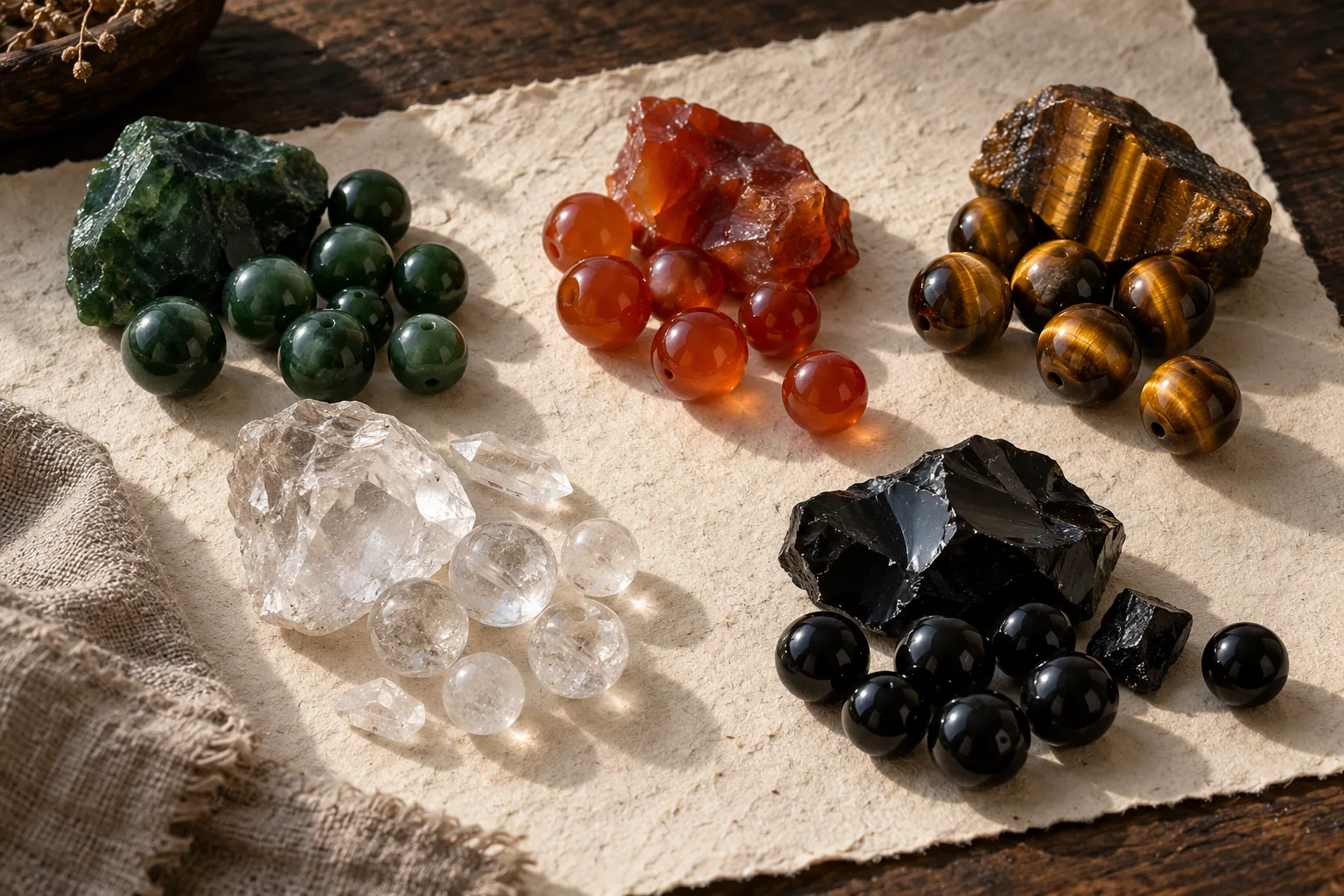
Swipe to see the full comparison
| Visual direction | Catalog material references |
|---|---|
| Green and wood tones | Green aventurine, moss agate, jade, sandalwood |
| Warm reds and pink | Carnelian, garnet, rose quartz, red agate |
| Gold and brown | Tiger’s eye, citrine, yellow jasper, smoky quartz |
| Pale and gray | Clear quartz, howlite, moonstone, white agate, hematite |
| Blue and dark | Lapis lazuli, aquamarine, sodalite, black obsidian, black onyx |
The same material at a different scale
The existing catalog uses approximately 4, 6, 8 and 10 mm main beads across different designs. Fine beads create a more continuous line; larger beads emphasize individual materials. Both can carry the same intention while looking and feeling different.
Those diameters are not available in every material and product by default. If you want to keep a design’s ingredients but change the scale, identify the reference and the desired diameter so the actual material can be checked.
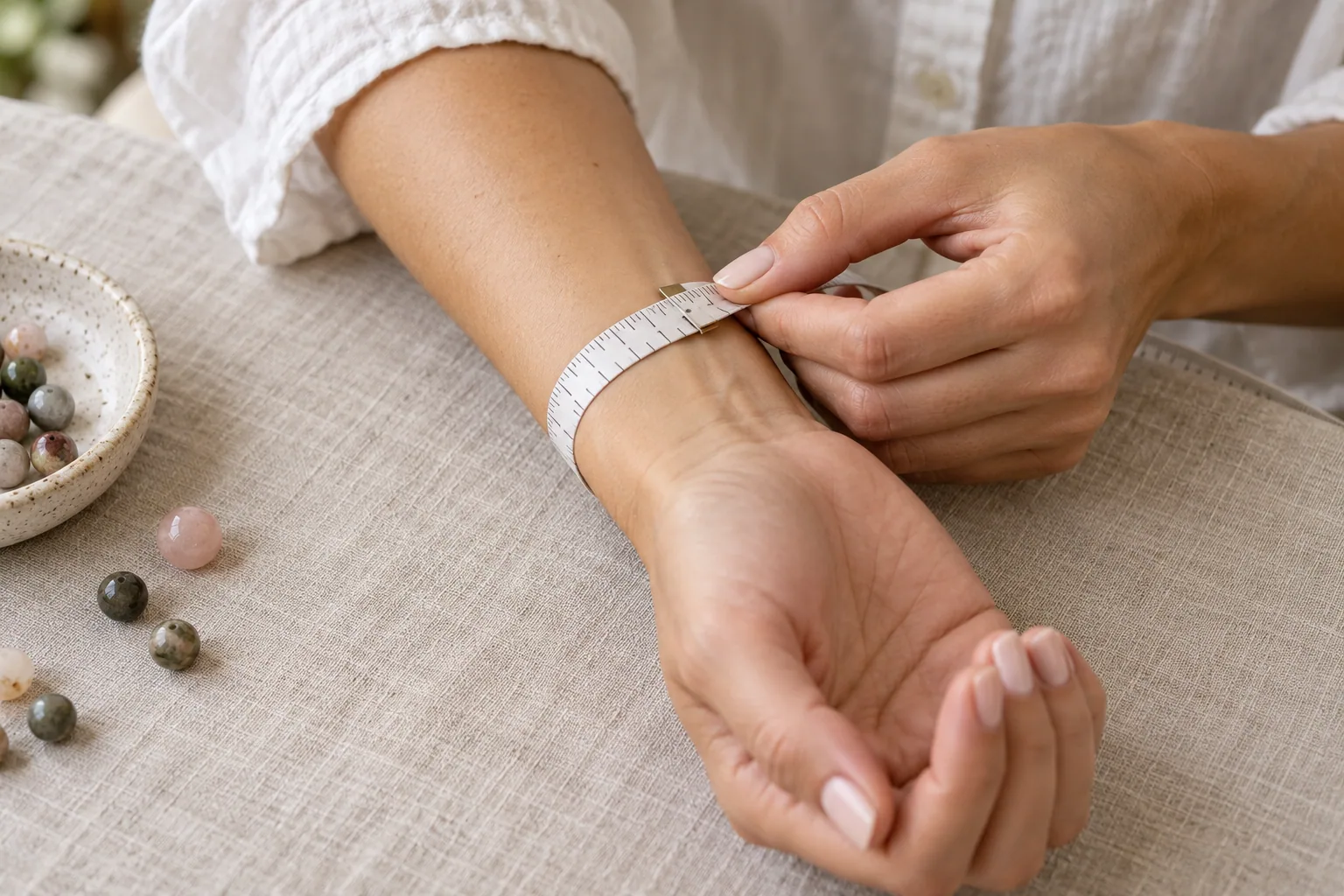
Wrist circumference is separate from bead diameter. Product pages currently offer 14–21 cm wrist choices. The measured value, preferred room and use alongside a watch can also be described. A distant photograph does not replace a measurement.
Single material, accents or a mixture
One material emphasizes its own color and markings. A few light or dark accents create contrast. A broader mixture uses proportion and rhythm to make the different ingredients work together.
If you already like a product, identify what to keep and what to change. Dislikes can help too: no large carving, a wood-and-stone preference, or a wish to keep the appearance mostly dark.
A reference image communicates an impression rather than confirming material identity or price. Gold-colored details, jade-like color, transparency and apparent size still need translation into named materials and specifications before the proposal is final.
Appearance and a personal composition
An appearance-led design starts with material, color, wrist and occasion preferences. For a personal composition, tell us which colors and materials you enjoy, your wrist size and any occasion you would like to mark.
Career, protection, affinity and study wishes can also give the design a theme. The individual composition, materials and price are agreed through a design discussion.
Confirm a specific finished arrangement
A clear proposal names the materials, main bead diameter, wrist fit, components, colors and quantity. Any documentation or unusual construction requirement belongs there too. That gives you a concrete item to confirm rather than an abstract style promise.
Pricing follows the agreed composition. Share the destination and any desired receiving date in the enquiry. If materials, bead scale or a carving change, confirm the revised arrangement rather than treating an early reference image as the final version.
Collecting preferences makes the discussion more specific. The material and making arrangements still need confirmation afterward. Keep your most important preferences while allowing comfort and actual available materials to shape the result.
Questions & answers
Will submitting preferences produce an instant price?
No automatic quote is generated. A price follows confirmation of the materials, dimensions, components and making conditions.
Can an existing design use a different wrist or bead size?
Name the original design and requested change. The available material and construction will be confirmed rather than assuming every product offers every specification.