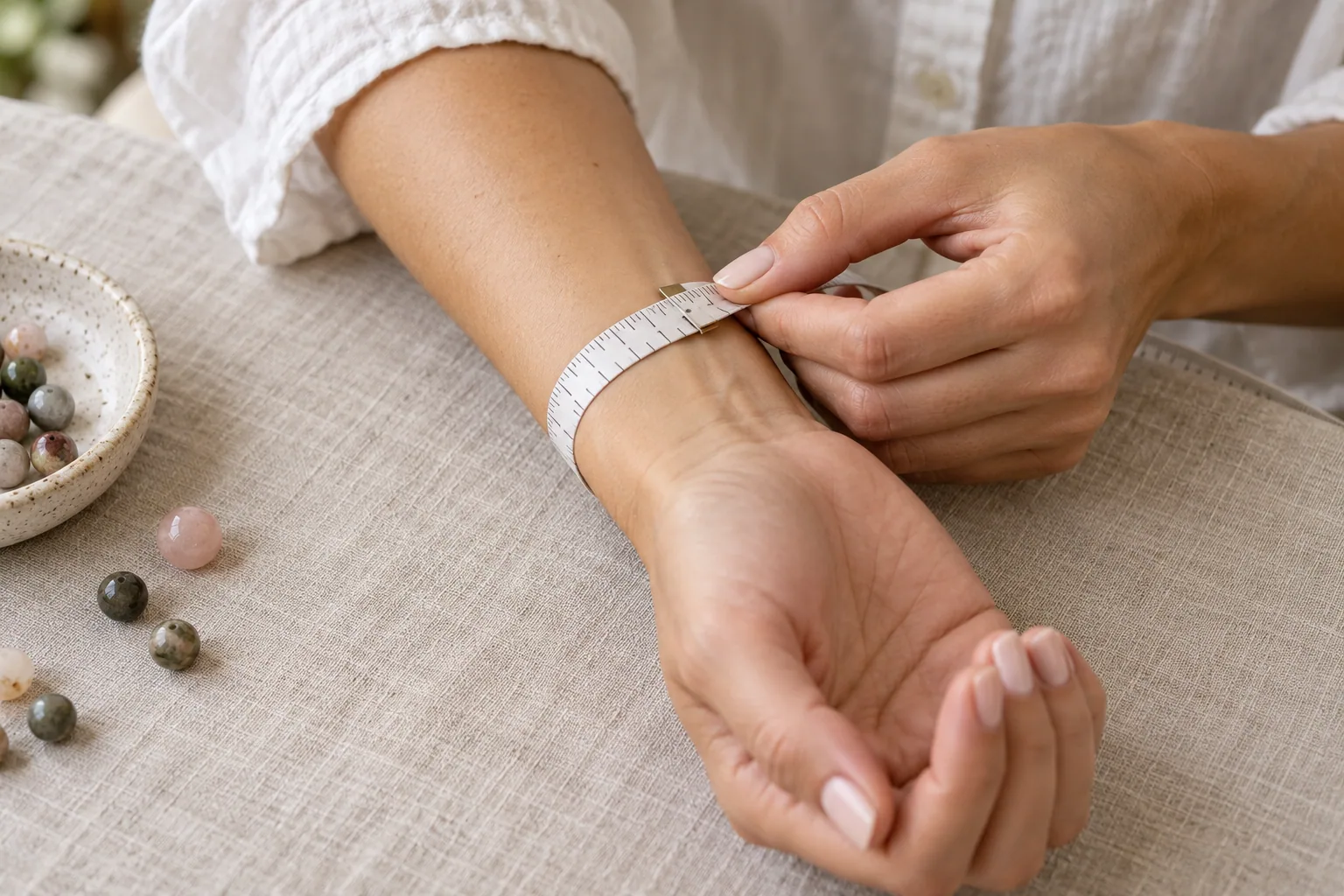
Use a flexible tape or paper strip
Wrap a flexible tape around the position where you normally wear a bracelet. Let it touch the skin without tightening it or leaving an obvious gap. Keep the wrist relaxed, repeat at the same position and record the circumference.
Without a tape, use a non-stretch paper strip, mark where it overlaps, then lay it flat against a ruler. Stretchy cord can change length while being pulled, making it less useful for an accurate measurement.
Record the actual snug measurement. A preference for close, relaxed or loose wear can be stated separately. Treating a number that already includes extra room as the wrist itself can confuse the later sizing discussion.
Wrist circumference is not every bracelet measurement
Wrist circumference measures the wrist. Internal bracelet circumference describes the space inside the item. A laid-flat length depends on the beads, arrangement and measuring method. All may use centimeters without being the same measurement.
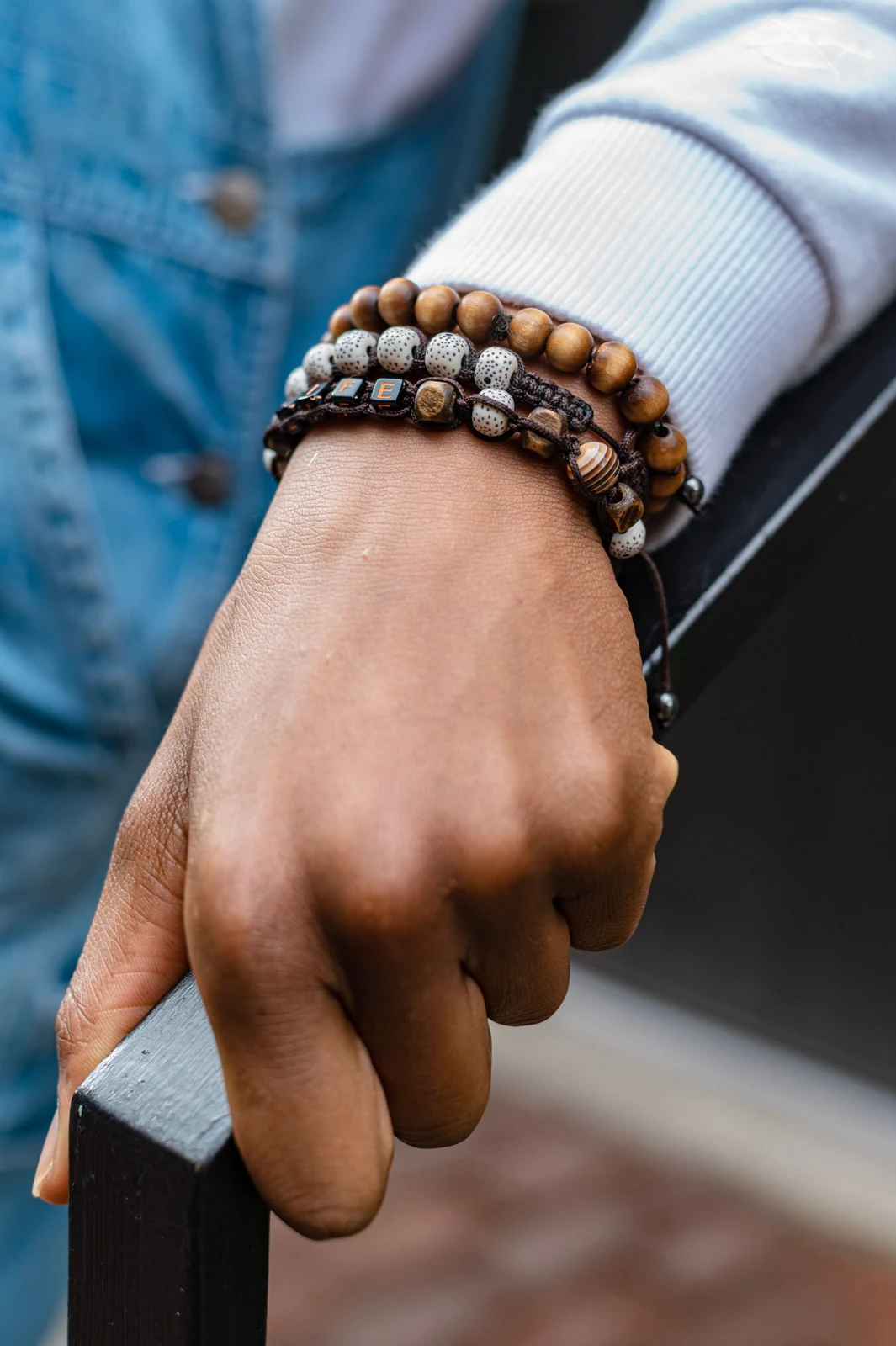
For round beads, the path around the outside is longer than the path near the wrist. Pulling a strand straight and measuring its length does not automatically identify the wrist it fits. When referring to an old bracelet, keep its bead diameter and wearing feel in mind too.
The product page records a wrist-size choice. The finished wearing feel also depends on bead scale, components and design. Describe a specific fit preference alongside the snug wrist measurement so that both are clear.
Current wrist options: 14–21 cm
The current product pages offer 14, 15, 16, 17, 18, 19, 20 and 21 cm wrist options. The table converts these to approximate inches for another measuring scale; the units describe the same circumference.
For a measurement between options or outside the range, ask with the actual value and your wearing preference. Keep the original measurement intact rather than changing it to match a menu. A selected wrist number should not be confused with a separately measured finished internal circumference.
Swipe to see the full comparison
| Wrist circumference | Approximate inches |
|---|---|
| 14 cm | 5.5 in |
| 15 cm | 5.9 in |
| 16 cm | 6.3 in |
| 17 cm | 6.7 in |
| 18 cm | 7.1 in |
| 19 cm | 7.5 in |
| 20 cm | 7.9 in |
| 21 cm | 8.3 in |
Comparing 4, 6, 8 and 10 mm beads
Common main-bead diameters in the catalog are 4, 6, 8 and 10 mm across different designs. Each product does not necessarily offer every diameter. A main-bead specification also does not mean that every companion bead or component has the same size.
Four millimeters gives a fine-bead line, six remains relatively delicate, eight makes individual beads more visible, and ten gives a more prominent material presence. Choose the proportions you enjoy rather than assigning a fixed size by gender.
Swipe to see the full comparison
| Main beads | Appearance to compare | Existing examples |
|---|---|---|
| 4 mm | Fine beads and a continuous line | Fine rose quartz and howlite designs |
| 6 mm | A finer mixed composition | Nephrite and fine moonstone designs |
| 8 mm | More visible round beads | Obsidian Protection; Steady Prosperity |
| 10 mm | Prominent individual beads | Jade Resolve; yellow jasper single-material design |
Sizing a gift with less guesswork
Ask for the recipient’s wrist circumference and preferred bead scale when possible. To preserve a surprise, refer to a bracelet they already wear comfortably and note its structure. A photograph of a wrist alone is not a reliable circumference measurement.
Partners or family members can share an intention without wearing identical dimensions. A design both people enjoy wearing is a more useful match than making the numbers identical.
For a BaZi custom gift, birth information informs the traditional interpretation; the wrist still needs a physical measurement. Age, animal sign and chart details do not substitute for size. Accurate dimensions also help arrange the materials and components.
Notice movement and everyday contact
The bracelet should feel comfortable during natural movement, without persistent pressure or excessive sliding and knocks. When worn with a watch or another bracelet, notice contact between components. Larger beads may also interact differently with sleeves, writing and a desk.
Fit preference varies with wearing position and habits. If unsure, describe what you like or dislike about an existing bracelet alongside your measurement. Repeatedly stretching the string is not a reliable way to establish a different lasting size.
Questions & answers
Can height and weight determine wrist size?
They are not an accurate substitute. People of similar height and weight can have different wrists. A tape or paper-strip measurement is more direct.
Do 8 mm beads mean I do not need a centimeter size?
You still need wrist sizing. Eight millimeters describes the main bead diameter; centimeters describe the wrist circumference.
Should I automatically add one centimeter?
Record the snug measurement first and state your preferred room separately. Adding an unconfirmed allowance can mix the wrist measurement with the desired finished fit.