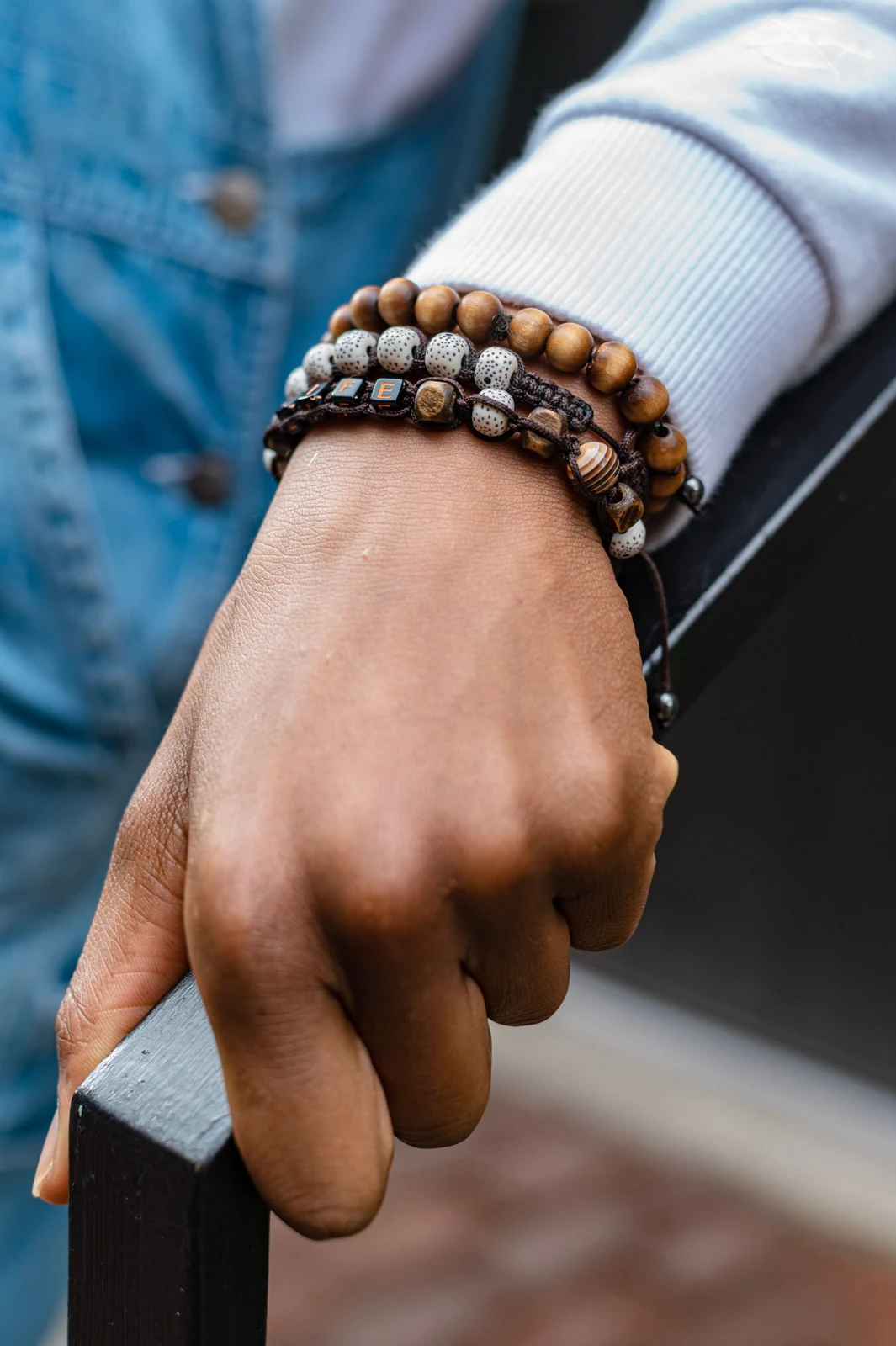
Start with the type of bracelet
Plain bead bracelets can be worn according to the dominant hand, watch, sleeves and work habits. Someone who writes or uses a desk frequently may care most about movement and contact. Comfort and fewer repeated knocks are practical considerations for regular wear.
The receiving-left and projecting-right idea appears in modern Feng Shui and crystal contexts, but it is not one universal rule shared by all Buddhist, folk or religious traditions. If you follow a particular practice, confirm its convention. A stone’s color alone does not prescribe the same wrist for everyone.
Red strings have different traditions
A red string may express Chinese wishes for auspicious beginnings or a zodiac year, and similar objects also appear in other cultural and religious settings. Red color alone does not establish its origin or combine all those settings into one ritual.
Kabbalah-associated red-string practices, for example, receive differing views within Jewish discussion. Chabad’s explanation considers their folk and religious standing, illustrating why one popular practice should not be presented as representing every Jewish tradition. Respecting the source is more accurate than creating a universal protection rule.
When giving a red string, describe the wish behind it and any specific documented source or ceremony. Without such information, it can be a meaningful auspicious gift without turning a product story into an assumed religious history.
Prayer beads have a purpose and structure
Malas can be used for counting in a practice, with materials, bead numbers, markers and handling varying by tradition and purpose. Tibet House’s collection notes that Indo-Tibetan traditions generally use 108 beads and displays different materials. That does not require every everyday wrist strand to have the same structure.
A religious user can follow their tradition’s requirements, while daily wrist wear emphasizes fit, bead diameter and care. A guru bead, tassel or fixed count is a design feature rather than something automatically implied by the word sandalwood or crystal.
The current site designs present Five Elements intentions and material compositions. A particular prayer use, ceremony or component needs separate confirmation within the proposed arrangement.
Pixiu, lettering and orientation
Orientation comes from the actual object: a Pixiu has a head and tail, lettering has a reading direction, and other religious motifs may have associated practices. Plain round beads generally do not raise the same directional question.
Some Pixiu traditions describe an outward-facing head, while construction and wearing practices vary. Look at how the actual carving is strung and which custom you wish to follow rather than applying one online drawing to every design.
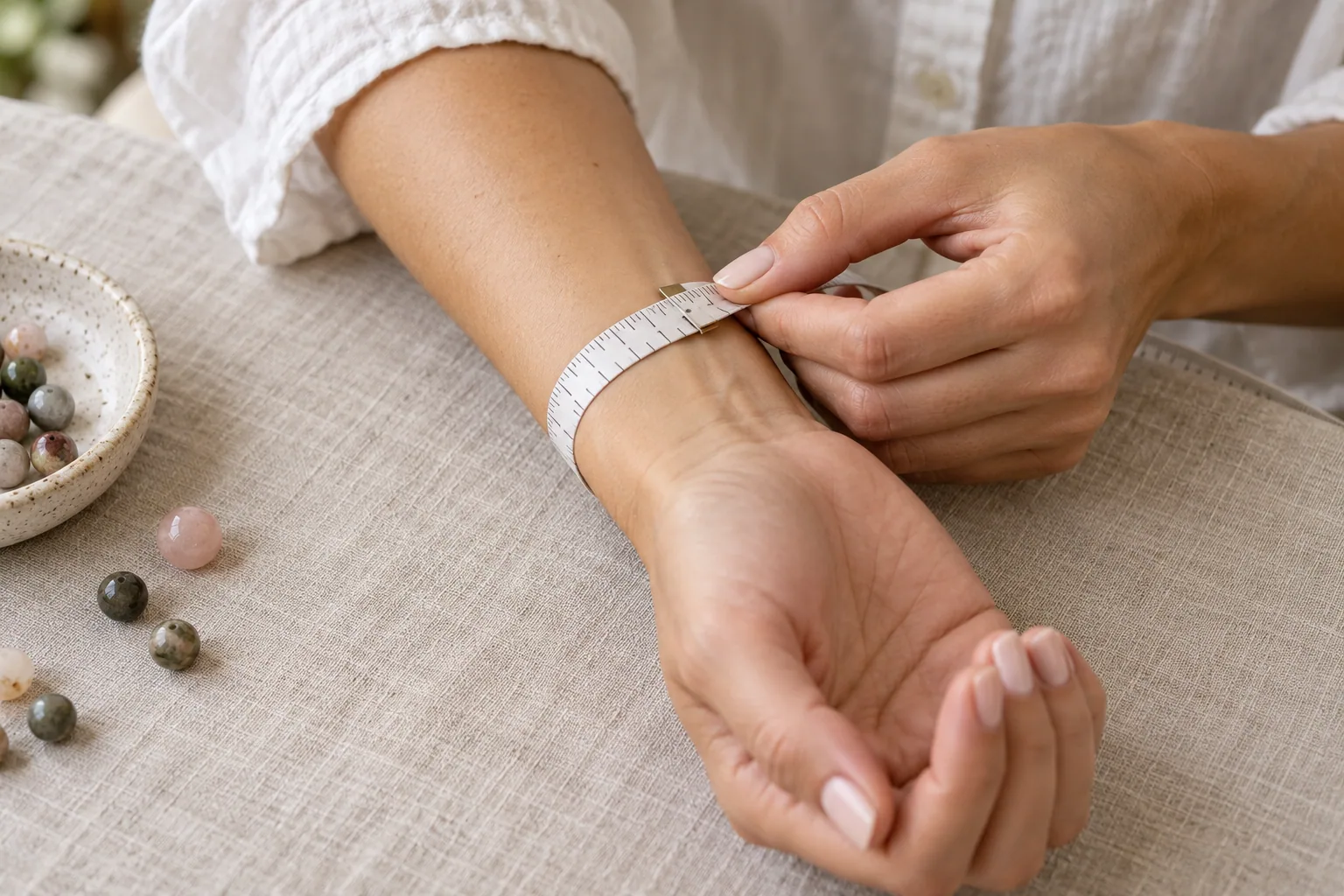
For Pixiu, a lotus or another cultural motif, tell us the form, material, size and wearing preference you have in mind. A personal proposal considers the component’s direction, cord construction and wrist fit so a meaningful detail also works in everyday wear.
Color and the wish you carry
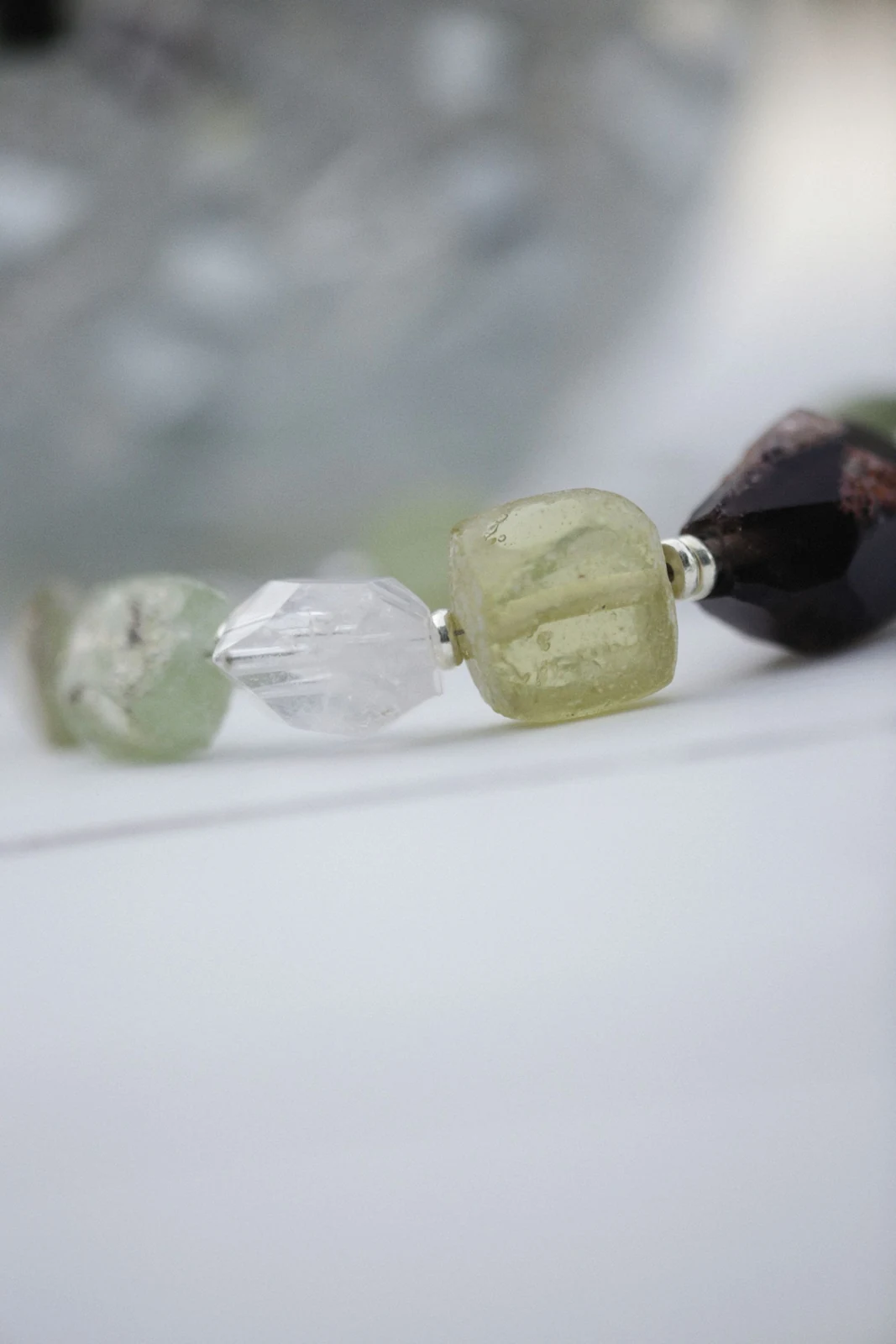
Red can express celebration, pale white harmony and dark obsidian protection. Jade, tiger’s eye and other materials also have cultural associations. Moving a bracelet to the other wrist does not change its physical composition into an opposite product.
Ready-to-wear pieces may be selected for peace, career, affinity or study. Personal design also considers birth details, favorable elements and annual wishes. Meaning, actual materials and a comfortable fit can coexist without repeatedly changing wrists to follow conflicting online formulas.
Taking it off and caring for it
Remove the bracelet as appropriate for sport, bathing, cleaning products or activities that invite hard knocks. Moonstone needs attention around impact, sandalwood should avoid prolonged soaking, and a mixed item needs care for every component and its string.
Temporary removal need not mean abandoning the intention behind a gift. Store it separately on a soft lining, keep hands and beads clean, and attend to worn stringing. A specific religious convention can be followed while also considering the physical item.
For a gift, explain the meaning and respect the recipient’s wearing preferences. Whether they use a watch, enjoy carvings or prefer one wrist is part of choosing something they will welcome.
Questions & answers
Must left-handed people reverse every rule?
Everyday fit can adapt to the dominant hand. A specific religious or folk convention should be understood within its own tradition; there is no single reversal rule for all bracelets.
Does a broken string prove that it blocked misfortune?
You may keep the personal meaning of the object while checking wear, pulling and components. A broken string alone cannot establish a past or future event.
Can I wear two bracelets with different intentions?
Consider your preferences and any tradition you follow, as well as comfort and contact between materials. A personal BaZi arrangement is discussed as a whole rather than determined by the number of bracelets stacked.