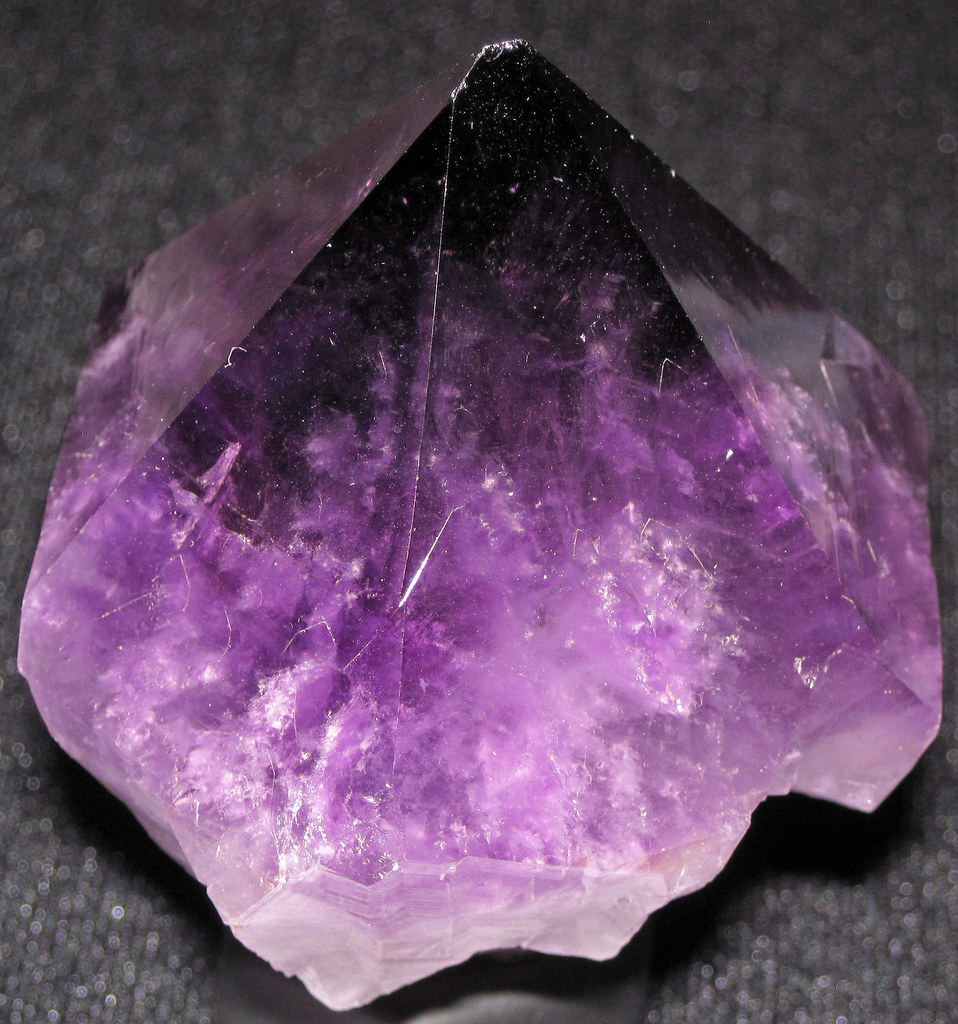
Purple quartz in changing shades
Amethyst is the purple variety of quartz. GIA describes bluish and reddish-purple tones and common zones of lighter and darker color. Zoning does not simply mean that color was painted onto the surface; origin and treatment still require appropriate identification.
Pale round beads can feel light, while deeper ones make a quieter statement. Color may vary within a larger crystal, making cutting direction and thickness relevant to the finished appearance. In a bracelet, consistent matching matters more than the darkest single bead.
A white background, dark setting or strong spotlight can change a photograph’s impression. Ordinary-light views and close details provide useful context, showing the overall color and internal texture rather than only the most dramatic photographic effect.
Geodes, loose gems and finished beads
A geode presents crystal clusters and a natural outline; a loose gem emphasizes cut, color and clarity; a bracelet adds matching and fit. They share a material name but not a pricing structure. A large specimen sold by weight is not a direct price model for drilled and polished beads.
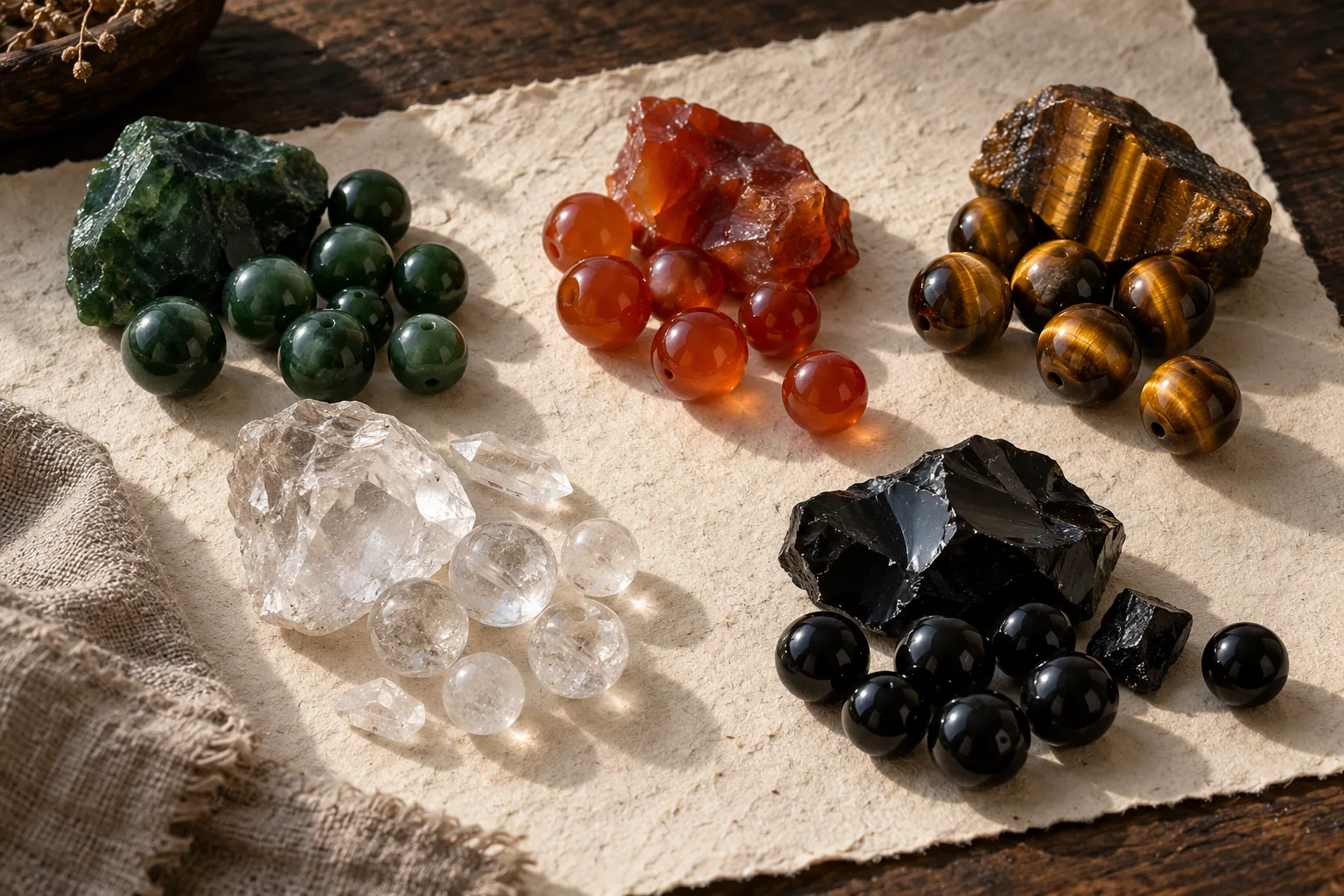
GIA notes that larger amethyst does not necessarily carry the sharp size premium associated with some rarer gems. Actual color and workmanship remain central. A dark, nearly black-looking piece may be less appealing to a wearer than a lighter, brighter purple. Zoning should also be viewed in the context of the finished object.
Labels such as A, AAA or collector quality need a seller’s specific explanation. Dimensions, clarity, origin and treatment should be separated. An attractive color name is not a laboratory grade; the details of the actual item remain the most useful basis for comparison.
Natural, laboratory-grown and treated
Amethyst is mined and also grown in laboratories. Laboratory-grown amethyst and glass imitation are different concepts: one is a manufactured counterpart of the gemstone, while the other uses another material to resemble it. Color, coolness or cloudy features alone cannot reliably distinguish them.
Heat can change amethyst’s color, sometimes toward the yellow associated with citrine. Natural origin and untreated status should therefore be described separately. Clear material is not automatically untreated, and an included piece is not automatically natural. Supporting information is more useful than those assumptions.
Ametrine combines purple and yellow within one crystal. A bracelet made from separate amethyst and citrine beads is a different kind of combination. One term identifies material; the other describes a design. Clear naming preserves both kinds of appeal.
February and a wish for clarity
Amethyst is a February birthstone. GIA records historical links with purple color, strength and intelligence, alongside the Greek wine-related story behind its name. Those traditions give context to a gift for a new year, learning or a steadier sense of purpose.
In a Five Elements intention, purple can join ideas of dignity, clarity and resolve. The complete materials, colors and favorable elements still matter; every purple gem need not become an identical answer. Pale companions feel clearer and lighter, while dark ones make a more subdued arrangement.
A BaZi chart, personal energy pattern and annual and ten-year cycles can add a personal context to a birthday wish. This page explains the material; specific supply, dimensions and pricing belong to an actual design discussion. Cultural stories need not be turned into predictions of guaranteed outcomes.
A gentle beginning and practical care
A first wearing can be marked by gently preparing the piece and choosing a wish. Physical cleaning still follows the material’s needs. GIA recommends warm soapy water and notes concerns with intense light, heat and abrupt temperature changes. Prolonged sun exposure is not required to make an intention meaningful.
Amethyst has a Mohs hardness of 7 but can be scratched by harder jewelry. Corners, bead holes and cord need attention, and mixed pieces require care for every component. Separate storage and regular checks are more useful than an occasional aggressive cleaning.
Questions & answers
Does color zoning mean amethyst is fake?
No. Amethyst can naturally show areas of different color strength. Origin and treatment cannot be established from zoning alone.
Is darker purple always better?
Color, brightness, clarity and preference work together. Very dark material can hide detail; lighter purple has its own appeal.
Is laboratory-grown amethyst glass?
No. Laboratory-grown amethyst and glass made to imitate purple are different materials and should be described accurately.
Should amethyst be cleansed in sunlight every day?
Prolonged intense light is unsuitable as a fixed care routine. Some amethyst may fade, so gentle cleaning and appropriate storage are preferable.