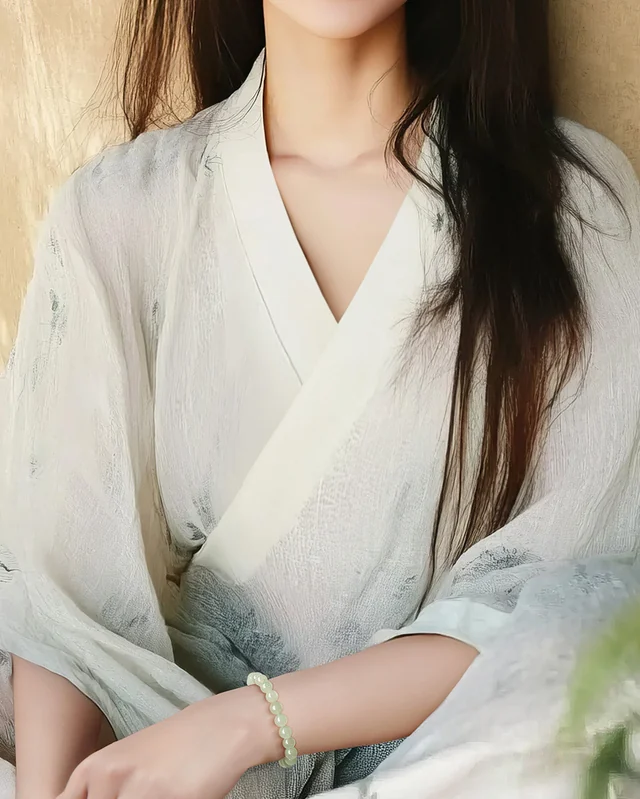
Protection · Balance
8 mm Hetian Jade Bracelet · Jade Blessings
Hetian jade (nephrite)
$128.008 mm · Wood
 View larger
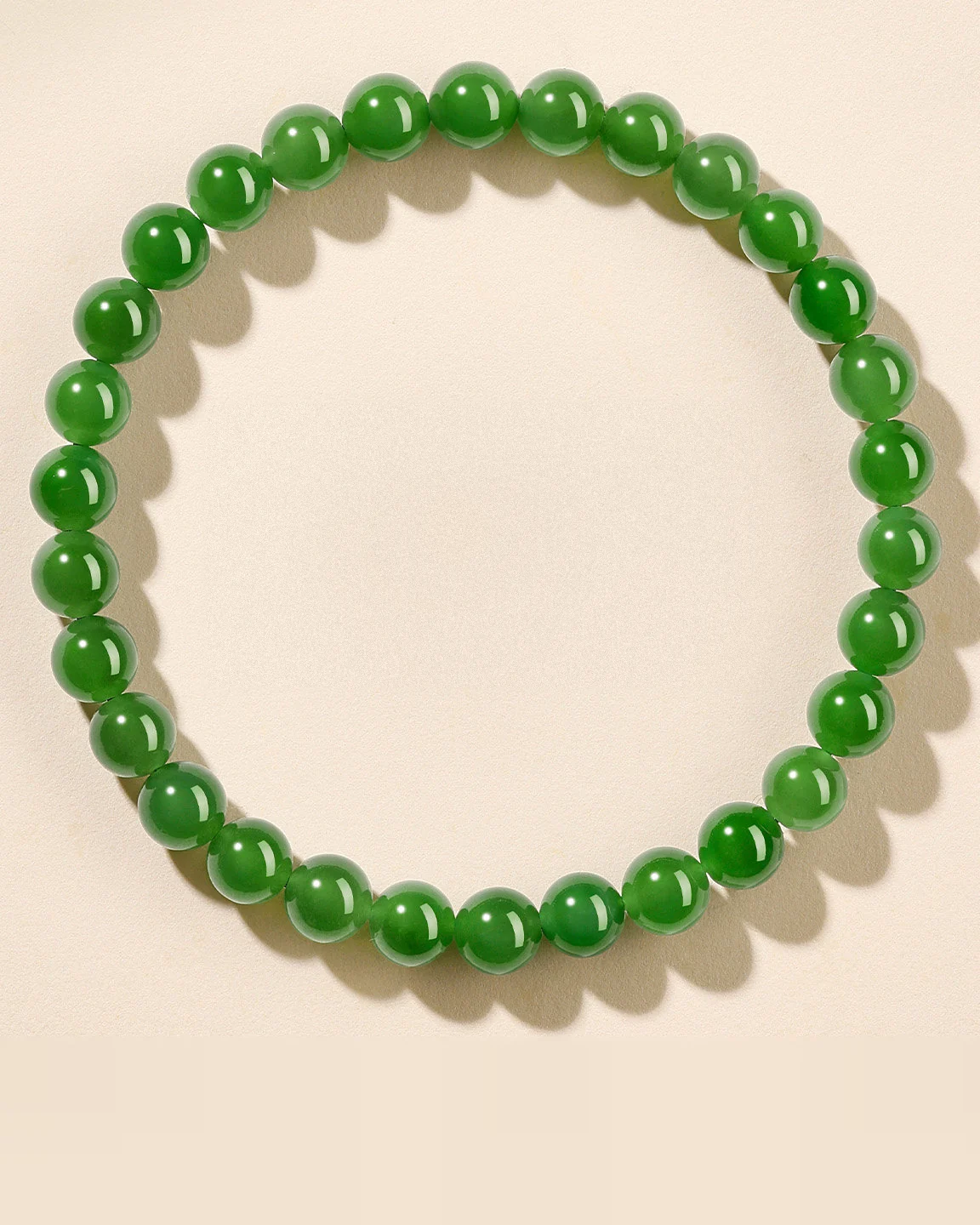
Green nephriteSpinach green · 6 mm
Auspicious bracelets / Wood
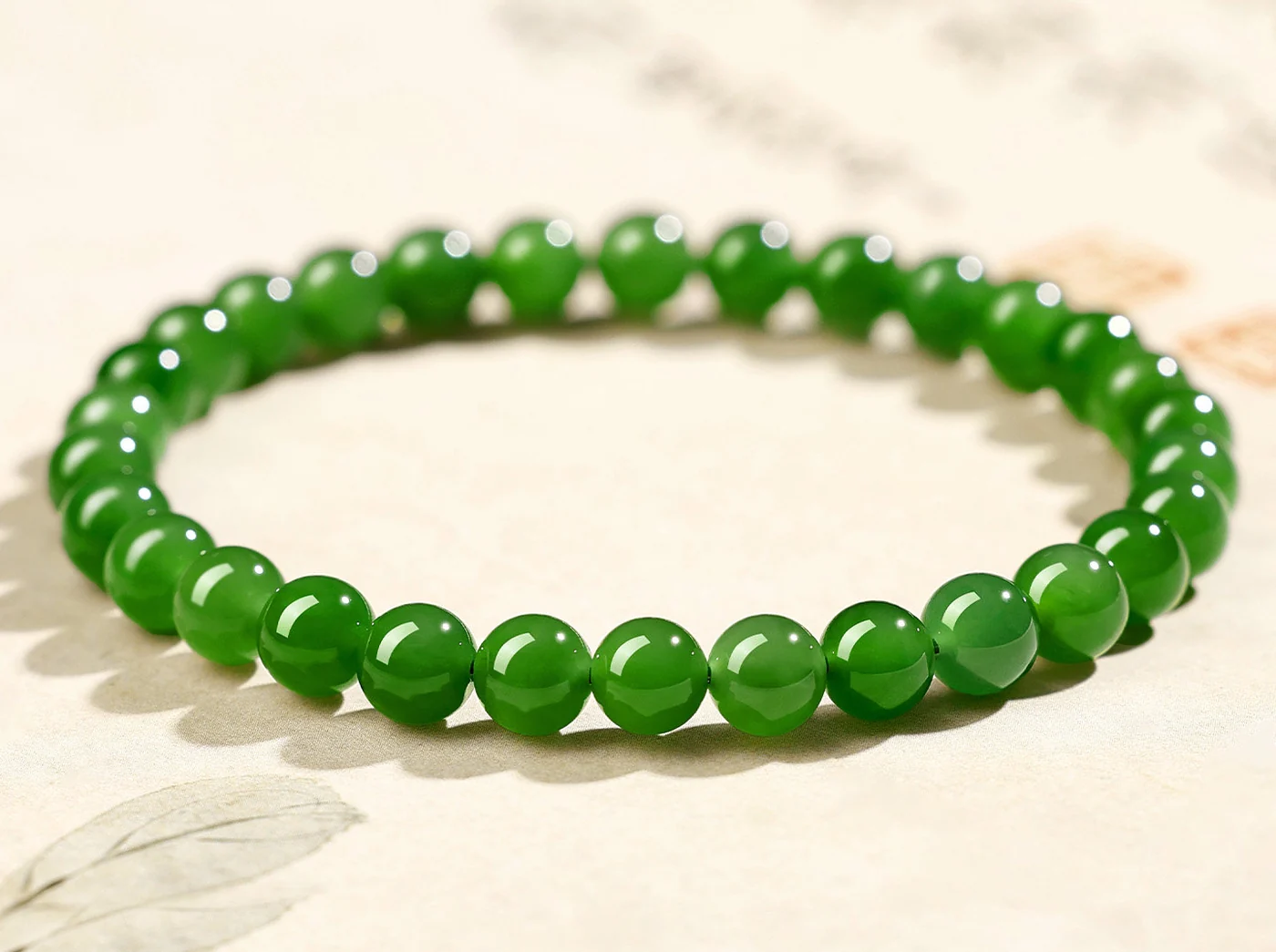
Fine 6 mm rounds of deep spinach-green nephrite, selected to be clean of black specks, in one slim strand.
$278.00USD
Prepared in 5 days after payment
Shipping: Asia $10; Europe, US, Canada, Australia & NZ $20
Ready-designed returns may be requested within 14 days. See returns policy
Growing Blessings
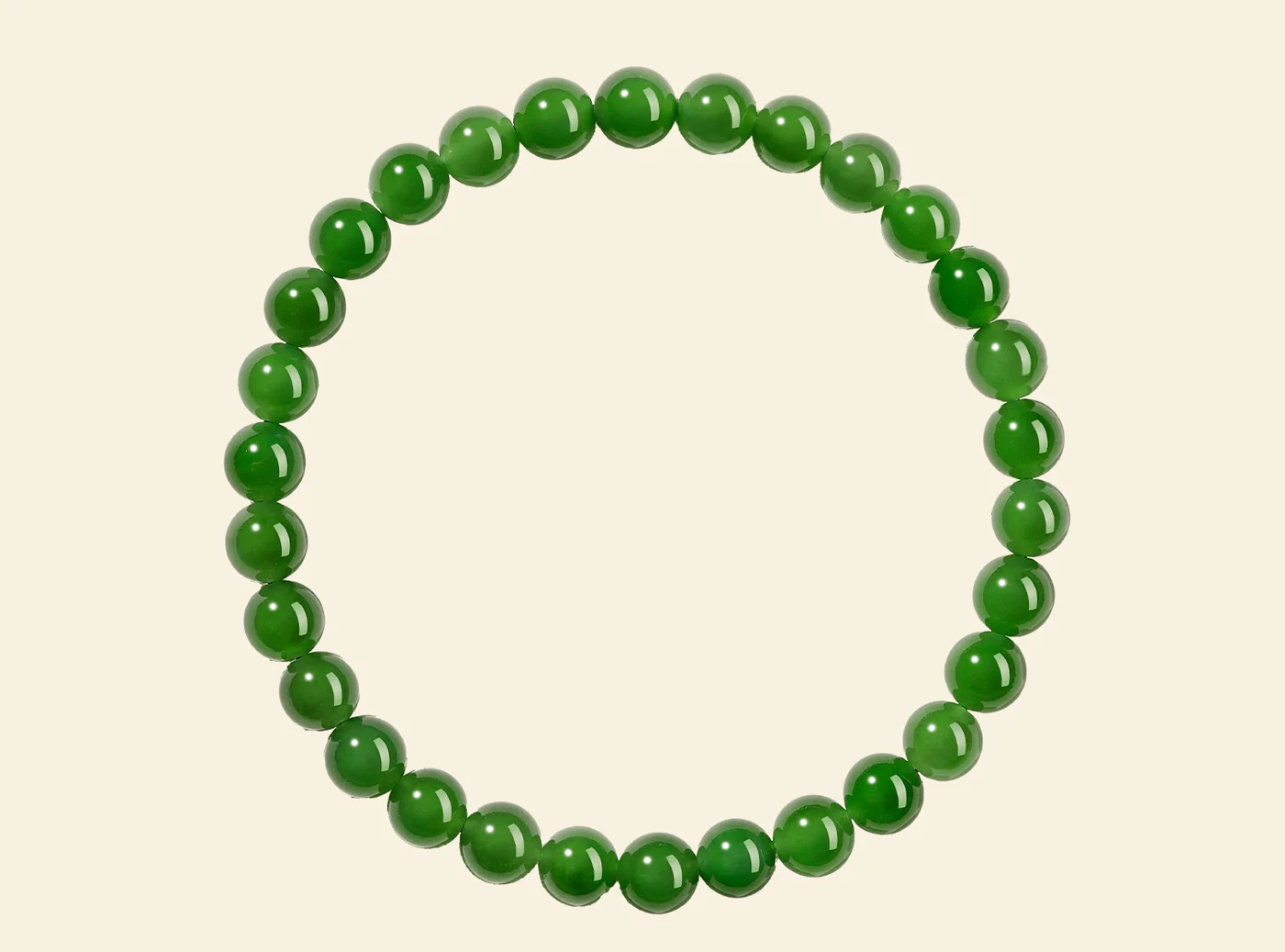
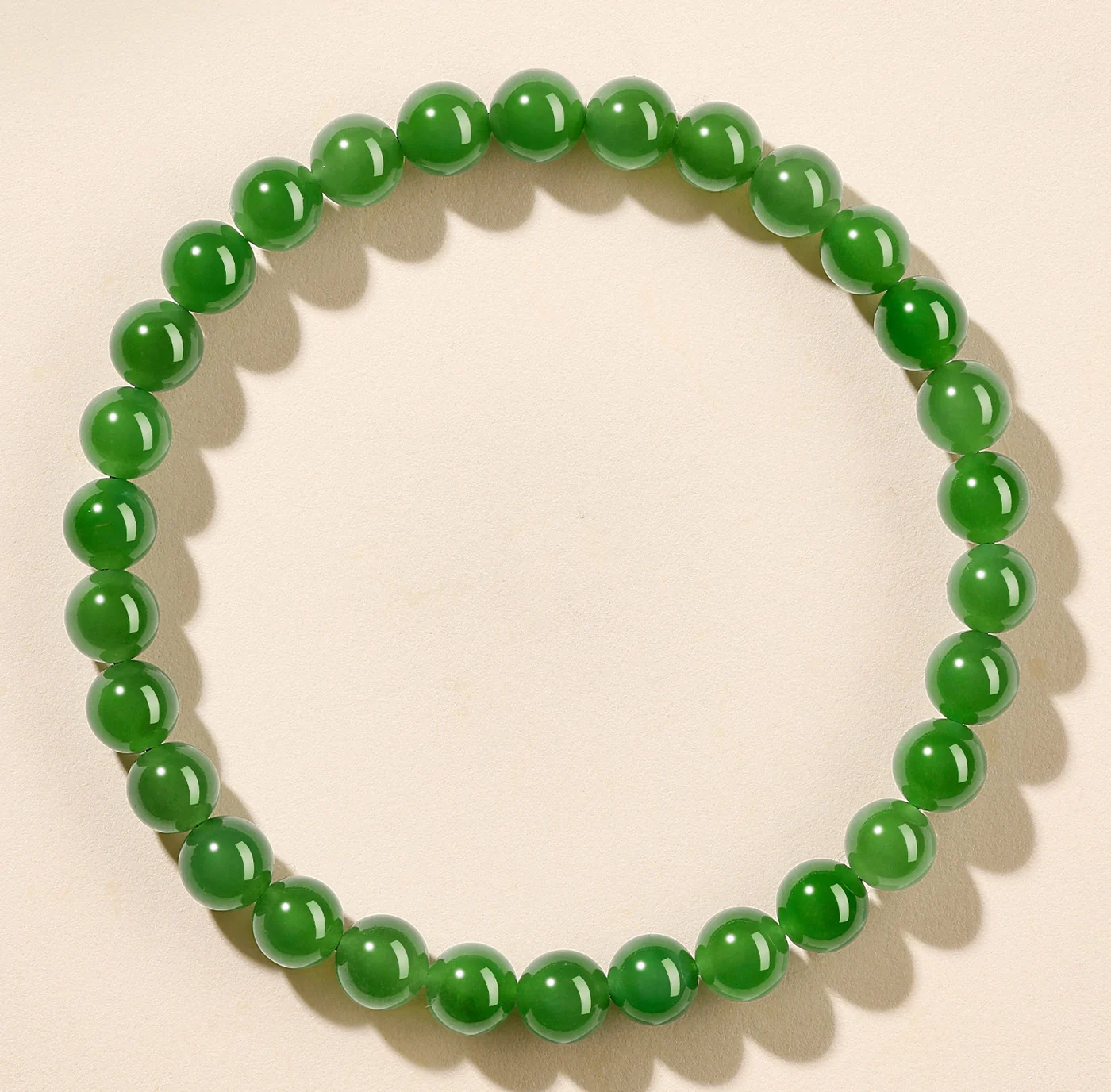
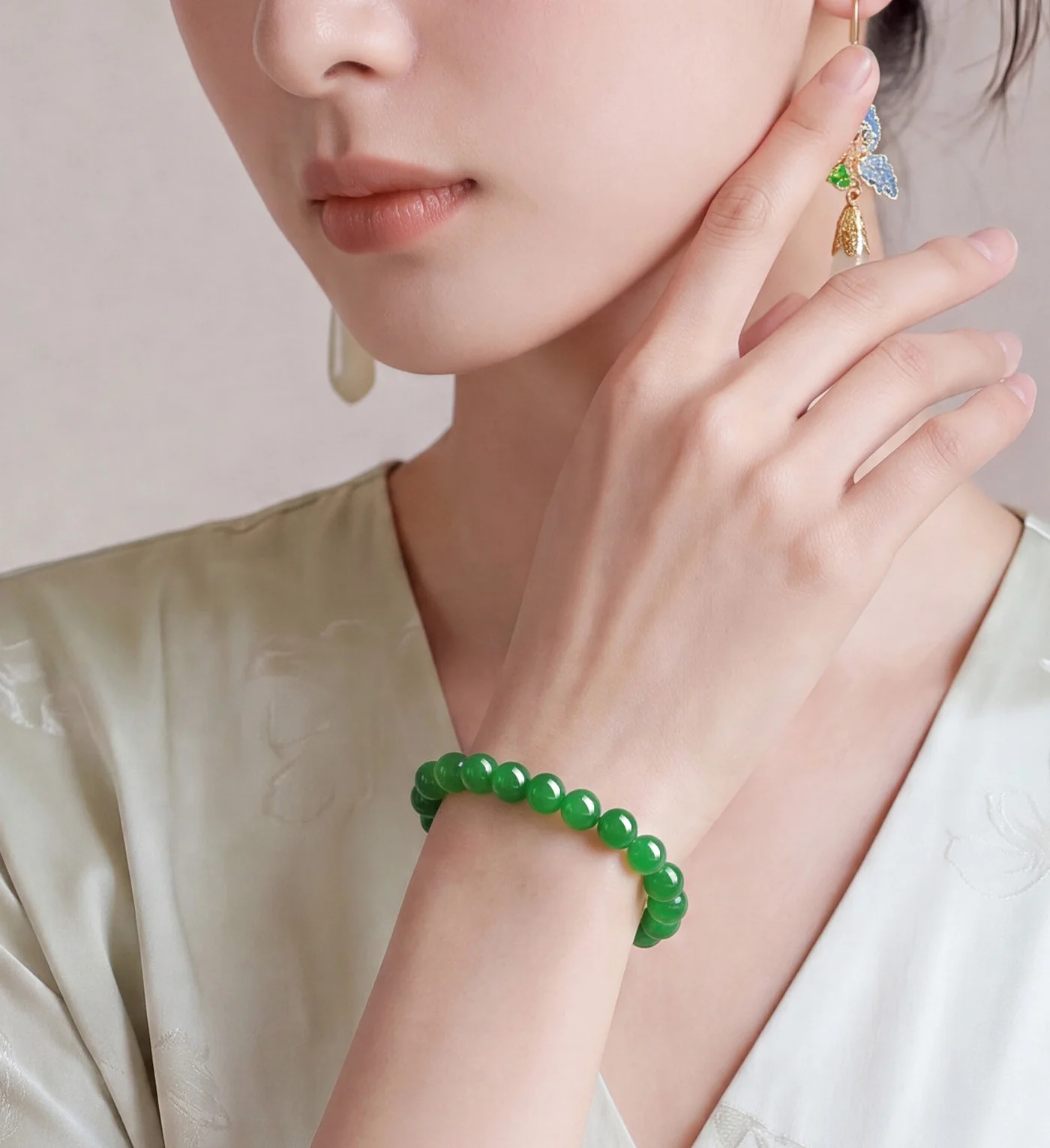
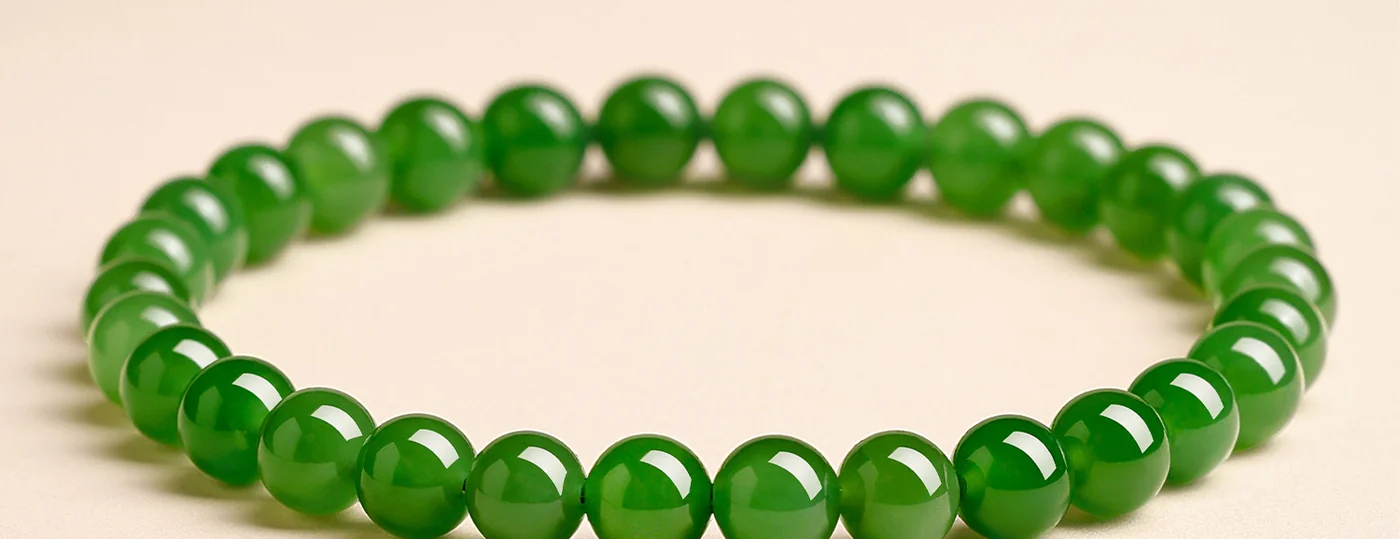
Growing Blessings is a fine strand of spinach-green nephrite, the green variety of Hetian jade that Chinese collectors call biyu. Each round bead is approximately 6 mm across, cut from collector-grade material selected to be free of the black specks that usually scatter through green nephrite. The colour is deep, even and saturated, with the soft, oily lustre that only nephrite has.
The name recalls bamboo, which grows “joint by joint”, each section built on the one before. In Chinese it is a wish for steady progress and for blessings that accompany every new step, whether a move abroad, a new job or a long course of study. The slim 6 mm beads make this the most discreet of our jade designs, a strand that can be worn every day without drawing attention, yet glows a rich green whenever the light finds it.
Growing Blessings
What biyu is, why “spinach green” and “no black specks” matter, and how to choose and care for a fine nephrite strand.
01
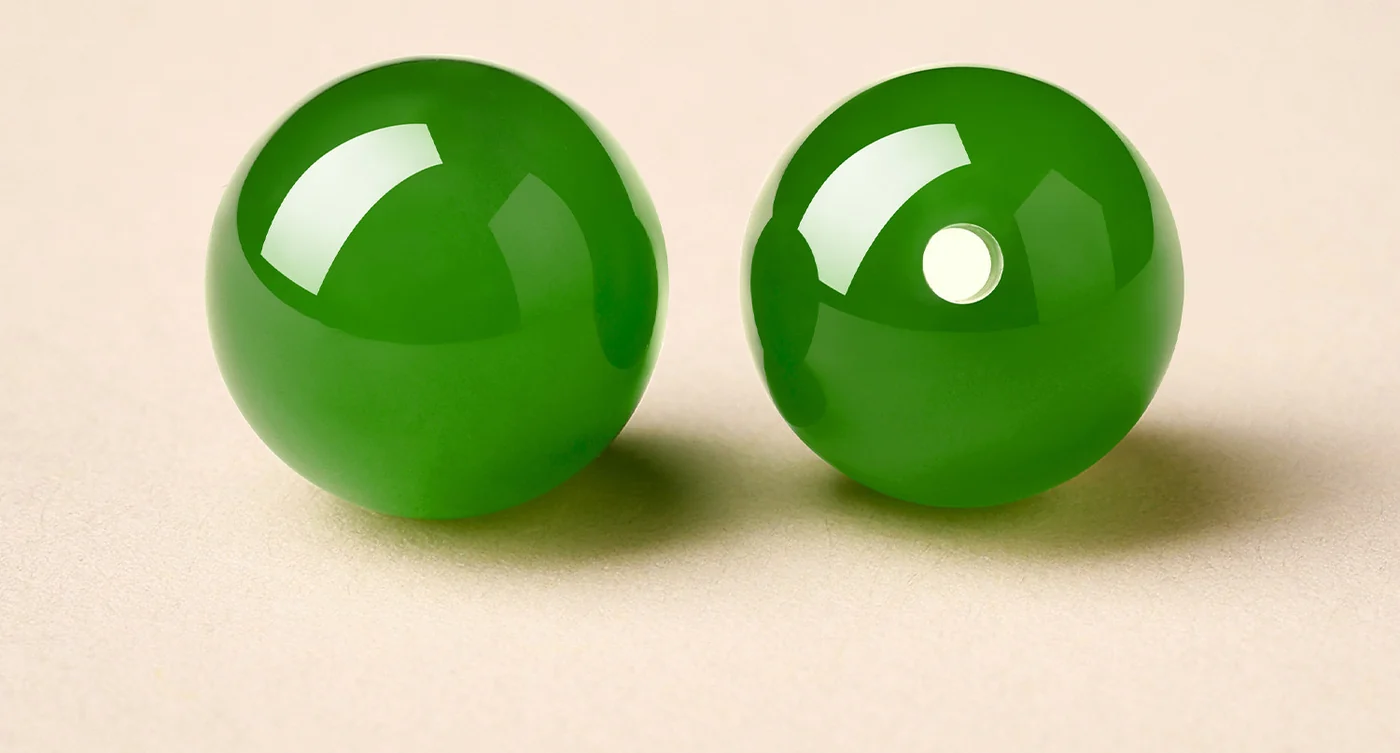
Hetian jade is the Chinese name for nephrite, the tough, fibrous jade that has been carved in China for thousands of years. Most people picture it as white or pale celadon, but nephrite also occurs in a deep green, which the jade trade calls biyu, literally “green-blue jade”. The colour comes from iron in the mineral structure: the more iron-rich actinolite the stone contains, the deeper and greener it becomes.
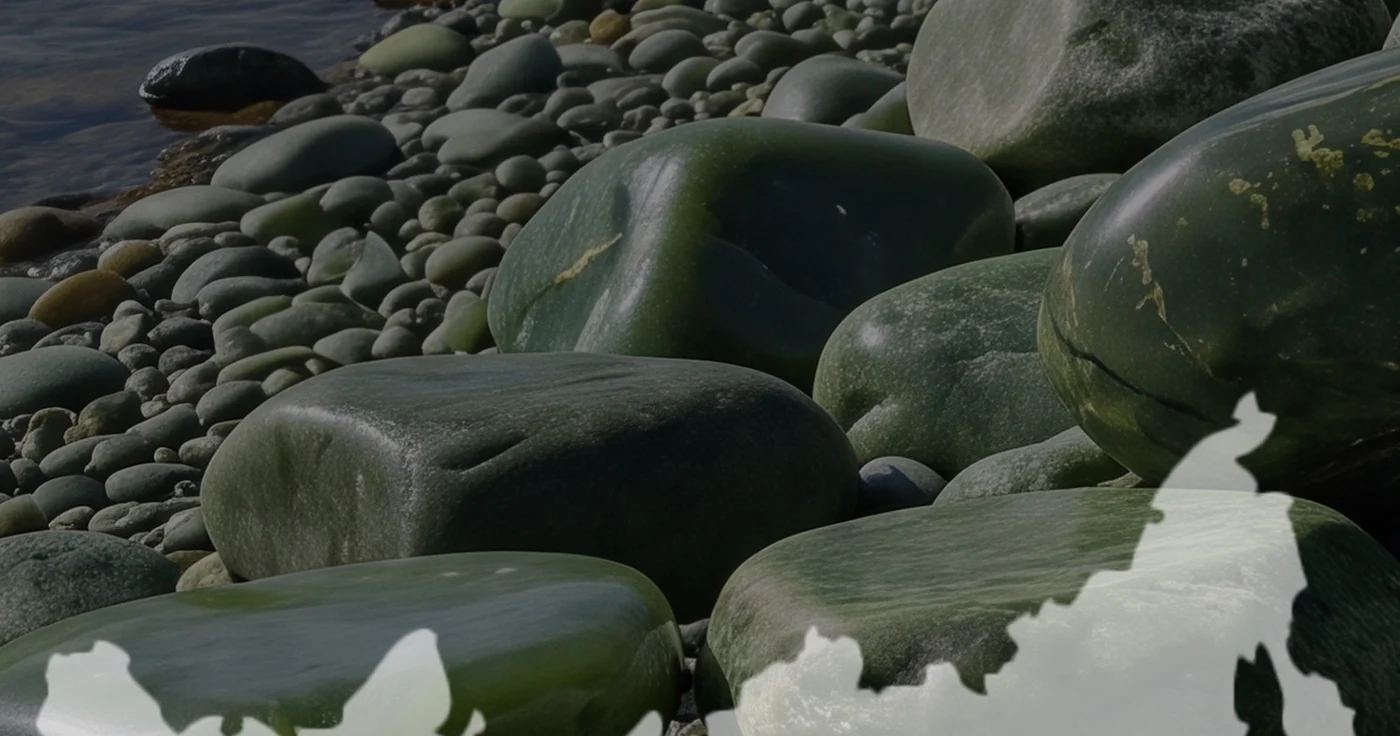
Biyu has its own long history. Qing dynasty craftsmen carved it into brush pots, bowls and imperial seals, and green nephrite from the Manas region of Xinjiang was highly valued at court. Today some of the finest material comes from the Eastern Sayan mountains in Siberia, near Lake Baikal, where old mines produce a vivid, even green that collectors call “spinach green”.
Like all nephrite, biyu is made of countless interlocking microscopic fibres. That felted structure makes it exceptionally tough, far more resistant to breaking than harder stones such as quartz, and gives the polished surface its characteristic soft, oily lustre rather than a glassy shine.
02
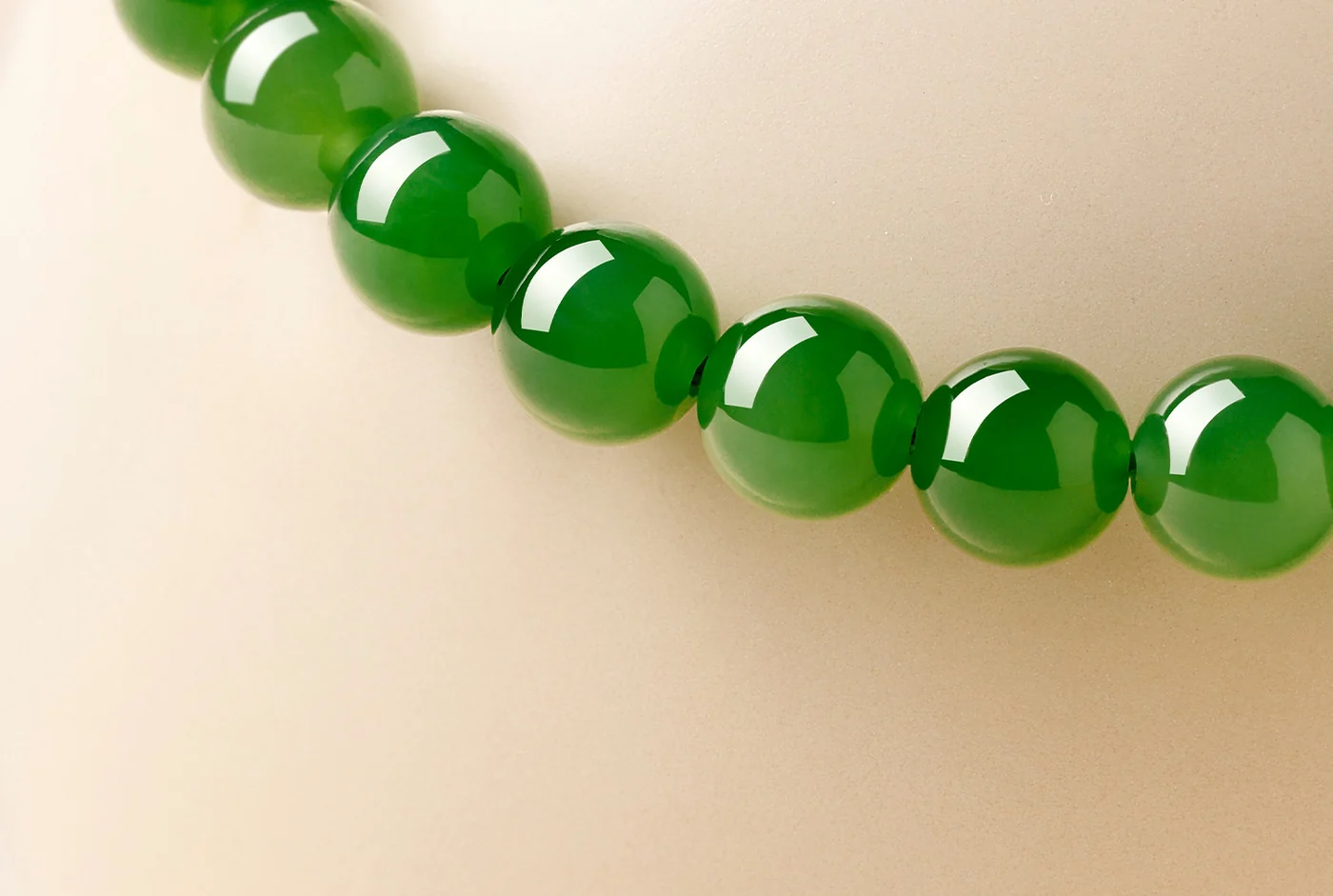
Green nephrite almost always contains small black inclusions, usually grains of chromite or magnetite that formed alongside the jade. In ordinary material they appear as scattered dark dots; in lower grades they cluster into visible patches. Collectors therefore prize biyu that is “free of black and free of impurities”, with a clean, even body colour from bead to bead.
The beads in Growing Blessings are selected from that clean material. Their colour is a saturated, slightly bluish green, deeper than the green of aventurine and richer than most jadeite of a similar price. Seen closely, the beads look almost luminous at the edges, where light passes a little way into the stone before returning.
No natural stone is perfectly uniform, and you may notice a very fine variation in tone along the strand, or the faintest pinpoint inclusion deep inside a bead under strong magnification. These are signs of natural nephrite. What you should not see is the peppering of black dots that characterises ordinary green jade.
03
In the jade trade, “old mine” refers to established deposits whose material has been known and tested for many years, as distinct from newly opened sources whose quality can be less consistent. The material used here is described by our supplier as old-mine Russian biyu, valued for its colour saturation, fine texture and relatively few black specks.
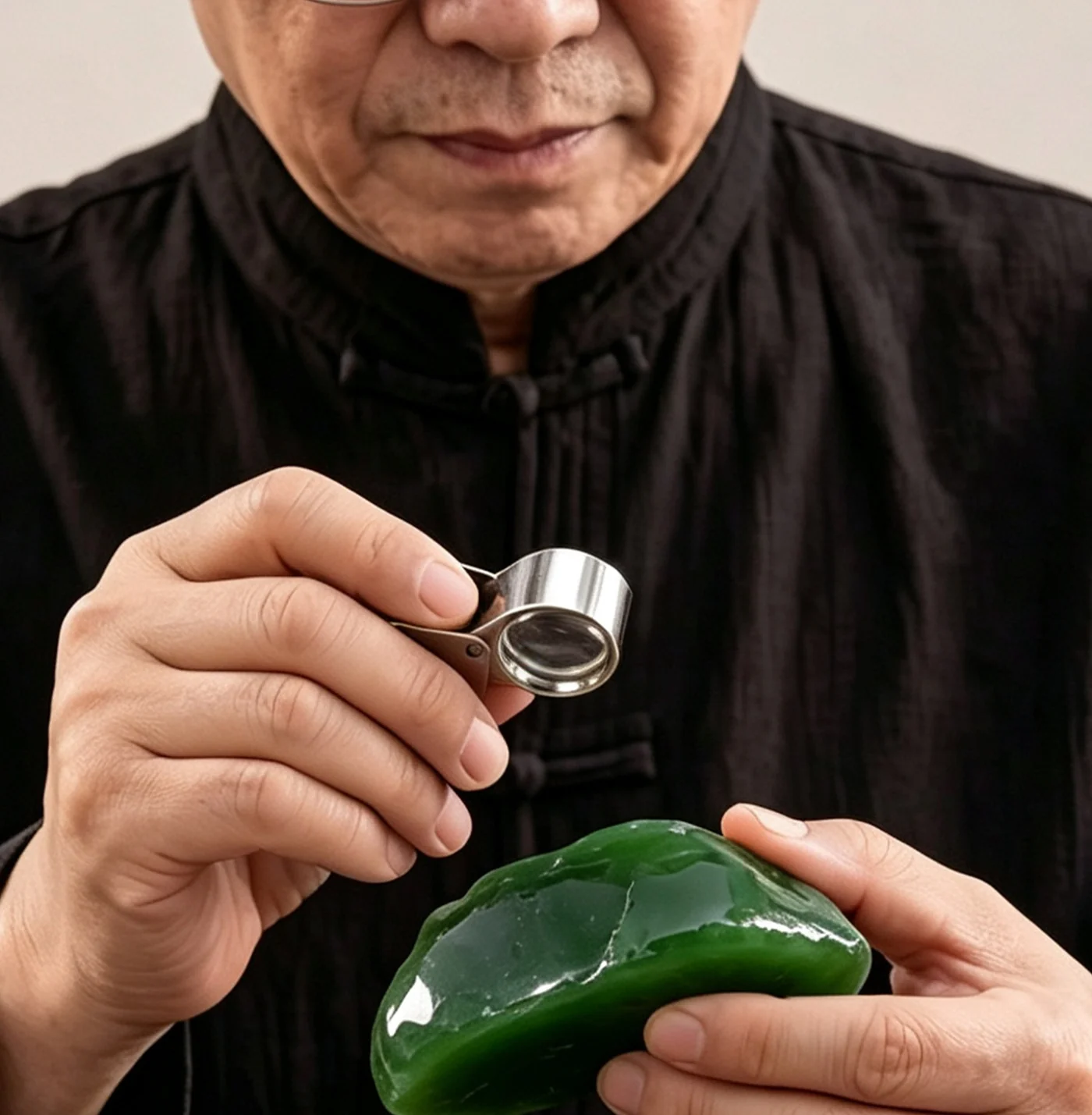
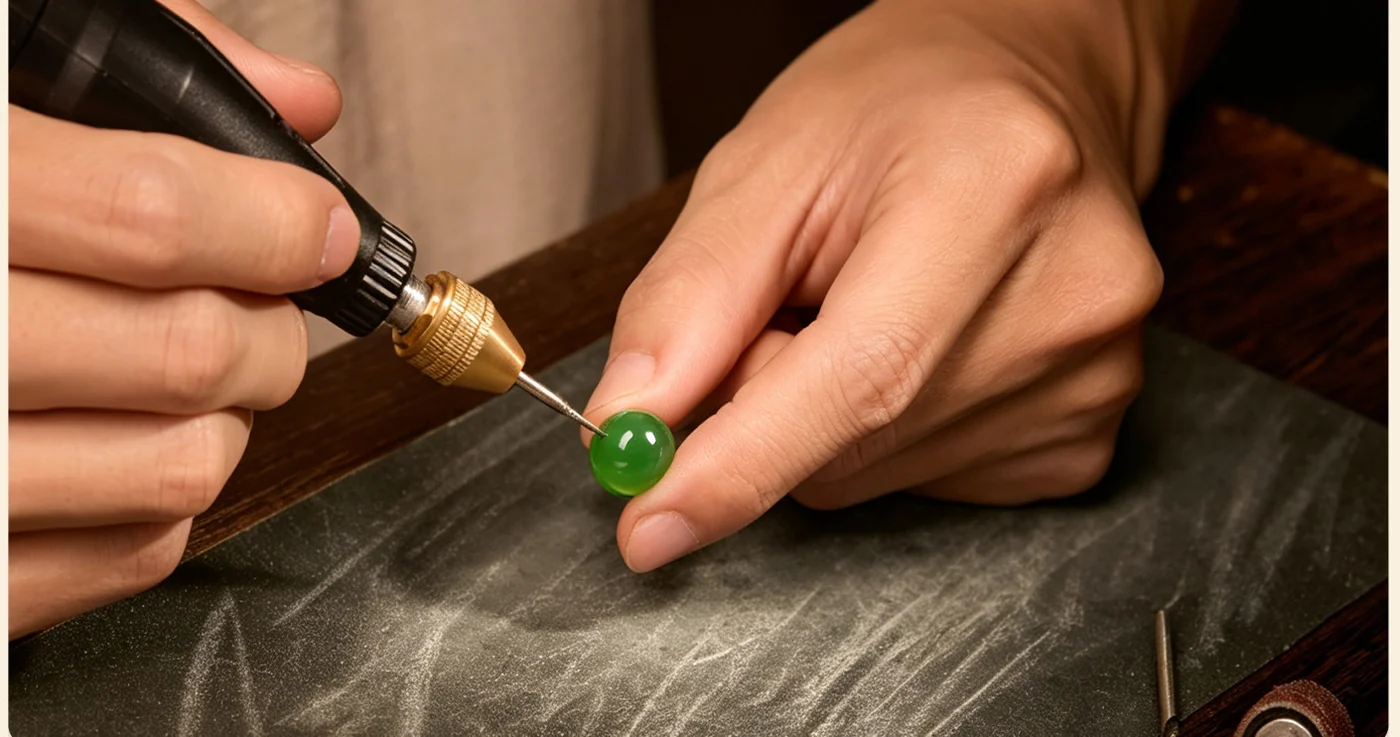
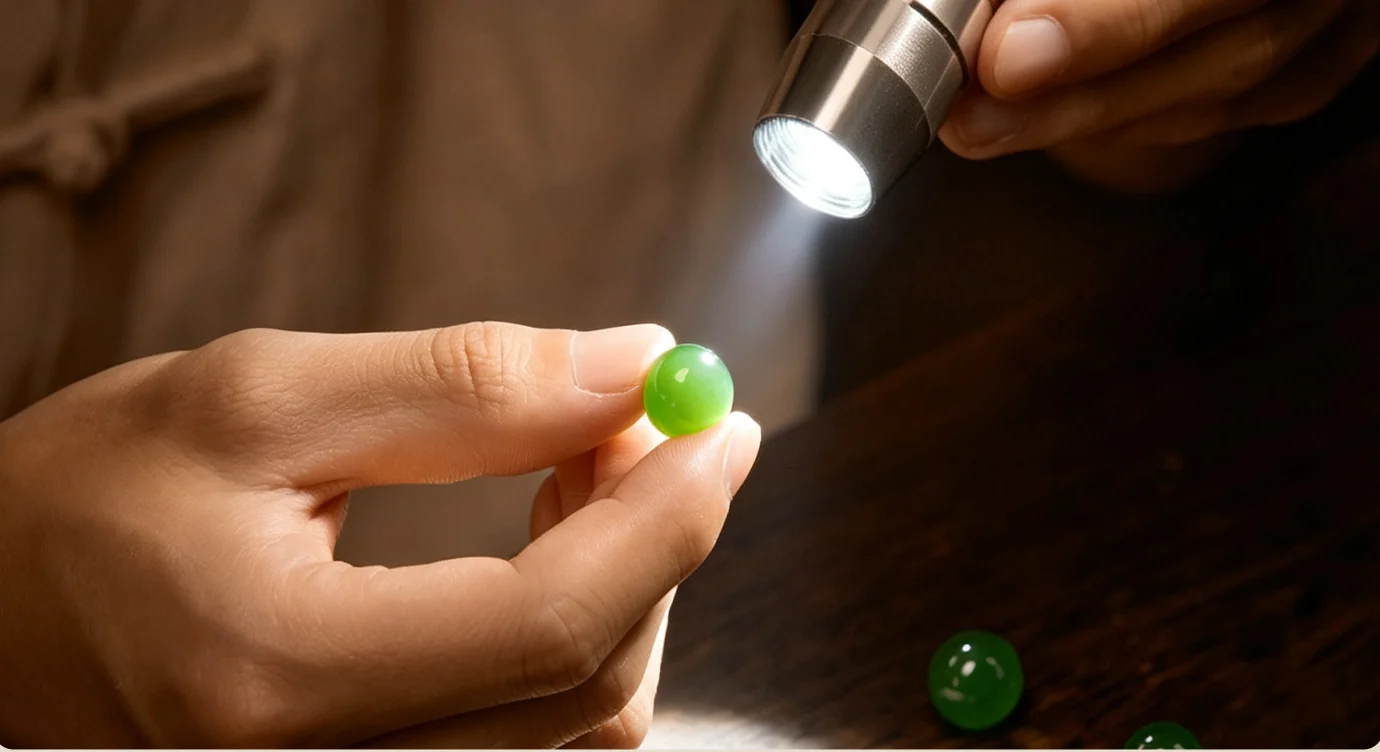
Even from a good deposit, only part of each boulder is suitable for beads of this grade. The rough is examined under a loupe, cut into blanks, rounded and polished, then each bead is checked again against a strong light for clarity and colour. Beads with visible black spots, cracks or a colour that strays from the rest are set aside. Matching enough clean beads of one tone for a full strand is the main reason fine biyu bracelets cost more than ordinary green jade.
Each finished strand is supplied with an identification certificate from a third-party gem laboratory, confirming that the beads are natural nephrite.
04
Several green materials are sold as jade. Dyed quartzite and glass can look vivid but tend to have either a sugary, granular look or a glassy shine. Serpentine, sometimes called “new jade”, is softer and often more yellowish. Jadeite is a different mineral altogether, granular rather than fibrous and usually more glassy in lustre.
A gem laboratory identifies nephrite through its refractive index of about 1.61 to 1.62, a specific gravity of roughly 2.95 to 3.0, and its fibrous structure under magnification. These tests are not possible at home, which is why a certificate is more reliable than folk methods. One thing you can observe is lustre: polished nephrite has a soft, waxy glow that seems to sit just under the surface, whereas glass and dyed quartz reflect light more sharply.
Untreated biyu needs no enhancement. Its colour is stable, it does not fade in daylight, and with regular wear the surface takes on a slightly deeper sheen from contact with the skin.
05
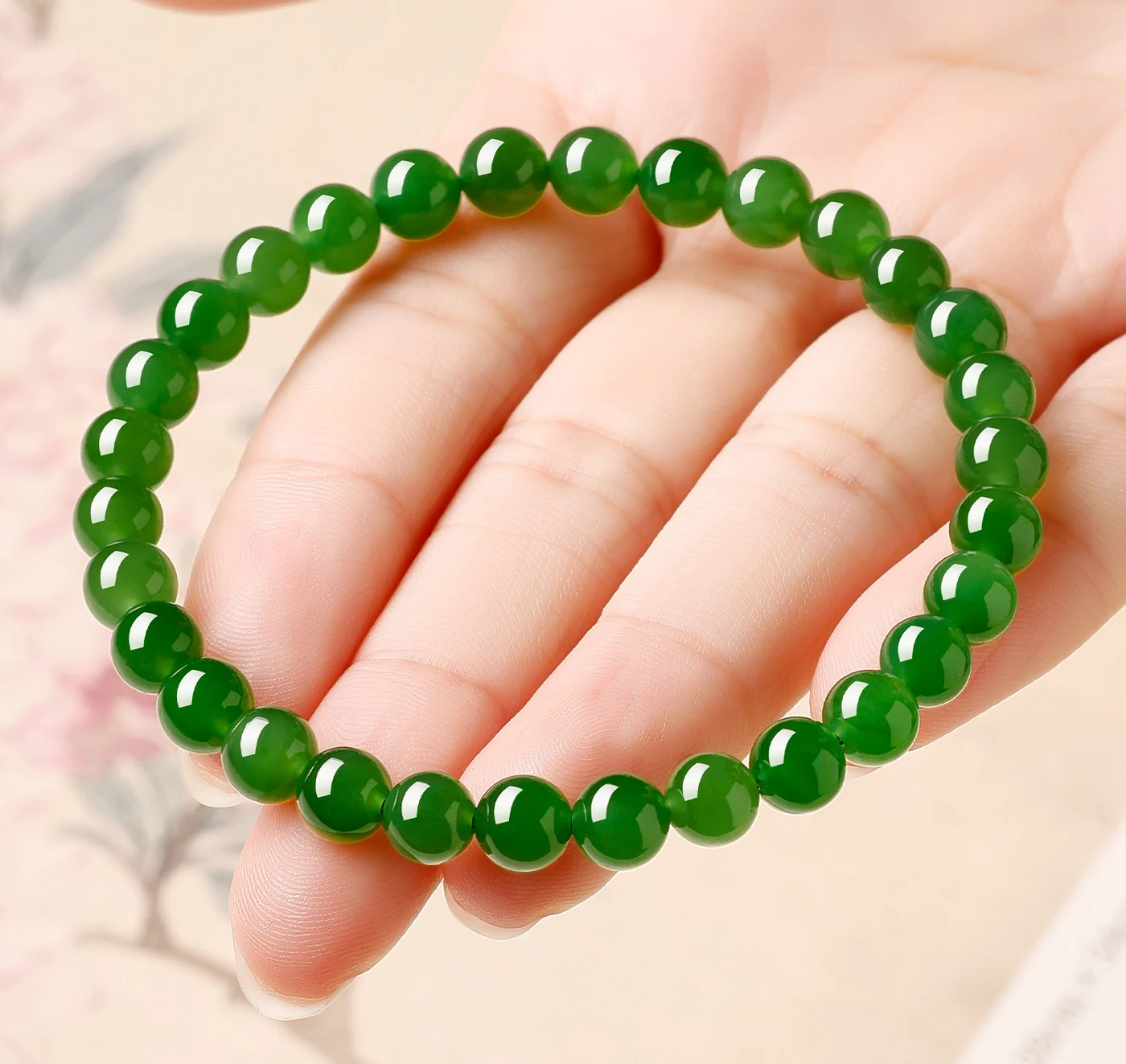
Deep green is a strong colour, and bead size controls how strong it looks on the wrist. At 4 mm, a biyu strand is a thin, elegant line; at 6 mm, each bead is large enough to show its glow while the bracelet remains slim and refined; at 8 mm and above, the green becomes a bold, eye-catching band.
Growing Blessings uses 6 mm beads so that the colour reads clearly without dominating. The strand sits comfortably beside a watch, slips under a shirt cuff and suits slender as well as larger wrists. Fine beads also make the most of clean material: with more beads per strand, the evenness of the colour becomes part of the bracelet’s appeal.
| Bead diameter | How deep green looks | Often chosen for |
|---|---|---|
| 4 mm | A fine, elegant line | Stacking or very slender wrists |
| 6 mm · this design | Clear glow in a slim strand | Everyday wear, beside a watch |
| 8 mm | Bold, saturated band | Wearing one statement strand |
06
Measure the wrist itself with a soft tape or paper strip, just above the wrist bone where you usually wear a bracelet. Keep it snug without squeezing and choose that measurement on this page. The strand is made with a small allowance so that it moves slightly and stays comfortable through the day.
A 6 mm strand uses many beads, which is part of what makes clean biyu valuable. The table shows typical counts; your bracelet may differ by one bead, because natural beads vary fractionally and every strand is checked against the measurement as it is strung.
Between two sizes, choose the larger for a relaxed fit or the smaller for a closer one. Roll the elastic strand over the knuckles rather than stretching it wide.
| Wrist size | Approximate inches | Typical bead count (6 mm) |
|---|---|---|
| 14 cm | 5.5 in | 28 beads |
| 15 cm | 5.9 in | 30 beads |
| 16 cm | 6.3 in | 31 beads |
| 17 cm | 6.7 in | 33 beads |
| 18 cm | 7.1 in | 35 beads |
| 19 cm | 7.5 in | 36 beads |
| 20 cm | 7.9 in | 38 beads |
| 21 cm | 8.3 in | 40 beads |
07
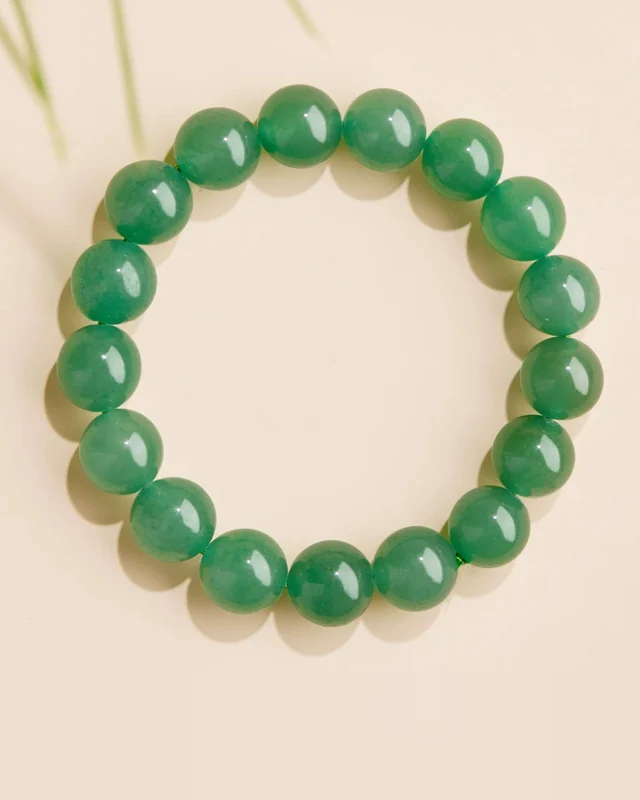
All of our jade bracelets use nephrite, but the colour changes the character of each one completely. Pale qingshui jade, as in Jade Blessings, is soft, cool and almost watery, a gentle stone for everyday wear and family gifts. Lake-green and gradient strands sit in between, mixing pale and deeper tones. White jade is creamy and luminous, the classic colour of scholar’s ornaments.
Spinach-green biyu is the most saturated of them. It reads as confident and grounded, works especially well on men and on anyone who prefers dark, rich colours, and keeps its depth even in dim light. Because clean biyu is scarce, it is also the grade most associated with collectors.
If you are choosing between them, think about the wearer’s usual palette. Someone who wears a lot of white, beige and pastel tones often prefers pale jade; someone whose wardrobe leans to navy, black, grey and earth tones tends to find deep green more natural. The comparison table below lists the jade designs side by side.
08
The Chinese phrase behind this design comes from bamboo, which rises section by section, each joint stronger than the last. “Rising joint by joint” is a common wish for someone at the start of a journey: success that builds steadily rather than suddenly. Bamboo is also one of the scholar’s “three friends of winter”, admired for staying green and upright through hardship.
Jade adds its own layer of meaning. For thousands of years it has stood for integrity, peace and protection, and families give jade to children and travellers as a wish for safety. Deep green links the bracelet to Wood in the Five Elements, the element of spring, growth and new beginnings.
Together they make Growing Blessings a natural gift for a departure: a student going abroad, a young professional moving cities, a family member starting a new chapter. These are cultural meanings rather than promises. For an arrangement shaped around your own birth chart and favourable elements, a personal design begins with a fuller BaZi discussion.
09
Spinach-green nephrite is surprisingly versatile. It looks crisp against white and cream, rich with navy and black, and warm beside camel and brown. It pairs naturally with yellow gold, which brings out its warmth, and with silver, which makes the green look cooler. Because the beads are fine, the strand layers well with a watch, a thin bangle or a second bracelet of pale jade.
Many collectors enjoy the slow change in a nephrite bracelet over time. With daily wear, the surface gains a slightly deeper, more lustrous finish; Chinese collectors call this “nurturing” jade. There is nothing to do beyond wearing it and wiping it gently; avoid oils and creams, which only gather dust.
The bracelet is unisex. Men who prefer a discreet piece often choose 6 mm biyu, and the deep green reads as more understated than paler stones in a professional setting.
10
Nephrite is one of the toughest gem materials, but polished beads can still bruise or chip if they strike stone or metal. Take the bracelet off for sport, gardening and heavy work. Wipe it with a soft cloth; avoid ultrasonic cleaners, steam and chemicals. Perfume and sun cream do not harm the jade but dull its lustre and age the elastic, so let them dry first. Store it on its own in a soft pouch, and have it restrung if gaps appear between the beads, usually every one to two years with daily wear.
As a gift, Growing Blessings suits departures and beginnings: going abroad to study, a first posting, a new home. The certificate that accompanies each strand reassures the recipient, and a short note explaining the bamboo wish makes the meaning clear. If you cannot measure their wrist, choose the most likely size; an unworn ready-designed bracelet can be returned within 14 days of delivery.
Biyu is green nephrite, the green variety of what China calls Hetian jade. Its colour comes from iron in the mineral structure.
No. Nephrite and jadeite are different minerals. Nephrite is fibrous, extremely tough and softly lustrous; jadeite is granular and often more glassy.
Most green nephrite contains small black mineral grains. The beads here are selected from clean material in which these dots are absent to the naked eye.
Yes. The beads are untreated; their deep green is the natural colour of the nephrite.
Yes. Each strand is supplied with an identification certificate from a third-party gem laboratory.
Clean, evenly coloured material is scarce, and many beads must be matched for a 6 mm strand. Much of each boulder is unsuitable for this grade.
Typically 28 beads for a 14 cm wrist, rising to about 40 beads for 21 cm.
No. Nephrite’s colour is stable in daylight. Regular wear only deepens the surface lustre.
It is best not to. Water will not harm the jade, but soap and repeated soaking weaken the elastic cord.
Our supplier describes it as old-mine Russian biyu from the Eastern Sayan region near Lake Baikal, one of the best-known sources of spinach-green nephrite.
Green aventurine is a sparkly quartz rock with a lighter, more minty colour. Biyu is nephrite: tougher, denser and deeper green, with a soft waxy lustre instead of sparkle.
Yes. The design is unisex, and fine deep green beads are a popular discreet choice for men.
Yes. Deep green biyu layers beautifully with pale or white jade; the contrast between the two is a classic pairing in Chinese jewellery.
The colour grade and finish match the photographs, though every natural strand varies very slightly in tone.
Protection · Balance
Hetian jade (nephrite)
Prosperity · Career
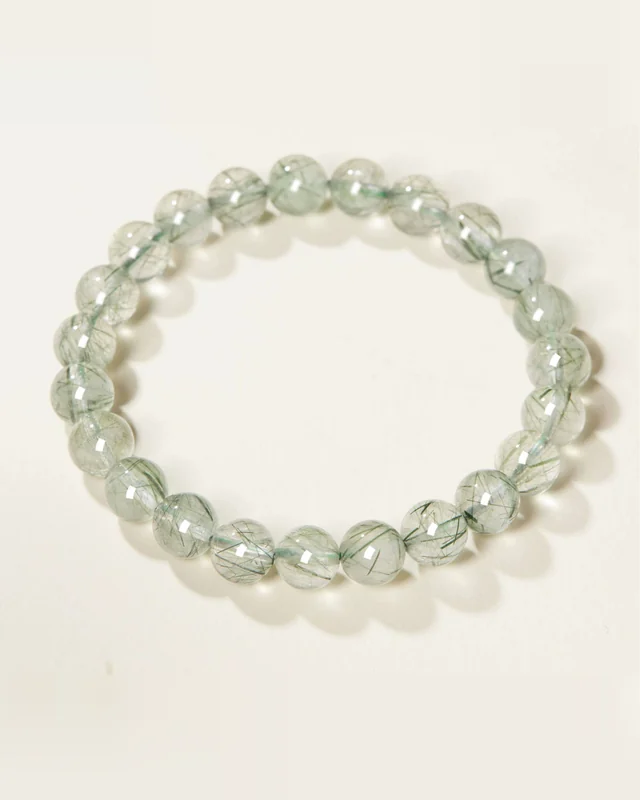
Green rutilated quartz
 Personal designs
Career · Wisdom
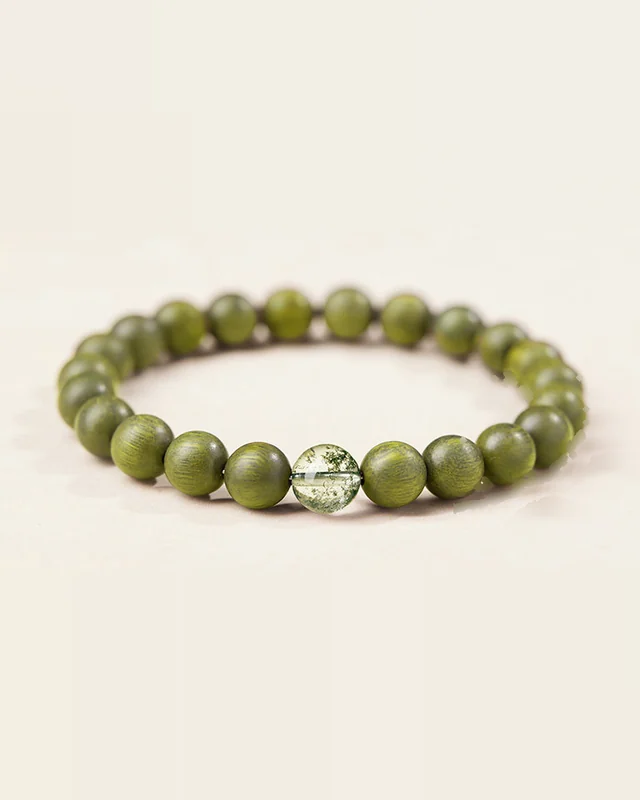
Green sandalwood · Green phantom quartz
We use Google Analytics and Microsoft Clarity by default to understand visits and improve browsing. Form inputs are masked, and you can opt out anytime. Privacy policy