Career · Protection
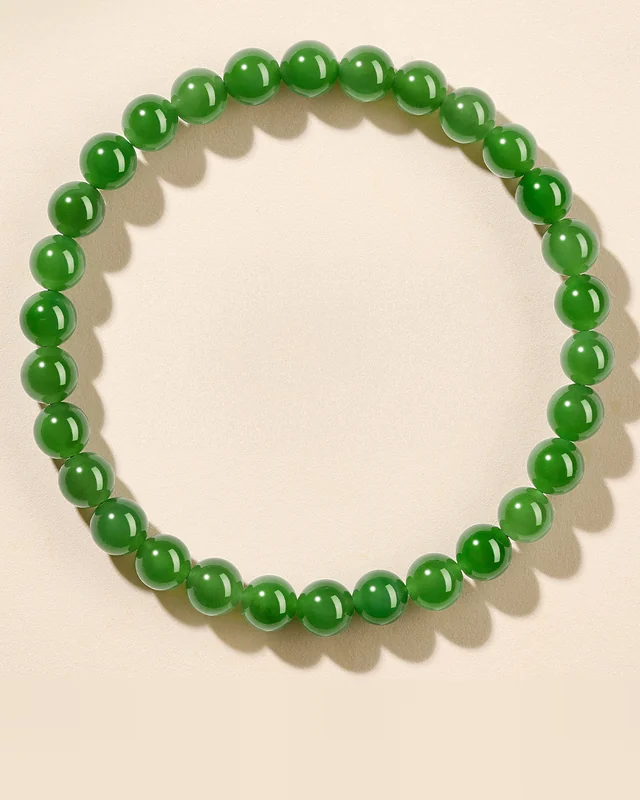
6 mm Spinach-Green Nephrite Bracelet · Growing Blessings
Green nephrite (Hetian biyu)
$278.006 mm · Wood
 View larger
Hetian jadeLight qingshui · 8 mm
Auspicious bracelets / Wood
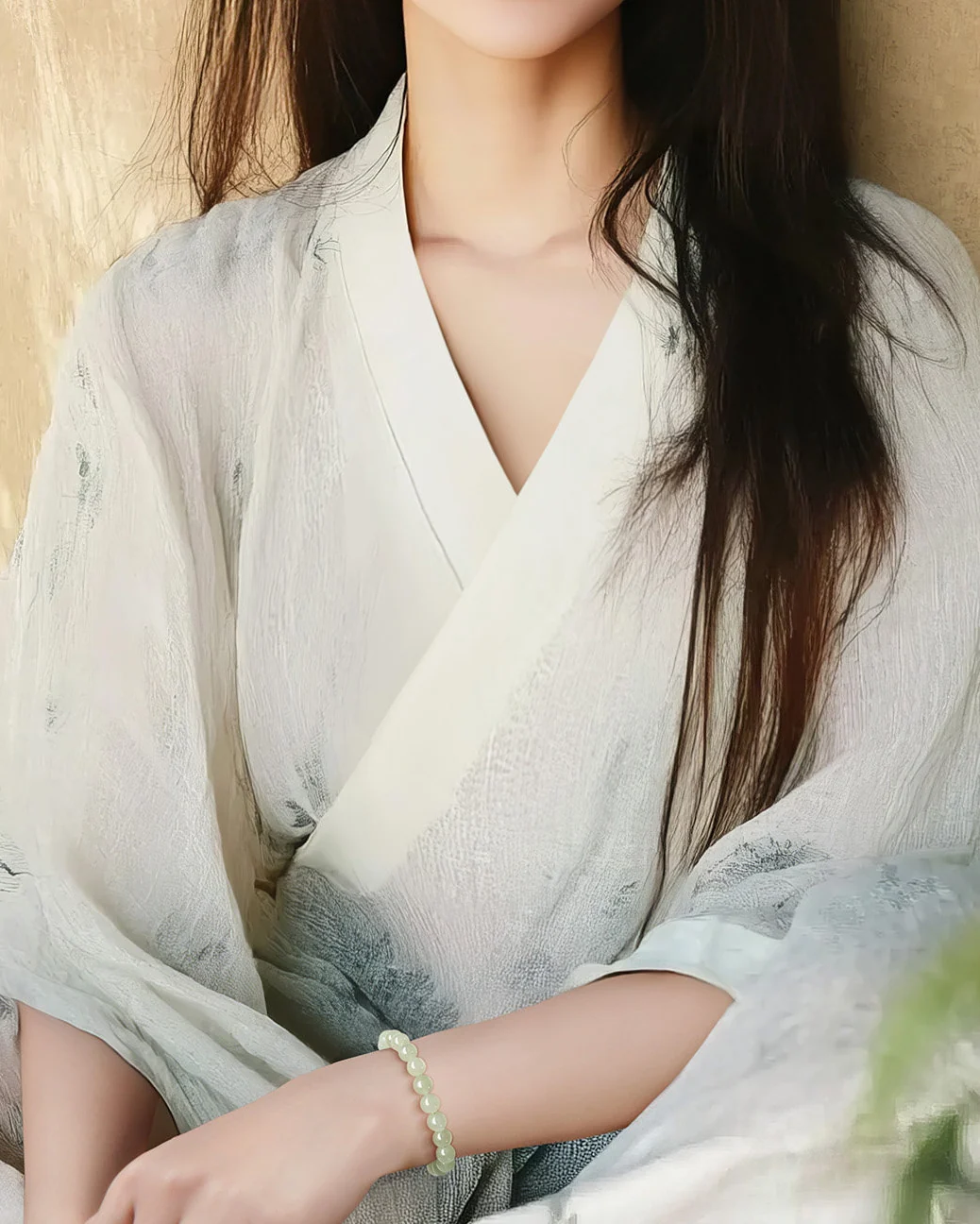
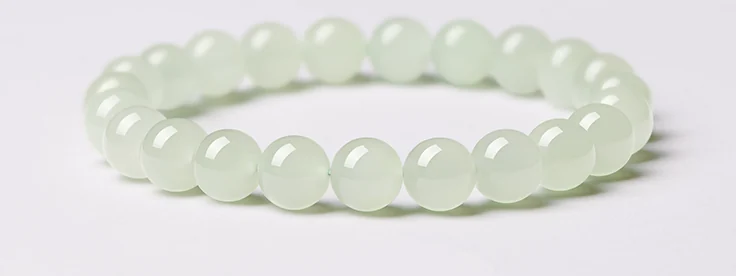
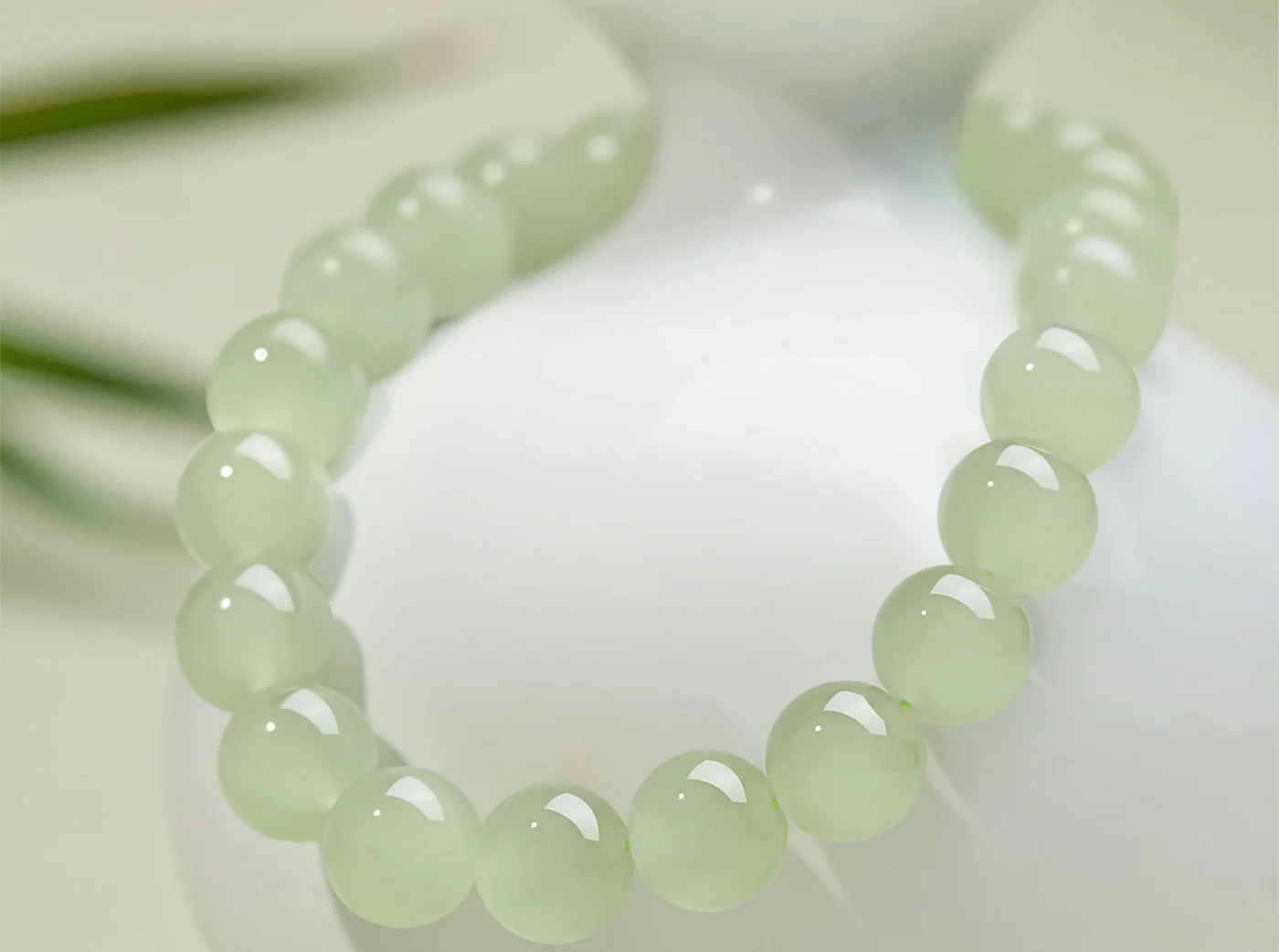
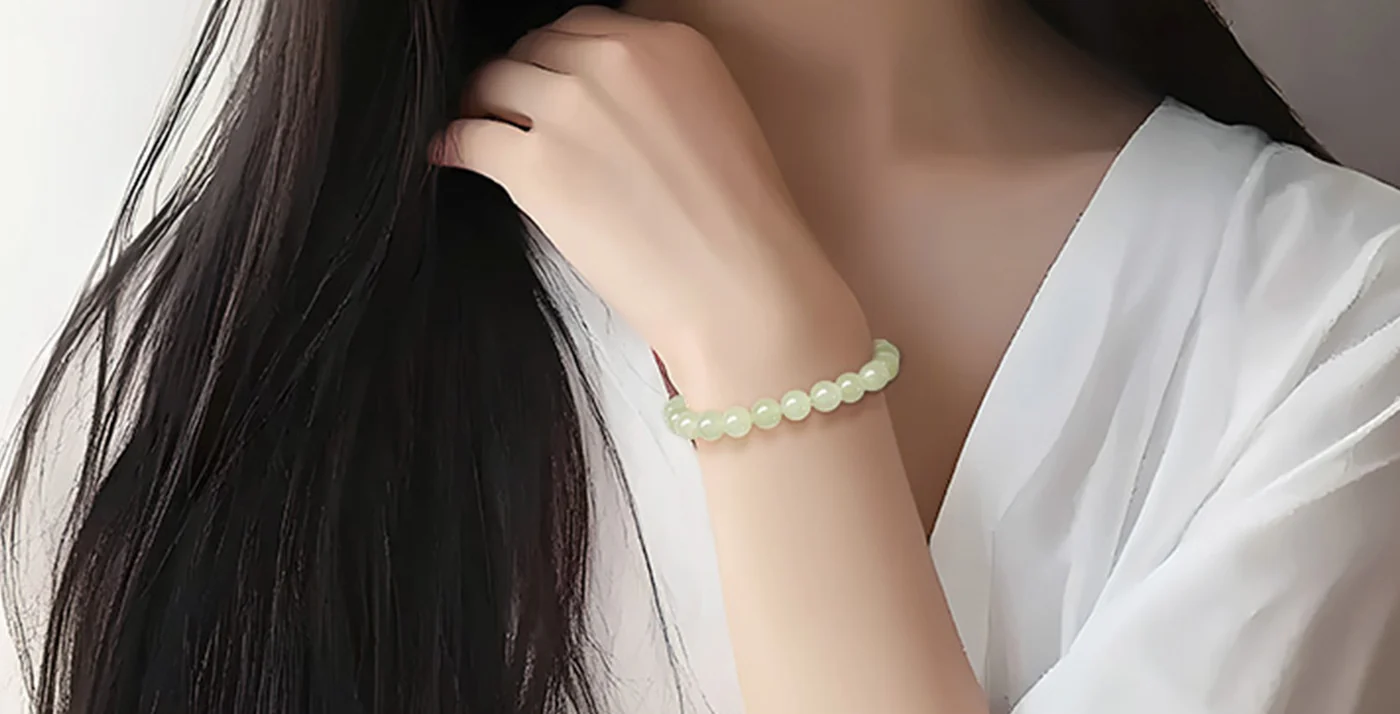
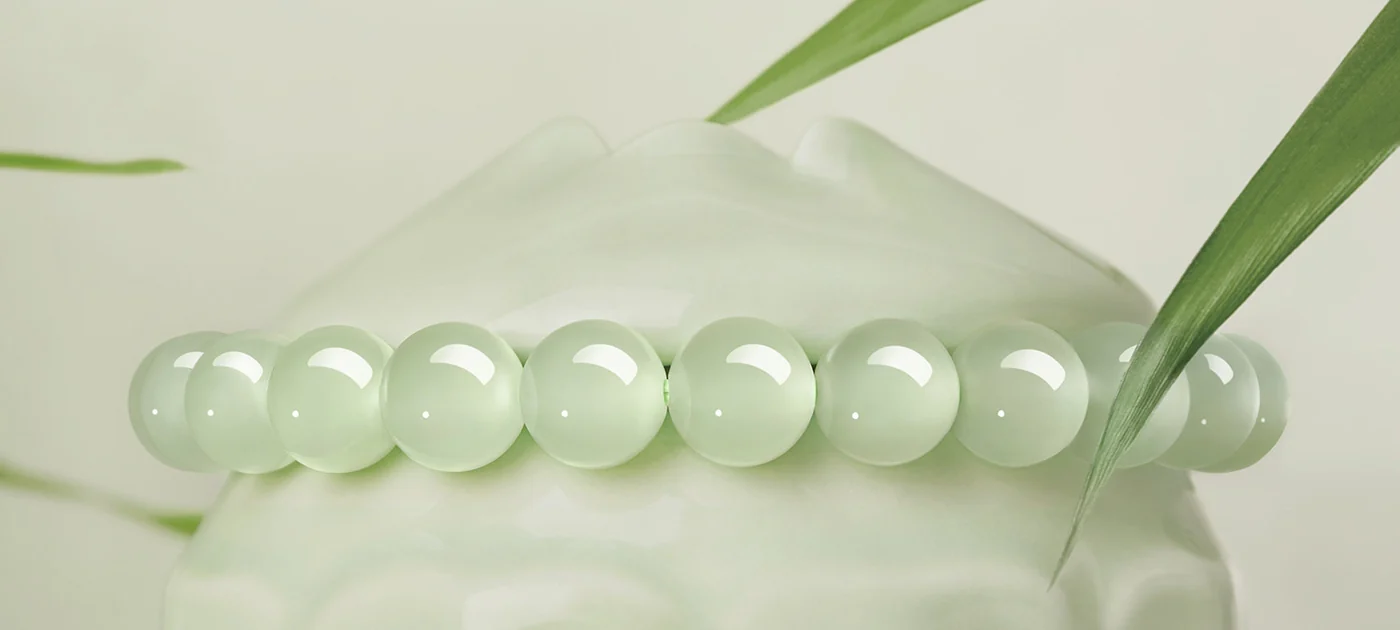
Pale, icy green Hetian jade rounds, approximately 8 mm, in a single strand with a soft, oily lustre.
$128.00USD
Prepared in 5 days after payment
Shipping: Asia $10; Europe, US, Canada, Australia & NZ $20
Ready-designed returns may be requested within 14 days. See returns policy
Jade Blessings
Jade Blessings is a single strand of Hetian jade, the nephrite that has been prized in China for thousands of years. Each round bead is approximately 8 mm across and polished to the soft, slightly oily lustre that jade lovers call a “waxy” glow. The colour is light qingshui, a pale, icy green with a hint of celadon blue that looks cool in daylight and warmer by lamplight.
Jade has long stood for peace, integrity and protection in Chinese culture, and green belongs to Wood, the element of growth and renewal. This bracelet is chosen for family birthdays, a long-awaited visit home or simply as an everyday companion that becomes more personal the longer it is worn. Compared with the other jade designs, it is the most understated: a quiet strand that suits almost any outfit.
Jade Blessings
What Hetian jade is, how to read its colour, how to recognise untreated jade, and how to choose the right fit.
01
The word “jade” covers two different minerals. Jadeite, the bright green material most associated with Myanmar, is one. Nephrite is the other, and it is the jade of ancient China: the stone of Neolithic ritual discs, Han dynasty burial suits and countless scholar’s ornaments. Hetian jade is the Chinese name for nephrite, taken from Hotan in Xinjiang, where the finest river pebbles were collected for imperial workshops for more than two thousand years.
Today the name describes the material rather than a single place. Under China’s national standard for the identification of Hetian jade, nephrite of the right composition and structure can be called Hetian jade whether it was mined in Xinjiang, Qinghai, Russia or elsewhere. What matters is the stone itself: a dense mat of tiny, interlocking tremolite fibres that gives nephrite its soft lustre and its remarkable toughness.
Nephrite is only moderately hard, at about 6 to 6.5 on the Mohs scale, but it is one of the toughest natural materials used in jewellery. The felted structure resists breaking far better than harder stones such as quartz. That is why ancient craftsmen could carve it into thin, delicate forms, and why a nephrite bracelet is a dependable everyday piece.
02
Long before the Silk Road carried silk west, a “Jade Road” carried nephrite east. Archaeologists have found Hotan jade in the tomb of Fu Hao, a Shang dynasty queen and general who died more than three thousand years ago, far from Xinjiang in the Yellow River valley. For centuries, river pebbles gathered by hand from the White Jade and Black Jade rivers near Hotan were carried across deserts to the capitals of successive dynasties.
In the imperial workshops, jade was reserved for objects of the highest status: ritual discs and tablets, seals of office, belt plaques, and the cups and brush rests of the scholar’s desk. The Qianlong emperor in the eighteenth century was a passionate collector who inscribed poems on his favourite pieces. Over time, jade moved from palaces into ordinary homes, and simple bead bracelets and bangles became among the most familiar ways to wear it.
A strand like Jade Blessings belongs to that later, more personal tradition. It is not a museum piece, but it carries the same material and much of the same meaning: something durable, quietly beautiful and handed on with care.
03
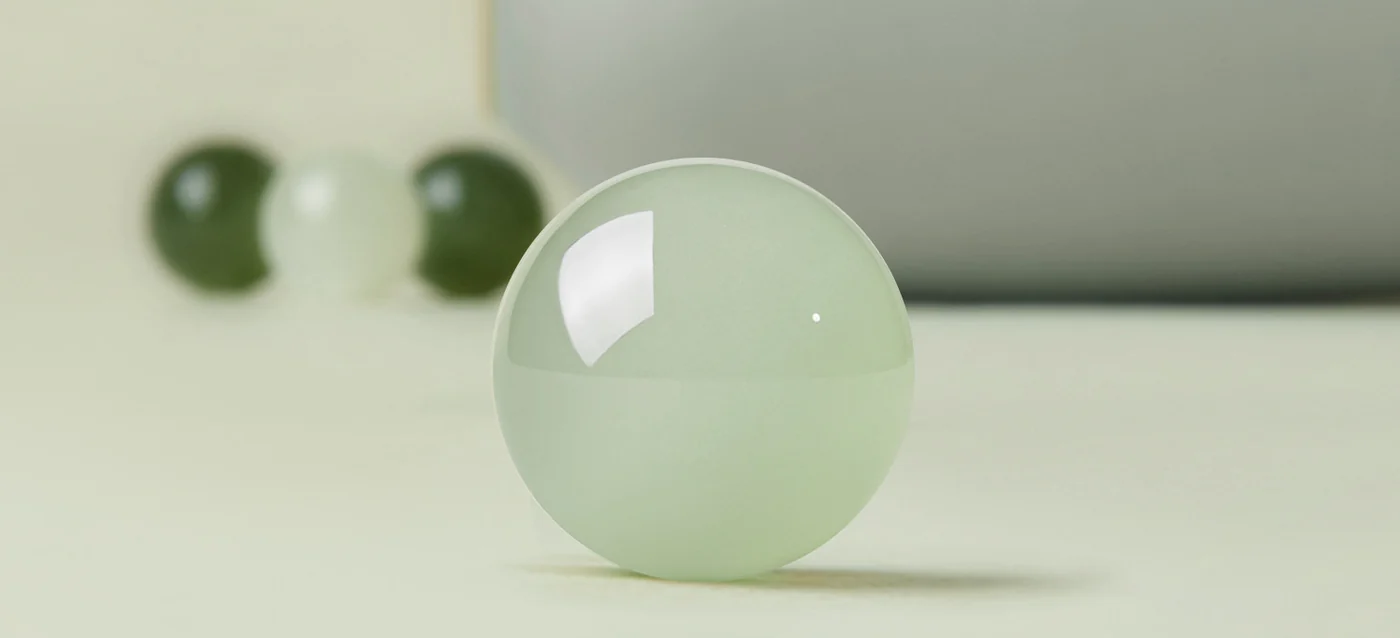
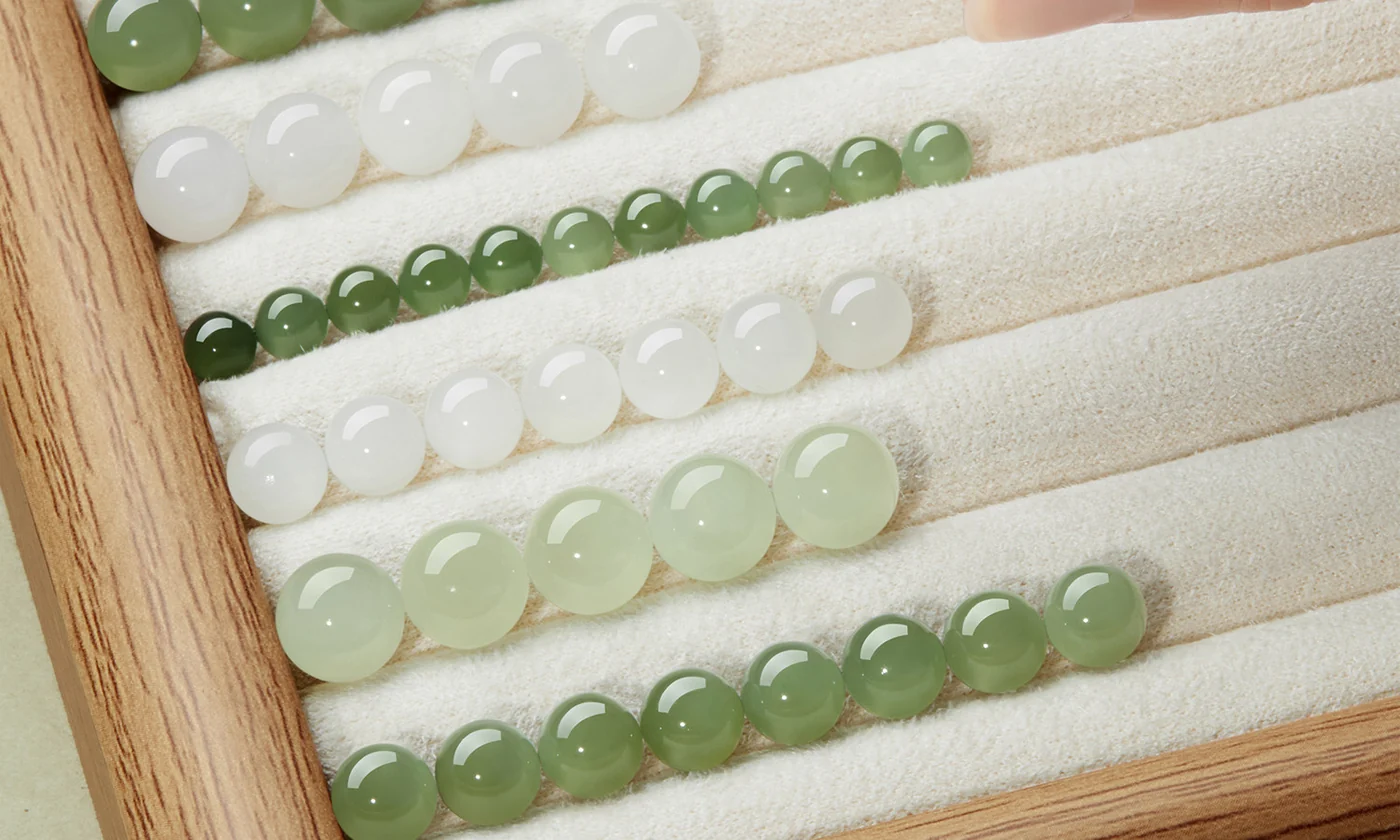
Chinese jade traders describe nephrite with a precise vocabulary. Qingshui, literally “clear water”, is a family of pale, translucent greens with a cool, faintly blue cast, as though a little jade had been dissolved in water. Within that family, light qingshui is the palest and freshest; middle and deep qingshui become progressively greener, and a related shade, lake green, leans further towards blue-green.
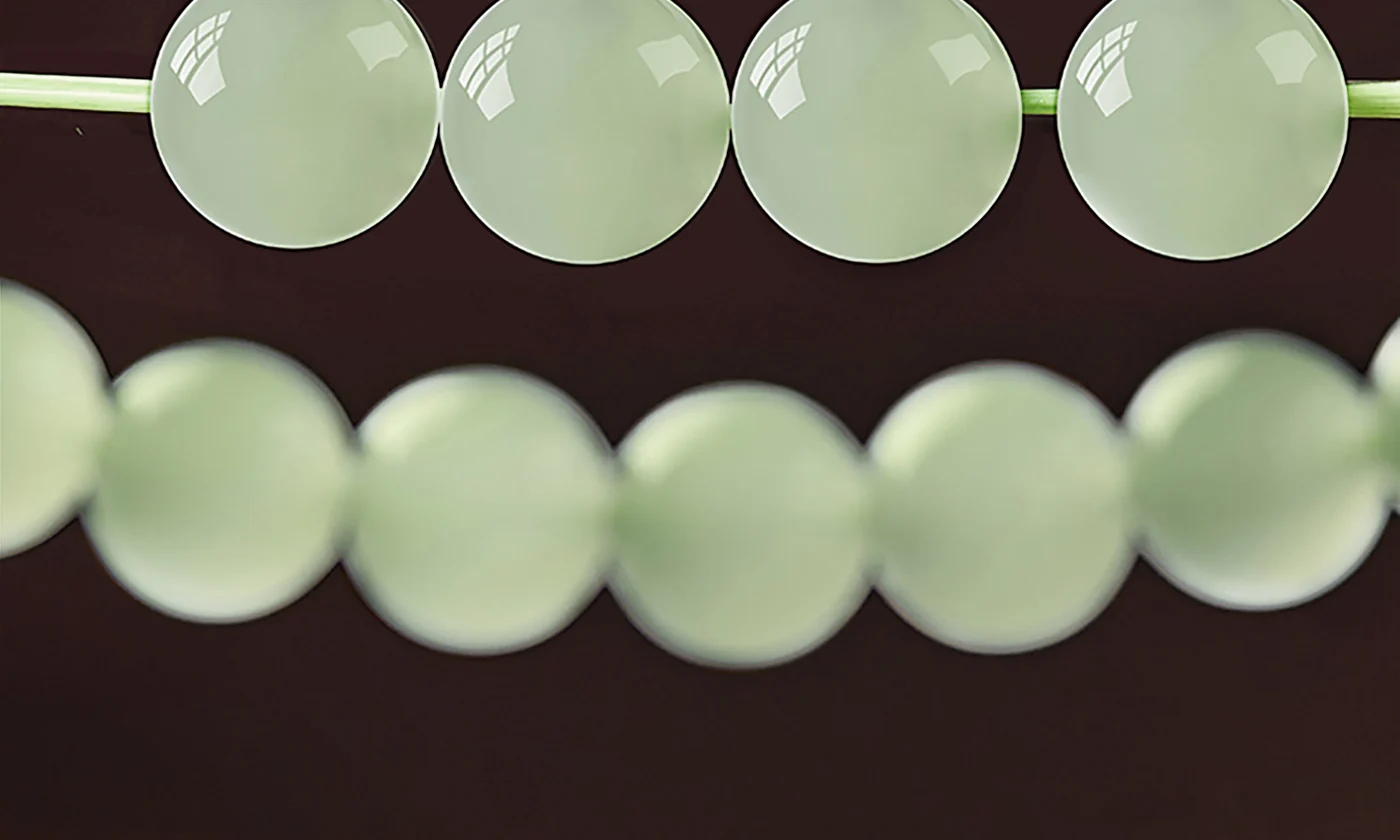
The tray in the photograph shows how wide the range can be, from creamy white through soft celadon to deep green. For Jade Blessings, the beads are matched within the light qingshui range, so the strand reads as one even, gentle colour rather than a mixture. You may still see slight variation from bead to bead, and occasionally a fine cloud or cotton-like wisp inside a bead; these are natural features of nephrite, not flaws in the polish.
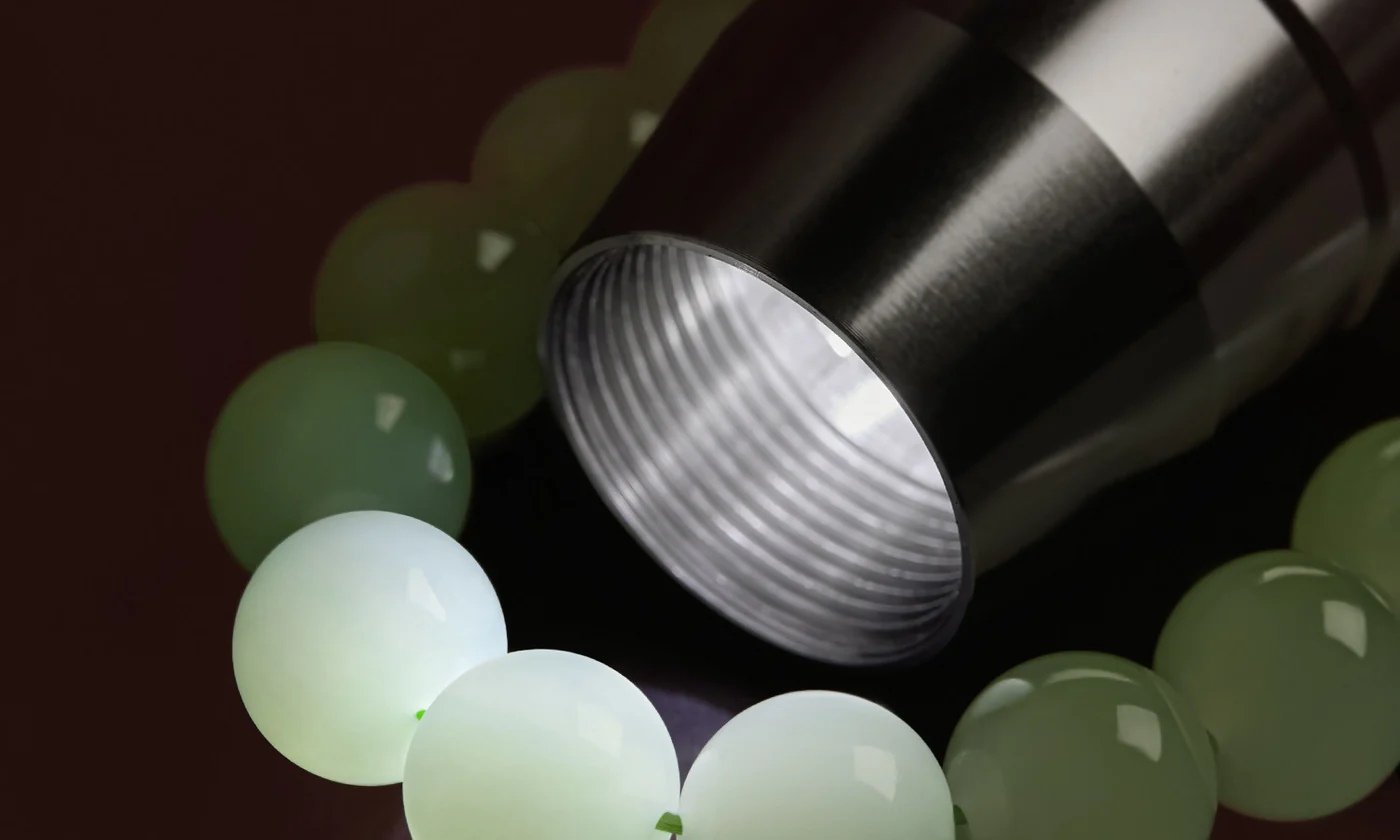
Lighting changes the impression considerably. In daylight, light qingshui looks cool and fresh, almost minty. Under warm indoor lights it softens towards a buttery pale green. Both are the same bracelet; it is part of jade’s appeal that it looks slightly different through the day.
04
Most treatments in the jade trade involve jadeite, which can be bleached, impregnated with resin or dyed. Nephrite is treated less often, but dyed or heavily waxed material does exist, and other green stones such as glass, dyed quartzite and serpentine are sometimes sold as jade. For that reason, each strand of Jade Blessings is supplied with an identification certificate from a third-party gem laboratory confirming that the beads are natural nephrite.
A gem laboratory identifies nephrite mainly by its refractive index, around 1.61 to 1.62, its specific gravity of about 2.95 and its fibrous structure under magnification. None of these can be judged reliably at home, which is why a certificate matters more than folk tests. Holding a bead to the cheek or listening to two beads tap together tells you little; dyed stone, on the other hand, can sometimes be spotted by colour concentrated in cracks and around the drill holes.
Untreated nephrite needs nothing to look good. The waxy lustre comes from the stone’s structure and the polish, and over months of wear it deepens slightly as the surface picks up a natural patina from the skin, a process Chinese collectors describe as the jade being “nurtured” by its wearer.
05
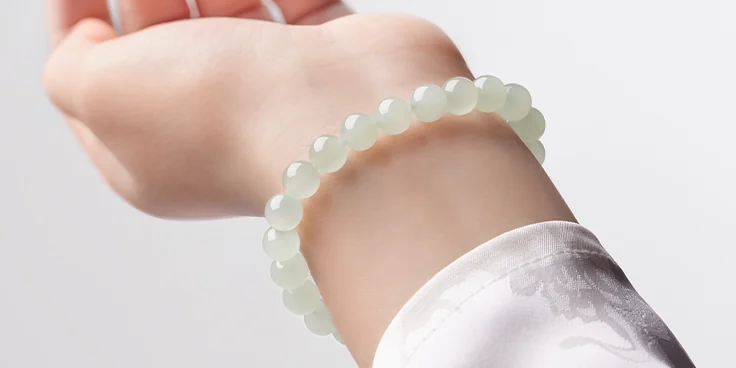
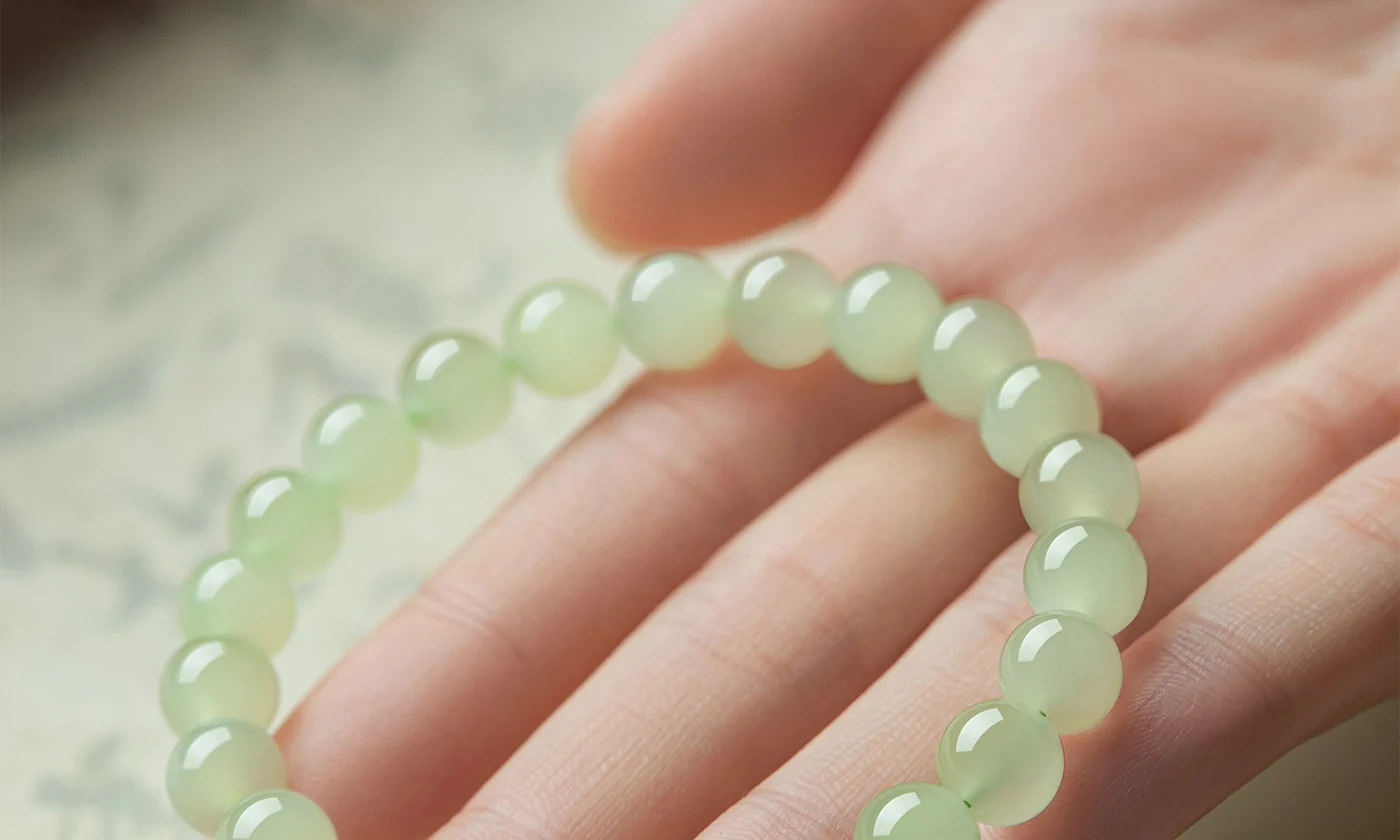
Pale nephrite is subtle by nature, and bead size changes how that subtlety reads. At 6 mm a light qingshui strand is delicate, almost like a line of dew. At 8 mm each bead is large enough to show its translucency and glow, while the bracelet still feels light and refined. At 10 and 12 mm the jade becomes a substantial, eye-catching band with noticeable weight.
Jade Blessings uses 8 mm because it balances these qualities for daily wear. It sits comfortably beside a watch, slips under a cuff, and suits most wrists. If you would like a deeper colour or a bolder presence, compare the other Hetian jade designs in the table further down this page.
| Bead diameter | How pale jade looks | Often chosen for |
|---|---|---|
| 6 mm | Fine and dewy; a whisper of colour | Stacking, slender wrists, minimal style |
| 8 mm · this design | Clear glow with a refined outline | Daily wear and gifts; most wrist sizes |
| 10 mm | Fuller, with stronger colour | Wearing one bracelet alone |
| 12 mm | Substantial and weighty | Larger wrists and collectors |
06
Measure the wrist itself with a soft tape or a paper strip, just above the wrist bone where you usually wear a bracelet. Keep it snug but not tight and choose that measurement on this page. The strand is made with a small allowance so it moves slightly and stays comfortable.
Nephrite is a little denser than quartz, so a jade strand feels pleasantly weighty for its size. The table shows typical bead counts for 8 mm beads; your bracelet may differ by one bead, because natural beads vary fractionally and every strand is checked against the measurement as it is strung.
If you are between sizes, choose the larger for a relaxed fit or the smaller for a closer one. Roll the elastic strand over the knuckles when putting it on, rather than stretching it wide.
| Wrist size | Approximate inches | Typical bead count (8 mm) |
|---|---|---|
| 14 cm | 5.5 in | 22 beads |
| 15 cm | 5.9 in | 23 beads |
| 16 cm | 6.3 in | 24 beads |
| 17 cm | 6.7 in | 25 beads |
| 18 cm | 7.1 in | 27 beads |
| 19 cm | 7.5 in | 28 beads |
| 20 cm | 7.9 in | 29 beads |
| 21 cm | 8.3 in | 30 beads |
07
No material is as closely tied to Chinese values as jade. Confucius compared the qualities of a gentleman to jade: warm and smooth like benevolence, firm and orderly like wisdom, unbending like integrity. A saying still heard today, “the gentleman does not set aside his jade without reason”, reflects how jade pendants and bracelets were worn constantly as reminders of character.
Alongside virtue, jade carries a long association with peace and protection. Families give jade to children and elders as a wish for safety and health, and there is a popular belief that jade and its wearer look after each other, the stone gaining lustre as the person gains well-being. In the Five Elements, this green jade belongs to Wood, linked with spring, growth and vitality.
These are cultural meanings rather than promises, and they are part of what makes jade such a natural gift within a family. If you would like a bracelet arranged around your own birth chart and favourable elements, a personal design begins with a fuller BaZi discussion.
08
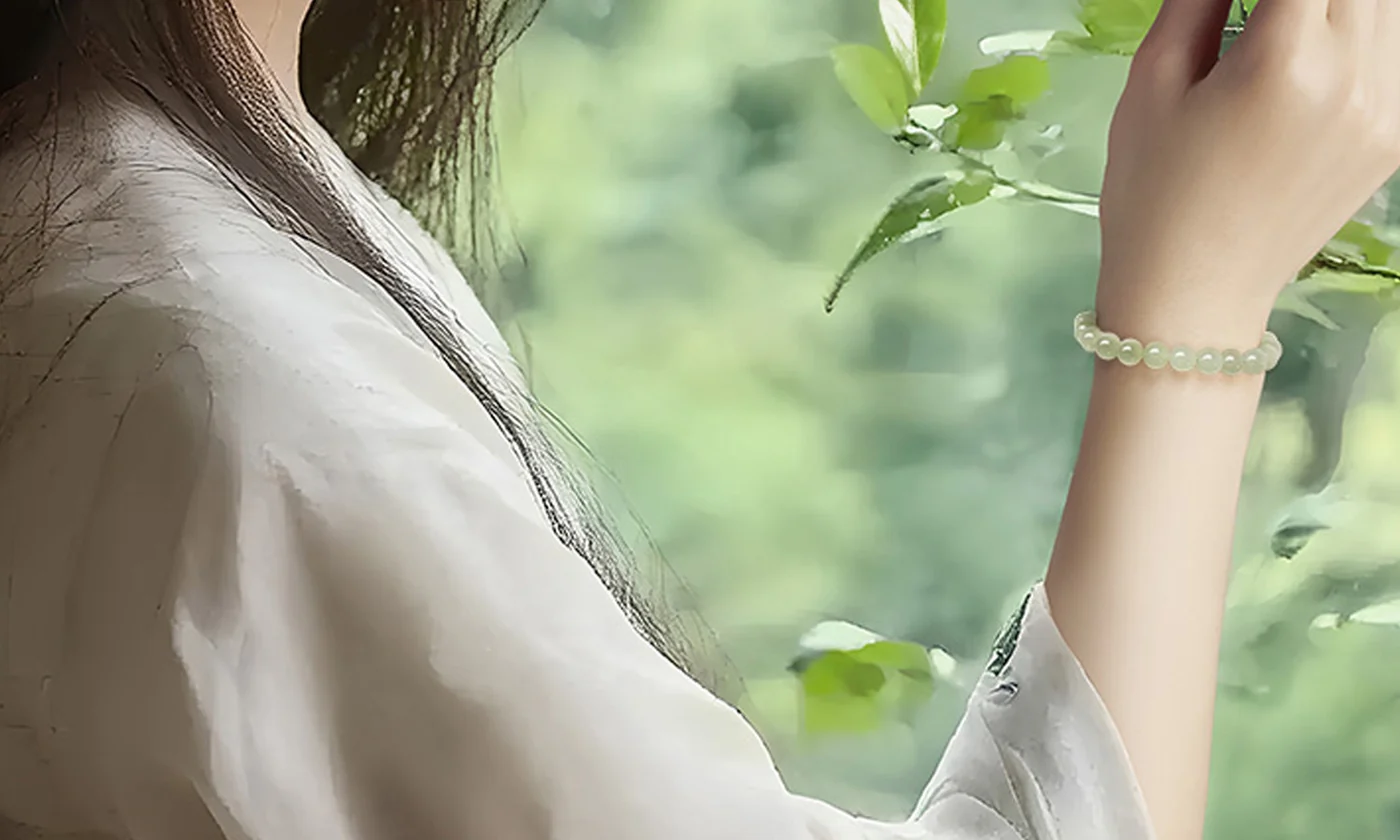
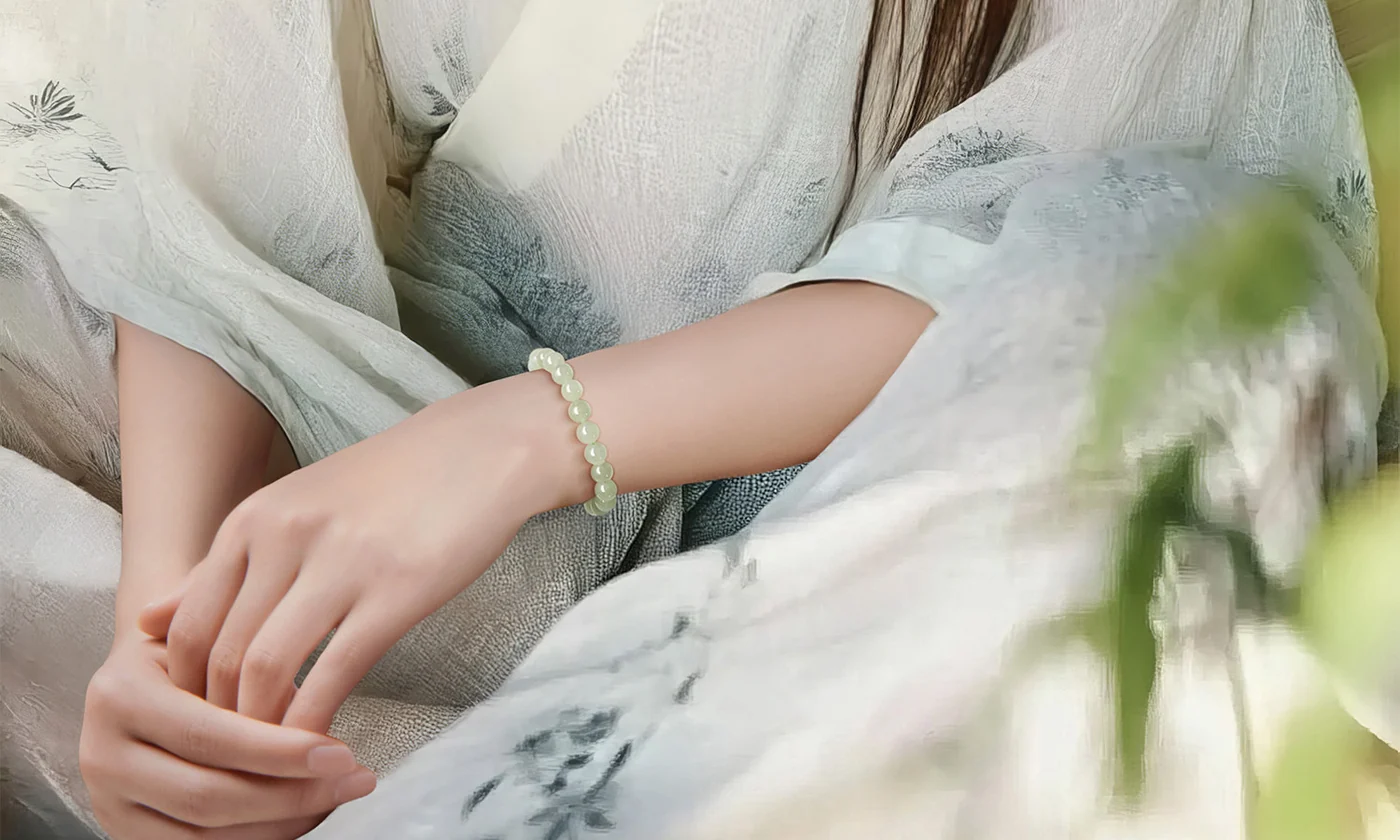
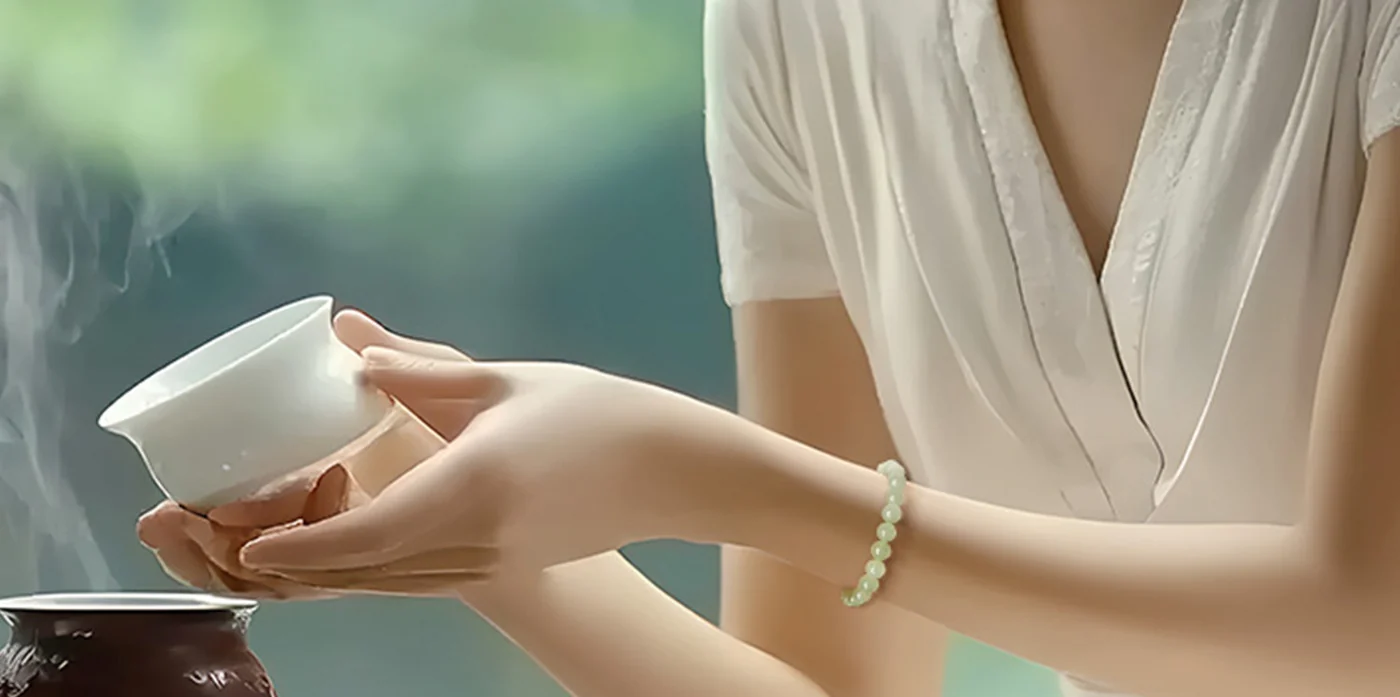
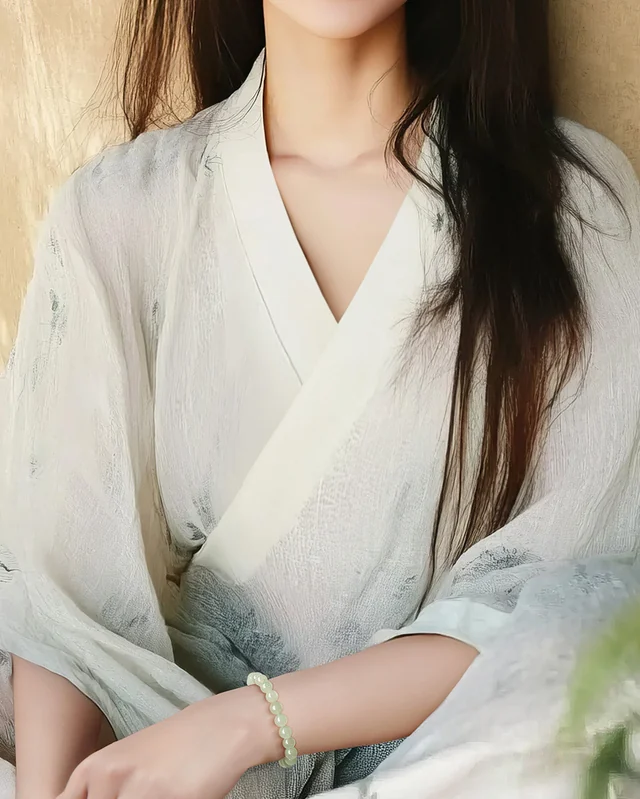
Pale jade is one of the easiest stones to wear. Its soft colour sits naturally with white, cream, grey, navy and natural linen, and it pairs well with both silver and gold. Many people wear Jade Blessings alone; others combine it with a fine gold chain or a slim bangle for a gently layered look.
Jade rewards being worn often. The natural oils of the skin slowly add depth to the polish, which is why collectors speak of “raising” or nurturing jade. There is nothing you need to do beyond wearing it and wiping it occasionally with a soft cloth; avoid rubbing in oils or creams, which only attract dust.
Because nephrite is tough, the bracelet is comfortable for daily life, but it is still a polished stone. Take it off for sport, gardening or heavy lifting, and avoid knocking it against stone counters or metal edges, which can bruise or chip the surface over time.
09
In many Chinese families, jade marks the important moments: a baby’s first month, a coming of age, a wedding, a long-awaited reunion. Jade Blessings fits naturally into that tradition. It is a thoughtful birthday gift for a mother or grandmother, a present to carry home after time away, or a quiet way of wishing someone peace and good health.
The pale colour is understated enough for almost anyone, and the certificate that accompanies each strand adds reassurance for the recipient. If you cannot measure their wrist, choose the most likely size; an unworn ready-designed bracelet can be returned within 14 days of delivery. A short note explaining jade’s meaning makes the gift more personal for someone new to the tradition.
10
Clean the bracelet by wiping it with a soft, dry or slightly damp cloth. Avoid ultrasonic cleaners, steam, bleach and household chemicals. Perfume, hand sanitiser and sun cream do not harm nephrite itself but leave a film that dulls the lustre and shortens the life of the elastic cord, so let them dry before putting the bracelet on.
Store jade on its own in a soft pouch, away from harder stones such as quartz and diamonds that could scratch it. Avoid sudden extremes of temperature, such as leaving it on a hot windowsill and then rinsing it in cold water. The stranded elastic will relax over time; if gaps appear between the beads or the cord looks pale and thin, have it restrung before it breaks, usually every one to two years with daily wear.
Yes. The beads are natural nephrite, called Hetian jade in China, and each strand is supplied with an identification certificate from a third-party laboratory.
No. In current Chinese standards, Hetian jade is the name for nephrite of the right composition and structure, regardless of where it was mined.
It is a jade-trade term for a pale, translucent green with a cool, slightly blue cast. It is the palest of the qingshui shades.
No. The beads are untreated nephrite; their colour and lustre are natural.
The colour stays the same, but the surface gradually gains a deeper glow from regular wear and skin contact.
They are different minerals. Nephrite is fibrous, very tough and has a soft, waxy lustre; jadeite is granular, often more vivid and glassy, and usually more costly.
Typically 22 beads for a 14 cm wrist, rising to about 30 beads for 21 cm.
It is best not to. Water will not harm the jade, but soap and repeated soaking weaken the elastic cord.
Wrap it in a soft pouch and keep it apart from other jewellery and from hard objects in your bag. Jade is tough, but a direct knock against metal or stone can still chip a bead.
Yes. Jade is worn by men and women alike in China; for a more substantial look, men often choose 10 mm beads.
The colour range and finish match the photographs, but every strand of natural jade varies slightly in tone and in its natural inner clouds.
Compare the material, bead shape and size to choose the arrangement that fits your style.
| Design | Materials | Bead shape & size | Ordering |
|---|---|---|---|
 8 mm Hetian Jade Bracelet · Jade BlessingsThis design | Hetian jade (nephrite) | 8 mm | $128.00 USD |
| 6 mm Spinach-Green Nephrite Bracelet · Growing Blessings | Green nephrite (Hetian biyu) | 6 mm | $278.00 USD |
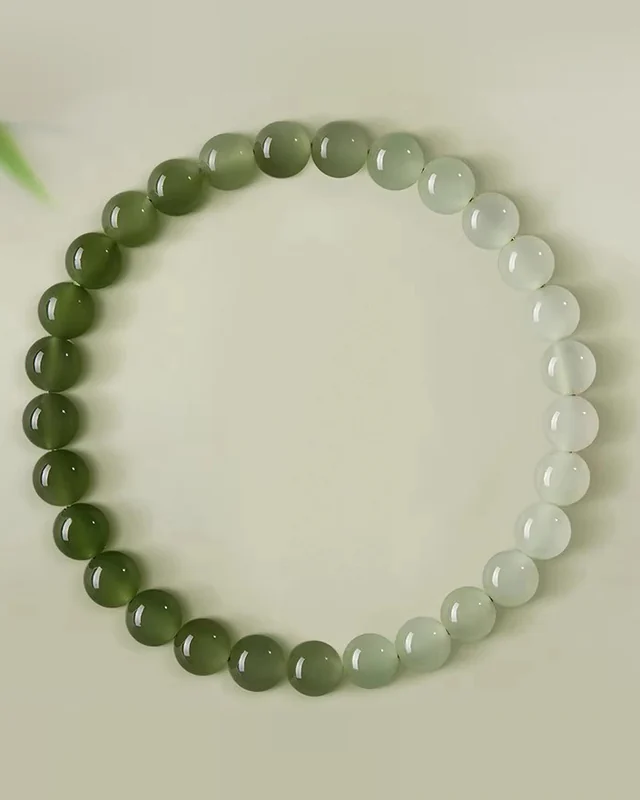 6 mm Gradient Hetian Jade Bracelet · Springtime Affinity | Hetian jade (nephrite) | About 6 mm | $78.00 USD |
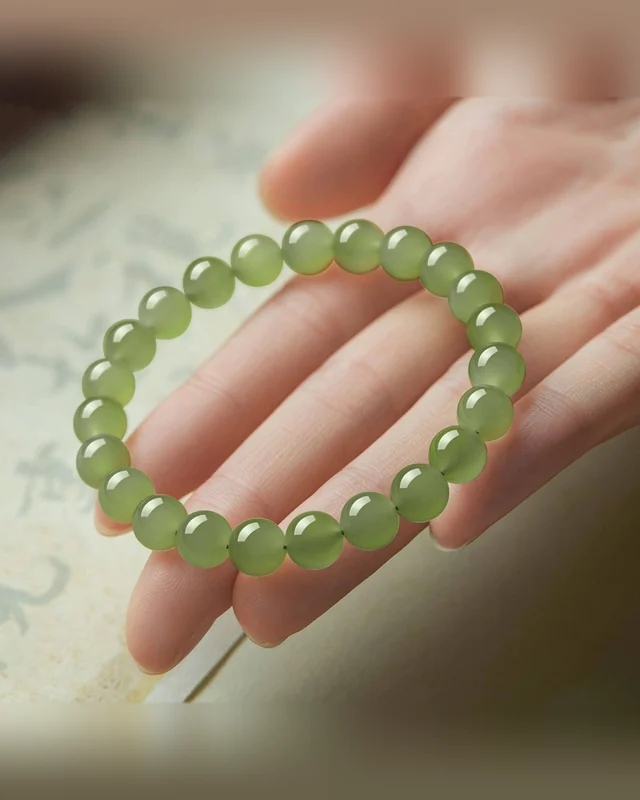 10 mm Grape-Green Hetian Jade Bracelet · Jade Resolve | Hetian jade (nephrite) | 10 mm | $218.00 USD |
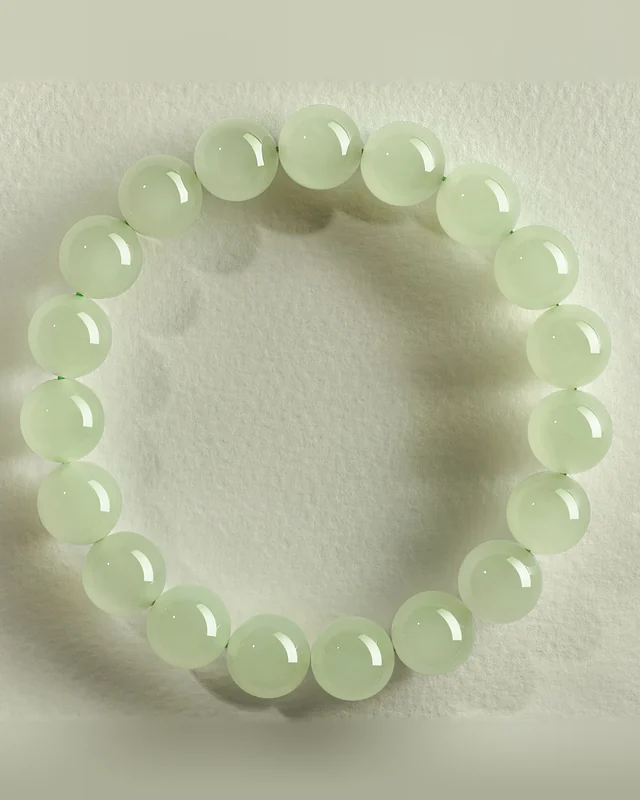 10 mm High-Ice Pale Qingshui Hetian Jade Bracelet · Clear and Harmonious | Hetian jade (nephrite) | 10 mm | $228.00 USD |
Career · Protection
Green nephrite (Hetian biyu)
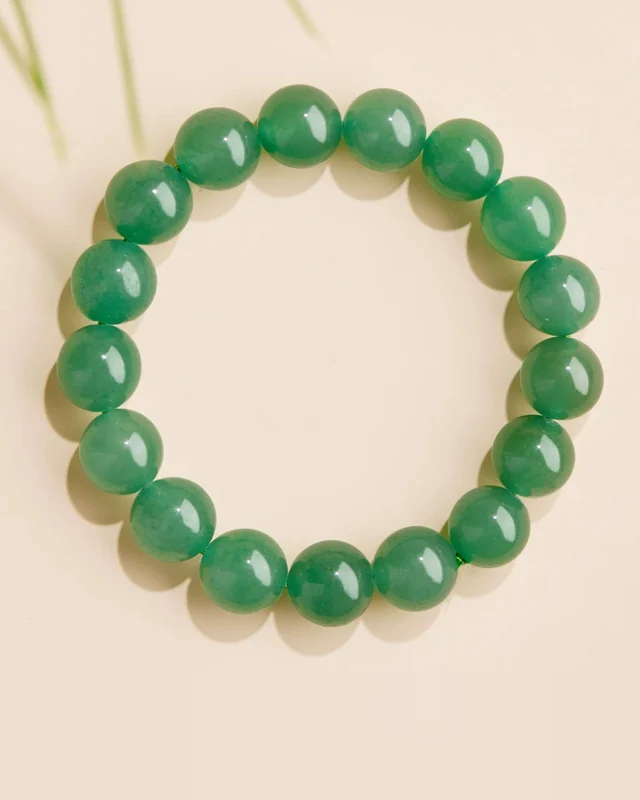
Career · Balance
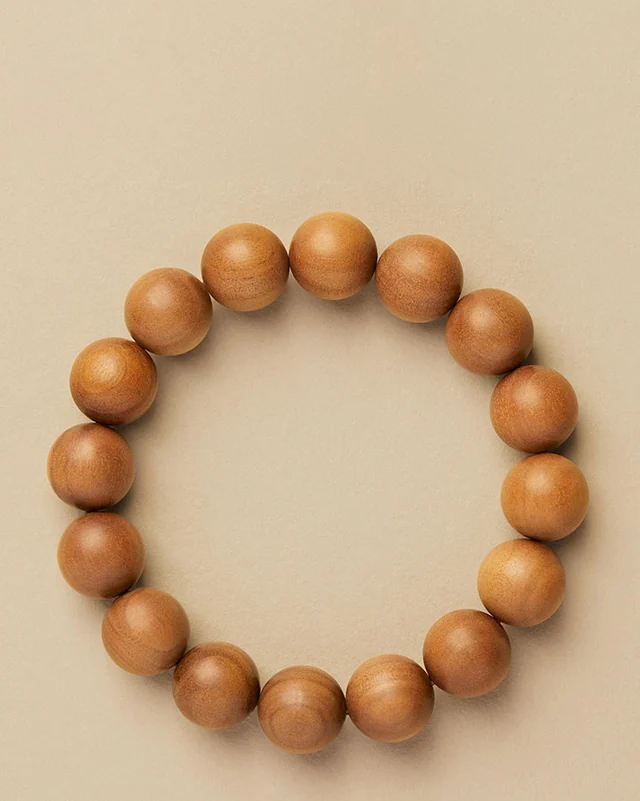
Indian Sandalwood
 Personal designs
Career · Wisdom
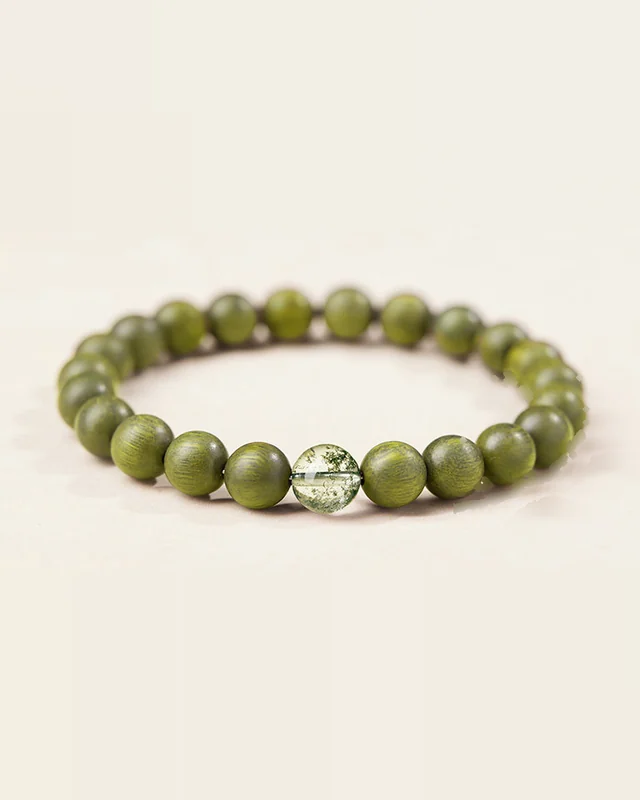
Green sandalwood · Green phantom quartz
We use Google Analytics and Microsoft Clarity by default to understand visits and improve browsing. Form inputs are masked, and you can opt out anytime. Privacy policy