 View larger
Amber8 mm
Auspicious bracelets / Earth
8 mm Golden Beeswax Amber Bracelet · A Grounded Home
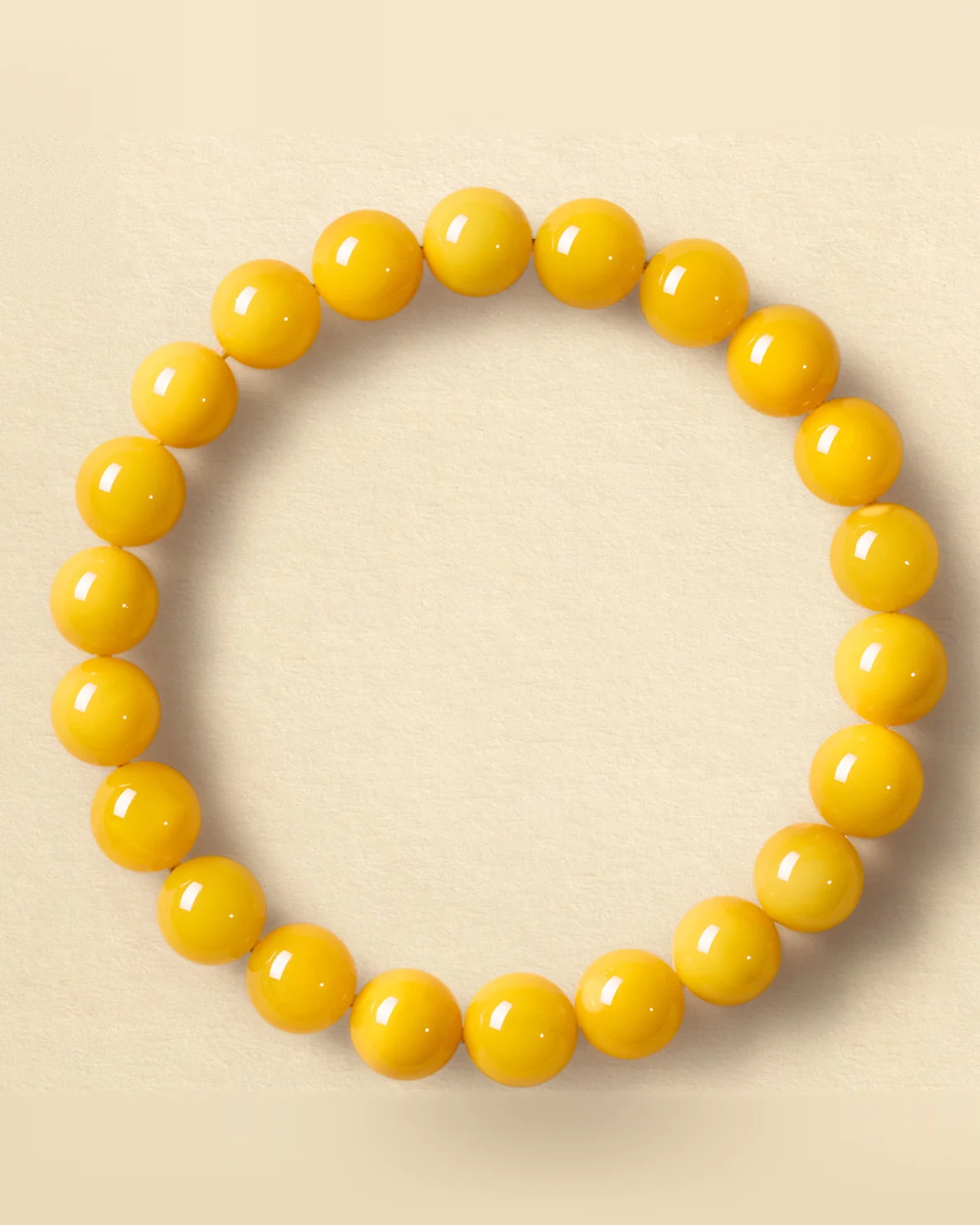
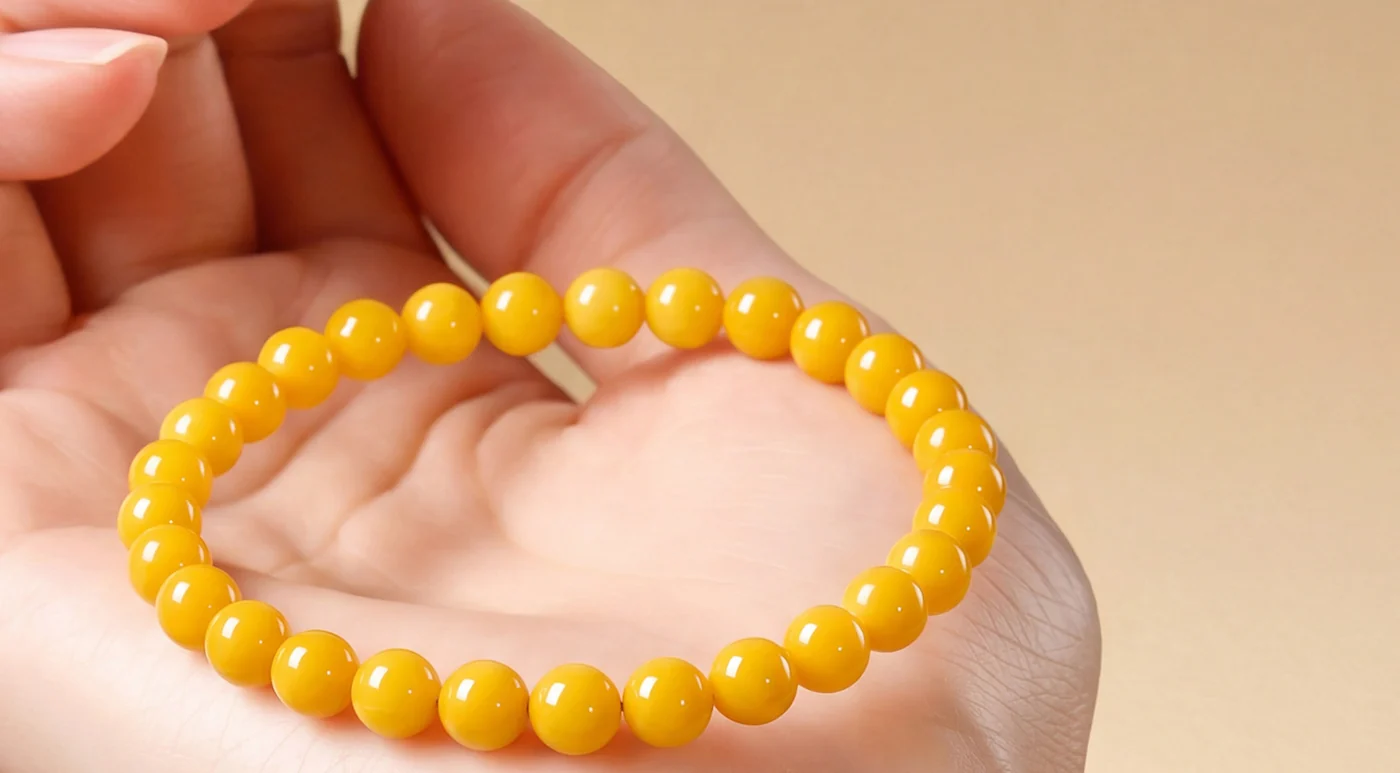
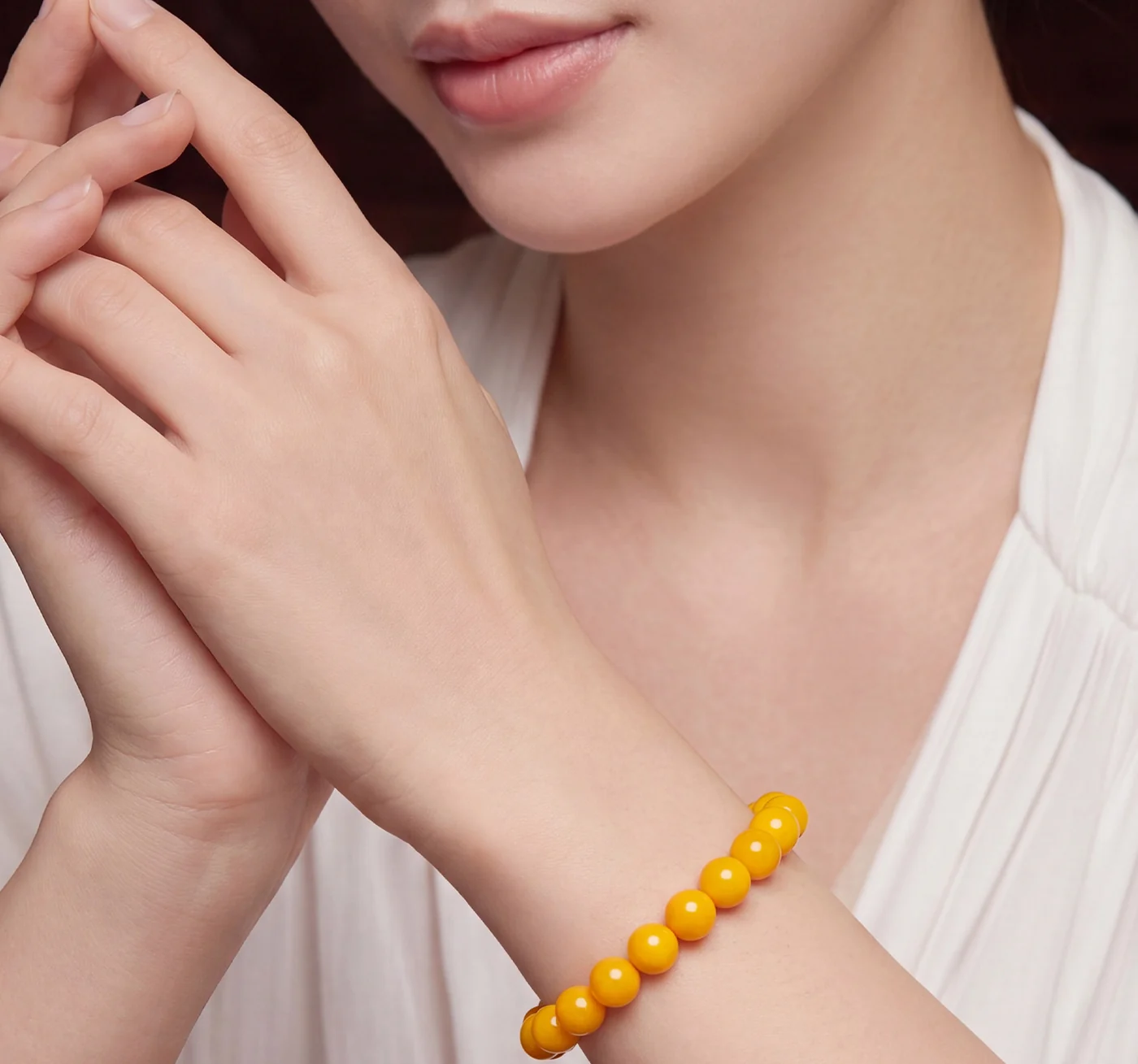
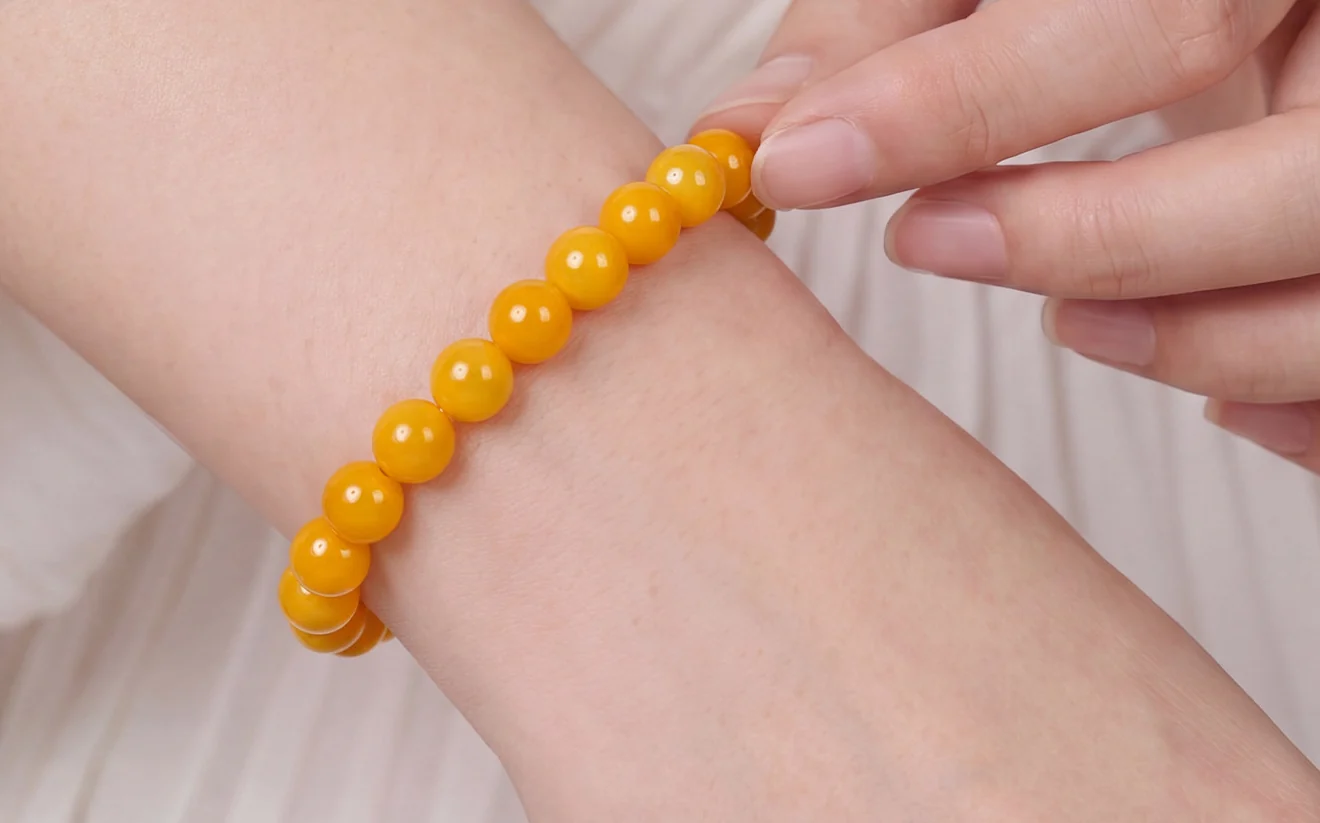
Opaque golden Baltic amber, the colour the Chinese trade calls “chicken-fat yellow”, in light, warm 8 mm rounds.
$198.00USD
- Gemstones & materials
- Amber (opaque “beeswax” amber)
- Colour
- Rich, buttery golden yellow
- Bead shape & size
- Round, approximately 8 mm
- Origin
- Baltic region (as described by our supplier)
- Cord
- Stranded elastic, single strand
- Style
- WX023
Prepared in 5 days after payment
Shipping: Asia $10; Europe, US, Canada, Australia & NZ $20
Ready-designed returns may be requested within 14 days. See returns policy
A Grounded Home
Warm gold from an ancient forest
A Grounded Home is a strand of golden amber, each round bead approximately 8 mm across. This is miela, beeswax amber: opaque amber with a soft, waxy lustre, in the rich, buttery yellow the Chinese trade calls ji you huang, “chicken-fat yellow”, after the golden fat of a good broth. It is a colour of warmth, nourishment and comfort.
Amber is fossilised tree resin, tens of millions of years old, and it is remarkably light and warm on the wrist. Yellow belongs to Earth in the Five Elements, and the Chinese name, hou tu an jia, means thick earth, a settled home: a wish for a stable household, family harmony and everyday peace.
- Opaque beeswax amber beads, approximately 8 mm.
- Rich chicken-fat yellow with a soft, waxy lustre.
- Very light and warm to wear.
- Wrist sizes from 14 to 21 cm, with the bead count adjusted to your size.
A Grounded Home
A Grounded Home in detail
What amber and beeswax are, what “chicken-fat yellow” means, how to care for a soft organic gem and how to choose the right fit.
01
Amber, resin turned to stone
Amber is not a mineral but fossilised tree resin. Tens of millions of years ago, resin flowed from ancient trees, was buried and slowly hardened as its volatile parts escaped. What remains is a light, warm organic gem, about 2 to 2.5 on the Mohs scale, with a density only slightly above water. A strand of 8 mm amber beads weighs far less than a strand of stone.
Because it began as resin, amber can contain tiny bubbles, plant fragments and, famously, insects. It is also warm to the touch and becomes slightly charged with static when rubbed, which is why the ancient Greeks called it elektron.
02
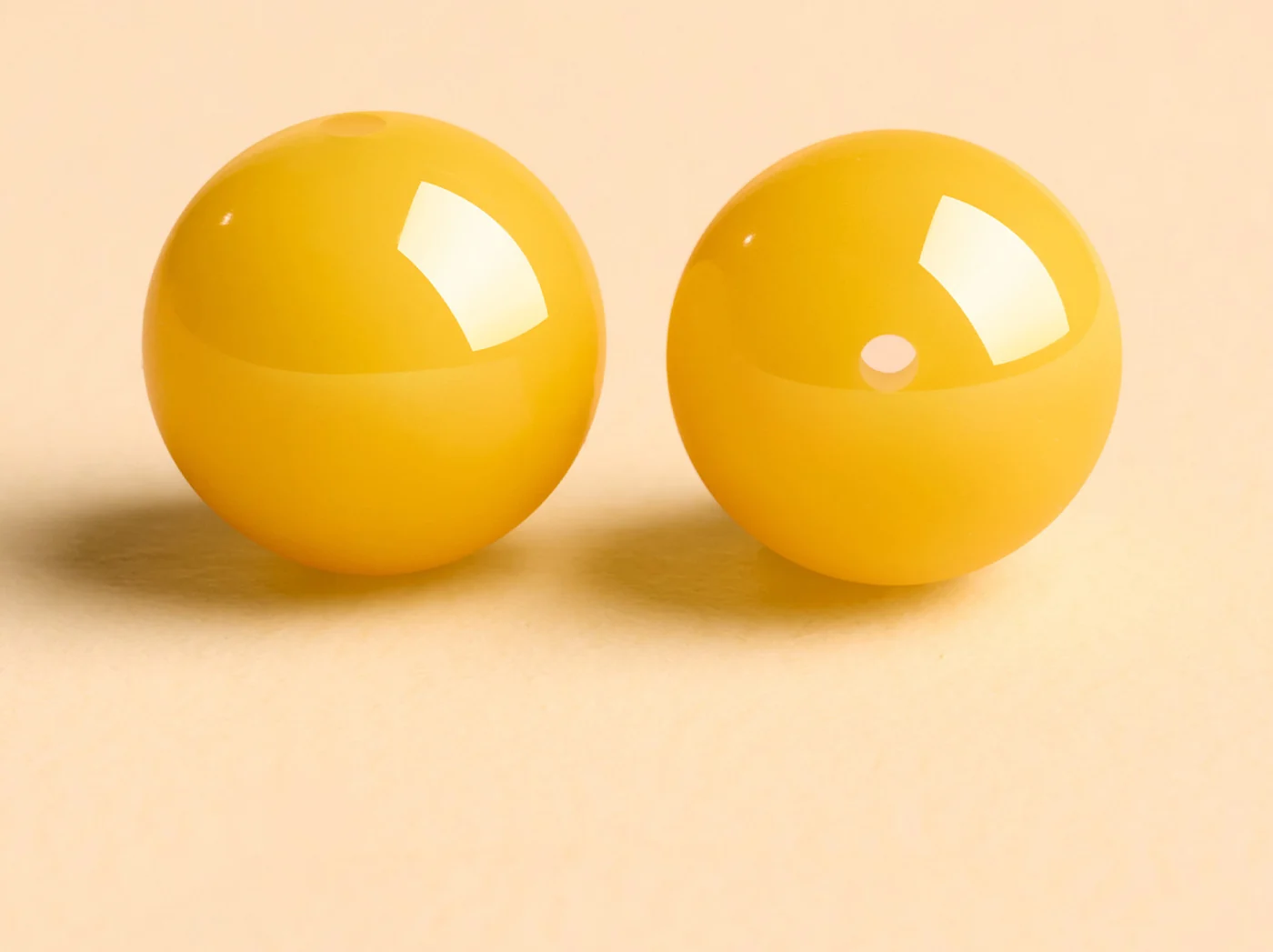
What “beeswax” amber is
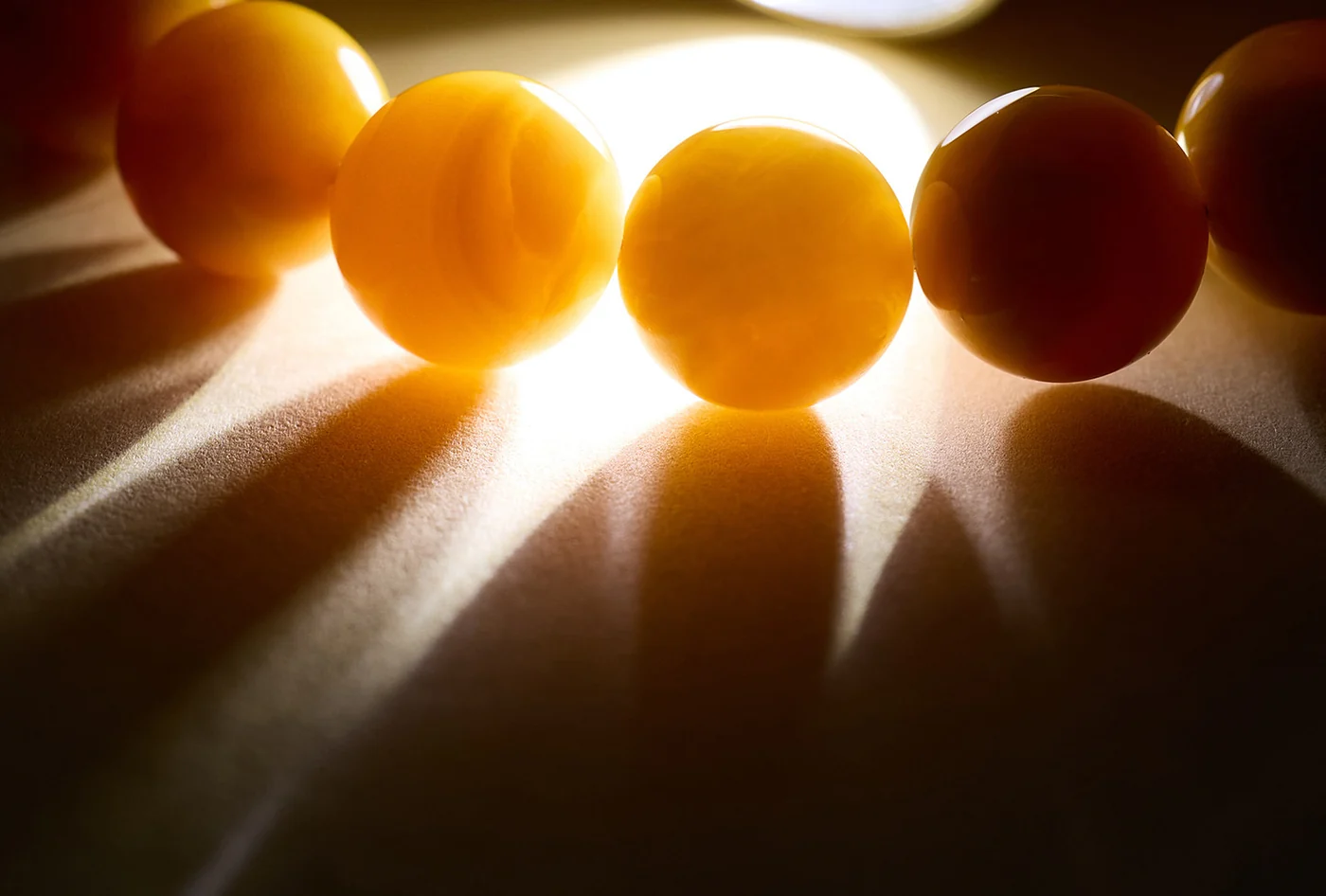
In Chinese, transparent amber is called hupo, and opaque amber is called miela, literally “honey wax” or beeswax, after its creamy, waxy look. The opacity comes from countless microscopic bubbles trapped in the resin, which scatter light. Beeswax amber has a soft, buttery lustre rather than a glassy shine, and is the form of amber most prized in China, Tibet and Mongolia.
A good beeswax bead looks dense and smooth, with an even colour and a gentle glow, like polished butter or honey that has set.
03
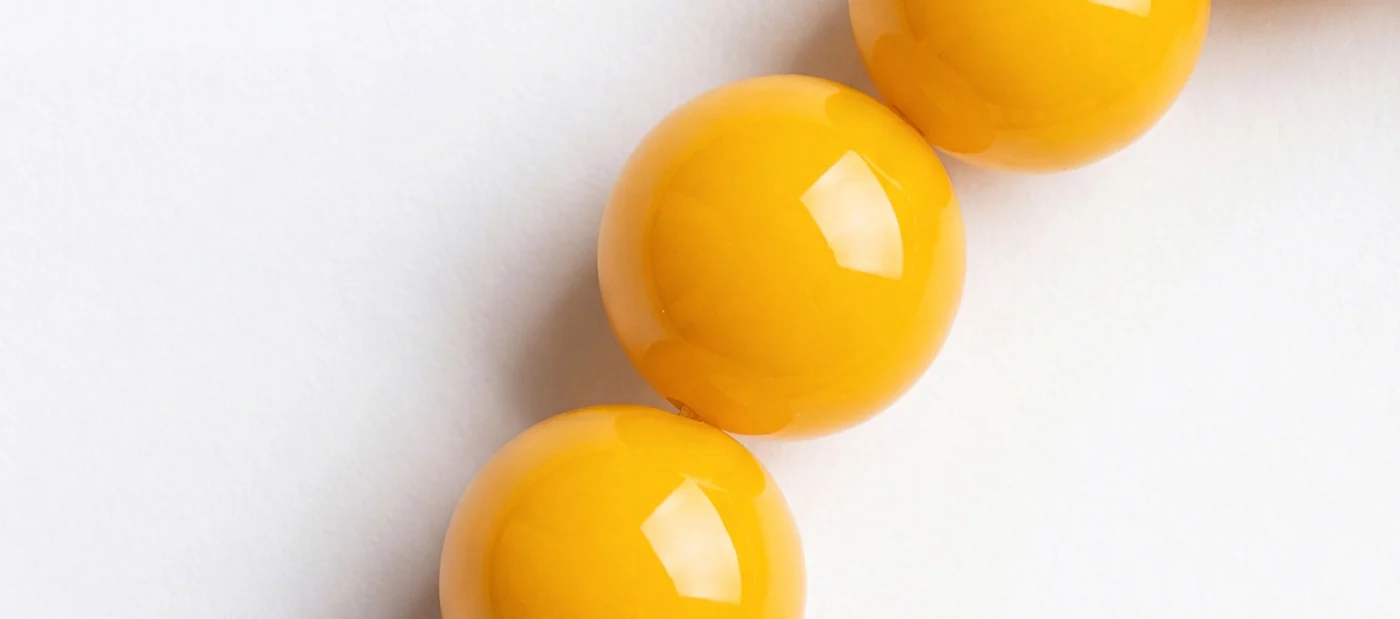
Chicken-fat yellow
Beeswax amber ranges from pale cream and lemon to deep orange. Among them, ji you huang, chicken-fat yellow, is a rich, saturated golden yellow with an oily sheen, named after the golden fat that rises on a well-made chicken broth, a symbol of nourishment and plenty in Chinese cooking. It is one of the most sought-after beeswax colours.
The beads in A Grounded Home are selected for an even chicken-fat yellow. Natural amber varies slightly in tone and may show faint flow lines; these are signs of genuine material.
04
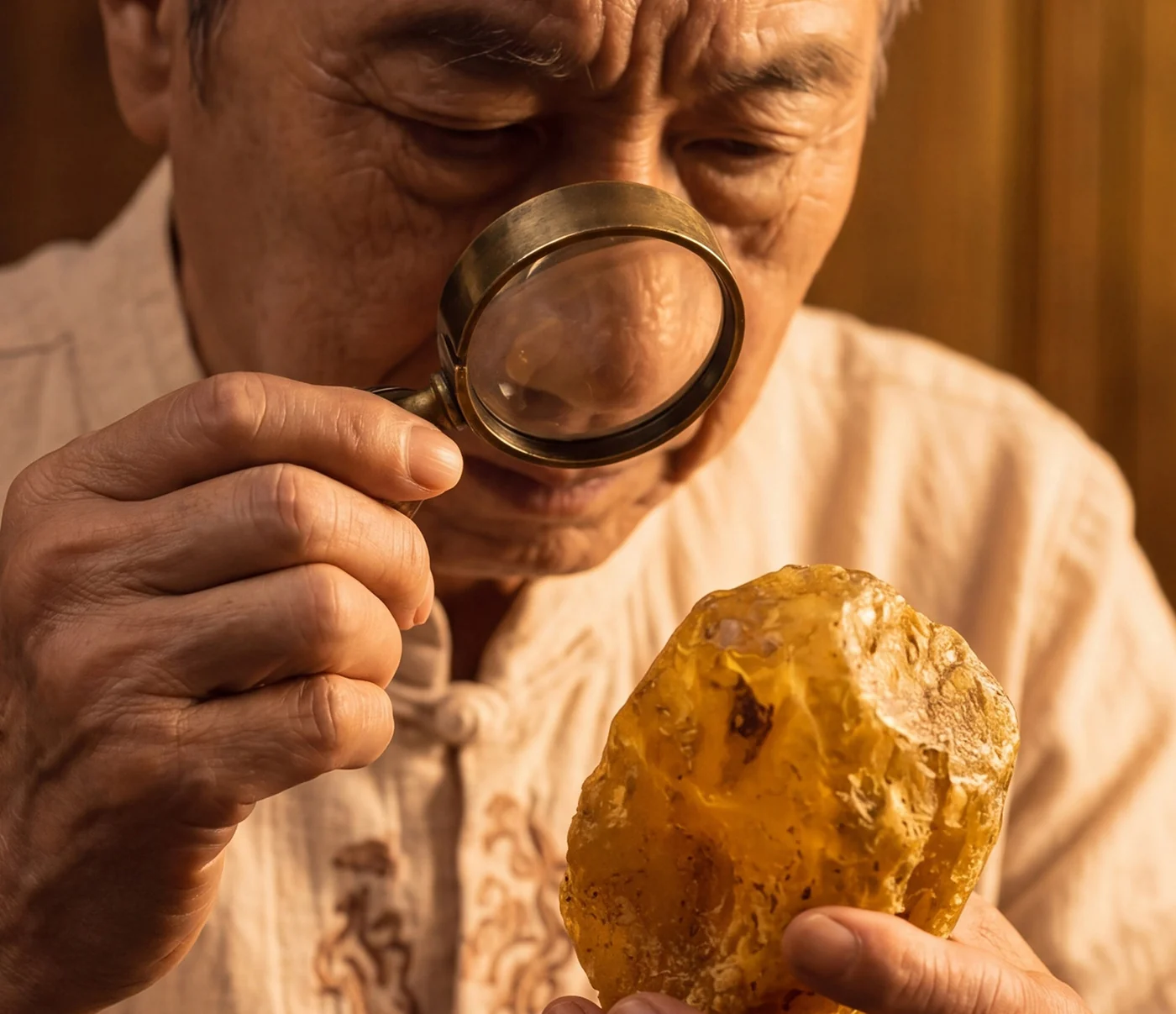
Baltic amber
Most of the world’s amber comes from the shores of the Baltic Sea, where resin from vast prehistoric forests, some 40 million years old, has been washed out of the sea floor and dug from coastal deposits for thousands of years. Baltic amber, succinite, is especially rich in succinic acid and has been traded across Europe and Asia since antiquity.
Our supplier describes the amber in this bracelet as natural Baltic beeswax amber of top grade. Like much commercial amber, some material on the market is heated or pressed to improve colour or size; if this matters to you, please ask, and we can help arrange testing.
05
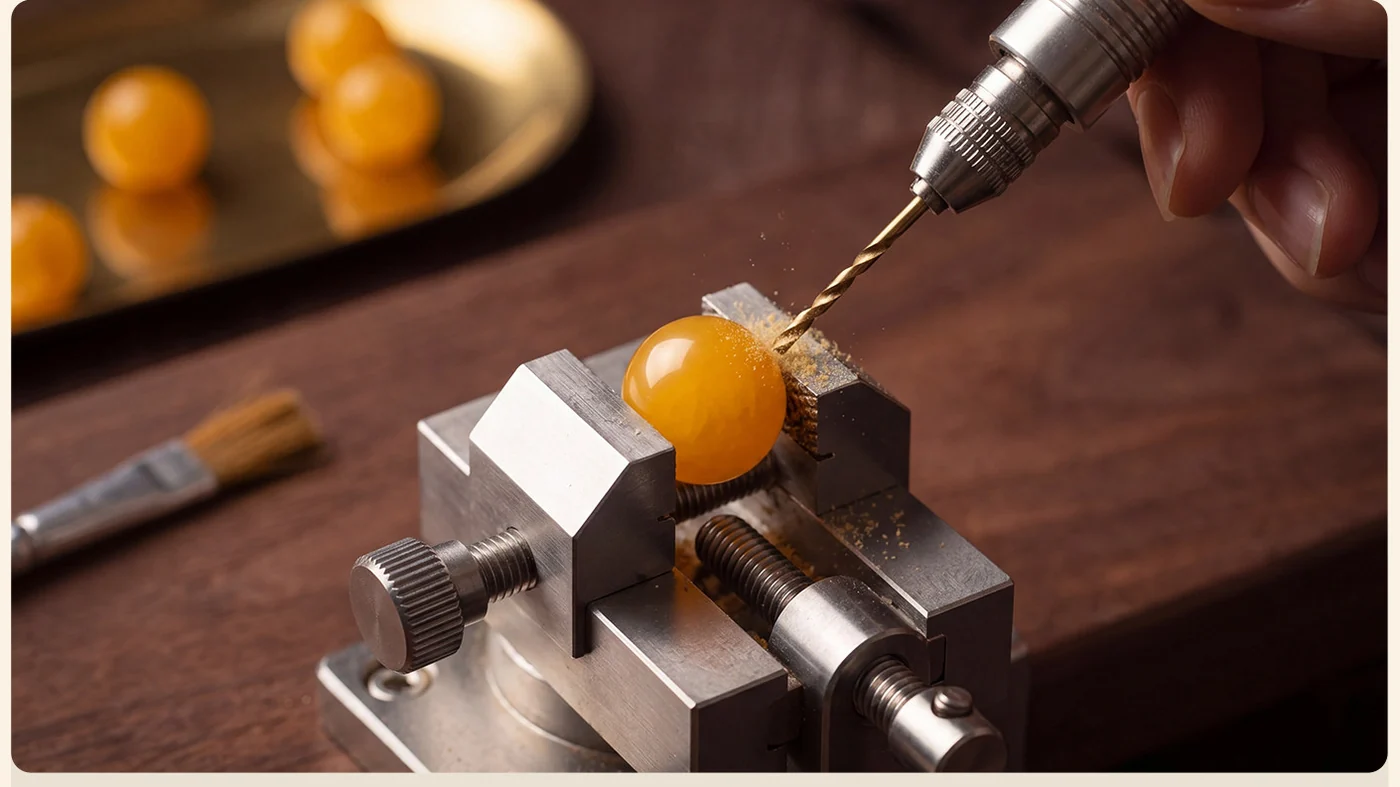
Turned, polished and checked
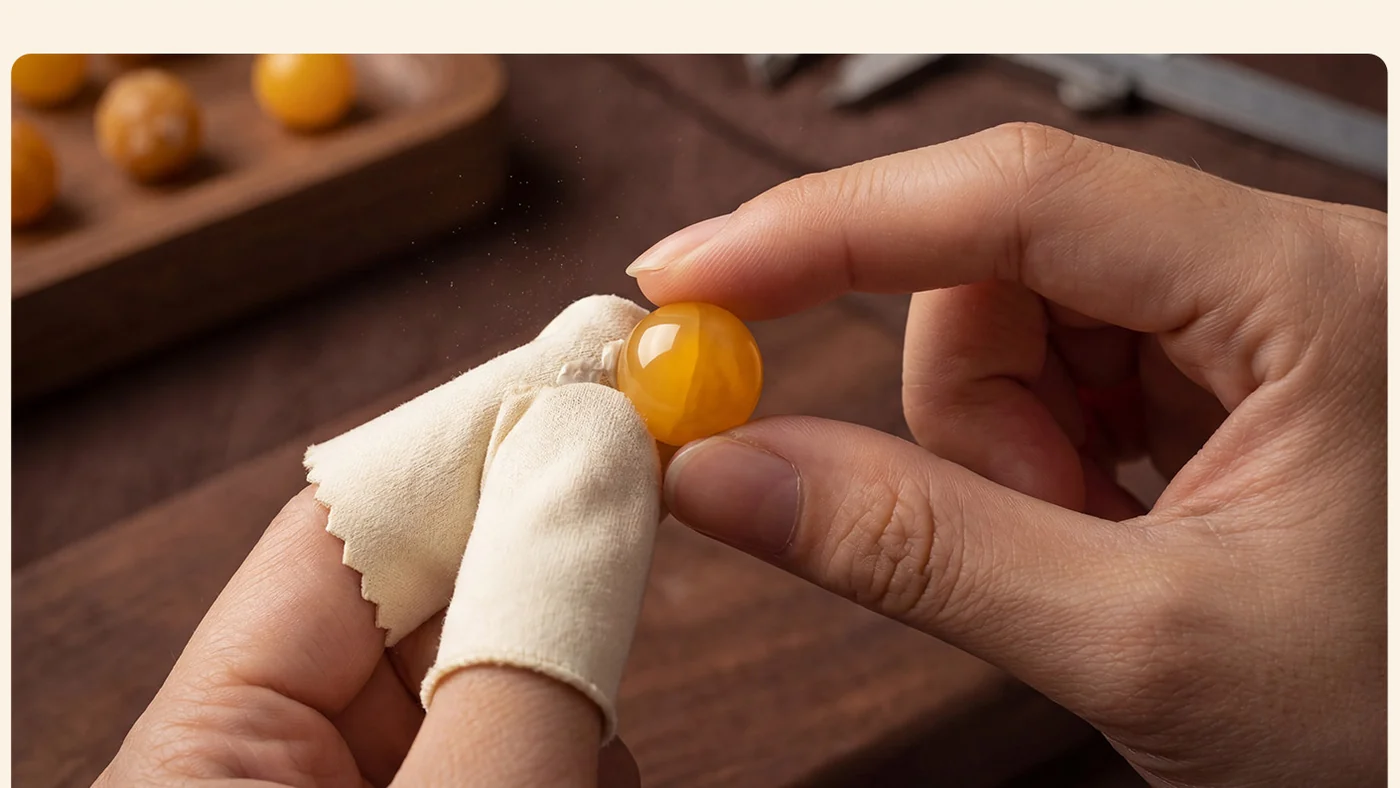
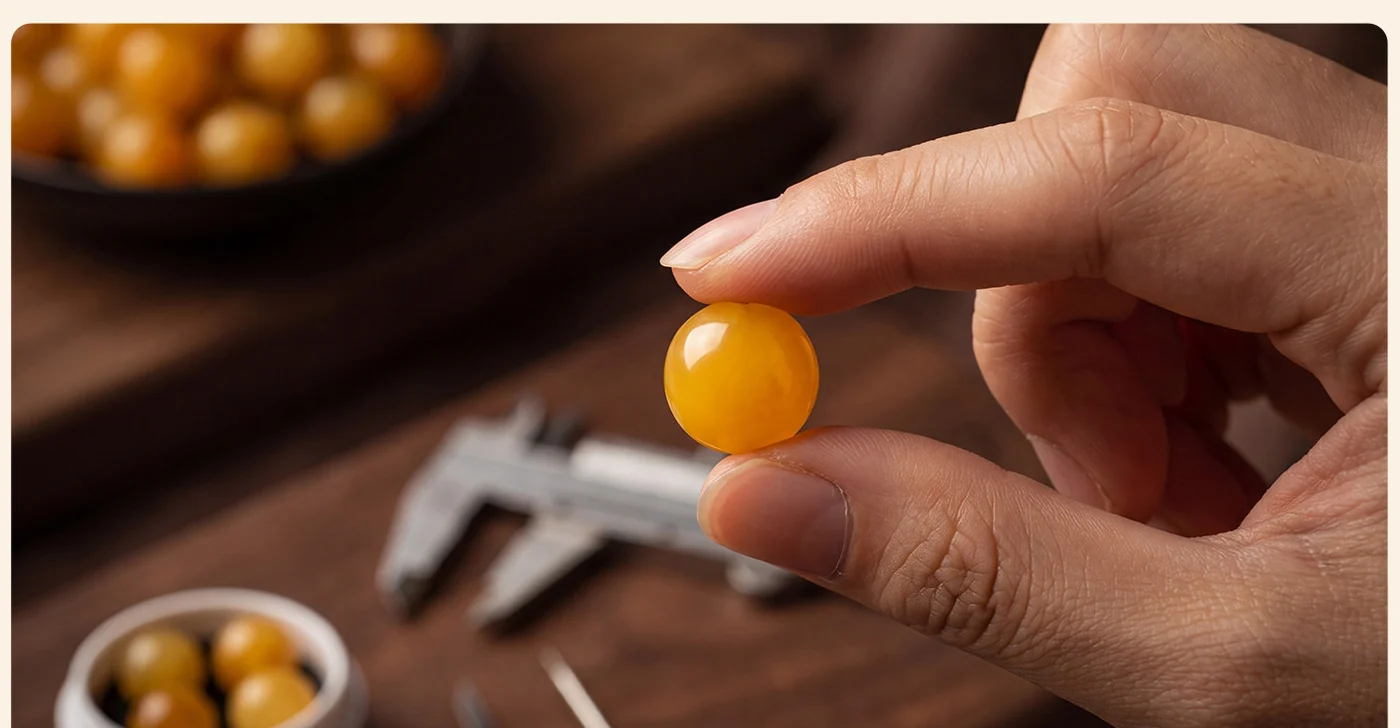
Because amber is soft, beads are shaped gently at low speed to avoid heat, which can crack or darken the resin. They are drilled carefully and polished by hand to bring out the waxy lustre. Each bead is then checked for colour, cracks and surface flaws, and the strand is matched so the yellow looks even from bead to bead.
Our supplier reports that only a small proportion of rough reaches this colour grade. Pieces with cracks, dark spots or uneven colour are used for smaller beads or set aside.
06
Light and warm on the wrist
The first thing most people notice about amber is how light it is. An 8 mm strand weighs only a few grams, and amber does not feel cold the way stone does; it reaches skin temperature almost immediately. Many people who find stone bracelets heavy or chilly love amber for this reason, especially in winter. It is also quiet: amber beads make almost no sound when they touch a desk or each other, unlike harder stones.
07
A stone for the cold months
Amber has always been associated with warmth. It feels warm to the touch, it glows like firelight and, in the far north where it is gathered, it was once burned as incense. Many people reach for their amber bracelet in autumn and winter, when cool stones feel chilly against the skin and a touch of golden colour brightens darker clothes.
In summer, simply take extra care with sun cream and perspiration, wiping the beads after wear.
08
Why 8 mm
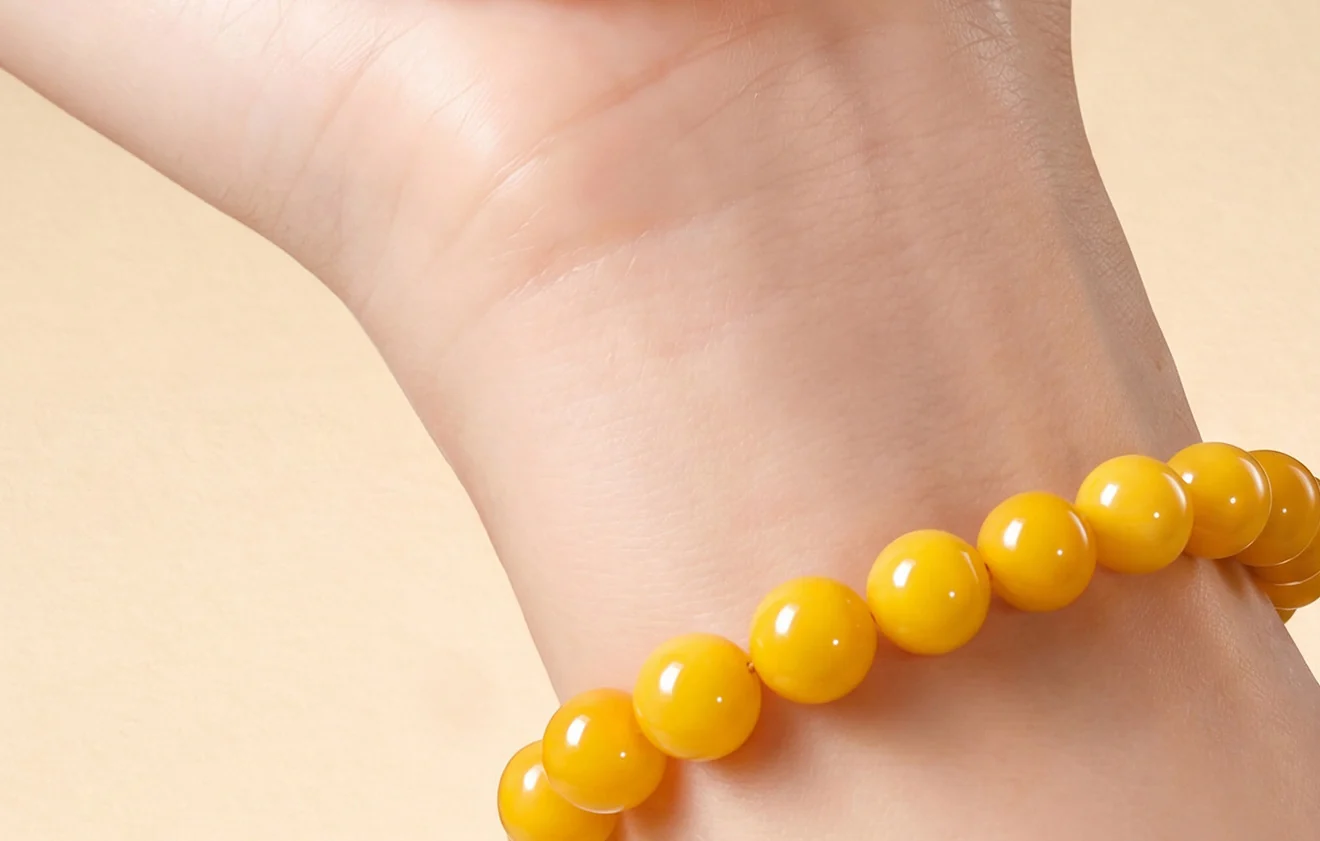
Beeswax amber in this colour is offered from 4 mm to 14 mm, and price rises steeply with size because large, evenly coloured pieces are rare. At 8 mm, the beads show their colour and lustre clearly, the strand is substantial without being bold, and the weight remains almost unnoticeable.
| Bead diameter | Look on the wrist | Often chosen for |
|---|---|---|
| 4–6 mm | Fine, delicate gold line | Stacking, slender wrists |
| 8 mm · this design | Clear colour, balanced strand | Everyday wear; most wrists |
| 10–14 mm | Bold, collector’s strand | Statement wear; larger wrists |
09
Choosing your wrist size
Measure the wrist itself with a soft tape or paper strip, just above the wrist bone where you usually wear a bracelet. Keep it snug without squeezing and choose that measurement on this page. The strand is made with a small allowance so that it moves slightly and stays comfortable.
The table shows typical bead counts for 8 mm beads. Your bracelet may differ by one bead, as each strand is checked against the measurement when it is strung.
| Wrist size | Approximate inches | Typical bead count (8 mm) |
|---|---|---|
| 14 cm | 5.5 in | 22 beads |
| 15 cm | 5.9 in | 23 beads |
| 16 cm | 6.3 in | 24 beads |
| 17 cm | 6.7 in | 25 beads |
| 18 cm | 7.1 in | 27 beads |
| 19 cm | 7.5 in | 28 beads |
| 20 cm | 7.9 in | 29 beads |
| 21 cm | 8.3 in | 30 beads |
10
Thick earth, a settled home
Hou tu means thick, rich earth, the kind of ground that can hold deep roots and bear good harvests. An jia means to settle a home. The phrase hou tu an jia wishes for a household with solid foundations: family members who are well, a home that feels secure and days that pass in peace.
Golden amber, the colour of ripe grain and warm light, suits this wish naturally. It is often chosen for a housewarming, a family moving into a new home or as a gift for parents.
These are cultural meanings and personal wishes rather than promises.
11
Yellow and the Earth element
In the Five Elements, yellow belongs to Earth, the element of the centre, late summer and stability. Its virtue is xin, trustworthiness, and it is associated with nourishment, patience and care for others, the qualities that make a home. Yellow was also the imperial colour in China, the colour of the centre of the world. If you would like to know whether Earth suits your own birth chart, a personal design begins with a fuller BaZi discussion.
12
Amber in Asian tradition
Amber reached China along trade routes many centuries ago and became one of the treasured materials of court and temple. In Tibet and Mongolia, large beeswax beads are worn in headdresses and necklaces and handed down for generations, valued as signs of prosperity and status. In Qing-dynasty court beads, amber was one of the materials used for the counter beads of officials.
Old beeswax beads deepen to orange and brown over decades of wear, and such pieces are highly collected today. Baltic amber reached Asia by long overland routes, which is part of why it was once so precious so far from the sea where it was found.
13
Beeswax amber and yellow jasper
Yellow jasper, which this design used before, is an opaque, grainy stone, heavy and cool, with a matt or slightly dull polish. Beeswax amber shares its warm opaque yellow but is a completely different material: light, warm, soft and waxy. Imitations of amber include plastic, resin, copal (young, unfossilised resin) and pressed amber made from small fragments.
14
Why this design changed
A Grounded Home was previously made with 8 mm yellow jasper. We now make it with golden beeswax amber, which keeps the warm, opaque yellow but is lighter, warmer and more highly valued in Chinese tradition. The size and the wish for a settled, harmonious home remain the same.
15
Wearing golden amber
Chicken-fat yellow looks warm and radiant with white and cream, as the photographs show, and rich with camel, brown, olive and navy. It pairs beautifully with gold and with tortoiseshell or leather accessories. Because it is so light, it is comfortable even for people who rarely wear bracelets, and it is a gentle and easy first piece of jewellery for older members of the family.
Stack it with a fine red agate or Nanhong strand for a warm red-and-gold palette, or with turquoise for a classic Himalayan combination. Keep it away from harder stones that might scratch it.
16
Amber that ages beautifully
Amber changes slowly with time and wear. Over years, exposure to air and gentle contact with skin deepen its colour towards orange and give it a soft, satiny surface. Collectors call this ageing, and many value old, darkened beeswax above fresh material. Your bracelet will become, in a small way, a record of the years you wear it.
17
A bracelet to hand down
In many Chinese, Tibetan and Mongolian families, beeswax amber is bought not only to wear but to keep. Because it ages gracefully, deepening in colour and softening in lustre, a strand worn by a mother or grandmother is often treasured by the next generation, carrying both its own warmth and the memory of the person who wore it.
That idea of continuity suits a bracelet named for a settled home. If you are buying it for a parent, it may one day return to the family with its colour richer than when it was given.
18
A gift for a new home
A Grounded Home is a warm gift for a housewarming, a family moving into a new home, newlyweds setting up house or parents and grandparents. Its golden colour and meaning of a settled home make it especially fitting for the people who hold a family together.
A short note explaining hou tu an jia makes the meaning clear. If you cannot measure the recipient’s wrist, choose the most likely size; an unworn ready-designed bracelet can be returned within 14 days of delivery.
19
Recognising natural amber
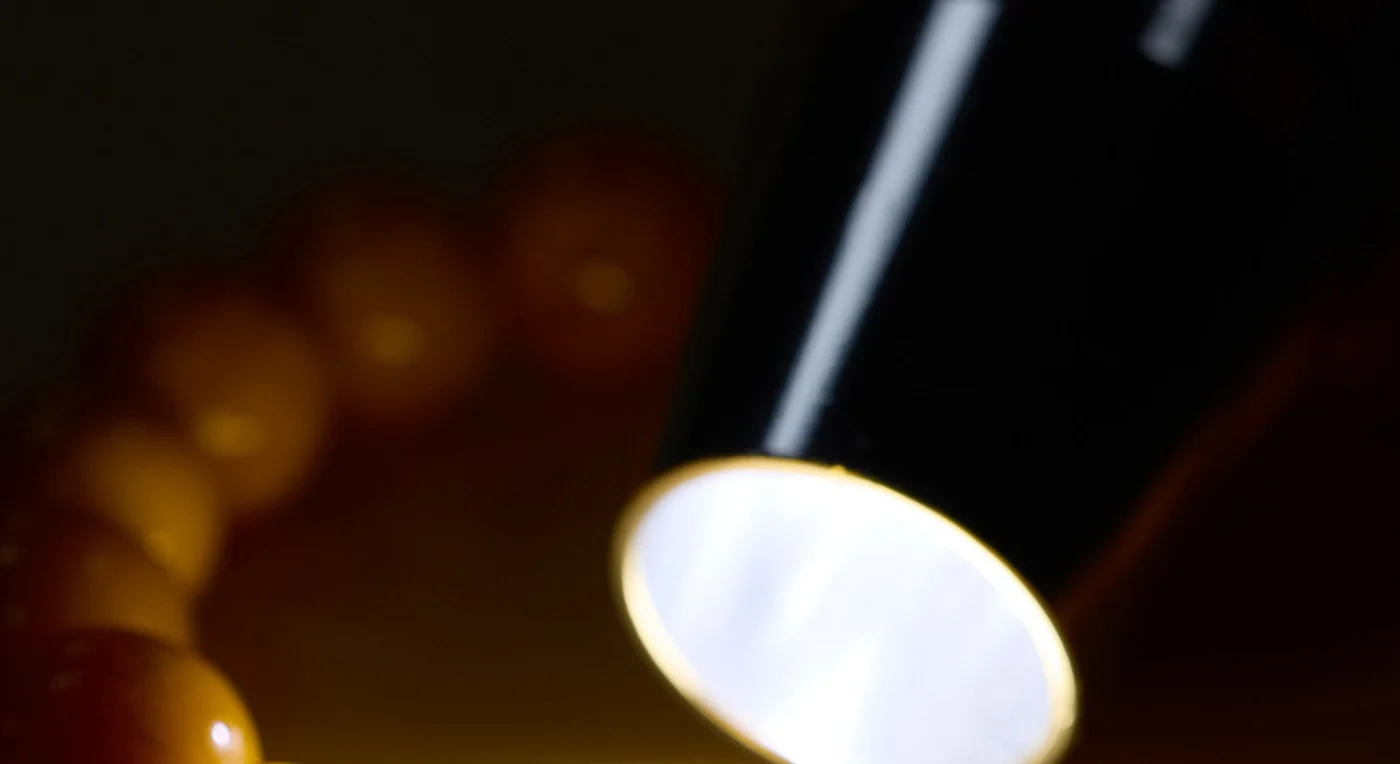
Natural amber is very light and warm, and some floats in strongly salted water. Under a strong light, beeswax amber may show soft flow lines and slightly translucent edges. Rubbed briskly, it can pick up static and give a faint pine-like scent. Plastic and resin imitations are often too uniform; copal becomes tacky with alcohol or acetone.
Such home tests can damage amber and are not conclusive, so we do not recommend them. Our supplier describes these beads as natural Baltic beeswax amber and provides a testing certificate; please contact us if you would like documentation.
20
Caring for amber
Amber is soft and sensitive. Keep it away from perfume, hair spray, alcohol, cleaning products and sun cream, which can dull or crack its surface. Avoid hot water, saunas and leaving it in strong sunlight, and remove it before washing, swimming and exercise.
Wipe it with a soft, dry cloth and store it on its own in a soft pouch, away from harder stones and metal that might scratch it. With daily wear, the elastic usually lasts one to two years; if gaps appear between the beads, have it restrung.
Questions & answers
What is beeswax amber?
Opaque amber, called miela in Chinese, with a creamy, waxy look.
What does chicken-fat yellow mean?
A rich golden yellow named after the golden fat on a good broth; a prized amber colour.
Is it natural?
Our supplier describes it as natural Baltic beeswax amber and provides a testing certificate.
Why is it so light?
Amber is fossil resin, only slightly denser than water.
Is amber fragile?
It is soft and can scratch, but it is not brittle like glass; treat it gently.
Can it get wet?
Please avoid water, especially hot water, and chemicals.
Will the colour change?
Over years it slowly deepens towards orange, which collectors value.
How many beads will my bracelet have?
Typically 22 beads for a 14 cm wrist, rising to about 30 for 21 cm.
Which element is it?
Golden yellow is associated with Earth.
Why did the design change from yellow jasper?
Amber keeps the warm yellow and is lighter, warmer and more valued in Chinese tradition.
Is it suitable for men?
Yes. Golden amber suits men and women alike.
Can I stack it with other bracelets?
Yes, with red agate, Nanhong or turquoise; avoid hard stones rubbing against it.
Can I order a different size?
This design is made in 8 mm. Ask a design adviser about other sizes.
How should I store it?
On its own in a soft pouch, away from heat, sun and harder stones.
Which wrist should I wear it on?
Whichever is most comfortable; many people wear it on the wrist without a watch.
Will it look exactly like the photographs?
The material and size match, though natural amber varies slightly in tone.
Know the materials in this bracelet
Compare these related designs
Protection · Balance
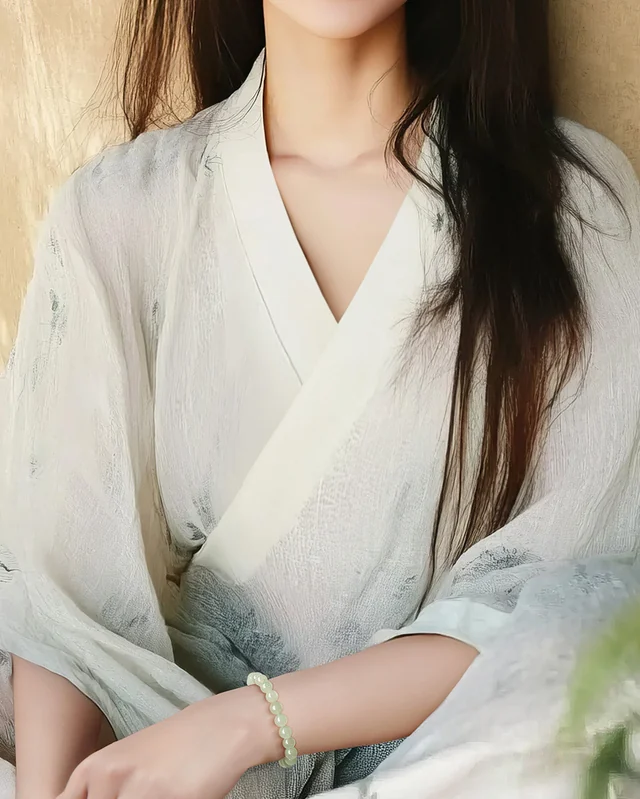
8 mm Hetian Jade Bracelet · Jade Blessings
Hetian jade (nephrite)
$128.008 mm · Wood
 Personal designs
Prosperity · Career
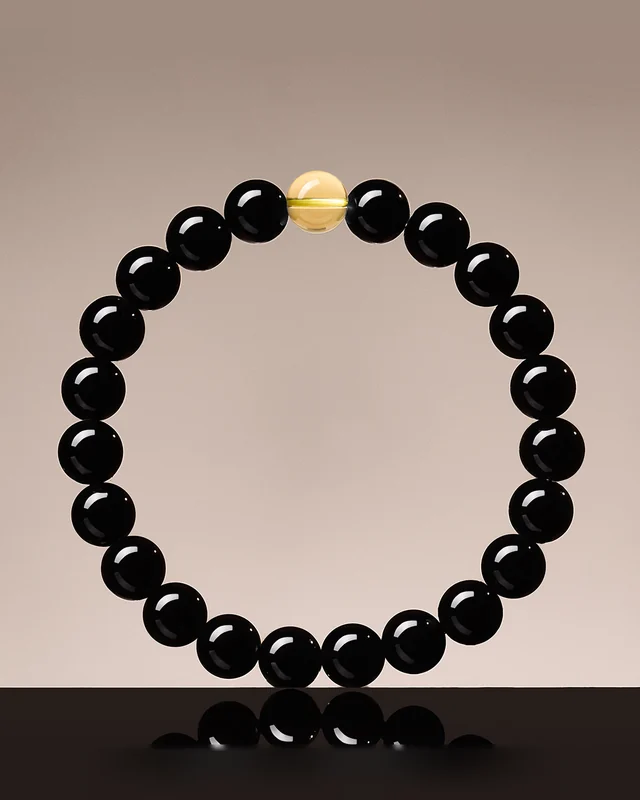
Custom Obsidian and Citrine Bracelet · Earth Prosperity
Black obsidian · Citrine
Quoted after we confirm your design8 mm · Earth