Protection
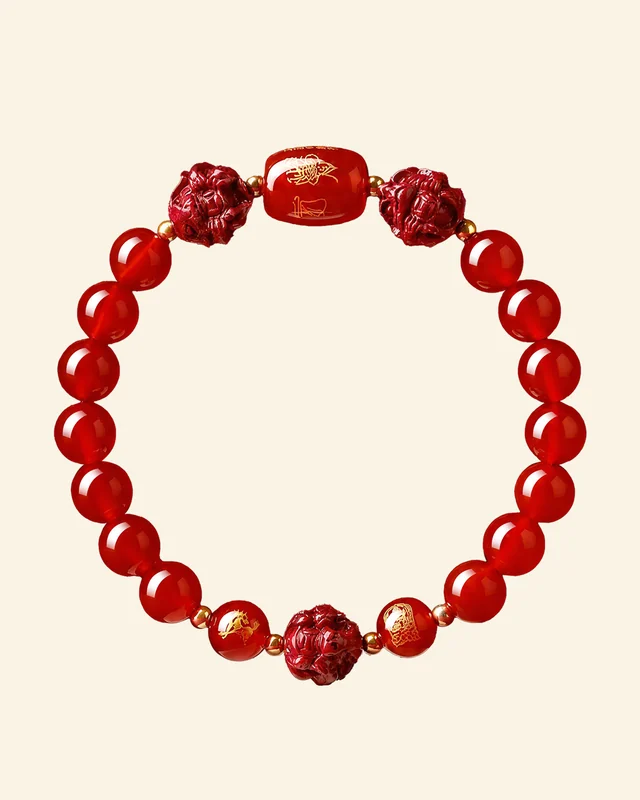
8 mm 2027 Year of the Goat Red Agate Bracelet · Auspicious Radiance
Natural red carnelian agate (chalcedony)
$68.008 mm · Fire
 View larger
Red agateIce type · 8 mm
Auspicious bracelets / Fire
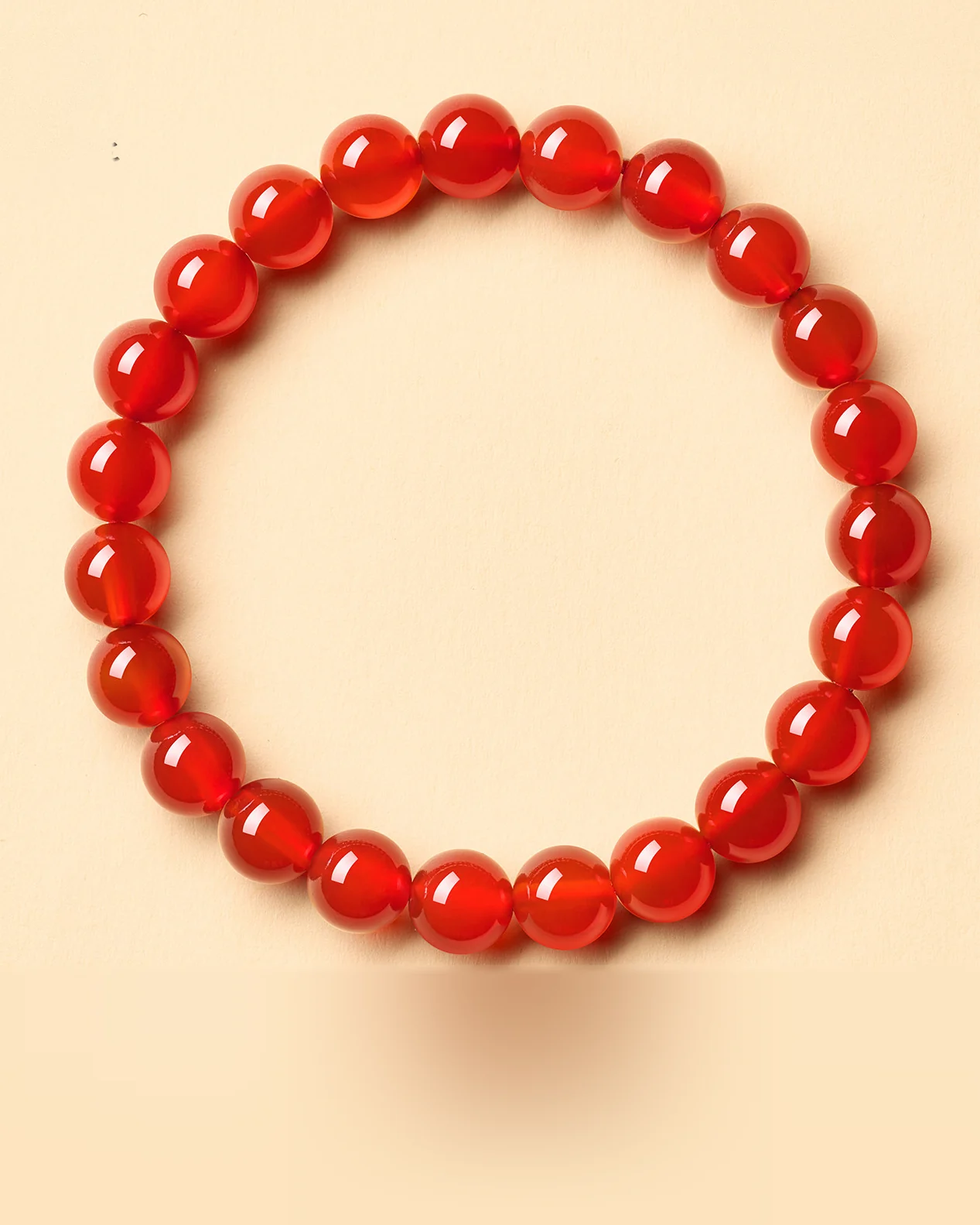
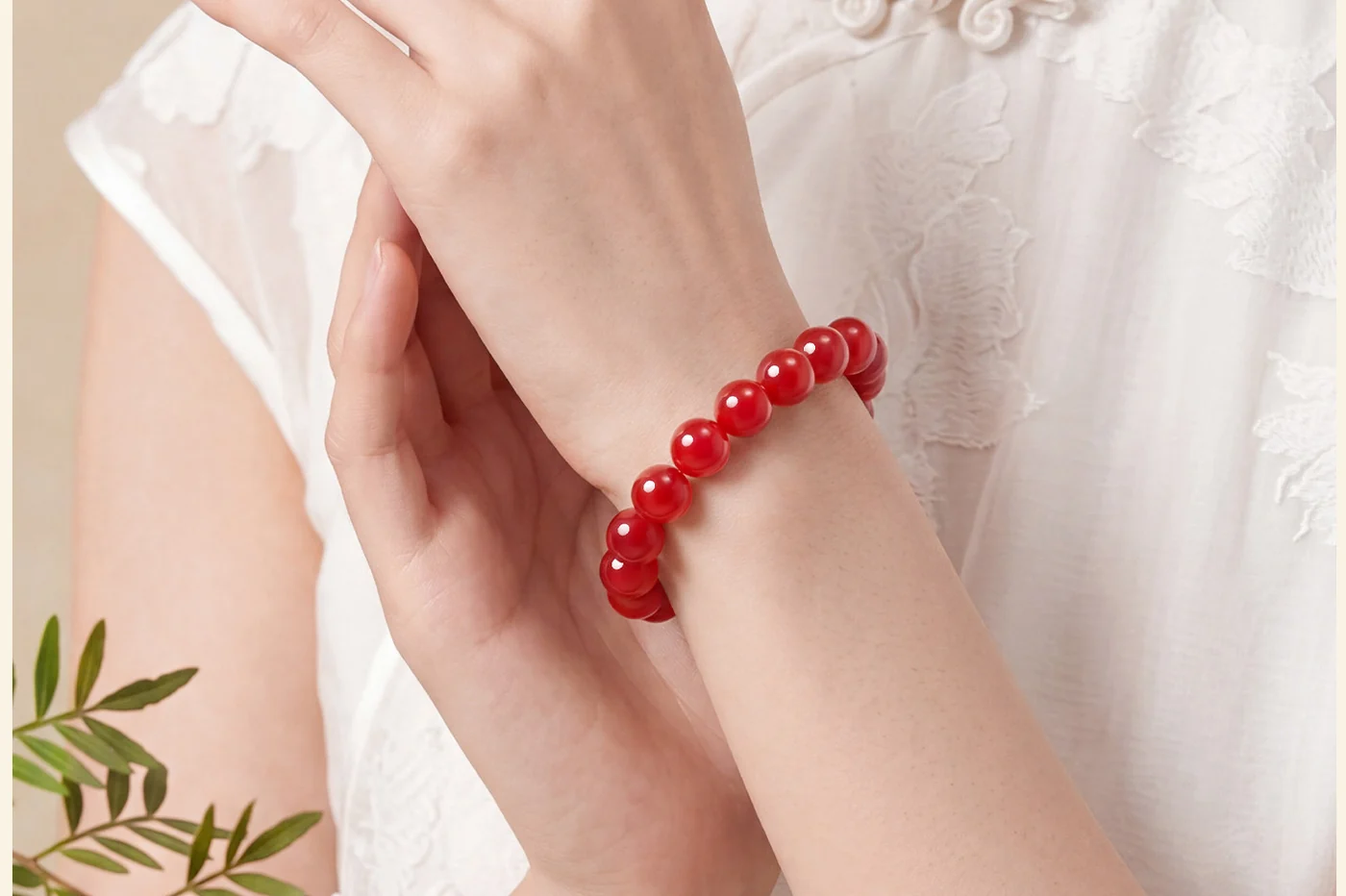
Translucent “ice-type” Brazilian red agate in 8 mm rounds, glowing a clear, warm red from within.
$70.00USD
Prepared in 5 days after payment
Shipping: Asia $10; Europe, US, Canada, Australia & NZ $20
Ready-designed returns may be requested within 14 days. See returns policy
Year-Round Good Fortune
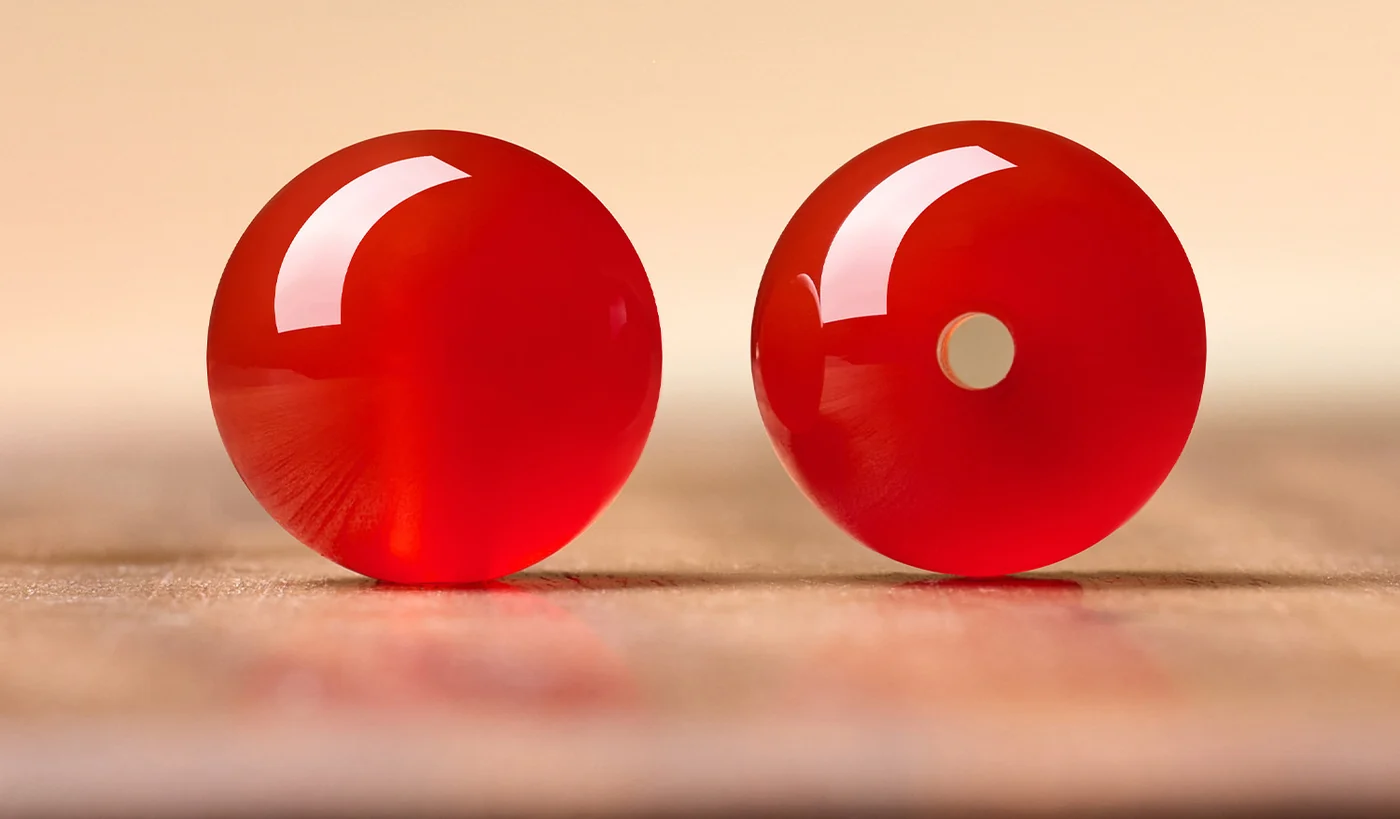
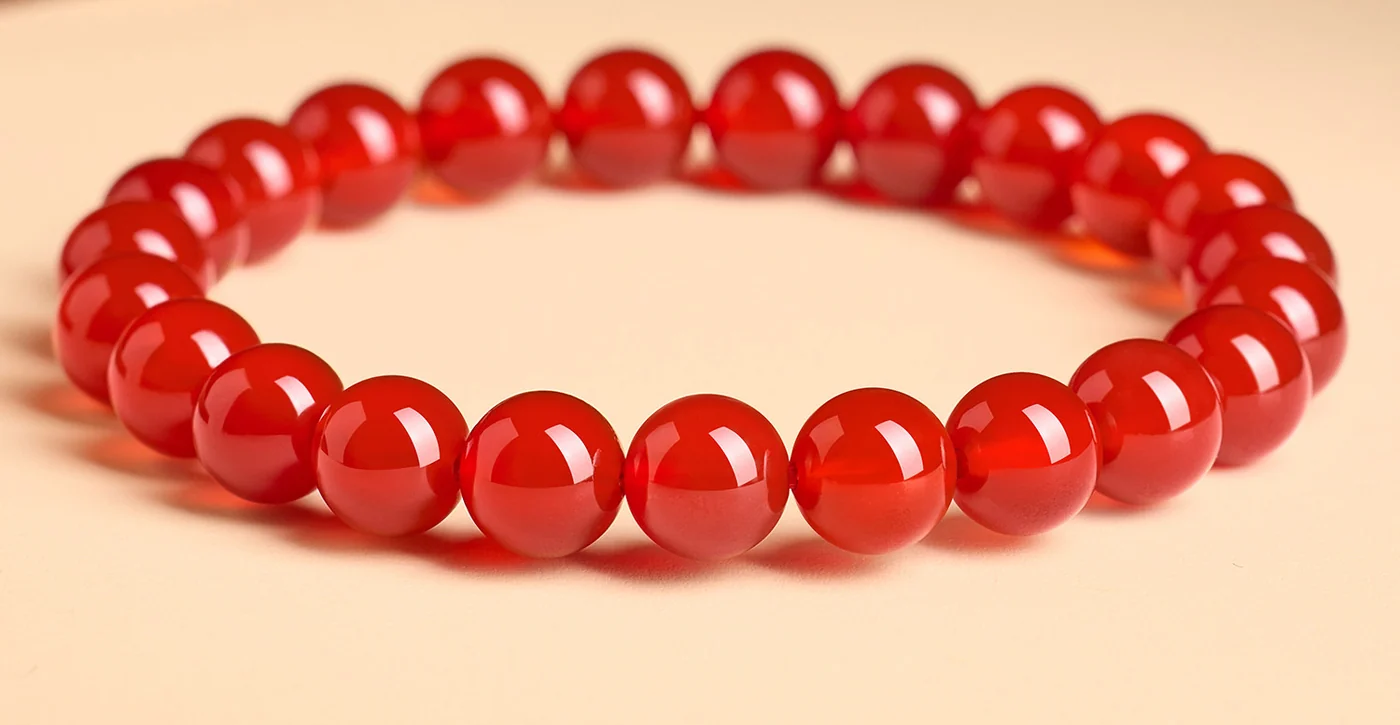
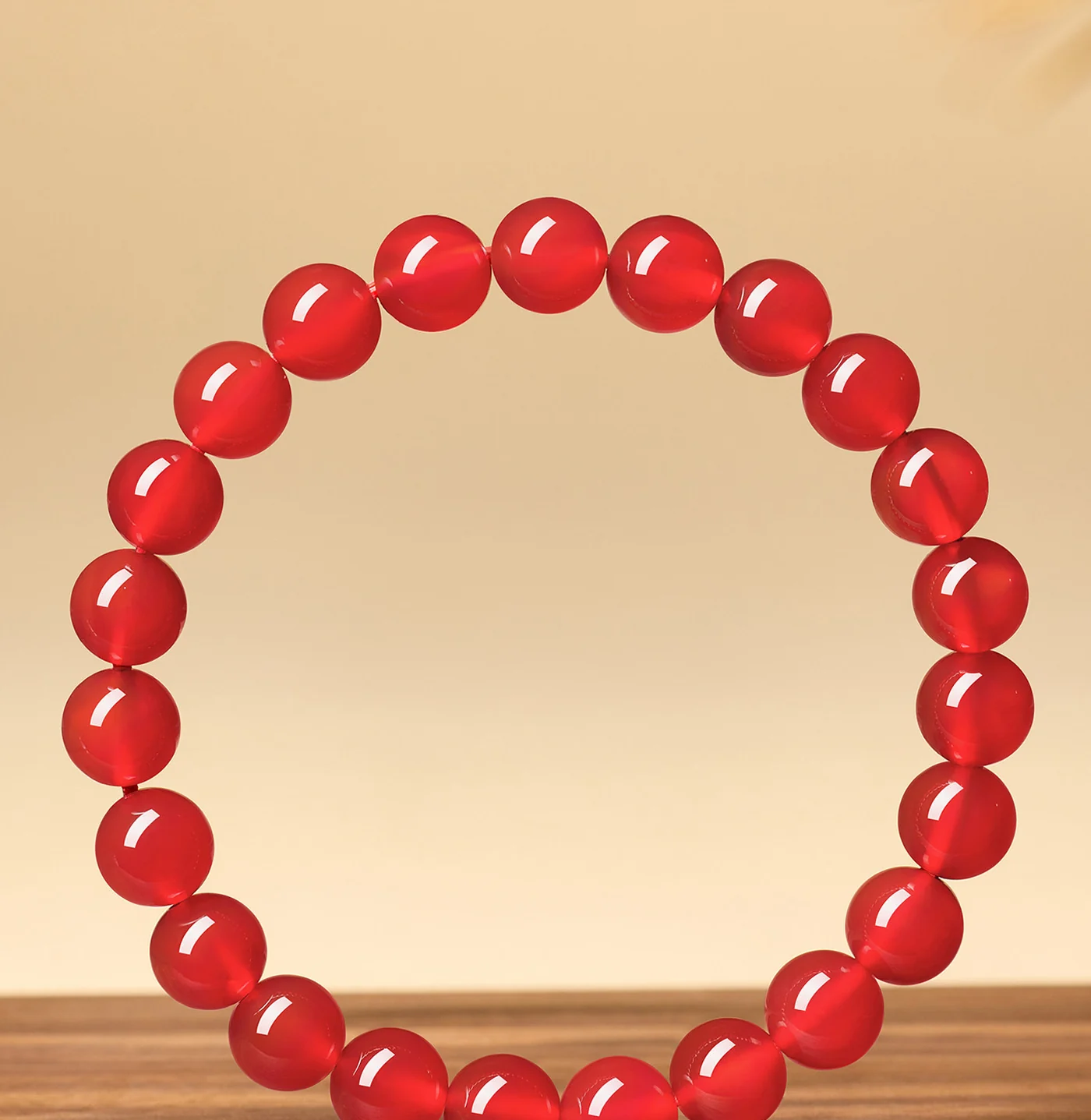
Year-Round Good Fortune is a single strand of red agate, each round bead approximately 8 mm across. The material is what Chinese traders call “ice type”: agate translucent enough that light passes into the bead and glows back out, so the red looks lit from within rather than flat. Cut from Brazilian rough and polished to a glassy shine, the beads are an even, vivid red that stays cheerful in any light.
Red is the colour of celebration, protection and good news in Chinese culture, and belongs to Fire in the Five Elements. The Chinese name, suisui jiqing, wishes for happy occasions year after year. It is one of the most popular gifts we make, chosen for birthdays, Lunar New Year, a promotion or simply as an everyday bracelet for someone who loves warm red.
Year-Round Good Fortune
What red agate is, what “ice type” means, how the beads are made and selected, and how to choose the right fit.
01
Agate is a form of chalcedony, the microcrystalline variety of quartz. Instead of growing as large visible crystals, the silica in agate is made of countless tiny fibres packed tightly together, often in bands that record the slow filling of a cavity in volcanic rock. That fine structure makes agate tough, dense and able to take a beautiful polish.
Red agate owes its colour to iron, usually as minute particles of iron oxide spread through the chalcedony. Depending on the amount and form of the iron, the colour ranges from pale orange through cherry to deep blood red. The traditional Chinese term for red agate in jewellery is hong manao; the word manao, literally “horse brain”, is said to come from the way some banded rough resembles the folds of a brain.
Agate is about 6.5 to 7 on the Mohs hardness scale, hard enough to resist scratches from everyday dust, and because it is a fibrous aggregate it resists chipping better than single crystals of similar hardness. It is one of the most durable stones for a bead bracelet.
02
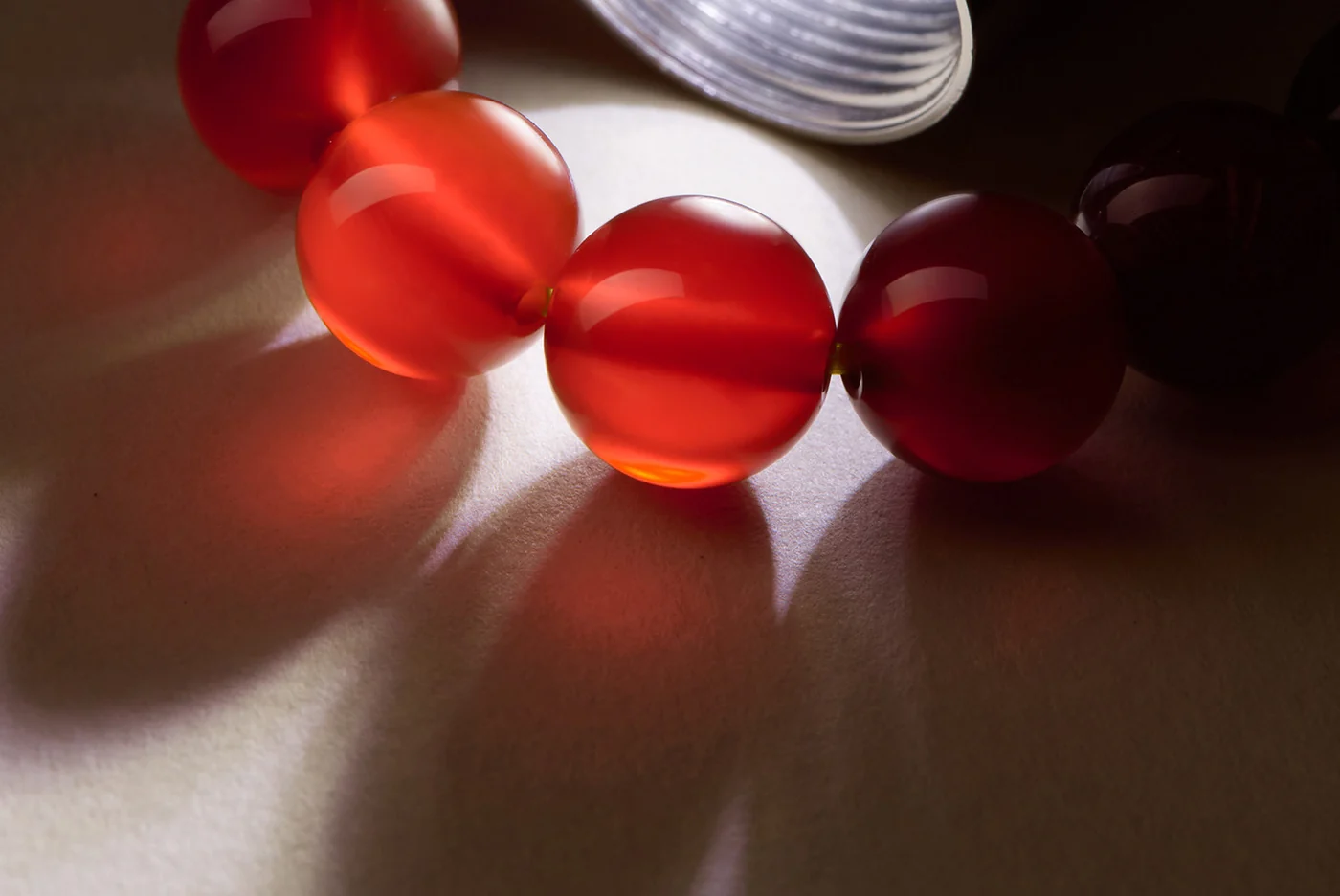
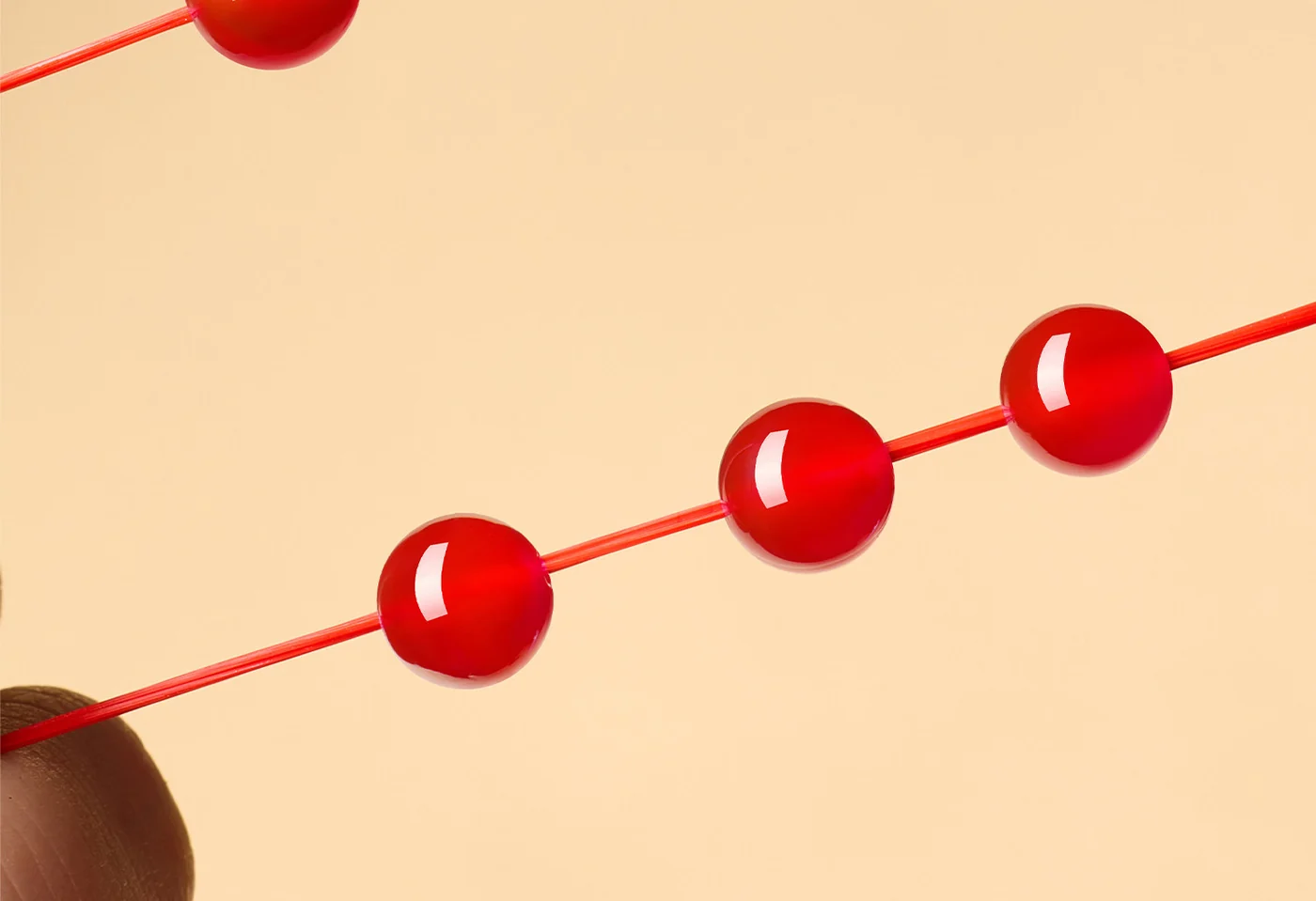
Chinese traders borrow a jade term, “ice”, to describe agate that is clear enough for light to travel well into the stone. Ordinary red agate can be quite opaque, looking like polished brick-red porcelain. Ice-type red agate is translucent: hold a bead to a torch and the whole sphere lights up a clear, bright red, with only faint natural clouds inside.
On the wrist, that translucency changes everything. Light enters each bead, bounces inside and returns, so the bracelet seems to glow even indoors. In sunshine the colour turns bright cherry red; in lamplight it deepens to a warm garnet tone. The surface polish adds sharp highlights that make the strand look lively as you move.
Ice-type material is a small fraction of the rough. Our supplier describes selecting it from a very large quantity of raw stone, with the clearest, most evenly coloured sections set aside for beads of this grade.
03
Brazil, especially the state of Rio Grande do Sul, is one of the world’s great agate sources. Agate there formed in cavities in ancient basalt lava flows, and it is collected in large nodules that are cut, sorted and shipped to workshops around the world, including the bead-making centres of China.
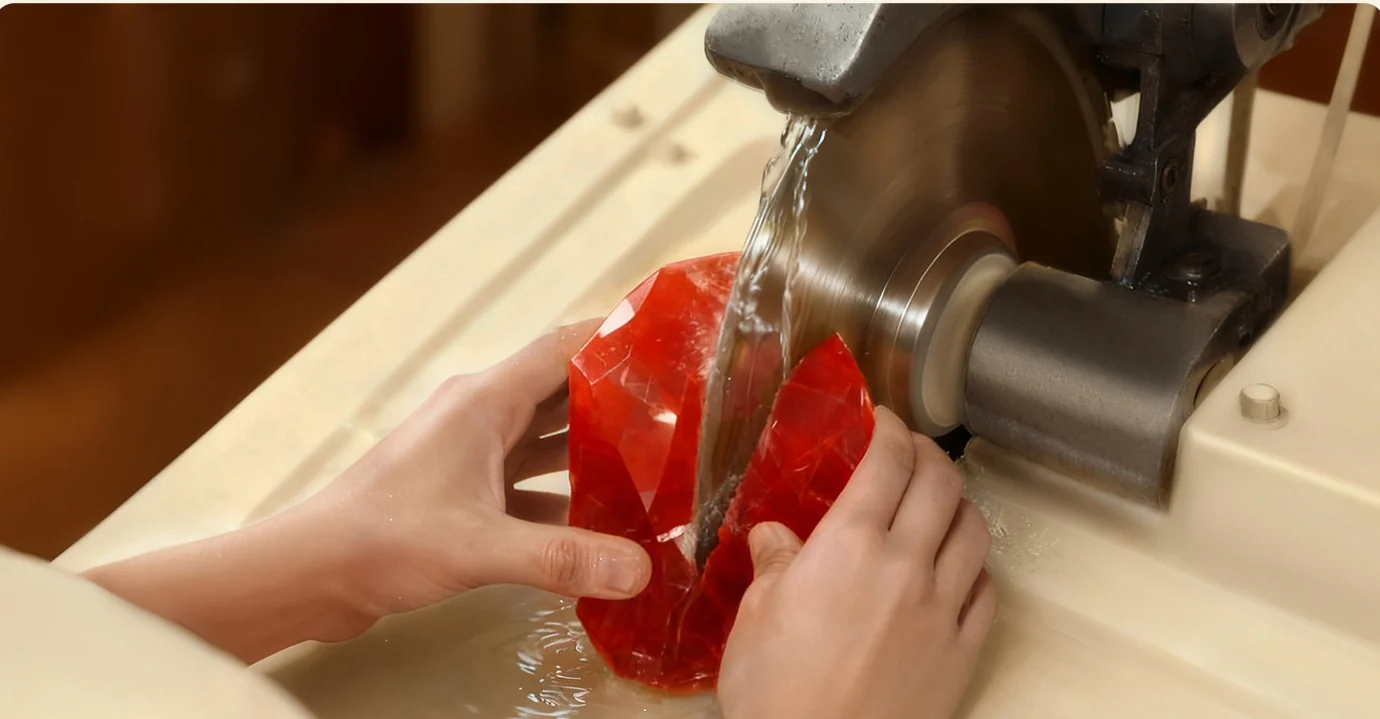
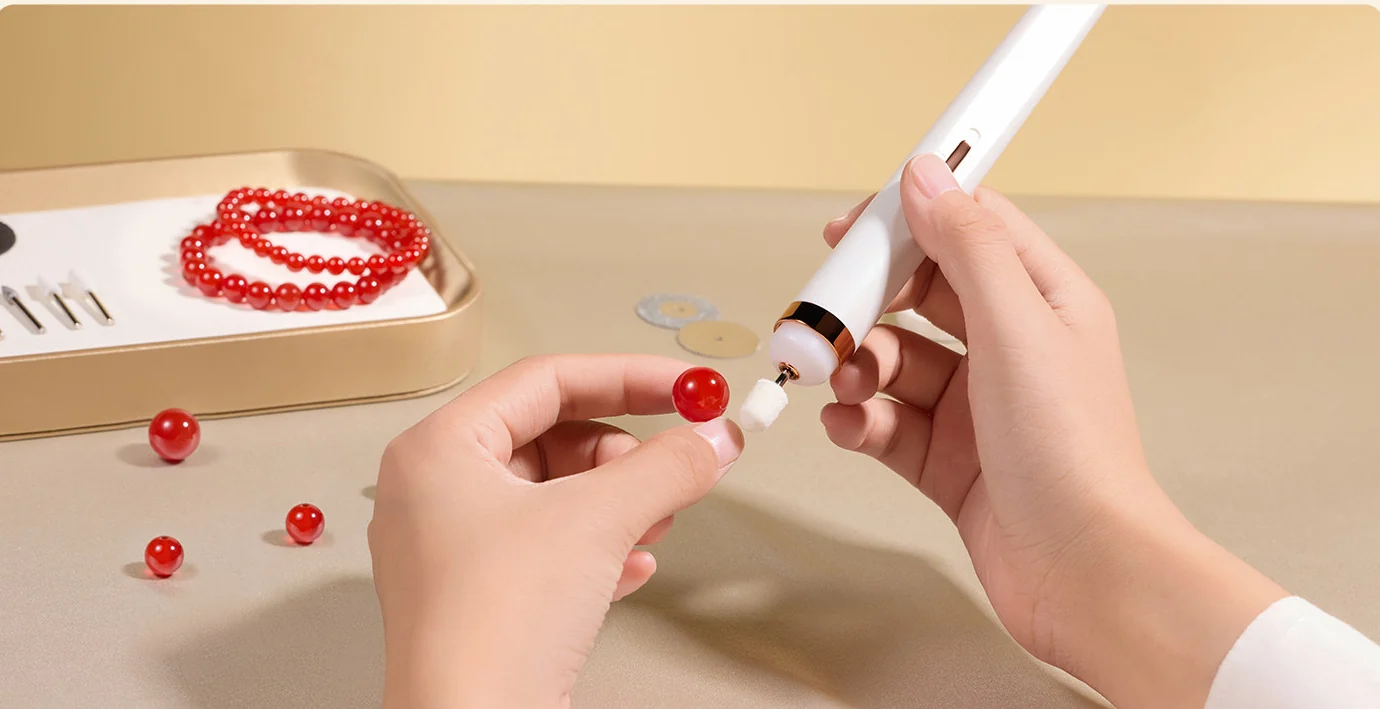
Turning rough into fine beads is skilled work. The nodules are sawn into slabs under running water, examined for cracks and colour, cut into cubes and rounded. A craftsman with long experience can judge from the rough which sections will polish into clean, evenly coloured beads, and which will reveal cracks or cloudy patches once finished.
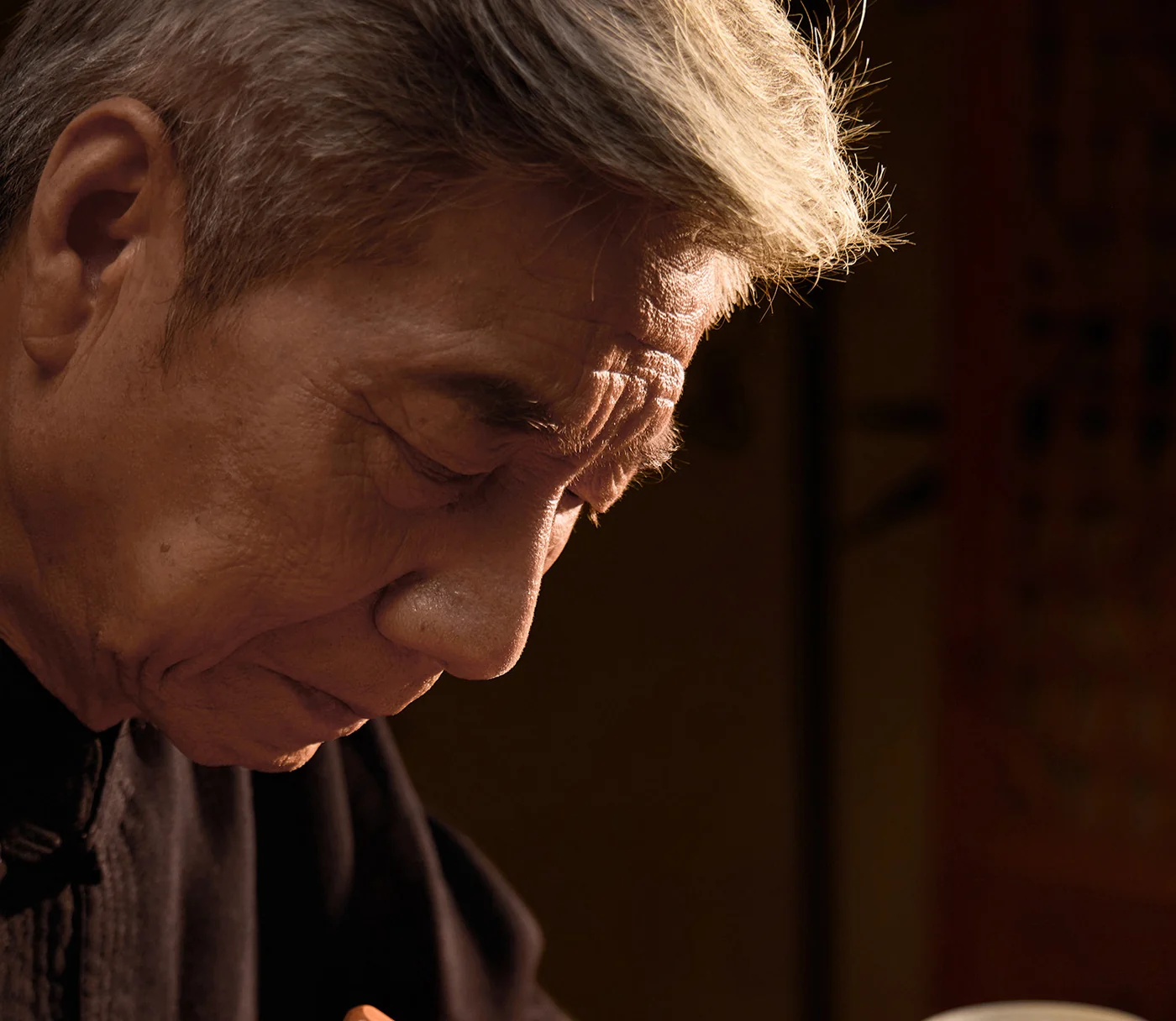
Our supplier works with craftsmen who have spent decades with agate, and each strand of Year-Round Good Fortune is supplied with an identification certificate from a third-party gem laboratory.
04
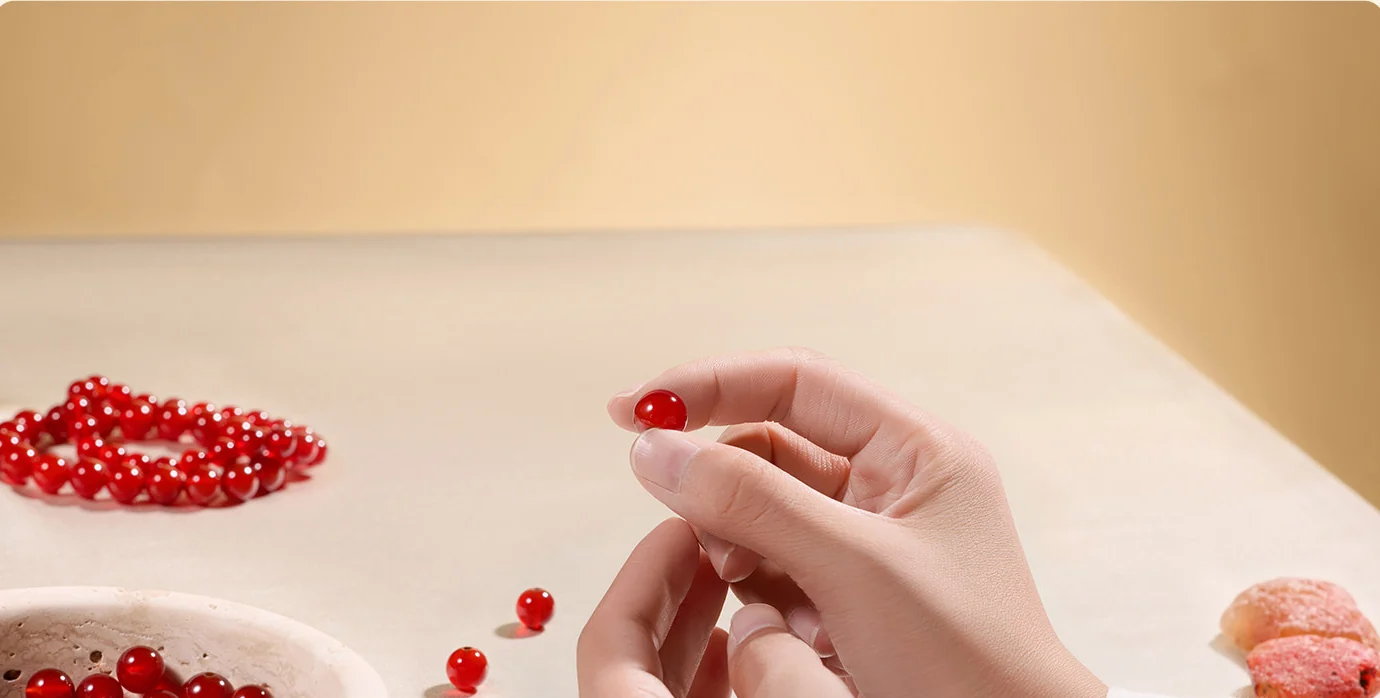
After polishing, every bead is checked again under a light. Beads with internal cracks, visible “water lines”, pits in the surface or a colour that strays from the rest are removed. The remaining beads are sorted into tones so that a strand reads as one even red, rather than a mixture of orange and crimson.
Some natural features are still expected. Agate forms in layers, and a gentle band of slightly lighter or darker red, or a faint cloud inside a bead, is part of the stone’s character. These are signs of natural agate, not defects in the polish, and they help distinguish natural material from glass imitations, which tend to look perfectly uniform.
The strand is then threaded on stranded elastic, checked against the ordered wrist size and inspected one last time before it is packed.
05
Because agate is porous at a microscopic level, it readily accepts dyes, and much inexpensive red agate on the market is grey or pale agate that has been dyed or heat treated. Dyed agate often looks very uniform, sometimes with colour concentrated around the drill holes or in fine cracks, and can fade or bleed over time.
Our supplier specifies natural ice-type red agate for this design, and each strand comes with a laboratory certificate. At home, you can look at the drill holes with a torch: in natural material the colour at the hole matches the rest of the bead. You can also hold a bead to a strong light and look for gentle natural variation and faint banding.
Natural red agate is stable. Its colour does not fade with normal wear and daylight, and the polish lasts for years with simple care.
06
Bead size shapes how a red bracelet feels. Fine 4 or 6 mm beads give a delicate line of colour; 10 mm and above make a bold band that reads strongly from across a room. At 8 mm, each translucent bead is large enough to glow clearly, while the bracelet still sits neatly under a cuff and feels light on the wrist.
It is also the most versatile size for gifts. Eight millimetres suits most wrists, from slender to broad, and works with both everyday and formal clothes. If you would like a bolder strand, ask a design adviser about larger beads in the same material.
| Bead diameter | How red agate looks | Often chosen for |
|---|---|---|
| 4–6 mm | A fine, delicate line of red | Stacking, slender wrists |
| 8 mm · this design | Clear glow in a neat strand | Everyday wear and gifts; most wrist sizes |
| 10–12 mm | A bold, glowing band | Wearing one statement bracelet |
| 14–16 mm | Very large and weighty | Larger wrists and collectors |
07
Measure the wrist itself with a soft tape or paper strip, just above the wrist bone where you usually wear a bracelet. Keep it snug without squeezing and choose that measurement on this page. The strand is made with a small allowance so that it moves slightly and stays comfortable.
The table shows typical bead counts for 8 mm red agate. Your bracelet may differ by one bead, because natural beads vary fractionally and each strand is checked against the measurement when it is strung.
If you fall between sizes, choose the larger for a relaxed fit or the smaller for a closer one. Roll the elastic strand over the knuckles rather than pulling it wide.
| Wrist size | Approximate inches | Typical bead count (8 mm) |
|---|---|---|
| 14 cm | 5.5 in | 22 beads |
| 15 cm | 5.9 in | 23 beads |
| 16 cm | 6.3 in | 24 beads |
| 17 cm | 6.7 in | 25 beads |
| 18 cm | 7.1 in | 27 beads |
| 19 cm | 7.5 in | 28 beads |
| 20 cm | 7.9 in | 29 beads |
| 21 cm | 8.3 in | 30 beads |
08
Few colours carry as much meaning in Chinese life as red. It is the colour of New Year couplets and lanterns, wedding dresses, red envelopes and birthday celebrations; it marks happy occasions and is believed to keep misfortune away. Wearing red at the turn of the year, during one’s zodiac year or at an important event is a custom that remains widespread.
The Chinese name of this design, suisui jiqing, means “auspicious celebration year after year”. It wishes for a steady flow of good news, happy gatherings and peace, rather than a single stroke of luck. Red agate, with its warm, cheerful colour, has long been a favourite stone for carrying this wish in everyday life.
These are cultural meanings rather than promises, and they are part of why red bracelets are given so often within families and between friends.
09
In the Five Elements, red belongs to Fire, the element of summer, the south and peak energy. Fire is linked with enthusiasm, recognition and warmth between people; it is the element of being seen. A red stone is often chosen by someone starting a new role, hoping to be noticed for their work, or simply wanting to bring more warmth into the year.
In personal design, Fire is balanced against the other elements according to a person’s birth chart. If your chart calls for more Fire, a red bracelet is an easy, everyday way to bring it in; if it calls for less, a different colour may suit you better. A personal design begins with a fuller BaZi discussion if you would like that guidance.
Year-Round Good Fortune itself is a ready-designed piece, chosen for its colour, meaning and the simple pleasure of wearing bright red.
10
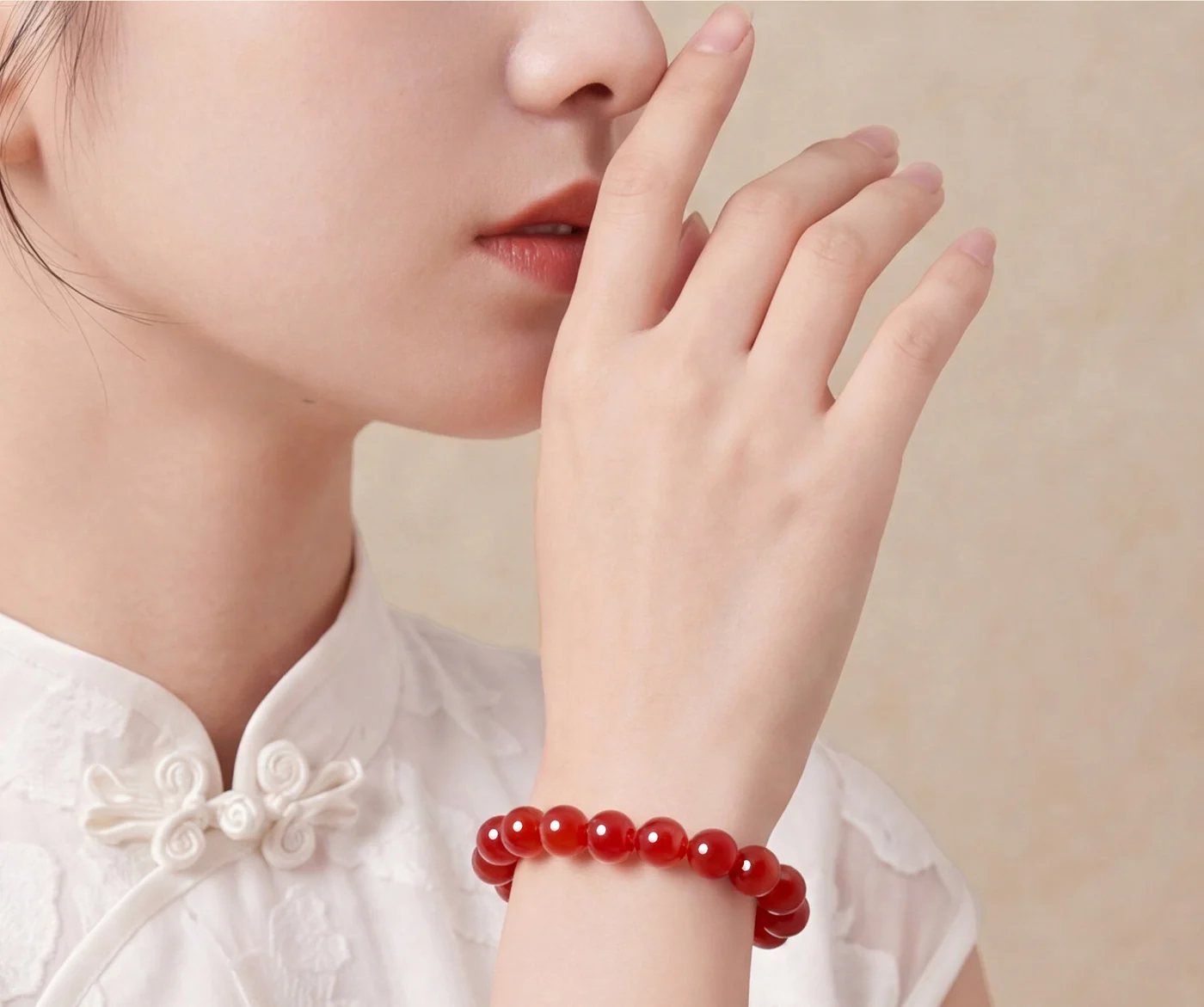
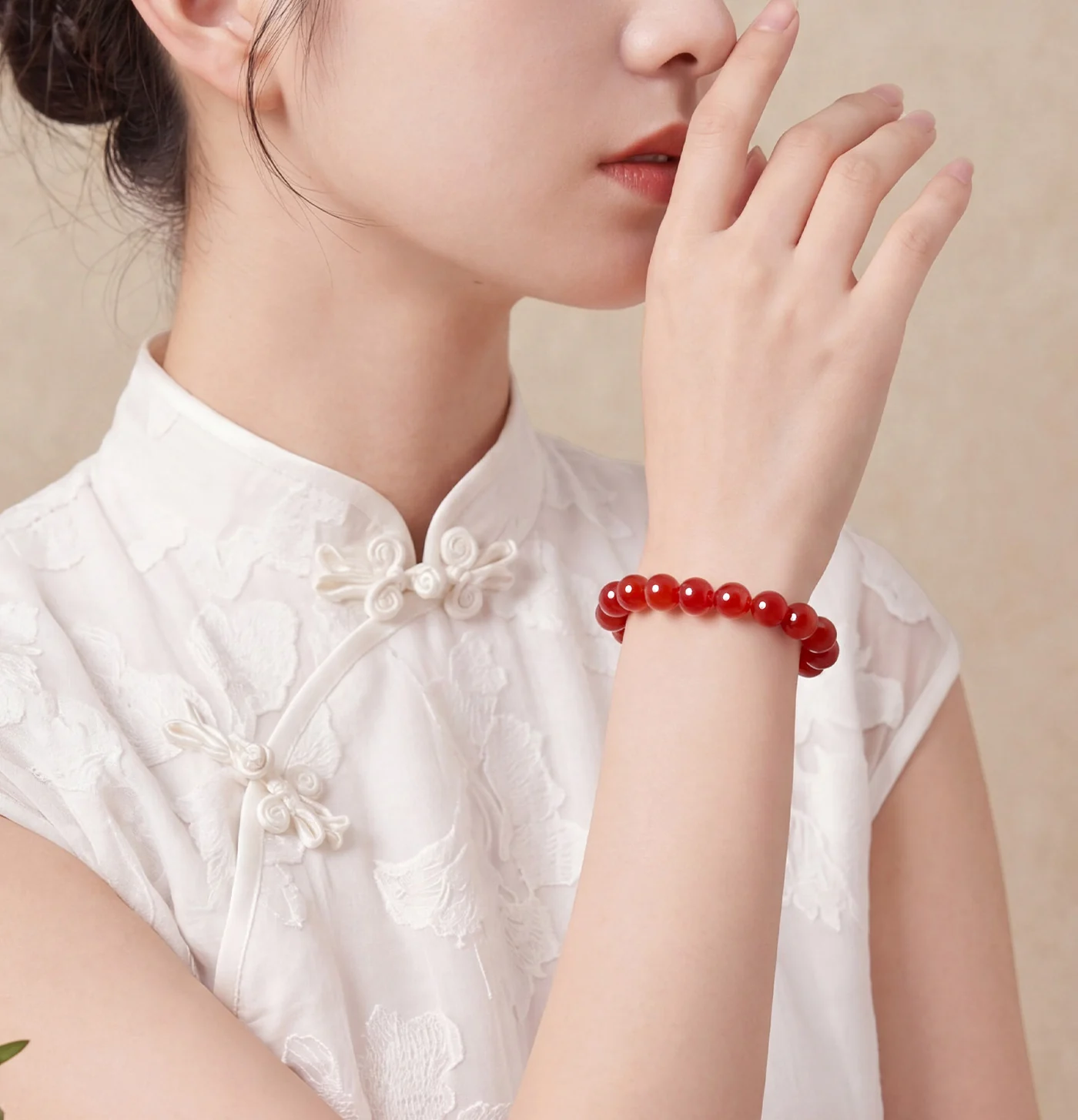
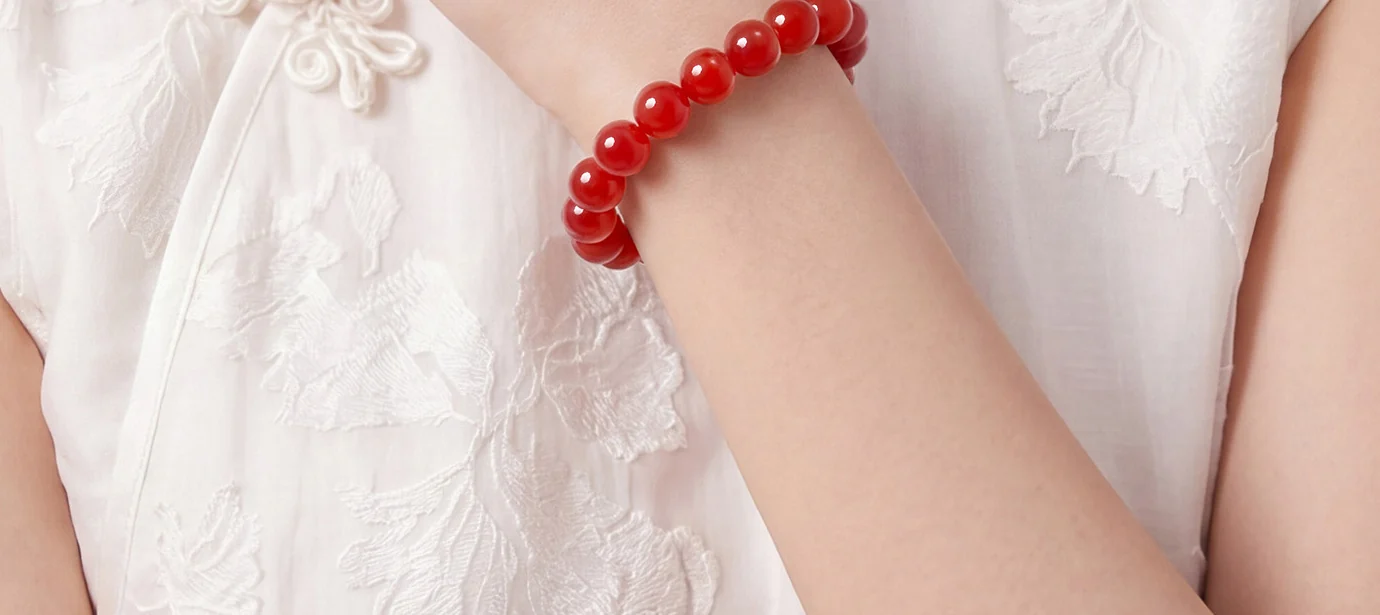
Red agate is surprisingly easy to wear. It looks crisp against white and cream, as the photographs show, adds warmth to grey, navy and black, and makes a cheerful accent with denim. With metals, it is classic with yellow gold and fresh with silver.
At 8 mm, the strand works alone or stacked. Paired with a fine gold chain it looks polished; paired with a pale jade or clear quartz bracelet it becomes a gentle colour contrast. Wearing it on the opposite wrist from a watch keeps the beads free of knocks.
The design is unisex. Many men wear red agate, especially during their zodiac year, and the 8 mm size is discreet enough for a professional setting.
11
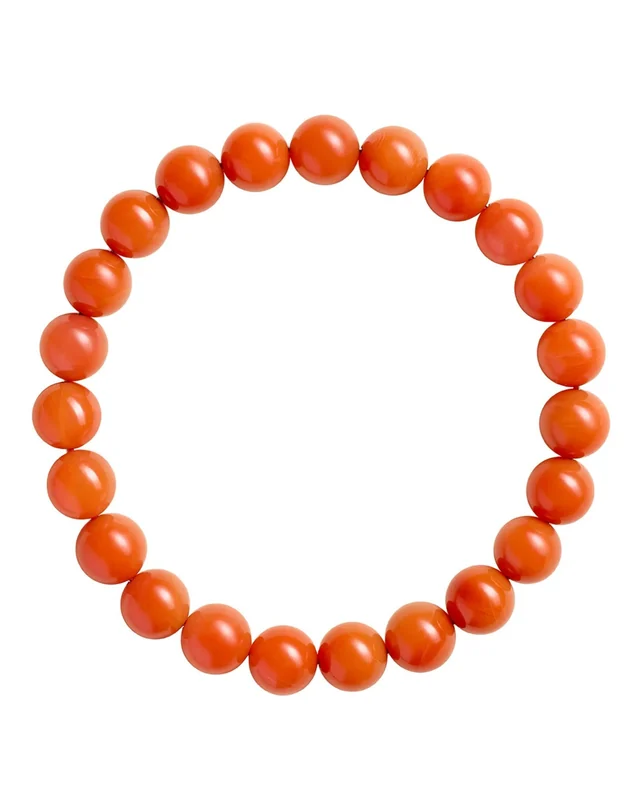
Several red chalcedonies are sold under different names. Carnelian is the international name for orange-red chalcedony, usually translucent and often lighter in tone. Nanhong agate, from Baoshan in Yunnan and Liangshan in Sichuan, is a prized Chinese red agate with a dense, waxy, almost opaque persimmon colour. Brazilian ice-type red agate, as used here, sits between them: brighter and more translucent than Nanhong, deeper red than most carnelian.
Each has its admirers. Choose ice-type red agate if you love clarity and glow; choose Nanhong if you prefer a soft, porcelain-like warmth. Our Nanhong designs are listed in the related bracelets below.
12
Year-Round Good Fortune is one of our most popular gifts because its meaning fits almost any celebration: birthdays, Lunar New Year, a wedding, a promotion, a new baby in the family or someone entering their zodiac year. Red is welcome at all of these, and the 8 mm size suits almost any recipient.
A short note explaining the wish for “happy occasions year after year” makes the gift more personal, especially for someone unfamiliar with the tradition. If you cannot measure their wrist, choose the most likely size; an unworn ready-designed bracelet can be returned within 14 days of delivery.
13
Wipe the beads with a soft, dry or slightly damp cloth and let the strand dry flat. Avoid soaking, ultrasonic cleaners and household chemicals. Perfume, sun cream and hand sanitiser do not harm agate but leave a film that dulls the shine and shortens the life of the elastic, so let them dry before putting the bracelet on.
Store the bracelet flat and on its own in a soft pouch. Remove it before swimming, bathing and sport, and avoid knocking it against stone or metal surfaces. With daily wear, stranded elastic usually stays in good condition for one to two years; if gaps open between the beads, have it restrung before it breaks.
Yes. Our supplier specifies natural ice-type red agate, and each strand is supplied with an identification certificate from a third-party laboratory.
It describes agate translucent enough for light to pass well into the bead, so it glows rather than looking flat and opaque.
No. Natural red agate’s colour is stable in normal wear and daylight.
You may see faint natural banding or clouds in some beads. These are features of natural agate, not defects.
Typically 22 beads for a 14 cm wrist, rising to about 30 for 21 cm.
Yes. Red is traditionally worn during one’s zodiac year, and red agate is one of the most popular choices.
Yes. The design is unisex, and 8 mm is a discreet everyday size.
Ice-type red agate is brighter and more translucent; Nanhong is denser and more opaque, with a soft, waxy persimmon red.
It is best not to. Water will not harm agate, but soap, chlorine and soaking weaken the elastic cord.
This design is made in 8 mm. Ask a design adviser about other sizes in the same material.
Whichever is most comfortable; many people wear it on the wrist without a watch.
The material, size and finish match the photographs, though natural agate varies slightly in tone from strand to strand.
Protection
Natural red carnelian agate (chalcedony)
Career · Prosperity
Nanhong agate
 Personal designs
Career · Prosperity
Black obsidian · Red agate
We use Google Analytics and Microsoft Clarity by default to understand visits and improve browsing. Form inputs are masked, and you can opt out anytime. Privacy policy