Agate within the chalcedony family
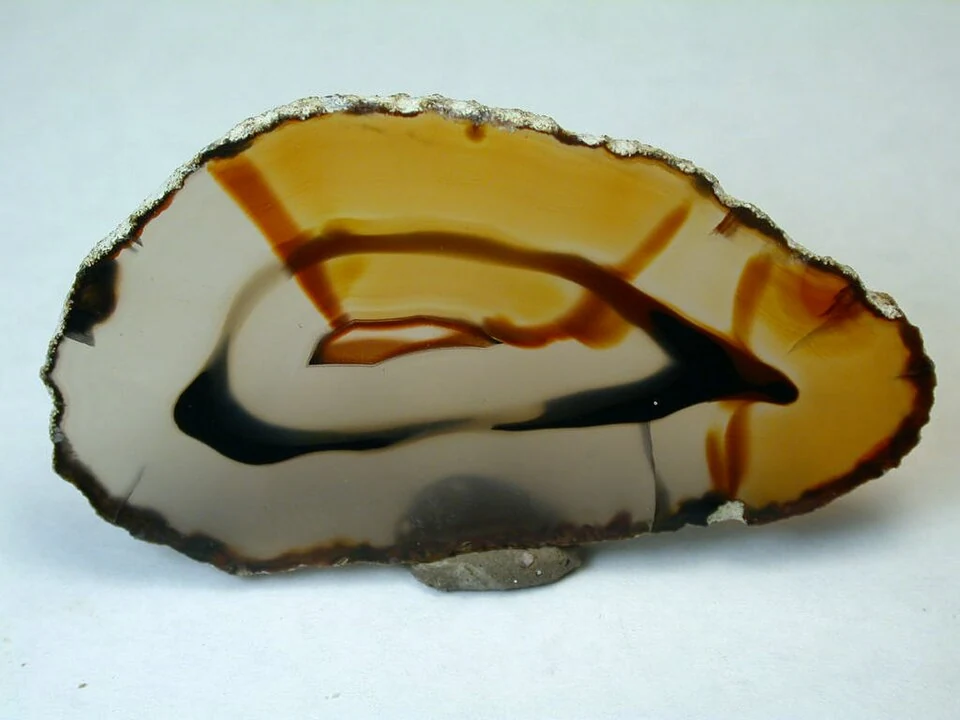
Agate belongs to the fine-grained quartz family called chalcedony, with banding among its familiar appearances. Trade names also use agate for mossy, branching and scenic patterns that need not show neat stripes. A family name and a variety name can both be correct descriptions at different levels.
A slice, round bead and cabochon reveal different portions of the rough material. Cutting direction changes the pattern, and a bead retains only a small part of it. A strand may emphasize continuity or the individuality of each piece.
GIA describes the long use of these materials in carving and jewelry. Layers can serve raised cameos, engraved surfaces and beads in different ways. The finished object reflects both natural pattern and the work that brings it forward.
Moss, branches and special flashes
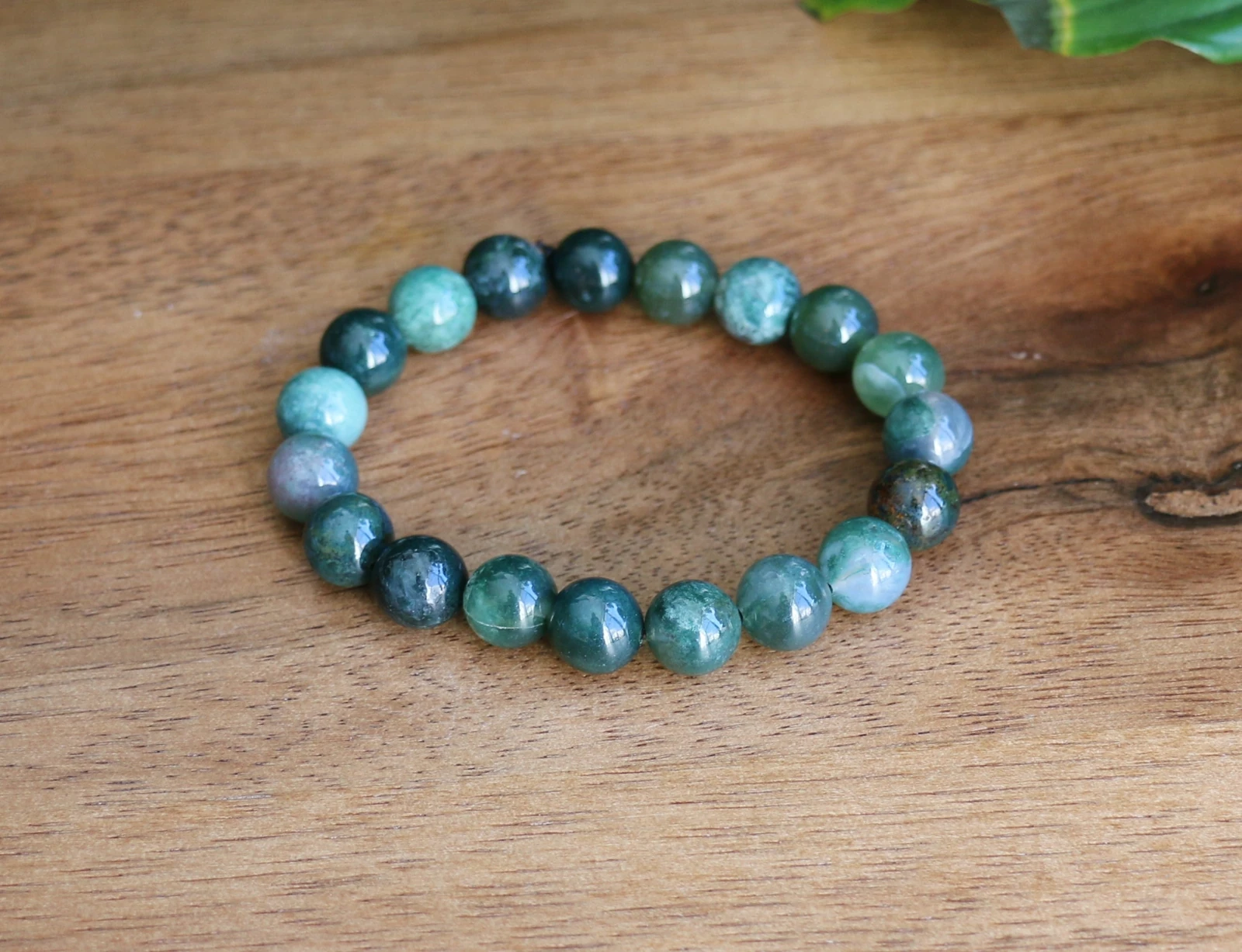
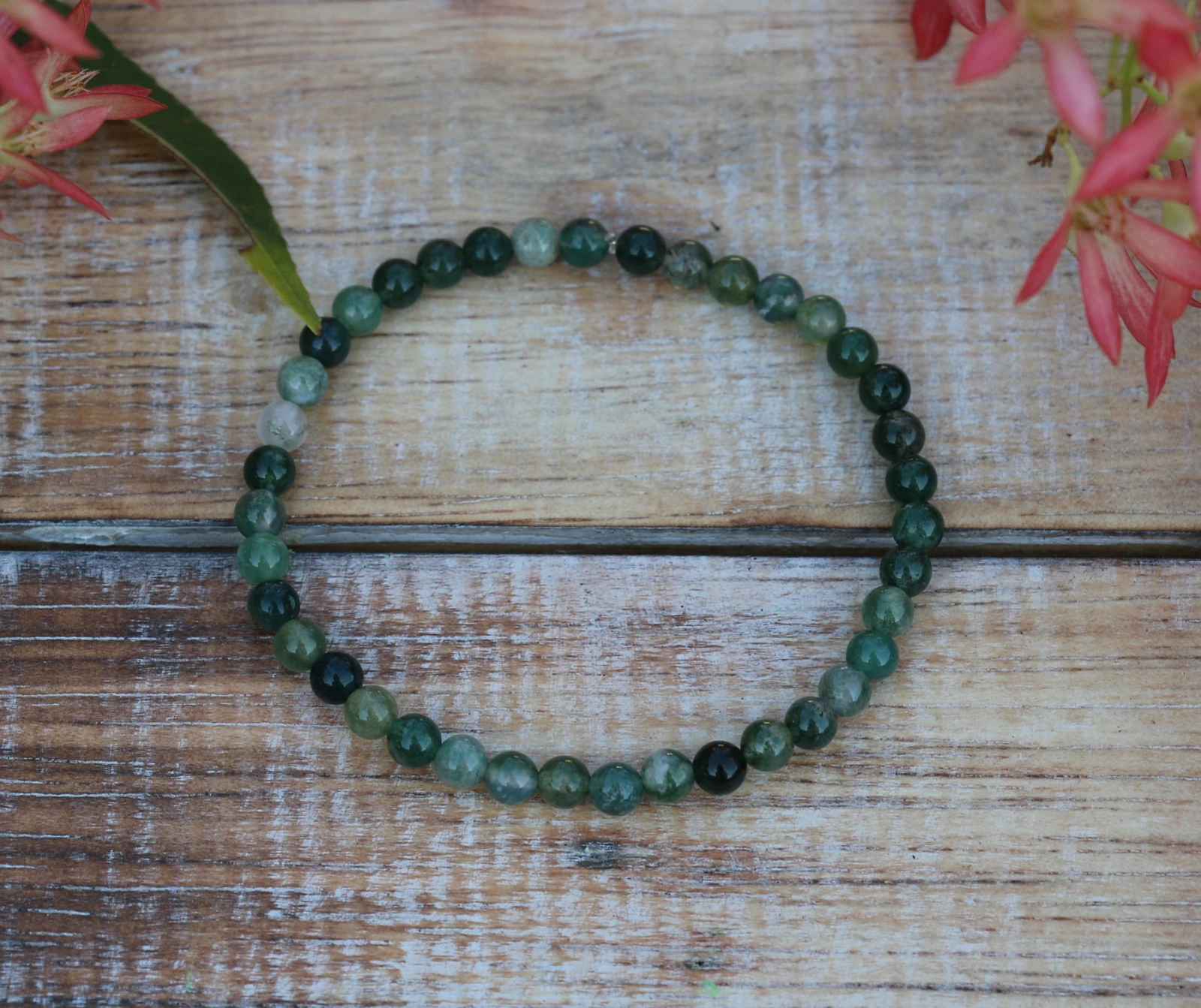
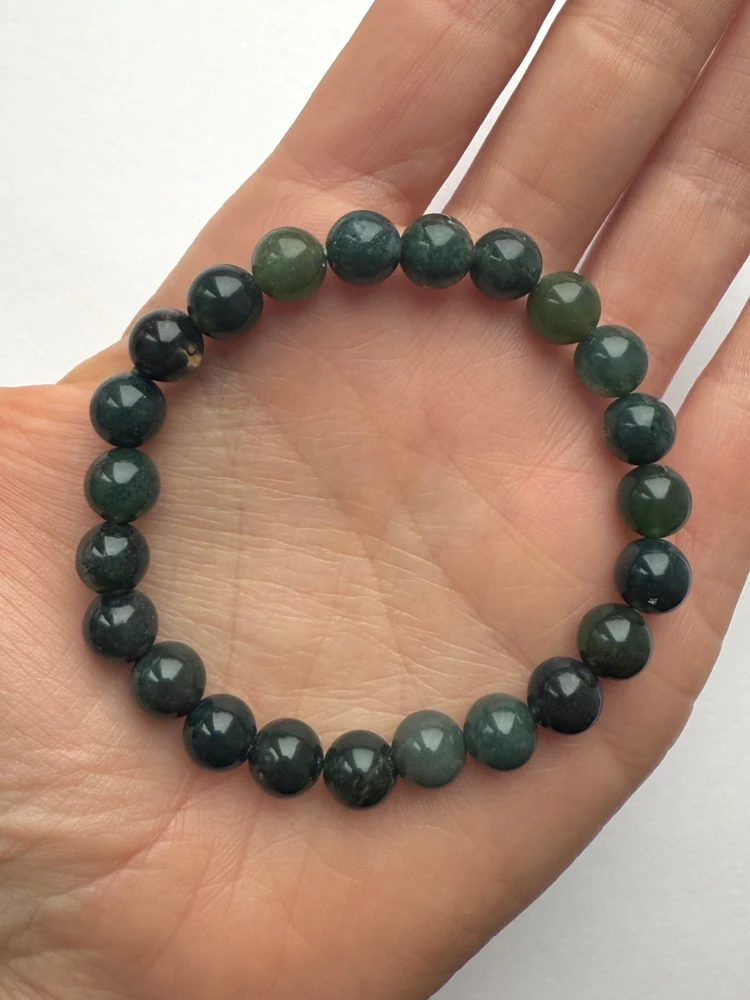
The plant-like appearance of moss agate comes from mineral inclusions rather than real vegetation. Green branching shapes, a pale background and translucent areas can give each bead a different balance. Dense pattern and generous clear space offer different pleasures.
Fire agate attracts interest through a special color effect, while lace-related names emphasize delicate banding. Such names can guide a search but do not make one price table apply to all varieties. Ordinary rough, carefully cut optical effects and collectible patterns are different purchases.
A pattern that resembles a mountain, tree or cloud leaves room for personal imagination. It need not become a test of authenticity or imply a ritual history. Actual texture and clear material information already provide plenty to appreciate.
Vivid color and clear treatment information
Agate can be naturally colored or color-enhanced. GIA particularly notes dyeing among vividly pink, blue and green goods. Treated agate differs from a glass imitation, and natural origin differs from untreated color.
Strong color does not automatically prove imitation, nor does a pale shade prove absence of treatment. Photographs show appearance rather than every identity detail. Fire, acids or repeated solvent rubbing can damage a finished piece without supplying a full answer.
A preference for natural-looking pattern or for vivid uniform color can both be stated clearly. The important point is how the actual product is described. Identity, treatment and dimensions let the color stand on accurate information.
Rough-stone prices and bracelet prices
Begin by distinguishing rough, collectible specimens, carvings, loose beads and finished bracelets. Kilogram, strand and carat prices refer to different goods. Converting one unit into another finished object can overlook selection and workmanship.
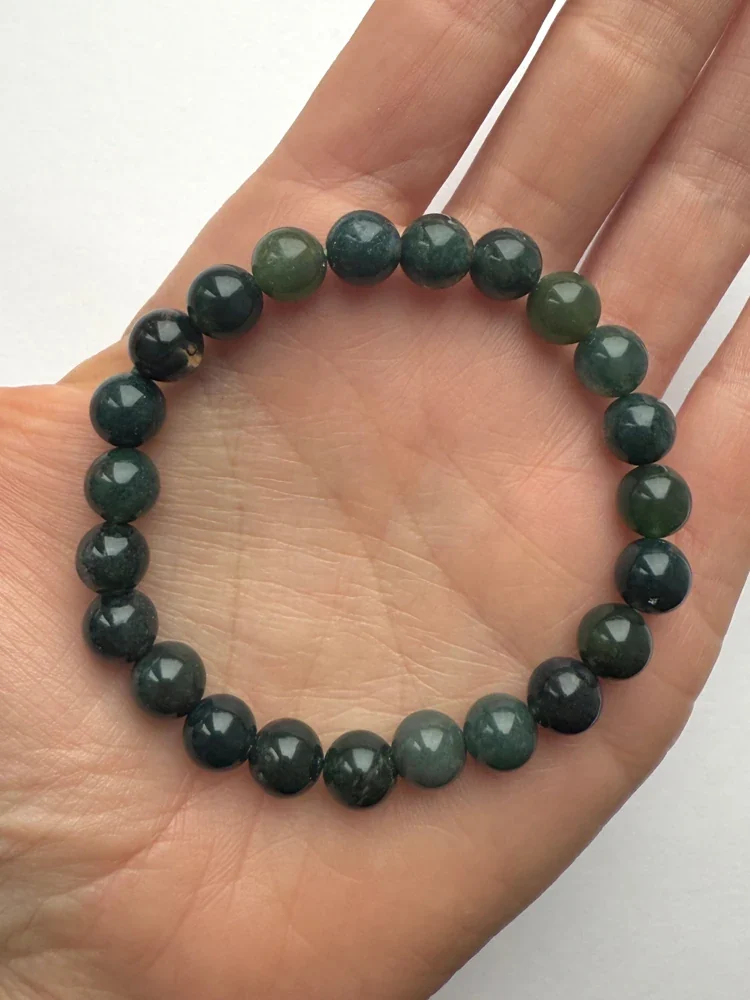
For a strand, compare diameter, roundness, matching, hole finish, polish and companions. Natural variation does not mean no selection took place; visual uniformity does not automatically imply higher quality. Pattern and finish work together.
A particular origin or unusual appearance may attract collectors, but a locality name cannot replace the actual material. Check condition, treatment, whether images correspond to the item and the suitability of the construction for use.
Red, white and moss green intentions
Annual Blessings uses approximately 8 mm red agate, with a continuous warm red for a celebratory year. Renewed Prosperity uses approximately 8 mm moss agate, whose green inclusions suggest growth and accumulation. Each keeps one material throughout; their difference comes from the stones themselves and the intention attached to them.
For a finer patterned bracelet, consider the approximately 4 mm moss-agate study design. The approximately 6 mm white-agate design offers a paler alternative with a more visible round bead. Their proportions and tones give learning and orderly progress two different expressions.
Personal BaZi work considers favorable elements, the energy pattern and annual and ten-year cycles. Red can express celebration, green growth and white clarity, without requiring every design to contain an equal share of all colors.
Preserving the pattern
Avoid hard knocks, harsh cleaners and prolonged intense sunlight, especially for treated material. Gentle cleaning is preferable to aggressive mechanical methods for included gems such as moss agate. Mixed bracelets also require care for every companion and the cord.
Use a soft cloth, dry separate storage and timely repairs to worn cord or chipped holes. A favorite strand often contains a few patterns you recognize immediately; considerate care keeps those small landscapes close.
Questions & answers
Does moss agate contain actual plants?
Its plant-like patterns are mineral inclusions, not preserved moss. Their variation is part of the material’s appeal.
Must every agate show bands?
Banding is characteristic, but trade names also include mossy and branching materials. Read the particular variety description.
Is vivid blue agate necessarily natural color?
No. Agate is often dyed. Natural origin and natural color need separate confirmation.
Can fire agate prices represent ordinary agate?
No. Special optical effects, cutting and collectible patterns require comparison with similar varieties and specifications.