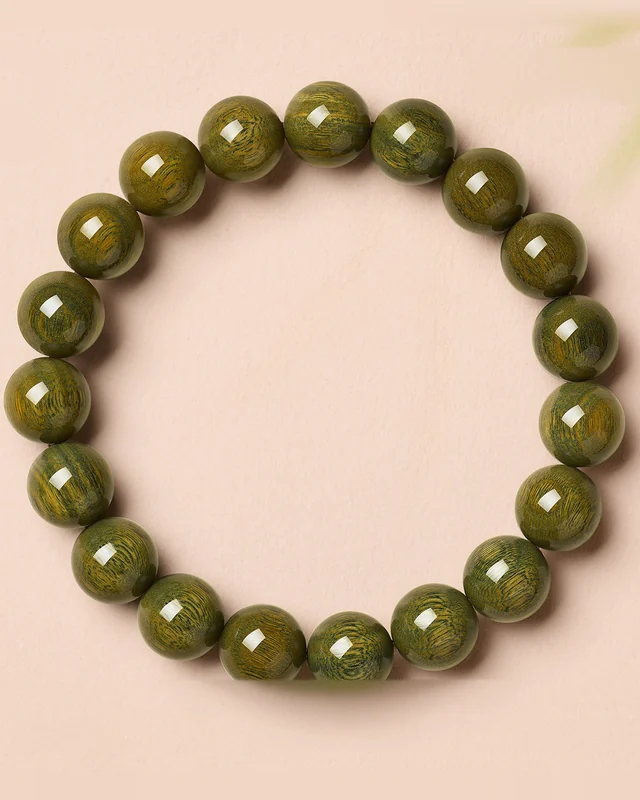
Balance
10 mm Natural Green Sandalwood Bracelet · Evergreen Tranquility
Natural vintage green sandalwood (Bulnesia sarmientoi / Verawood)
$76.0010 mm · Wood
 View larger
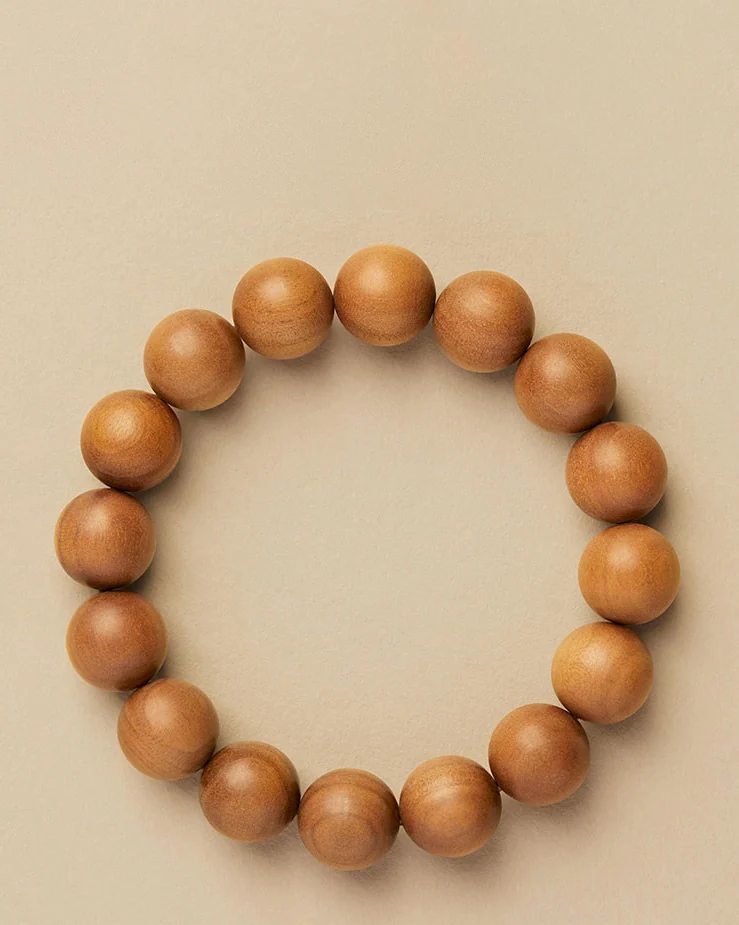
Indian sandalwood8 mm
Auspicious bracelets / Wood
Round 8 mm beads of authentic Indian Mysore sandalwood (Santalum album): aged heartwood rich in natural santalol oils, carrying a quiet, buttery woody fragrance that warms with the skin.
$64.00USD
Prepared in 5 days after payment
Shipping: Asia $10; Europe, US, Canada, Australia & NZ $20
Ready-designed returns may be requested within 14 days. See returns policy
Helpful Connections
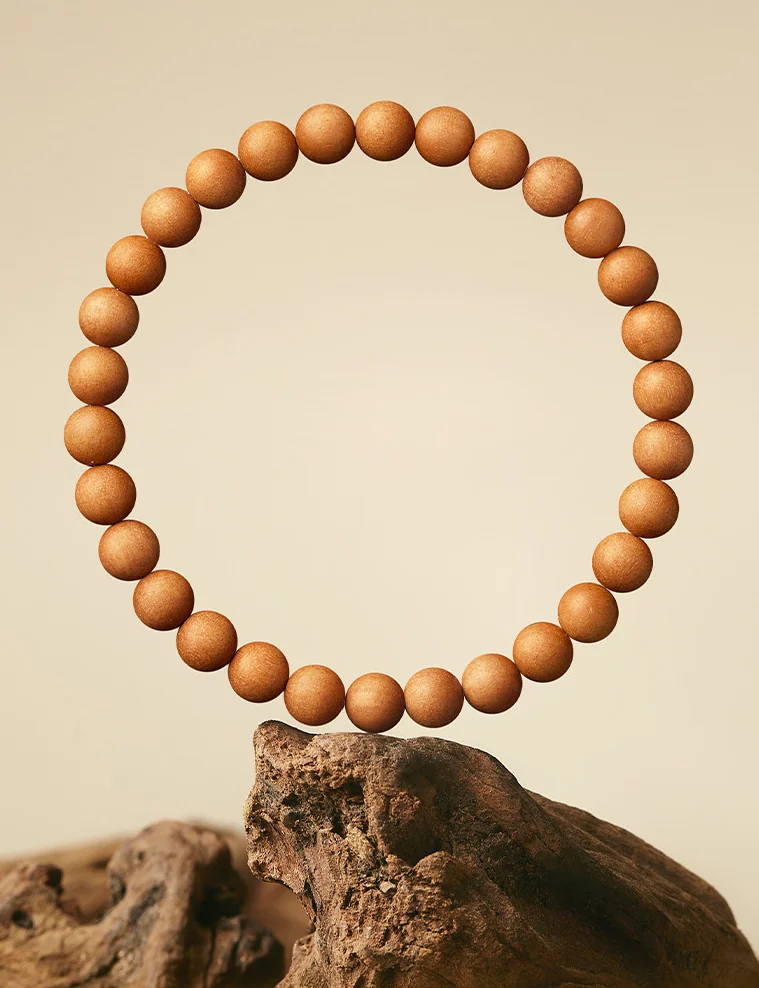
Helpful Connections is a classic strand of genuine Indian Mysore sandalwood (Santalum album) turned into smooth, balanced round beads of approximately 8 mm. Grown slowly in the fertile highlands of southern India, this revered timber yields a natural fragrance celebrated for centuries: an airy, noble woody character grounded by an enduring, buttery sweetness with delicate milky undertones. Unlike synthetic perfumes that project loudly, authentic sandalwood sits close to the body, quietly releasing its warmth as it meets the temperature of your wrist.
In traditional Five Elements philosophy, natural fragrant wood belongs to the Wood element, the phase of springtime, upward vitality and grounded expansion. The Chinese name, gui ren xiang fu, expresses an enduring wish for helpful people along one’s career path: trusted mentors who share timely counsel, collaborative colleagues who offer reliable support, and steady partnerships built on mutual respect and shared integrity.
Helpful Connections
Explore the botanical heritage of Santalum album, what high-oil aged heartwood truly means, how to care for natural wood on the wrist, and how to select your ideal fit.
01
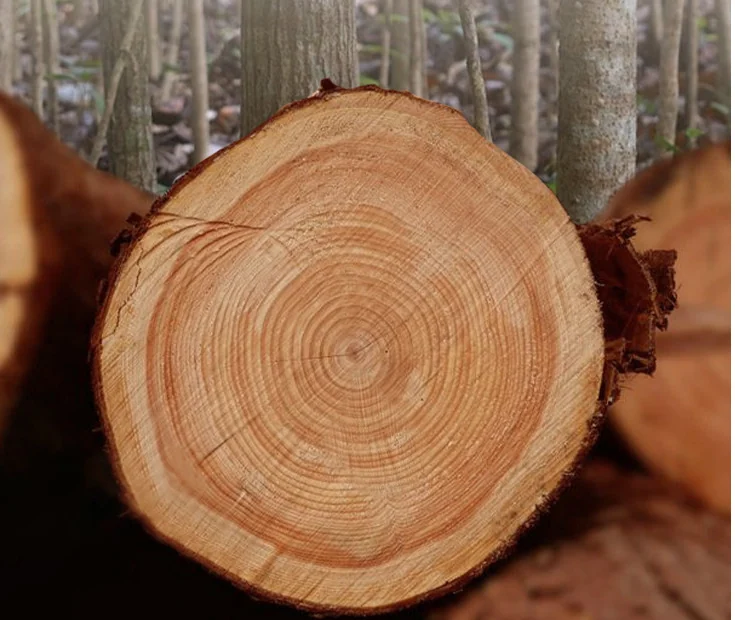
True sandalwood belongs botanically to Santalum album, a slow-growing evergreen tree of the Santalaceae family native to southern India, with its most celebrated historical groves clustered around the plateau of Mysore in Karnataka and neighbouring regions of Tamil Nadu. In Sanskrit literature and classic trade records along the ancient Silk Road, it was revered as candana or zhatan (旃檀), held above all other fragrant timbers for its noble character and long-lasting aromatic richness.
What makes Santalum album exceptional among woods is where and how its fragrance develops. In ordinary aromatic trees such as pine or camphor, resin resides largely in the outer bark, needles or young branches. In genuine sandalwood, the precious essential oils accumulate deep within the dense central heartwood over decades of mature growth, shielded from the sun and weathered into dense, heavy timber.
Our supplier sources this material from mature, legally certified Mysore logs, turning only the dense inner core into jewellery-grade round beads.
02
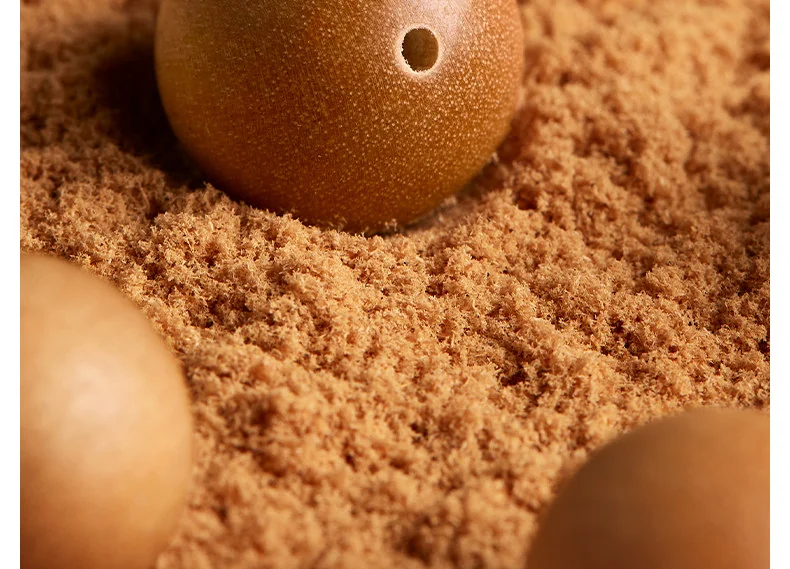
The natural aroma of authentic Mysore sandalwood is complex, refined and immediately recognizable to experienced collectors. Rather than an aggressive, sharp blast of perfume, it unfolds with an airy, clean, dignified woody note—often described in Chinese wood appreciation as qing zheng mu xiang (清正木香)—which gradually reveals a lingering, velvety sweetness with distinct creamy and milky undertones (dai zhe si si tian nai xiang).
This buttery richness is primarily driven by high natural concentrations of alpha-santalol and beta-santalol, sesquiterpene alcohols unique to mature Santalum album. These organic compounds possess remarkable fixative stability, meaning the fragrance does not quickly evaporate into the room. Instead, it warms gently against your pulse points, creating an intimate sensory atmosphere that accompanies you through the day without intruding on those around you.
03
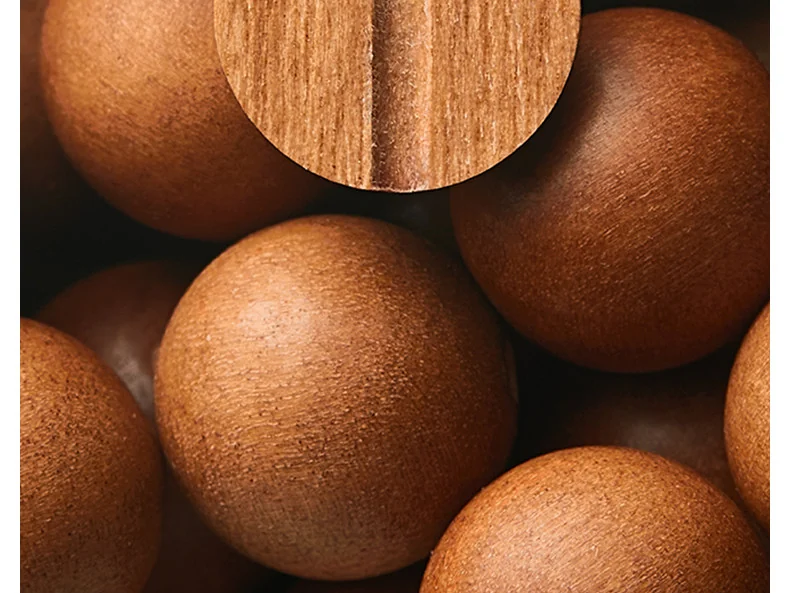
In the timber trade, our supplier describes these beads as gao you lao liao (高油老料), meaning high-oil aged heartwood. A mature sandalwood trunk contains two structurally distinct zones: the outer sapwood (bai pi or bian cai) and the dark inner heartwood (shu xin liao). The outer sapwood is pale cream, fibrous, entirely devoid of essential oils, and essentially scentless; during ethical processing, this entire outer layer is discarded.
The round beads of this bracelet are carved exclusively from the dense, amber-brown heartwood at the tree core. When inspected under close optical magnification, the surface reveals microscopic resin canals, fine natural pores (zong yan), and subtle growth lines. These compact wood fibers hold the condensed santalol oils, giving the beads a dense, tactile weight and a natural, silky sheen when polished.
04
Freshly felled sandalwood—known in the craft as xin liao (new timber)—still retains volatile, lighter terpenes that can give off a sharp, slightly acidic, or pungent initial smell. Furthermore, freshly cut wood contains unevaporated moisture, making it susceptible to cracking, warping, or shrinking when moved between humid and air-conditioned environments.
In contrast, authentic aged stock (lao liao) has been set aside in ventilated, dry storage warehouses for years or even decades. Over this prolonged aging process (chun hua), moisture dissipates evenly throughout the cellular structure, and the sharper volatile components oxidize and soften, leaving behind the mellow, deep, sweet balsamic core. This patient natural seasoning stabilizes the timber, ensuring that the finished 8 mm beads resist splitting and maintain their spherical accuracy through changing seasons.
05
In low-quality commercial markets, inferior or exhausted woods are frequently soaked in synthetic chemical fragrances (jia xiang jing), stained with chemical pigments to mimic the rich honey-brown of old timber (ran se), or coated in high-gloss polyurethane varnish (shang qi) to mask dry pores. These surface treatments seal off the natural wood grain, prevent the wood from breathing, and can cause skin irritation for sensitive wearers.
Our supplier adheres strictly to the craft standard of ling xiang jing, ling ran se, ling shang qi (0香精、0染色、0上漆). Each bead is mechanically turned from raw cured heartwood, smoothed step by step with fine-grit abrasive papers, and dry-polished on a lathe without chemical waxes or surface lacquers. What you see and touch is the pure, authentic, unvarnished natural grain of Indian sandalwood.
06
Because historical harvesting severely reduced wild sandalwood populations across the Indian subcontinent over past centuries, the Indian government established rigorous conservation frameworks to protect the species. Today, wild felling is strictly banned, and the cutting, transport, and auction of Santalum album timber in Karnataka and Tamil Nadu are strictly regulated by state forest departments, with raw logs distributed through supervised government auctions.
Furthermore, the genus Santalum is regulated under Appendix II of CITES (the Convention on International Trade in Endangered Species of Wild Fauna and Flora). Appendix II controls international trade to ensure that commercial timber is harvested legally, sustainably, and with documented chain of custody. We take conservation governance seriously and ensure our workshop sources wood that respects these essential ecological controls.
07
Customers often ask about the difference between Indian sandalwood and green sandalwood (lütan), which features in our Five Elements series such as personal-grove. Green sandalwood is not a true sandalwood at all; it is the heartwood of Bulnesia sarmientoi (often called verawood or Argentine lignum vitae), a tree native to the Gran Chaco dry forests of South America belonging to the Zygophyllaceae family.
The two woods are completely distinct in botanical identity, appearance and scent. Green sandalwood is an olive-to-forest-green wood with dark feathery streaks that deepens to deep emerald when exposed to sunlight, exuding a fresh, tea-like and rose-tinted balsamic fragrance. Indian sandalwood (Santalum album) is a warm honey-tan to golden caramel wood that carries the iconic sweet, creamy, milky santalol aroma. Both are exquisite natural timbers, but they represent entirely different botanical families.
08
Another common comparison arises between Indian Mysore sandalwood (Santalum album) and Australian sandalwood (Santalum spicatum). Australian sandalwood is a respected natural wood sustainably harvested from the arid shrublands of Western Australia under government quotas, widely used in modern natural incense and essential oil distillation.
However, the aromatic profiles of the two species differ significantly due to their chemical composition. Australian sandalwood has a lower total santalol percentage and contains higher proportions of farnesol and other sesquiterpenes, giving it a drier, sharper, more cedar-like or resinous pine character. Indian Mysore Santalum album contains the highest concentrations of alpha- and beta-santalol in the world, creating that incomparably smooth, rounded, sweet, milky finish that has made Mysore the historical gold standard of fragrant woods.
09
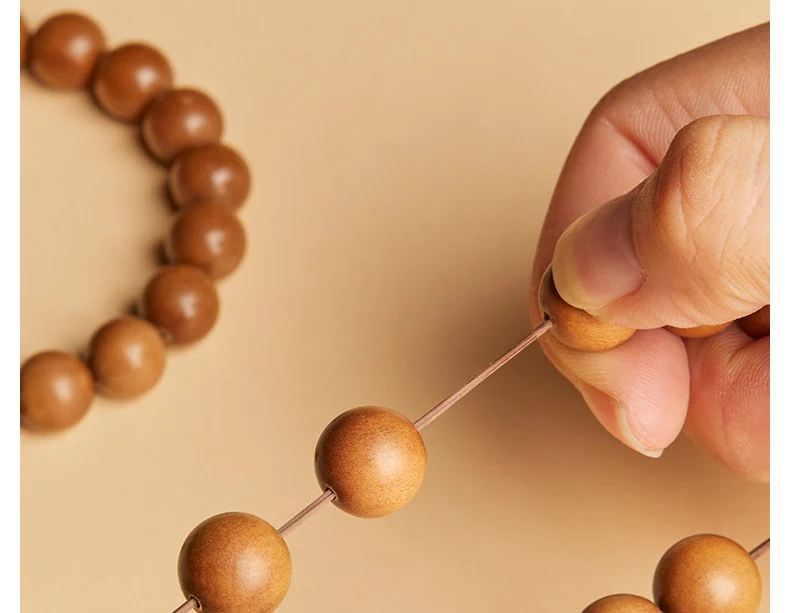
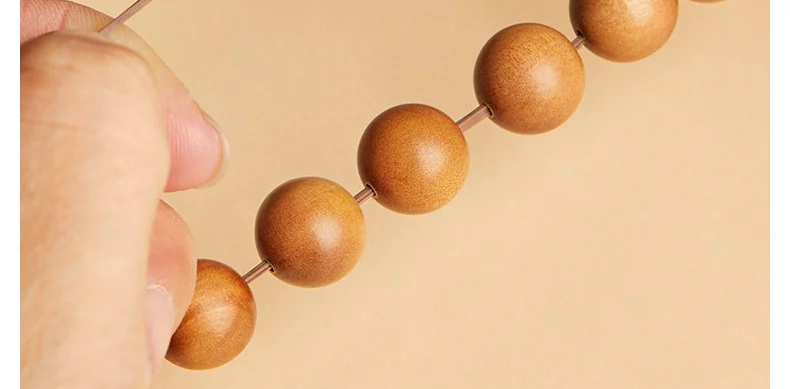
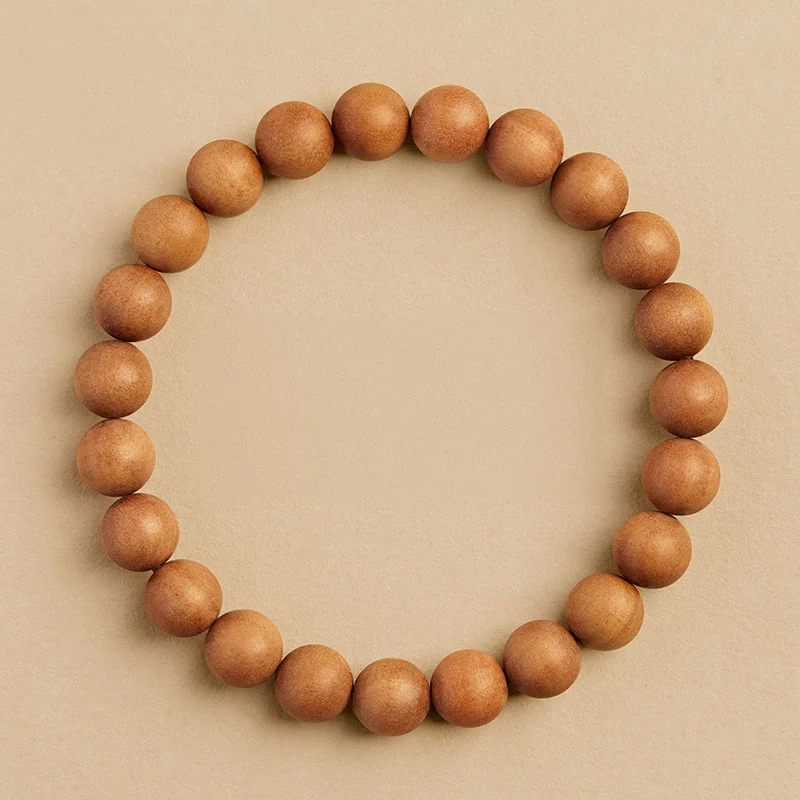
In traditional bead aesthetics, 8 mm is celebrated as the most versatile, balanced proportion. Smaller 4 mm or 6 mm beads can feel delicate and slender on broader wrists, while larger 12 mm or 14 mm beads possess a bold, heavy presence that can catch on cuffs or feel bulky during desk work. At approximately 8 mm, each bead provides sufficient surface area to display the natural wood grain and diffuse its subtle aroma, while maintaining a refined, lightweight silhouette.
On average, an 8 mm strand consists of 21 to 29 round beads depending on your wrist measurement. It sits flatly and comfortably against the wrist bone, sliding effortlessly beneath long shirt sleeves, cashmere sweaters, and tailored blazers without catching on fabrics.
10
To find your correct size, wrap a flexible measuring tape or a narrow strip of paper snugly around your bare wrist, directly above the wrist bone where you prefer a bracelet to sit. Mark the point of overlap and measure the flat length in centimetres. Do not add extra slack when selecting your size: our studio automatically calculates the appropriate bead count and cord tension to ensure a comfortable, natural fit.
Because wooden beads are lightweight and warm quickly to skin temperature, many wearers prefer a comfortable standard fit that rests gently against the pulse point without sliding excessively up and down the arm.
11
The story name of this bracelet, Helpful Connections (gui ren xiang fu), draws from centuries of Eastern cultural wisdom regarding professional flourishing. In traditional thought, gui ren refers to the mentors, insightful teachers, trusted advisors, and collaborative peers whose guidance and timely encouragement illuminate one’s path forward during critical career turning points.
True professional support is rarely attracted through loud self-promotion or nervous urgency. Instead, the serene, grounded presence of aged sandalwood evokes an inner posture of composure, clarity, and patience. Wearing the strand serves as a quiet personal reminder to listen attentively, honour commitments, cultivate sincere relationships, and maintain emotional equilibrium when navigating complex workplace decisions.
We share these associations as meaningful cultural reflections and personal aspirations rather than supernatural promises or guarantees.
12
In traditional Chinese Five Elements (Wuxing) philosophy, fragrant sandalwood is a pure manifestation of the Wood (mu) element. Wood governs springtime, the eastern dawn, renewal, upward growth, and flexible resilience. Just as a healthy tree remains firmly rooted in the earth while bending gracefully with changing winds, Wood energy represents the capacity for lifelong learning, creative adaptation, and steadfast moral grounding.
If your personal BaZi chart favours Wood, or if you find yourself in an environment that calls for sustained focus, strategic expansion, and calm perseverance, natural wood jewellery provides an organic, tactile touchpoint throughout your day.
13
Throughout the Tang, Song, Ming, and Qing dynasties, sandalwood occupied an honoured position at the intersection of spiritual contemplation and scholarly life. Buddhist monastics turned sandalwood into counting beads (nian zhu), prizing its cooling, clarifying scent for quiet meditation and breath awareness. In imperial scholar studios, pieces of Mysore heartwood were carved into brush rests, seal boxes, and arm rests.
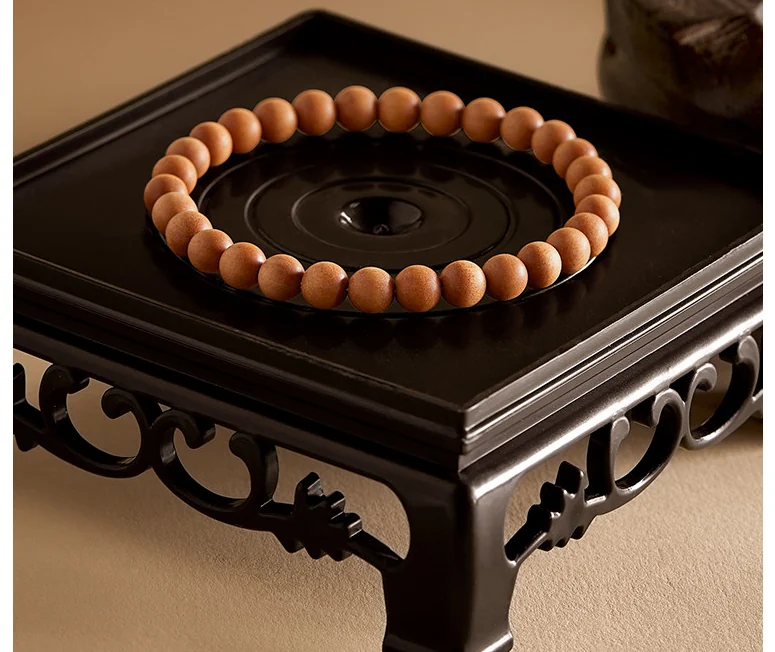
Scholars placed aged sandalwood on dark rosewood tables alongside inkstones and tea wares, valuing its presence for purifying the study atmosphere and clearing the mind before writing essays or studying classical texts. Wearing a strand of Mysore sandalwood today continues this unbroken tradition of quiet refinement and contemplative focus.
14
One of the most gratifying aspects of wearing untreated natural sandalwood is witnessing its gradual evolution. When first crafted, the beads display a warm, pale honey-tan or soft golden-brown hue. As you wear the bracelet over weeks and months, the surface interacts naturally with ambient air, light, and the microscopic trace oils of clean skin.
Through this slow, natural oxidation process, the wood grain gradually darkens to a richer caramel, chestnut, or reddish-amber tone. Gentle daily contact acts as an organic buffing cloth, compacting the surface fibers and creating a soft, translucent, silky luster known in connoisseurship as bao jiang (patina). Rather than remaining static like synthetic materials, genuine sandalwood records the passage of your personal journey on your wrist.
15
Helpful Connections was originally offered on our site with generic brown sandalwood beads of unspecified botanical origin and source. While pleasant, that earlier material lacked verified species documentation, verified forestry provenance, and the distinctive sweet milky depth that defines genuine Indian Mysore heartwood.
We have completely re-engineered this model around authentic Indian Mysore sandalwood (Santalum album) heartwood, sourced from legally regulated state forestry auctions with CITES Appendix II international trade compliance. The new design is shaped from decades-aged high-oil timber with zero synthetic fragrances, dyes, or surface varnish, while faithfully retaining the classic 8 mm bead proportion, the Wood element alignment, and the original Helpful Connections story name.
16
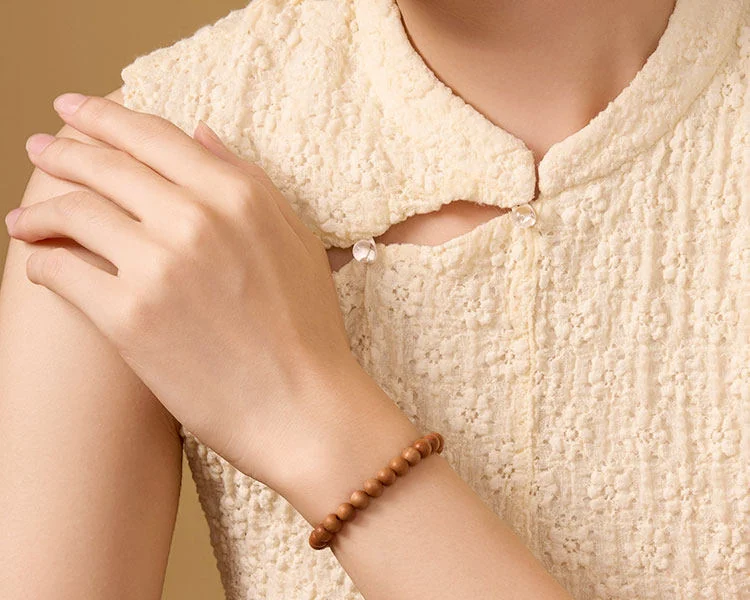
Sandalwood possesses an understated, organic elegance that complements a wide spectrum of modern wardrobes. Its warm, matte woody tones harmonize naturally with unbleached linens, soft cashmere, chunky wool knitwear, and crisp cotton shirting. In professional office settings, it sits discreetly beneath tailored jackets, offering a subtle counterpoint to dark navy, charcoal, or cream suiting.
The bracelet is striking when worn alone as a quiet personal statement, but it also layers handsomely with a slim silver cuff, a matte black obsidian cord, or a discreet leather strap. Because the wood is lightweight and warm, it quickly becomes an indispensable everyday companion.
17
For many professionals who spend extended hours behind computer monitors and in demanding meetings, wearing sandalwood offers an invaluable sensory anchor. During moments of intense problem-solving, strategic contemplation, or brief screen breaks, rolling a smooth 8 mm bead between the thumb and forefinger provides immediate tactile grounding.
The friction of your fingers gently warms the heartwood, releasing a faint, sweet whisper of milky wood scent. Taking three conscious, deep breaths while holding the beads can help reset nervous tension, steady an active mind, and restore mental perspective before your next task.
18
The restrained, organic character of 8 mm Indian sandalwood makes it an inherently unisex piece. Many men who feel uncomfortable wearing highly polished, translucent gemstones or glittering metallic bracelets appreciate the understated, matte, tactile nature of natural timber. It sits naturally beside a wristwatch on the same or opposite arm, reading as a discerning personal accessory rather than conspicuous jewellery.
Similarly, women frequently choose this design for its warm, grounded earthiness and refined botanical scent, pairing it effortlessly with both casual weekend attire and elegant minimalist workday ensembles.
19
With its rich cultural heritage and heartfelt symbolism of supportive connections, this bracelet makes an exceptionally thoughtful gift. It is an ideal token of gratitude for a mentor who has offered life-changing career guidance, a colleague celebrating a well-earned promotion, or a trusted business partner embarking on a collaborative enterprise.
Because natural sandalwood appeals across generations and aesthetic preferences, it avoids the uncertainties often associated with sizing brightly coloured gemstones. An included note sharing the meaning of gui ren xiang fu and the botanical heritage of Mysore timber makes the gift deeply memorable.
20
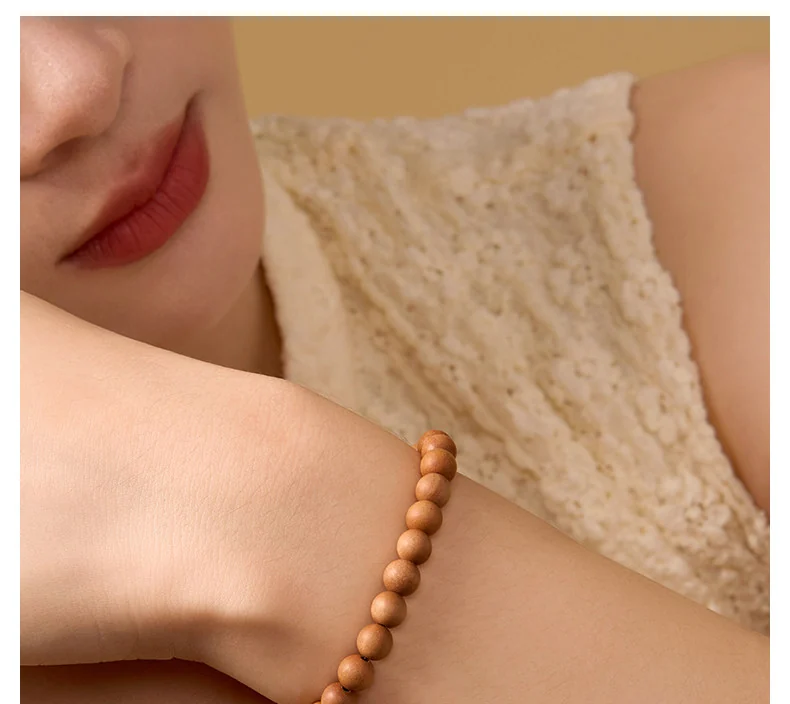
Genuine Indian Mysore sandalwood exhibits several unmistakable characteristics that distinguish it from artificial imitations. Real sandalwood has a substantial, dense feel in the hand, with a silky surface texture that never feels sticky or plasticky. Its aroma is subtle, warm, and intimate; it does not overwhelm from across a room like chemical fragrance oils, but blossoms softly when held against the skin.
When examined under good lighting, genuine heartwood beads display natural, irregular microscopic pores and soft variations in grain direction, rather than the mechanical uniformity of dyed composites. Our workshop provides verified documentation of botanical identity and testing provenance upon request.
21
Because sandalwood is an untreated, porous natural wood, proper daily care is essential to preserve its natural fragrance and surface luster. The most critical rule is to keep the beads strictly away from water and moisture. Water causes wood fibers to swell, raises the grain into a rough texture, leaches out natural santalol oils, and can turn the surface dull and greyish. Always remove your bracelet before washing hands, showering, swimming, or doing dishes.
Avoid all contact with chemical hand sanitizers, alcohol wipes, perfumes, cosmetics, and oily hand creams, which can permanently stain the timber and contaminate its delicate scent. When not wearing the bracelet, store it inside a small, airtight zip-seal pouch or a fabric-lined wooden jewellery box to prevent its volatile essential oils from dissipating into open room air. If the beads ever feel slightly dry after long storage, rubbing them gently with a clean, dry cotton cloth will quickly revive their natural luster.
We use authentic Indian Mysore sandalwood, botanically classified as Santalum album, sourced from the heartwood of mature trees in southern India.
It carries a noble, clean woody aroma grounded by a soft, enduring sweetness with delicate, creamy, milky undertones that warm gently with your body temperature.
It means the beads are cut exclusively from the oil-rich inner core of mature trees, seasoned naturally over years to stabilize moisture and mellow the fragrance, with all scentless sapwood discarded.
Green sandalwood is Bulnesia sarmientoi from South America, an olive-green wood with a tea-rose balsamic scent; Indian sandalwood is Santalum album, a warm honey-tan timber with a sweet milky santalol aroma.
Mysore Santalum album has higher concentrations of alpha- and beta-santalol, producing a sweeter, creamier, and more lingering scent, whereas Australian Santalum spicatum is drier, sharper, and more cedar-like.
Yes. Santalum album is listed in CITES Appendix II to ensure sustainable international trade, and felling in India is strictly overseen by state forest departments through supervised auctions.
No. Our supplier adheres strictly to zero fragrances, zero dyes, and zero varnish (0香精、0染色、0上漆), dry-polishing the raw natural wood on precision lathes.
Yes. Over months of wear, exposure to air and clean skin oils will naturally oxidize and polish the wood, deepening it from honey-tan to a rich, lustrous caramel patina.
No. Water can swell the wood fibers, raise the grain, leach out natural oils, and weaken the cord. Always remove the bracelet before water exposure.
Store it in an airtight sealed bag or a lined jewellery box to prevent the precious santalol essential oils from evaporating into open air.
We upgraded the previous generic brown sandalwood of unknown origin to certified Indian Mysore Santalum album heartwood with CITES compliance, while preserving the 8 mm size and Helpful Connections story.
Measure your bare wrist snugly with a soft tape; the strand contains approximately 21 to 29 beads (8 mm) depending on whether your wrist measures between 14 cm and 21 cm.
Yes. The 8 mm bead size is a classic, understated proportion that looks natural on both masculine and feminine wrists, whether worn alone or paired with a watch.
Yes, but we recommend wearing the bracelet above the watch or on the opposite wrist so the wooden beads do not rub against sharp metal crowns or buckles.
In Chinese tradition, it expresses a wish for supportive mentors, trustworthy colleagues, and collaborative partnerships along your career path, anchored by inner calm and composure.
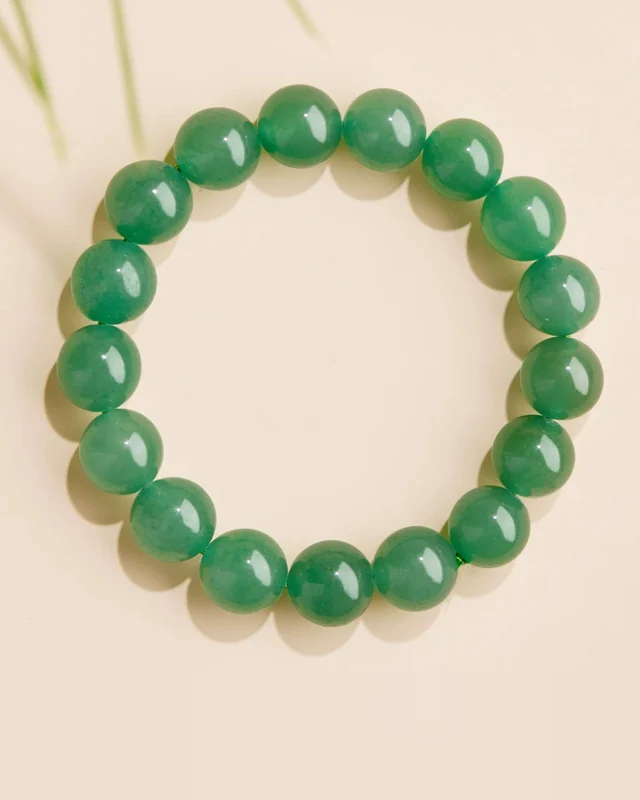
Balance
Natural vintage green sandalwood (Bulnesia sarmientoi / Verawood)
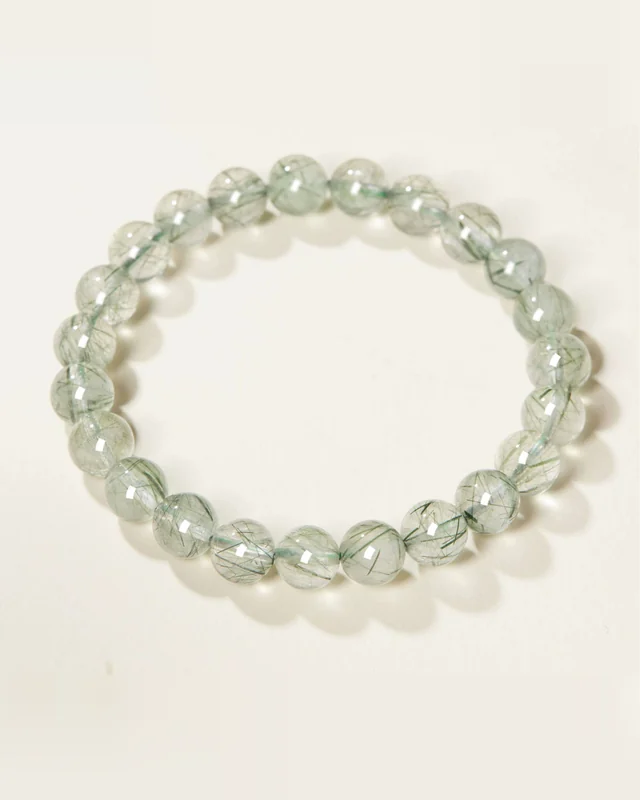
Prosperity · Career
Green rutilated quartz
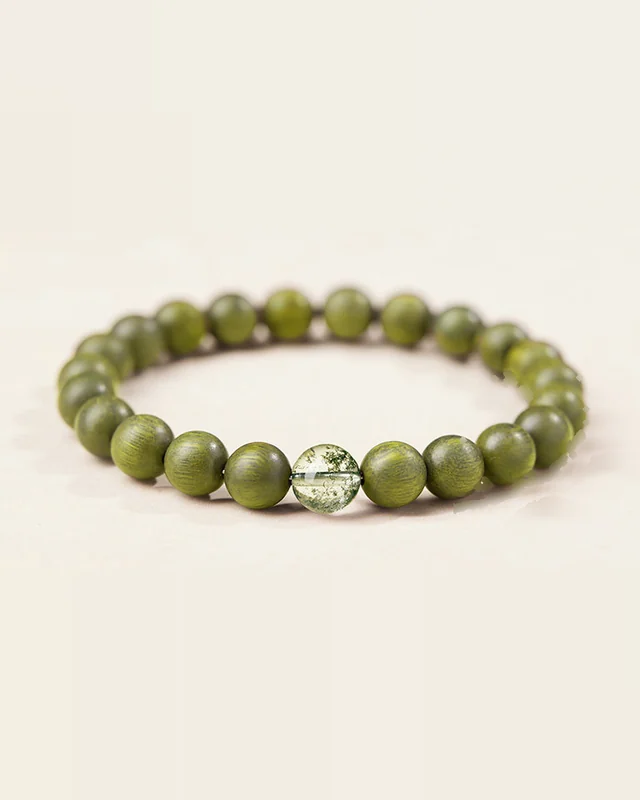 Personal designs
Career · Wisdom
Green sandalwood · Green phantom quartz
We use Google Analytics and Microsoft Clarity by default to understand visits and improve browsing. Form inputs are masked, and you can opt out anytime. Privacy policy