Career · Balance
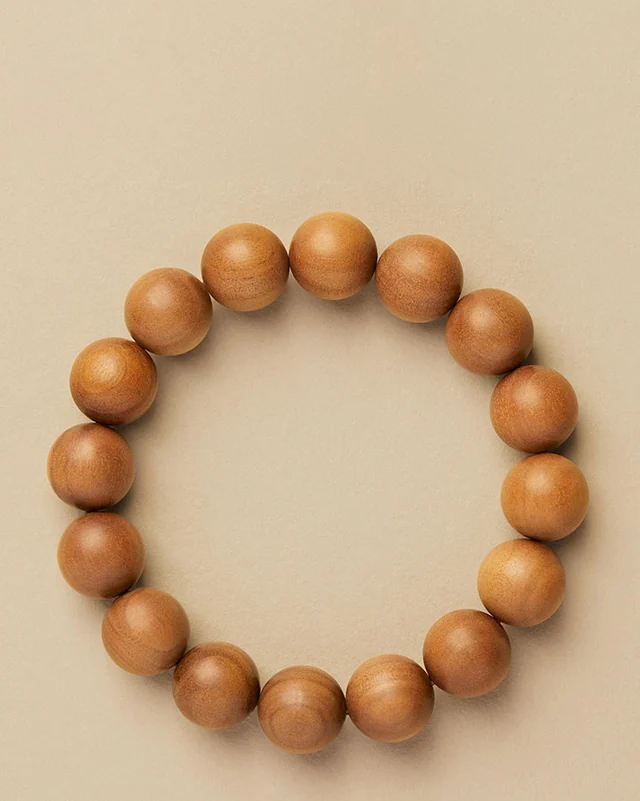
8 mm Indian Sandalwood Bracelet · Helpful Connections
Indian Sandalwood
$64.008 mm · Wood
 View larger
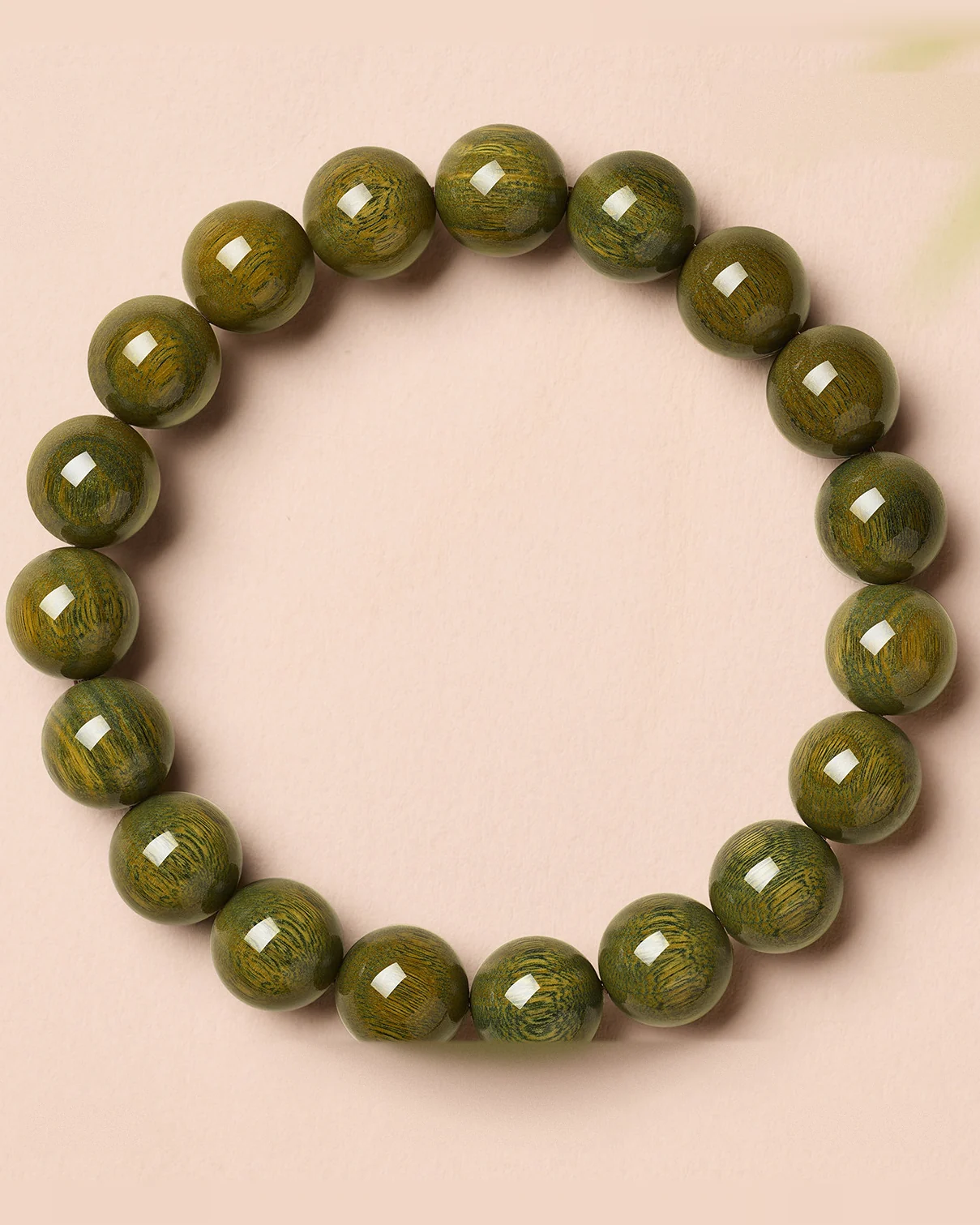
Green sandalwood (Bulnesia sarmientoi)10 mm sinking grade
Auspicious bracelets / Wood
Handcrafted from dense, aged South American verawood heartwood: naturally aromatic spheres that oxidise into rich jade green, sink in water, and buff into a mirror-like patina.
$76.00USD
Prepared in 5 days after payment
Shipping: Asia $10; Europe, US, Canada, Australia & NZ $20
Ready-designed returns may be requested within 14 days. See returns policy
Evergreen Tranquility
Evergreen Tranquility is sculpted from seasoned heartwood of Bulnesia sarmientoi, known reverently throughout Asian contemplative traditions as Green Sandalwood (绿檀木). Harvested from the semi-arid woodlands of the South American Gran Chaco, this extraordinary wood is celebrated across the globe for two rare biological wonders: an intoxicating, naturally persistent balsamic perfume and a phototropic chemistry that causes the timber to deepen into a lustrous jade green when exposed to sunlight and fresh air.
Unlike industrial wooden beads that rely on artificial chemical dyes, synthetic gloss varnishes or surface perfumes that evaporate within weeks, our 10 mm beads are 100% natural and untreated. Every bead is dry-sanded through multiple ultrafine grits to preserve the breathable wood pores. As you handle the strand in daily meditation or quiet reflection, your natural skin warmth gently warms the internal guaiacol resins, releasing an enduring aroma that grounds the breath, dissolves nervous tension, and cultivates an enduring glass-like patina over years of companionship.
Evergreen Tranquility
An authoritative exploration into Bulnesia sarmientoi: its phototropic oxidation, dense resin chemistry, Five Elements wood vitality, and the mindful practice of cultivating bead patina.
01
In the vast realm of precious hardwoods, few botanical species command as much fascination as Bulnesia sarmientoi, a slow-growing tree indigenous to the arid Gran Chaco plains spanning northern Argentina, western Paraguay and southeastern Bolivia. Known colloquially in European woodworking as Verawood or Argentine Lignum Vitae, and throughout East Asia as Green Sandalwood (绿檀木 or 玉檀香), this extraordinary timber belongs to the caltrop family (Zygophyllaceae). It is celebrated for its astounding physical density, interlocking cross-grain structure, and a high concentration of therapeutic essential resins.
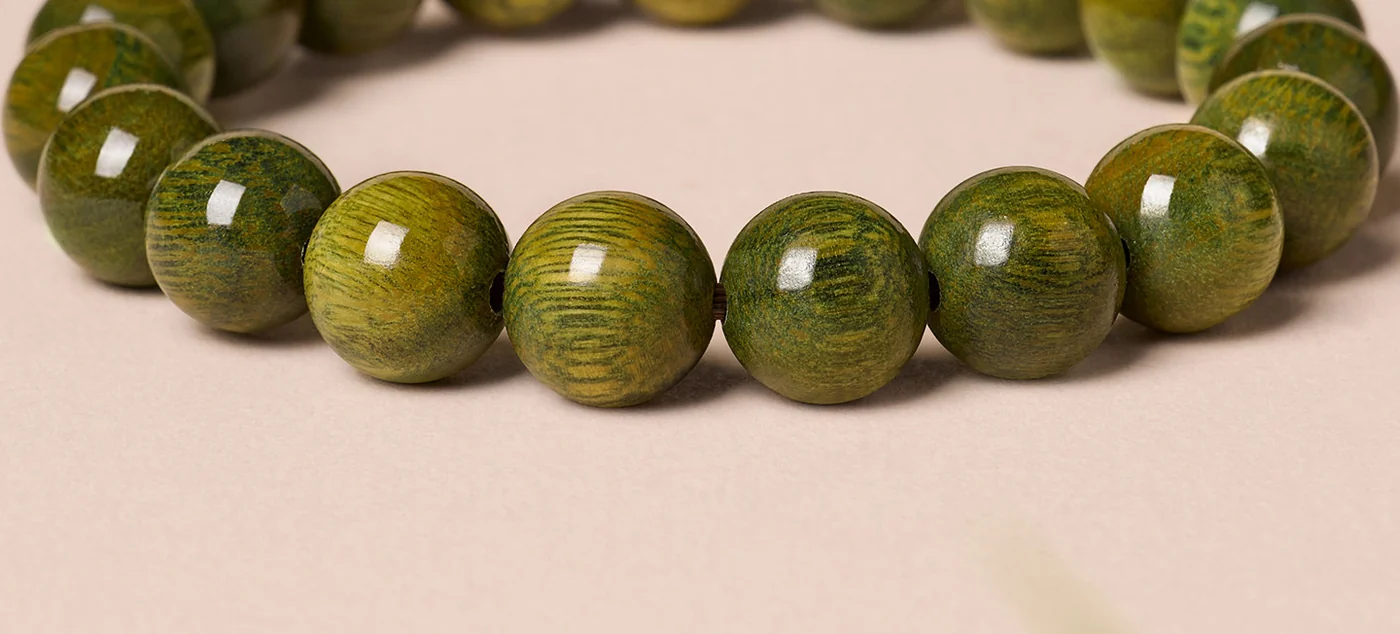
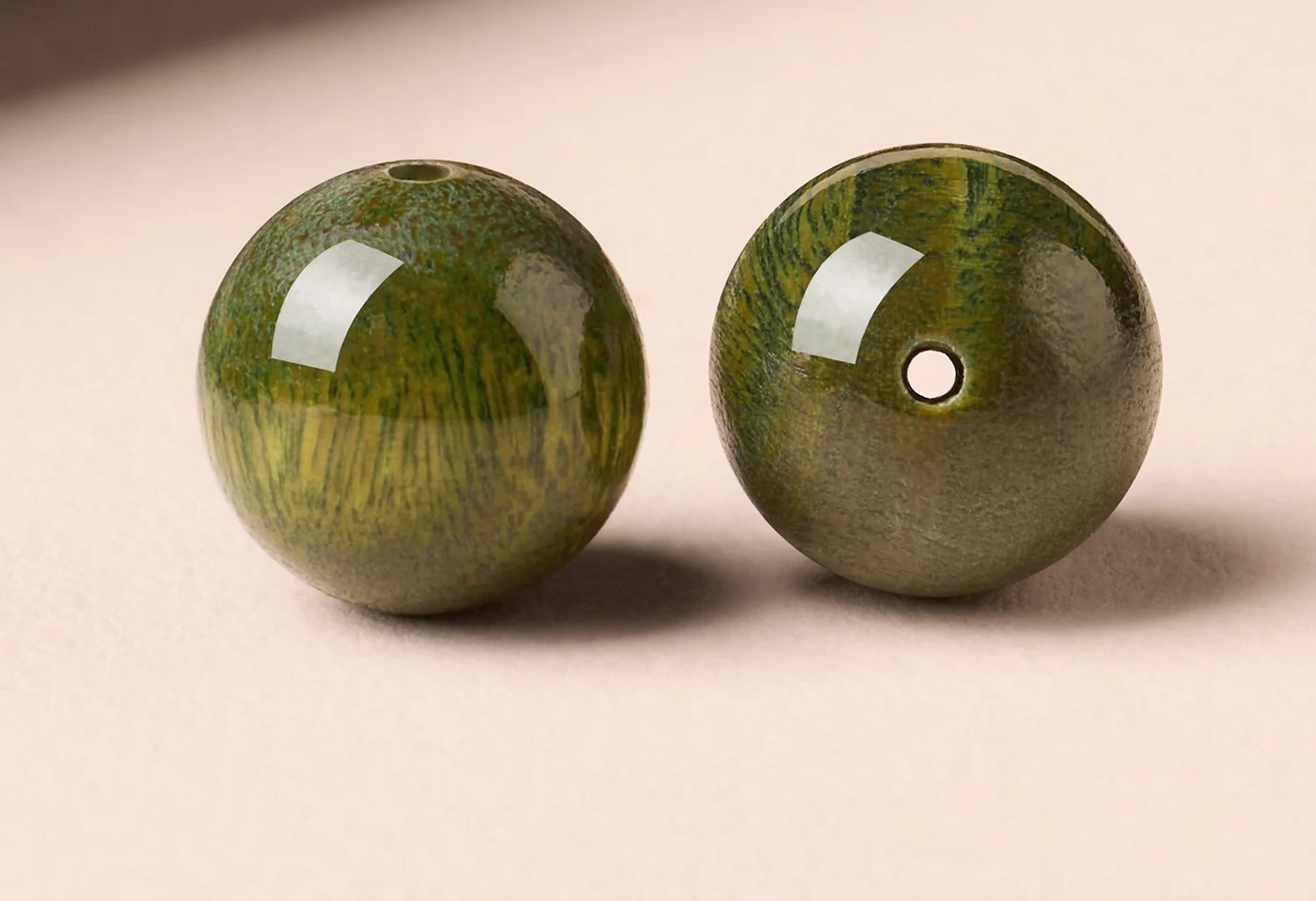
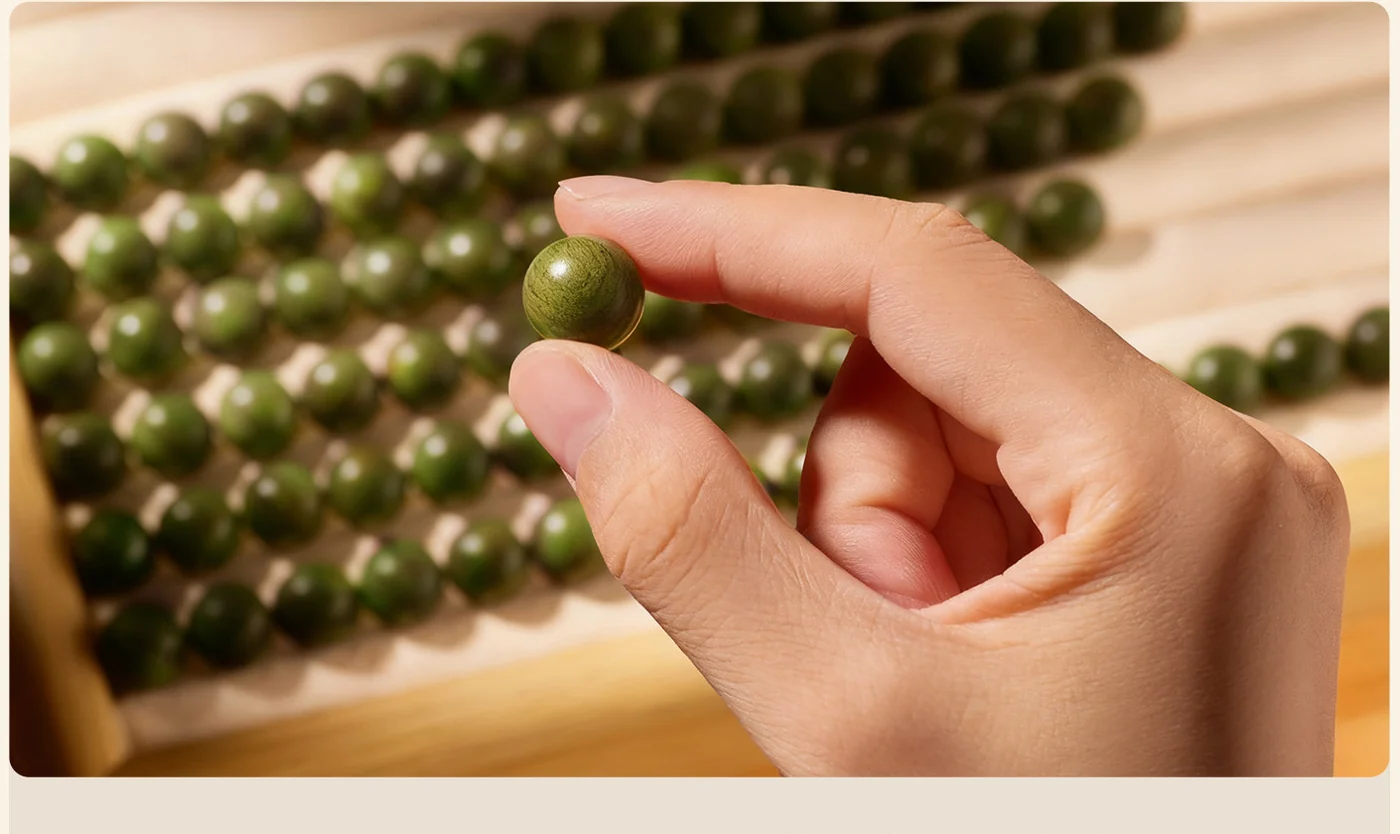
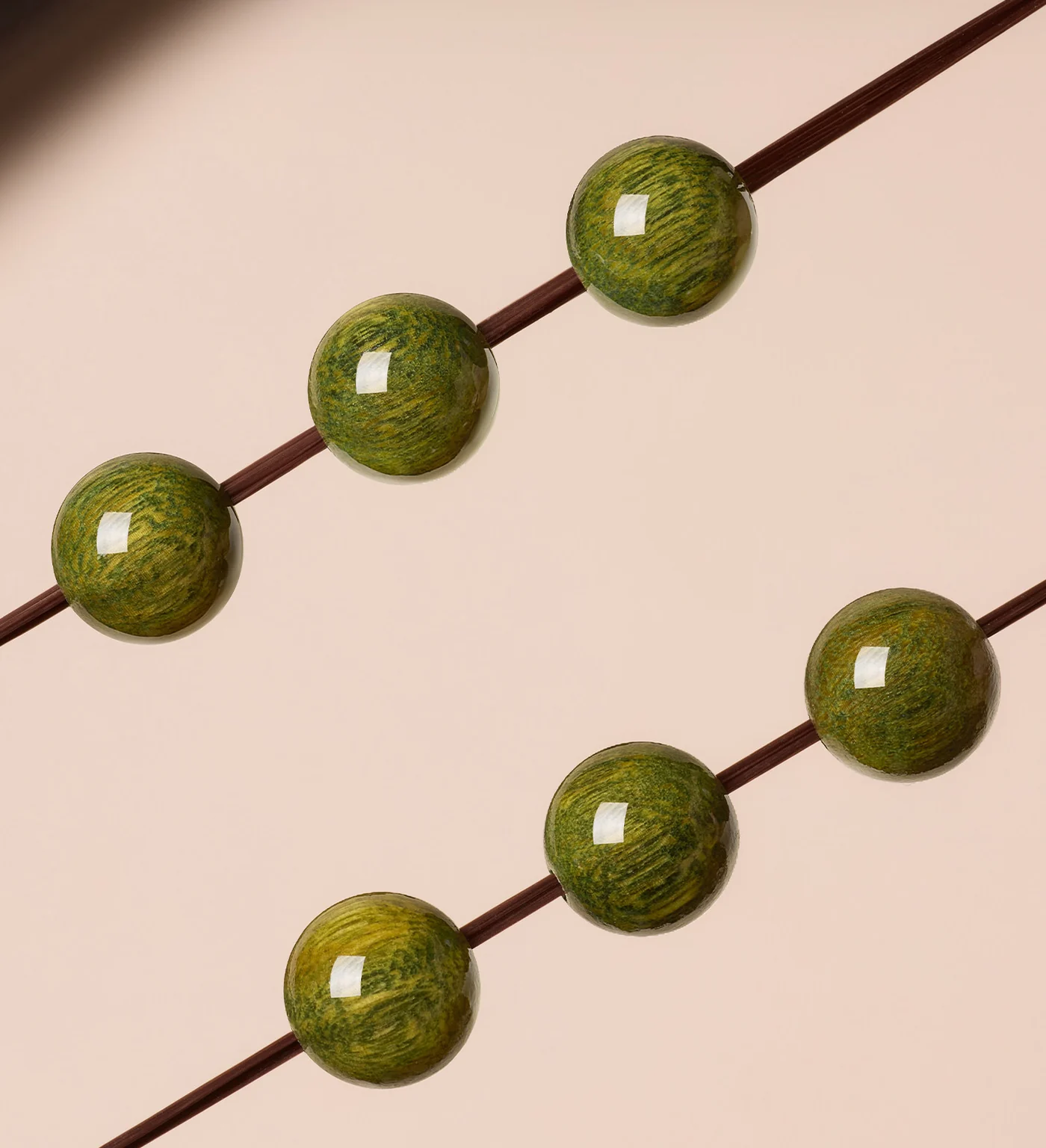
What sets green sandalwood apart from nearly all other woods is its living chromatic responsiveness. When freshly turned on a wood lathe or cut from sealed timber stock, the heartwood reveals a modest pale olive, yellowish-tan or warm almond hue. However, as ultraviolet light and atmospheric oxygen react with the wood’s unique phenolic constituents, an enzymatic oxidation cascade unfolds across the surface. Within hours of exposure to natural daylight, the beads begin a dramatic chromatic metamorphosis, transforming into a rich, waxy, deep emerald jade green.
This natural transformation has earned the wood its poetic Chinese designation "Yu Tan" (玉檀, jade sandalwood). Connoisseurs prize this quality because it proves that the wood is alive, unvarnished, and completely free of artificial chemical sealants. Rather than fading or degrading with exposure to sunlight, green sandalwood deepens its color and intensifies its natural chatoyant grain, creating a piece of wearable art that actively mirrors the environment in which it is cherished.
02
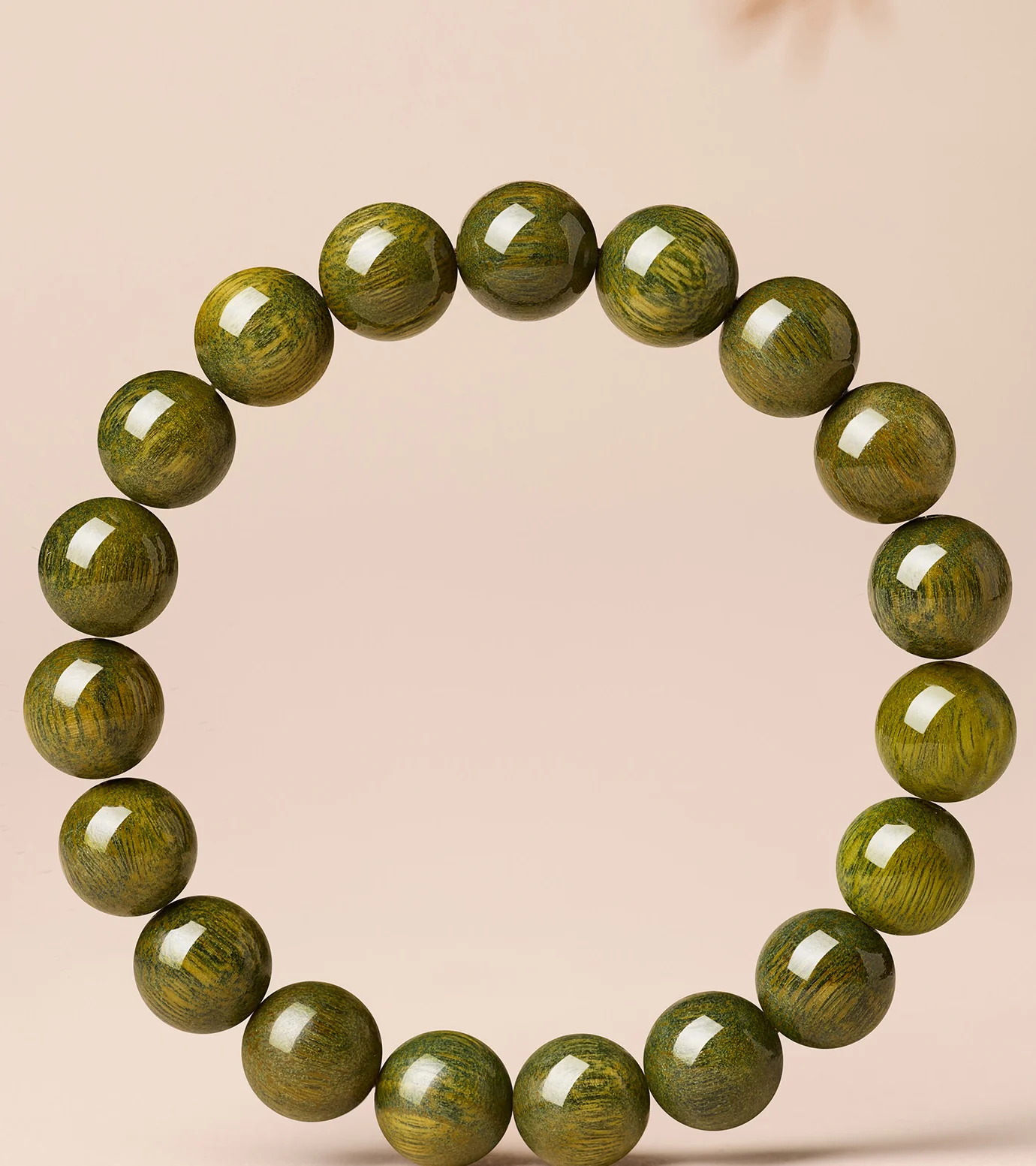
At Vivqo, ethical integrity and gemmological transparency form the cornerstone of everything we craft. It is vital for every collector to understand the exact botanical distinction between "Green Sandalwood" (Bulnesia sarmientoi) and "True Sandalwood" (Santalum album, represented in our collection by Woodland Rhythm WX004):
While commercial vendors often blur these distinctions or falsely market verawood as "green Indian sandalwood," we celebrate each timber for its authentic botanical truth. True Santalum album is prized for its rare milky santalol aroma and sacred heritage in temple incenses. In contrast, Bulnesia sarmientoi is cherished for its heavier sinking density, remarkable jade oxidation, and invigorating balsamic bouquet. Exploring both designs allows collectors to experience two profoundly different aromatic masterpieces of the botanical world.
| Property & Criterion | Green Sandalwood (WX071) · This Design | Indian Mysore Sandalwood (WX004 · Woodland Rhythm) |
|---|---|---|
| Botanical Classification | Bulnesia sarmientoi (Zygophyllaceae family) | Santalum album (Santalaceae family) |
| Geographical Origin | Gran Chaco region, South America (Argentina / Paraguay) | Mysore plateau, Karnataka, Southern India |
| Specific Gravity & Density | 1.20–1.28 g/cm³ (Sinks immediately in water) | 0.90–0.98 g/cm³ (Floats or suspends near surface) |
| Aroma Profile | Sweet, balsamic, herbal-vanilla with warm medicinal guaiacol notes | Creamy, sweet, lactonic, sacred milky-woody santalol bouquet |
| Color Evolution | Oxidises from golden-olive to deep jade green upon light exposure | Golden honey-amber that deepens into rich reddish-chestnut with age |
| CITES Regulatory Status | CITES Appendix II (controlled international commercial trade) | Indian Forest Department strict state-controlled monopoly auctions |
| Primary Metaphysical Role | Pure Wood element: Liver meridian ease, flexibility, emotional clearing | Spiritual elevation, crown chakra opening, serene meditation focus |
| Retail Price Point | $76 (10 mm sinking grade) | $64 (8 mm aged Mysore high-oil heartwood) |
03
The phototropic oxidation of green sandalwood is one of the most delightful phenomena in natural material collecting. Many first-time owners are surprised when they open a brand-new, freshly packaged bracelet and discover that the beads appear yellowish-tan or muted olive-brown rather than vivid green. This is not a defect or a variation in timber quality; it is the definitive hallmark of freshly polished, authentic Bulnesia heartwood that has been protected from light during storage and transit.
The chemical engine behind this transformation lies in the wood’s rich reservoir of natural lignans, specifically compounds related to furoguaiacin and guaiacol derivatives. In the dark interior of the tree or inside an airtight box, these organic molecules remain in their reduced state. When exposed to ambient ultraviolet (UV) rays from sunlight and air, free radicals catalyze a gentle oxidation reaction across the outer cellular layers of the wood. Within 24 to 48 hours of gentle exposure to natural daylight, the yellow hue deepens into olive, and within a few days, a glorious emerald-jade green emerges across the spherical surface.
Remarkably, this process is dynamic and reversible in subtle ways. If the bracelet is sealed away in a completely dark drawer or airtight pouch for several months, the green hue may soften back toward a deep olive-tan as surface oxidation stabilizes. Place it back on your wrist in morning sunlight, and the vibrant jade tone blooms once again. Over years of wear, as natural hand oils seal the pores, the jade color becomes permanently locked beneath an amber-toned glassy patina, resulting in an antique jade-wood luster that cannot be replicated by any modern finishing process.
04
A major reason discerning collectors fall in love with green sandalwood is its rich, distinctive, and completely natural fragrance. Unlike synthetic aroma-sprayed beads that smell overpowering for three days and turn inert a week later, authentic Bulnesia heartwood possesses a permanent aroma that is locked inside the microscopic cellular structure of the timber. Even after decades or centuries, scraping the surface or simply warming the beads between the palms instantly awakens the fragrance.
The scent profile of green sandalwood is multifaceted and deeply comforting. To the nose, it presents an initial wave of sweet, warm balsamic resins, accompanied by subtle powdery vanilla undertones, followed by a crisp, cleansing herbal-medicinal finish reminiscent of crushed evergreen needles and wild tea tree. This olfactory bouquet is driven by two primary natural phytochemicals: guaiacol (responsible for the warm, balsamic, lightly medicinal note) and bulnesol (a sesquiterpene alcohol that imparts the sweet, rounded, calming floral-wood depth).
In traditional aromatherapy, the essential oils of Bulnesia sarmientoi (frequently distilled as "Champaca wood oil" or "Guaiacwood oil") are employed to relieve nervous tension, dispel mental fatigue, and encourage deep, diaphragmatic breathing. Wearing the bracelet on your wrist allows your body heat—typically 33°C to 36°C at the radial artery—to serve as a gentle, continuous low-temperature aroma diffuser throughout your working day.
05
In traditional Asian timber appraisal, the gold standard of quality has always been whether a wooden bead sinks or floats in water—known colloquially as "sinking grade" (沉水级). Most common timbers, including pine, cedar, walnut and even standard true sandalwood, have specific gravities between 0.45 and 0.95 g/cm³, meaning they float buoyantly. Only a rare elite group of ultra-dense hardwoods cross the threshold of 1.00 g/cm³, enabling them to sink like river pebbles.
Bulnesia sarmientoi is one of the heaviest and most structurally dense timbers on planet Earth. Well-seasoned, high-resin vintage green sandalwood boasts an astonishing air-dry density ranging from 1.20 to 1.28 g/cm³. When dropped into a vessel of fresh water, a genuine bead will plummet directly to the bottom without hesitation. This extraordinary heft translates to a substantial, luxurious tactile presence on the wrist—each 10 mm bead feels remarkably cool, smooth and solid in the palm.
This density arises from the harsh climatic conditions of the Gran Chaco, where intense dry seasons, scorching heat and mineral-rich soils force the tree to grow at an exceptionally slow pace. Growth rings are tightly packed, with microscopic fibers intertwined in an interlocking herringbone pattern. Furthermore, the tree fills its own vascular canals with heavy natural resins, effectively petrifying itself into an organic compound that resists decay, insect boring and environmental wear for generations.
06
Collectors of authentic green sandalwood occasionally encounter an astonishing sight: after leaving their bracelet sealed inside an airtight pouch or wooden case for a few days, the beads emerge covered in a delicate, silvery-white crystalline frost or silky hair-like filaments. In Chinese connoisseur circles, this phenomenon is revered as "Tu Si" (吐丝, spinning silk) or "Tu Shuang" (吐霜, exuding frost), and it is celebrated as an infallible proof of virgin, unvarnished natural resin content.
Far from being mold or surface contamination, this crystalline frost consists of pure natural guaiacol and sesquiterpene resin molecules. Because Bulnesia sarmientoi heartwood is saturated with aromatic essential resins under internal capillary pressure, these volatile organic compounds slowly migrate outward through the wood rays. In an open room with constant airflow, the molecules evaporate into the air, creating the familiar room fragrance. However, inside a sealed, stagnant micro-environment, the saturated vapor condenses and crystallizes directly onto the bead surface into microscopic needle-like crystals.
To verify that the frost is authentic resin rather than mold, one needs only to gently rub the bead with a clean thumb or soft cotton cloth: the crystals dissolve instantly from the warmth and friction, sinking back into the wood pores and releasing a burst of sweet balsamic fragrance, leaving the surface glossy and pristine. Artificial timber, dyed wood, or beads sealed with industrial lacquer can never exhibit this phenomenon because their resin pathways have been choked off.
07
The native habitat of Bulnesia sarmientoi is confined entirely to the Gran Chaco ecosystem, an arid subtropical wilderness that stretches across northern Argentina, western Paraguay and southeastern Bolivia. This unique biome, characterized by spiny scrub, extreme seasonal droughts and dramatic temperature swings, produces woods of unmatched resilience and resin saturation. However, the unique qualities of verawood led to heavy commercial exploitation in the late 20th century for timber exports and perfume distillation.
To protect wild forest populations from unsustainable deforestation, the international conservation community placed Bulnesia sarmientoi on Appendix II of the Convention on International Trade in Endangered Species of Wild Fauna and Flora (CITES). Appendix II classification does not prohibit commercial trade; rather, it establishes strict scientific harvest quotas, requires legal provenance verification, and mandates export permits confirming that the timber was harvested in harmony with the long-term survival of the species.
Vivqo works exclusively with ethical workshop partners who source aged raw timber lots that carry verified export documentation and governmental forestry clearance. Furthermore, because wooden beads utilize relatively small timber billets and offcuts from certified forestry allocations, our production maximizes material utility with zero wastage. By respecting the natural pace of the Gran Chaco forests, we ensure that this sacred green timber remains a sustainable treasure for generations of mindful wearers to come.
08
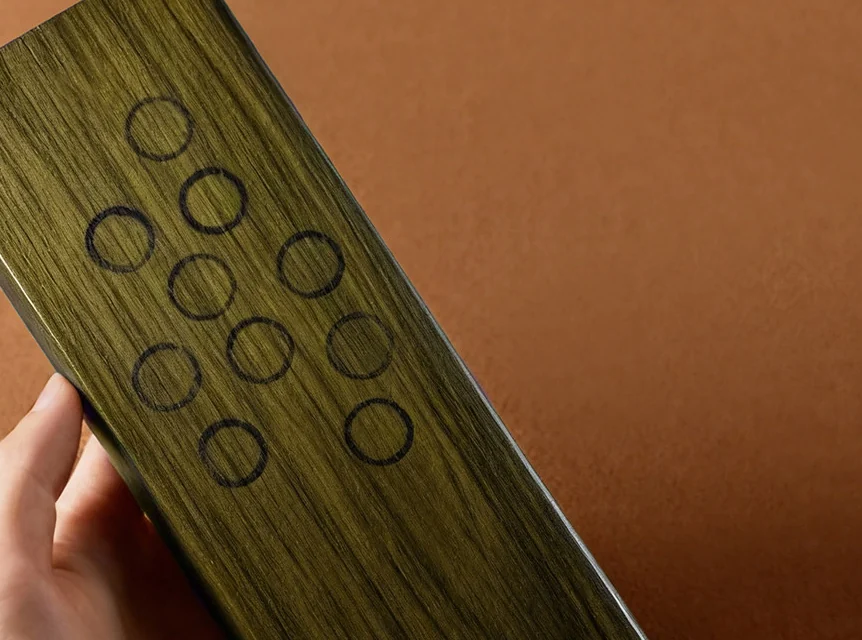
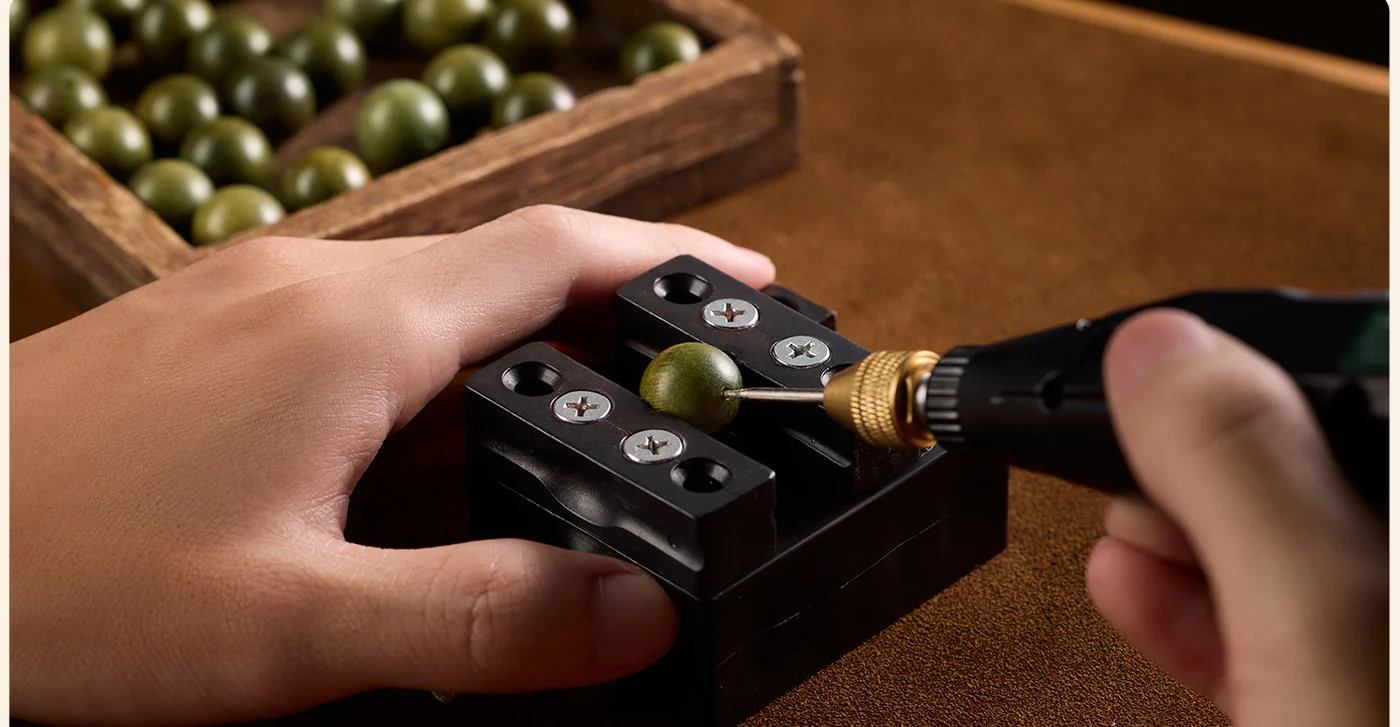
Transforming dense, interlocking-grain verawood into flawless 10 mm spheres requires extraordinary lapidary precision and patience. Because the grain direction of Bulnesia sarmientoi alternates and twists sharply from growth ring to growth ring, attempting to carve or turn the wood too quickly with aggressive steel tools will cause grain tear-out, chipping, or micro-fractures along the resin veins.
Our artisan workshop begins with naturally seasoned heartwood timber that has been cured in low-humidity drying kilns for over eighteen months to eliminate residual internal moisture tension. The timber is precision-sawn into uniform cubic blanks, which are then mounted onto high-speed water-cooled jewelers lathes. Using custom tungsten-carbide concave gouges, each bead is turned into a true geometric sphere with tolerances within ±0.15 mm.
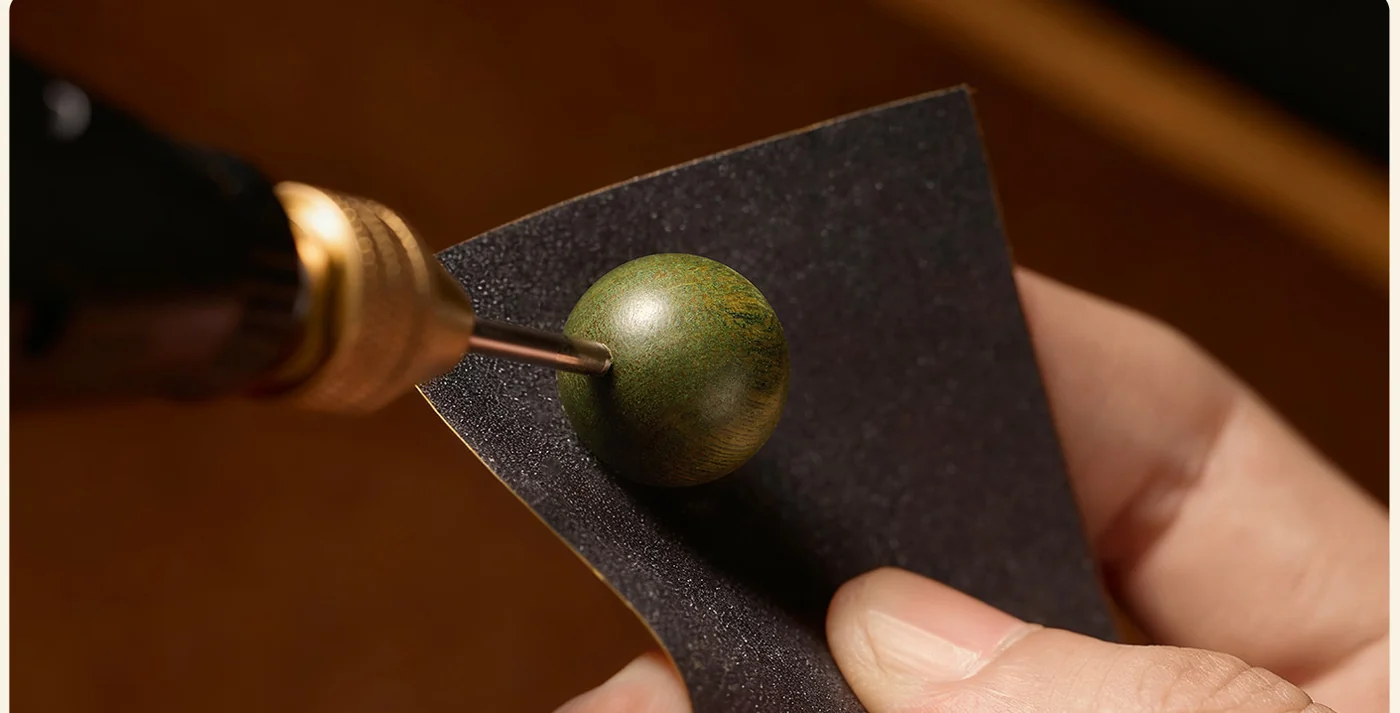
The most crucial stage is the polishing process. Many commercial manufacturers take shortcuts by tumbling beads in liquid wax or spraying them with synthetic clear coat to achieve instant shine. We strictly reject all chemical coatings. Instead, our green sandalwood undergoes a meticulous seven-stage dry-sanding regimen, advancing progressively from 320 grit up to 3000 grit ultra-fine diamond polishing paper. The intense friction of fine sanding melts the wood’s own internal resins onto the outer surface, burnishing the wood into an organic, silky sheen while leaving every microscopic cellular pore completely open and breathable.
09
Within classical Chinese Five Elements philosophy (五行, Wu Xing), the universe operates through the dynamic interplay of Wood (木), Fire (火), Earth (土), Metal (金) and Water (水). Among these cosmic principles, the Wood element represents the energy of springtime, renewal, upward expansion, botanical vitality, and psychological flexibility. It embodies the resilient strength of a tall bamboo or ancient forest tree that bends gracefully before torrential storms without snapping.
In Traditional Chinese Medicine (TCM), the Wood element governs the Liver meridian (肝经) and Gallbladder system (胆). The Liver is celebrated in classical texts as the "Commanding General" (将军之官) responsible for the smooth and unhindered circulation of Qi (气) and emotional harmony throughout the body. When modern life subjects us to chronic deadlines, emotional frustration, repressed anger or intense mental stress, Liver Qi frequently stagnates (肝气郁结), manifesting physically as chest tightness, eye fatigue, irritability, shallow breathing and restless sleep.
Wearing genuine green sandalwood serves as an organic, living talisman of the Wood element. Its soothing jade-green wavelength—the primary color associated with Liver Qi regulation—calms visual overstimulation and settles an overactive nervous system. Concurrently, the steady release of balsamic aromatic terpenes promotes diaphragmatic breathing, uncoils internal tension, and encourages a mindset of flexible adaptation and grounded patience.
10
To ensure that Evergreen Tranquility rests on your wrist with natural ergonomic balance and aesthetic grace, we offer green sandalwood in two distinct calibrated diameters: our standard 10 mm profile and an optional substantial 12 mm executive size. Choosing between these dimensions depends on your wrist circumference, daily lifestyle and aesthetic intention:
For most wearers, the 10 mm bead size strikes the sweet spot between noticeable organic presence and effortless daily wearability. It possesses enough volume to showcase the interlocking grain and jade color transitions, while remaining light and comfortable enough to wear from morning meetings through evening dinner without fatigue.
| Specification & Dimension | 10 mm Standard Profile (WX071) · This Design | 12 mm Substantial Profile (WX071-12) |
|---|---|---|
| Bead Diameter | 10.0 mm (±0.2 mm) | 12.0 mm (±0.2 mm) |
| Typical Bead Count (16 cm wrist) | 19–20 beads | 16–17 beads |
| Strand Weight | Approximately 24–28 grams | Approximately 42–48 grams |
| Visual Presence | Refined, balanced, versatile; glides easily under shirt cuffs | Bold, grounding, commanding tactile presence; prominent wrist anchor |
| Recommended Wrist Range | 14.0 cm to 18.0 cm (ideal for both men and women) | 16.5 cm to 21.0 cm (especially favored for larger wrists) |
| Tactile Rolling Experience | Deft, nimble, smooth fingertip rotation during quick pauses | Substantial palm mass, deep tactile heft for deliberate grounding meditation |
| Desk & Keyboard Ergonomics | Minimal wrist interference; comfortable during typing and writing | Best unclasped and placed on a wooden desk tray during heavy computer work |
11
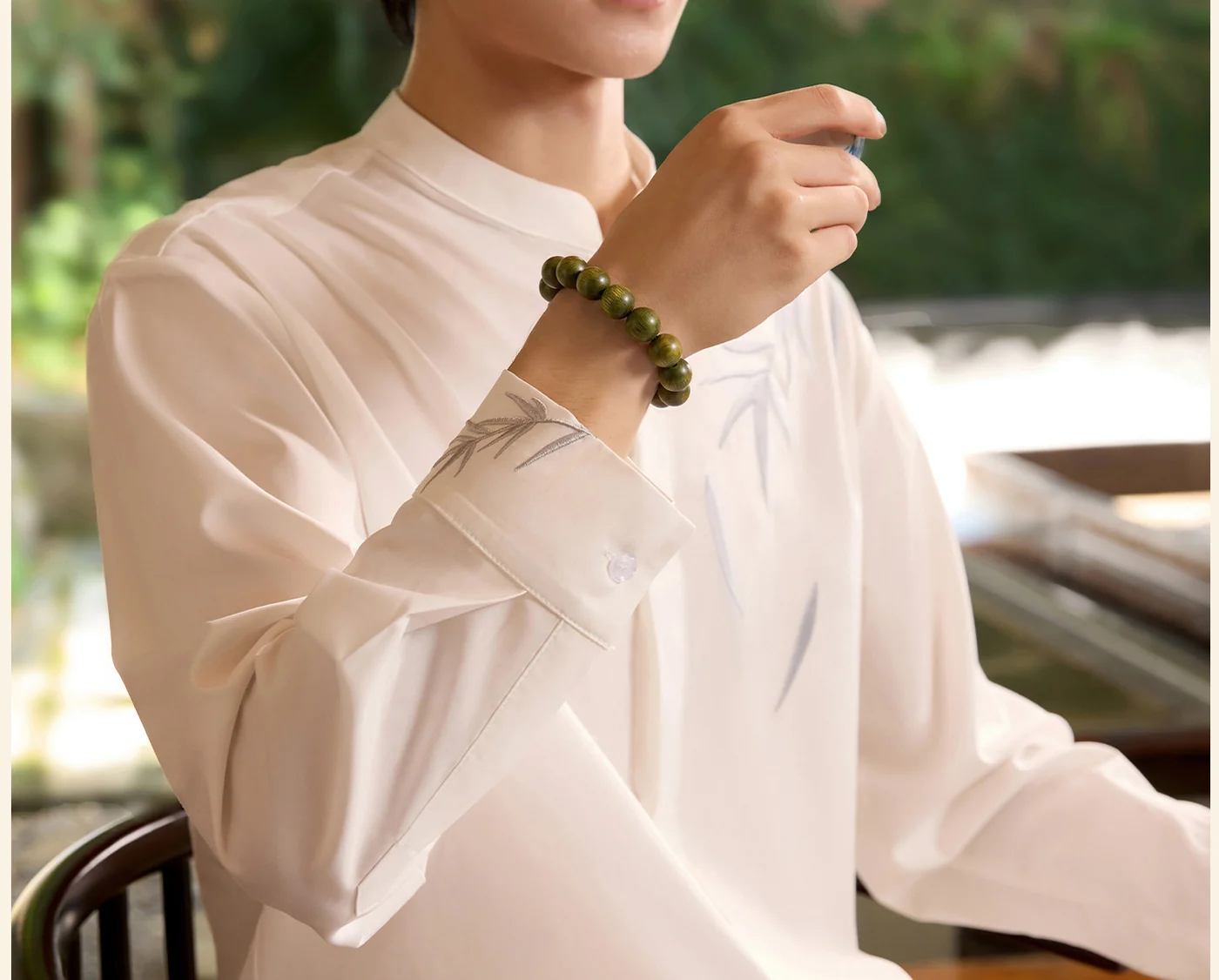
Because wooden beads are rigid solid spheres that sit elevated above the skin, measuring your wrist correctly is essential for a sublime fit. A strand that is too tight will leave indentation marks and overstretch the elastic cord, while an excessively loose strand will slide clumsily along the forearm and bump into desks and doorframes.
To determine your exact wrist size, take a flexible measuring tape or a strip of paper and wrap it snugly around your wrist immediately above the styloid process (the prominent wrist bone). Note the exact measurement in centimeters without adding extra slack. In our studio, we use a calibrated algorithmic formula to calculate the exact internal circumference of the strand based on the geometric pitch of 10 mm spheres:
Each strand is hand-strung using heavy-duty, multi-strand Japanese polyurethane elastic core. We double-thread each bead and secure the closure with a reinforced surgeon’s knot concealed invisibly inside the drill channel of a dedicated anchor bead. This construction ensures maximum tensile strength, smooth stretch over the hand, and long-term security against accidental snapping.
12
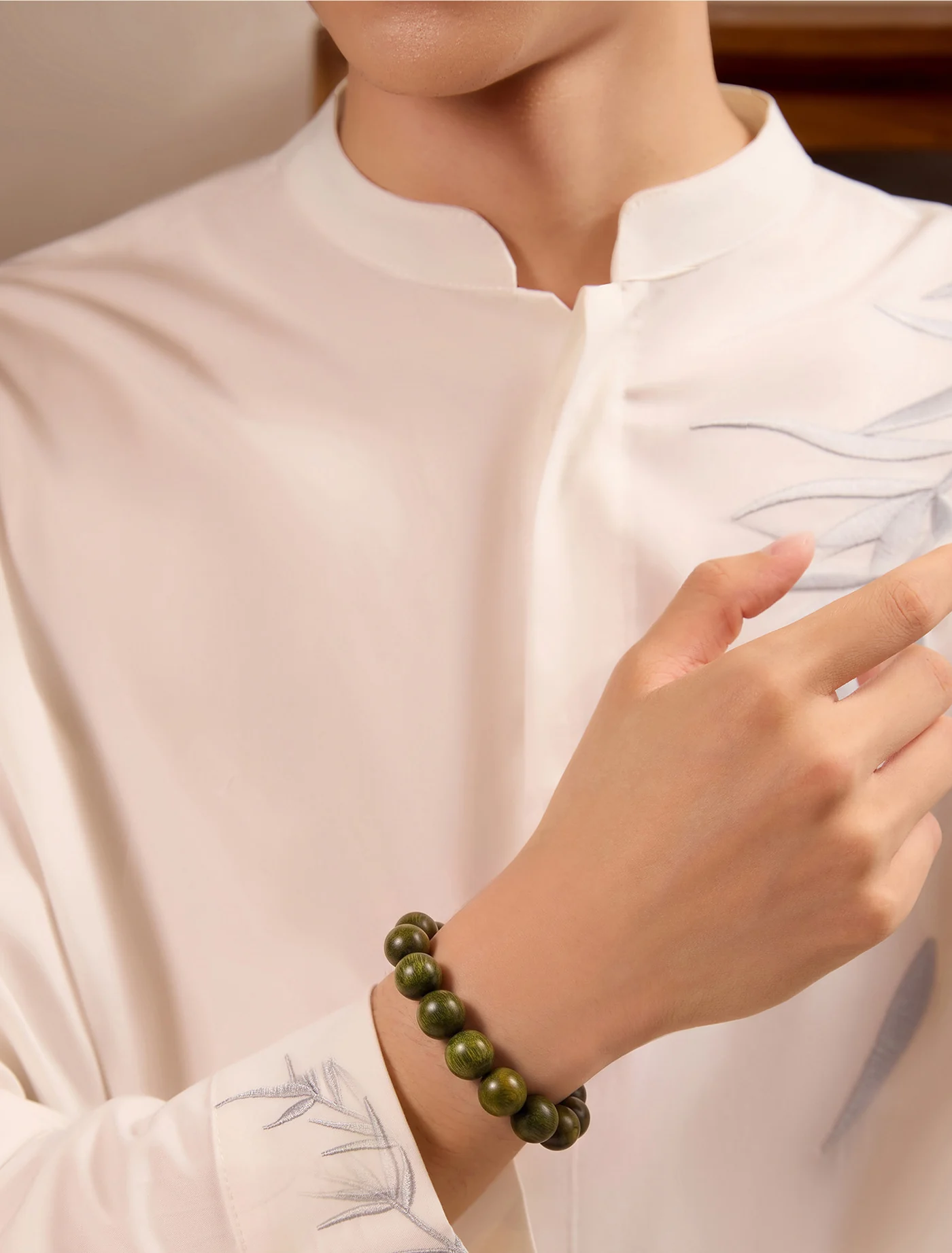
In our hyper-digitized modern world, our hands spend hours tapping glass phone screens and typing on plastic keyboards—experiences devoid of natural organic texture. The ancient practice of holding and rolling beads (known across contemplative traditions as prayer beads, mala, or worry beads) is grounded in modern somatic neuroscience. The fingertips possess one of the highest densities of nerve endings and tactile mechanoreceptors anywhere in the human body.
When work deadlines loom or anxiety spikes, holding the cool, dense spheres of green sandalwood between your thumb and index finger provides an immediate physical grounding anchor. As you roll one bead at a time in synchronization with slow, deep breaths, several physiological mechanisms engage simultaneously: heart rate decelerates, repetitive muscle tension in the forearm releases, and the mind is redirected away from circular worries into concrete tactile reality.
Combine this somatic rhythm with the subtle release of natural guaiacol aroma warmed by your fingertips, and the bracelet transforms into a portable sanctuary of calm. Whether during tense negotiations, traffic commutes, or before falling asleep, a few minutes of mindful bead counting resets the nervous system with timeless simplicity.
13
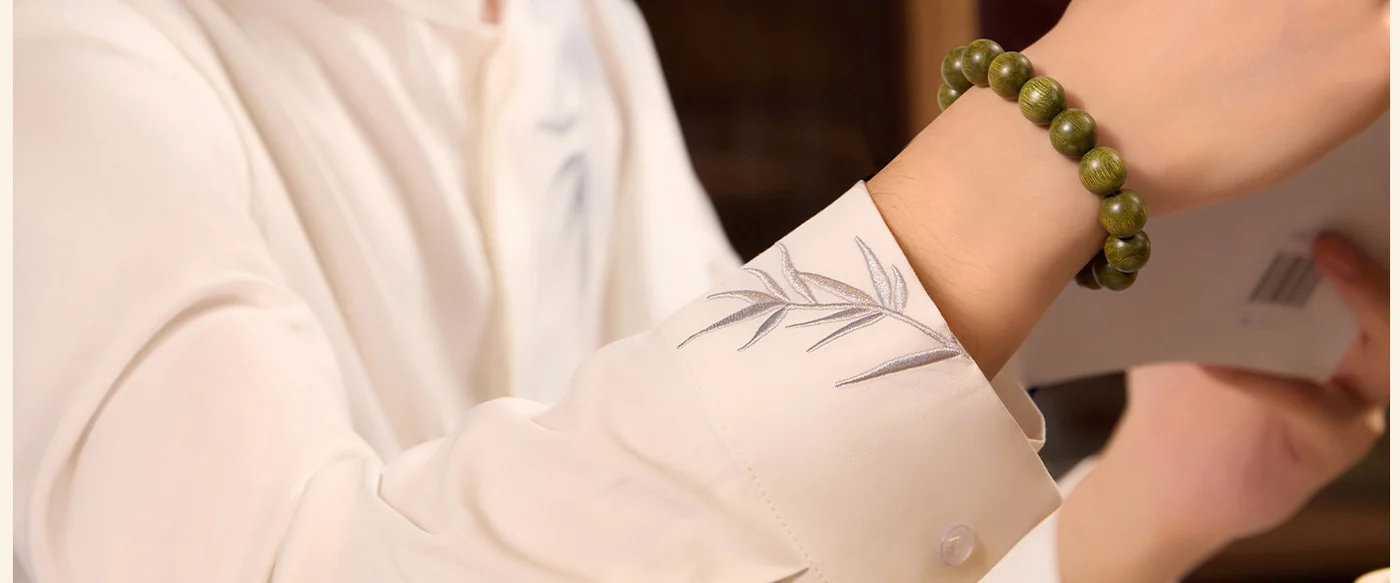
A common misconception is that wooden beads are strictly traditional or bohemian and difficult to harmonize with tailored contemporary fashion. In reality, the subdued, organic olive-and-jade palette of green sandalwood makes it one of the most versatile and sophisticated accessories in modern wardrobe styling.
In professional and executive settings, green sandalwood pairs impeccably with navy, charcoal, beige, and crisp white tailored garments. When worn alongside a stainless steel or titanium luxury wristwatch, the organic warmth of the wood softens the cool, mechanical edge of the timepiece, creating an intriguing textural dialogue between modern horology and ancient nature.
In casual and weekend environments, green sandalwood effortlessly complements natural fibers: raw linen shirts, chunky knitwear, washed denim, and earthy cottons. Its jade-green hue harmonizes beautifully with earth-toned sneakers, leather boots, and canvas tote bags. It can also be stacked seamlessly with matte black obsidian, raw unpolished volcanic lava, or silver accent cuffs for a relaxed, layered bohemian elegance.
14
In Asian connoisseurship, the supreme joy of owning fine timber beads lies in the meditative practice of "Pan Wan" (盘玩)—the patient, mindful cultivation of an antique surface patina (包浆, Bao Jiang). An authentic patina is not a varnish applied by human brushes; it is a translucent, glass-like protective shell formed when natural wood resins and skin lipids slowly oxidize, polymerize, and buff under gentle friction.
To cultivate a breathtaking, mirror-like patina on your 10 mm green sandalwood bracelet, we recommend following the time-tested classical three-stage methodology:
The most common mistake made by impatient beginners is wearing new beads against sweaty skin during intense workouts or in hot weather. Sweat contains water, salt and acids that penetrate unsealed wood pores, turning the surface dull, cloudy and rough. Patience is the secret ingredient of fine patina: buff dry, let rest, wear mindfully, and the wood will reward you with an heirloom luster that lasts a lifetime.
15
Because green sandalwood is a living, breathable natural timber rather than an inert mineral crystal, keeping it in pristine condition requires observing a few fundamental care protocols:
First and foremost, keep the bracelet away from water. Never wear your wooden bracelet into the shower, bathtub, swimming pool, sauna or ocean. Immersing the beads in water causes the dense wood fibers to swell rapidly; when they dry out, the uneven contraction creates microscopic radial surface cracks (checking) and washes away precious aromatic resins. If your bracelet accidentally gets splashed with clean water, immediately pat it dry with a soft microfiber towel and allow it to air-dry in a cool, shaded room.
Second, shield the wood from harsh chemicals, perfumes, colognes and alcohol-based hand sanitizers. Always apply fragrance, hairspray and skin lotions to your body and allow them to dry completely before slipping your bracelet onto your wrist. Chemical solvents will dissolve the delicate surface resins and leave chalky white blemishes on the wood.
Finally, protect the beads from extreme heat and desiccating drafts. Avoid leaving your bracelet on hot car dashboards exposed to blazing summer sun, or placing it directly next to winter heating vents or air conditioning blower units. Rapid temperature and humidity swings are the primary cause of timber splitting. When not wearing your bracelet, store it inside the breathable fabric pouch provided, in a climate-controlled room.
16
Due to the immense popularity of green sandalwood and the strict CITES harvest regulations governing genuine Bulnesia sarmientoi, the commercial market contains numerous counterfeits and treated imitations. Unscrupulous manufacturers often take cheap, low-density white woods (such as birch or rubberwood) and infuse them with chemical green dyes and artificial perfumes.
Fortunately, genuine sinking-grade green sandalwood possesses several unique physical and chemical signatures that cannot be faked:
Every single strand of Vivqo Green Sandalwood is guaranteed 100% natural, un-dyed, un-waxed, and verified sinking grade. We encourage our collectors to test and observe their beads with confidence.
17
While Bulnesia sarmientoi originated geologically in South America, its adoption into East Asian spiritual, literary and artistic culture over the past century represents a fascinating synthesis of global botany and traditional aesthetics. In China, Taiwan, Japan and Korea, the wood was embraced as a modern cousin of ancient sacred sandalwood, honored for its serene perfume and jade-like visual nobility.
In traditional Chinese aesthetic philosophy, jade (玉) has represented the ultimate moral ideal of human character for over five thousand years: cool, unyielding, smooth, benevolent, and quietly radiant. When artisans discovered a natural timber that possessed the hardness, sinking density and emerald translucence of nephrite jade while exhaling the soothing fragrance of sacred incense, they bestowed upon it the title "Yu Tan" (玉檀, Jade Sandalwood). It quickly became a favored material for scholar’s desk objects, meditation beads, brush pots, and carved talismans.
Today, wearing a green sandalwood bracelet continues this timeless scholar tradition. In a world characterized by disposable synthetic gadgets and ephemeral digital trends, a strand of seasoned green sandalwood stands as an enduring emblem of "Sui Han Chang Qing" (岁寒长青)—remaining evergreen, steadfast and fragrant through all seasons of life.
This is the natural, celebrated phototropic oxidation of Bulnesia sarmientoi. Natural phytochemicals (lignans and guaiacol derivatives) inside the heartwood react chemically with ambient ultraviolet light and atmospheric oxygen, transforming the freshly polished yellow-olive surface into deep emerald jade green within 24 to 48 hours.
No. Green sandalwood is Bulnesia sarmientoi (Zygophyllaceae family, native to South America), while true sandalwood is Santalum album (Santalaceae family, native to India and represented in our collection by Woodland Rhythm WX004). Green sandalwood is denser (sinks in water) and features a balsamic-vanilla aroma and jade oxidation, while Indian sandalwood floats and features a creamy, lactonic-woody perfume.
This is the famous "Tu Si" (spinning silk) or crystalline frost phenomenon. It occurs when concentrated, volatile aromatic resins inside the dense heartwood migrate to the surface and crystallize in a sealed, stagnant environment. It is definitive proof of unvarnished, 100% natural timber. Gently wiping the beads with a cloth or warming them between your palms dissolves the frost back into the wood.
Never. The fragrance is not a superficial chemical coating sprayed onto the surface; it is an intrinsic part of the wood’s dense cellular resin chemistry. While the external scent may seem milder when the beads are cold, gently rubbing the strand or warming it against your wrist will instantly release the sweet balsamic aroma for decades to come.
No, absolutely not. Immersing dense hardwoods in water causes the porous cellular structure to swell and contract unevenly upon drying, leading to surface cracking (checking), loss of luster, and leaching of natural aromatic resins. Always remove your bracelet before showering, swimming, or hand-washing.
Yes. Authentic seasoned heartwood of Bulnesia sarmientoi has a specific gravity between 1.20 and 1.28 g/cm³, which is significantly denser than water (1.00 g/cm³). A single unstrung bead will sink directly to the bottom. If a vendor’s "green sandalwood" floats or bobs near the surface, it is a lighter imitation wood.
For the first 2 to 3 weeks, buff the beads daily for 15 minutes with a clean, dry white cotton glove. This removes microscopic wood dust and distributes internal resin evenly. Then let the beads rest in a breathable pouch for a week to allow the resin to oxidize and harden. Finally, wear with clean, dry hands to build a glassy, permanent patina.
Immediately pat the beads dry with a soft, clean microfiber cloth or paper towel. Do not use hair dryers, ovens, or direct blazing sunlight to dry them, as rapid heat will crack the wood. Allow them to air-dry naturally in a shaded, well-ventilated room, and then buff with a cotton glove to restore surface luster.
Yes. Our beads are 100% natural, wax-free, varnish-free and chemical dye-free. However, because verawood contains concentrated natural essential resins (guaiacol and bulnesol), individuals with rare, extreme plant resin allergies should handle the beads briefly first to verify personal skin comfort.
In classical Chinese Five Elements philosophy, green sandalwood is a living forest timber that displays an emerald-jade green hue. Both its botanical origin and chromatic frequency resonate directly with the Wood element (木), which governs growth, flexibility, and Liver meridian harmony.
The 10 mm size is our universally flattering standard profile (24–28 g), offering an ideal balance between subtle wrist presence and office ergonomic comfort. The 12 mm size (42–48 g) offers a bolder, heavier tactile anchor preferred by collectors with larger wrists (17 cm+) or those who love substantial palm heft.
Yes. Green sandalwood pairs beautifully with stainless steel, titanium, leather straps, and mineral stones such as obsidian, jade, and clear quartz. To avoid surface scratches on the wood from sharp metal clasps, you may wear the wooden strand on your opposite wrist or place a smooth spacer bead between them.
Bulnesia sarmientoi is listed under CITES Appendix II to ensure sustainable international forestry management. Finished consumer goods such as personal jewelry bracelets are fully legal to own, wear, and transport across international borders. Vivqo sources only from certified, legally documented timber allocations.
In the prolonged absence of ambient light, the surface oxidation may soften slightly back toward an olive-tan hue, and white resin frost may form on the surface. Simply bring the bracelet back into natural room daylight and buff it with a cloth: the emerald-jade color will swiftly bloom anew.
We strongly advise against applying any external oils, vegetable oils, or commercial perfumes. Bulnesia sarmientoi already possesses an abundance of its own superior natural resins. Adding external oils can clog the pores, attract airborne dust, turn the wood rancid, and permanently dull the natural jade color.
You can perform the simple alcohol swab test: rubbing an authentic bead with a 75% rubbing alcohol cotton swab will produce a pale golden-amber resin mark, leaving the wood beneath completely intact and green. A dyed fake will bleed deep artificial green pigment onto the swab, exposing white wood underneath.
Career · Balance
Indian Sandalwood

Protection · Balance
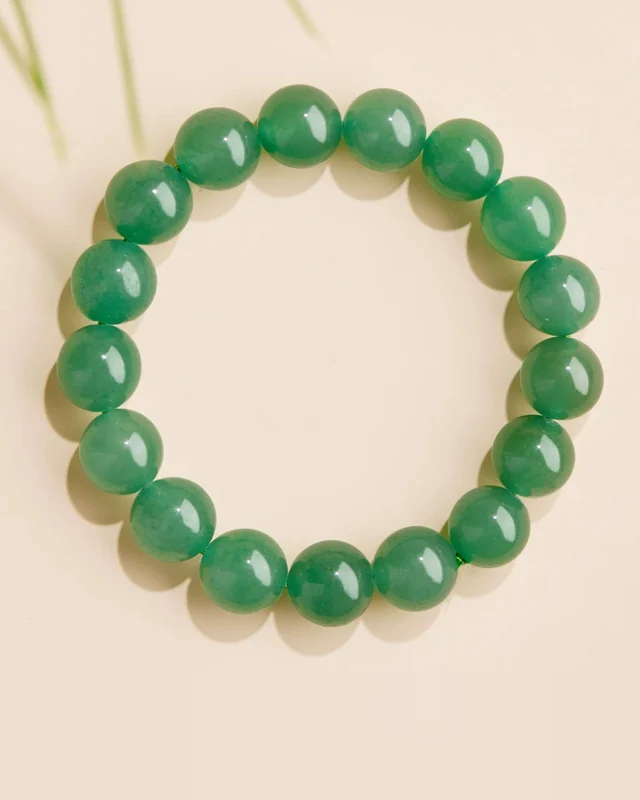
Hetian jade (nephrite)
 Personal designs
Career · Wisdom
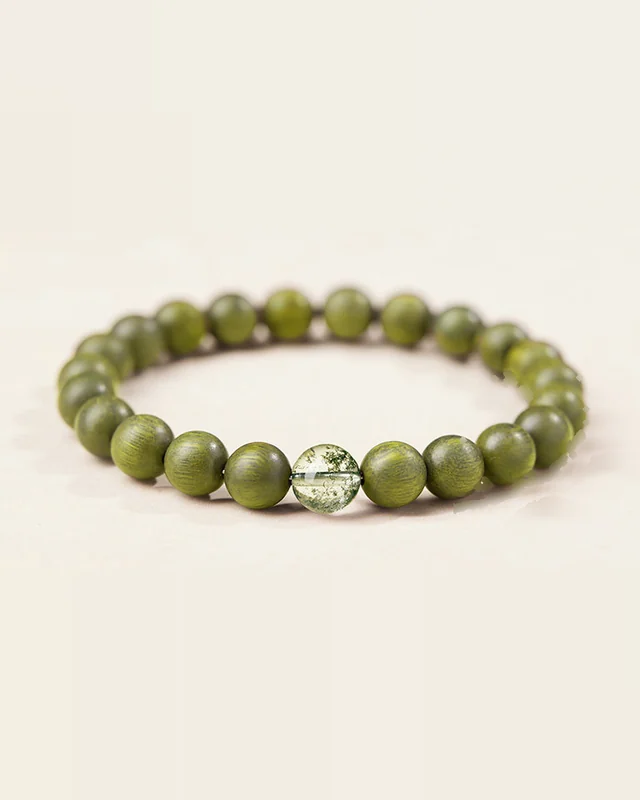
Green sandalwood · Green phantom quartz
We use Google Analytics and Microsoft Clarity by default to understand visits and improve browsing. Form inputs are masked, and you can opt out anytime. Privacy policy