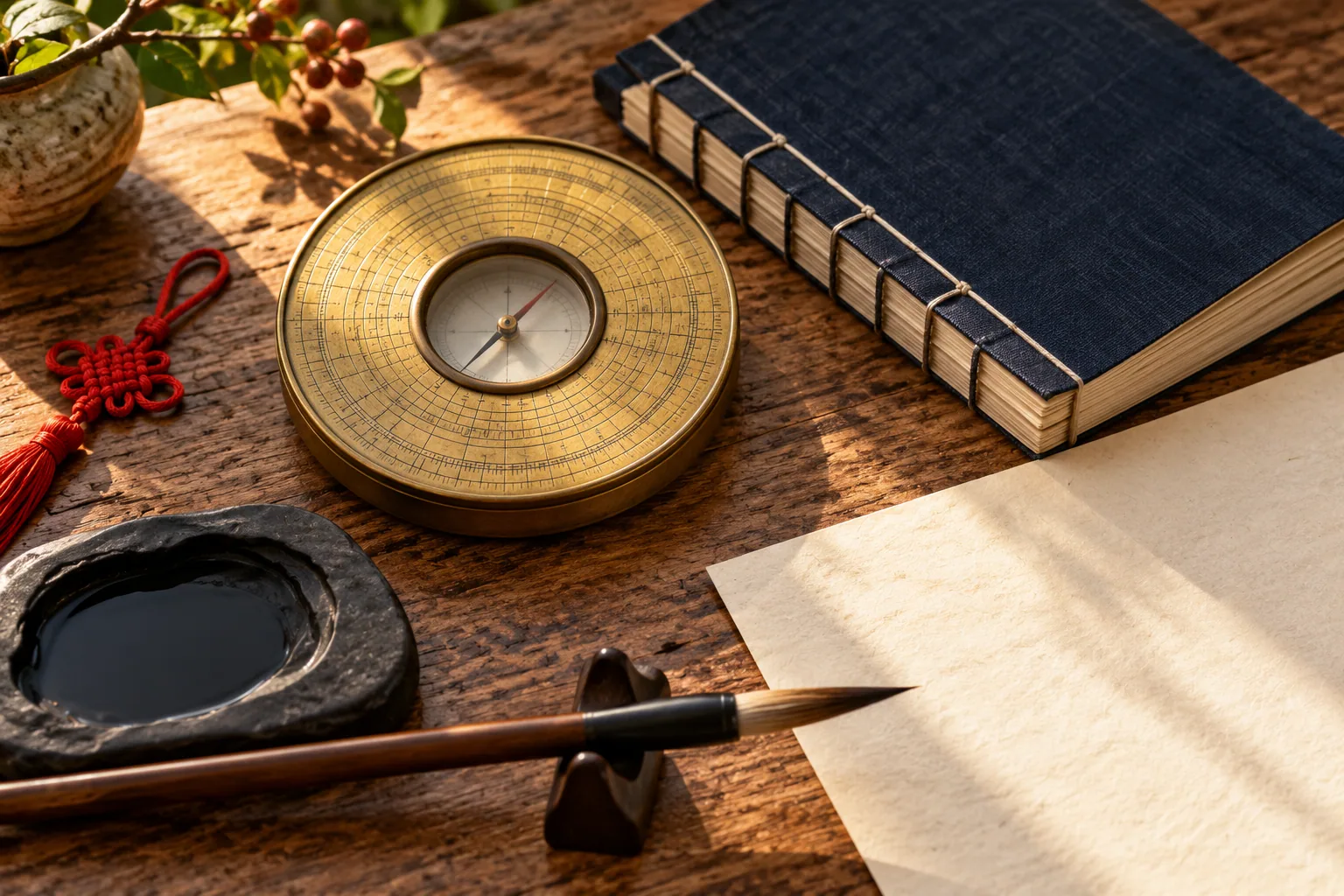
How the Four Pillars are formed
Each pillar contains one Heavenly Stem and one Earthly Branch. The four are the Year, Month, Day and Hour Pillars. Ten stems and twelve branches combine in an ordered sixty-pair cycle. This traditional time notation provides the foundation for BaZi analysis.
The pillars are not formed by simply replacing four Gregorian numbers with four animals. Months involve seasonal conventions, the hour stem relates to the day stem, and year boundaries need a stated rule. A zodiac-year table is therefore not a complete BaZi chart.
Swipe to see the full comparison
| Pillar | Basic content | Useful first question |
|---|---|---|
| Year | Stem and branch for the birth year | Which year-boundary convention is used? |
| Month | Stem and branch of the seasonal month | Where is the solar-term transition? |
| Day | Stem and branch of the day | Which stem is the Day Master? |
| Hour | Stem and branch of the double-hour | Which time record and convention are used? |
Stems, branches and Five Elements
The ten stems are Jia, Yi, Bing, Ding, Wu, Ji, Geng, Xin, Ren and Gui. Traditional assignments pair them with Wood, Fire, Earth, Metal and Water, each in yin and yang forms. The twelve branches also appear in months, double-hours and animal-year references.

The same branch can appear in different positions. A year branch may name the zodiac animal, while a day branch belongs to the Day Pillar. A shared character does not make those positions interchangeable. Branches also connect with hidden stems and seasonal ideas in traditional analysis.
The Five Elements describe a traditional system of generation, control and change. Color associations can help remember cultural imagery, but a preferred color is not enough to identify a complete personal chart.
Why the Day Master matters
Zi Ping BaZi commonly takes the day stem as a reference point, called the Day Master or Day Yuan. A Jia day stem is described as a Jia Wood Day Master. It is not the birth-year animal or a freely chosen representative color.
The relationships of other stems to the Day Master, together with yin-yang polarity, generate the Ten Gods names. One stem can therefore receive different relationship labels for different Day Masters. Wealth, Resource and Officer must be read relative to that reference.
The Day Master is a center for discussing the arrangement, not a complete classification of people into ten fixed personalities. Season, other pillars and their combinations remain part of traditional interpretation.
Solar terms and lunar dates
Common Zi Ping methods divide months by solar terms rather than changing the Month Pillar on every first lunar day. Terms such as Li Chun and Jing Zhe provide transition references, with a specific time important near a boundary.
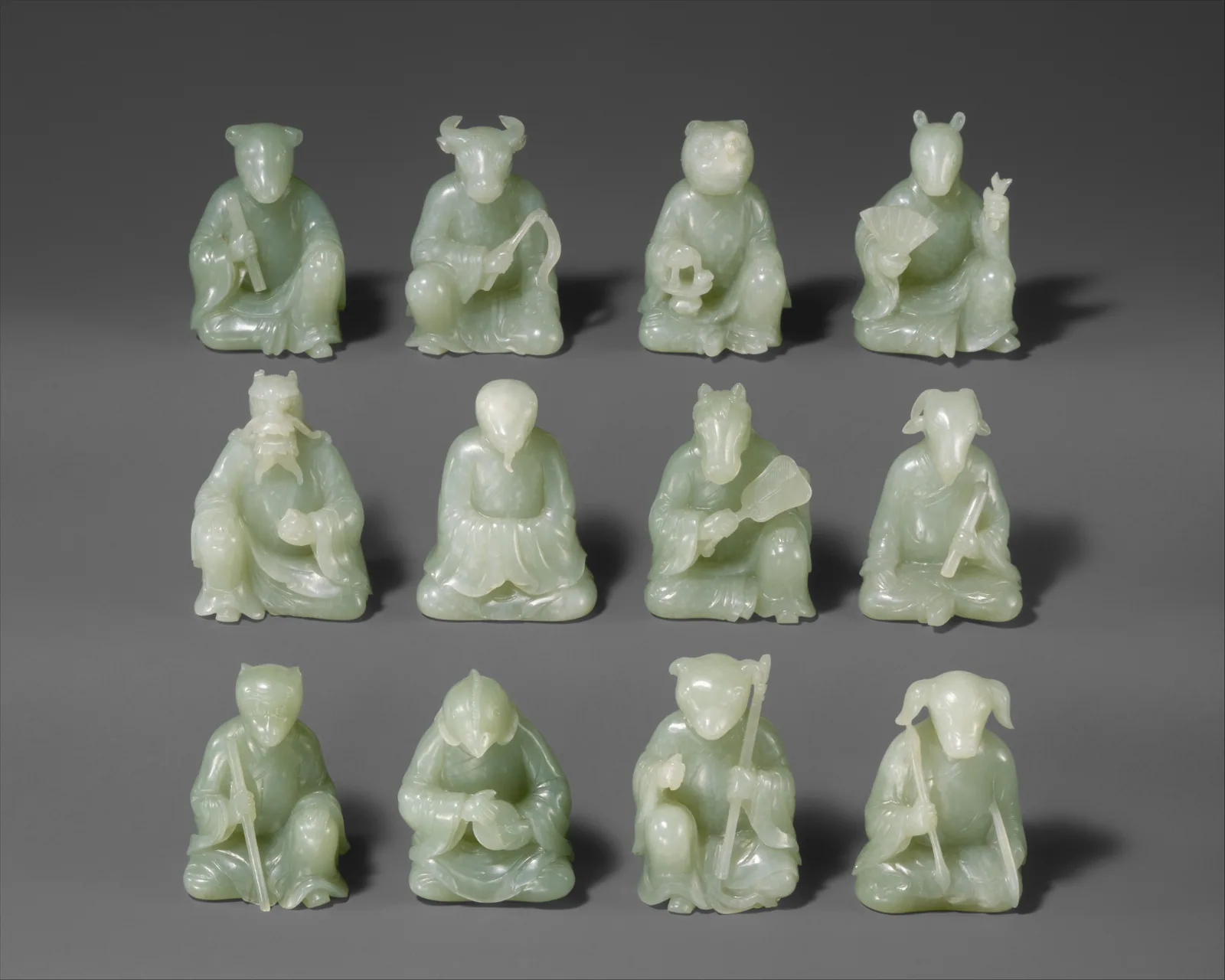
The lunar calendar and solar terms belong to related calendar knowledge but do not have identical month boundaries. Lunar months relate to lunar phases, while solar terms relate to the Sun. Chinese New Year and Li Chun can consequently fall on different dates, helping explain some differences between chart outputs.
Calculation and interpretation
Chart calculation applies a method to birth details and displays stems, branches and associated fields. Interpretation analyzes their relationships within a traditional framework. A page containing many fields does not make them equally important or automatically answer a personal question.
Season, Day Master, Ten Gods, hidden stems, structure and timing occupy different levels. A Direct Wealth label is not a literal promise of money, and a symbolic-star label alone does not establish an event. Each belongs within the wider method and chart.
A consultation can explore traditional perspectives on life stages and personal concerns. Career choices, relationships and action also need real-world information. The terminology can help articulate a question without replacing the practical judgment required for it.
BaZi and a Five Elements bracelet
Ready-to-wear bracelets can be chosen by intention and materials, such as career, peace, affinity or study. A personal BaZi composition instead aims to connect birth details, favorable elements and the year’s wishes with the bead arrangement.
The brand’s personal-design approach uses the chart’s energy pattern and favorable elements as material cues. Bead diameter, wrist fit and material preferences still belong to the wearer. A general blessing and a personal composition can each be described clearly without pretending that every ready-to-wear item has undergone a personal reading.
Questions & answers
Is BaZi the same as the Chinese zodiac?
The zodiac mainly names the year branch. BaZi also includes the other stem-and-branch information in the year, month, day and hour.
Are the eight characters all counted with equal weight?
Traditional methods consider position, season and relationships, rather than simply adding identical points for every character. The chosen analysis method should be stated.
Can I learn about BaZi with only my Gregorian birthday?
Yes. You can study the concepts and organize what you know. A personal Four Pillars arrangement also needs birth time, place and the calendar and time conventions being applied.