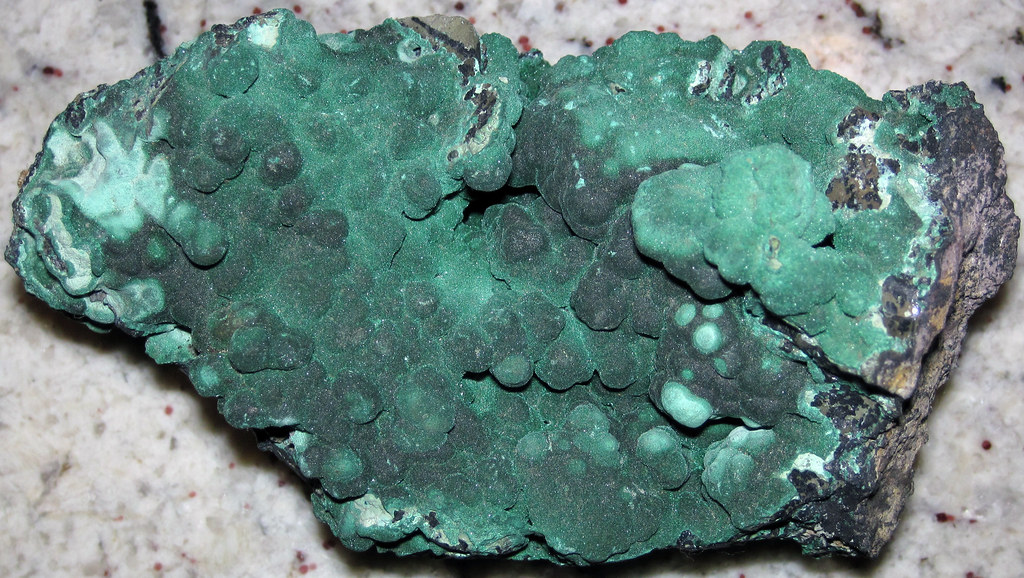
Copper color and patterns of growth
Malachite is a copper carbonate mineral. Mindat records its green color and relatively low hardness, while IGS connects its banding with changes during formation. Polishing reveals arcs, circles and irregular waves that give an opaque material considerable visual variety.
A round bead shows a small part of the pattern; a larger slice or cabochon can reveal more complete curves. Someone drawn to rings may prefer a broader surface, while a strand emphasizes color matching. There is no single best pattern independent of the finished object.
Dark and light green do not necessarily mean separate stones assembled together. Malachite may also occur naturally with azurite, creating a blue-and-green material. That differs from adding a separate blue bead to a design. Identity, natural association and design ingredients deserve separate descriptions.
An old green with a present-day wish
The Metropolitan Museum of Art holds malachite fragments from ancient Egypt’s New Kingdom. IGS also describes the material’s use in ornament, carving and decorative art. A modern bracelet is one form within that history, without automatically inheriting the purpose of a particular ancient object.
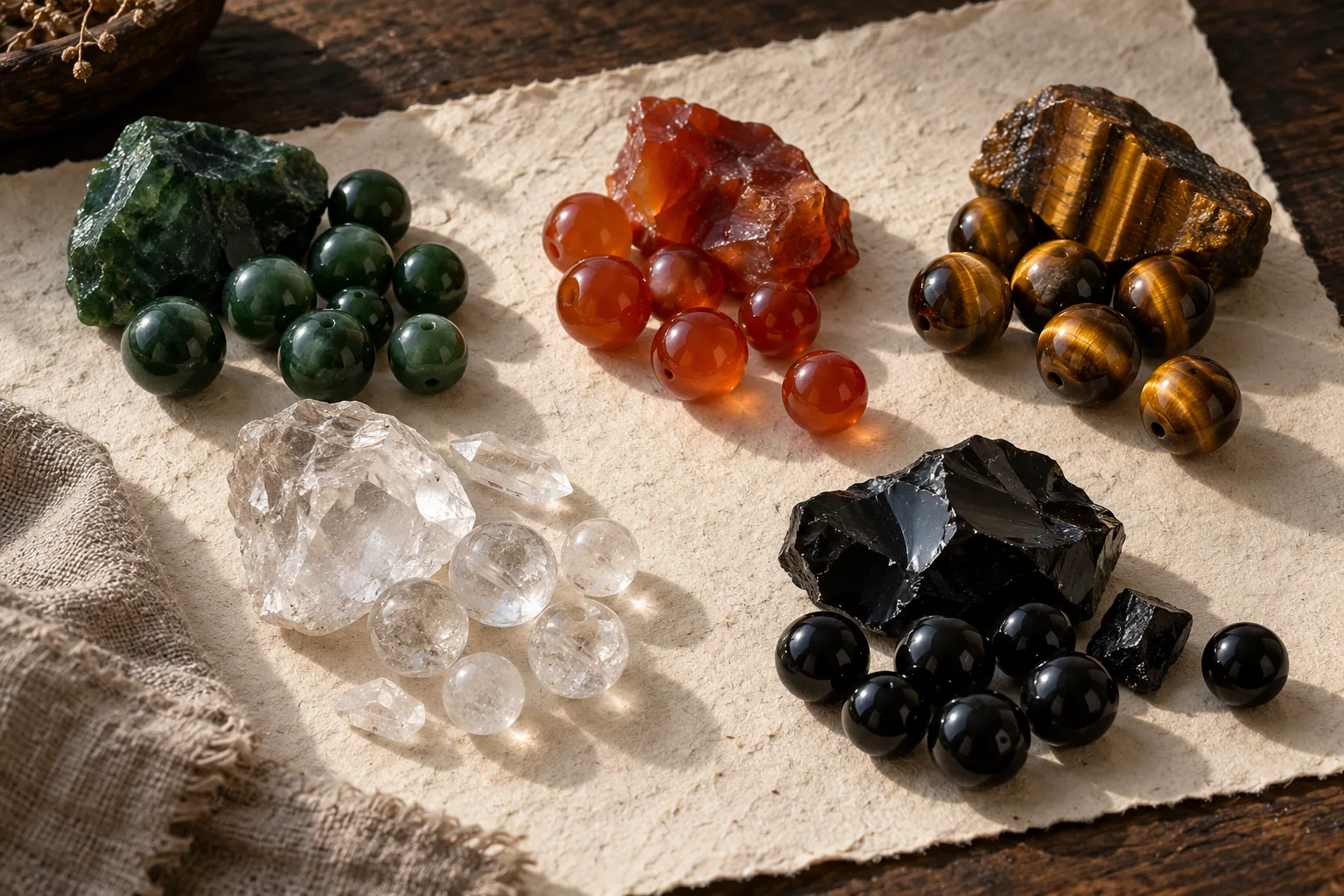
The rich green and unfolding patterns lend themselves to cultural ideas of growth, renewal and a sound foundation. A Five Elements design can use them for a Wood-oriented wish or a new professional chapter. Pale accents can allow the material’s own pattern to remain prominent.
Personal design considers favorable elements, annual and ten-year cycles and the wearer’s wish. Malachite, jade and aventurine may all be green, but they are different materials. A similar color invites comparison, not substitution under an inaccurate product name.
Patterns, treatments and imitations
Imitations can reproduce a green-banded look, but judging a photograph as too regular is not complete identification. Lighting, cutting and polishing affect the pattern seen. Resin, glass or another imitation needs its correct identity stated.
IGS notes that some less compact material may be stabilized with resin or surface-waxed. Treatment of malachite is different from using another material to imitate it. Natural source, treatment and construction should be described separately rather than replaced by a vague purity claim.
Acid tests or grinding damage a finished piece and introduce unnecessary exposure. Professional examination is more appropriate when identity matters. For shopping, review the name, photographs, finish and available documentation. Coolness or weight alone does not establish natural origin.
Pattern and workmanship both contribute
Rough mineral, collectible crystals, carvings, slices and bead strands are different goods. Pattern completeness, cutting orientation, compactness and finishing affect their appeal. A raw-material weight price cannot directly explain a carefully carved or selected finished piece.
For a strand, consider the rhythm of the patterns, color, diameter, holes and polish. Identical beads are not automatically the prettiest choice, and varied patterns are not automatically poor work. Natural markings should be separated from chips or unfinished surfaces.
The intended use matters to a softer stone. Someone whose wrist repeatedly meets equipment or a desk may prefer a form that receives fewer knocks. Enjoying the pattern and choosing a practical object are connected parts of the purchase.
A softer material deserves gentler handling
Malachite has a Mohs hardness around 3.5–4 and can be damaged by abrasion, heat or acid. IGS advises against steam, ultrasonic and acidic cleaning. Avoid impacts and store it away from harder gems and metal, following the information for the actual finished piece.
Wearing polished jewelry is different from breathing dust produced by cutting. Copper-containing malachite dust should not be inhaled; do not grind it or add rough material or powder to drinking water. A broken or powder-shedding object needs attention before continued skin contact.
Check cord, holes and components as well. In a mixed design, harder companion beads may rub against the surface. Separate storage with a soft divider both protects the piece and makes inspection easier.
Questions & answers
Are green bands necessarily dyed?
No. Natural malachite can show light and dark banding. Treatment or imitation still needs to be considered through material information.
What is malachite with azurite?
The minerals can occur together naturally, showing adjacent blue and green. That differs from a design made with separate blue beads.
Is it suitable for a bracelet that receives frequent knocks?
Its softness calls for care. Consider a less exposed jewelry form or remove it for activities involving repeated impact.
Can malachite be put into drinking water?
Do not add malachite, mineral powder or beads of unknown treatment to drinking water. Keep its use to appropriate display or jewelry purposes.