The sparkle inside the green
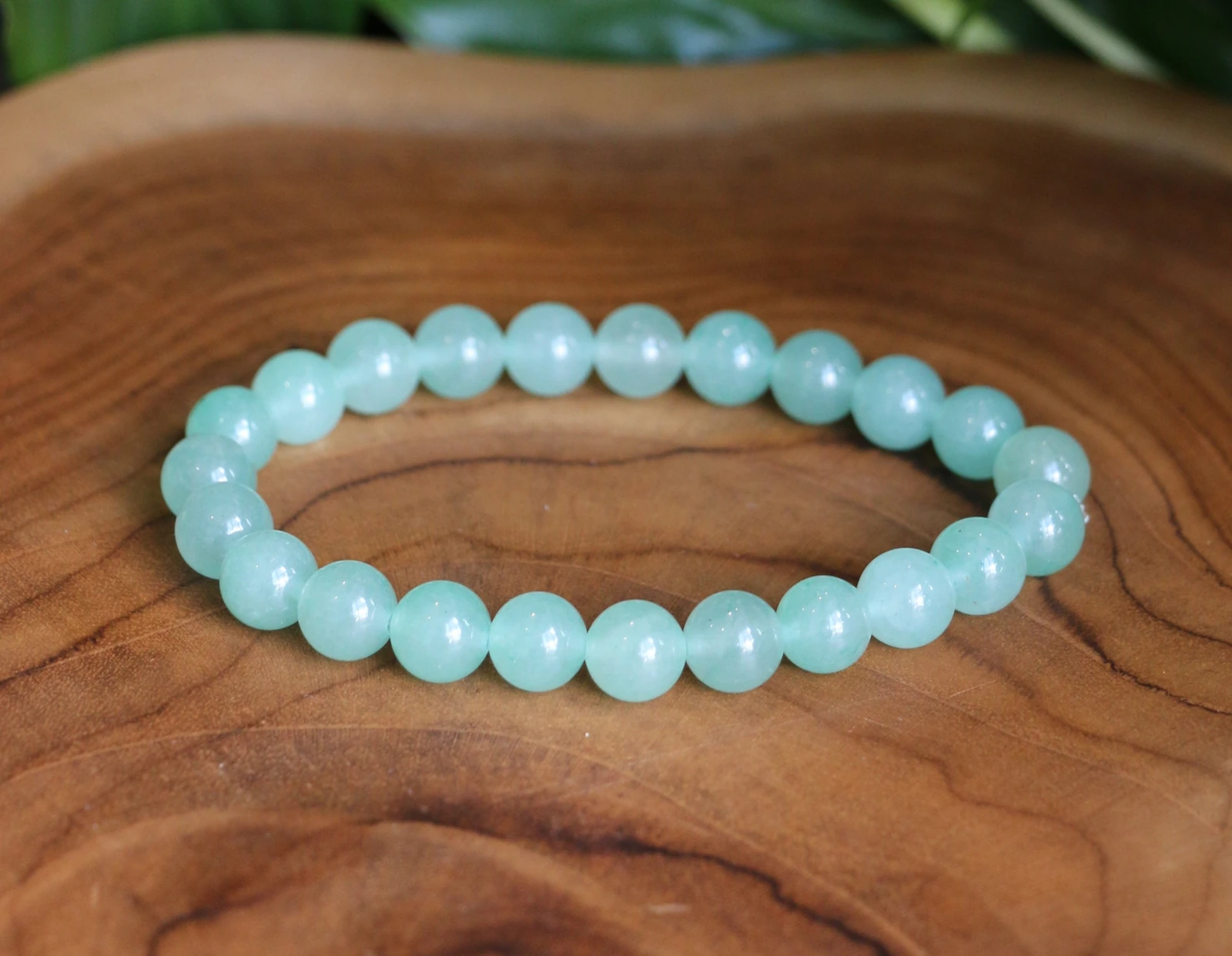
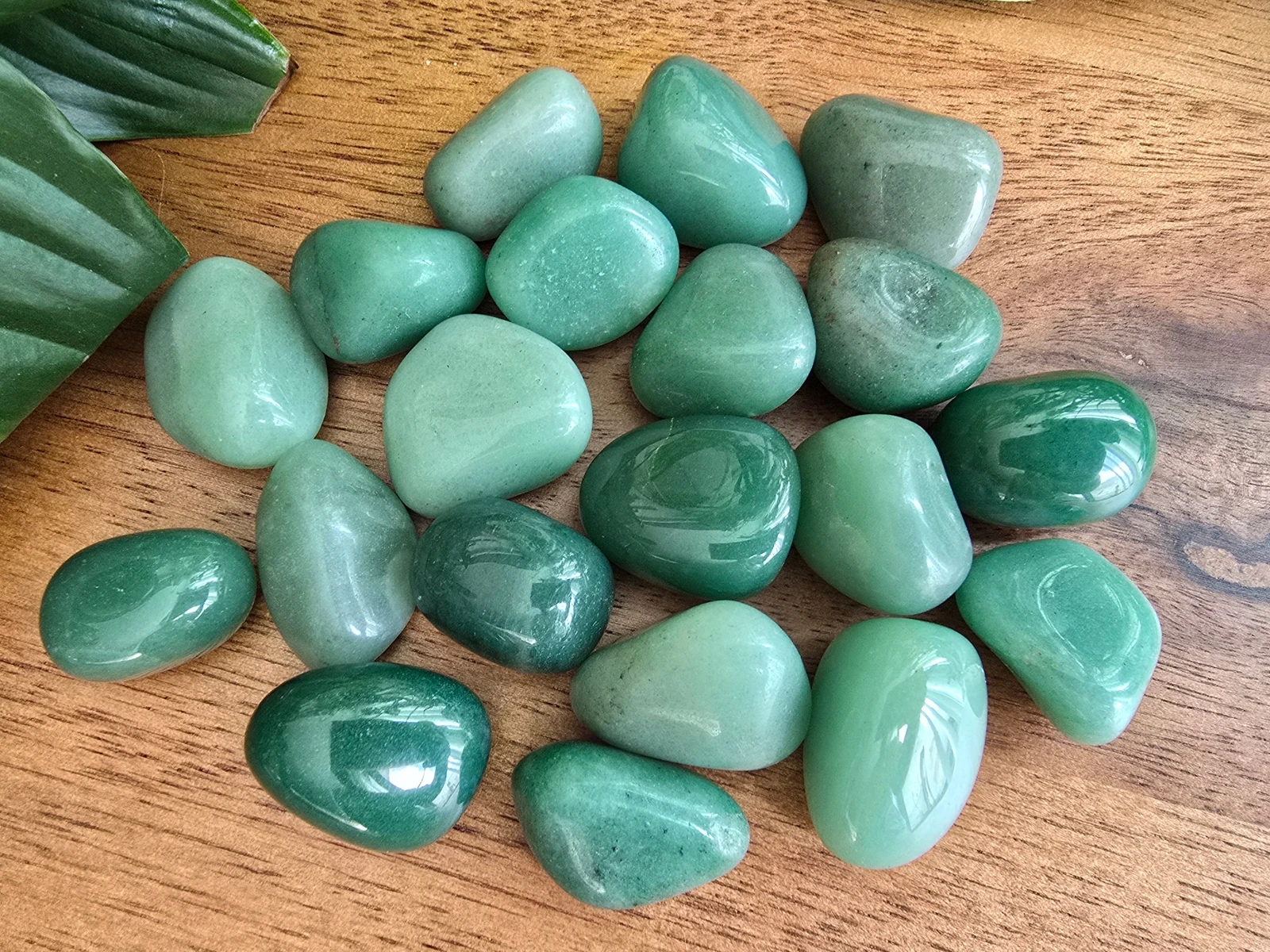
Aventurine is a quartz-rich material containing small reflective crystals. Green material commonly contains green mica, which contributes to its appearance. The sparkle is spread through the stone rather than concentrated into one bright facet, and it changes as the bead or the light moves.
Aventurine occurs in colors beyond green, but this website’s designs use green aventurine. Check the stated color alongside the material name. Whole-bracelet images show the overall tone; close views under different lighting are more useful when a noticeable sparkle matters to you. The lighting in one photograph should not become the entire basis for your choice.
Wood, growth and positive connections
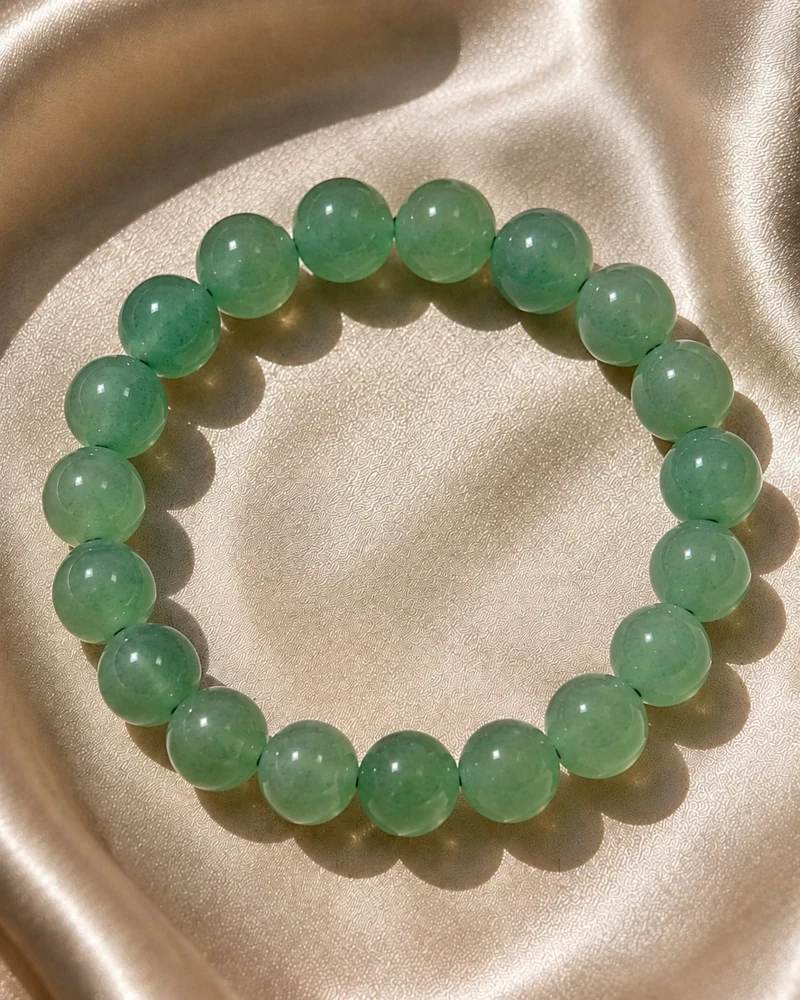
Green belongs to the Wood palette in Five Elements traditions. Wood expresses growth, upward movement and the unfolding of possibilities, making aventurine a natural visual choice for a new professional chapter, continued learning or positive connections. The intention can be as straightforward as wishing someone well in a course of study.
Wood’s association with growth can be expressed at different scales. Rising Fortune uses approximately 10 mm green aventurine for a fuller presence; the study design uses approximately 8 mm while retaining the same material’s subtle sparkle. Choose the proportion you enjoy and the milestone you want to mark.
Searches for aventurine benefits often lead to language about opportunity and good fortune. Here, those ideas belong to cultural symbolism and personal intention. A ready-to-wear design can be chosen by the meaning and materials you enjoy; a personal favorable-element arrangement takes its direction from a fuller BaZi discussion.
Aventurine, moss agate and jade
All three names may bring green stones to mind, but they describe different materials and different visual interests. Aventurine is worth examining for its overall green appearance and fine sparkle. Moss agate is valued for plant-like mineral patterns. Jade is a broader material name that calls for a more specific identification when the variety matters.
Choose green aventurine for a more continuous green tone, or compare moss agate if you enjoy each bead looking like a small landscape. Sparkle and moss-like inclusions offer different pleasures. Looking at the actual designs side by side is more useful than comparing green intensity alone.
Price and the complete bracelet
Rough material, individual beads, loose strands and finished bracelets are different purchases. A raw-stone price by weight cannot be converted directly into the price of a finished bracelet. Main bead diameter, matching, polishing, companion materials and making all become part of the finished item. Compare similar specifications before comparing prices.
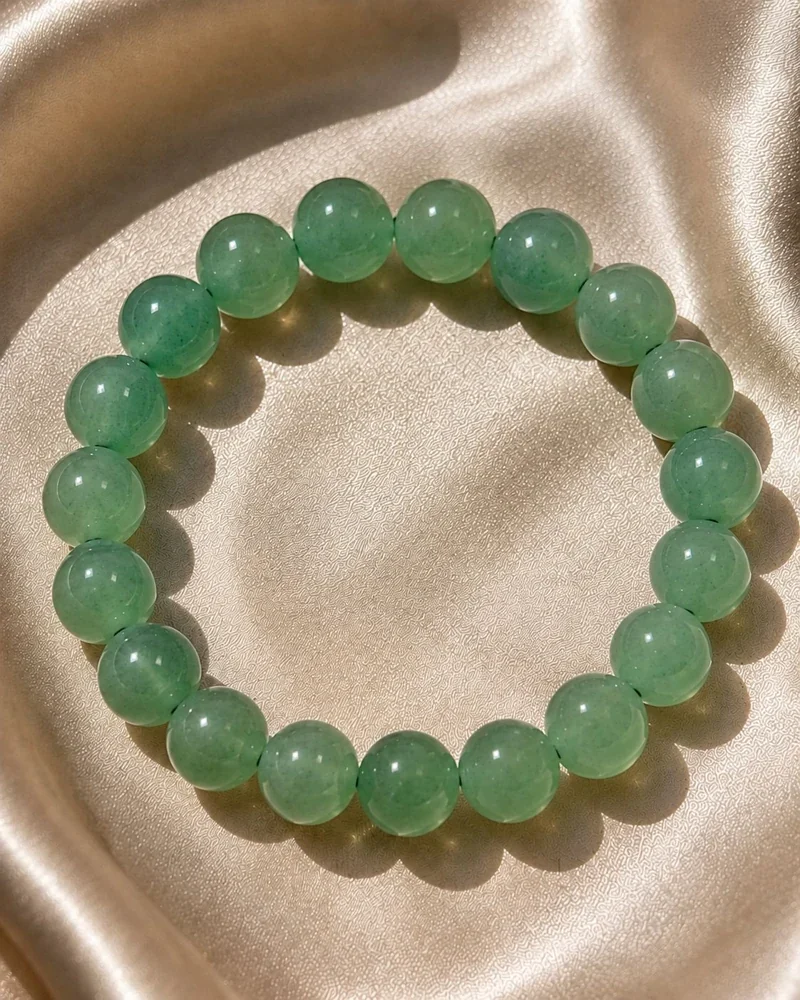
For everyday wear, consider whether the tones work together, the polished surfaces feel comfortable and the stringing suits the design. More sparkle is not automatically everyone’s preference, nor is the darkest green necessarily the most appealing. Use actual images and the written specification to choose between a softer or deeper green impression.
The ready-designed green-aventurine choices use approximately 8 mm and 10 mm round beads. Custom directions include black wood with aventurine and a faceted aventurine composition. Round beads, contrasting wood and faceted surfaces create different tactile effects; wrist fit is chosen separately.
Wearing and caring for the composition
Aventurine can be worn alone or as part of a mixed composition. Avoid hard knocks, store bracelets separately and use a soft cloth for routine wiping. A sandalwood pairing needs care suitable for the wood as well as the stone, including avoiding prolonged soaking and high heat.
For a graduation, a new course or a career milestone, the green Wood theme gives the gift a clear message. Someone who prefers fine beads may enjoy a 6 mm design; a wood-and-stone preference points toward the sandalwood composition. Meaning and wearing taste work best together when choosing something the recipient will enjoy regularly.
Questions & answers
Is green aventurine a type of jadeite?
No. Aventurine is a quartz-rich material, while jadeite is a different gem material. Similar green colors do not make them interchangeable. Use the specific material name and description when choosing.
Should every aventurine bead sparkle strongly?
The appearance depends on inclusions, polishing, light and viewing angle. A single photograph with little visible sparkle is not enough to identify or reject a material. Consider its description and actual appearance together.
Can aventurine simply replace missing Wood in my BaZi chart?
A Wood-themed bracelet can express a growth intention. A personal favorable-element composition considers the whole chart rather than equating an absent element with a requirement for more of it. That belongs to the custom discussion.