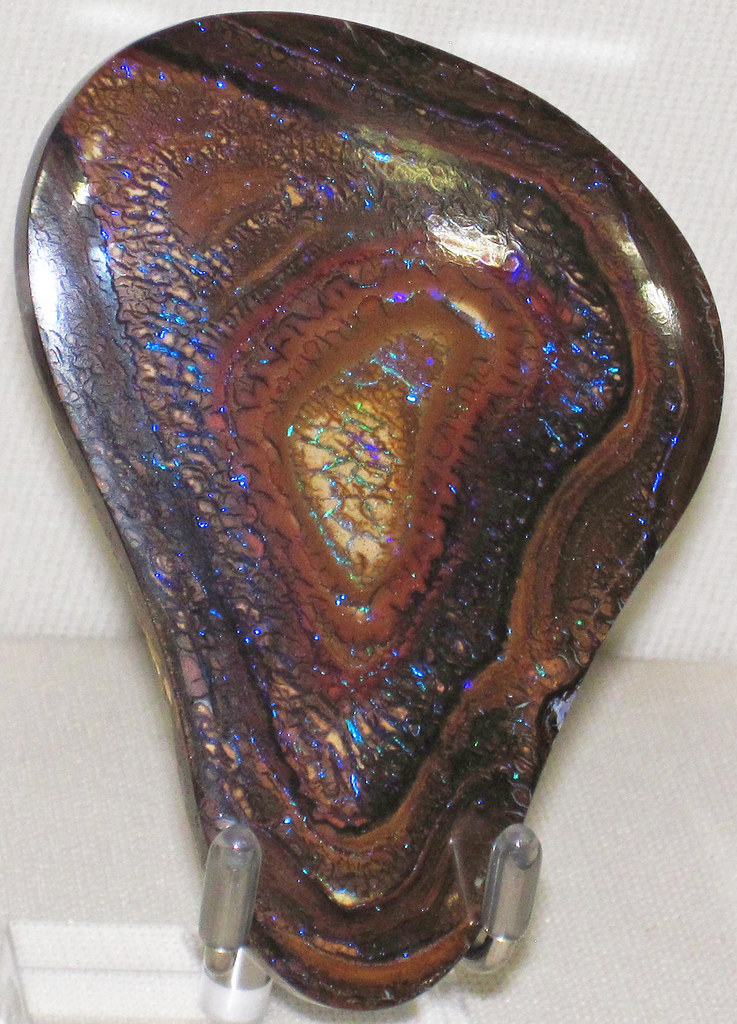
Play-of-color is different from body color
GIA distinguishes precious opal with play-of-color from common opal without it. The flashing colors arise from the interaction of light with tiny internal structures. Body color is the pale, dark or otherwise colored background. An absence of flashing color does not alone rule out opal.
A slow moving view shows where colors appear, how widely they spread and whether a pattern remains attractive across angles. The brightest single frame can be impressive without representing ordinary wear. Views in natural and normal indoor light help complete that impression.
White, black, fire and boulder opal
White opal uses a pale background; black opal has a darker one that can strengthen contrast. Black describes the background rather than an absence of color. Fire opal emphasizes warm yellow, orange or red body color and need not show play-of-color. Boulder opal retains naturally attached host rock.
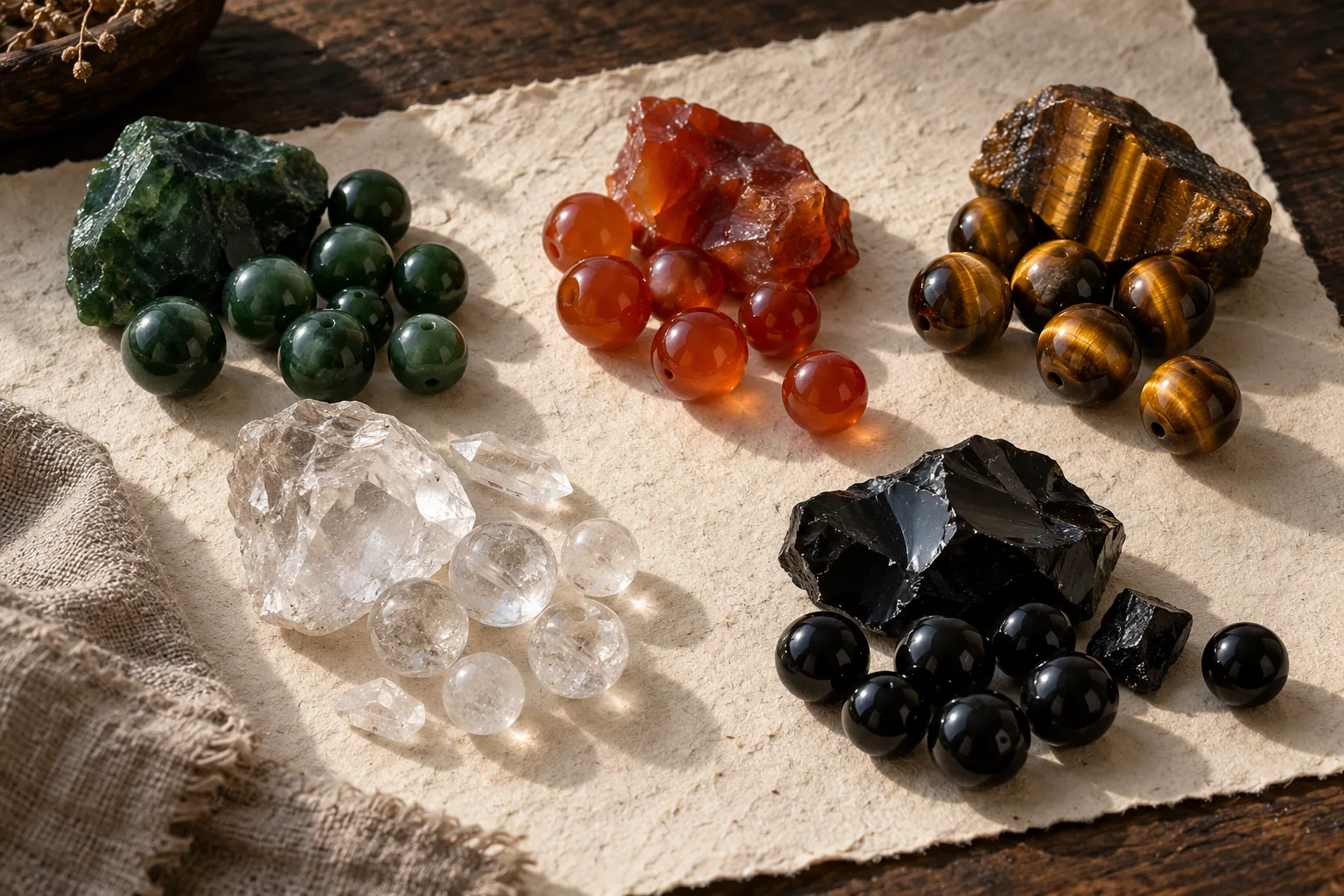
These names classify appearances rather than create a fixed price ranking. A weak or damaged dark-background piece may be less appealing than a bright, well-patterned pale one. The actual object still needs to be assessed.
Freeform outlines, domes, beads and carvings preserve different amounts of color and thickness. An irregular shape can follow the material to present its light well. Symmetry is not the only route to an attractive finished gem.
Solid, assembled, synthetic and imitation
An opal doublet adds backing to a thin opal layer; a triplet also adds a transparent cap. GIA explains how assembly makes thin material usable in jewelry. It has its own value but needs its construction disclosed rather than being described as a complete solid opal.
Synthetic opal is another category, involving manufactured opal material. Glass and plastic imitations use other substances to reproduce an appearance. Opalite commonly names opalescent glass and should not become natural opal merely through a similar-sounding word.
Back, side and front views help explain construction. A setting can hide the edges, making a face-up photograph insufficient. Clear information about structure, origin and treatment answers more than one broad question about whether something is real.
Value cannot be separated from the pattern
Color, brightness, pattern, body color, transparency, size and damage can all matter. Equal weights may show very different visual quality. Carat-price information needs the relevant type and quality established before it can offer a useful comparison.
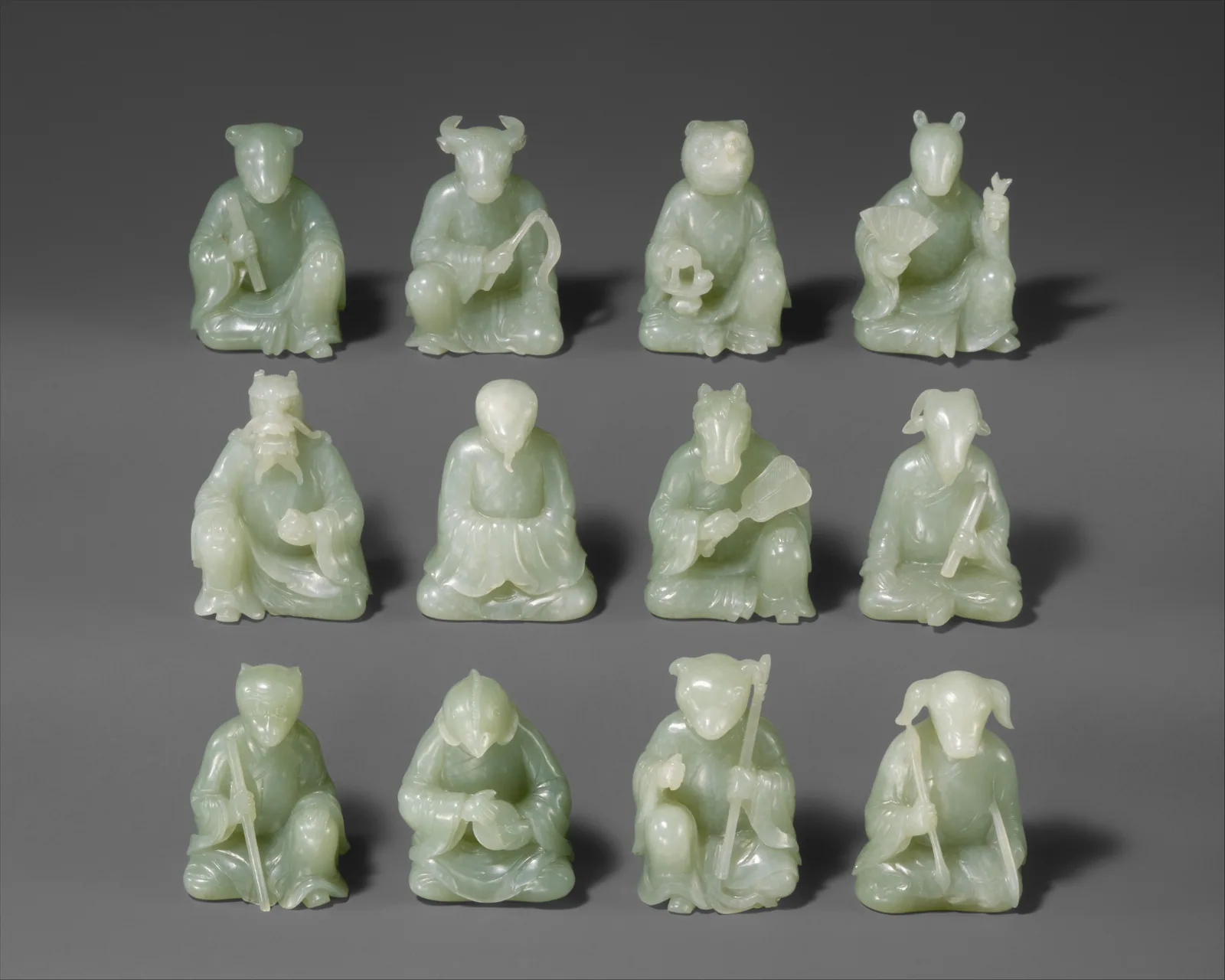
Rough material carries uncertainty about what cutting will reveal and how much usable gem will remain. A finished cabochon and uncut rough therefore have different pricing contexts. A strand adds matching, drilling and companion materials, and should be viewed as a whole.
Origin is interesting without deciding quality by itself. Confirm that the images show the actual item, read any assembly or treatment information and look for visible cracking. Those details make comparisons more specific than a locality name alone.
October and light through change
Opal is an October birthstone. Its changing colors suit wishes for a new year, hope and the richness of experience. A gift can mark personal change, with something new becoming visible each time the piece turns.
Within BaZi bead design, many colors do not automatically fulfill every Five Elements need. A personal chart, favorable elements and annual and ten-year cycles still provide context, while the material’s wear requirements matter to the physical design. A meaningful wish can accompany the light without turning each flash into a prediction.
Water absorption and considerate handling
Some opal is hydrophane, meaning it absorbs water and may change transparency. GIA’s research describes that behavior. It does not justify routine long soaking or experiments with unknown liquids. Type, construction and treatment each influence appropriate care.
Protect opal from impact, strong heat, abrupt temperature changes and aggressive mechanical cleaning. Assembled pieces also include adhesive layers and settings. Keep the material information; new fine cracks or unexpected appearance changes deserve professional attention rather than heating or repeated soaking at home.
Personal opal selection and pricing
Opal designs are quoted for the selected variety, bead size, play-of-colour, bead count and wrist fit. We confirm the stones and design before making your bracelet. Common opal and opal with play-of-colour are selected and priced separately.
Questions & answers
Is a stone without flashing color necessarily not opal?
Common opal may lack play-of-color. Type, body color and other information need to be considered together.
Is an opal doublet just fake glass?
Not necessarily. A doublet may contain an opal layer and backing, making it an assembled piece. Glass imitation is a different category.
Must opal always be stored in water?
Do not treat soaking as universal care. Hydrophane behavior, assembly and treatments differ, so follow information for the particular piece.
Is opalite the same as opal?
Opalite commonly refers to opalescent glass or other trade materials, not natural opal. Similar names require clear identification.
How do I order an opal bracelet?
Share your preferred body colour, play-of-colour, bead size and budget through personal design. Your adviser provides a quote for the selected stones and arrangement before the bracelet is made.