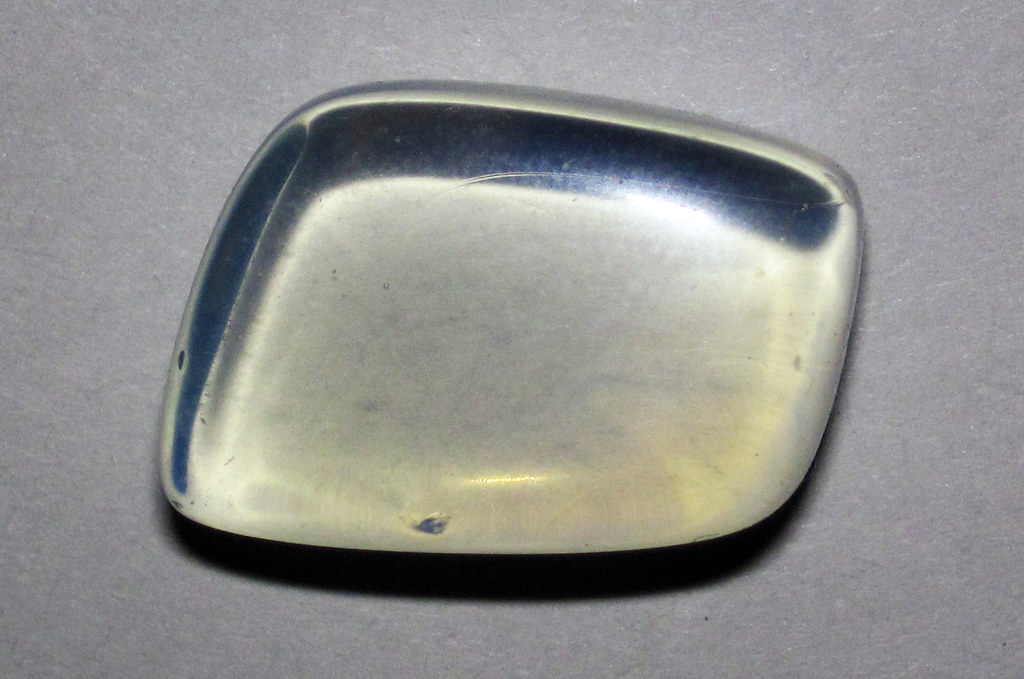
One name with several uses
IGS describes common jewelry opalite as a glass trade name associated with imitating opal or moonstone. Mindat also notes historical use for some common opal materials. A product therefore needs its actual identity stated rather than relying on the name alone.
This page focuses on the familiar glass used for beads and decorative objects. Smooth surfaces and a consistent appearance can make an appealing strand. When the manufactured material is clearly described, it can be appreciated for design and finish without borrowing a natural mineral’s origin story.
Names such as sea opal or artificial moonstone can add confusion. Sea, moon and opal imagery may be marketing language rather than composition. The material field deserves clarity, particularly when a price is being compared with natural gemstones.
Opal and moonstone are different materials
Natural opal is hydrated silica, and some displays play-of-color. Moonstone is feldspar with a moving adularescent glow. Glass may suggest their appearance without sharing their identity or formation history.
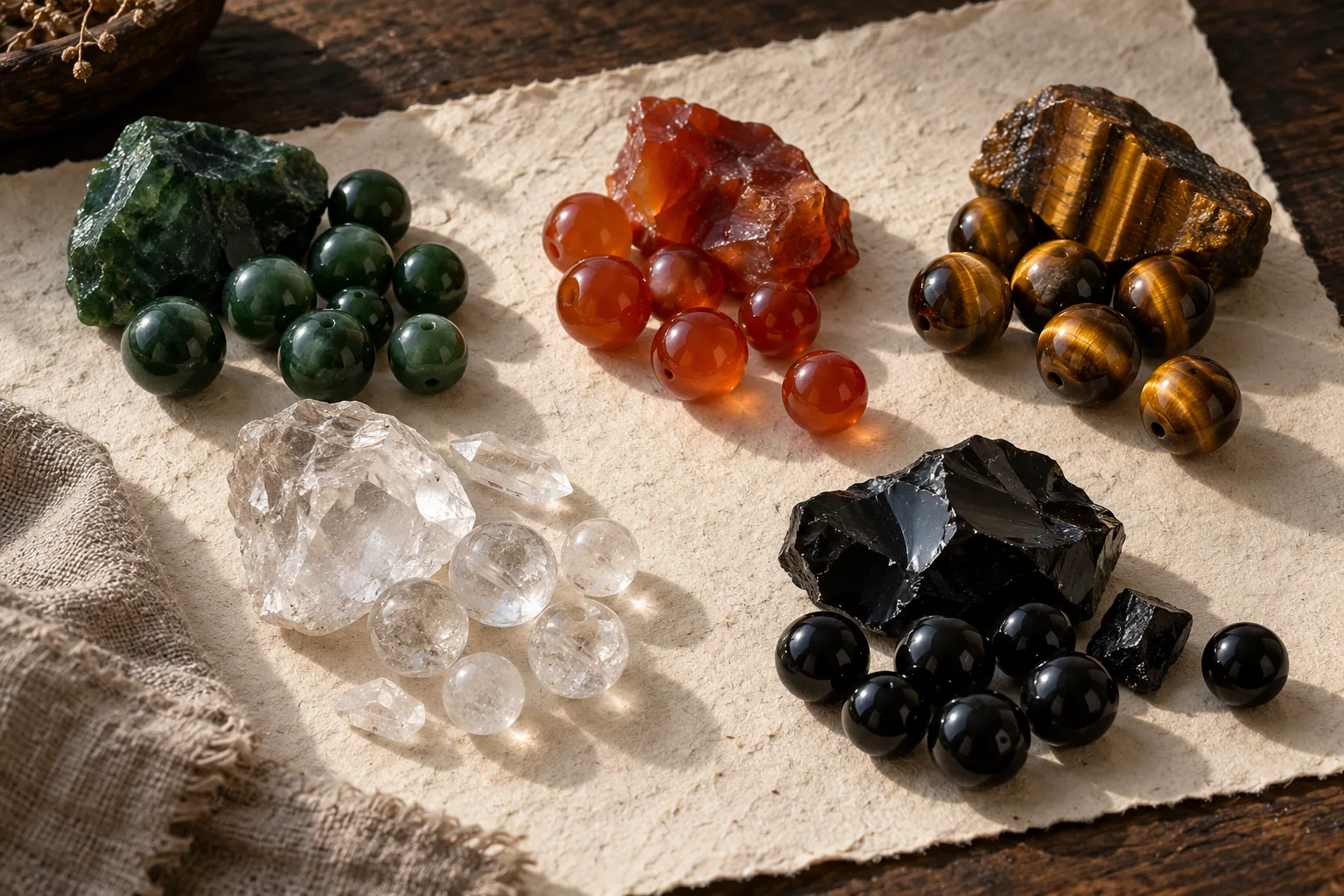
Synthetic opal also differs from glass imitation. One describes a manufactured counterpart of the gem; the other uses another material to reproduce a look. Even the word artificial may be too broad without explaining the actual construction.
Bubbles, evenness and reflections can offer clues, but no simple rule makes bubble-free material natural. Well-made glass may look clean, while natural gems can have complicated internal features. Reliable descriptions and professional identification are more useful than a one-feature photograph test.
Beads, angels and a visible wish
Contemporary jewelry and crystal traditions often link opalite’s pale appearance with clarity, peace or a fresh beginning. An angel carving gives a protection wish a recognizable shape. Angel describes the motif and bead describes the form; neither changes the material.
A gift can draw meaning from the relationship between giver and recipient. Graduation, a birthday or a move can be marked with a personal message. Honest identification of a decorative material leaves that meaning intact without describing it as an ancient natural crystal.
Five Elements design considers color, proportion, favorable elements and intention. Someone wanting natural materials should have that requirement reflected in the design. Someone drawn to pale light can compare moonstone and clear quartz as genuinely different choices, rather than substitute one name for another.
Birth details and luck cycles can add a BaZi context to a wish, while the material name explains what the object is. Both can be clear, giving the gift a personal story and an accurate description.
Value in design and workmanship
Common opalescent glass is valued through shape, finish, assembly and components. Natural opal carat prices are not a direct model for it. Descriptive words about moonlight or rare energy should not silently turn it into a high-priced natural mineral. Comparable workmanship gives a more useful basis for choice.
Beads should have sound holes and an appropriate finish; carvings need stable bases and intact fine details. Consistency can be a design advantage without identifying the exact glass composition or ruling out a coating.
Protect glass from impact, abrupt temperature changes and rough rubbing. Coatings, adhesive and metal parts may need additional care. Wipe gently, dry after suitable cleaning and store separately. Fire, breakage and strong solvents are not appropriate home tests for a piece of jewelry.
Repair loose cord or damaged holes before continued wear. A gift for a child or a portable carving also needs an appropriate shape and secure storage. Considerate use preserves the original appeal more effectively than adding an unverifiable material story.
Questions & answers
Is opalite a natural crystal?
Common jewelry opalite is usually manufactured opalescent glass. The name has other uses, so the specific material should be stated.
What does an opalite angel mean?
An angel shape commonly expresses protection and goodwill; pale light may suggest peace or clarity. Motif and material identity remain separate information.
Is opalite glass synthetic opal?
Not the same category. Glass imitates an appearance, while synthetic opal is a manufactured gemstone counterpart.
Does an absence of bubbles prove natural origin?
No. Clean glass may show no obvious bubbles. Identification uses more than one visual feature.
Can it be combined with natural beads?
Yes, when each component is accurately listed and cared for. A requirement for all-natural materials should be stated in the design.