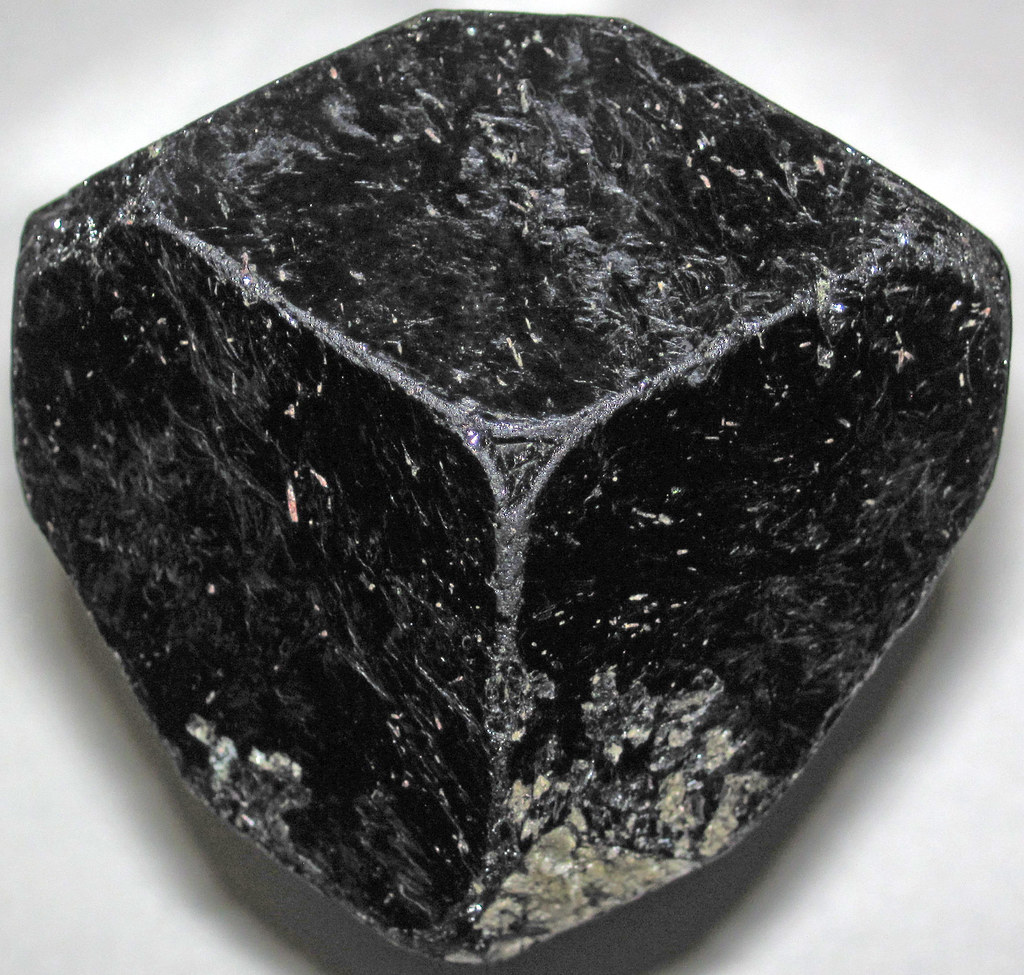
More than one color or mineral species
GIA describes a family of related minerals. Iron-rich schorl is commonly black, while many colored gem tourmalines are elbaite. Black and colored tourmalines are related without being identical products for every buying comparison.
Names such as rubellite, indicolite and Paraíba draw attention to colors or particular material conditions. Attractive terminology still needs matching identity information. The price of a special vivid color should not be applied to ordinary black rough or opaque beads simply because both are tourmaline.
Transparency, saturation and brightness also vary within one color. A faceted gem emphasizes light return, a bead strand relies on matching, and a rough specimen preserves crystal form. Those differences keep comparisons grounded in the actual object.
A watermelon crystal is not just a mixed-color strand
Watermelon tourmaline commonly shows a pink interior and green outer zone, an arrangement that a slice can reveal clearly. Alternating separate pink and green beads creates a different kind of combination: one describes internal zoning, the other design.
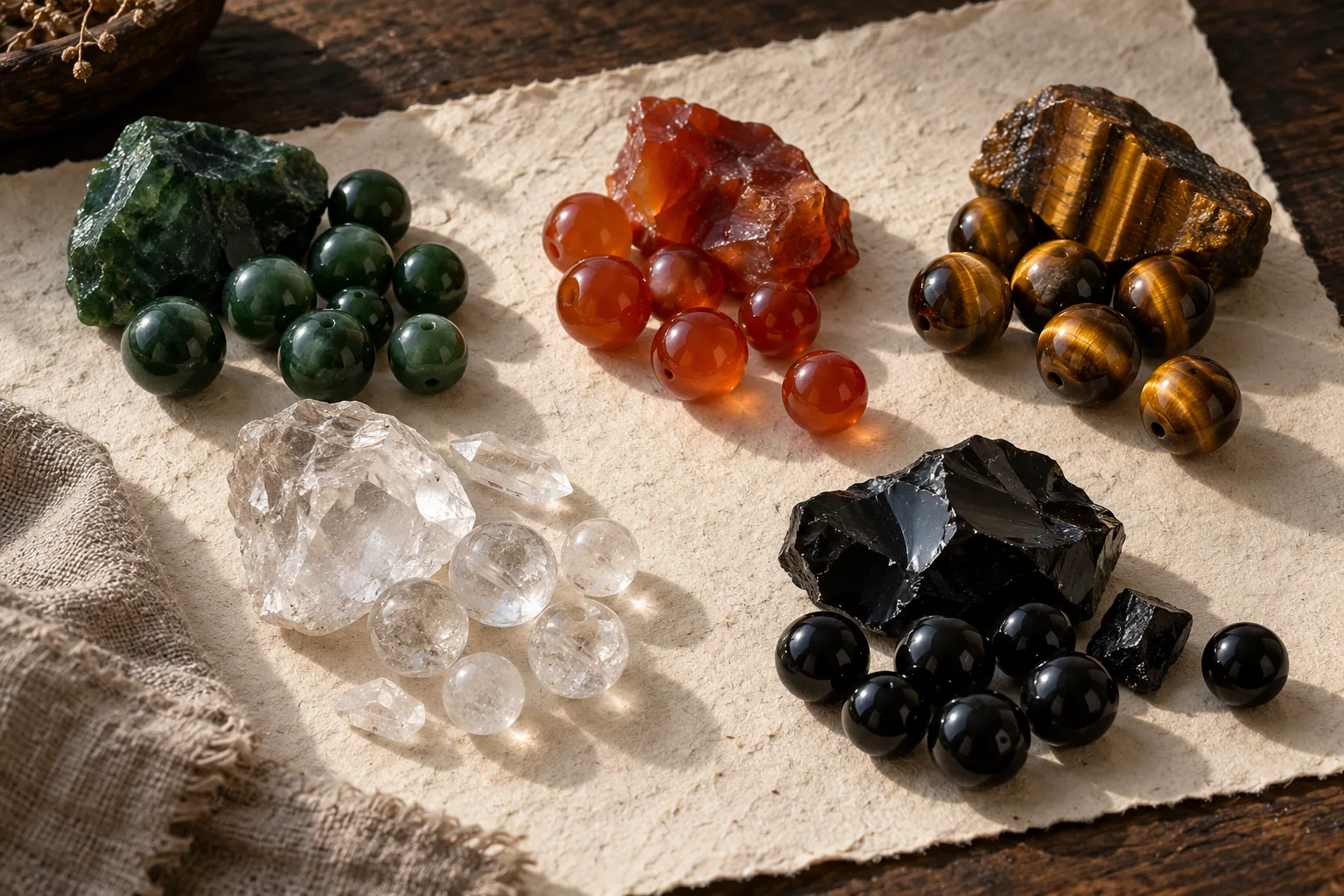
Slices, rounds and facets show different amounts of that original pattern. A bead may not retain a complete pink-and-green boundary. The name should therefore correspond to the actual material, with ordinary and transmitted views useful for understanding its color zones and texture.
A multicolor bracelet has its own appeal without borrowing the identity of a naturally zoned crystal. Its arrangement can graduate from pale to deep or emphasize one color. A shared palette does not prove that every bead has the same species or origin.
Black tourmaline and protection themes
Contemporary crystal traditions often associate black tourmaline with protection, resolve and personal boundaries. In a Five Elements intention, dark color can express steadiness or meet pale companions in a balanced contrast. That cultural meaning is different from a technical measure of physical shielding.
Obsidian is volcanic glass, black onyx is chalcedony and black tourmaline belongs to the tourmaline family. Their similar dark colors can come with different surfaces and textures. Comparing them need not make every protection-themed stone interchangeable.
Personal BaZi design considers the energy pattern, favorable elements and annual and ten-year cycles. A multicolor strand is not automatically suitable for every chart, and a black material is not the only route to a protection wish. The full composition gives the intention its personal character.
Value needs a complete specification
GIA emphasizes color in tourmaline value, alongside clarity, size and cutting. Bright, pleasing color and how light travels through the gem affect a faceted stone; a strand also requires coordinated bead diameters and colors.
Internal features may belong to crystal growth, but that does not make every crack harmless. Fractures near holes, chipped slice edges and the overall strength of the piece affect use. Natural features, treatment and accidental damage should not be treated as one category.
Some tourmalines undergo heat, irradiation or other appearance improvements. Natural origin, treatment status and geographic origin are separate questions, and a report should be read for what it actually establishes. Rough material, beads and fine loose gems also have different pricing contexts.
Gentle cleaning and protection from heat
Tourmaline has a Mohs hardness of about 7–7.5, but high heat or thermal shock can cause damage. GIA recommends warm soapy water rather than steam or ultrasonic cleaning. Some treated colors also deserve care around heat or intense light.
Thin slices, long crystals and round beads meet stress differently. Avoid impact and repeated contact with hard metal in mixed jewelry, store pieces separately and retain material information. Considerate use preserves color and texture more effectively than aggressive cleansing routines.
Questions & answers
Is black tourmaline the same as obsidian?
No. Tourmaline is a mineral family and obsidian is natural volcanic glass. Their dark color does not establish the same identity.
Is any pink-and-green strand watermelon tourmaline?
No. Separate colors arranged in a strand differ from pink-and-green zoning within one crystal. The name should match the material.
Why do tourmaline prices vary so much?
Color type, clarity, size, treatment, cut and product form can all differ. Fine loose gems and ordinary rough or beads require separate comparisons.
Does multicolor tourmaline automatically balance the Five Elements?
Color can express an element theme, but personal design also considers favorable elements and the complete intention. Many colors are not a universal prescription.