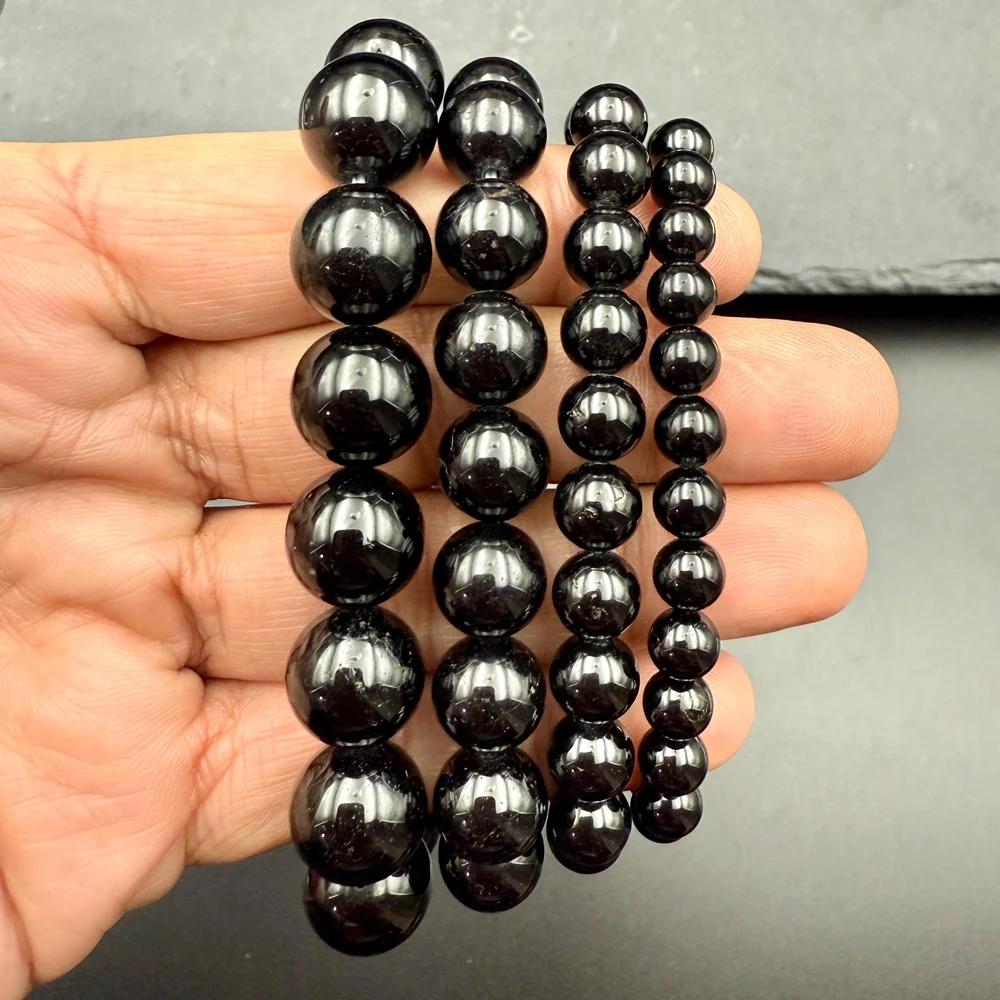
Banded chalcedony and uniform black beads
Gemological onyx is associated with parallel-banded chalcedony, including striking black-and-white layers. The jewelry trade also widely calls uniform black chalcedony black onyx. These related uses do not mean every finished bead will show a visible stripe.
Sardonyx introduces reddish-brown and pale layers into the discussion. Carvers can use different levels of color to separate a raised image from its background. A round bead may include only one part of the original material, so its complete layering may no longer be visible.
Pattern describes appearance; a material name describes identity. A preference for uninterrupted black does not require imaginary banding. Equally, a layered black-and-white object should not be compared visually as though it were identical to a uniform dark strand.
Color treatment and glass imitation
GIA identifies treated black chalcedony as a familiar jewelry material. Dyeing or another color improvement describes a treatment; glass imitation describes a different identity. Naturally sourced chalcedony can still be treated, making natural origin and untreated color separate statements.
GIA has examined glass manufactured to resemble black chalcedony closely. A photograph may not settle the question. Coolness, apparent weight or a single scratch can also be misleading. Supporting information and professional examination are more appropriate for a finished purchase.
Treatment information helps with care as well. Strong solvents, prolonged intense sunlight and aggressive cleaning should not become home identification experiments. Keep the description and ask for the relevant material details instead of damaging the beads.
Decorative onyx marble is a different material
Names such as Mexican onyx and onyx marble can refer to banded calcite used in decorative objects. IGS distinguishes that material from chalcedony onyx. A name used for a countertop, lamp or carving should not be transferred uncritically to a bracelet.
Obsidian, hematite and black tourmaline are also different identities. Obsidian is volcanic glass, hematite an iron oxide and tourmaline a mineral family. Shared darkness does not make their luster, structure, prices or care interchangeable.
A mixed bracelet can combine black onyx with hematite when both are correctly named. Their surfaces provide different kinds of reflection. Dark colors can be soft, sharp or metallic-looking, offering more variety than a single black label suggests.
Protection with a restrained character
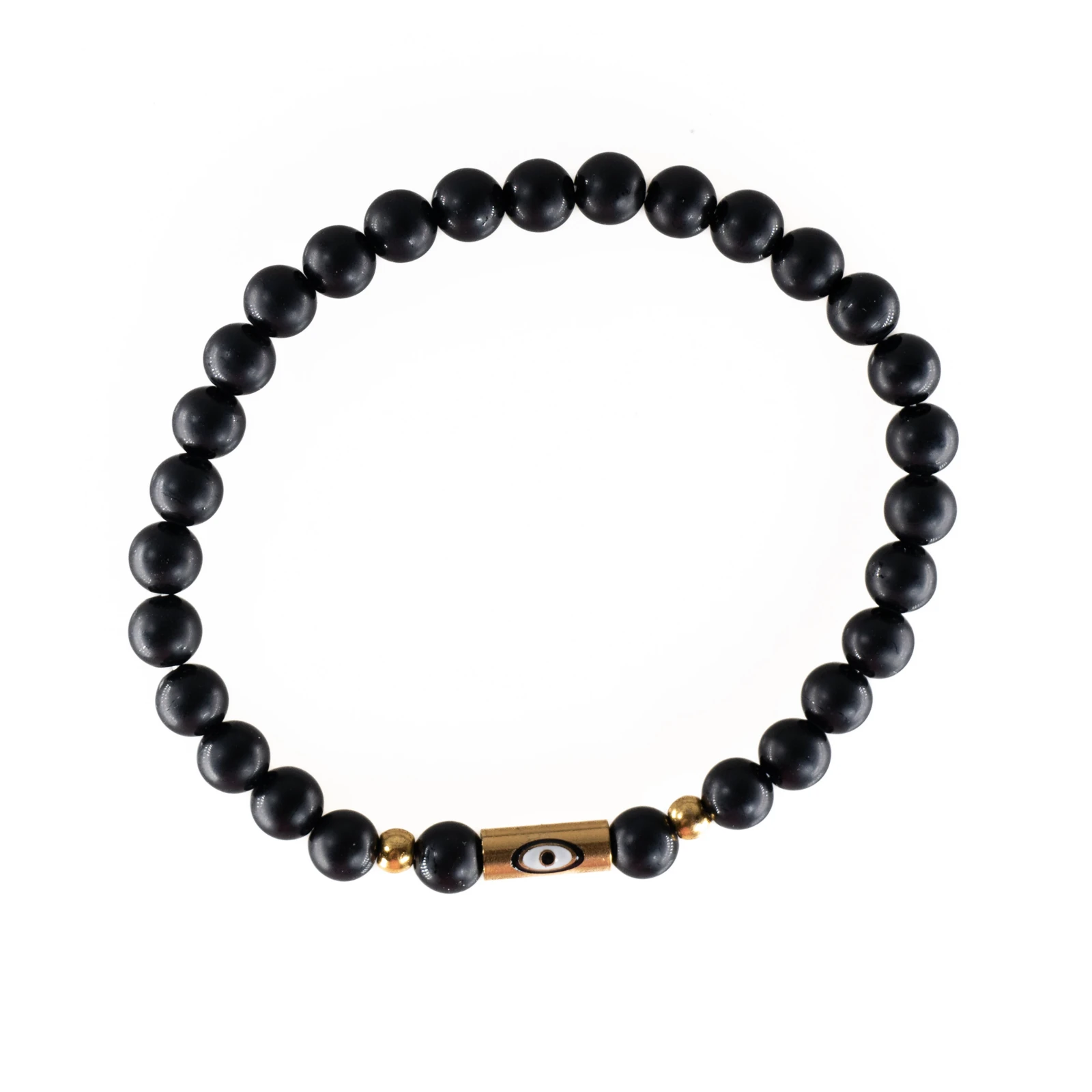
The approximately 6 mm black-onyx design pairs a continuous dark strand with a gold-tone eye motif. The ornament creates one focal point without making the whole bracelet elaborate, giving a visible expression to the wish for protection and a steady path ahead.
Custom directions pair black onyx with tiger’s eye or with lava stone. The first introduces golden-brown bands; the second emphasizes differences in surface texture. Favorable-element guidance, wrist fit and an intention of protection or an open path help shape the final balance.
A personal BaZi composition considers favorable elements and annual and ten-year cycles. A protection intention need not become a large dark strand: it can be fine, contrasting or quietly mixed. Proportion and daily habits leave room for personal character.
Surface quality and long-term wear
A uniform dark surface can reveal scratches, uneven polish and poorly finished holes. At the same bead diameter, also compare count, roundness, cord and companions. Carvings, ring stones, loose strands and finished bracelets involve different work, so the material name alone cannot explain their price.
Chalcedony beads suit everyday jewelry but still need protection from impact and repeated contact with harder objects. IGS advises gentle cleaning rather than aggressive mechanical systems. Follow any treatment-specific care, dry before separate storage and replace aging cord.
Natural banding, color treatment and accidental damage are different questions. The first two inform a buying choice; the third calls for maintenance. Clear material information helps both the original purchase and the years of use afterward.
Questions & answers
Must black onyx show black-and-white bands?
No. The trade name also covers uniform black chalcedony, and the cutting position can hide a rough piece’s original layers.
Is dyed chalcedony the same as glass?
No. One describes color treatment of chalcedony; the other is a different material identity.
Is onyx used in furniture the same gem?
Not necessarily. Decorative onyx can be banded calcite, with different properties from chalcedony onyx.
Can onyx and hematite be worn together?
That pairing can be discussed for a personal design. Black onyx and hematite have different sheen and weight, so bead size, proportion and wrist fit are considered together and the materials are specified.