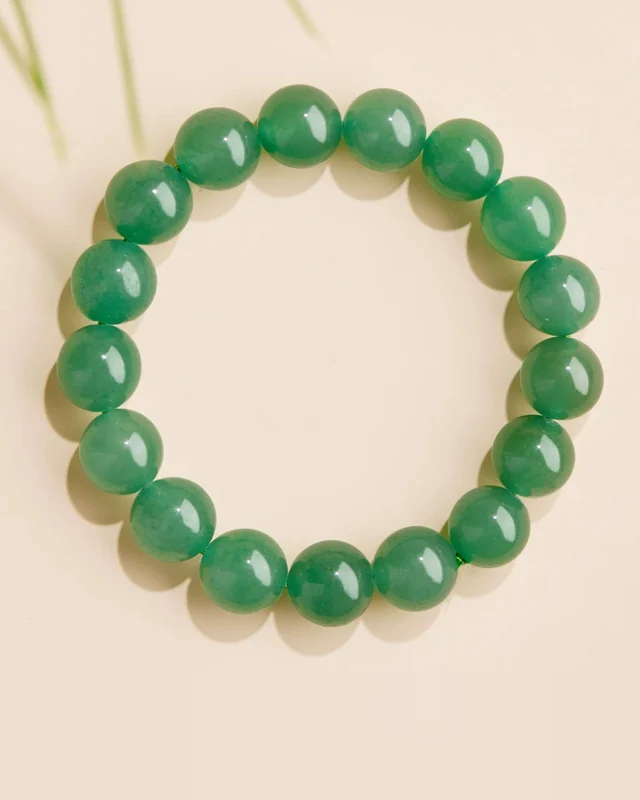
 View larger
Prehnite10 mm
Auspicious bracelets / Wood
10 mm Prehnite Bracelet · Rooted Success
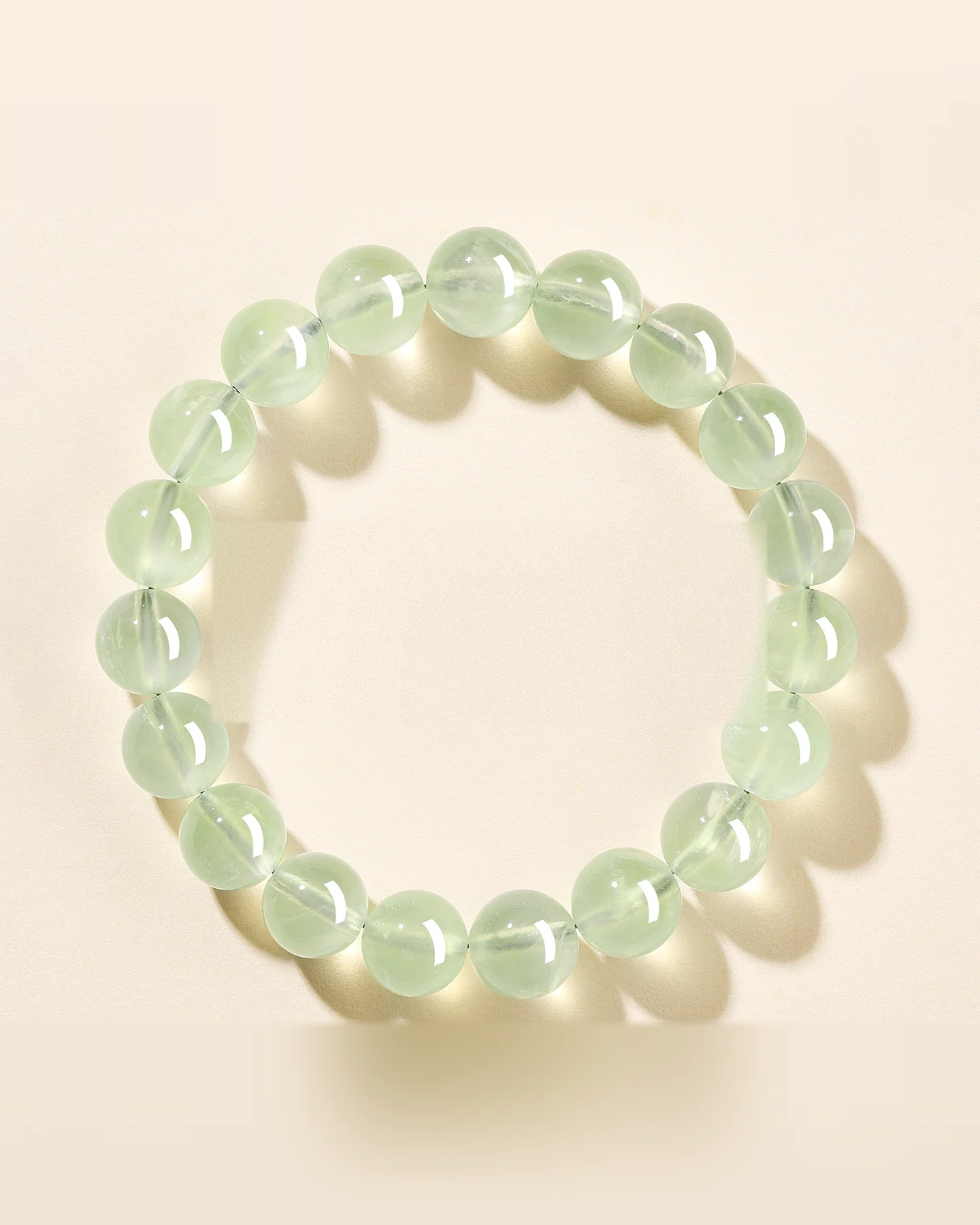
Translucent South African prehnite in 10 mm rounds, the soft, luminous green of new leaves after rain.
$148.00USD
- Gemstones & materials
- Prehnite
- Colour
- Pale, translucent apple to mint green
- Bead shape & size
- Round, approximately 10 mm
- Origin
- South Africa (as described by our supplier)
- Cord
- Stranded elastic, single strand
- Style
- WX007
Prepared in 5 days after payment
Shipping: Asia $10; Europe, US, Canada, Australia & NZ $20
Ready-designed returns may be requested within 14 days. See returns policy
Rooted Success
A forest after rain
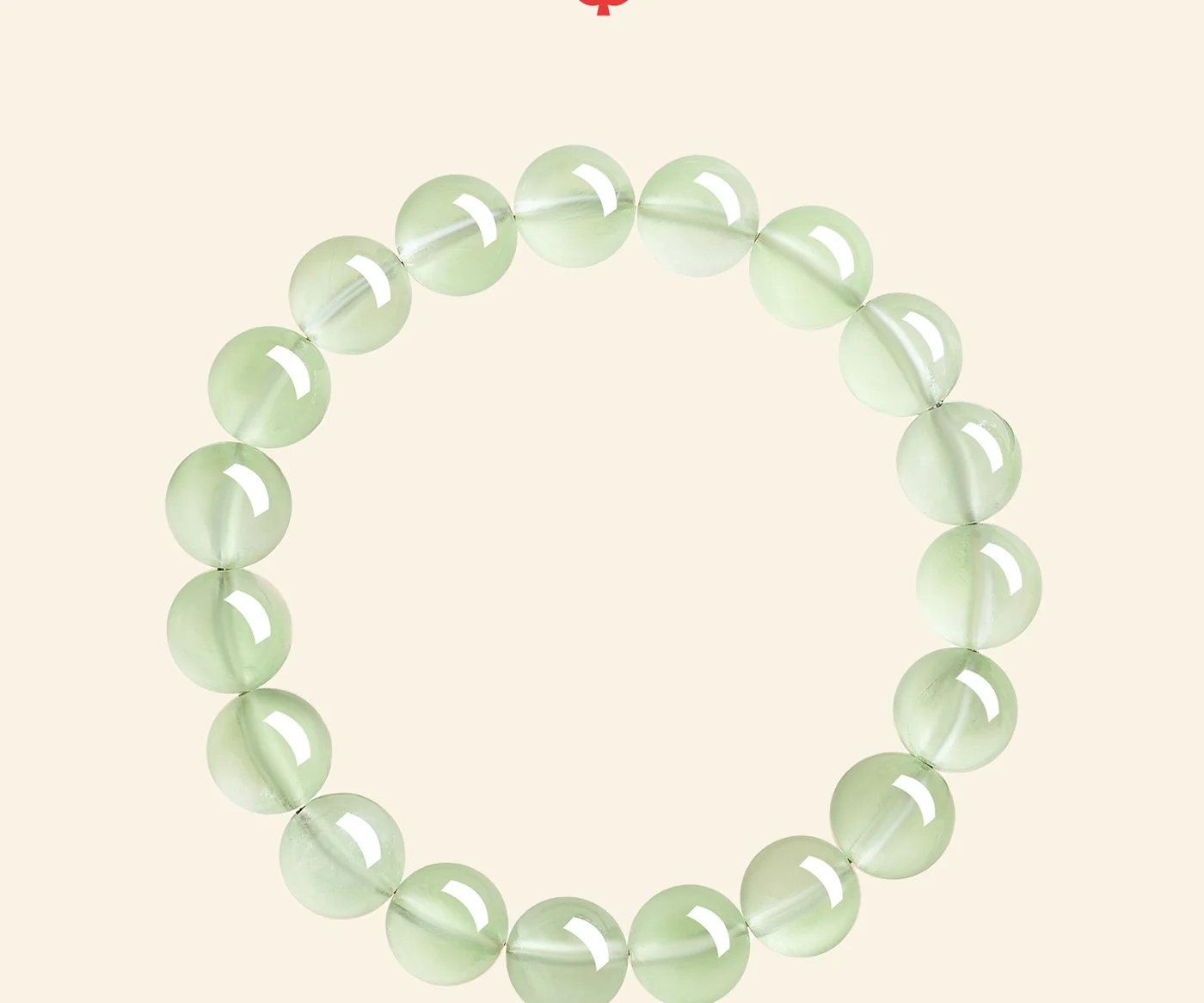
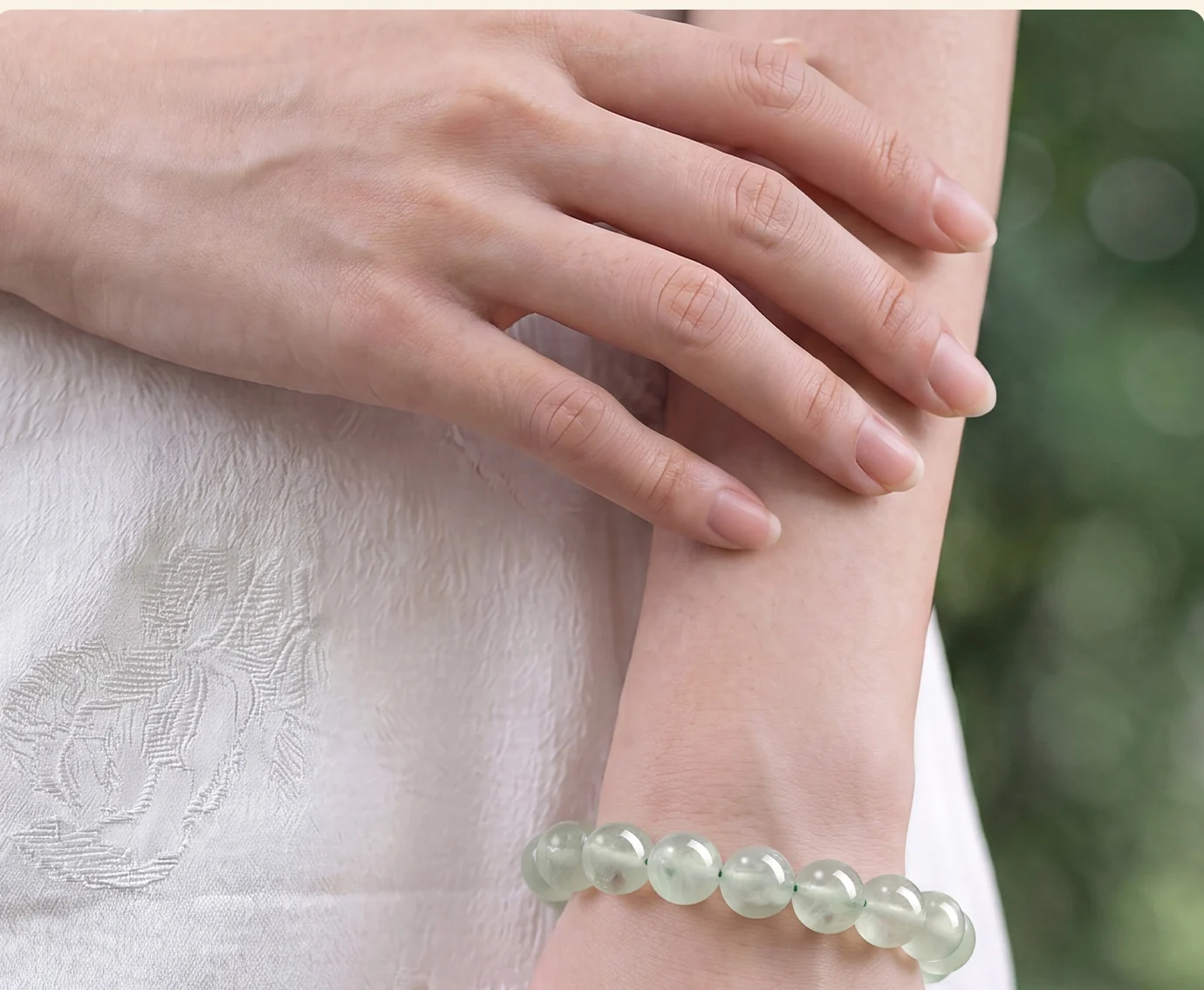
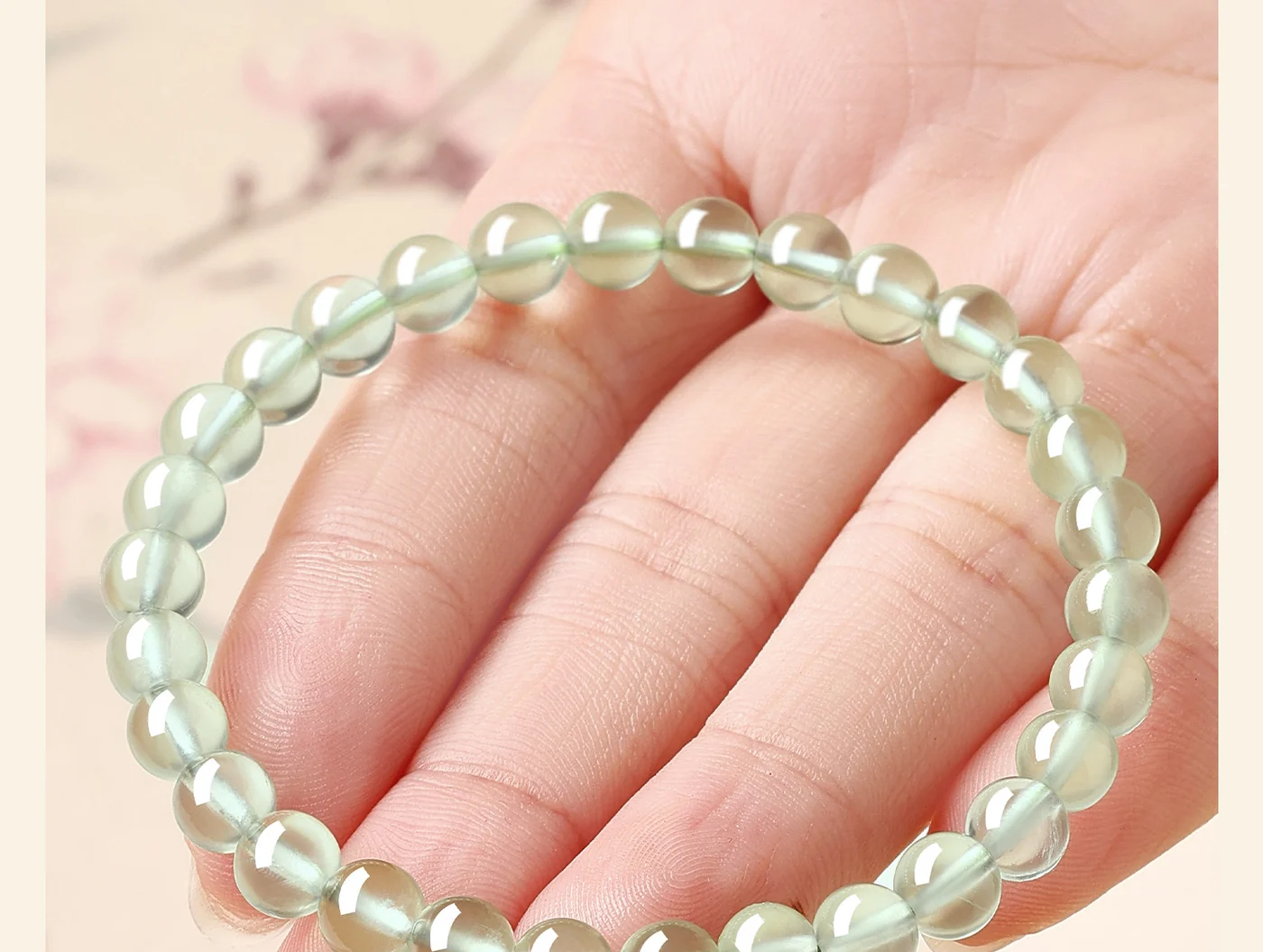
Rooted Success is a strand of prehnite, each round bead approximately 10 mm across. Prehnite is a soft, translucent green, somewhere between young apple and fresh mint, with a gentle glow that looks almost lit from within. At 10 mm each bead shows that depth clearly, like leaves glistening in a forest after rain.
Green belongs to Wood in the Five Elements, the element of growth and deep roots. The Chinese name, gen shen ye cheng, says that when the roots go deep, the work is accomplished: a blessing for careers and businesses built patiently, relationships that last and prosperity that endures.
- Round prehnite beads, approximately 10 mm.
- Translucent pale green, South African material.
- Cut, polished and selected for even colour and clarity.
- Wrist sizes from 14 to 21 cm, with the bead count adjusted to your size.
Rooted Success
Rooted Success in detail
What prehnite is, where its soft green glow comes from, how it is graded and how to choose the right fit.
01
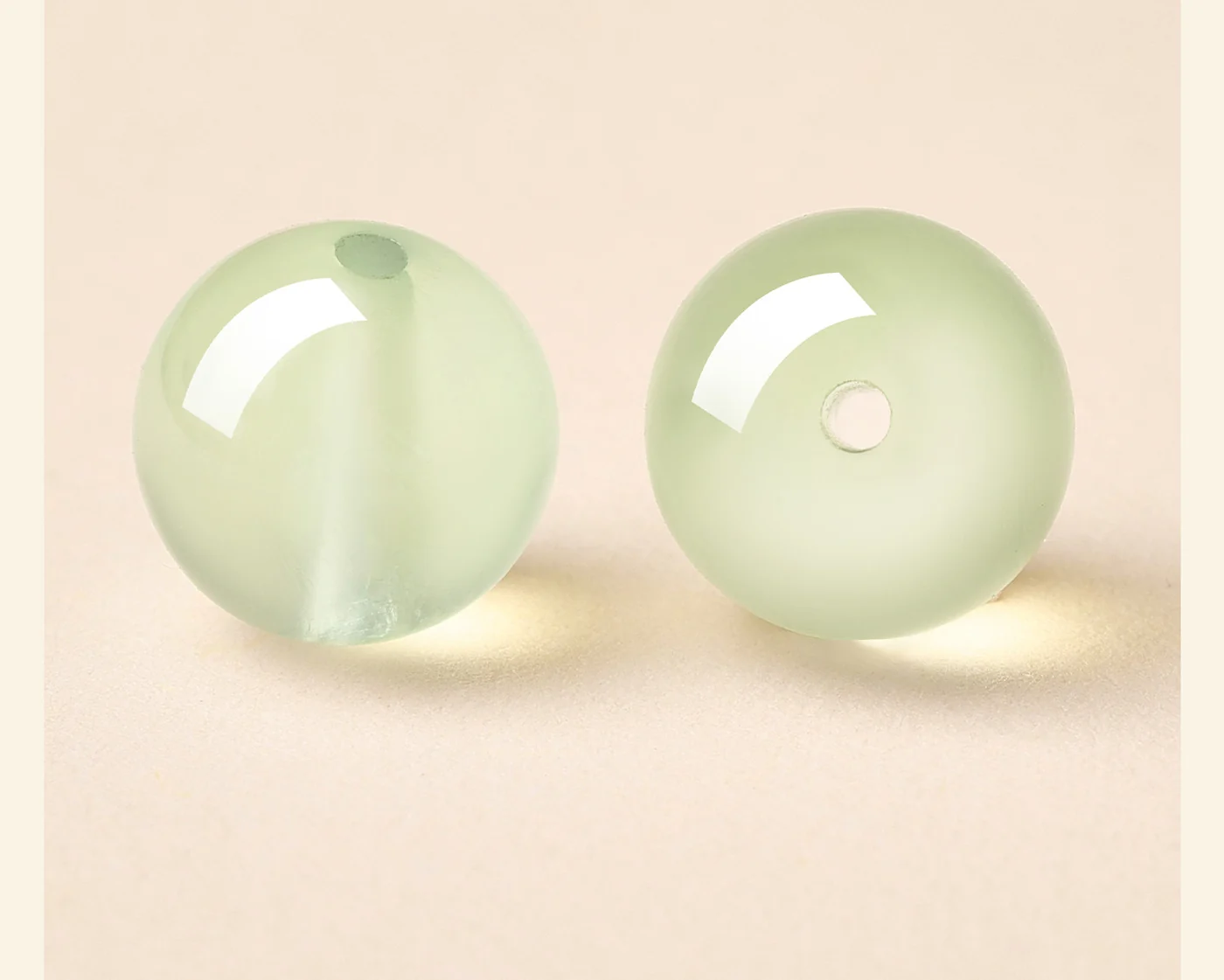
Prehnite, a soft green glow
Prehnite is a calcium aluminium silicate that usually forms in cavities in volcanic rock, often as rounded, grape-like clusters. Its typical colour is a pale, translucent green, sometimes yellowish or nearly colourless. It measures about 6 to 6.5 on the Mohs scale, slightly softer than quartz but comfortably hard enough for everyday wear.
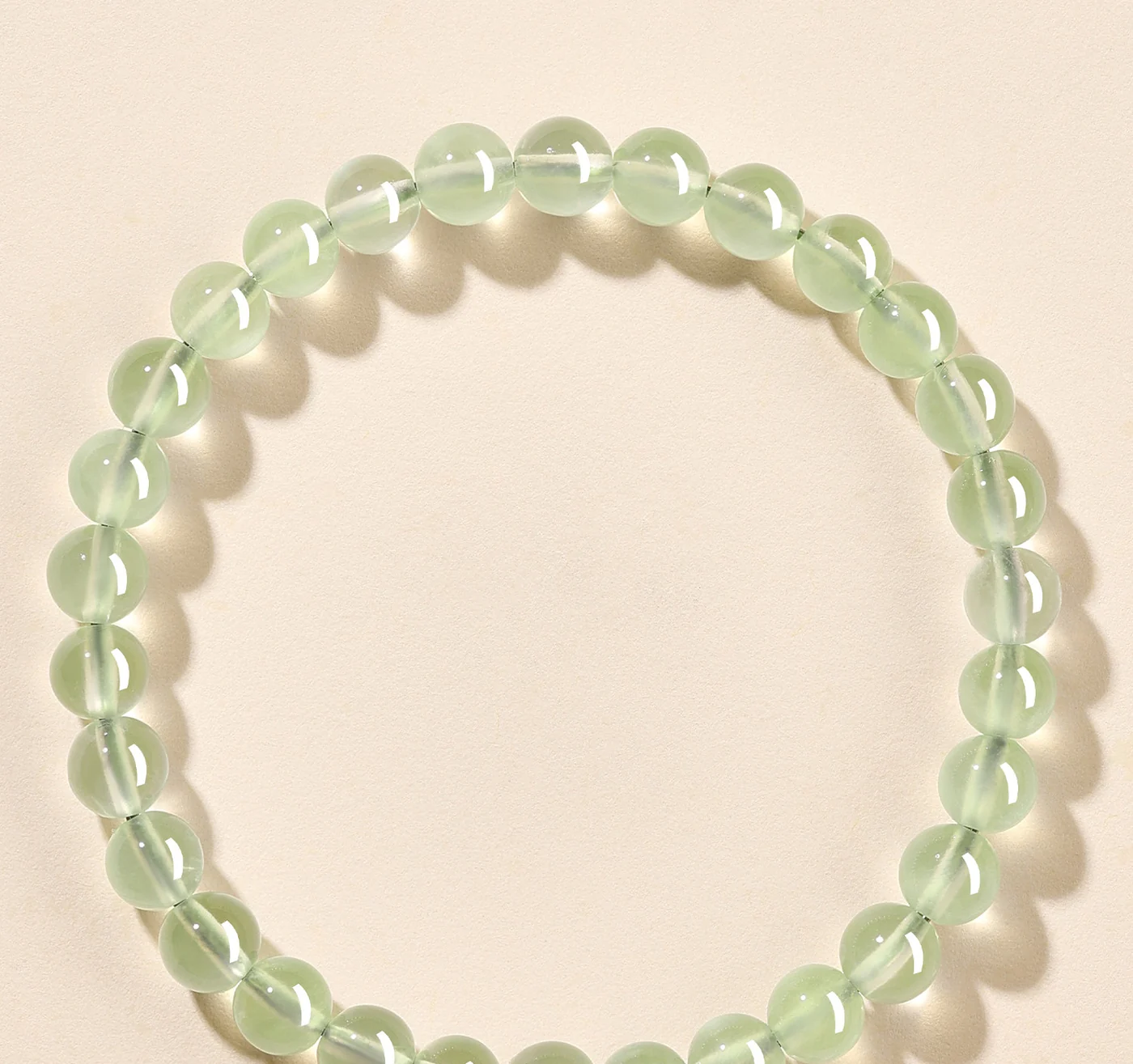
What makes prehnite special is its texture of light. The stone is made of many tiny, closely packed crystals, so light enters and is gently diffused, giving a soft, misty glow rather than the sharp sparkle of quartz. Polished into round beads, it looks like green glass held up to a window, softened by mist.
02
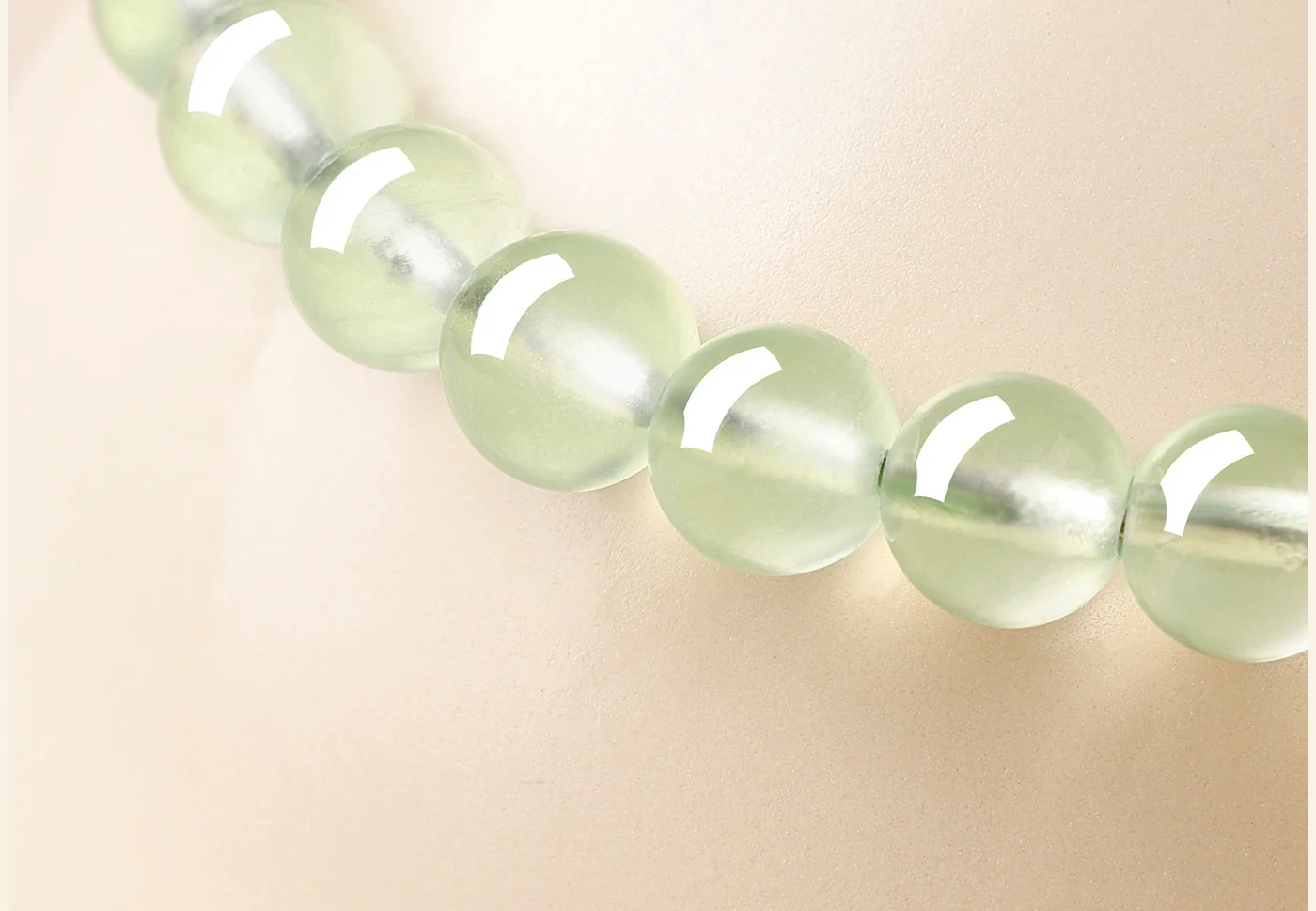
What good colour looks like
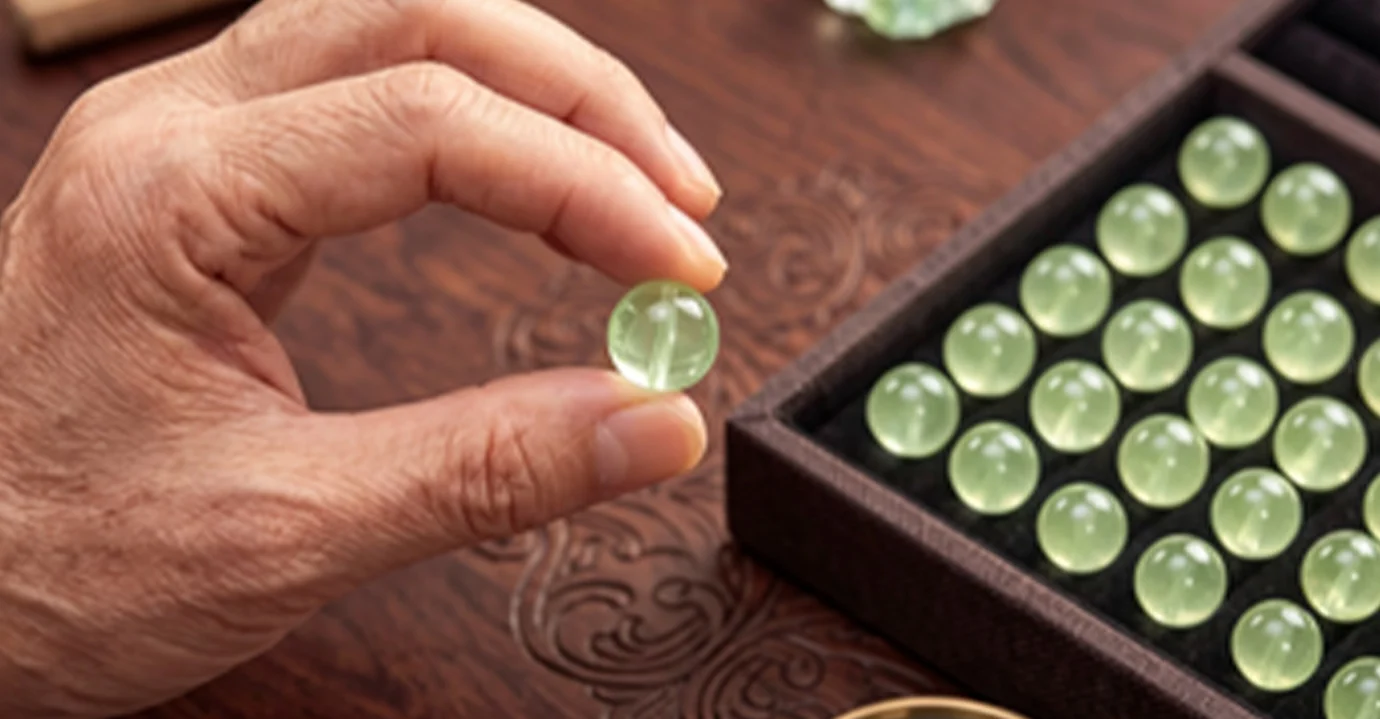
The most admired prehnite is an even, fresh green with high translucency, often described in the Chinese trade as icy or “imperial”. Lower grades are paler, more yellow or grey, cloudier, or show dark inclusions and white patches. Some prehnite contains black needles of epidote; this bracelet is selected for clear, clean green beads without them.
Our supplier describes these beads as imperial-grade prehnite. You may still see small natural variations: a slightly deeper green in one bead, a faint internal veil in another. These are signs of natural stone rather than defects.
03
Selected bead by bead
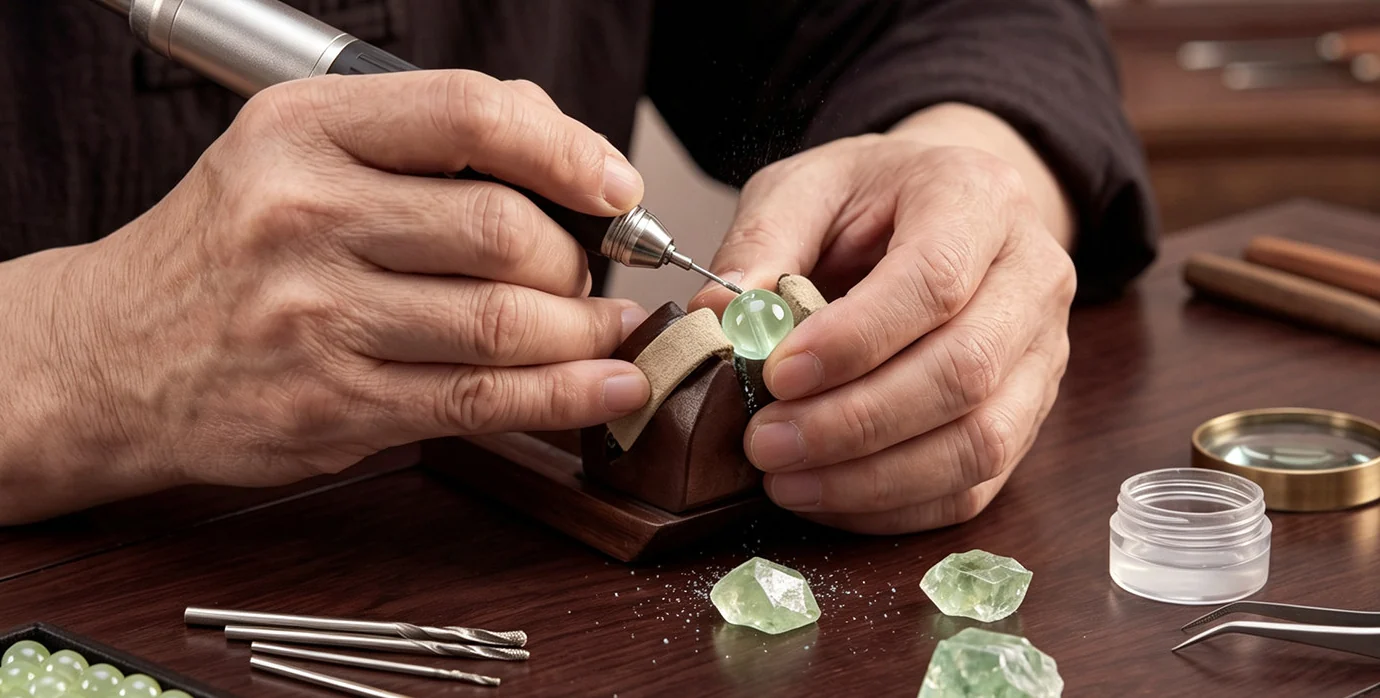
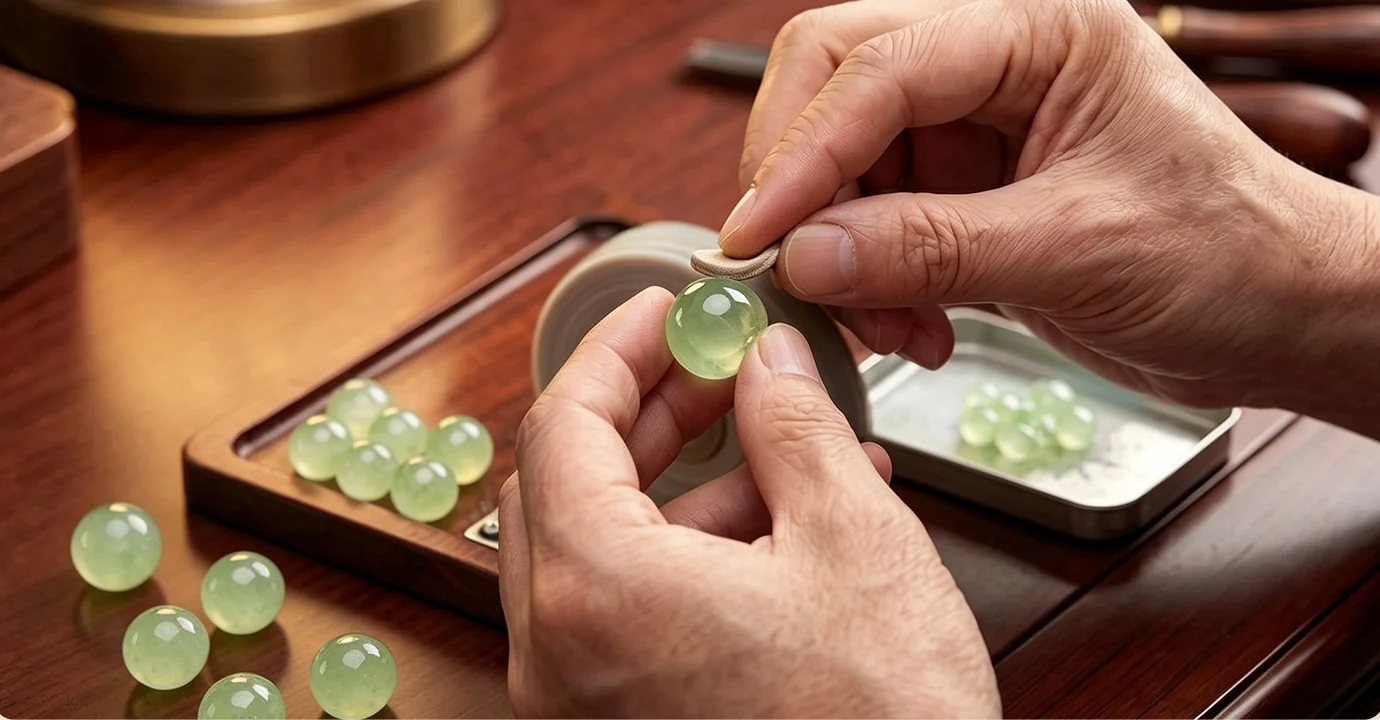
Prehnite rough often contains cracks and cloudy zones, so only part of each piece is suitable for beads, and only a smaller part for 10 mm rounds. After cutting and polishing, the beads are sorted for colour, translucency and surface quality, and matched so that the strand looks even all the way round.
Matching matters especially for prehnite, because small differences in green or translucency are easy to see side by side. A well-matched strand looks like a single continuous glow; a poorly matched one looks patchy, with some beads milky and others clear.
| Feature | Lower grade | This bracelet |
|---|---|---|
| Colour | Yellowish, grey or patchy | Even, fresh green |
| Translucency | Cloudy or opaque | High, glowing |
| Inclusions | Dark needles, white spots | Clean, with only faint natural veils |
| Polish | Dull or pitted | Smooth, glassy shine |
04
From the Cape to the bracelet
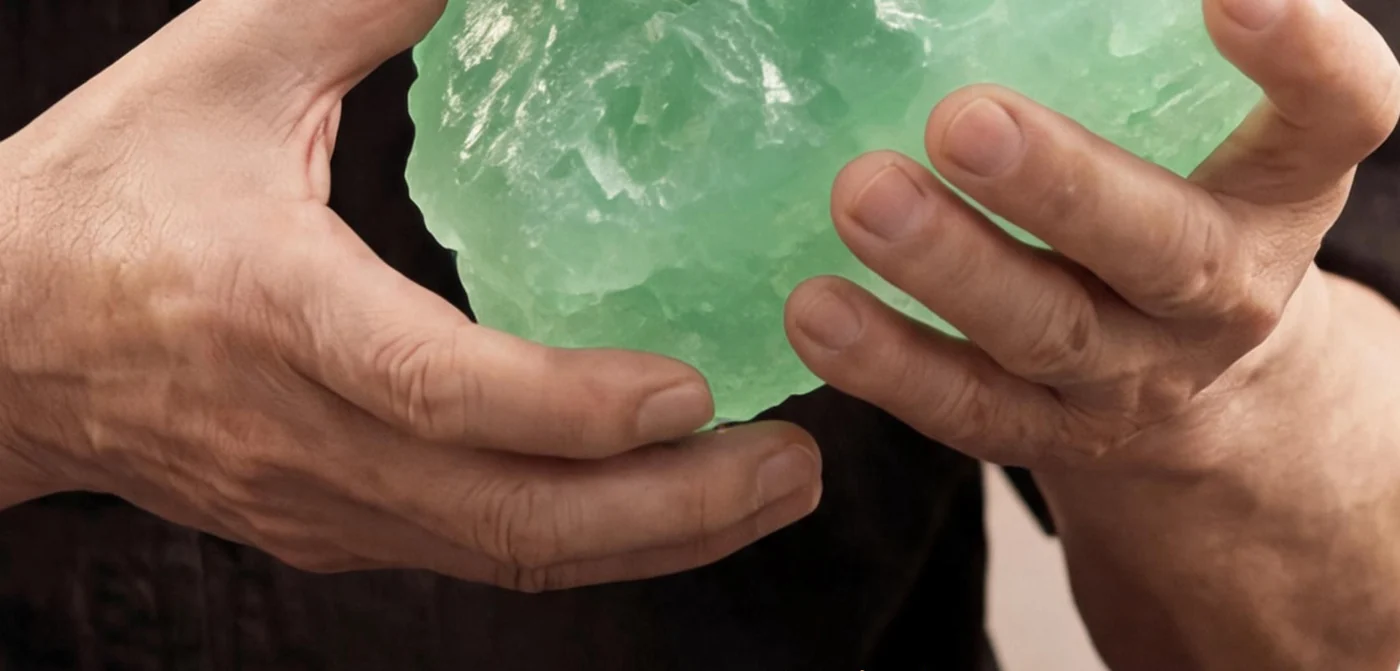
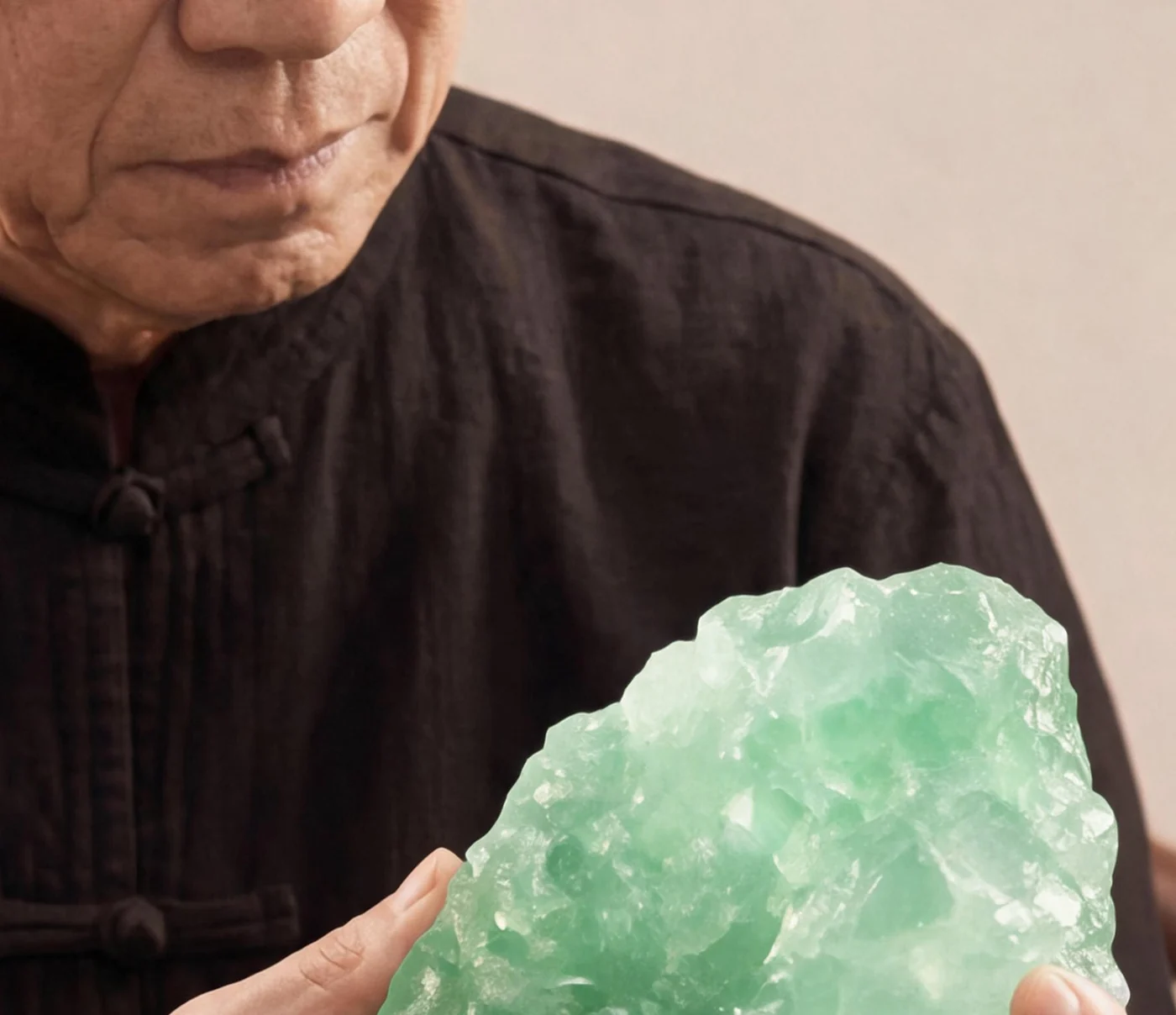
Fine prehnite comes from several places, including Australia, Mali and China, but South Africa holds a special place in its history: the first specimens studied in Europe came from the Cape. Our supplier describes the rough for this bracelet as South African material, selected at source for colour and translucency.
Prehnite forms where hot fluids have moved through basalt and other volcanic rocks, slowly depositing minerals in cracks and cavities. Large, clean pieces suitable for round beads are much rarer than the small crusts and clusters sold as specimens, which is one reason good prehnite bracelets in larger sizes are relatively costly.
05
The first mineral named after a person
Prehnite takes its name from Hendrik von Prehn, an eighteenth-century Dutch military officer who brought specimens from the Cape of Good Hope to Europe. When the mineral was described in 1788, it became one of the first minerals ever named after a person, a convention that is now standard in mineralogy.
In Chinese the stone is called putaoshi, “grape stone”, after the rounded, grape-like clusters in which it often grows. In crystal lore it is sometimes called a stone of unconditional love and calm; in Chinese bead culture its fresh green links it to growth and good fortune. Jewellers prize the finest translucent pieces for cabochons and carvings, where its soft glow resembles that of fine jade.
06
Why 10 mm
Prehnite is offered from 6 mm to 12 mm. Because its beauty lies in its translucent depth, it benefits from a larger bead: at 6 mm it can look simply pale green, while at 10 mm each bead shows a full, glowing depth of colour. At 11 to 12 mm it becomes a bold, substantial strand and the price rises steeply.
| Bead diameter | How prehnite looks | Often chosen for |
|---|---|---|
| 6–8 mm | Soft, pale and delicate | Stacking, slender wrists |
| 10 mm · this design | Full, glowing depth | A balanced single strand |
| 11–12 mm | Bold and substantial | Larger wrists, statement wear |
07
Choosing your wrist size
Measure the wrist itself with a soft tape or paper strip, just above the wrist bone where you usually wear a bracelet. Keep it snug without squeezing and choose that measurement on this page. Larger beads take up more room inside the circle, so the strand is made with a little extra allowance.
The table shows typical bead counts for 10 mm beads. Your bracelet may differ by one bead, as natural beads vary fractionally and each strand is checked against the measurement when it is strung.
Between two sizes, choose the larger for a relaxed fit or the smaller for a closer one. Roll the strand over the knuckles rather than stretching it.
| Wrist size | Approximate inches | Typical bead count (10 mm) |
|---|---|---|
| 14 cm | 5.5 in | 18 beads |
| 15 cm | 5.9 in | 19 beads |
| 16 cm | 6.3 in | 20 beads |
| 17 cm | 6.7 in | 21 beads |
| 18 cm | 7.1 in | 22 beads |
| 19 cm | 7.5 in | 23 beads |
| 20 cm | 7.9 in | 24 beads |
| 21 cm | 8.3 in | 25 beads |
08
Deep roots, accomplished work
Gen shen ye cheng means “deep roots, work accomplished”. A tree with deep roots survives storms and keeps growing year after year; a business, a team or a career built patiently on solid foundations does the same. The phrase is a blessing for success that lasts rather than success that arrives quickly and fades.
Rooted Success is often chosen by business owners marking an anniversary, team leaders taking on more responsibility and anyone celebrating years of steady work.
These are cultural meanings and personal wishes rather than promises.
09
Green, Wood and steady growth
In the Five Elements, green belongs to Wood, the element of spring, the east and upward growth. Wood is the only element that is alive, rooted in Earth, fed by Water and reaching for light. Its virtue is ren, benevolence, and it is associated with patience, planning and growth that cannot be rushed.
If you would like to know whether Wood suits your own birth chart, a personal design begins with a fuller BaZi discussion.
10
Roots shared with others
Deep roots are rarely grown alone. In a forest, the roots of neighbouring trees intertwine and hold the soil together, which is why a wood survives storms that would topple a single tree. The same is true of lasting work: a business depends on long relationships with colleagues, partners and customers, built over years of keeping one’s word.
That is why Rooted Success is often given within teams, by a founder to the people who built the company with them, or by colleagues to a leader at an important anniversary. Some teams order several strands in different sizes as a shared reminder of what they have grown together.
11
Why “forest after rain”
Anyone who has walked in a forest just after rain will recognise prehnite’s colour: the fresh, slightly silvered green of wet leaves, with light caught in every drop. That quiet, renewed green is the feeling this design is named for. It is calm rather than vivid, and it looks different in every light, cooler in the morning, warmer at sunset.
In Chinese painting and poetry, rain on green hills is a long-standing image of renewal and quiet abundance, the moment when the land is refreshed and growth can continue.
12
Prehnite and other pale green stones
Prehnite is sometimes confused with other pale green stones. Moss agate, which this design used before, is translucent chalcedony with green, moss-like patterns. Green chalcedony is more even and waxy. Pale green jade is denser and more opaque, with a fibrous structure. Green fluorite is glassier and softer, often banded with purple.
13
Why this design changed
Rooted Success was previously made with 10 mm moss agate. Our current supplier does not offer moss agate of the quality we want, so we now make the design with 10 mm prehnite. It keeps the soft green of growth, with more translucency and glow, and the blessing for enduring work and lasting prosperity remains the same.
14
Wearing prehnite
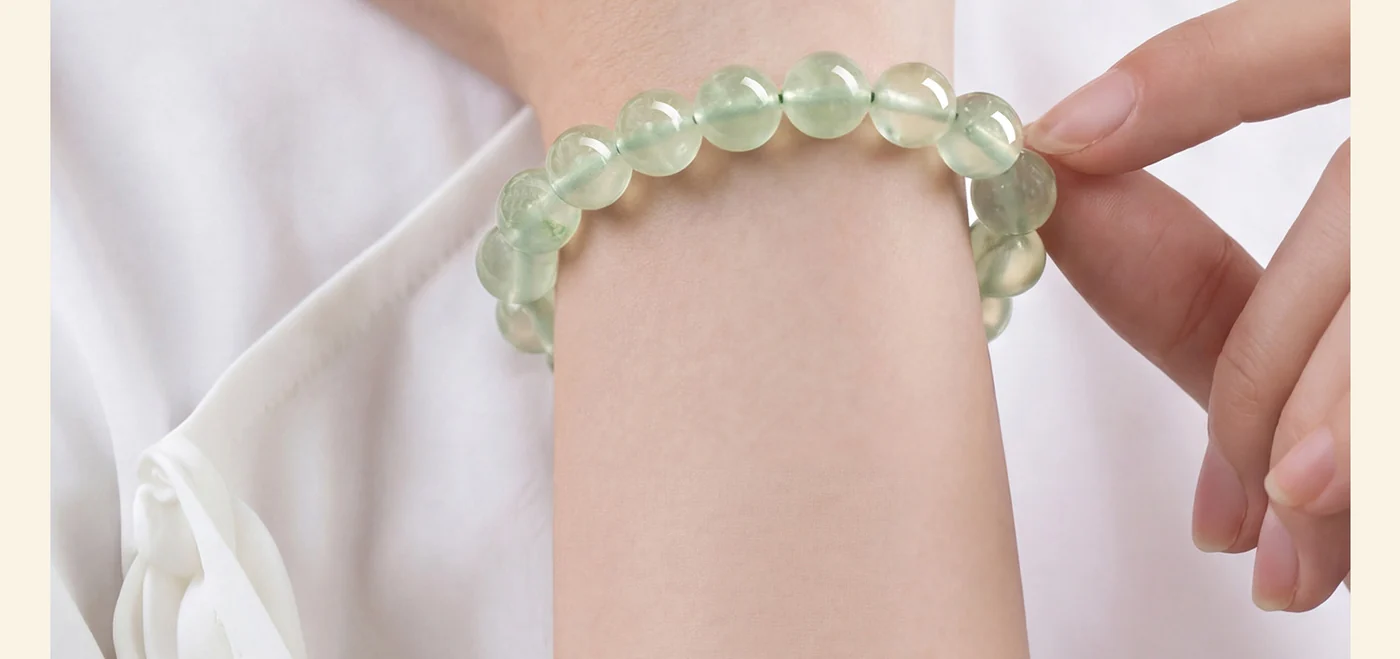
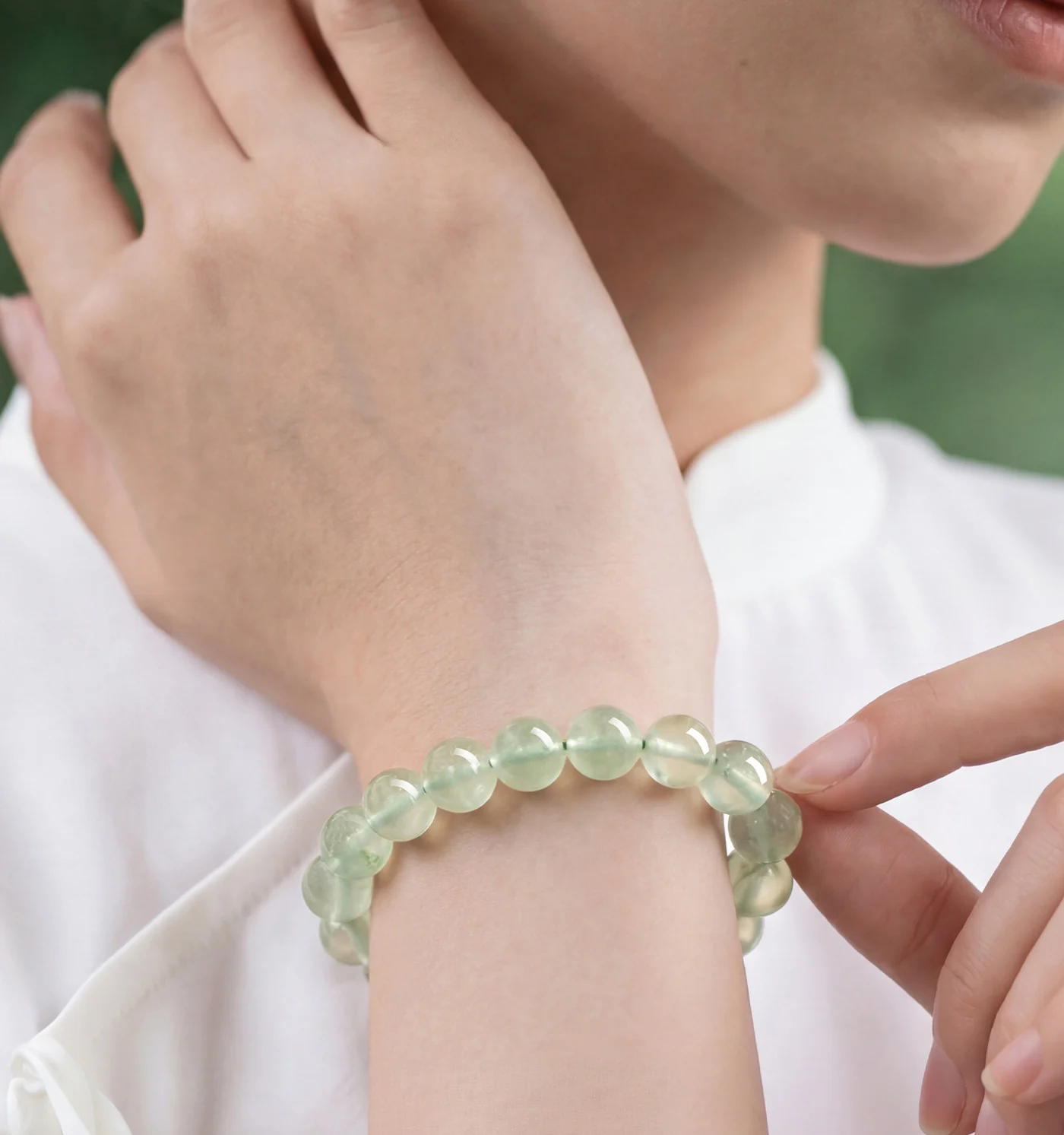
Prehnite’s pale, glowing green looks fresh with white, cream and soft grey, as the photographs show, and natural with linen, denim and olive. It pairs well with both gold and silver, and its calm colour suits offices as well as weekends.
At 10 mm the strand is substantial enough to wear alone. To stack, add a slim clear quartz or white moonstone bracelet for light, or a fine green sandalwood strand for a deeper green. The design suits men and women alike.
15
A calm colour for long days
Prehnite’s soft green is one of the most restful colours a bracelet can have. It does not demand attention in a meeting, yet it catches the eye on a sunny desk or in the light from a window. Many people find that looking at it during a long working day is a small moment of calm.
At 10 mm the strand has a pleasant, cool weight, and the smooth beads are easy to turn between the fingers while thinking. Remove it before washing your hands or exercising, and keep it in its soft pouch overnight, and it will keep its gentle glow for many years of everyday wear.
16
A gift for a milestone
Rooted Success is a natural gift for a business anniversary, a promotion to a leadership role, the founding of a company or the retirement of someone whose work has lasted. It also suits a colleague or mentor, as a thank-you for years of steady support, or a family business passing from one generation to the next, when the idea of deep roots carries particular weight.
A short note explaining gen shen ye cheng makes the meaning clear. If you cannot measure the recipient’s wrist, choose the most likely size; an unworn ready-designed bracelet can be returned within 14 days of delivery.
17
Recognising natural prehnite
Prehnite is imitated with green glass and dyed quartzite. Glass is often too clear and too even, with round bubbles; dyed stones may show colour concentrated in cracks. Natural prehnite has a soft, slightly misty glow, faint internal veils and small variations in green from bead to bead, and feels cool and fairly heavy in the hand.
Our supplier describes these beads as natural South African prehnite and provides a testing certificate for the material. If you would like documentation or independent testing, please contact us before or after ordering.
18
Caring for prehnite
Prehnite is hard enough for daily wear but can chip if knocked against stone or metal, especially around the drill holes. Remove the bracelet for sport, gardening and heavy work. Avoid perfume, cleaning products and strong acids, and keep it away from strong heat, which can affect its colour.
Wipe the beads with a soft cloth to keep their glow, and store the bracelet on its own in a soft pouch. With daily wear, stranded elastic usually lasts one to two years; if gaps appear between the beads, have it restrung before it breaks.
Questions & answers
What is prehnite?
A calcium aluminium silicate mineral, usually pale translucent green, about 6–6.5 on the Mohs scale.
Why did the design change from moss agate?
Our current supplier does not offer moss agate of the quality we want; the meaning is unchanged.
Is this natural prehnite?
Our supplier describes it as natural South African prehnite and provides a testing certificate.
Why 10 mm?
Prehnite’s glow shows best in larger beads; at 10 mm the depth of colour is clear.
Will the colour fade?
Not with normal wear. Avoid long exposure to strong heat.
Can it get wet?
Brief contact is fine; remove it for bathing and swimming to protect the elastic.
How many beads will my bracelet have?
Typically 18 beads for a 14 cm wrist, rising to about 25 for 21 cm.
Which element is prehnite?
Its fresh green is associated with Wood in the Five Elements.
Is it suitable for men?
Yes. At 10 mm it suits men and women alike.
Who was prehnite named after?
Hendrik von Prehn, who brought specimens from the Cape of Good Hope in the eighteenth century.
Can I stack it with other bracelets?
Yes. It pairs well with clear quartz, moonstone and green sandalwood.
Does it have black needles?
Some prehnite does; this bracelet is selected for clean green beads without them.
Can I order a different size?
This design is made in 10 mm. Ask a design adviser about 8 or 12 mm.
How should I store it?
On its own in a soft pouch, away from harder stones.
Which wrist should I wear it on?
Whichever is most comfortable; many people wear it on the wrist without a watch.
Will it look exactly like the photographs?
The material and size match, though natural prehnite varies slightly in shade and translucency.
Know the materials in this bracelet
Compare these related designs
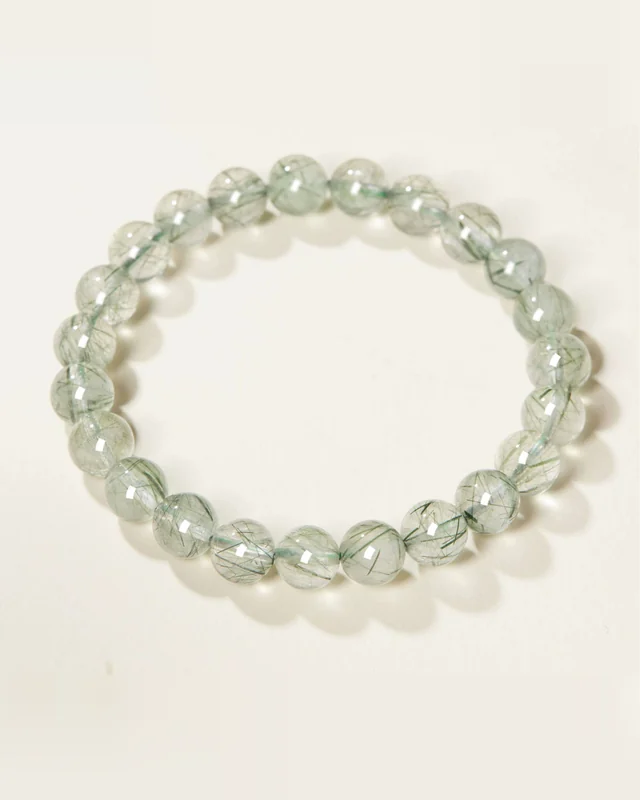
Prosperity · Career
8 mm Green Rutilated Quartz Bracelet · Renewed Prosperity
Green rutilated quartz
$98.008 mm · Wood
 Personal designs
Career · Wisdom
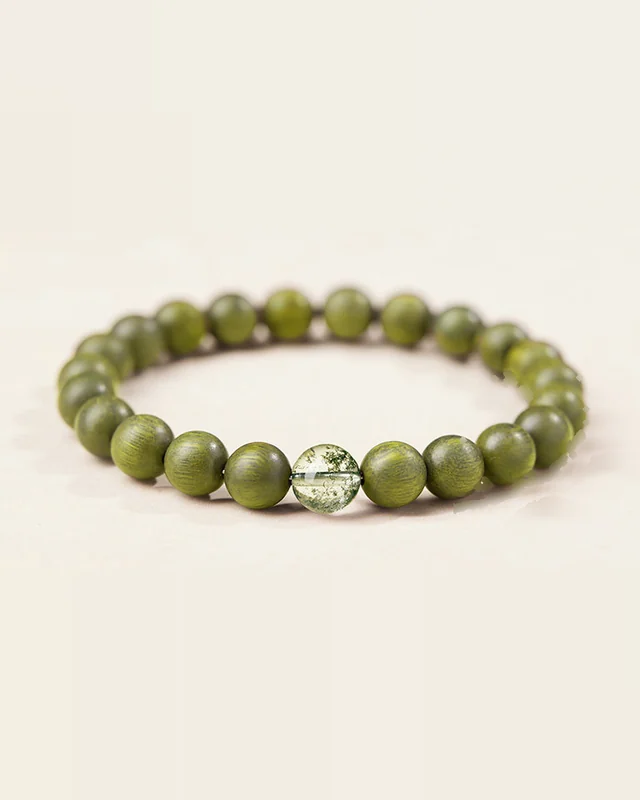
Custom Green Sandalwood and Green Phantom Quartz Bracelet · Wood Career
Green sandalwood · Green phantom quartz
Quoted after we confirm your design8 mm · Wood
Protection · Balance
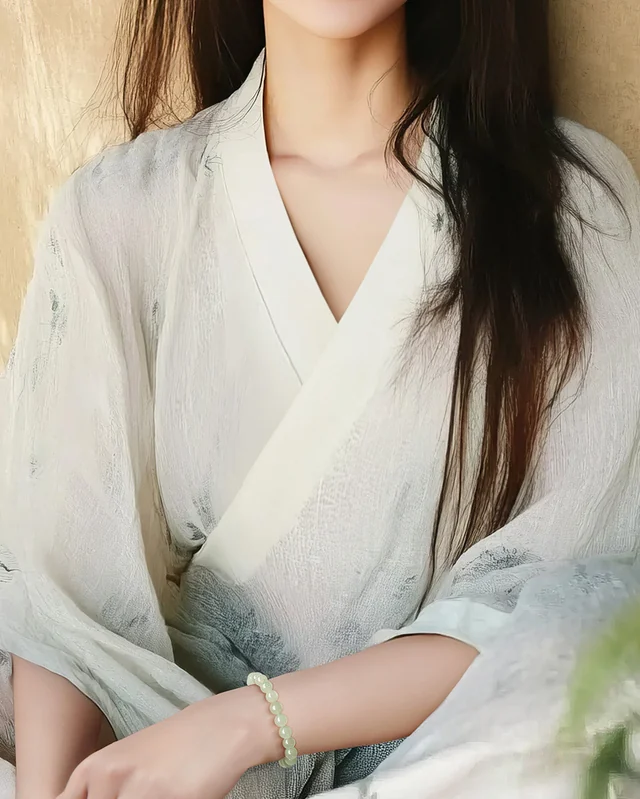
8 mm Hetian Jade Bracelet · Jade Blessings
Hetian jade (nephrite)
$128.008 mm · Wood