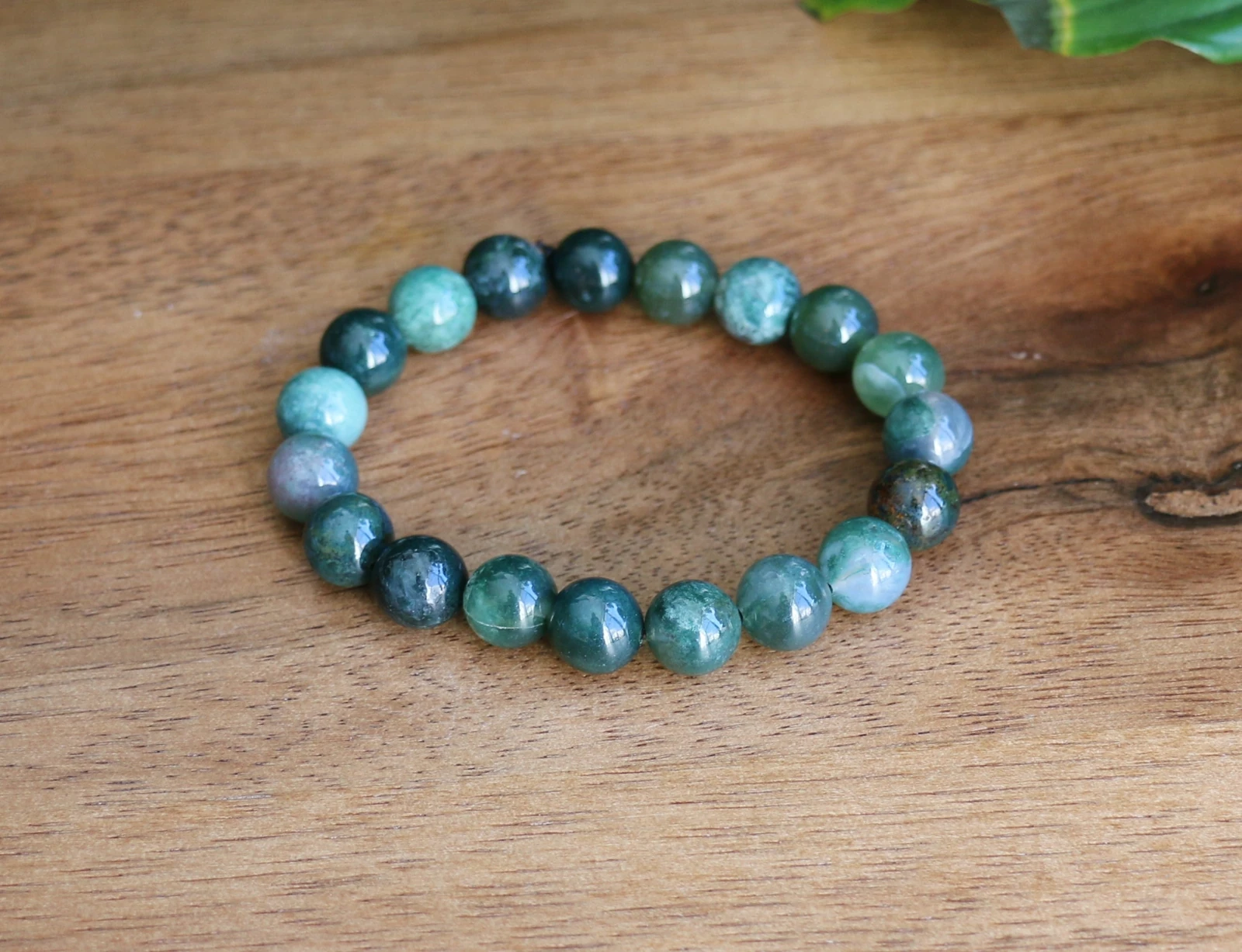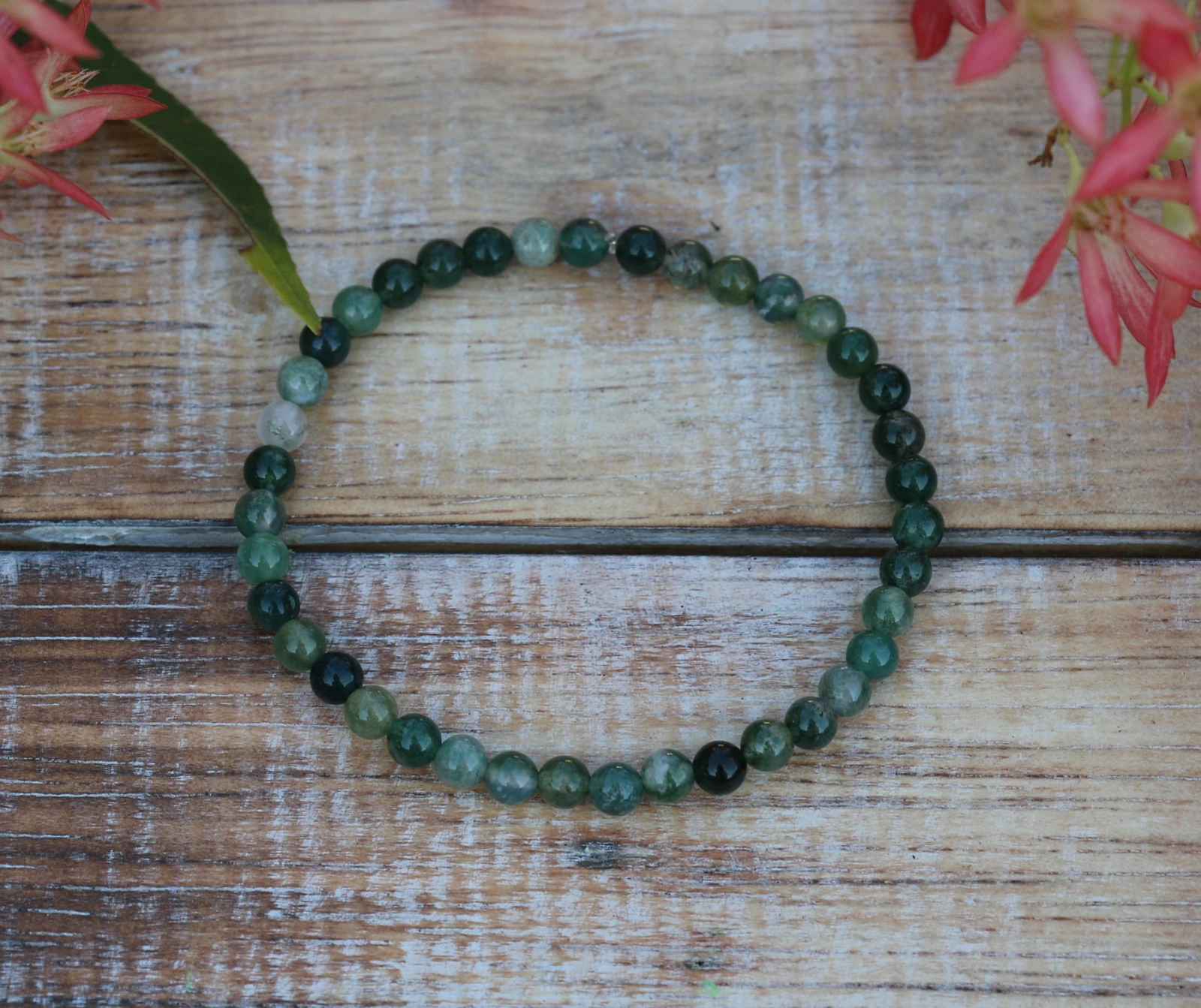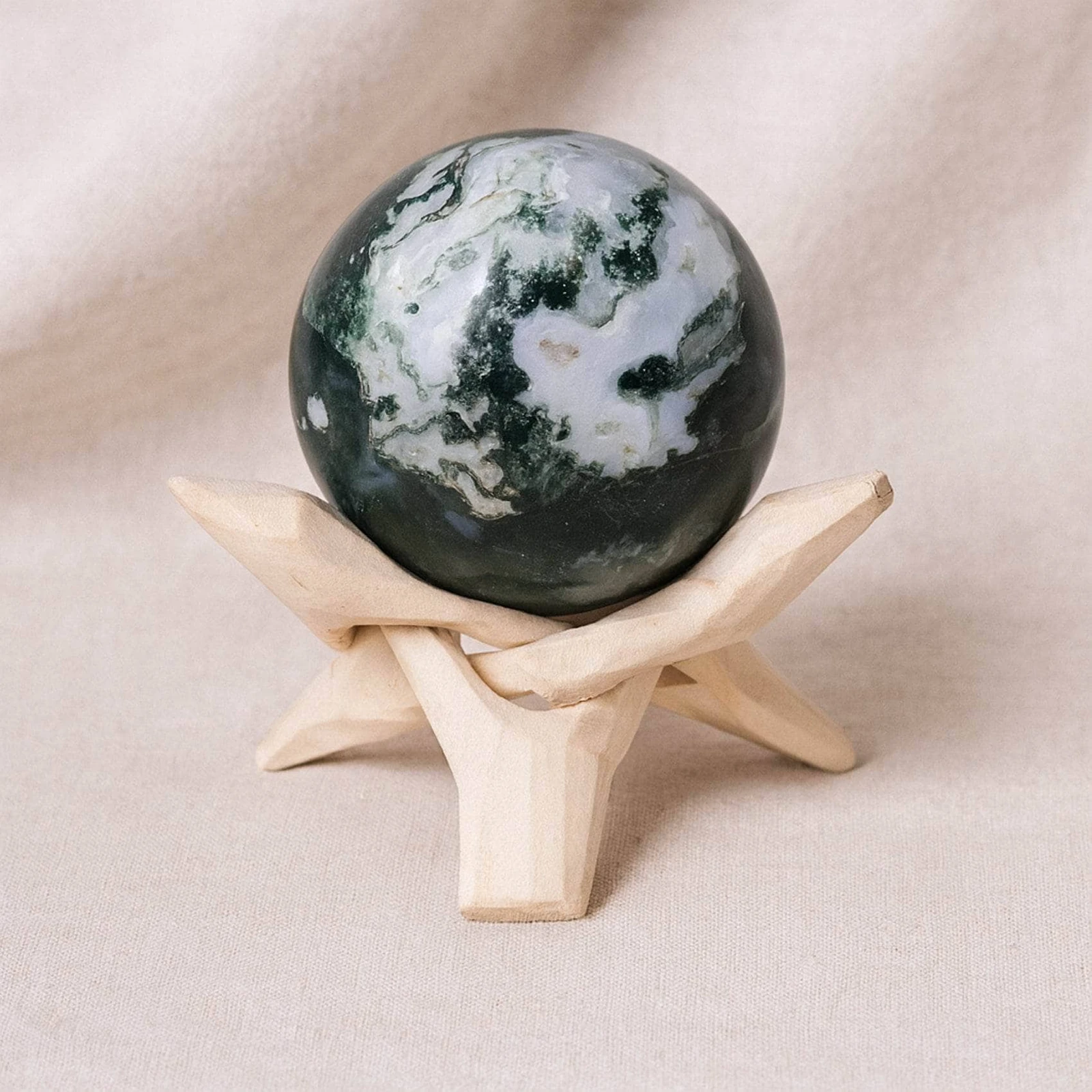
The moss-like pattern is mineral
Moss agate is a chalcedony material. Its name describes the plant-like appearance of mineral inclusions, rather than living moss preserved in a bead. That distinction makes it easier to appreciate the patterns as natural variation instead of expecting the same leaf shape in every stone.
The background matters as much as the pattern. Pale open areas can make individual green lines easy to see, while dense inclusions may give the bead a deeper green appearance overall. Where a bead is cut also changes the visible pattern, and turning it can reveal different layers.
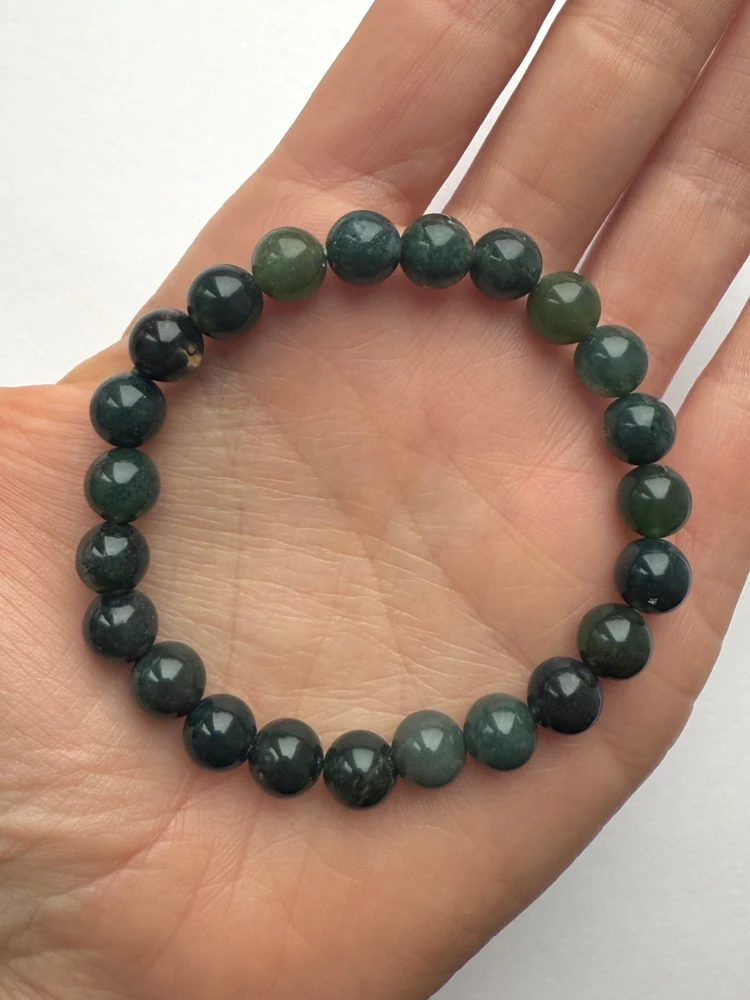
Woodland imagery and a growth intention
Moss-like green markings recall plants and new growth. In this collection, that appearance is used for Wood intentions involving study, career and positive connections. Its appeal lies in variation rather than perfect repetition, making it a thoughtful material for a wish marking a course of study or a new life chapter.
Moss-like inclusions deserve to be enjoyed in their own right. The single-material moss-agate designs use approximately 8, 10 and 4 mm beads. Medium beads offer balance, larger ones reveal more of the pattern, and the fine strand creates a lighter green line at the wrist.
Modern spiritual descriptions often associate moss agate with renewal and nature. Here, that language expresses a wish you want to carry: gradual learning, harmonious relationships or a positive beginning. The complete arrangement determines how the Five Elements theme is presented.
How much pattern do you like?
Inclusions are central to moss agate’s appearance, so a dark marking should not automatically be treated as a flaw. The real choice may be between fine branching, dense green patterns and a mistier background. Whole-bracelet images help you judge the colors together, while close views show the individual beads.
Open patterns leave more space around the inclusions and make them easier to distinguish. Denser patterns give a more continuous green impression. The former may stand out against clear quartz; the latter can sit comfortably with green aventurine in a strongly green composition. Neither preference needs to be universal.
For a gift, consider whether the person enjoys consistent color or individual patterns. Someone who wants every bead to appear similar may prefer a more uniform-looking material. Someone who enjoys small differences is more likely to appreciate the changing interior of moss agate.
Transparency, pattern and price
Price can vary with pattern, visual transparency, dimensions and workmanship. As an ornamental material, a piece whose background allows the inclusions to be seen gives a different experience from one whose interior is difficult to observe. Simply choosing the greenest piece does not address that difference.
Rough material, a ring stone and a finished bracelet also have different pricing conditions. A cabochon emphasizes one face and its pattern, whereas a bracelet brings together several beads, their diameters and any companions. A price per carat found online may have little direct relationship to a complete bracelet sold by the item.
Keep the material name and specifications clear. If a particular pattern is essential, use the actual material available for the proposed design as your reference. A representative image explains the type of appearance, but it does not make every future bead identical to the photographed one.
Other green materials to compare
Moss agate’s interest lies in inclusion patterns. Green aventurine is better known for its green color and subtle sparkle. Both can express a Wood intention, but they create different visual results. Jade needs its own material identification rather than being grouped with moss agate because it is green.
Agate, chalcedony and jasper terminology overlaps in everyday trade language. For the designs here, read the actual material list. If you want moss-like patterns, look for moss agate specifically; if you want banded patterns, compare the relevant agate variety. The name and the appearance should make sense together.
Wearing and routine care
Store bracelets separately and use a soft cloth for routine cleaning. Avoid repeated hard knocks and do not use unknown liquids to test the color. A mixed bracelet needs care appropriate to every component, so further cleaning should follow the confirmed materials in the whole composition.
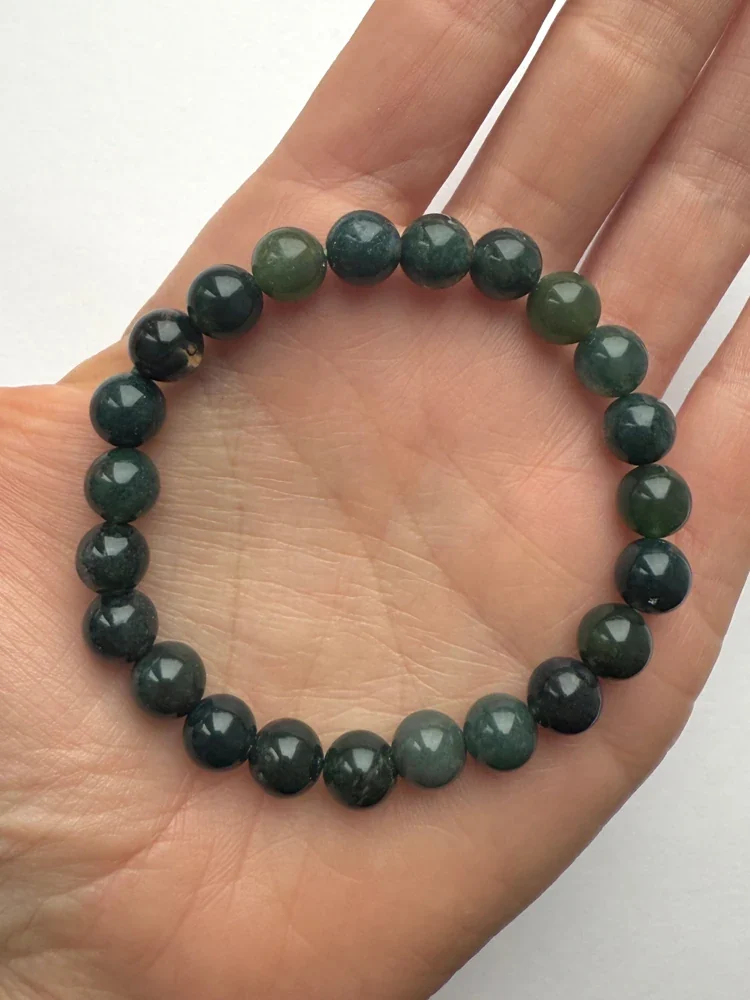
Bead diameter and wrist fit are separate choices. Smaller beads create an overall green rhythm; larger ones may make individual patterns easier to notice. If visible pattern is the main attraction, compare bead sizes and clear images rather than choosing solely by the depth of green.
Questions & answers
Will the green pattern keep growing?
No living moss is growing inside the material. The pattern comes from mineral inclusions formed within it. Wearing the bracelet means enjoying an existing pattern, not cultivating a plant.
Are darker inclusions always undesirable?
Not necessarily. The pattern and background create the appearance together. Consider whether the markings add interest and whether the beads work as a composition, alongside the material and treatment information.
Why is moss agate also popular in rings?
A larger face can display an individual interior pattern clearly. A bracelet shows the changing appearance across several beads instead. The two forms emphasize different parts of the material’s appeal.