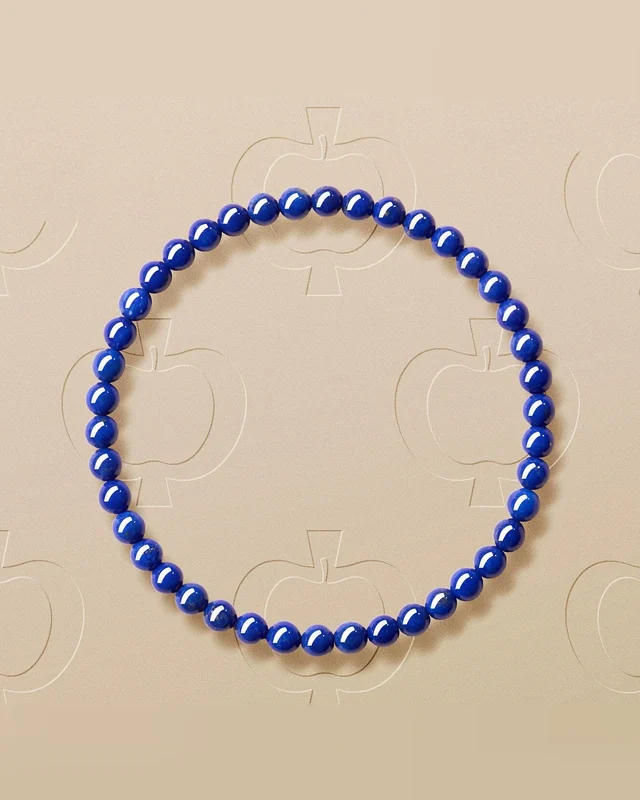
Career · Prosperity · Balance
4 mm Lapis Lazuli Bracelet · Three Rivers of Fortune
Lapis lazuli
$68.004 mm · Water
 View larger
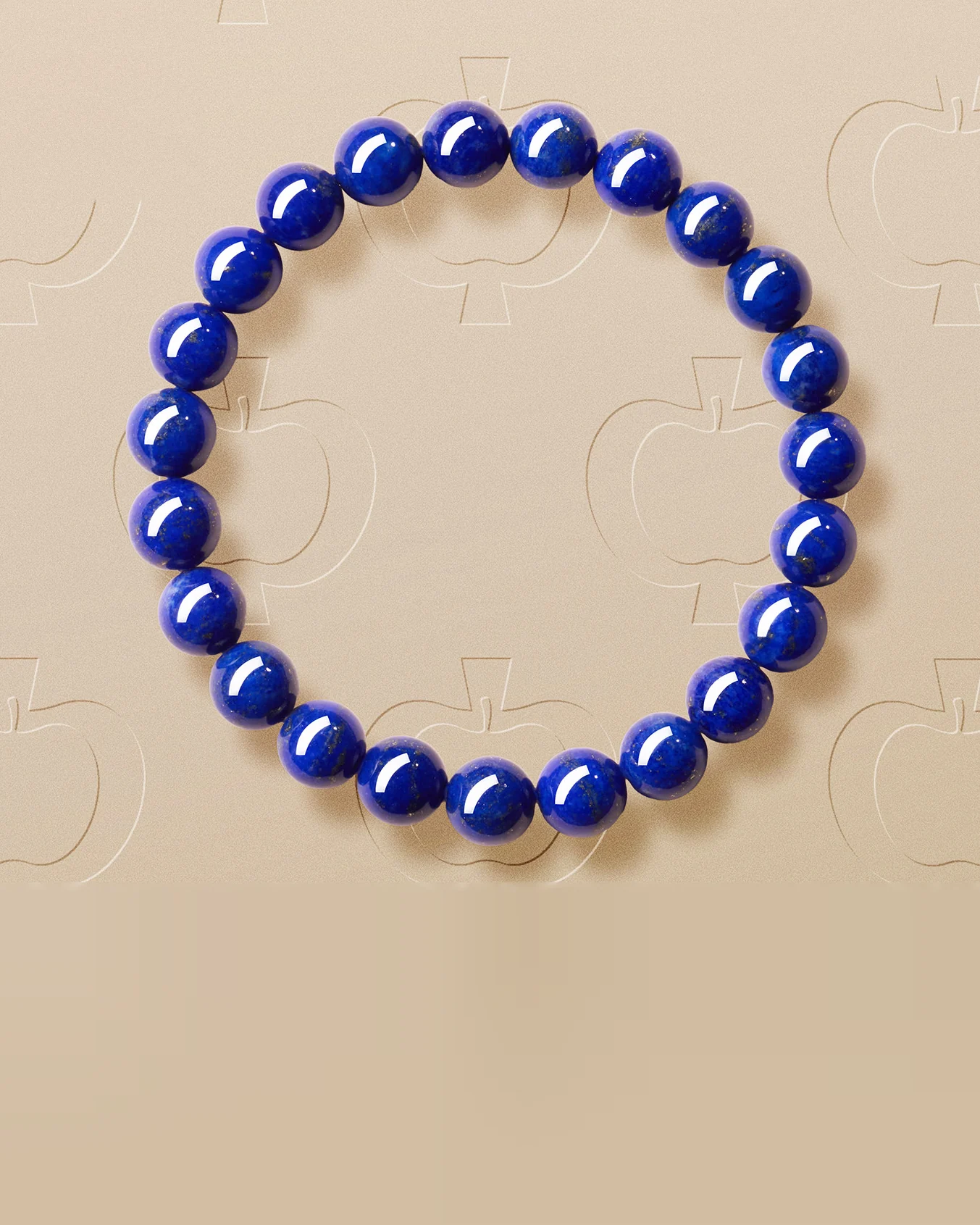
Lapis lazuli8 mm
Auspicious bracelets / Water
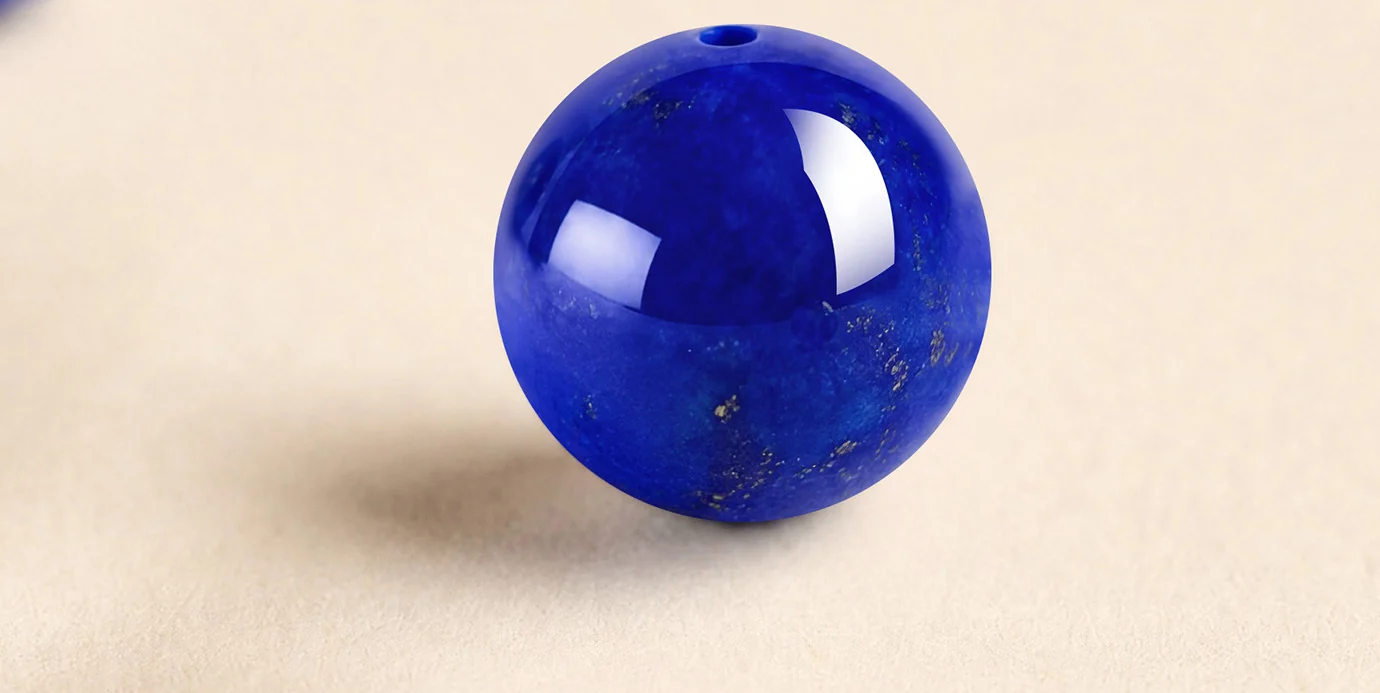
Deep royal-blue lapis lazuli from Afghanistan, in 8 mm rounds polished to a rich, even shine.
$108.00USD
Prepared in 5 days after payment
Shipping: Asia $10; Europe, US, Canada, Australia & NZ $20
Ready-designed returns may be requested within 14 days. See returns policy
An Open Career Path
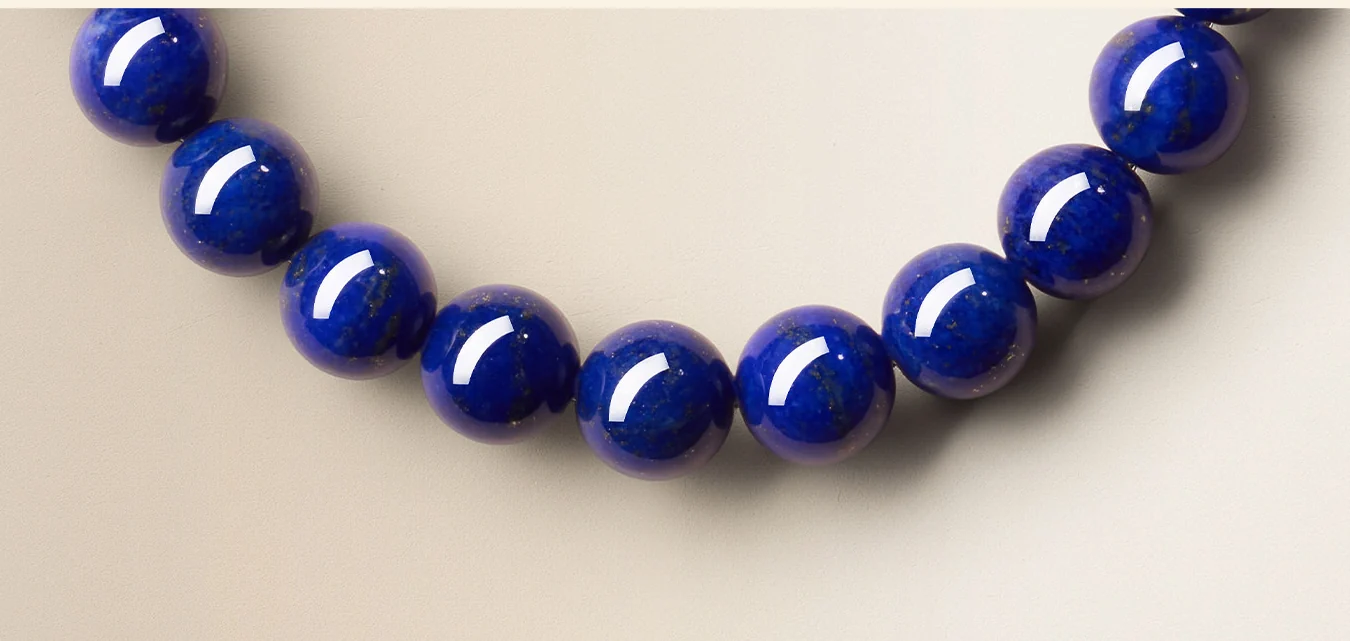
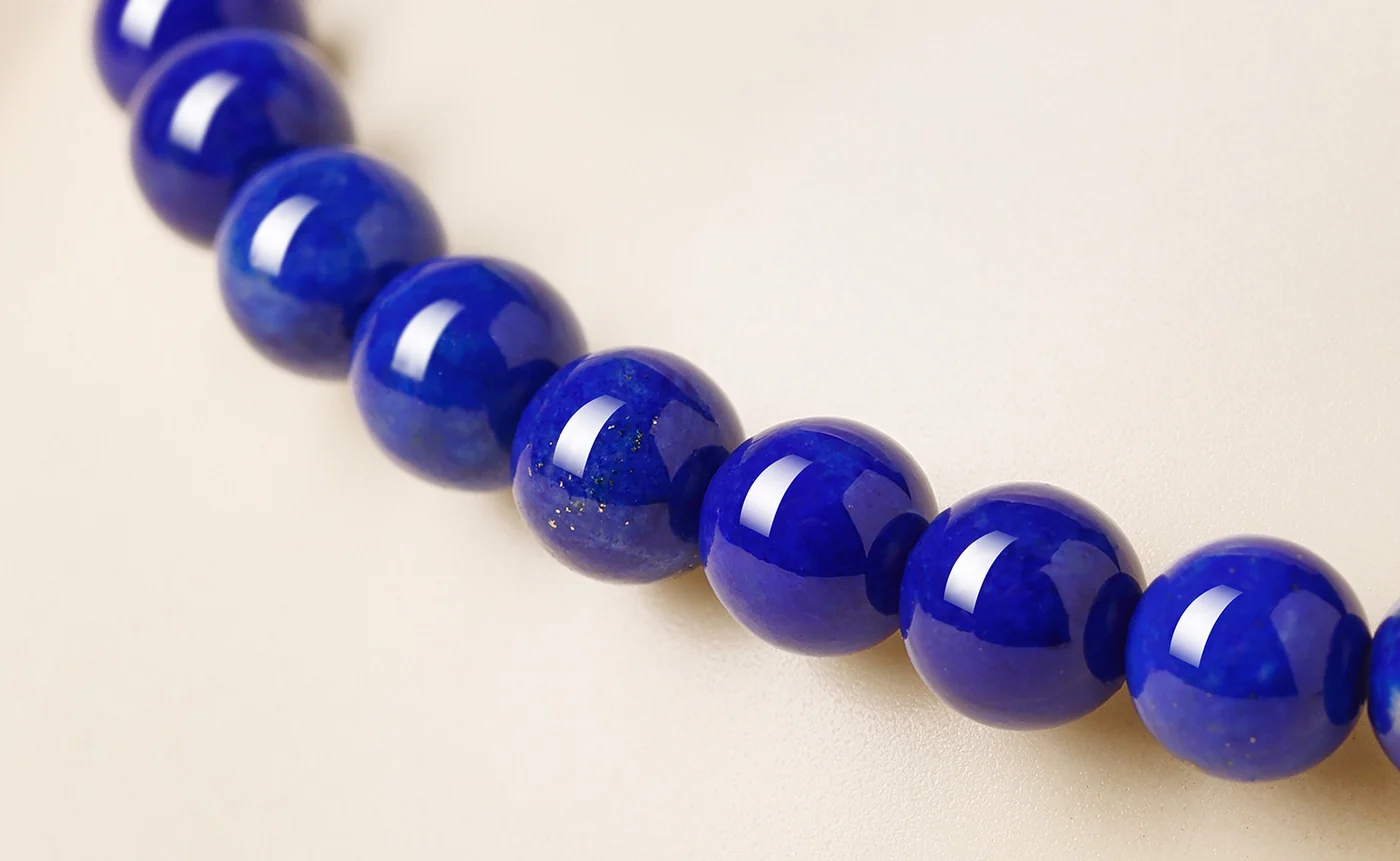
An Open Career Path is a strand of lapis lazuli, each round bead approximately 8 mm across, from Afghan material. Lapis is one of the oldest gemstones in human history, prized for a blue so deep and pure that it was once worth more than gold as a pigment. Good beads are an intense royal blue, sometimes scattered with tiny golden flecks of pyrite like stars.
Blue-black belongs to Water in the Five Elements, the element of wisdom and adaptability, and in Chinese tradition the deep blue of lapis, qing, is the colour of the sky. The Chinese name, qingyun delu, wishes for a clear road upward in one’s career. It is chosen by job seekers, people relocating for work and anyone at the start of a new professional chapter.
An Open Career Path
What lapis lazuli is, why Afghan lapis is famous, how to recognise good quality and how to choose the right fit.
01
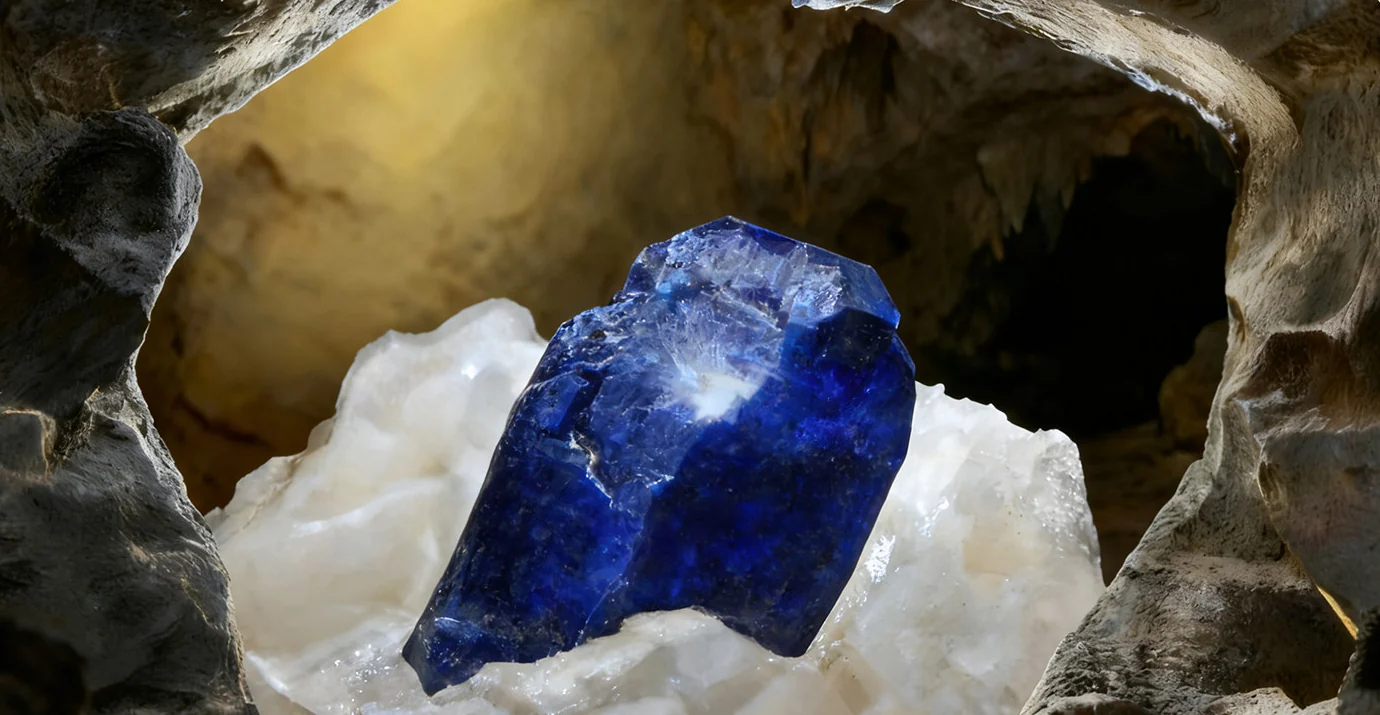
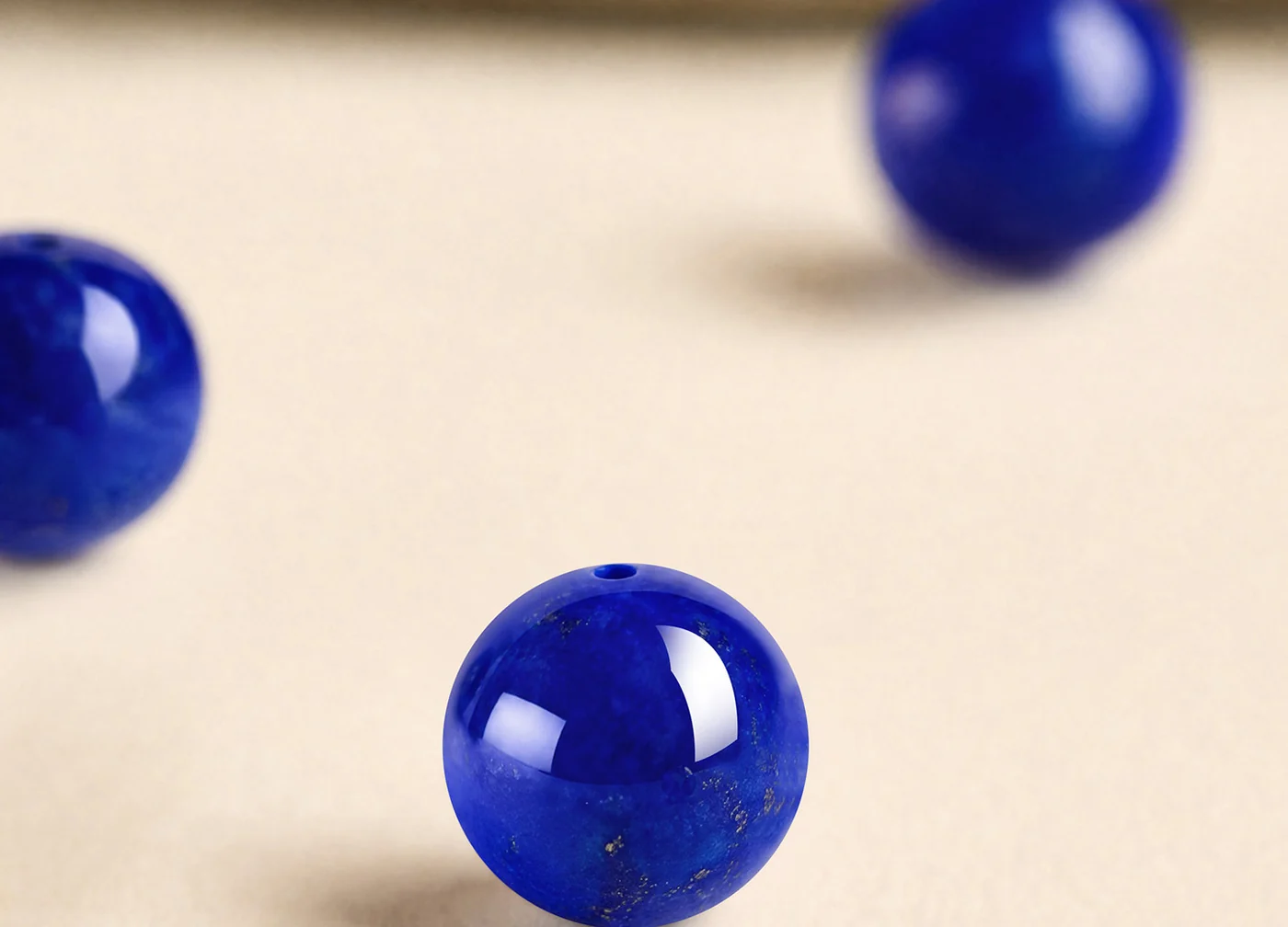
Lapis lazuli is not a single mineral but a rock. Its intense blue comes from lazurite, a rare blue mineral; white streaks are calcite; and the tiny golden sparks are pyrite. The proportions of these three decide the quality: the finest lapis is dominated by lazurite, giving an even, saturated blue with little or no white and only a sprinkling of gold.
The name combines the Latin lapis, stone, with lazulum, from the Persian word for blue, the same root that gives us “azure”. Lapis is relatively soft, about 5 to 5.5 on the Mohs scale, and slightly porous, so it needs gentler care than quartz. In return, it polishes to a rich, satiny shine that shows off its colour beautifully.
02
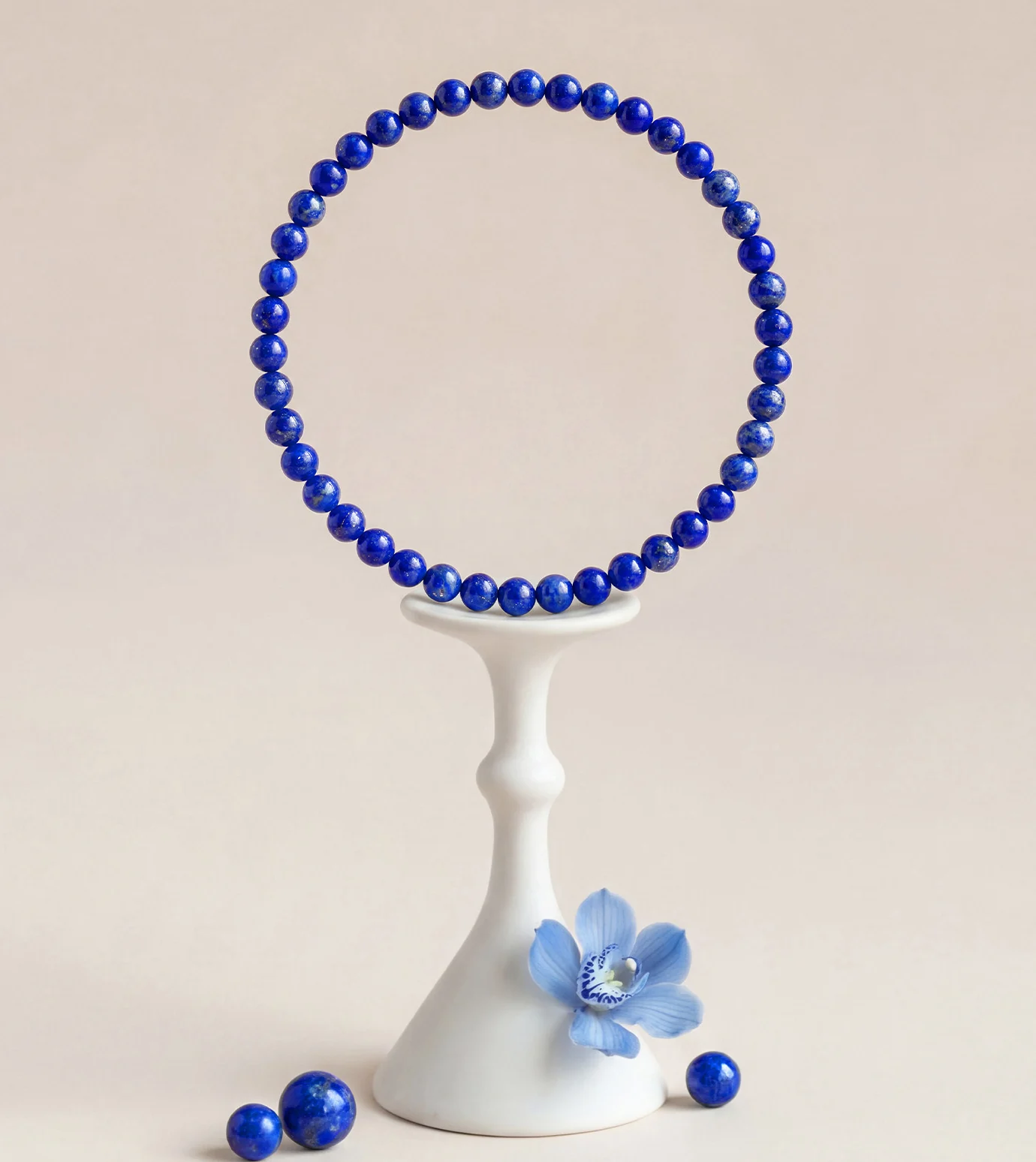
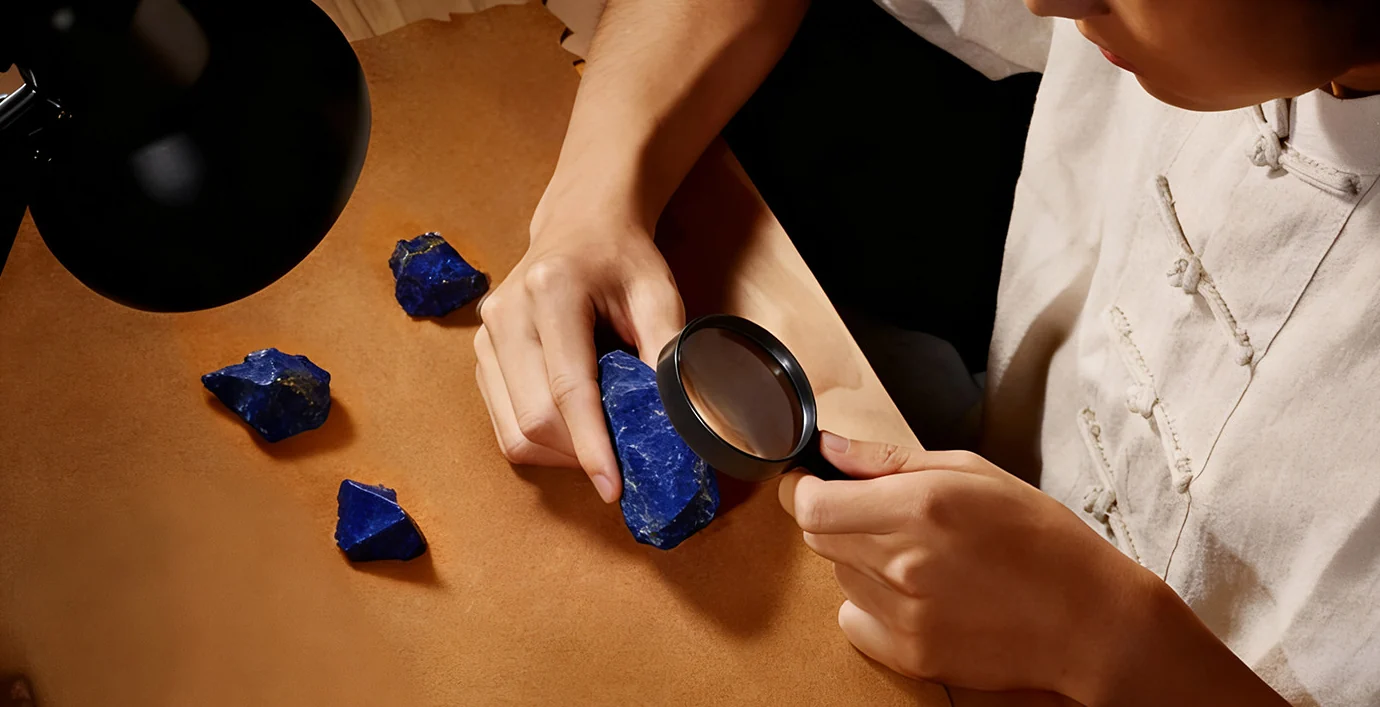
Lapis is graded largely by colour. The most valued is a deep, slightly violet royal blue, even across the bead, with little white calcite. Pyrite flecks are a matter of taste: a light, even sprinkle of gold is admired as “stars in the night sky”, while heavy pyrite or large white patches lower the grade.
The beads in An Open Career Path are selected for deep, even blue. Our supplier describes them as top-grade natural lapis. You may see small natural variations between beads, an occasional gold fleck or a faint lighter vein; these are signs of natural stone and part of lapis lazuli’s character.
03
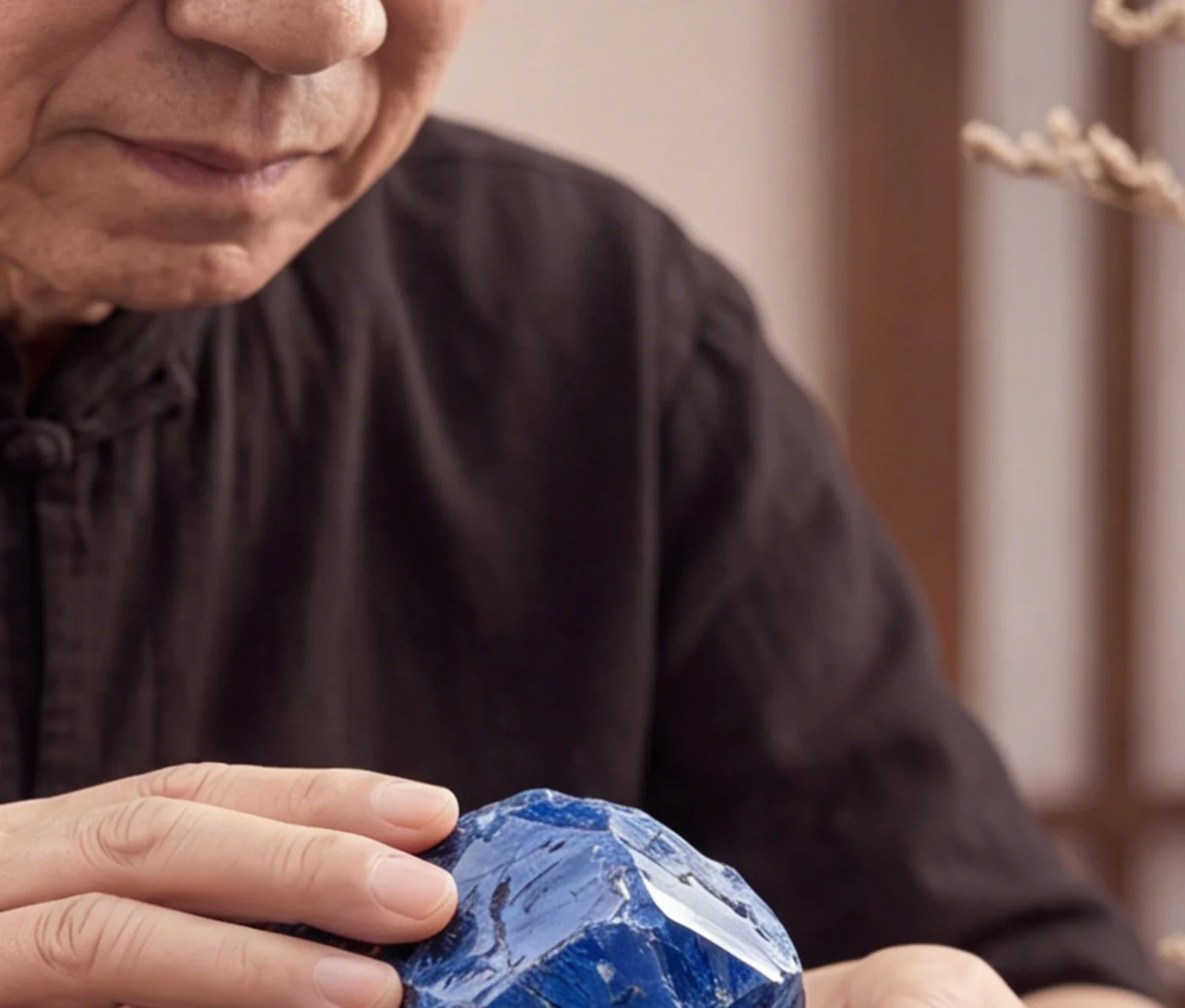
The mines of Sar-i Sang, in the Kokcha valley of Badakhshan in north-eastern Afghanistan, are among the oldest continuously worked mines in the world. Lapis from these mountains has been traded for more than six thousand years: it was found in the royal tombs of Ur, set into the funerary mask of Tutankhamun and carried along the Silk Road to China.
Afghan lapis remains the benchmark for colour. Other sources exist, including Chile and Russia, but their material is often paler or greyer. Our supplier describes the lapis in this bracelet as Afghan, selected for its deep blue.
Mining at Sar-i Sang is still largely done by hand in high, remote valleys, and the best material has always been scarce. That history is part of what makes a strand of fine lapis feel special.
04
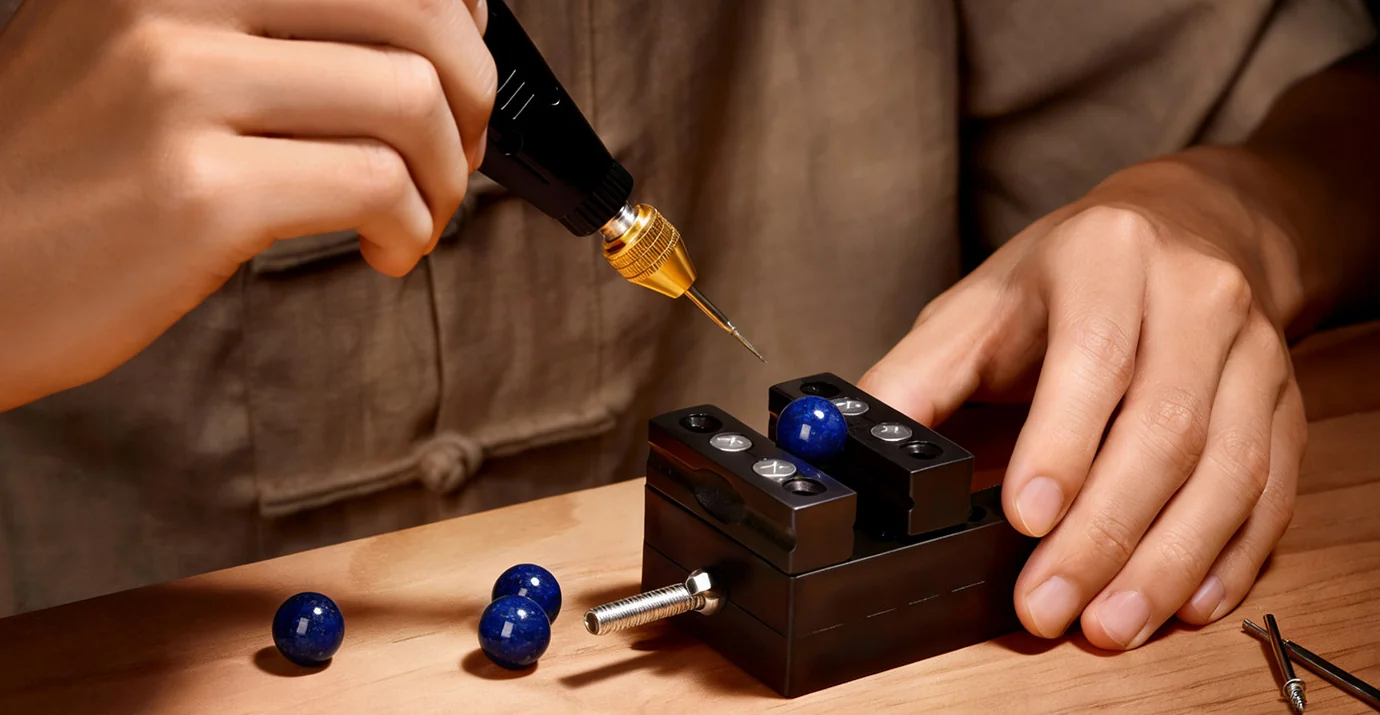
Lapis rough is cut to keep the deepest blue sections and avoid heavy white calcite. The pieces are rounded, drilled by hand and polished through several stages to a smooth, satiny finish. Because lapis is softer than quartz, polishing must be done patiently to avoid surface marks.
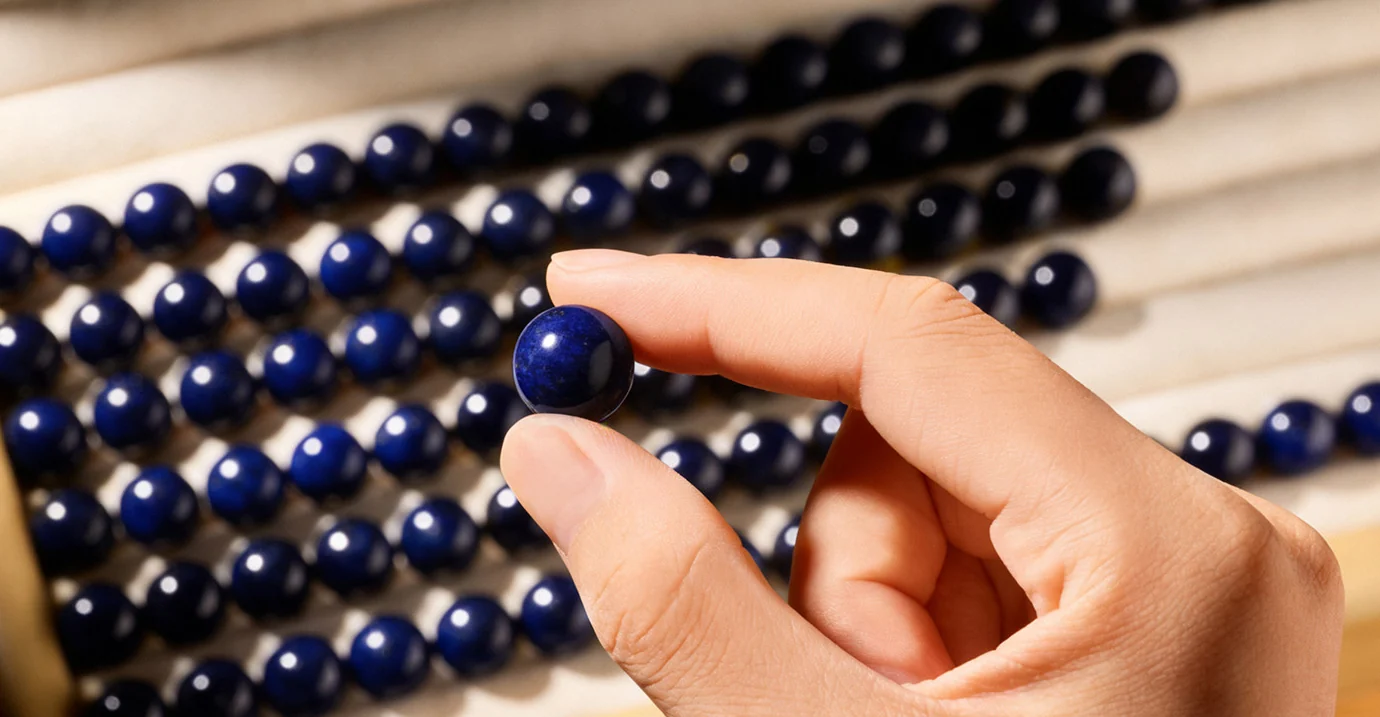
After polishing, every bead is inspected for colour, evenness, surface pits and the quality of the drill holes. Our supplier reports rejecting a large proportion of beads at this stage so that each strand shows a consistent, saturated blue.
05
Lapis is offered from fine 4 mm beads up to 10 mm. At 4 to 6 mm it is a delicate line of blue; at 8 mm each bead shows its depth of colour and any gold flecks clearly, while the strand stays comfortable and versatile; at 10 mm it becomes a bold, eye-catching band.
This design was previously made with irregular lapis chips and a lotus charm. We now make it with round 8 mm beads, which show the colour more evenly, feel smoother on the wrist and suit both men and women.
| Bead diameter | How lapis looks | Often chosen for |
|---|---|---|
| 4–6 mm | A fine, delicate line of blue | Stacking, slender wrists |
| 8 mm · this design | Clear, deep colour in a balanced strand | Everyday wear; most wrists |
| 10 mm | Bold, saturated band | Wearing one statement bracelet |
06
Measure the wrist itself with a soft tape or paper strip, just above the wrist bone where you usually wear a bracelet. Keep it snug without squeezing and choose that measurement on this page. The strand is made with a small allowance so that it moves slightly and stays comfortable.
The table shows typical bead counts for 8 mm lapis. Your bracelet may differ by one bead, as natural beads vary fractionally and each strand is checked against the measurement when it is strung.
Between two sizes, choose the larger for a relaxed fit or the smaller for a closer one. Roll the strand over the knuckles rather than stretching it.
| Wrist size | Approximate inches | Typical bead count (8 mm) |
|---|---|---|
| 14 cm | 5.5 in | 22 beads |
| 15 cm | 5.9 in | 23 beads |
| 16 cm | 6.3 in | 24 beads |
| 17 cm | 6.7 in | 25 beads |
| 18 cm | 7.1 in | 27 beads |
| 19 cm | 7.5 in | 28 beads |
| 20 cm | 7.9 in | 29 beads |
| 21 cm | 8.3 in | 30 beads |
07
The Chinese name qingyun delu joins qingyun, the “blue clouds” that stand for high position, with delu, finding the road. It is a wish that the way forward in one’s career will open: a good job after a long search, a successful move to a new city, a promotion after years of effort. The deep blue of lapis, the colour of a high, clear sky, makes it a natural stone for this wish.
In imperial China, lapis was used for the court beads and hat finials of senior officials and for the altar of Heaven, and its colour was associated with the sky and with authority. That history gives it a quiet association with dignity and rising through one’s work.
These are cultural meanings and personal wishes rather than promises.
08
In the Five Elements, deep blue and black belong to Water, the element of winter, the north and wisdom. Water adapts to any shape yet carves through stone over time, and in Chinese thought it represents intelligence, flexibility and the ability to find a way around obstacles. Those are useful qualities for anyone navigating a career.
If you would like to know whether Water suits your own birth chart, a personal design begins with a fuller BaZi discussion.
09
Ground into powder and refined, lapis produced ultramarine, the most precious blue pigment of the Renaissance. Painters reserved it for the robes of the most important figures, and it was sometimes priced above gold. In Asia, lapis was used in the murals of the Buddhist caves at Bamiyan and Dunhuang, carried along the Silk Road from Afghanistan.
In China, lapis became known as qingjinshi, and during the Qing dynasty it was used in the court beads of officials and in ritual objects for the worship of Heaven, whose colour it was believed to match. Few gemstones have such a long and wide-ranging history.
10
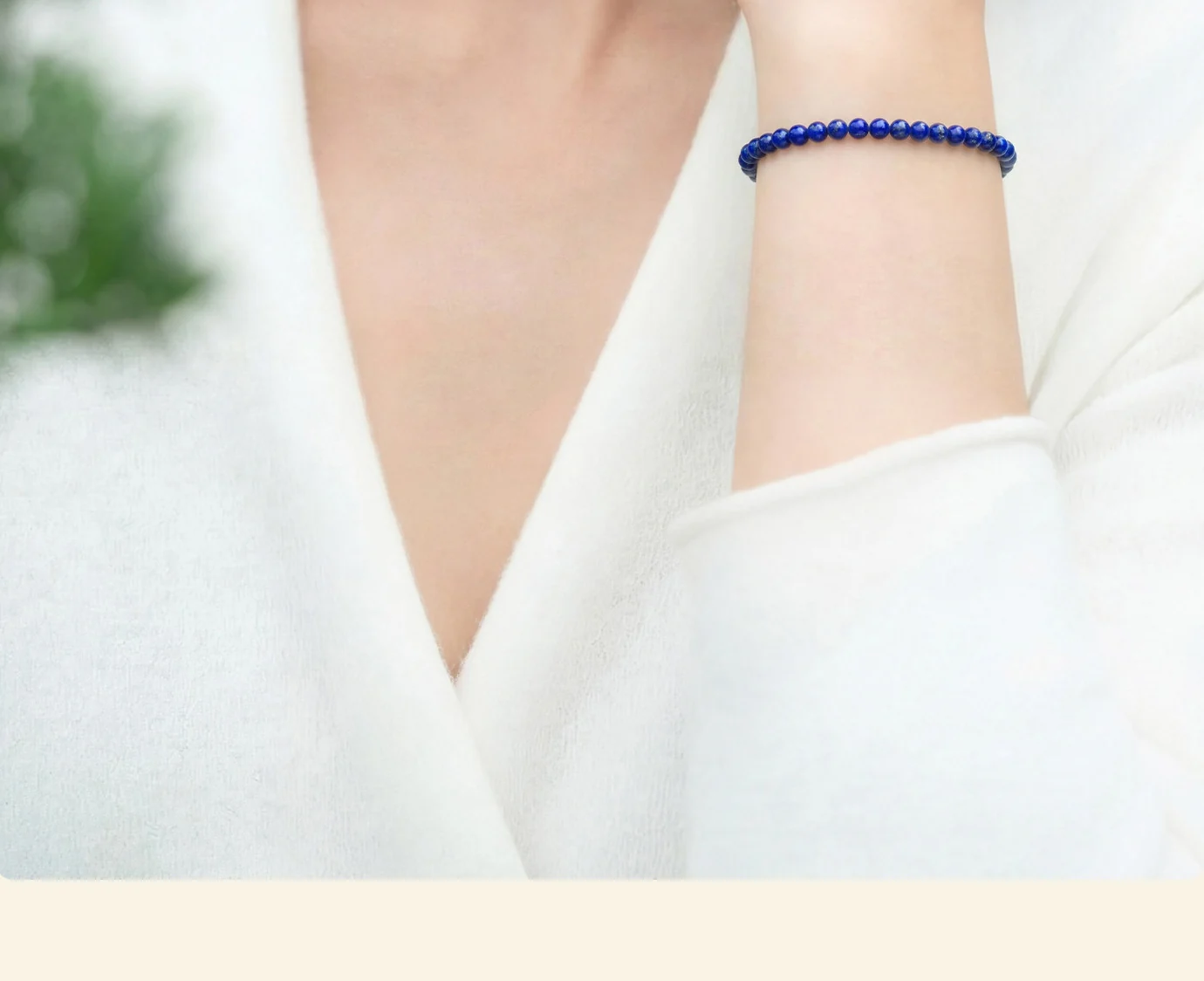
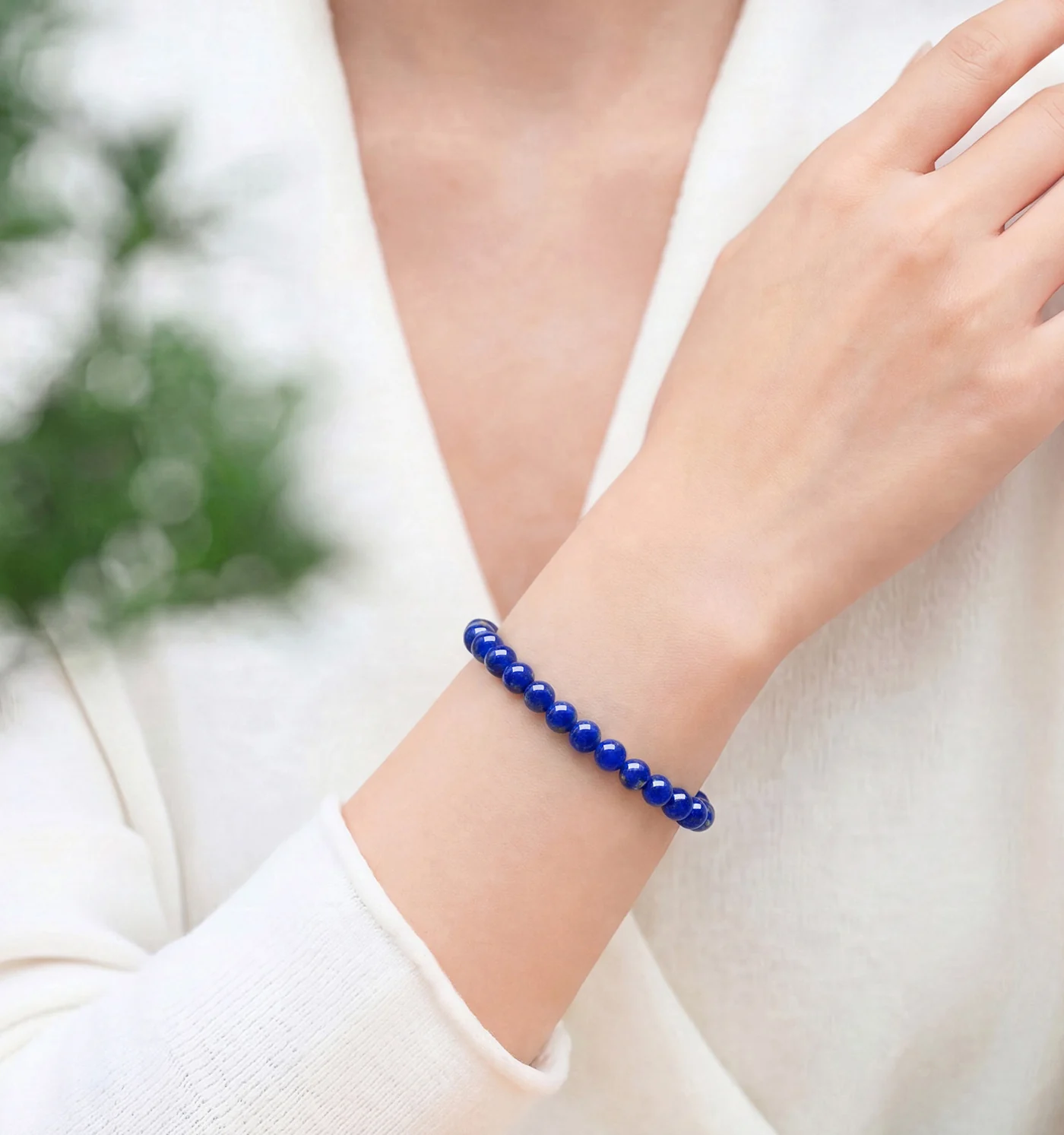
Deep blue lapis looks especially striking with white, as the photographs show, and smart with grey, camel and navy. It pairs beautifully with yellow gold, which echoes its pyrite flecks, and looks cool and modern with silver.
At 8 mm, the strand works alone or with a slim companion. It stacks well with a clear quartz or moonstone bracelet for a blue-and-white palette, or with tiger eye for a classic blue-and-gold contrast. The design is unisex and popular with men for professional settings.
11
This design was previously made with irregular lapis chips on a cord with a lotus charm. We now make it with round 8 mm beads of better, more consistent lapis. Round beads show the colour more evenly, are more comfortable to wear and make the strand easier to size accurately. The meaning and the deep blue remain the same.
12
Several blue stones are sometimes confused with lapis. Sodalite is a related mineral, usually a darker, greyer blue with more white veining and almost never any pyrite. Dyed blue agate or howlite can look very even but lacks the depth of lapis and has no natural gold flecks. Blue aventurine sparkles throughout rather than showing distinct pyrite points.
Lapis has a slightly velvety depth, a weight in the hand that feels substantial for its size, and, in good material, an intense colour that does not look painted on. Seeing several stones side by side is the easiest way to learn the difference.
13
An Open Career Path suits a new job, an interview season, a move abroad for work or a well-earned promotion. Its deep blue is also a natural gift for anyone born in September, since lapis is one of the traditional birthstones for that month in some lists, and for anyone who loves blue.
A short note explaining qingyun delu makes the meaning clear. If you cannot measure the recipient’s wrist, choose the most likely size; an unworn ready-designed bracelet can be returned within 14 days of delivery.
14
Many people who choose An Open Career Path wear it on working days as a small, private reminder of what they are aiming for: before an interview, during a demanding project or on the first morning in a new office. Its colour is calm and serious enough for formal clothes, and at 8 mm it sits comfortably beside a watch or under a shirt cuff.
Because lapis is softer than many stones, it is worth taking the bracelet off for the gym, for washing up and before bed. Those small habits keep the polish bright and the elastic fresh for much longer.
15
Lapis is often imitated or treated. Common imitations include dyed howlite or jasper, reconstituted lapis made from powder and resin, and glass. Dyed stones often look too uniform, and the colour may concentrate in cracks or rub off slightly on a white cloth moistened with a little alcohol. Natural lapis usually shows small variations, a few white calcite specks and occasional gold pyrite.
Our supplier describes these beads as natural lapis lazuli. If you would like independent confirmation, a gem laboratory can test the material; please contact us if you would like to arrange this before or after purchase.
16
Lapis is softer than quartz and slightly porous, so it is more sensitive to scratches, water and chemicals. Wipe it with a soft, dry cloth after wear, and avoid perfume, sun cream, hand sanitiser and cleaning products, which can dull or stain the surface. Store it on its own in a soft pouch.
Remove the bracelet before swimming, bathing and sport, and never soak it or use ultrasonic cleaners. With daily wear, stranded elastic usually lasts one to two years; if gaps appear between the beads, have it restrung before it breaks.
Our supplier describes it as natural Afghan lapis lazuli. A third-party laboratory test can be arranged on request.
They are pyrite, a natural mineral found in lapis. A light sprinkle is admired as “stars in the night sky”.
White specks are calcite, another natural component of lapis. Fine lapis has very little.
Round beads show the colour more evenly, are more comfortable and allow more accurate sizing.
It is softer than quartz and slightly porous, so avoid knocks, water and chemicals, but it is durable with gentle care.
Avoid soaking it. Brief contact with water will not harm it, but repeated soaking can dull the surface and weaken the elastic.
Typically 22 beads for a 14 cm wrist, rising to about 30 for 21 cm.
Deep blue lapis is associated with Water in the Five Elements.
Yes. Deep blue lapis is popular with men, especially for professional settings.
Natural lapis keeps its colour with normal wear. Dyed imitations may fade or rub off.
Yes. It pairs well with clear quartz, moonstone and tiger eye; avoid hard metal bangles that could scratch it.
No special ritual is needed. Avoid salt and water-based methods, which can harm porous lapis.
This design is made in 8 mm. Ask a design adviser about 4, 6 or 10 mm.
On its own in a soft pouch, away from harder stones and moisture.
Whichever is most comfortable; many people wear it on the wrist without a watch.
The material and size match, though natural lapis varies slightly in shade and in the amount of pyrite.
Career · Prosperity · Balance
Lapis lazuli
 Personal designs
Career · Prosperity
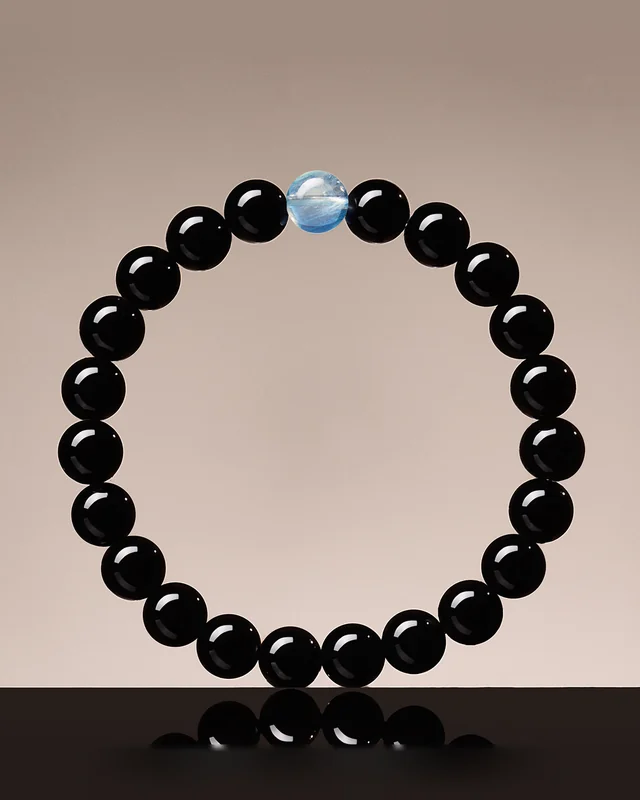
Black obsidian · Aquamarine
We use Google Analytics and Microsoft Clarity by default to understand visits and improve browsing. Form inputs are masked, and you can opt out anytime. Privacy policy