Blue, gold and white in one material
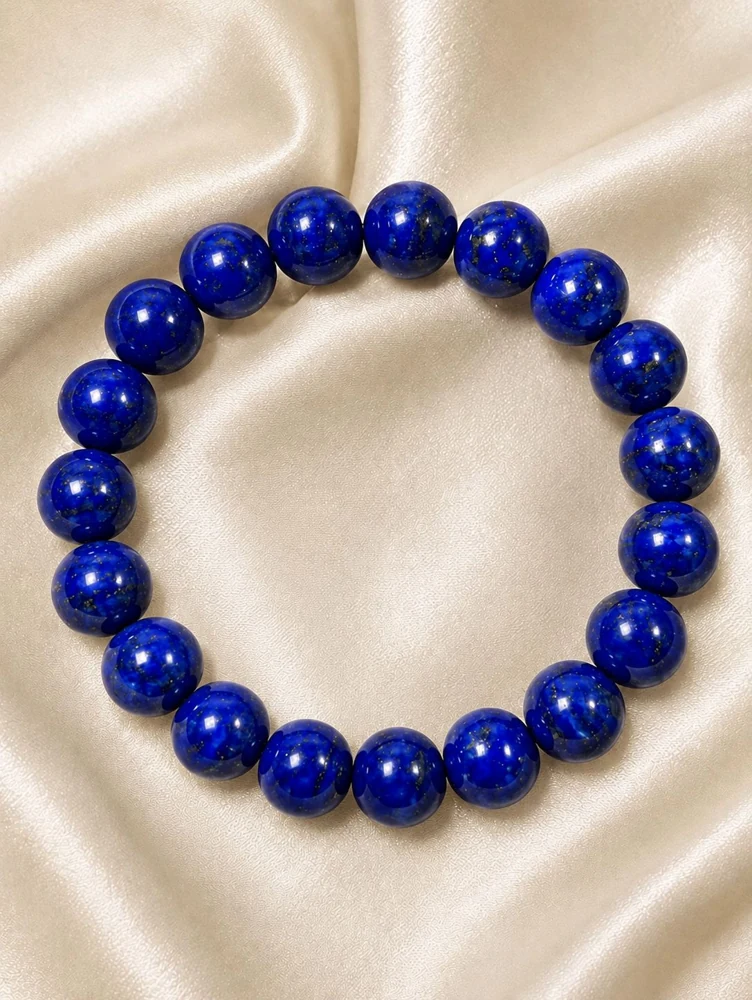
GIA describes lapis lazuli as a mineral aggregate. Lazurite supplies its characteristic blue, pyrite can create golden flecks, and calcite commonly appears white. The flecks are not gold, and white marks do not automatically make a piece false. They are clues to the material’s composition.
A bracelet may emphasize uninterrupted blue or reveal more of the pale veins and golden points. Even color is often preferred, but texture remains a personal choice. Small flecks can resemble stars; larger pale patches create a different pattern. How the beads work together matters more to a strand than one unusually attractive bead.
Lighting changes that impression. A strongly lit detail can emphasize one sparkling point, while ordinary room light shows a quieter surface. Overall photographs reveal matching; closer views reveal polish, texture and the finish around the holes.
An old blue with a present-day intention
GIA’s history discussion traces lapis in ancient decorative objects and its use in ultramarine pigment. Rough material, carvings, pigment and beads are different ways people have valued it. That history gives the color depth without assigning an ancient ritual to every modern bracelet.
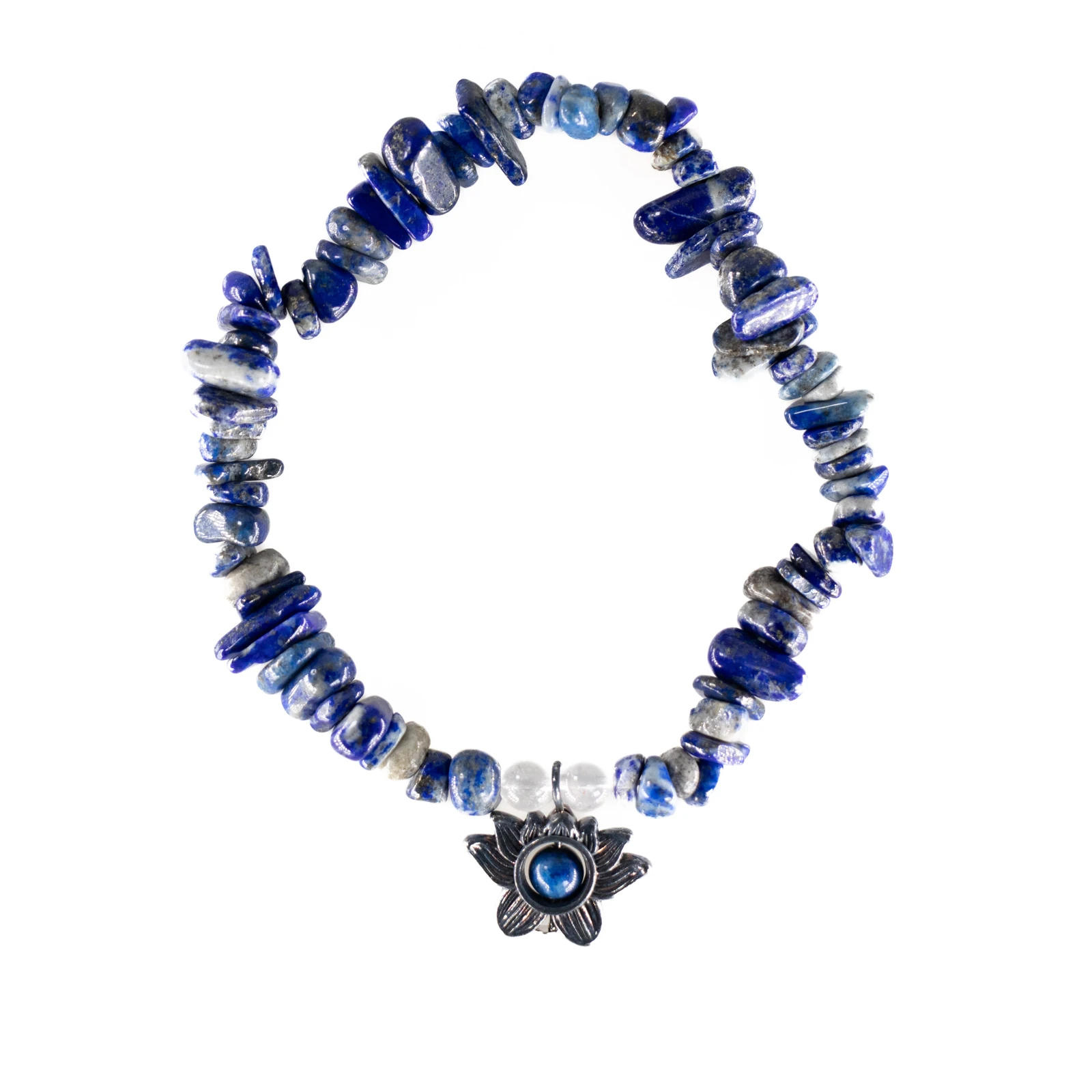
Lapis lazuli’s deep blue lends itself to intentions of progress and learning. One ready-designed style combines approximately 6 mm lapis chips with a lotus form, keeping a natural irregular outline. A black-wood and lapis custom direction offers a quieter contrast in material and surface.
The element theme belongs to the full design. A personal BaZi composition considers favorable elements and annual and ten-year cycles, not just how dark a blue looks. The material’s weight of color and quiet contrast can be appreciated directly in everyday wear.
Similar to sodalite, but a different identity
Sodalite also appears blue with pale markings. IGS distinguishes sodalite as a mineral from lapis lazuli as a rock containing several minerals. Pyrite flecks may help describe lapis, but their presence or absence alone cannot identify every blue bead.
Lapis often gives a deeper night blue, sodalite a blue-and-white pattern and aquamarine a paler translucent impression. Viewing them together shows how varied blue materials can be. In a custom mix, identify each material and its position so every part keeps its own character.
A vague label such as blue energy stone does not identify the purchase. Lapis, sodalite, dyed chalcedony and blue glass may share a color family while remaining different materials. A clear material list is more useful than guessing from the photograph.
Treatment and the value of a finished strand
Lapis may be dyed, waxed or otherwise treated to improve appearance. Natural origin and absence of treatment are different questions. Material information should address an untreated preference. Alcohol, acid or rubbing tests at home can damage a piece without providing a complete identification.
A bracelet’s price includes bead size, matching, polish, drilling and companion materials. Uniform dark blue, varied natural-looking patterns and a design containing only a few lapis beads are different specifications. A rough-stone price by weight cannot be transferred directly to a finished bracelet.
Useful details include overall color harmony, the pattern of pale veins and golden points, and the quality of the surfaces and holes. Origin stories are interesting, but the color, texture and workmanship of the actual piece remain the most immediate features to assess.
Gentle care for a deep blue surface
The minerals within lapis do not all behave identically. GIA recommends gentle soapy-water cleaning and advises against steam and ultrasonic systems. Acids, harsh cleaners and high heat are unsuitable for everyday care. Dyed or treated pieces also need the appropriate treatment-specific instructions.
Watch for repeated contact with hard metal, remove the bracelet for rough activity and store it dry and separately. A soft cloth handles ordinary fingerprints. Worn cord or chipped holes need attention so the piece can continue to accompany daily life.
Questions & answers
Are the golden flecks real gold?
They are usually pyrite, not gold. Together with blue minerals and pale calcite, they contribute to the material’s appearance.
Should lapis never have white veins?
White can be calcite within the rock. It affects color continuity and market preference, but does not by itself prove an imitation.
Can lapis and sodalite be paired?
Yes. Lapis brings deep blue and sodalite a blue-and-white pattern. A mixed design specifies each material, size and position before the composition is agreed around fit and intention.
Can lapis be worn every day?
It can suit considerate daily wear. Avoid hard knocks, harsh cleaners and heat, while also caring for the other beads and cord.