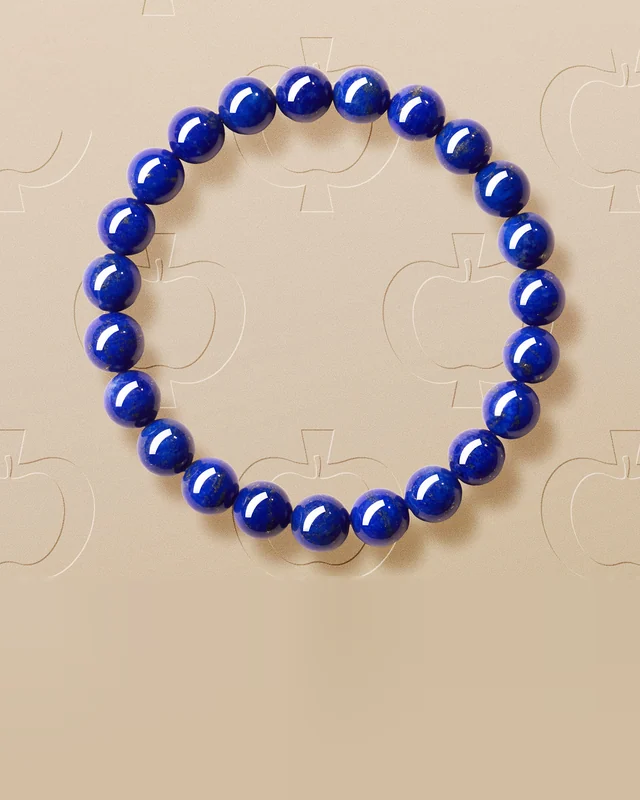
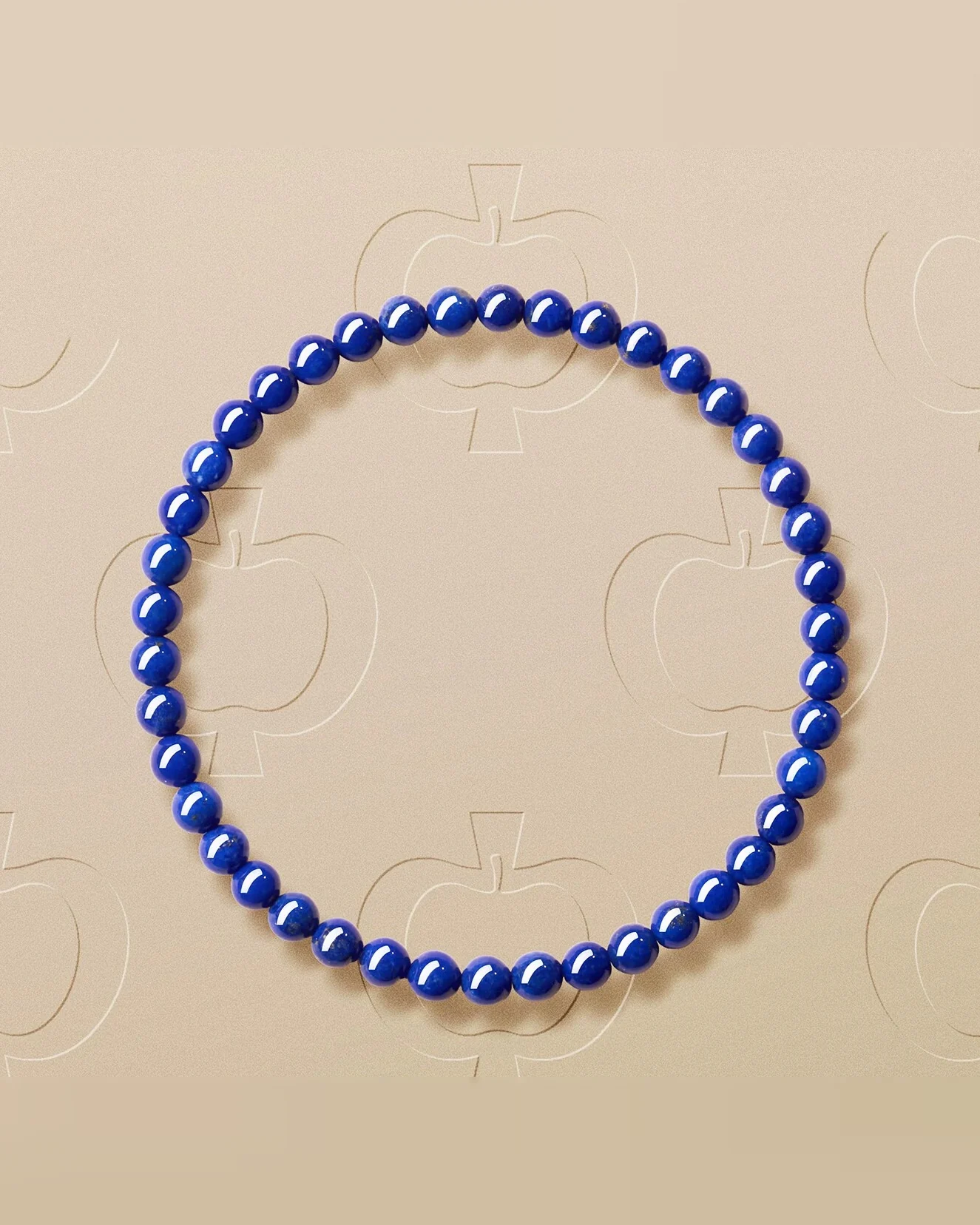
 View larger
Lapis lazuli4 mm
Auspicious bracelets / Water
4 mm Lapis Lazuli Bracelet · Three Rivers of Fortune
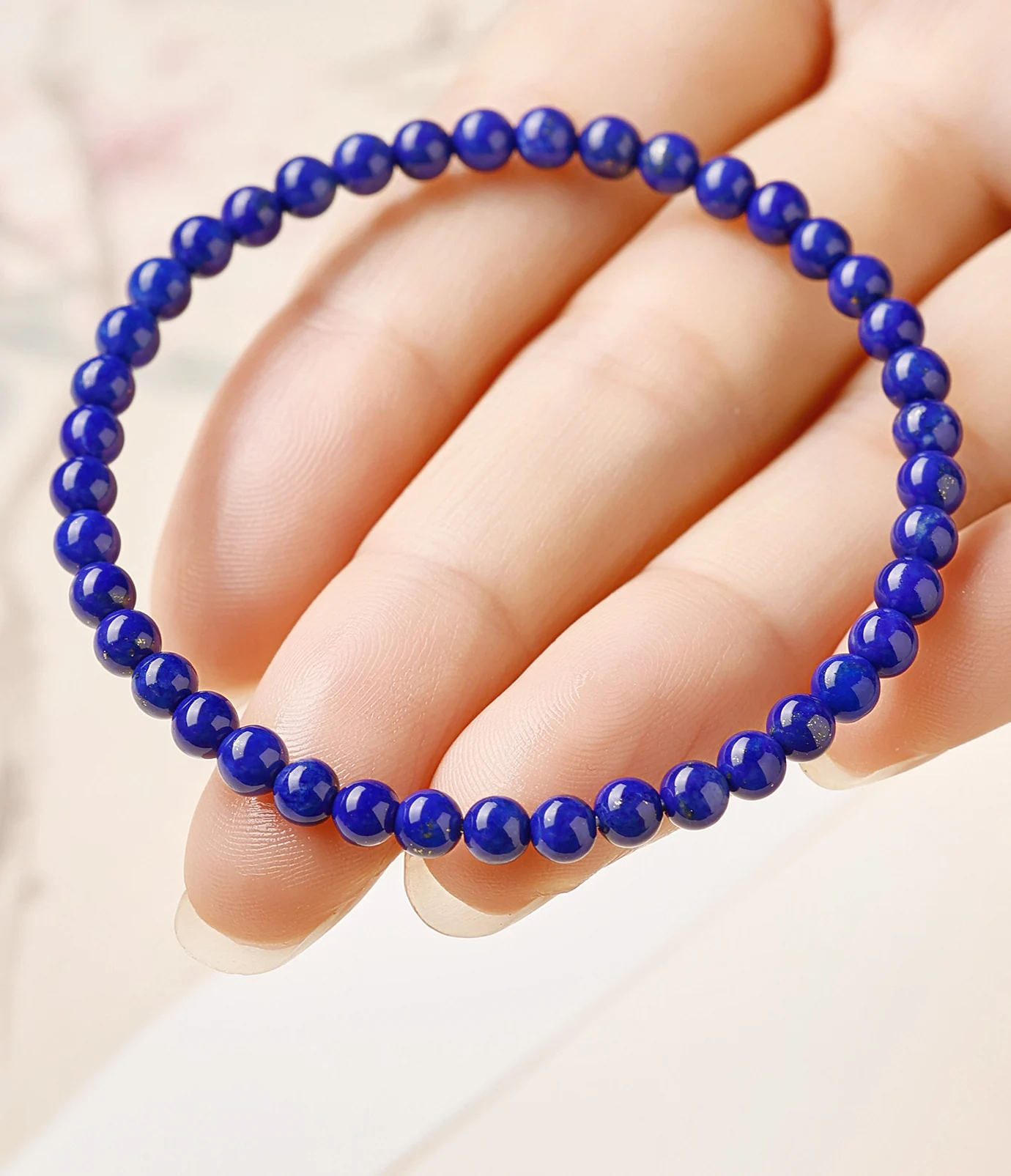
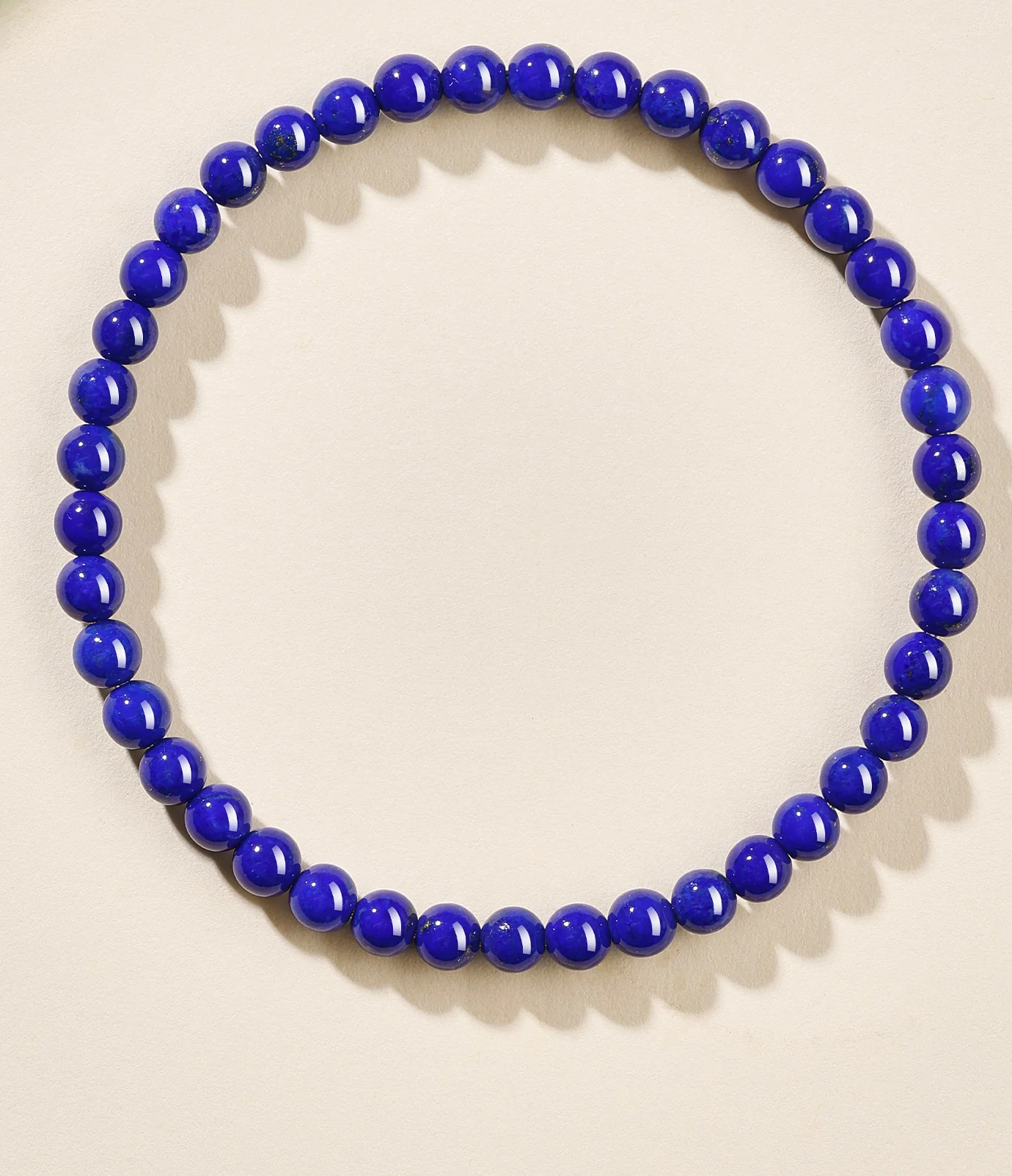
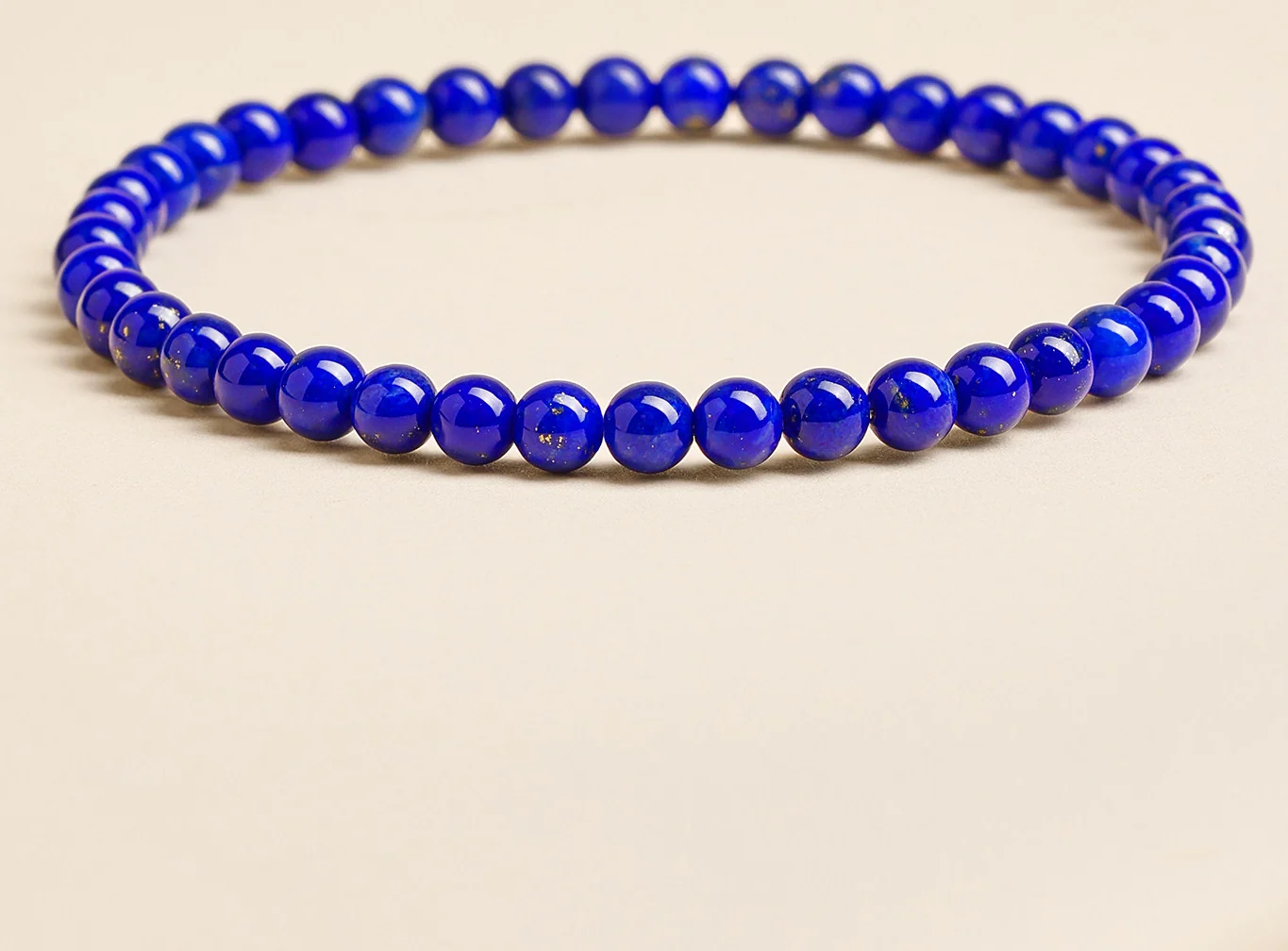
Fine 4 mm beads of deep royal-blue lapis lazuli, scattered with tiny gold flecks like stars in a night sky.
$68.00USD
- Gemstones & materials
- Lapis lazuli
- Colour
- Deep royal blue with fine golden pyrite flecks
- Bead size
- Approximately 4 mm
- Origin
- Afghanistan (as described by our supplier)
- Cord
- Stranded elastic, single strand
- Style
- WX050
Prepared in 5 days after payment
Shipping: Asia $10; Europe, US, Canada, Australia & NZ $20
Ready-designed returns may be requested within 14 days. See returns policy
Three Rivers of Fortune
A fine line of night-sky blue
Three Rivers of Fortune is a fine strand of lapis lazuli, each bead about 4 mm. The deep royal blue is scattered with tiny gold flecks of pyrite, so that every bead looks like a small piece of night sky. At this size the bracelet is delicate and quiet on the wrist, a thin line of colour that can be worn alone or alongside a watch or other strands.
The Chinese name, san chuan hui yuan, means three rivers flowing together into one wish: opportunities, supportive connections and smooth collaboration meeting in the same place. Deep blue belongs to Water, the element of flow and wisdom.
- Lapis lazuli beads of approximately 4 mm.
- Deep royal blue with fine gold pyrite flecks.
- Light, fine and easy to wear every day or to stack.
- Wrist sizes from 14 to 21 cm, with the bead count adjusted to your size.
Three Rivers of Fortune
Three Rivers of Fortune in detail
What lapis lazuli is, why it comes from Afghanistan, how to judge its colour and how to choose the right fit for fine beads.
01
Lapis lazuli, the blue of the night sky
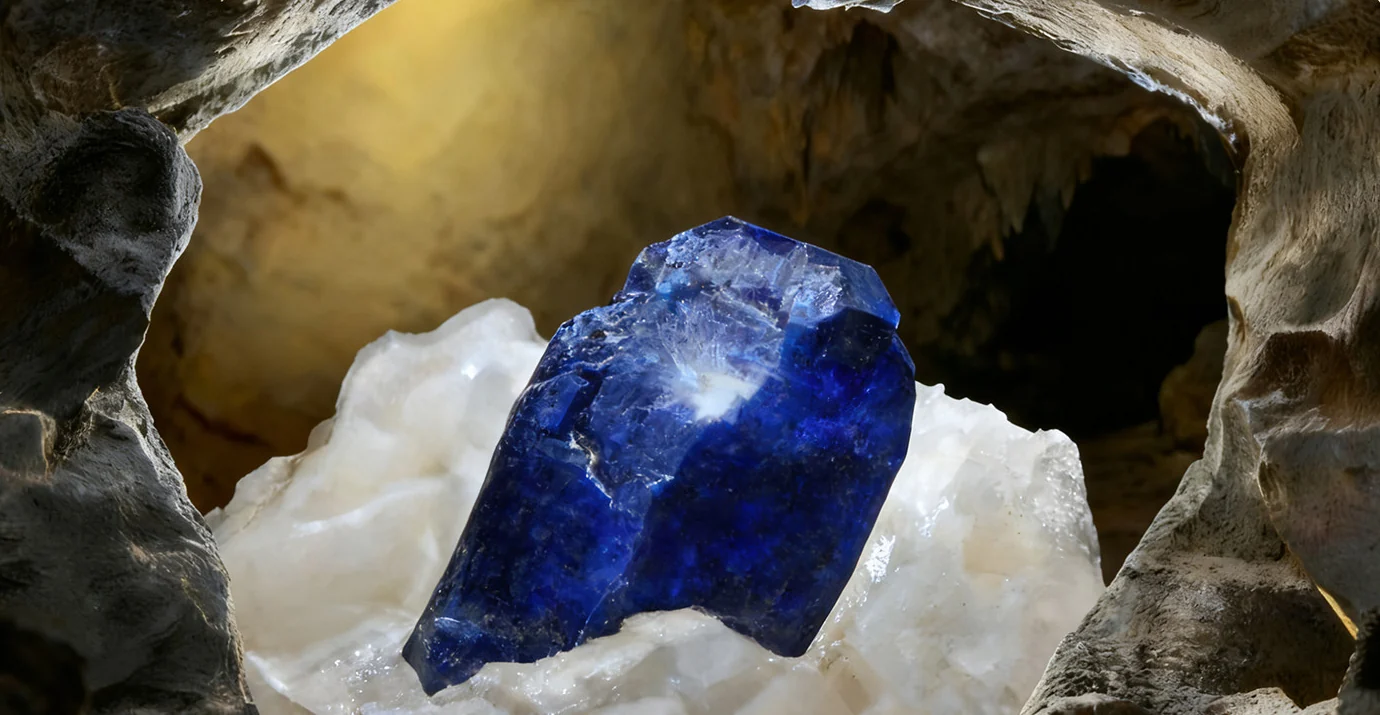
Lapis lazuli is not a single mineral but a rock. Its intense blue comes from lazurite, mixed with white calcite and golden flecks of pyrite. The best lapis is mostly lazurite, giving an even, saturated royal blue, with just enough pyrite to sparkle and little or no white calcite. It has been mined and treasured for more than six thousand years, and the name joins the Latin lapis, stone, with an old Persian word for blue.
02
From the mountains of Badakhshan
The most famous lapis comes from the Sar-e-Sang mines in the Badakhshan province of north-eastern Afghanistan, worked continuously for thousands of years. Afghan lapis is known for a deep, slightly violet blue and fine pyrite. Lapis is also found in Chile, Russia, Pakistan and elsewhere, but Chilean material tends to be paler and greyer. Our supplier describes the rough for this bracelet as Afghan lapis, selected for colour and an even distribution of gold flecks.
03
Golden stars in deep blue
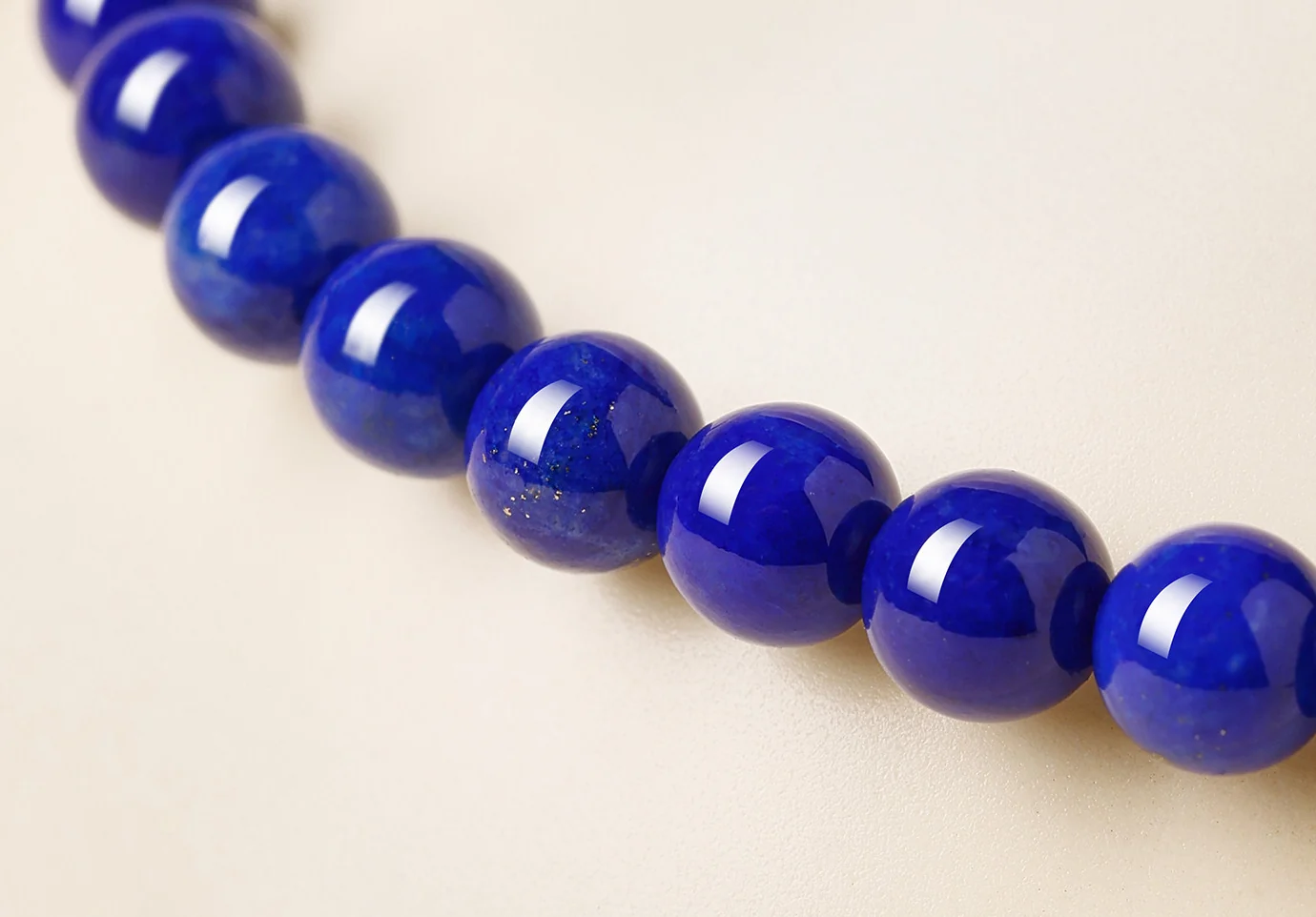
The small golden points in lapis are pyrite, iron sulphide, sometimes called fool’s gold. A fine scattering adds sparkle and is a sign of natural material; too much pyrite makes the stone look greenish or grey, and large patches distract from the blue. The supplier describes this lapis as deep blue like the night, with golden stars that shine. On 4 mm beads the flecks are tiny, so the overall impression is of rich blue with a faint glimmer.
04
What good lapis looks like
Lapis is graded mainly by colour and by how much white calcite it contains. The highest grades are an even, saturated royal blue with no visible white, a fine and even scattering of pyrite, and a dense structure that takes a bright polish. Lower grades are paler, show white streaks or patches, or have heavy pyrite. The supplier grades this strand as its top 8A+ quality, reporting that only around 15 percent of rough meets the standard.
05
Reading the rough
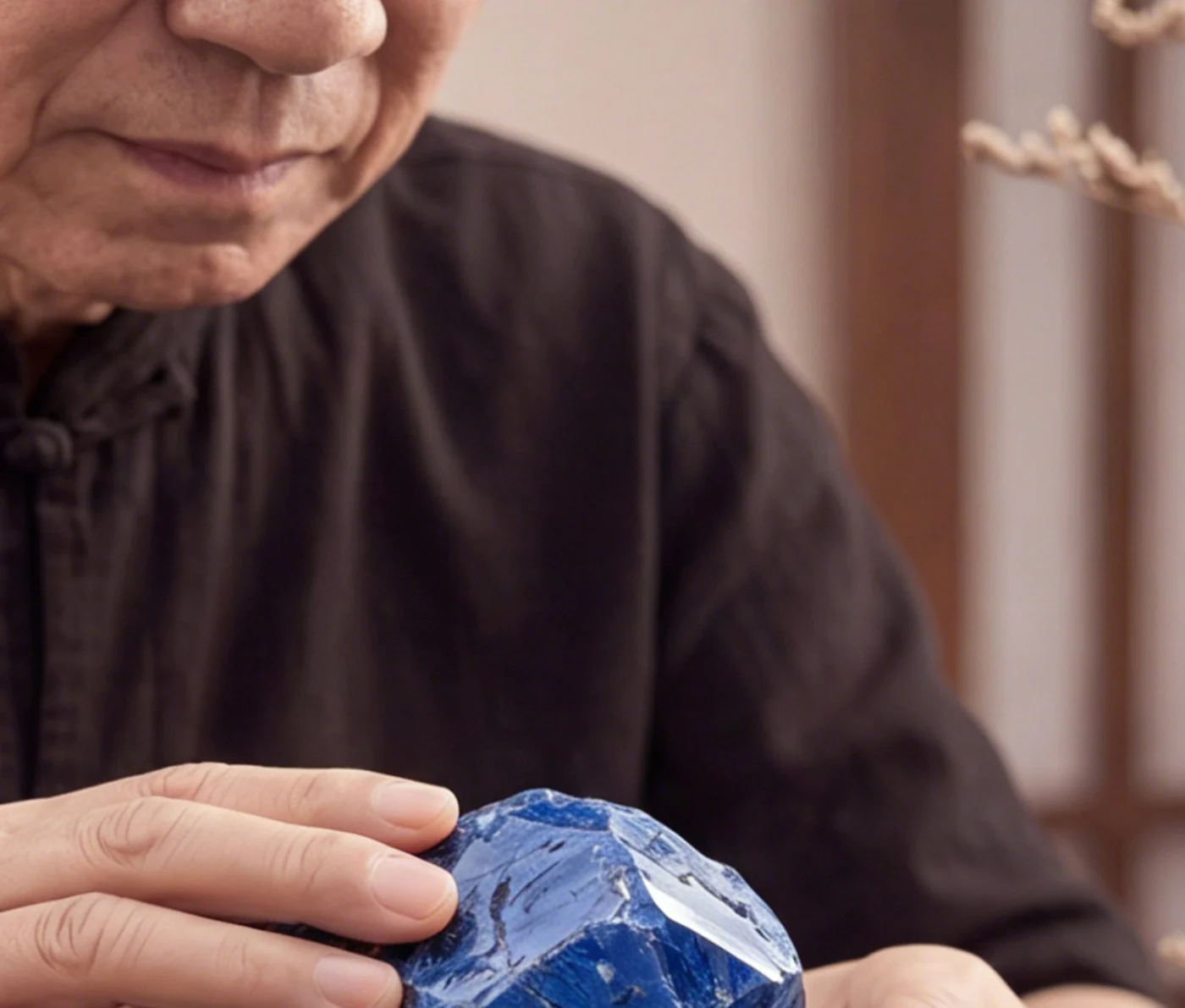
Before cutting, experienced cutters study each piece of rough under good light to find the purest blue and avoid veins of calcite and clusters of pyrite. For fine beads this is especially important, because each 4 mm bead is cut from a tiny section and any white or grey shows clearly. The supplier describes the work as supervised by experienced craftsmen following traditional hand-finishing methods.
06
Cut, polished and matched
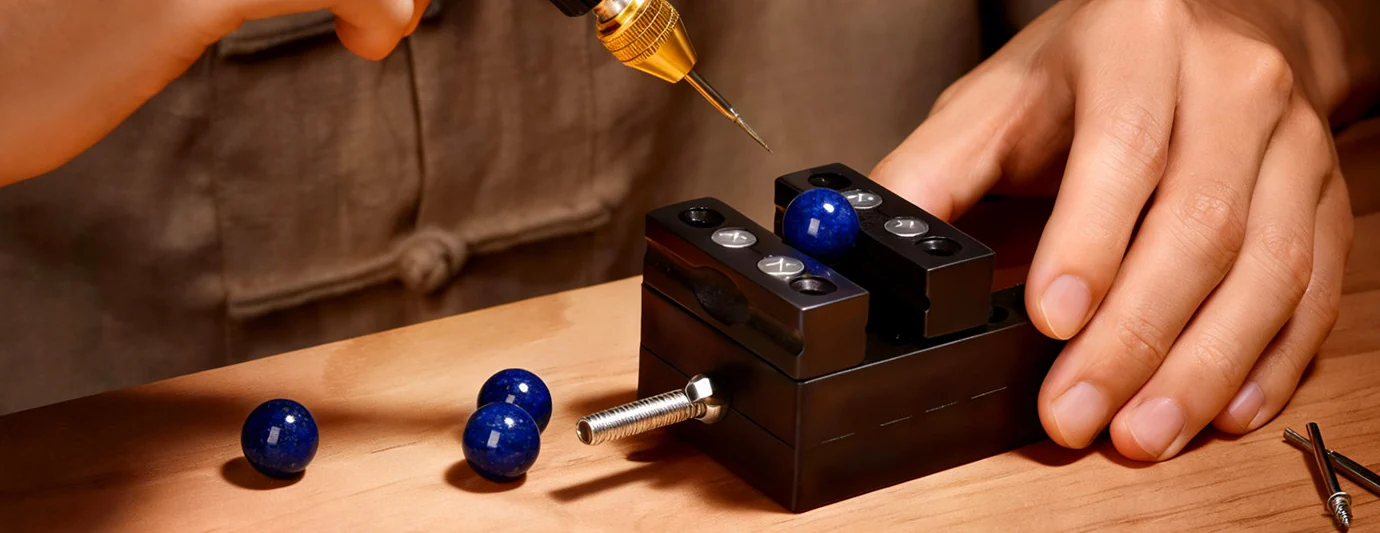
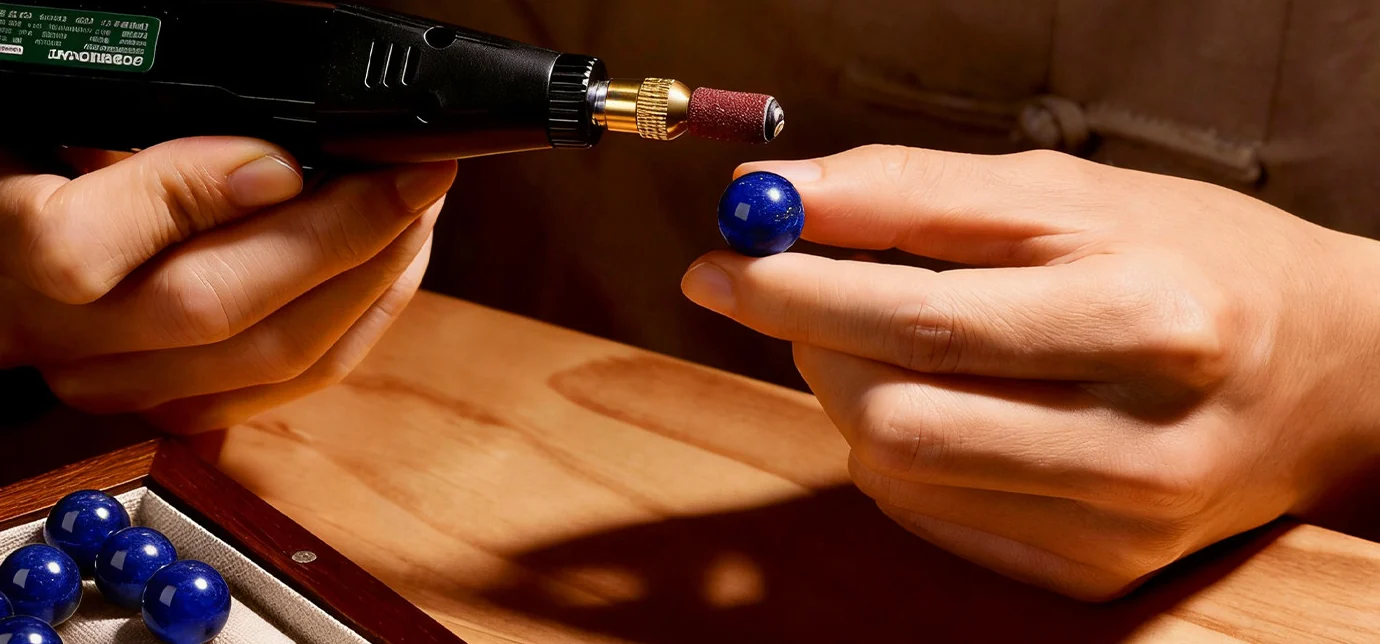
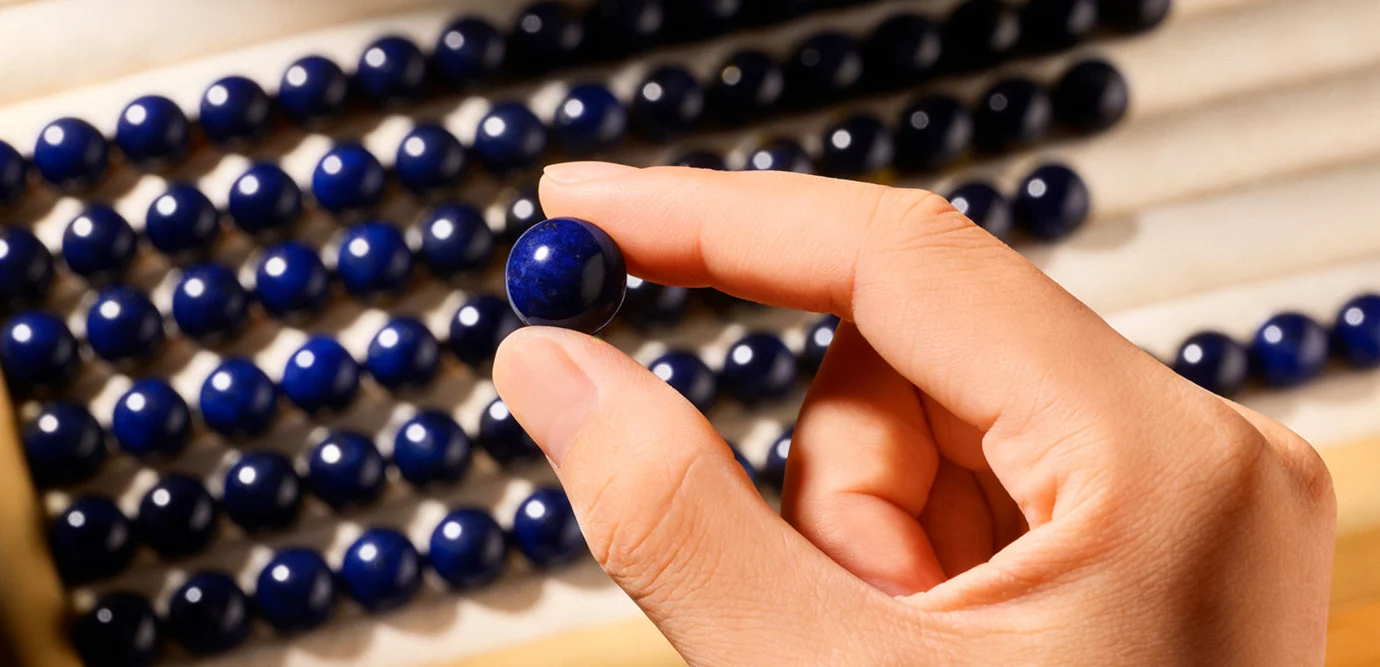
Selected rough is sawn into small blanks, rounded, drilled and polished through several grades of abrasive until the beads take a bright, glassy shine. Small beads need careful drilling because the walls are thin; a clean, smooth channel protects the cord. Finished beads are then sorted by colour so that each strand is an even, consistent blue, and the supplier reports rejecting more than half of the beads it inspects.
07
Why fine beads
At about 4 mm, these are among the finest beads used for bracelets. Fine beads give a delicate, refined look, and they show colour as a continuous line rather than as separate spheres. They are light enough to forget you are wearing them, and they slip easily under a cuff. A fine strand is also ideal for stacking, either several of the same stone or with other colours.
08
About the bead size
Each bead measures approximately 4 mm. Because the beads are small, a bracelet uses many more of them than a standard 8 mm strand: about 45 for a 16 cm wrist. Natural beads vary slightly, so the exact count depends on your measurement. If you prefer a bolder look in the same stone, our 8 mm lapis bracelet offers a fuller band.
09
Choosing your wrist size
Measure the wrist itself with a soft tape or paper strip, just above the wrist bone where you usually wear a bracelet. Keep it snug without squeezing. Fine bracelets look best fairly close to the wrist, so many people choose their exact measurement or add up to 0.5 cm.
The table gives approximate bead counts; each strand is checked against your measurement when it is strung.
10
Three rivers, one wish
San chuan hui yuan describes three rivers meeting and flowing on as one. The three rivers stand for three things that make work go well: opportunities that open at the right time, people who support and recommend you, and colleagues and partners who work together smoothly. When they converge, a project or career can move forward like a broad river.
Lapis has long been associated in Chinese tradition with nobility and clear thinking, and in modern crystal culture with communication and truthful speech, which suit the theme of collaboration.
These are cultural meanings and personal wishes rather than promises.
11
Deep blue and the Water element
In the Five Elements, deep blue and black belong to Water, the element of winter, the north and wisdom. Water connects and flows around obstacles, which is why it is linked with communication and with bringing people together. If you would like to know whether Water suits your own birth chart, a personal design begins with a fuller BaZi discussion.
12
For work that depends on others
This bracelet was designed with people whose work depends on coordination in mind: project managers, team leads, founders and anyone moving into a new role where relationships matter. Its fine, understated look suits the office and meetings, and it pairs naturally with a watch. Some wearers like to put it on at the start of a new project as a reminder of what they hope it will bring.
13
Lapis through history
Lapis from Badakhshan was traded to Mesopotamia and Egypt more than five thousand years ago. It decorated the royal tombs of Ur and the funerary mask of Tutankhamun. Ground into powder, it became ultramarine, the most precious pigment of Renaissance painting, reserved for the robes of the Virgin. In China, lapis, known as qing jin shi, the blue-gold stone, was prized at court and used in the beads worn by officials for ceremonies at the Altar of Heaven.
14
Lapis at the Chinese court
Under the Qing dynasty, the colours of court beads followed the colours of the great altars of Beijing. Coral was worn for the Altar of the Sun, amber or beeswax for the Altar of Earth, turquoise for the Altar of the Moon, and lapis lazuli for the Altar of Heaven, where the emperor prayed at the winter solstice for a good harvest. Lapis was therefore linked with heaven, with the highest ceremonies of the state, and with the blue of the sky. Its old Chinese name, jin jing shi, the stone of the golden essence, refers to its gold flecks.
Wearing lapis today carries an echo of that history: a colour once reserved for the most solemn occasions, now worn as a quiet everyday wish.
15
Lapis, sodalite and sapphire
Sodalite is a related blue stone that is often confused with lapis. It is usually a darker, more ink-blue with white veining and rarely shows pyrite. Sapphire, which this design used before, is a transparent, much harder corundum that sparkles when faceted. Lapis has the richest, most saturated opaque blue and its own golden flecks.
16
Recognising natural lapis
Because fine lapis is valuable, imitations and treatments are common. Lower-grade lapis is sometimes dyed to deepen its colour, and imitations include dyed howlite, dyed jasper and reconstituted material. Dye may collect in cracks or leave colour on a cotton pad moistened with a little acetone, and imitations often have pyrite that looks painted on or no pyrite at all. Natural lapis shows slight variation in tone and fine, irregular gold flecks.
Our supplier describes these beads as natural Afghan lapis and provides a testing certificate. Please contact us if you would like documentation.
17
Why this design changed
Three Rivers of Fortune was previously made with 5 mm faceted sapphire beads. We now make it with 4 mm lapis lazuli. The new design keeps the fine, deep-blue line and the meaning of opportunities flowing together, and offers the richer, more saturated blue and golden flecks of lapis at a similar fine scale.
18
Wearing a fine blue line
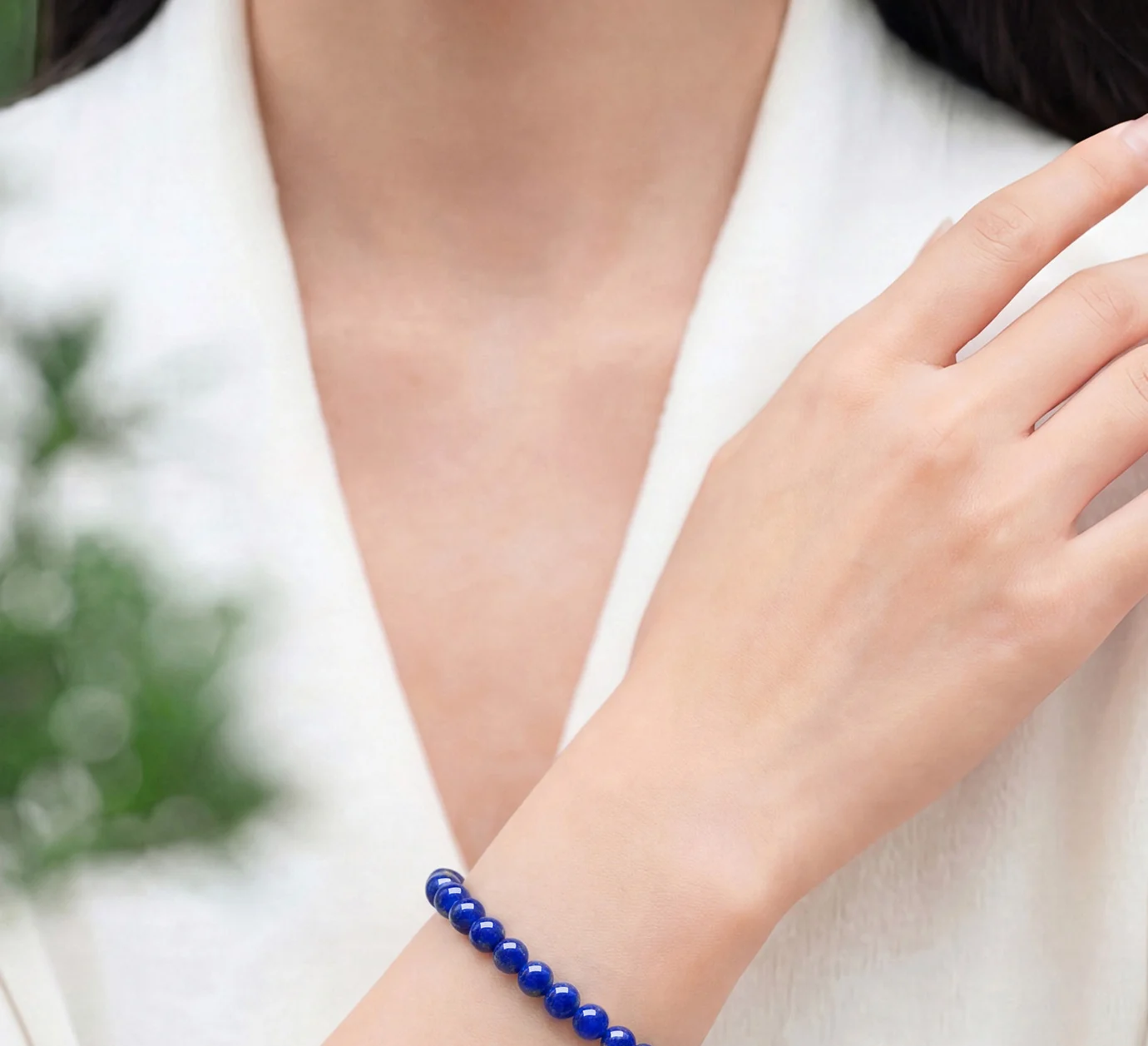
A fine lapis strand looks crisp with white shirts, as the photographs show, and elegant with navy, grey and camel. Against bare skin in summer the blue is especially vivid. It pairs well with gold, whose warmth echoes the pyrite, and with simple steel or gold watches.
19
In different light
Lapis changes subtly with the light. In daylight it is a clear royal blue; under warm indoor light it deepens towards violet and the gold flecks glow more strongly; in shade it can look almost navy. Because the 4 mm beads are small and highly polished, each one carries a tiny highlight, and together they give the strand a soft shimmer as the wrist moves. Against white cloth the colour looks especially saturated.
20
Stacking fine strands
Fine bracelets are made for stacking. Two or three strands of this lapis worn together make a richer band of blue; one lapis strand beside a fine strand of clear quartz, moonstone or pearl creates a crisp contrast. A fine gold chain bracelet also suits it. Because lapis is relatively soft, keep it away from much harder stones that could scratch it.
21
For men and women
Deep blue is a classic colour for men’s accessories, and a fine lapis strand reads as discreet and refined beside a watch. Many men who find larger beads too bold are comfortable with this size. For women it is a light everyday bracelet that suits work and evening alike. Couples sometimes choose two strands in different wrist sizes as a matching pair, a quiet shared reminder of the wish for things to flow together.
22
A gift for a new venture
Three Rivers of Fortune is a thoughtful gift for someone starting a new job or project, forming a partnership or taking on a role that brings many people together. Its fine, understated look makes it easy to wear every day.
A short note explaining san chuan hui yuan makes the meaning clear. If you cannot measure the recipient’s wrist, choose the most likely size; an unworn ready-designed bracelet can be returned within 14 days of delivery.
23
Caring for lapis lazuli
At about 5 to 5.5 on the Mohs scale, lapis is softer than quartz, and the calcite it contains is sensitive to acids. Remove it for sport, cleaning, swimming and bathing, and keep it away from perfume, lotion, sweat left to dry and household chemicals, which can dull the polish. Wipe it with a soft, dry cloth after wearing.
Store it on its own in a soft pouch. Fine bracelets use thin cord, so check the elastic every few months; with daily wear it usually lasts one to two years, and it should be replaced before it weakens.
Questions & answers
What size are the beads?
Approximately 4 mm.
Where does the lapis come from?
Our supplier describes it as Afghan lapis lazuli.
What are the golden flecks?
Pyrite, a natural part of lapis lazuli.
Is it dyed?
Our supplier describes the beads as natural and provides a testing certificate.
Why did the design change from sapphire?
Lapis keeps the fine deep-blue line and adds richer colour and golden flecks.
Is it too thin for men?
Many men like this discreet size, especially beside a watch.
How many beads will it have?
Roughly 40 for a 14 cm wrist and about 58 for 21 cm.
Which element is it?
Deep blue lapis is associated with Water.
Can I stack it?
Yes. Fine strands are ideal for stacking with other fine bracelets.
Can it get wet?
Avoid water and chemicals; remove it for washing, swimming and bathing.
Will it scratch?
It can be scratched by harder stones and metal; store it separately.
Will the colour fade?
Natural lapis is colour-stable in normal wear.
Is there a larger version?
Yes, our 8 mm lapis lazuli bracelet offers a fuller band.
How should I store it?
On its own in a soft pouch, away from harder stones.
Can it be a gift for a new job?
Yes. Its meaning of opportunity and support suits a new role well.
Will it look exactly like the photographs?
Natural lapis varies slightly in shade and pyrite from bead to bead.
Why is there little white in the beads?
Top-grade lapis is chosen for even blue with little visible calcite.
Does it look different indoors?
Yes. Warm light deepens the blue towards violet and makes the gold flecks glow.
Can I wear it with gold jewellery?
Yes. Gold echoes the pyrite flecks and suits deep blue well.
Is it suitable for the office?
Yes. Its fine, discreet size suits work clothes and sits easily beside a watch.
Compare these related designs
 Personal designs
Career · Prosperity
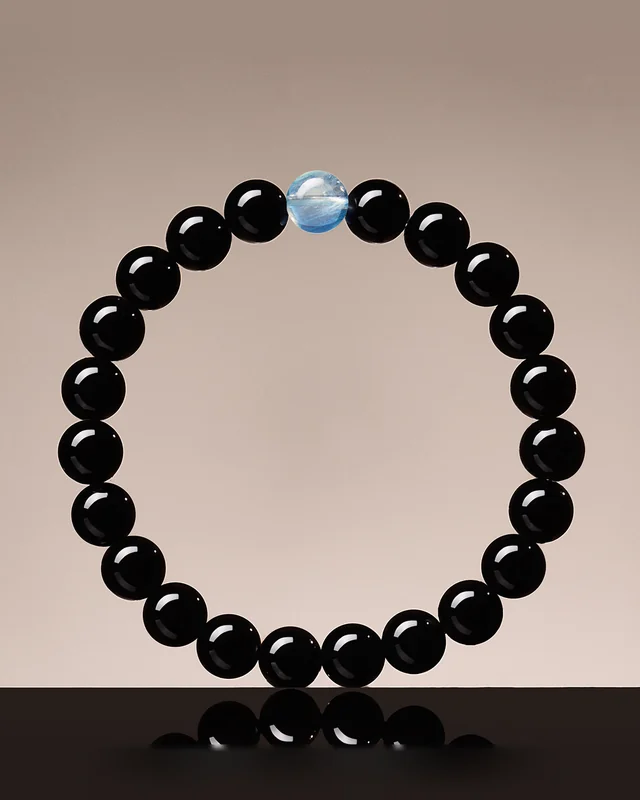
Custom Obsidian and Aquamarine Bracelet · Water Opportunity
Black obsidian · Aquamarine
Quoted after we confirm your design8 mm · Water