 View larger
Kyanite8 mm
Auspicious bracelets / Water
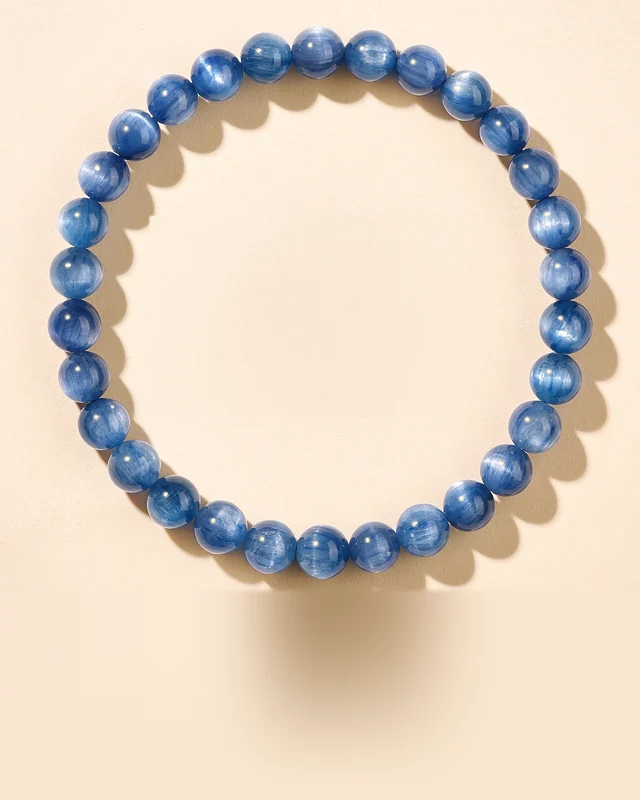
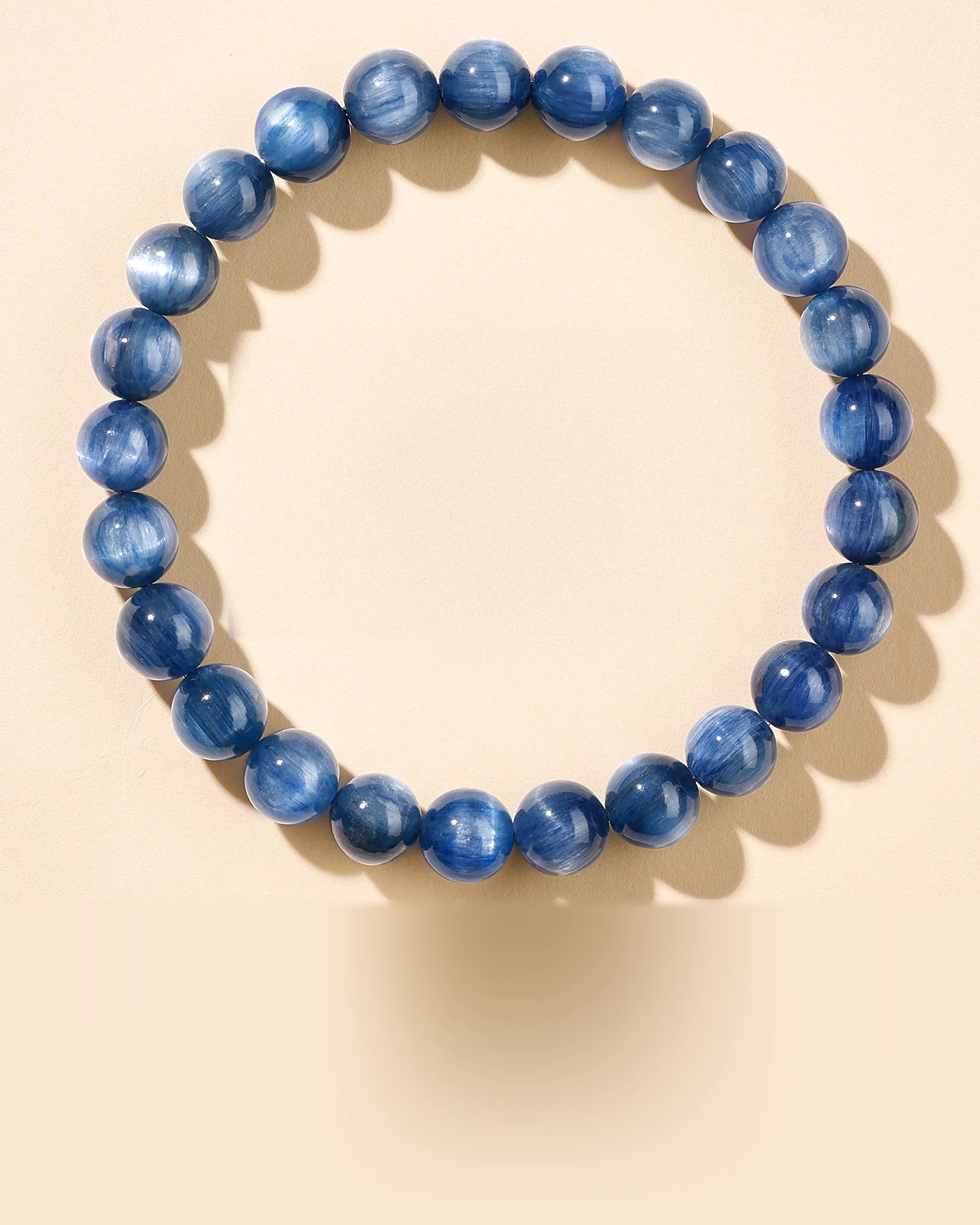
8 mm Blue Kyanite Bracelet · A Peaceful Journey
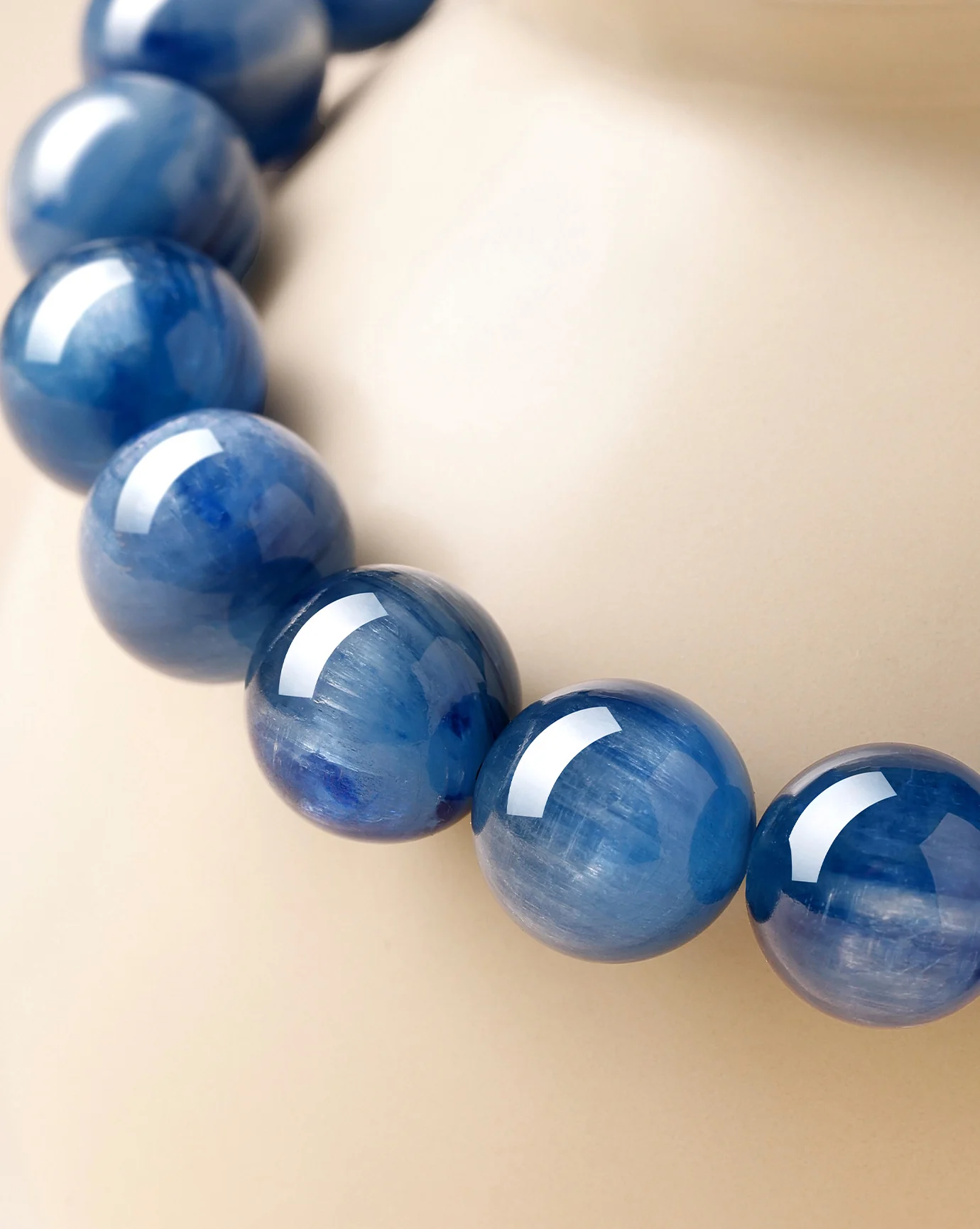
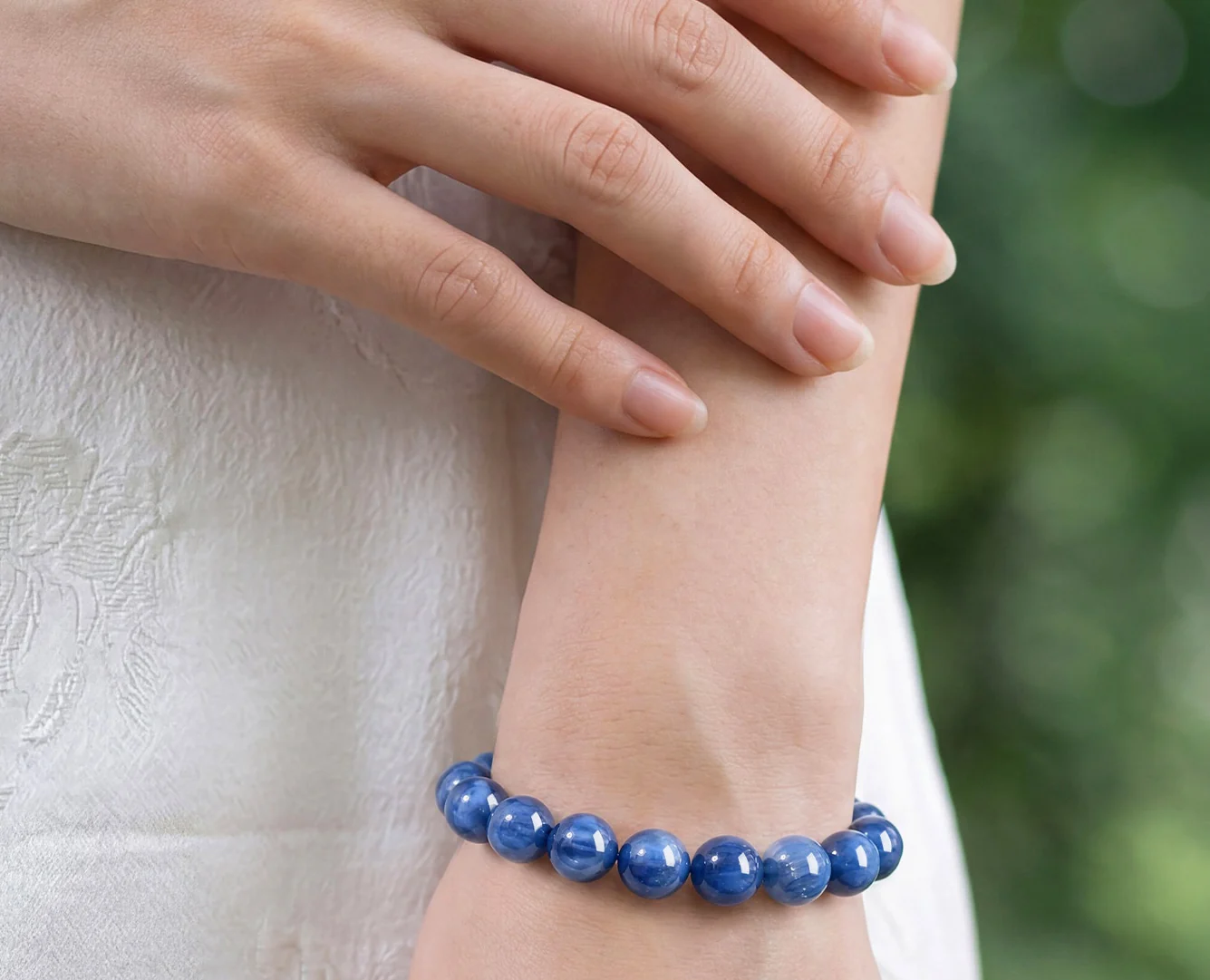
High-grade blue kyanite in 8 mm rounds, with a silky shimmer that moves across each bead like light on water.
$178.00USD
- Gemstones & materials
- Kyanite
- Colour
- Ocean to cornflower blue, with silky white streaks
- Bead shape & size
- Round, approximately 8 mm
- Grade
- High clarity “ice” grade with cat’s-eye shimmer (as described by our supplier)
- Cord
- Stranded elastic, single strand
- Style
- WX048
Prepared in 5 days after payment
Shipping: Asia $10; Europe, US, Canada, Australia & NZ $20
Ready-designed returns may be requested within 14 days. See returns policy
A Peaceful Journey
The blue of deep, calm water
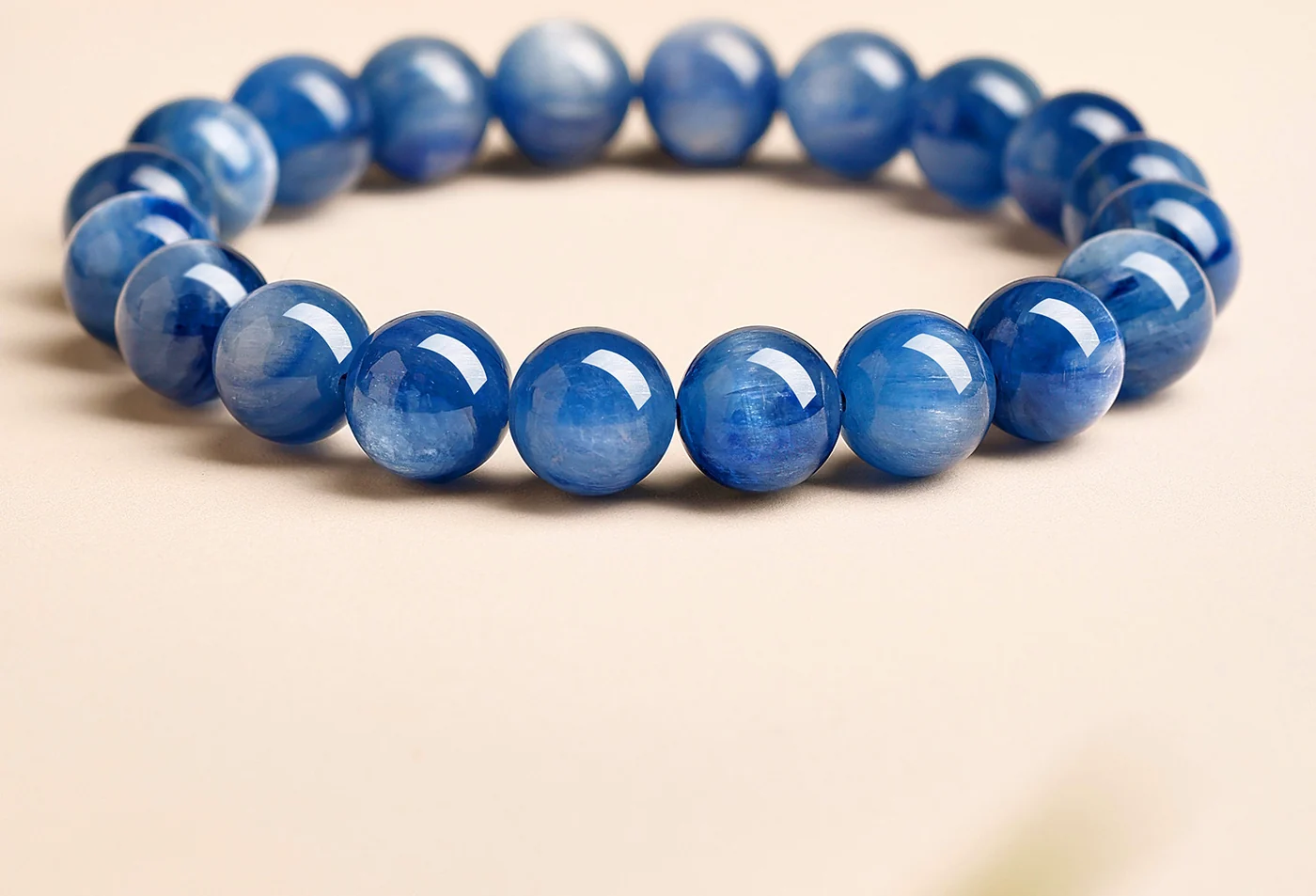
A Peaceful Journey is a strand of blue kyanite, each round bead approximately 8 mm across. Good kyanite is a clear ocean blue, threaded with fine, parallel fibres that catch the light as a soft, silky shimmer. In the best beads, which the Chinese trade calls ice grade with a cat’s eye, that shimmer moves across the stone like sunlight on water.
Blue belongs to Water in the Five Elements, and the Chinese name, anxing shuntu, wishes for a safe road and a smooth way. It is often chosen by people moving to a new city or country, frequent travellers and anyone starting a new chapter far from home.
- Round blue kyanite beads, approximately 8 mm.
- High-clarity beads with a silky, cat’s-eye shimmer.
- Cut, polished and selected bead by bead.
- Wrist sizes from 14 to 21 cm, with the bead count adjusted to your size.
A Peaceful Journey
A Peaceful Journey in detail
What kyanite is, where its shimmer comes from, how it is graded and cut, and how to choose the right fit.
01
Kyanite, a crystal of two hardnesses
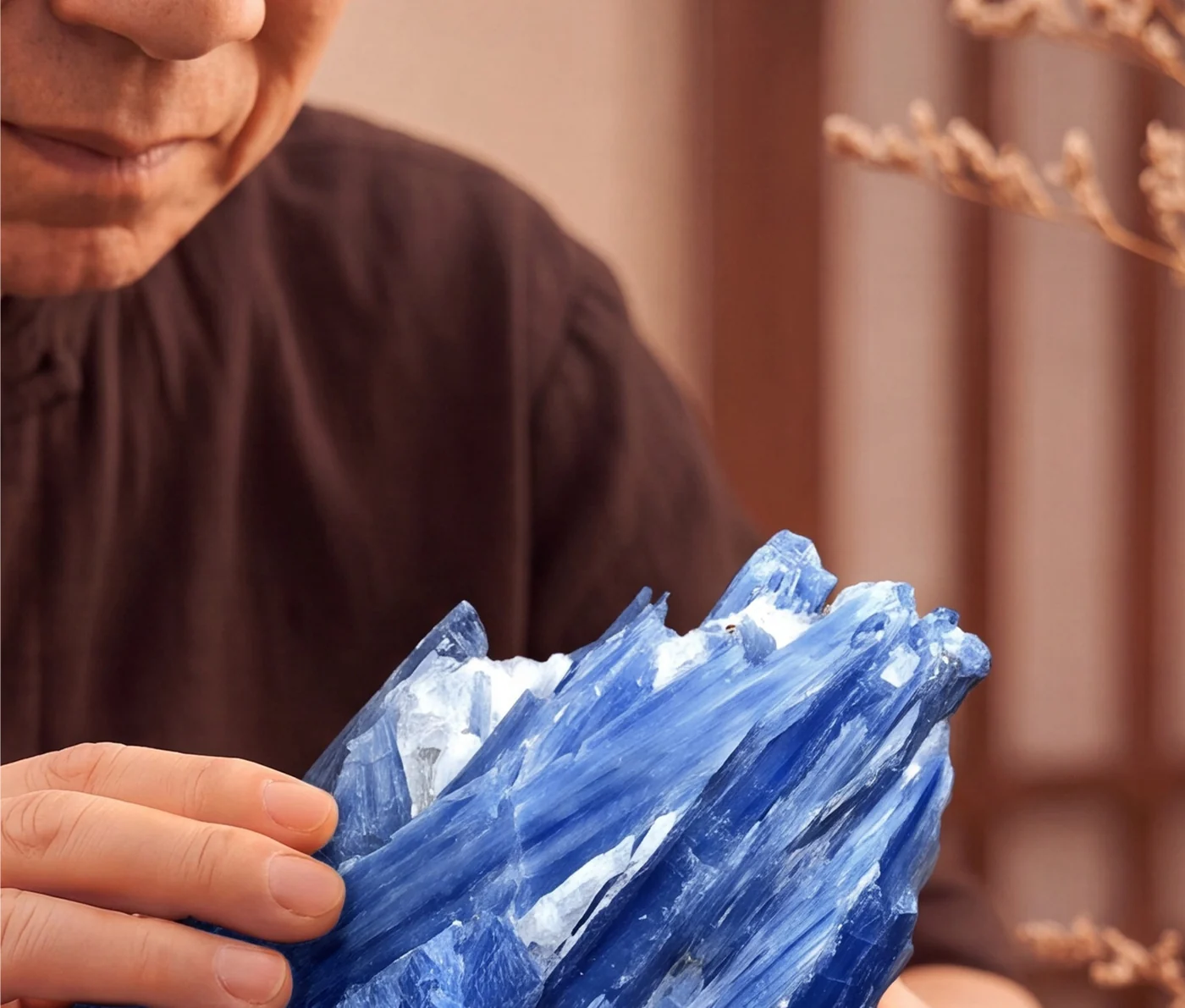
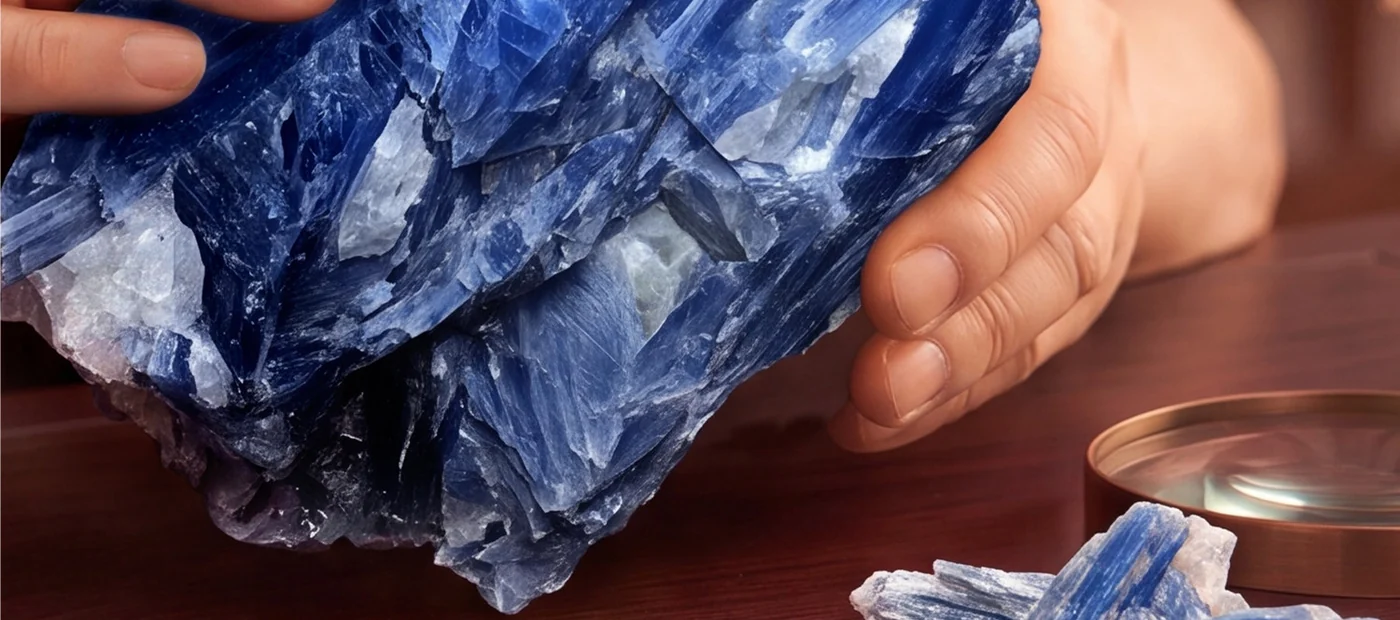
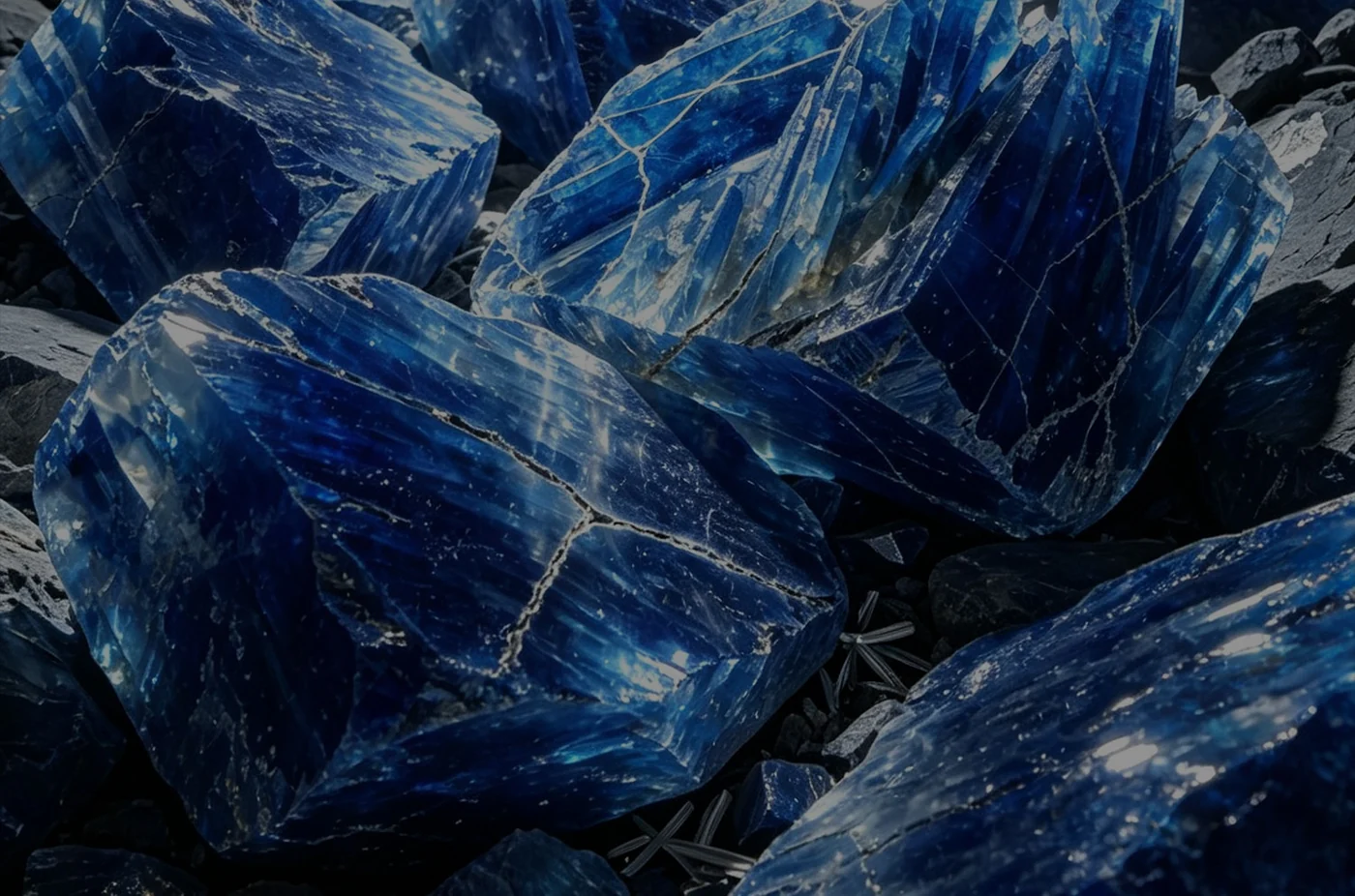
Kyanite is an aluminium silicate mineral that grows as long, flat, blade-like crystals, often in shades of blue. Its name comes from the Greek kyanos, deep blue. It forms under high pressure deep in the earth’s crust, and geologists use it as a marker of the conditions in which metamorphic rocks were created.
Kyanite is famous for an unusual property: its hardness depends on direction. Along the length of a crystal it measures about 4.5 to 5 on the Mohs scale, while across it, it reaches 6.5 to 7. It also has a perfect cleavage, meaning it can split cleanly along certain planes. That makes it one of the more challenging stones to cut into round beads, and one reason good kyanite strands are valued.
02
Where the silky shimmer comes from
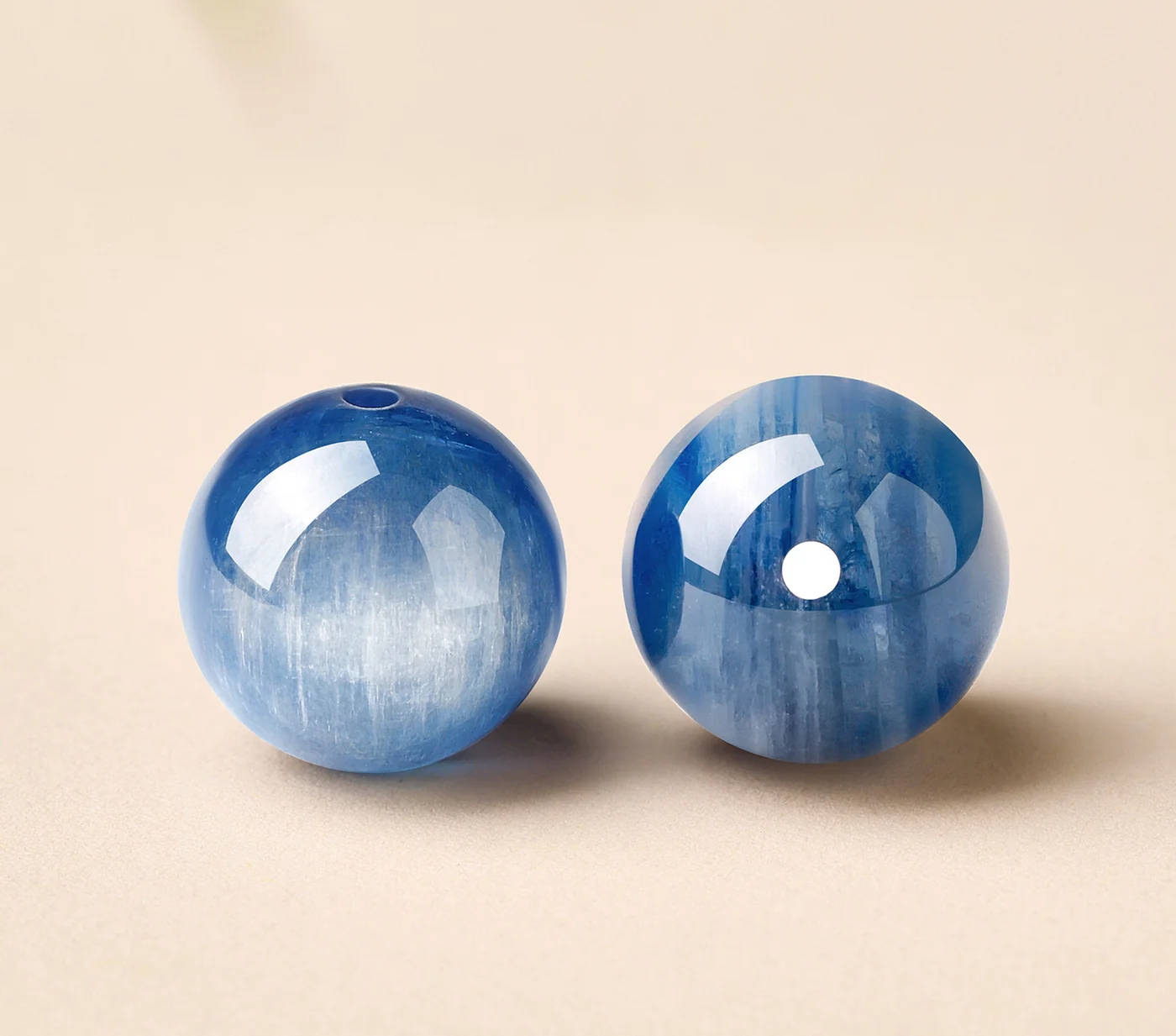
Kyanite crystals are built of fine, parallel fibres. When a bead is cut so that these fibres run across it, light reflects from them as streaks or a soft band of brightness that slides across the surface as the bead turns. Gemmologists call this effect chatoyancy; in Chinese it is described as maoyan, cat’s eye.
In lower grades, the fibres are cloudy and the shimmer is dull. In high-clarity, ice-grade beads, the blue is translucent and the fibres glow, giving the strand a liquid, moving light that is quite different from the flat colour of opaque blue stones.
03
How kyanite is graded
Kyanite is graded by colour, clarity and the strength of its shimmer. The most valued beads are an even, saturated blue, translucent enough for light to enter, with few white patches or cracks and a clear silky sheen. Lower grades are paler, greyer or more opaque, with visible fractures and patches of white.
Our supplier describes the beads in A Peaceful Journey as collector, ice grade, the top of its own scale, and reports that only a small fraction of rough reaches this standard. Natural kyanite still shows some variation: fine internal lines, slight differences in shade and the occasional lighter streak are part of the stone.
| Grade feature | Lower grade | This design |
|---|---|---|
| Colour | Pale or grey-blue, patchy | Even, saturated blue |
| Clarity | Opaque, cloudy | Translucent “ice” clarity |
| Shimmer | Dull or absent | Clear, silky cat’s-eye sheen |
| Cracks | Visible fractures | Few, selected bead by bead |
04
Where kyanite comes from
Gem-quality blue kyanite is found in Nepal, Brazil, India, Kenya, Tanzania and Myanmar, among other places. Nepalese kyanite is particularly prized for its intense, sapphire-like blue, while Brazilian material is known for long, well-formed blades. Most bead-grade kyanite is cut from the bladed crystals that grow in metamorphic rocks such as schist.
Because kyanite grows in thin blades, large, clear pieces suitable for round beads are relatively scarce. A strand of evenly matched 8 mm beads requires a good deal of rough and careful selection.
05
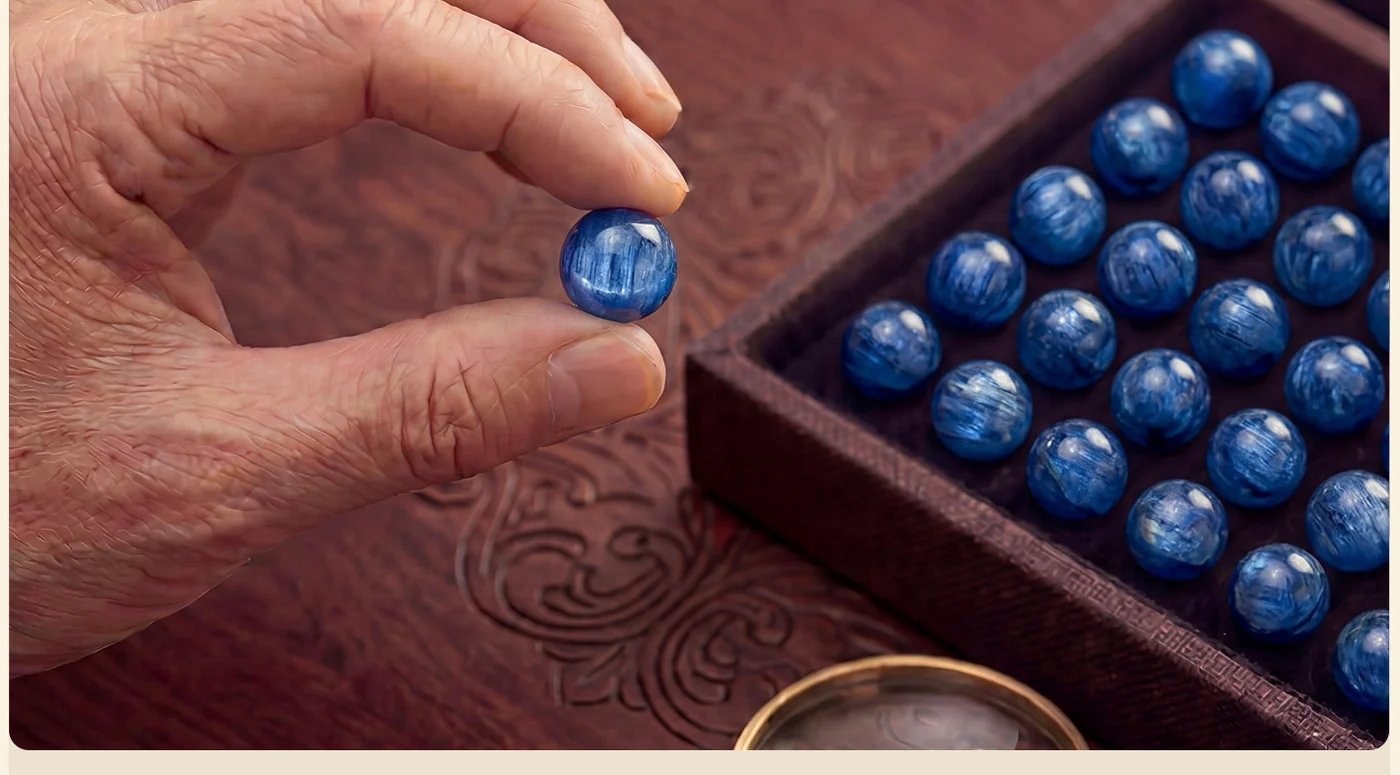
Cut, polished and selected by hand
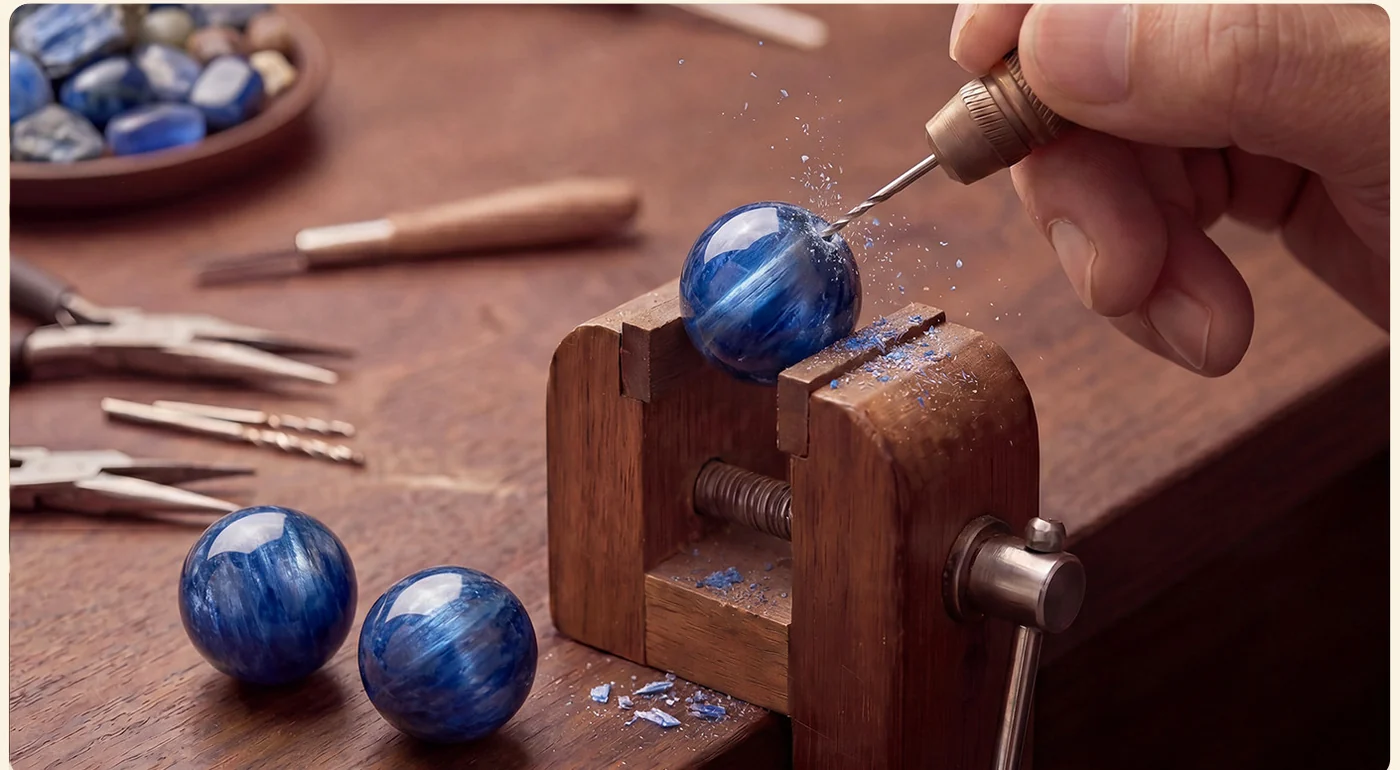
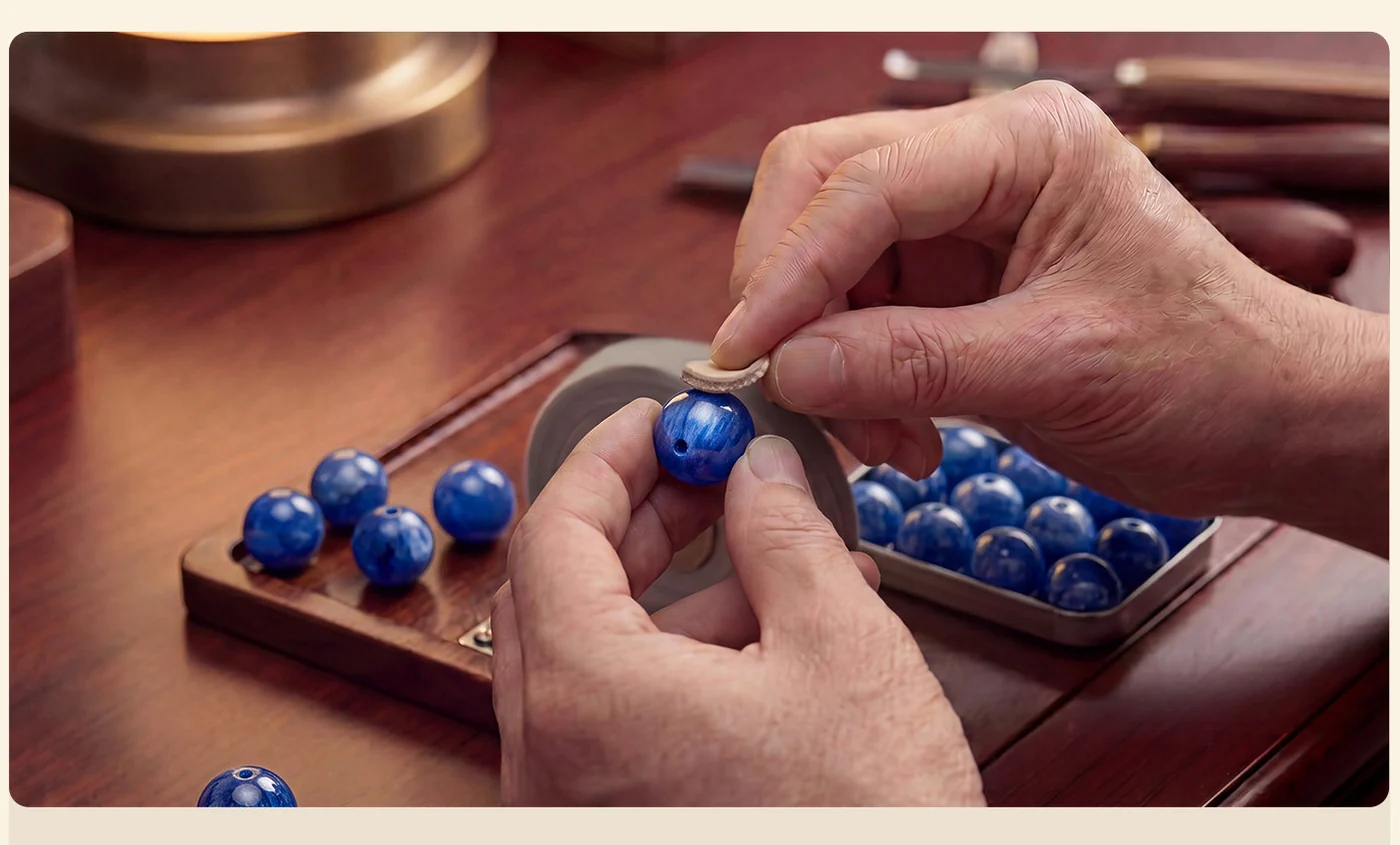
Kyanite blades are first cut into blanks, keeping the fibres in the orientation that gives the best shimmer. The blanks are rounded, drilled and polished through several stages. Because the stone is harder in one direction than another, polishing must be slow and even; rushing it leaves flat spots or fine chips.
Finished beads are sorted by colour, clarity, shimmer and size, and those with visible cracks or chips around the drill holes are set aside. Our supplier reports that only a small proportion of beads pass this selection for the top grade.
06
Why 8 mm
Kyanite is offered from 6 mm to 12 mm. At 6 mm the shimmer is subtle and the strand very fine; at 8 mm each bead is large enough to show its silky light clearly while the bracelet stays light and easy to wear; at 10 to 12 mm the effect is dramatic and the strand becomes a statement piece.
We chose 8 mm for this design because it suits most wrists, sits comfortably beside a watch and keeps the quiet, calm character that the name suggests.
| Bead diameter | How kyanite looks | Often chosen for |
|---|---|---|
| 6 mm | Fine, subtle shimmer | Stacking, slender wrists |
| 8 mm · this design | Clear shimmer in a balanced strand | Everyday wear; most wrists |
| 10–12 mm | Bold, dramatic light | Wearing one statement bracelet |
07
Choosing your wrist size
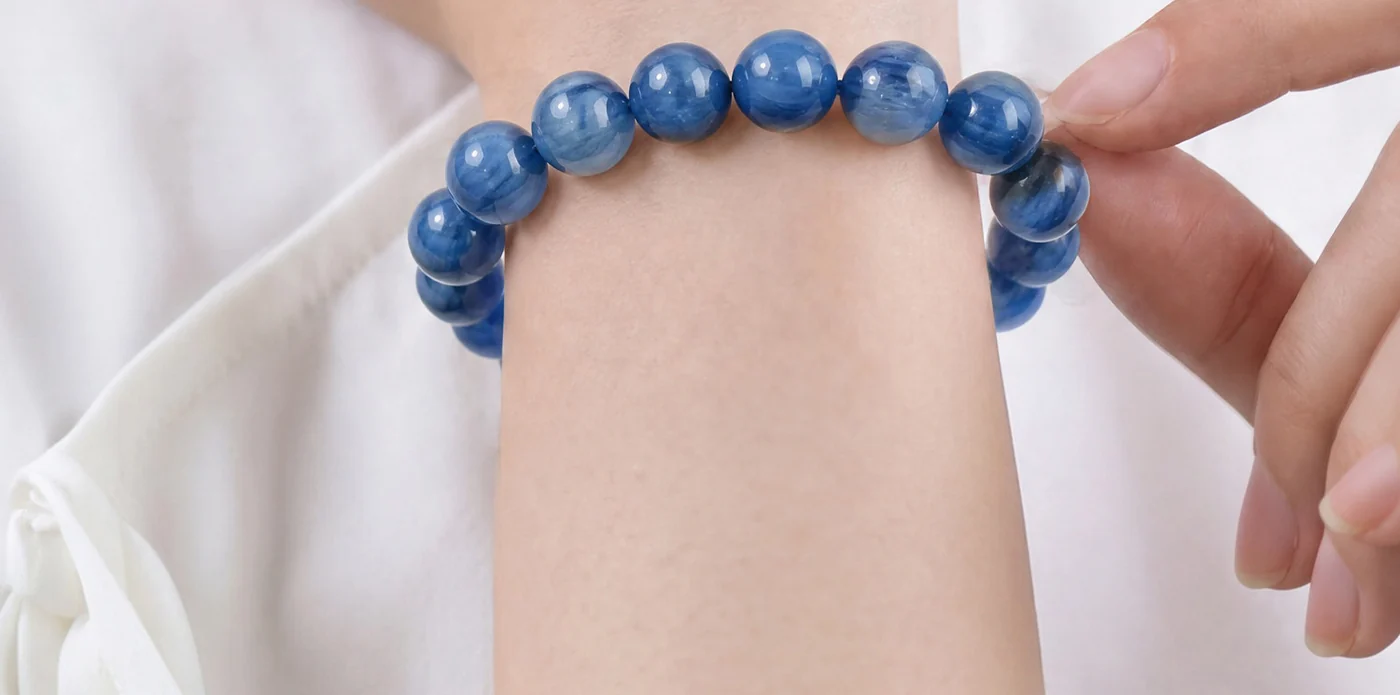
Measure the wrist itself with a soft tape or paper strip, just above the wrist bone where you usually wear a bracelet. Keep it snug without squeezing and choose that measurement on this page. The strand is made with a small allowance so that it moves slightly and stays comfortable.
The table shows typical bead counts for 8 mm kyanite. Your bracelet may differ by one bead, as natural beads vary fractionally and each strand is checked against the measurement when it is strung.
Between two sizes, choose the larger for a relaxed fit or the smaller for a closer one. Roll the strand over the knuckles rather than stretching it.
| Wrist size | Approximate inches | Typical bead count (8 mm) |
|---|---|---|
| 14 cm | 5.5 in | 22 beads |
| 15 cm | 5.9 in | 23 beads |
| 16 cm | 6.3 in | 24 beads |
| 17 cm | 6.7 in | 25 beads |
| 18 cm | 7.1 in | 27 beads |
| 19 cm | 7.5 in | 28 beads |
| 20 cm | 7.9 in | 29 beads |
| 21 cm | 8.3 in | 30 beads |
08
A safe road and a smooth way
The Chinese name anxing shuntu joins anxing, travelling in safety, with shuntu, a smooth road. It is a wish that a journey, whether a long trip, a move abroad or a change of career, will go well and end in a peaceful arrival. Kyanite’s calm blue, like the sea on a still day, suits this wish naturally.
In modern crystal culture, kyanite is also associated with calm communication and a settled mind, qualities that help when finding one’s way in a new place. The supplier’s own phrase for the stone is lanjing jingxin, “blue crystal, quiet heart”.
Many people who travel often like to keep one bracelet that goes everywhere with them, a familiar object that feels the same in an airport, a hotel room or a new apartment. Kyanite’s calm colour and light weight make it well suited to that role, and over time the strand becomes a small record of the places it has been.
These are cultural meanings and personal wishes rather than promises.
09
Blue, Water and calm
In the Five Elements, blue and black belong to Water, the element of the north, winter and wisdom. Water travels everywhere, finding its way around obstacles and settling wherever it arrives, which makes it a fitting element for journeys and new beginnings. Clear blue stones such as kyanite and aquamarine are among those most closely associated with it.
If you would like to know whether Water suits your own birth chart, a personal design begins with a fuller BaZi discussion.
10
From compass stone to modern gem
Kyanite was named in 1789 by the German geologist Abraham Gottlob Werner, after its blue colour. In some older traditions it was called a “traveller’s stone”: because a long crystal can be hung on a thread, folk stories say it was once used as a simple pointer, though there is no evidence that it is magnetic. The idea of kyanite as a stone for travellers nonetheless persists in crystal lore.
Today kyanite is important in industry, where it is used to make heat-resistant porcelain and spark plugs, and in jewellery, where fine blue material is increasingly appreciated as an affordable alternative to sapphire.
11
Wearing kyanite
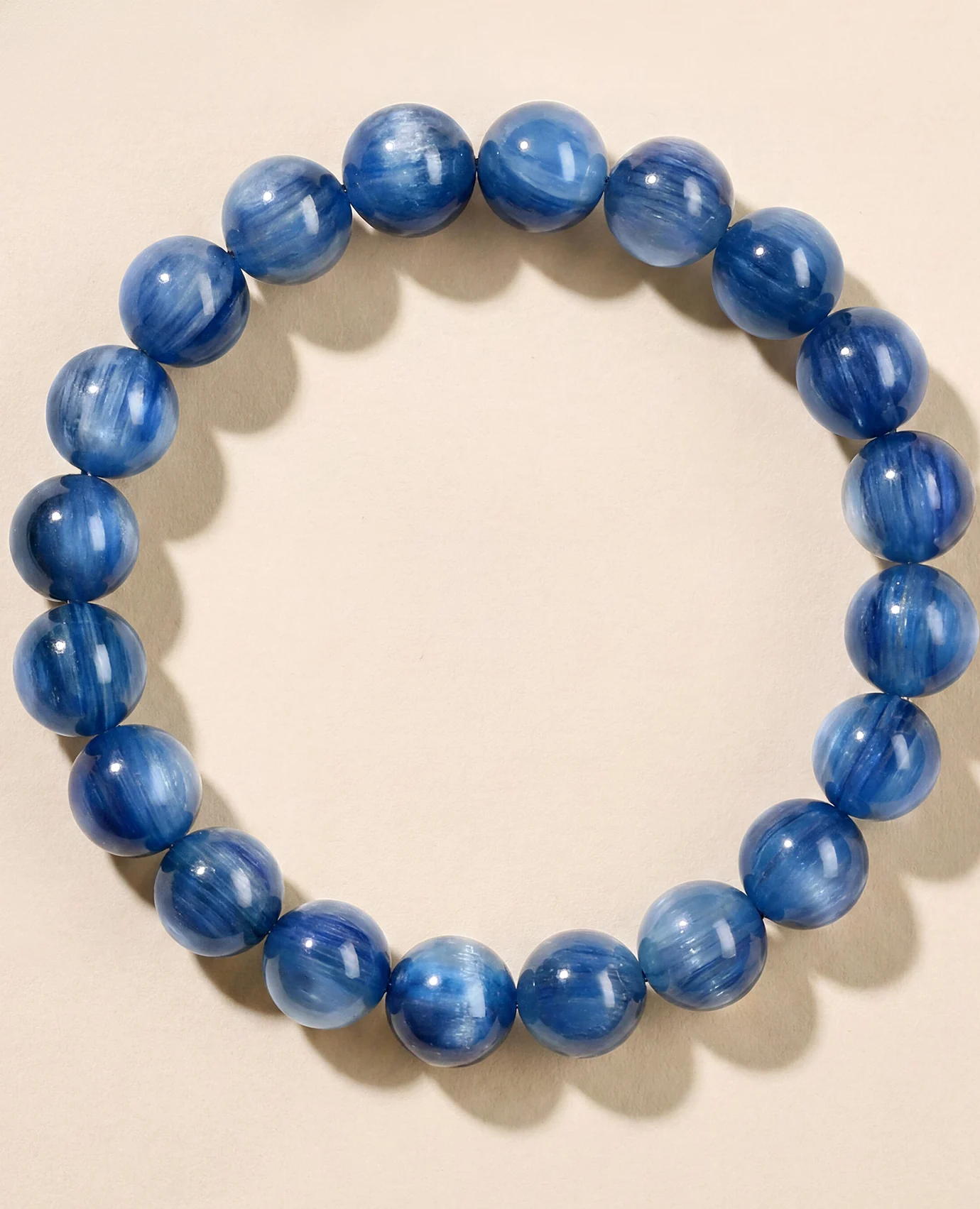
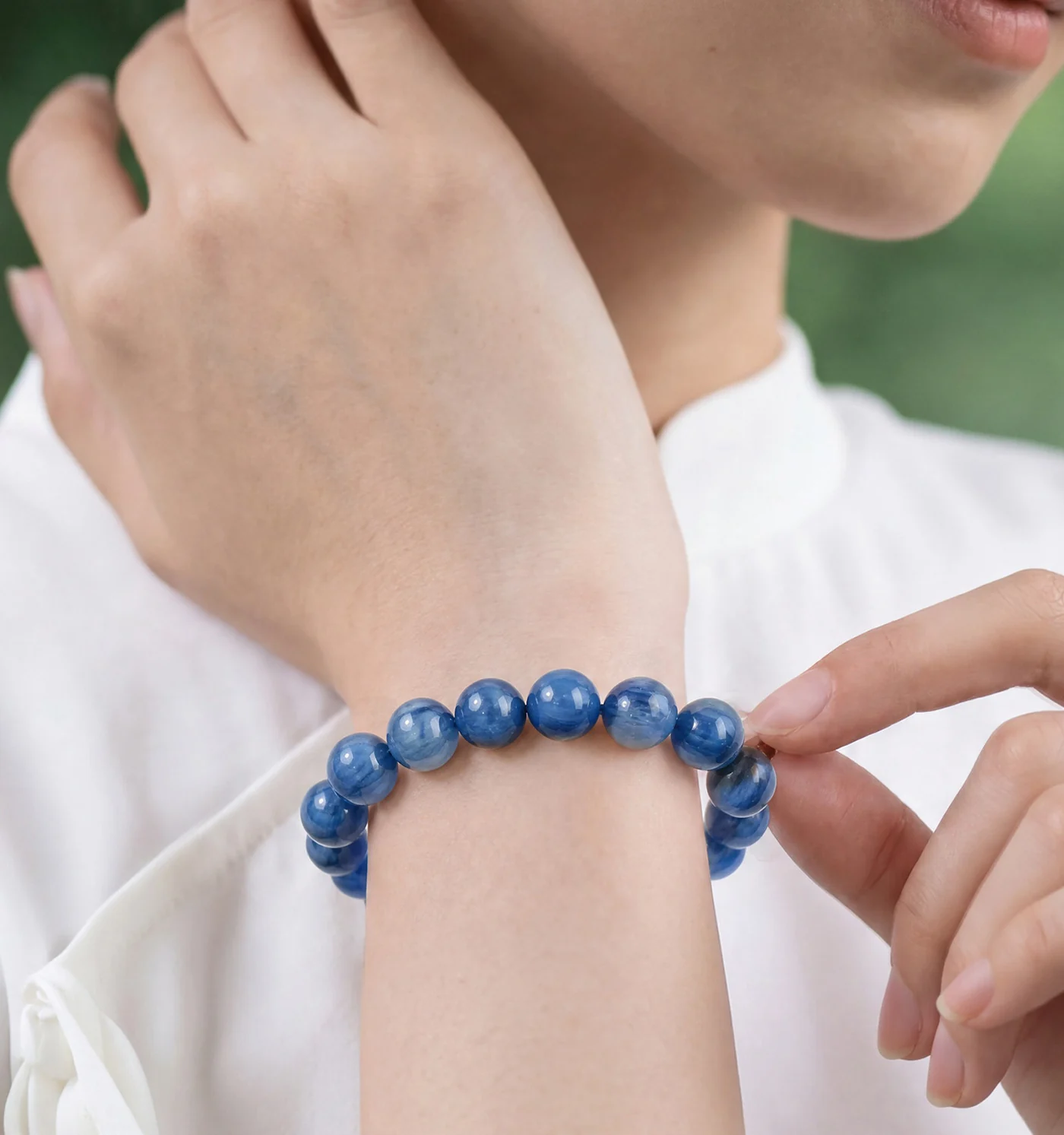
Kyanite’s ocean blue looks fresh with white and cream, as the photographs show, and elegant with grey, navy and denim. It suits silver and white gold especially well, and looks soft and summery with light linen.
At 8 mm the strand works on its own or with a slim companion. Stack it with clear quartz or moonstone for a cool blue-and-white palette, or with aquamarine for shades of sea and sky. Avoid stacking it with hard metal bangles, which can chip its surface.
12
Kyanite and other blue stones
Kyanite is easiest to recognise by its fibrous, streaky structure and silky shimmer. Lapis lazuli is opaque, deeper and often flecked with gold. Sodalite is a darker, greyer blue with white veins. Aquamarine is a pale, glassy sea blue without fibres. Sapphire is far harder and usually faceted rather than made into round beads.
13
A companion for the road
Many people who choose A Peaceful Journey wear it on the days that matter most to them: the flight to a new country, the first day in a new job, the move into a new home. Its colour is calm and easy to wear with work clothes and travel clothes alike, and at 8 mm it is light enough to forget about until the light catches it.
Because kyanite can chip, it is worth taking the bracelet off when carrying heavy luggage, at the gym and before bed. Those small habits keep it beautiful and comfortable for many journeys to come.
14
A gift for a new beginning
A Peaceful Journey is a natural farewell gift for someone moving abroad, starting university far from home, relocating for work or setting off on a long trip. It also suits anyone who loves the sea, and anyone who has just settled into a new home and would like a small reminder of the road that led there.
A short note explaining anxing shuntu makes the meaning clear. If you cannot measure the recipient’s wrist, choose the most likely size; an unworn ready-designed bracelet can be returned within 14 days of delivery.
15
Recognising natural kyanite
Natural kyanite almost always shows its fibrous, streaky structure: fine parallel lines, slight variations in blue and a shimmer that moves as the bead turns. Glass or dyed imitations tend to be uniform in colour, lack the fibrous texture and show no true chatoyancy. Dyed quartzite may show colour concentrated in cracks.
Our supplier describes these beads as natural kyanite and shows a gem-testing certificate for its kyanite strands. If you would like a certificate or independent testing for your own bracelet, please contact us before or after ordering and we can help arrange it.
16
Care for a stone with cleavage
Kyanite’s perfect cleavage means it can chip or split if knocked against a hard surface, even though it feels hard in the hand. Wear it with a little care, remove it for sport, gardening and heavy work, and store it on its own in a soft pouch so it does not knock against harder stones.
Wipe it with a soft, dry cloth after wear and avoid perfume, cleaning products, ultrasonic cleaners and sudden heat. With daily wear, stranded elastic usually lasts one to two years; if gaps appear between the beads, have it restrung before it breaks.
Questions & answers
What is the shimmer on the beads?
It is chatoyancy, light reflecting from the fine parallel fibres inside kyanite. The trade calls it a cat’s-eye effect.
Why are there white streaks?
The streaks are the natural fibrous structure of kyanite. In good beads they glow rather than look cloudy.
Is this natural kyanite?
Our supplier describes it as natural kyanite. A certificate or third-party test can be arranged on request.
Is kyanite fragile?
It has a perfect cleavage and can chip if knocked, so avoid hard surfaces and heavy work.
Can kyanite get wet?
Brief contact with water is fine. Avoid soaking, which weakens the elastic, and dry it after contact.
How many beads will my bracelet have?
Typically 22 beads for a 14 cm wrist, rising to about 30 for 21 cm.
Which element is kyanite?
Blue kyanite is associated with Water in the Five Elements.
Is it suitable for men?
Yes. Its calm blue suits men and women alike.
Will the colour fade?
Natural kyanite keeps its colour with normal wear. Avoid long exposure to strong heat.
How is kyanite different from lapis?
Kyanite is translucent and streaky with a silky shimmer; lapis is opaque, deeper blue and often flecked with gold.
Can I stack it with other bracelets?
Yes. It pairs well with clear quartz, moonstone and aquamarine. Avoid hard metal bangles.
Does kyanite need cleansing?
No special ritual is needed. In crystal lore kyanite is said not to need cleansing at all.
Can I order a different size?
This design is made in 8 mm. Ask a design adviser about 6, 10 or 12 mm.
How should I store it?
On its own in a soft pouch, away from harder stones.
Which wrist should I wear it on?
Whichever is most comfortable; many people wear it on the wrist without a watch.
Will it look exactly like the photographs?
The material and size match, though natural kyanite varies slightly in shade and in the strength of its shimmer.
Compare these related designs
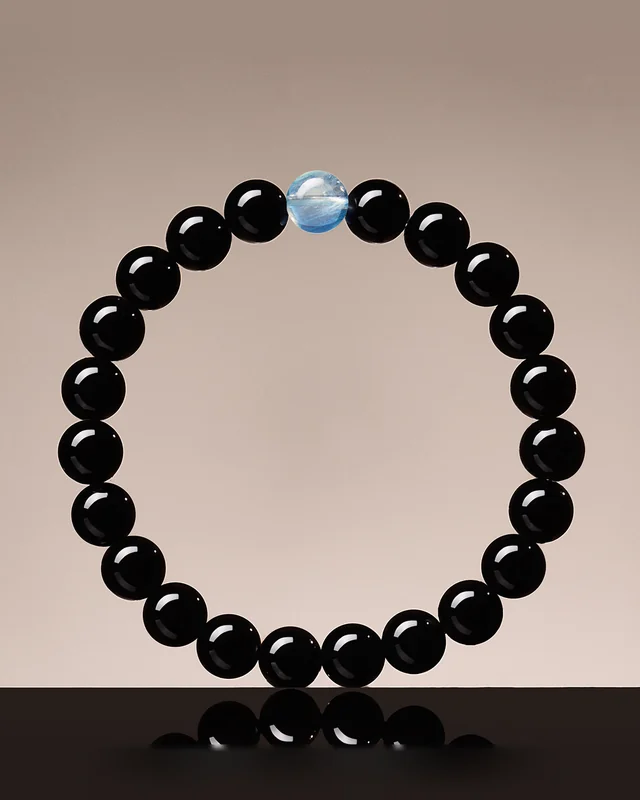 Personal designs
Career · Prosperity
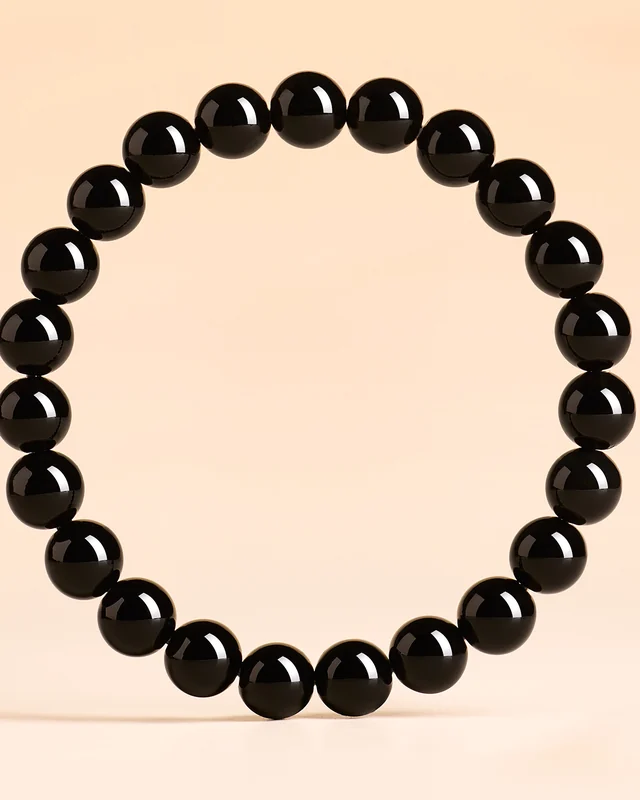
Custom Obsidian and Aquamarine Bracelet · Water Opportunity
Black obsidian · Aquamarine
Quoted after we confirm your design8 mm · Water