 View larger
Kyanite6 mm
Auspicious bracelets / Water
6 mm Blue Kyanite Bracelet · A Current of Learning
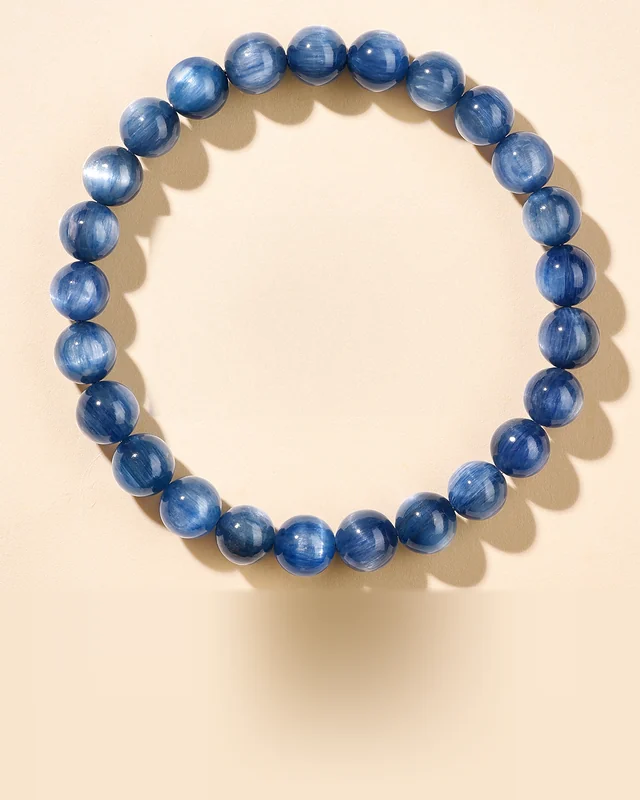
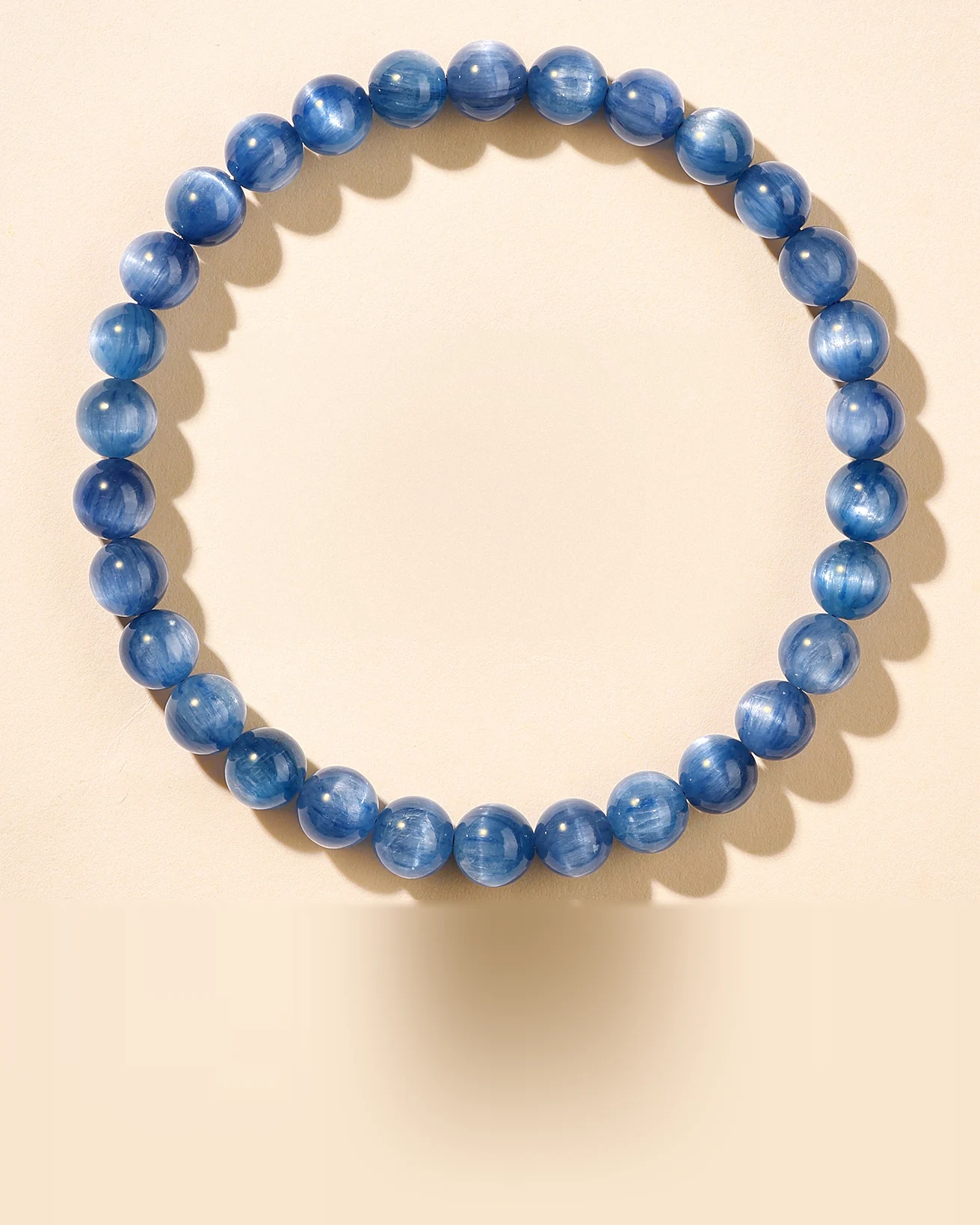
Fine 6 mm kyanite in clear ocean blue, each small bead streaked with silky fibres that catch the light.
$98.00USD
- Gemstones & materials
- Kyanite
- Colour
- Ocean blue with silky white streaks
- Bead shape & size
- Round, approximately 6 mm
- Grade
- High-clarity “ice” grade with cat’s-eye shimmer (as described by our supplier)
- Cord
- Stranded elastic, single strand
- Style
- WX044
Prepared in 5 days after payment
Shipping: Asia $10; Europe, US, Canada, Australia & NZ $20
Ready-designed returns may be requested within 14 days. See returns policy
A Current of Learning
A fine line of ocean blue
A Current of Learning is a fine strand of blue kyanite, each round bead approximately 6 mm across. Kyanite is a clear, ocean-blue crystal threaded with silky parallel fibres; even at this small size, the beads shimmer as they turn, like light moving across a stream. The supplier grades this material as ice clear with a cat’s-eye sheen.
Blue belongs to Water in the Five Elements, the element of wisdom and steady flow. The Chinese name, wen lan qi hui, joins waves of learning with the opening of insight: a wish for progress in study, a clear mind and knowledge that grows like a current, quietly and continuously.
- Blue kyanite beads, approximately 6 mm.
- Icy clarity with a silky, moving shimmer.
- Fine and light for everyday and desk wear.
- Wrist sizes from 14 to 21 cm, with the bead count adjusted to your size.
A Current of Learning
A Current of Learning in detail
What kyanite is, why fine beads still shimmer, what the name wishes for and how to choose the right fit.
01
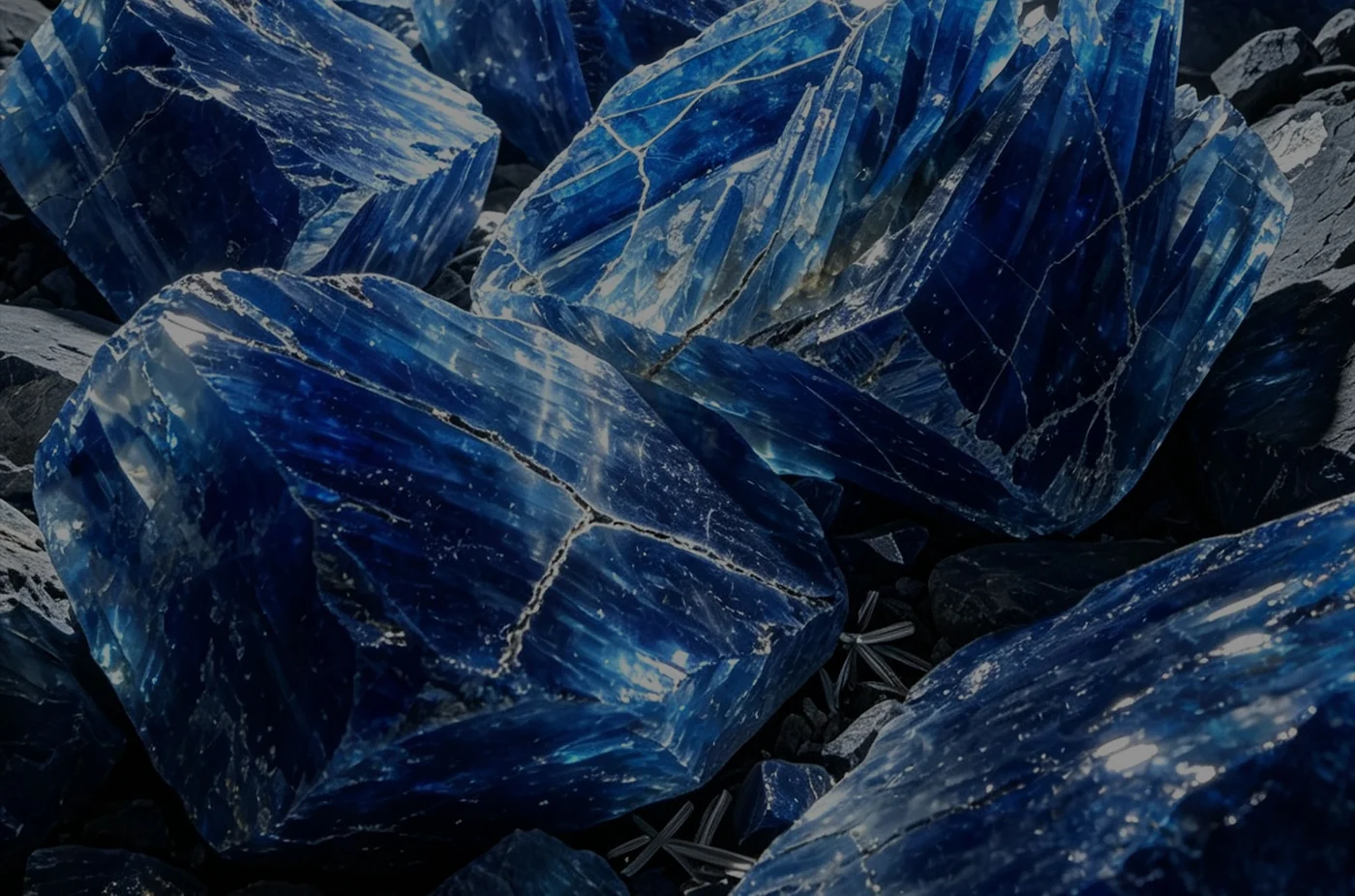
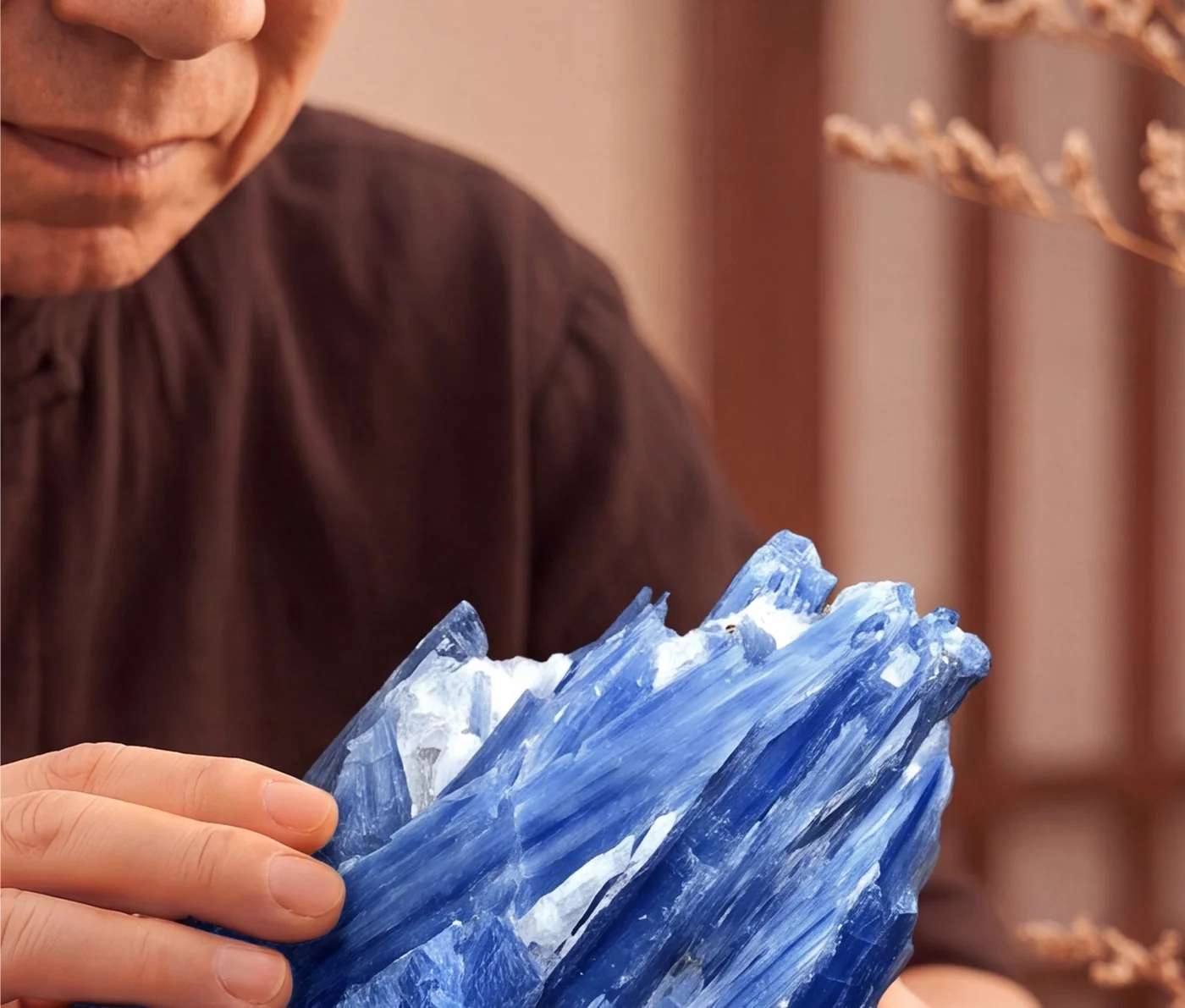
Kyanite, the blue blade
Kyanite is an aluminium silicate that grows in long, flat crystals like blades, usually in shades of blue. Its name comes from the Greek kyanos, dark blue. It forms deep in the earth under high pressure, and geologists read its presence as a record of the conditions inside mountain belts.
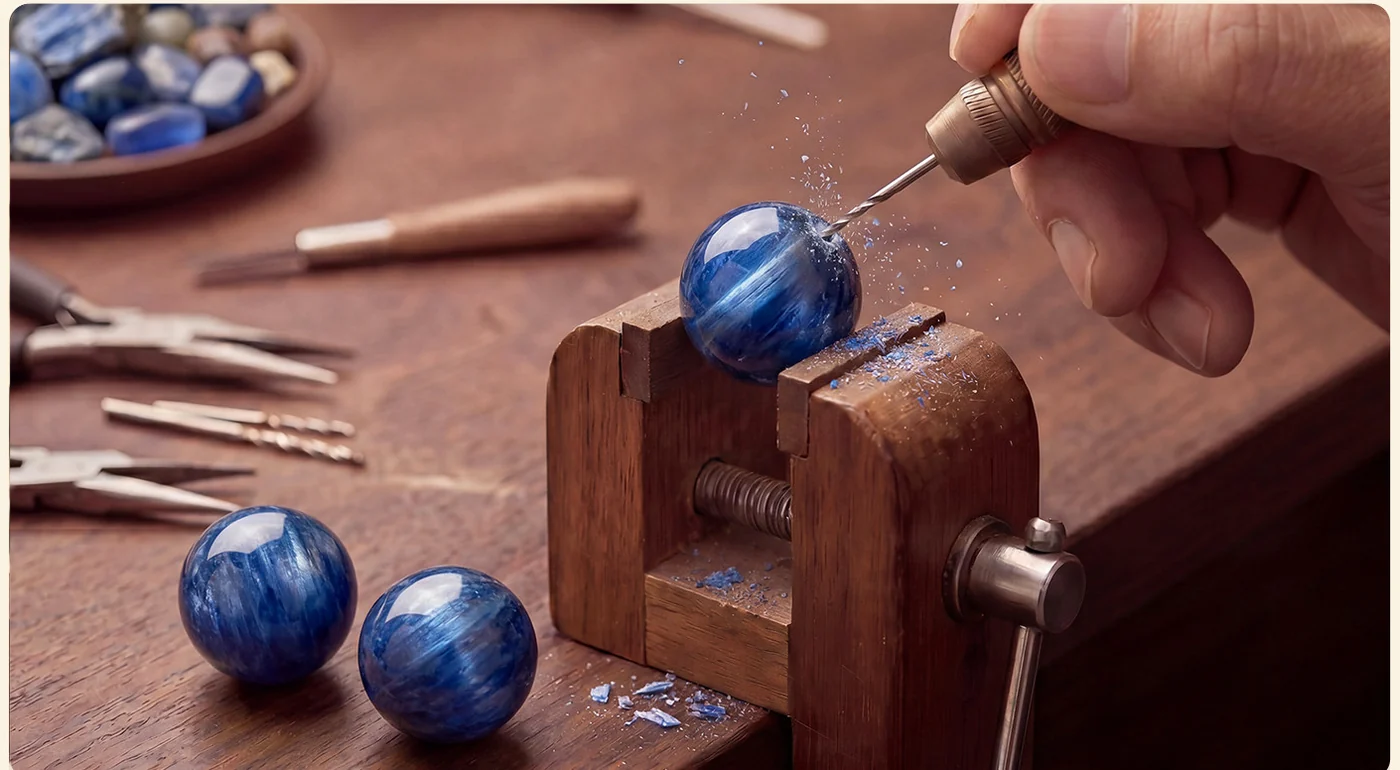
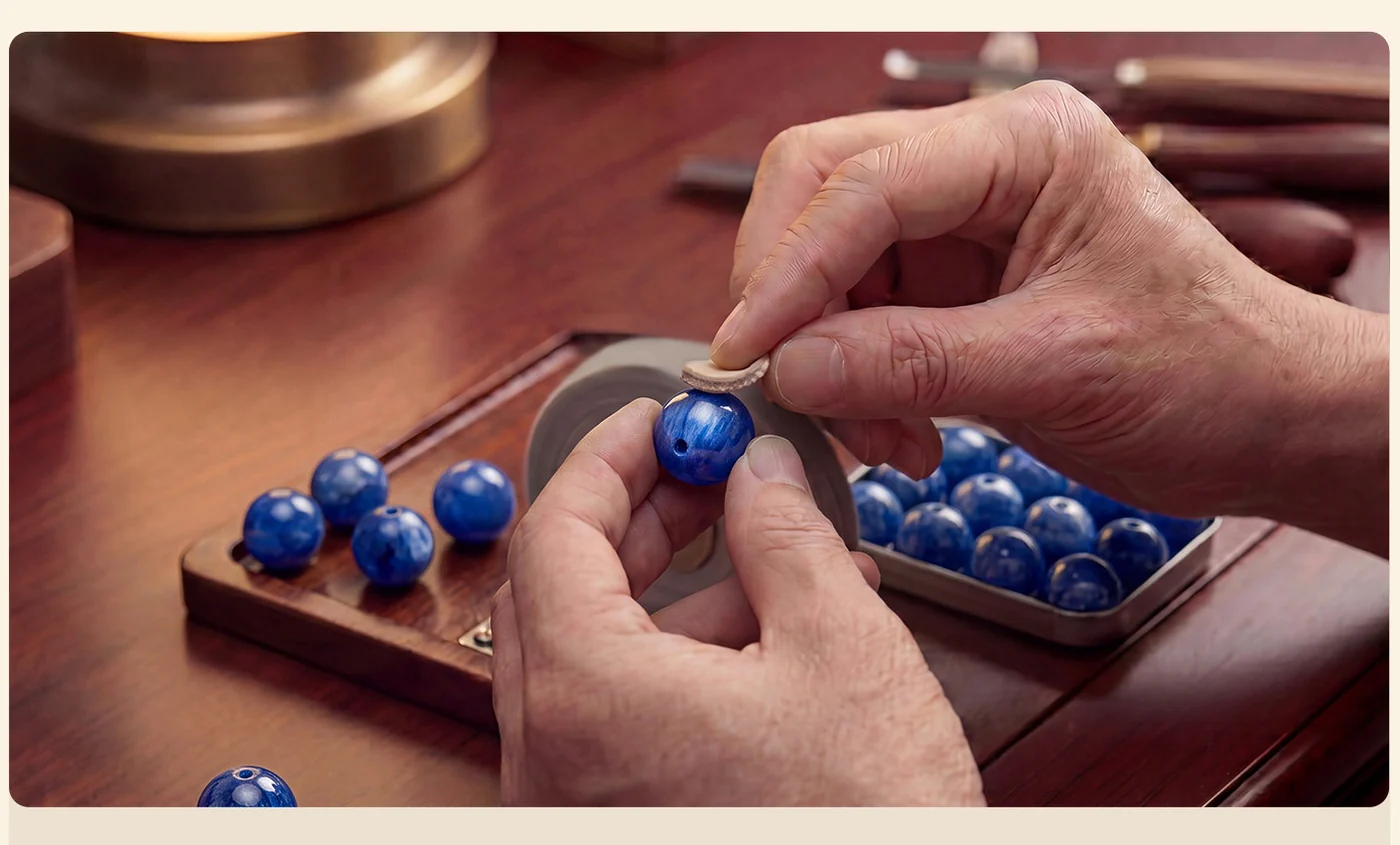
Kyanite is unusual in having two hardnesses: about 4.5 to 5 along the length of a crystal and 6.5 to 7 across it. It also splits easily along certain planes. Cutting it into small, even beads takes patience, which is one reason clean, well-matched kyanite strands are valued.
02
Shimmer in small beads
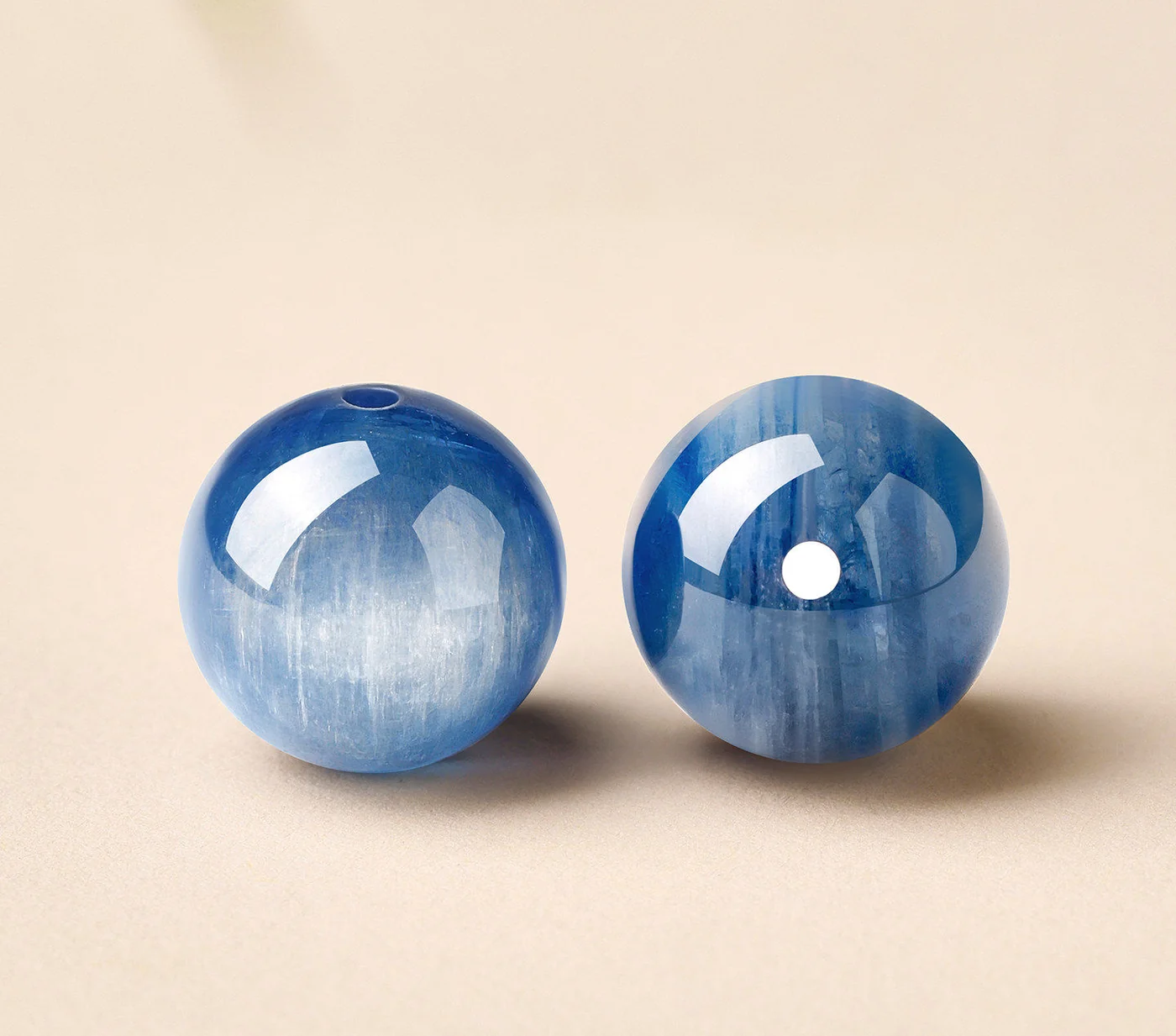
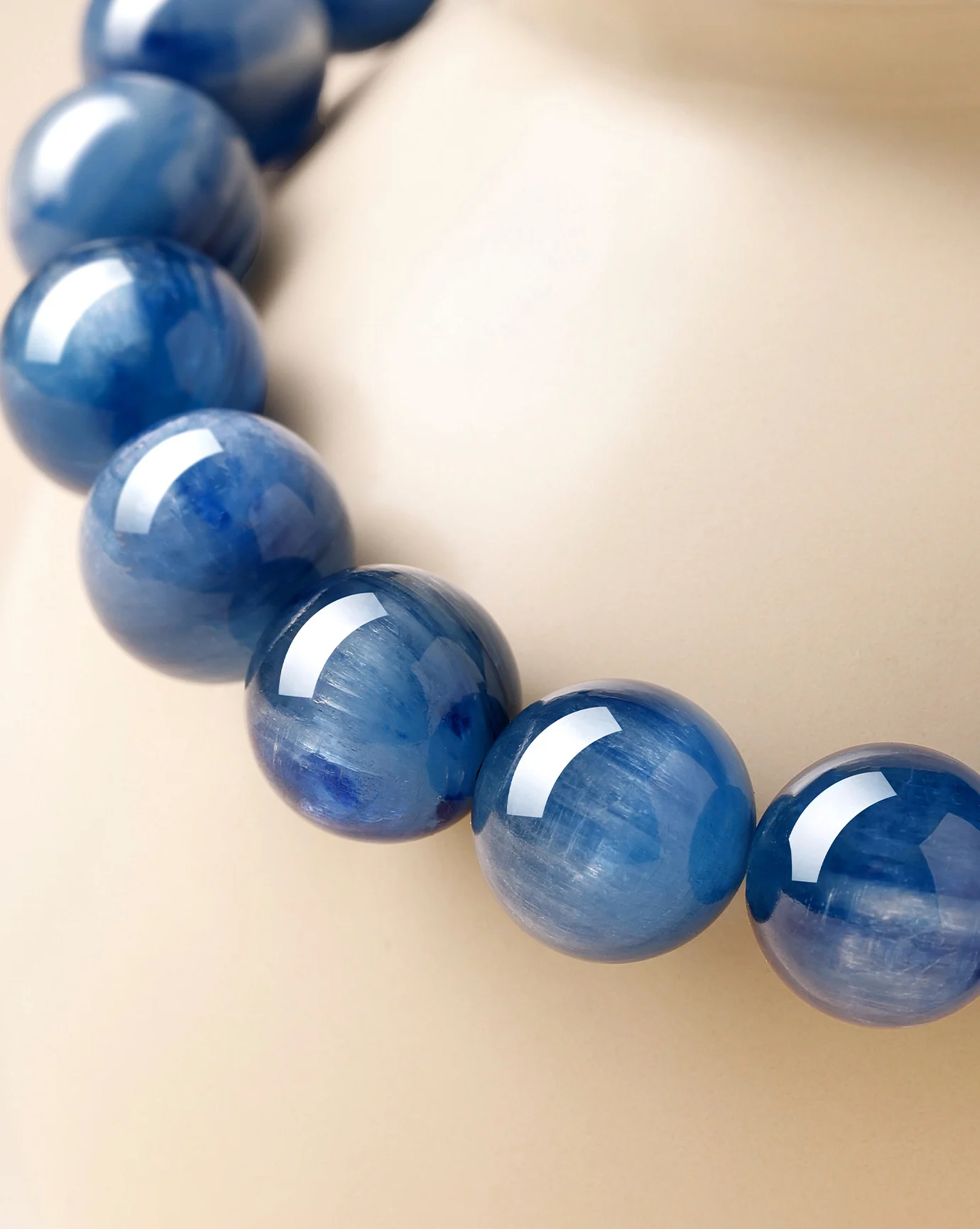
The silky glow of kyanite comes from fine parallel fibres inside the crystal. When the beads are cut so the fibres run across them, light reflects as a soft band that slides over each bead. On 6 mm beads the effect is delicate, a ripple of light along the whole strand rather than a bold flash on each bead, which suits a quiet, everyday bracelet.
High-clarity beads, which the trade calls ice grade, let light into the stone so the fibres glow; cloudy beads look flat.
03
Choosing ice-grade kyanite
Kyanite is graded by colour, clarity, shimmer and cracks. The best material is an even, saturated blue, translucent rather than milky, with a clear silky sheen and few visible fractures. In fine beads, matching matters: a strand of thirty small beads quickly shows any that are paler or cloudier than the rest.
Our supplier describes the beads in this bracelet as collector, ice grade and reports selecting only a small fraction of each batch for this quality. Natural kyanite still shows fine streaks and slight differences in shade.
04
Where kyanite comes from
Gem-quality blue kyanite is mined in Nepal, Brazil, India, Kenya, Tanzania and Myanmar, among other places. Nepalese material is famous for its intense, almost sapphire-like blue; Brazilian kyanite for long, well-formed blades. Clean, transparent pieces large enough for round beads are a small part of what is found, because kyanite tends to grow in thin, fractured plates.
Our supplier describes the rough for this series as natural kyanite, selected for colour, clarity and the strength of its fibres before cutting.
05
A stone named for its blue
Kyanite was named in 1789 by the German geologist Abraham Gottlob Werner, after the Greek word for blue. In Chinese it is called lan jing shi, blue crystal stone. For a long time it was valued mainly by industry, where it is used to make heat-resistant porcelain and spark plugs, and only in recent decades has fine translucent material become popular for jewellery.
06
Why 6 mm
This kyanite is offered from 6 mm to 12 mm. At 6 mm the strand is fine and light, ideal beside a watch or for stacking, and comfortable during long hours at a desk. At 8 mm and above, each bead shows a stronger shimmer and the bracelet becomes more noticeable. We also offer the 8 mm design A Peaceful Journey.
| Bead diameter | Look on the wrist | Often chosen for |
|---|---|---|
| 6 mm · this design | Fine, delicate shimmer | Study, desk work, stacking |
| 8 mm | Clearer shimmer, balanced | Everyday single strand |
| 10–12 mm | Bold, dramatic light | Statement wear |
07
Choosing your wrist size
Measure the wrist itself with a soft tape or paper strip, just above the wrist bone where you usually wear a bracelet. Keep it snug without squeezing and choose that measurement on this page. Fine strands look best close to the wrist, so most people choose their exact measurement.
The table shows typical bead counts for 6 mm beads. Your bracelet may differ by one bead, as each strand is checked against the measurement when it is strung.
Between two sizes, choose the larger for a relaxed fit or the smaller for a closer one. If you will wear it while writing, a slightly closer fit stops the beads sliding onto the back of the hand. Roll the strand over the knuckles rather than stretching it.
08
Waves of learning, opening insight
Wen means writing and learning; lan means great waves; qi hui means to open wisdom. Wen lan qi hui pictures study as a current that keeps moving: each day’s reading and practice adds to the flow, until understanding opens. It is a wish not for a sudden breakthrough but for steady, continuous progress, the kind that actually carries students through long courses and difficult exams.
Kyanite’s calm blue and the soft movement of its shimmer suit that idea: quiet, clear and always in motion.
Lan, the great wave, also appears in old phrases praising writing that flows with force and grace. The name therefore carries a second, gentler wish: that what you learn will one day flow out again, in writing, speaking and work, with ease.
These are cultural meanings and personal wishes rather than promises.
09
Blue and the Water element
In the Five Elements, blue and black belong to Water, the element of winter, the north and zhi, wisdom. Water finds its way around obstacles and, given time, wears through stone, an apt image for the persistence learning requires. Traditional thought links Water with memory and depth of understanding. If you would like to know whether Water suits your own birth chart, a personal design begins with a fuller BaZi discussion.
10
A quiet companion for study
A fine bracelet suits long hours of study: it does not get in the way of writing or typing, and it is light enough to forget until you glance down. Many students and professionals like to have a small, calm and familiar object to touch while they are thinking, and the smooth, cool kyanite beads serve that purpose well. Blue is also widely regarded as a calming, focusing colour, which is why it is so often chosen for study rooms, libraries and the covers of notebooks.
11
Objects on the scholar’s desk
In traditional China, the scholar’s desk held a small world of objects: brush, ink, paper and inkstone, but also stones, beads and small carvings chosen to calm the mind and inspire the work. A fine bracelet carries on that tradition in a modern form, a small, beautiful thing kept close during hours of study. Blue and green were favourite colours for such objects, linked to clear water, distant mountains and a quiet mind.
12
For exam seasons
Exam seasons are a time when many families in China look for small tokens of encouragement, from the national university entrance exam in June to postgraduate and professional qualifications in winter. A Current of Learning is often chosen as such a token: a calm, practical bracelet that a student can wear every day of revision and into the exam room, where plain jewellery is usually permitted.
13
For language learners and candidates
This design has long been chosen by language learners, people preparing for qualifications and those returning to study later in life. The idea of a current of learning fits language study especially well, where progress comes from daily exposure rather than single bursts of effort. Some wear the bracelet every day of a course and keep it afterwards as a reminder of what they achieved.
14
Kyanite and the colour of the sky
Fine kyanite has been compared to sapphire, and in some markets it has been sold as an affordable alternative to it. Its blue ranges from pale sky to deep cornflower; the beads here are a clear, medium ocean blue. In Chinese art, qing, the colour between blue and green, has long stood for clarity, youth and a scholarly spirit, from blue-and-white porcelain to the blue robes of examination candidates in old paintings.
15
How it looks through the day
In soft indoor light, fine kyanite reads as a gentle, slightly misty blue. Near a window or in sunlight, the fibres light up and a ripple of silver travels along the strand as you move. Under a desk lamp the colour deepens and the shimmer becomes a fine, steady glow. Because each bead is small, the bracelet looks even and calm from a distance and reveals its texture up close.
16
Kyanite, black tourmaline and sodalite
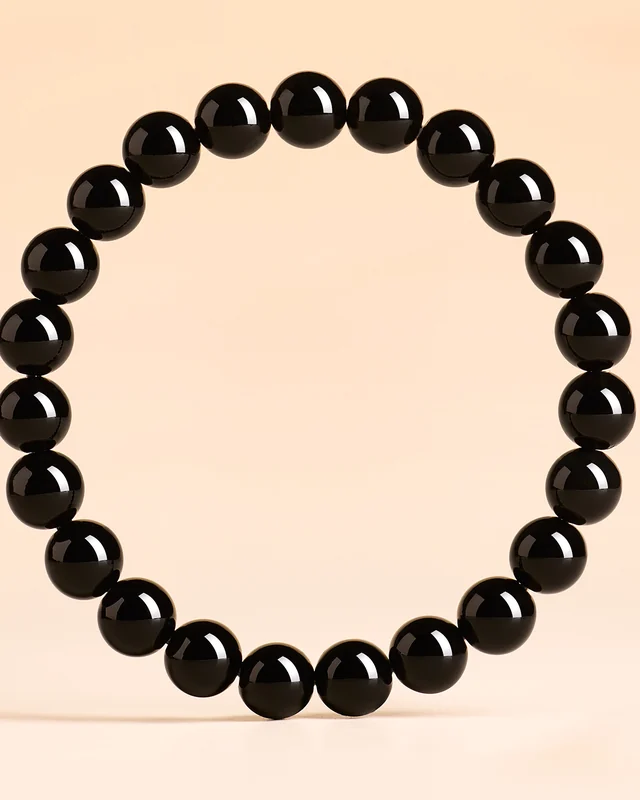
Black tourmaline, which this design used before, is an opaque black stone with a glassy lustre, traditionally associated with protection. Sodalite is an opaque royal blue with white veins. Kyanite is translucent and fibrous, with a silky shimmer, giving a lighter, fresher look while keeping the Water element’s blue.
17
Why this design changed
A Current of Learning was previously made with 8 mm black tourmaline. We now make it with 6 mm ice-grade kyanite. Blue suits the name and web address of the design, which have always pointed to flowing water, and the finer size suits study and desk wear. The wish for learning and steady progress remains the same.
18
Wearing fine kyanite
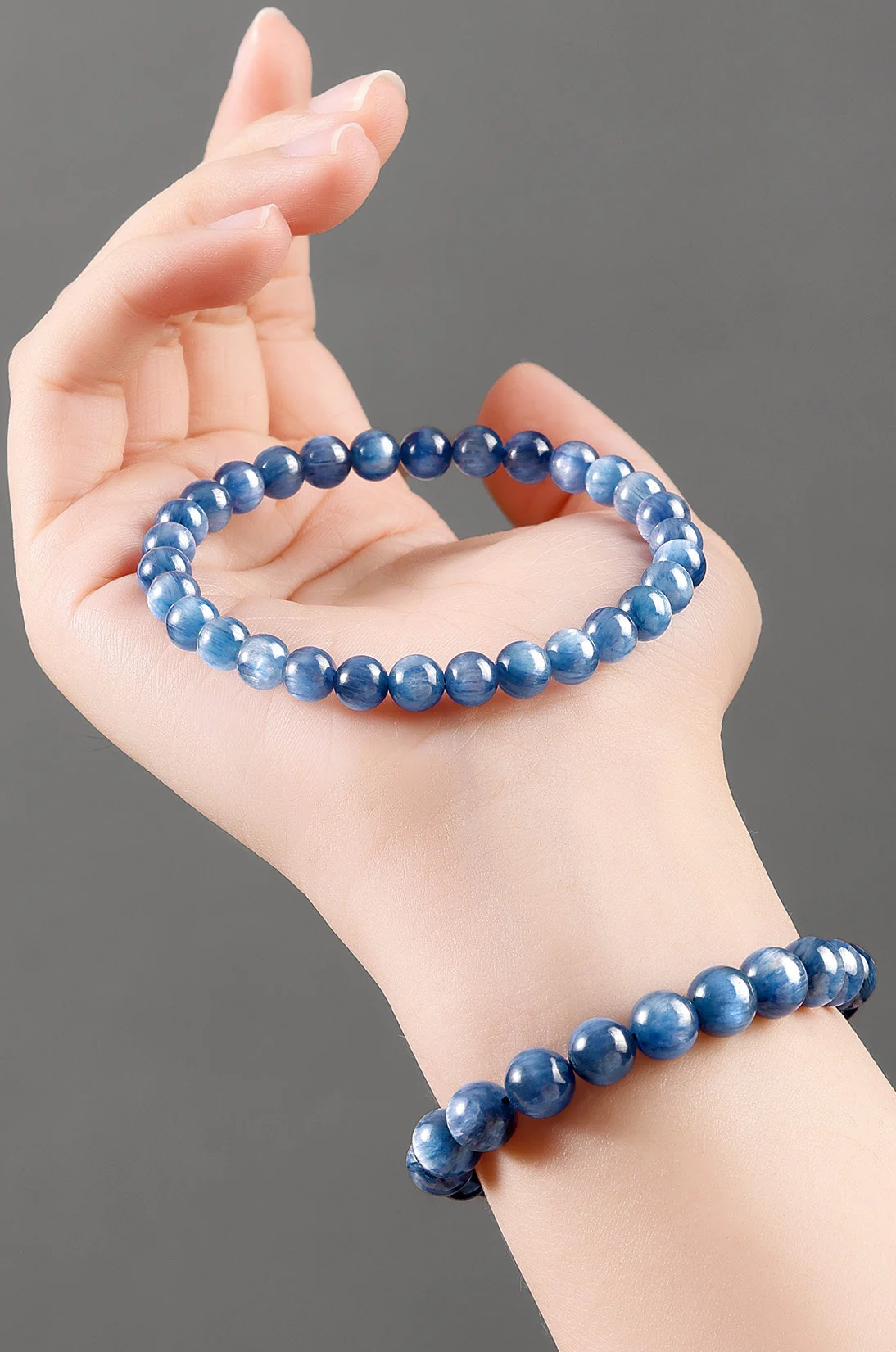
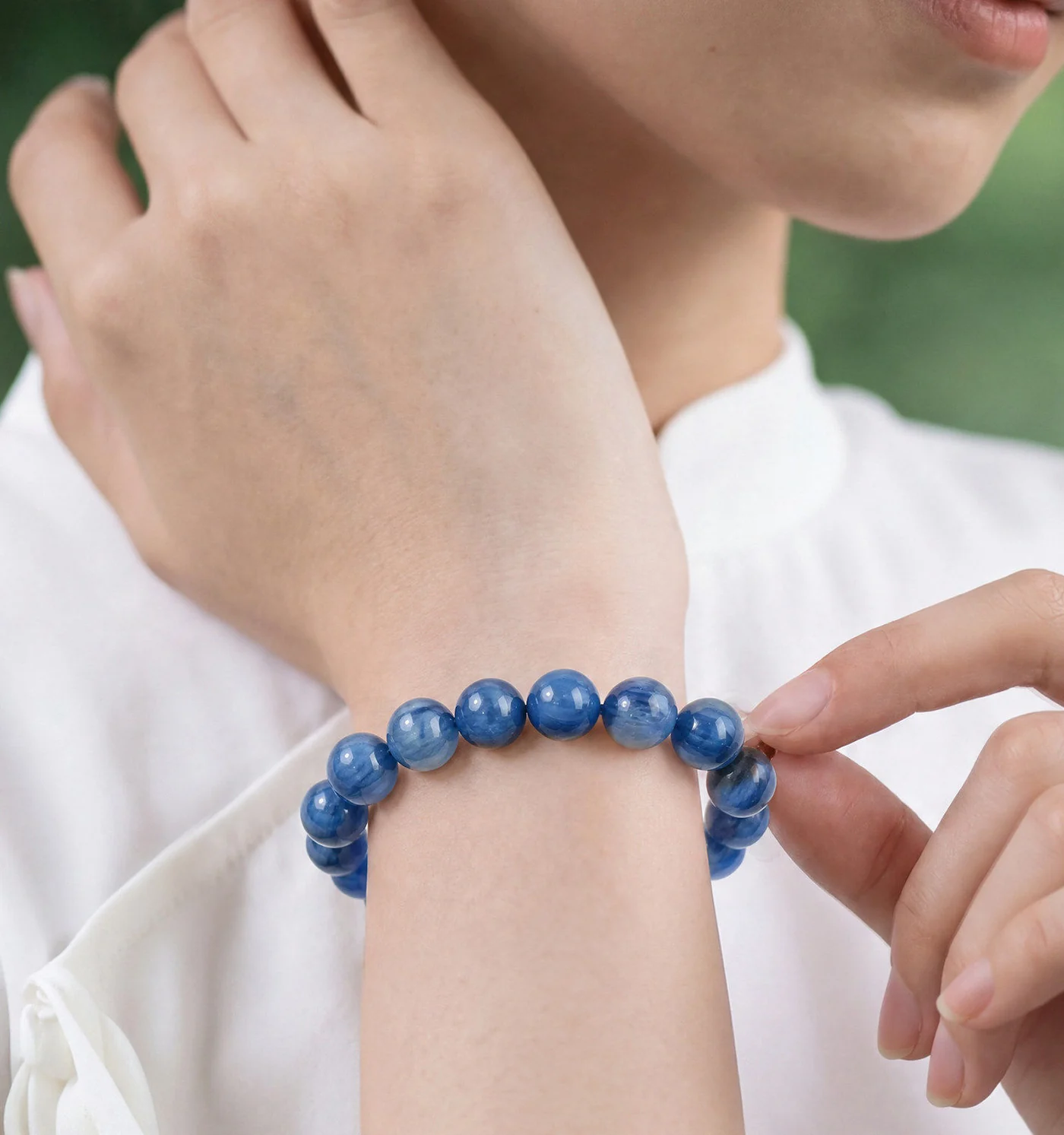
Ocean blue looks fresh with white, as the photographs show, and smart with grey, navy and denim. Kyanite suits silver and white gold particularly well. A 6 mm strand is understated enough for school, offices and exam halls, and adds a clear touch of colour to plain clothes.
Because the strand is so light, it is easy to forget you are wearing it, which is exactly what many people want from an everyday bracelet. It looks equally right on a student, a teacher or a professional in a suit.
19
Stacking ideas
Fine kyanite stacks well. Wear two strands together, as one of the photographs shows, or pair it with a slim clear quartz or moonstone bracelet for a cool blue-and-white palette, or with lapis for layered blues. Keep it away from hard metal bangles, which can chip its surface, and choose companions of a similar fine size so the whole stack sits neatly and evenly together.
20
A gift for students
A Current of Learning is a thoughtful gift for a student starting university, someone preparing for an exam or qualification, a language learner or a teacher. Its fine size and calm colour suit almost anyone, and its meaning is encouraging without pressure. Parents often give it at the start of a school year, and graduates sometimes give one back to a favourite teacher as thanks.
A short note explaining wen lan qi hui makes the meaning clear. If you cannot measure the recipient’s wrist, choose the most likely size; an unworn ready-designed bracelet can be returned within 14 days of delivery.
21
Recognising natural kyanite
Natural kyanite shows fibrous, streaky structure and a shimmer that moves as the bead turns, with slight variations in blue. Glass and dyed imitations tend to look uniform, lack fibres and show no true shimmer. Our supplier describes these beads as natural kyanite and shows a gem-testing certificate for its kyanite strands; please contact us if you would like documentation or independent testing.
22
Caring for kyanite
Kyanite has a perfect cleavage and can chip if knocked, especially at the drill holes. Remove the bracelet for sport and heavy work, and store it on its own in a soft pouch. Wipe it with a soft cloth, and keep it away from perfume, cleaning products and sudden heat.
With daily wear, stranded elastic usually lasts one to two years; if gaps appear between the beads, have it restrung before it breaks.
Questions & answers
What is kyanite?
A blue aluminium silicate crystal with fibrous structure and a silky shimmer.
Do 6 mm beads still shimmer?
Yes, softly. The effect is a gentle ripple of light along the strand.
Is it natural?
Our supplier describes it as natural kyanite and shows a testing certificate.
Is kyanite fragile?
It has cleavage and can chip if knocked; treat it gently.
Why did the design change from black tourmaline?
Blue suits the design’s name, and the finer kyanite suits study and desk wear.
How is this different from your 8 mm kyanite?
It is finer and lighter; the 8 mm shows a stronger shimmer.
How many beads will my bracelet have?
Typically 28 beads for a 14 cm wrist, rising to about 40 for 21 cm.
Which element is kyanite?
Blue kyanite is associated with Water.
Is it good for students?
Yes. It is often chosen for study and exam years.
Is it suitable for men?
Yes, especially stacked or worn with a watch.
Can it get wet?
Brief contact is fine; avoid soaking and dry it afterwards.
Will the colour fade?
Natural kyanite keeps its colour; avoid long exposure to heat.
Can I order a larger size?
Ask a design adviser about 8, 10 or 12 mm.
How should I store it?
On its own in a soft pouch, away from harder stones.
Which wrist should I wear it on?
Whichever is most comfortable; many people wear it on the non-writing hand.
Will it look exactly like the photographs?
The material and ocean-blue grade match closely; some lifestyle photographs show 8 mm beads from the same supplier series.
Compare these related designs
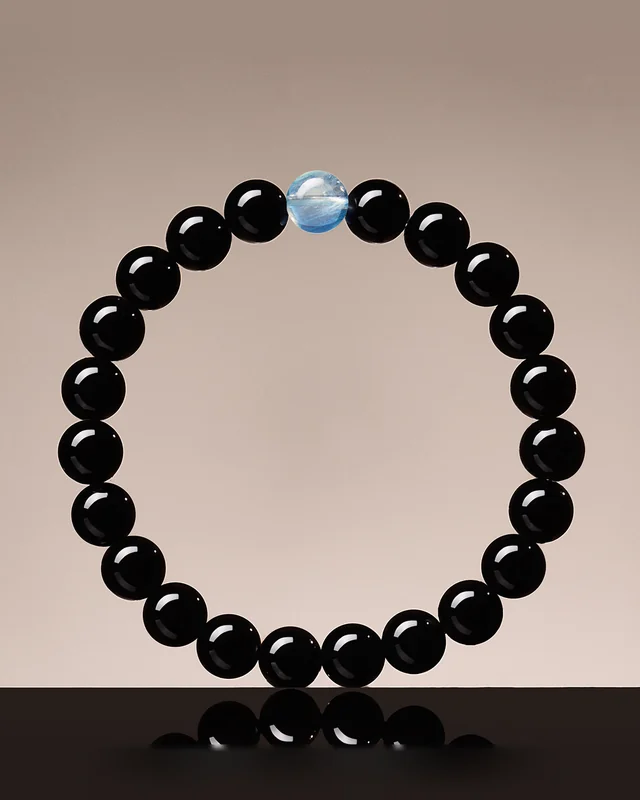 Personal designs
Career · Prosperity
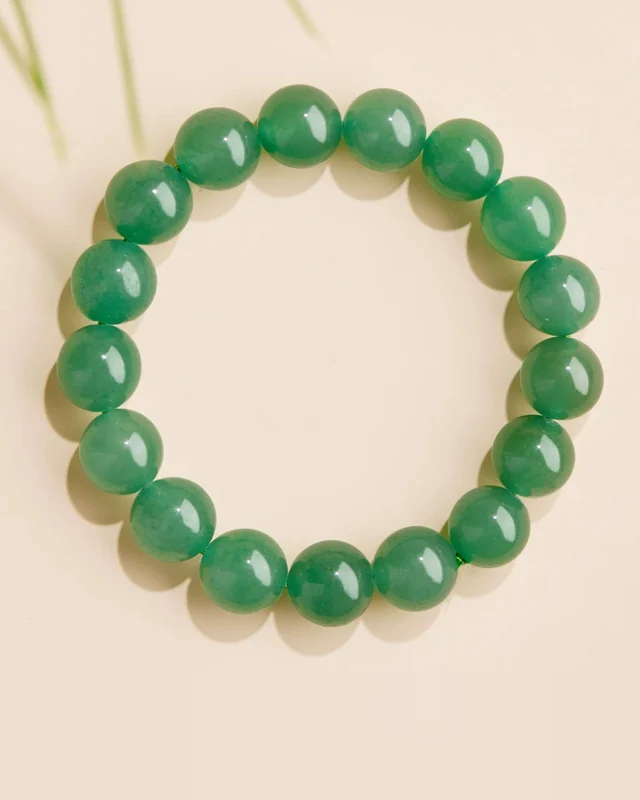
Custom Obsidian and Aquamarine Bracelet · Water Opportunity
Black obsidian · Aquamarine
Quoted after we confirm your design8 mm · Water