 View larger
Rainbow tourmaline3 mm fine beads
Auspicious bracelets / Wood
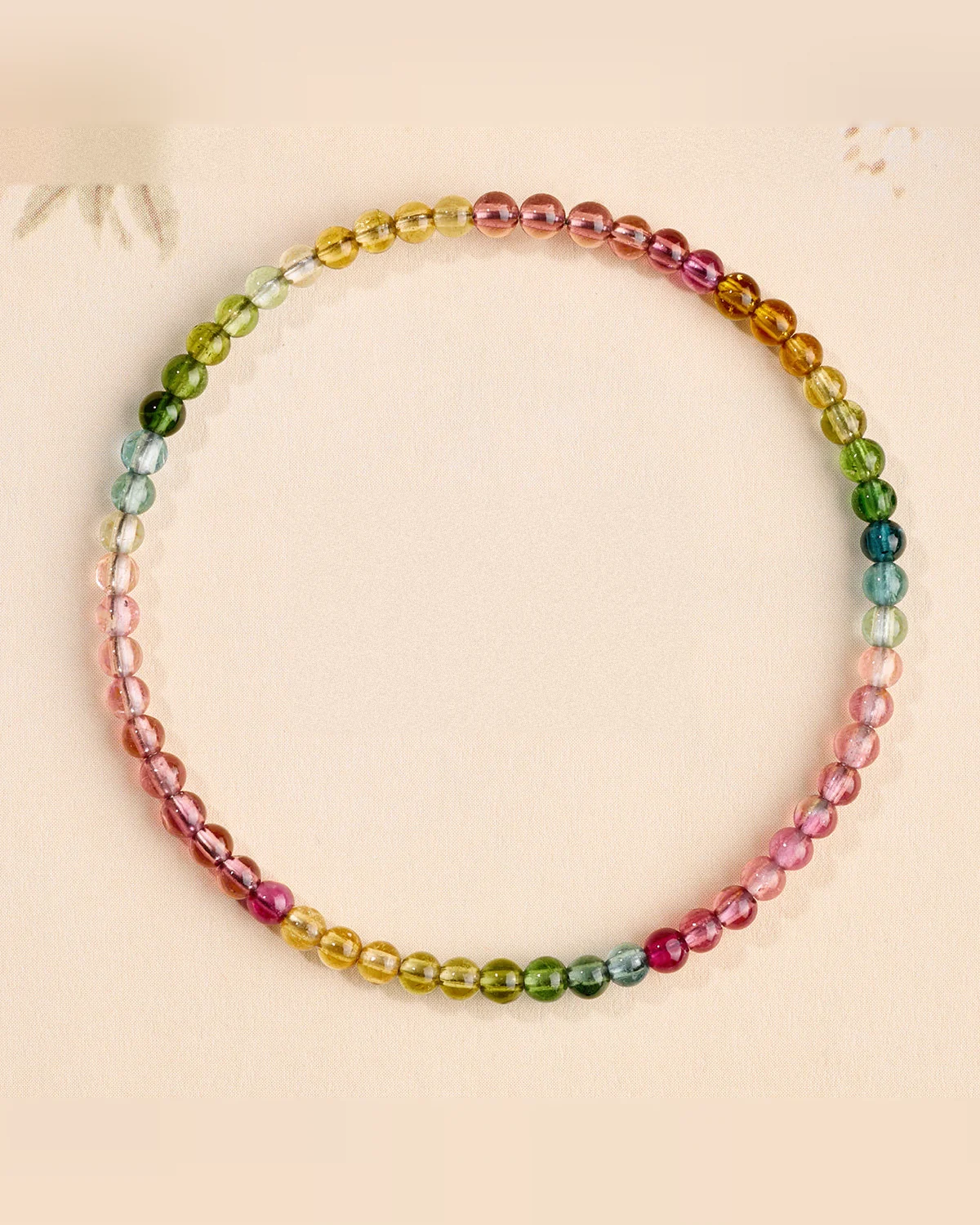
3 mm Rainbow Tourmaline Bracelet · Prismatic Harmony
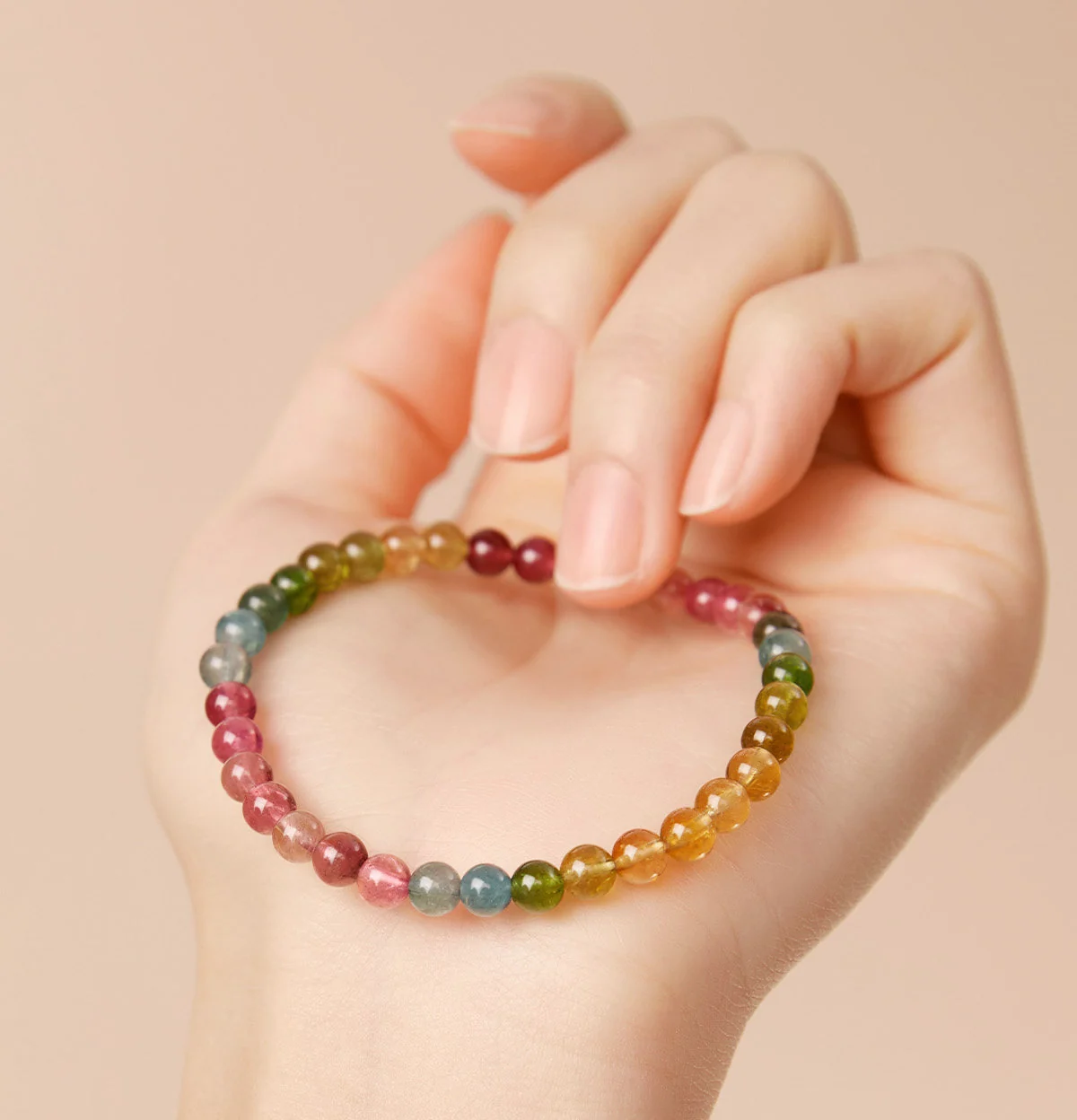
Natural rainbow tourmaline in fine 3 mm rounds: a luminous spectrum of rubellite pink, verdelite green, indicolite blue and warm honey amber.
$104.00USD
- Gemstones & materials
- Natural rainbow tourmaline (borosilicate gemstone)
- Colour
- Multi-colour prismatic spectrum (pink, peach, green, blue, yellow, amber)
- Bead shape & size
- Round, approximately 3 mm (optional 5 mm and 6 mm by custom request)
- Clarity grade
- Ice grade (translucent vitreous luster with fine natural fluid veils)
- Origin
- Pegmatite deposits (Brazil and Africa, as described by our supplier)
- Cord
- High-resilience transparent elastic cord, single strand
- Five Elements
- Wood (with secondary Fire resonance in rubellite tones)
- Intentions
- Harmony, emotional warmth and balanced composure
- Style
- WX077
Prepared in 5 days after payment
Shipping: Asia $10; Europe, US, Canada, Australia & NZ $20
Ready-designed returns may be requested within 14 days. See returns policy
Prismatic Harmony
A ribbon of living colour along the wrist
Prismatic Harmony gathers the full chromatic spectrum of natural tourmaline into an exceptionally fine 3 mm strand. Like a slender thread of morning light refracted through water droplets, the bracelet moves seamlessly from deep rubellite pink and delicate peach to forest verdelite, indicolite ocean blue and sunny golden amber. Worn on the wrist, it feels almost weightless, offering a subtle, luminous presence that catches the light with every natural movement of your hands.
In Chinese mineral philosophy, tourmaline is affectionately celebrated as the rainbow that fell to earth (luo ru ren jian de cai hong). Its diverse hues unite under the Five Elements banner of Wood—the element of spring, organic vitality, supple growth and emotional renewal. The Chinese name of this design, Hong Guang He Yun (Rainbow Light and Harmony), carries a gentle wish for balanced emotions, open-hearted connections and a smooth, joyful rhythm throughout your everyday life.
- Natural multi-coloured tourmaline beads measuring approximately 3 mm in diameter.
- Ice-grade transparency showing soft internal crystalline veils and a vitreous shine.
- Featherlight and understated: designed for comfortable everyday wear or stacking with watches.
- Custom hand-strung to your wrist measurement from 14 cm to 21 cm on resilient transparent cord.
Prismatic Harmony
Rainbow Tourmaline in Detail
Exploring the geological origin of tourmaline, the chemistry behind its vivid rainbow palette, the differences between 3 mm, 5 mm and 6 mm sizes, and the authentic disclosure of gemstone treatments.
01
The rainbow stone of ancient legend
For centuries, gem merchants and travellers have marvelled at tourmaline’s extraordinary ability to display almost every colour known in the mineral kingdom. Ancient Mediterranean and Middle Eastern legends told of a magical gemstone that travelled along a rainbow as it journeyed from the sun to the earth, gathering every hue into its crystal lattice along the way. While such stories belong to poetic myth, the visual reality of natural tourmaline is no less captivating: a single pegmatite pocket can produce crystals ranging from vibrant ruby reds and peach pinks to emerald greens, electric blues and rich golden ambers.
The name tourmaline itself derives from the Sinhalese word toramalli, a term originally applied by Sri Lankan gem traders to multi-coloured pebbles discovered in the gravels of Ceylon. When Dutch traders introduced these colourful gemstones to European lapidaries in 1703, they were initially perplexed by their unusual optical and physical properties, mistaking various crystals for ruby, sapphire, emerald or topaz before mineralogists recognised them as an entirely unique mineral supergroup.
02
A complex borosilicate of the Earth
Geologically, tourmaline is not a single uniform mineral species, but a complex family of cyclosilicate minerals containing boron, aluminium and silicon, crystallising in the trigonal system. Most gem-quality multi-coloured tourmalines used in fine jewellery belong to the species elbaite, named after the historic island of Elba off the coast of Italy, alongside dravite and liddicoatite. These minerals form predominantly in rare granitic pegmatites—extreme subterranean magma bodies where volatile gases, superheated water and incompatible rare elements concentrate during the final stages of continental cooling.
Because pegmatite fluid chemistry fluctuates rapidly as crystals grow over millions of years, tourmaline possesses an astonishingly flexible crystalline framework. Chemical substitutions readily occur across its internal atomic sites without disrupting its overall crystal structure. This chemical versatility makes tourmaline one of nature’s most sensitive geological recorders: microscopic shifts in nearby iron, manganese, lithium or titanium concentrations produce dramatic zoning, giving rise to multi-coloured crystals, bi-colour transitions and the wide spectrum of hues showcased in our bracelet.
03
How trace elements paint the spectrum
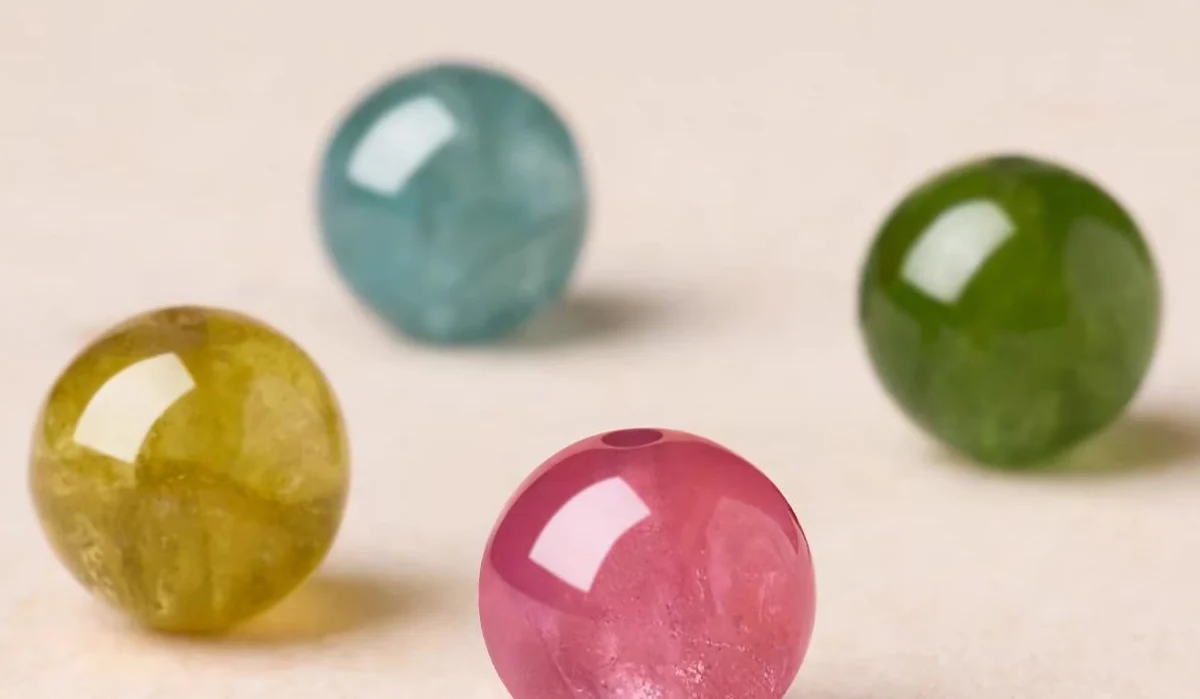
The rich visual harmony of this bracelet arises from distinct chromophore ions naturally embedded in each tourmaline bead. Rather than artificial dyes, each colour tells the story of specific elements present during crystallisation:
Because our supplier carefully selects natural rough from reputable pegmatite mines in Brazil and Africa, the beads display an authentic organic gradient. When you examine the strand closely in natural daylight, you will notice subtle shifts in saturation and natural tone from bead to bead, confirming that each sphere was shaped from genuine natural gemstone rather than synthetic glass.
| Tourmaline Variety | Prominent Colour | Active Chromophore Elements | Cultural Resonance |
|---|---|---|---|
| Rubellite | Rosy pink to rich raspberry red | Manganese (Mn2+ and Mn3+) ions with natural ambient irradiation | Warmth, tender love and emotional openness |
| Verdelite | Grass green to forest olive | Divalent iron (Fe2+) or trace chromium and vanadium | Vitality, steady growth and the Wood element |
| Indicolite | Teal, slate blue to ocean indigo | Iron charge transfer interactions (Fe2+ to Fe3+) | Mental calm, serene wisdom and deep clarity |
| Dravite / Canary | Honey amber, golden yellow and peach | Titanium and divalent manganese complexes | Nourishment, cheerful warmth and balanced energy |
04
Pyroelectric and piezoelectric phenomena
Beyond its chromatic beauty, tourmaline holds a celebrated place in the history of experimental physics due to its remarkable electrical properties. Tourmaline crystals lack a center of symmetry along their polar three-fold axis. Consequently, when tourmaline is subjected to gentle heat or temperature fluctuations, opposing electrical charges build up at opposite ends of the crystal—a phenomenon known as pyroelectricity. Similarly, mechanical compression or frictional rubbing generates a measurable electrostatic potential across the stone, known as piezoelectricity.
In the eighteenth century, Dutch gem merchants dubbed tourmaline aschentrekker, meaning ash puller, because heated tourmaline crystals would attract lightweight fireplace embers and pipe ash through electrostatic charge. In 1880, French physicists Jacques and Pierre Curie conducted their pioneering experiments on piezoelectricity using tourmaline slices, laying the foundational science that later enabled modern sonar, quartz timekeeping and high-frequency oscillators. In traditional Chinese crystal culture, this unique electrical dynamism earned tourmaline the name dian qi shi (electric stone), giving rise to symbolic associations with revitalising stagnant energy and clearing mental inertia.
05
The delicate charm of 3 mm rounds
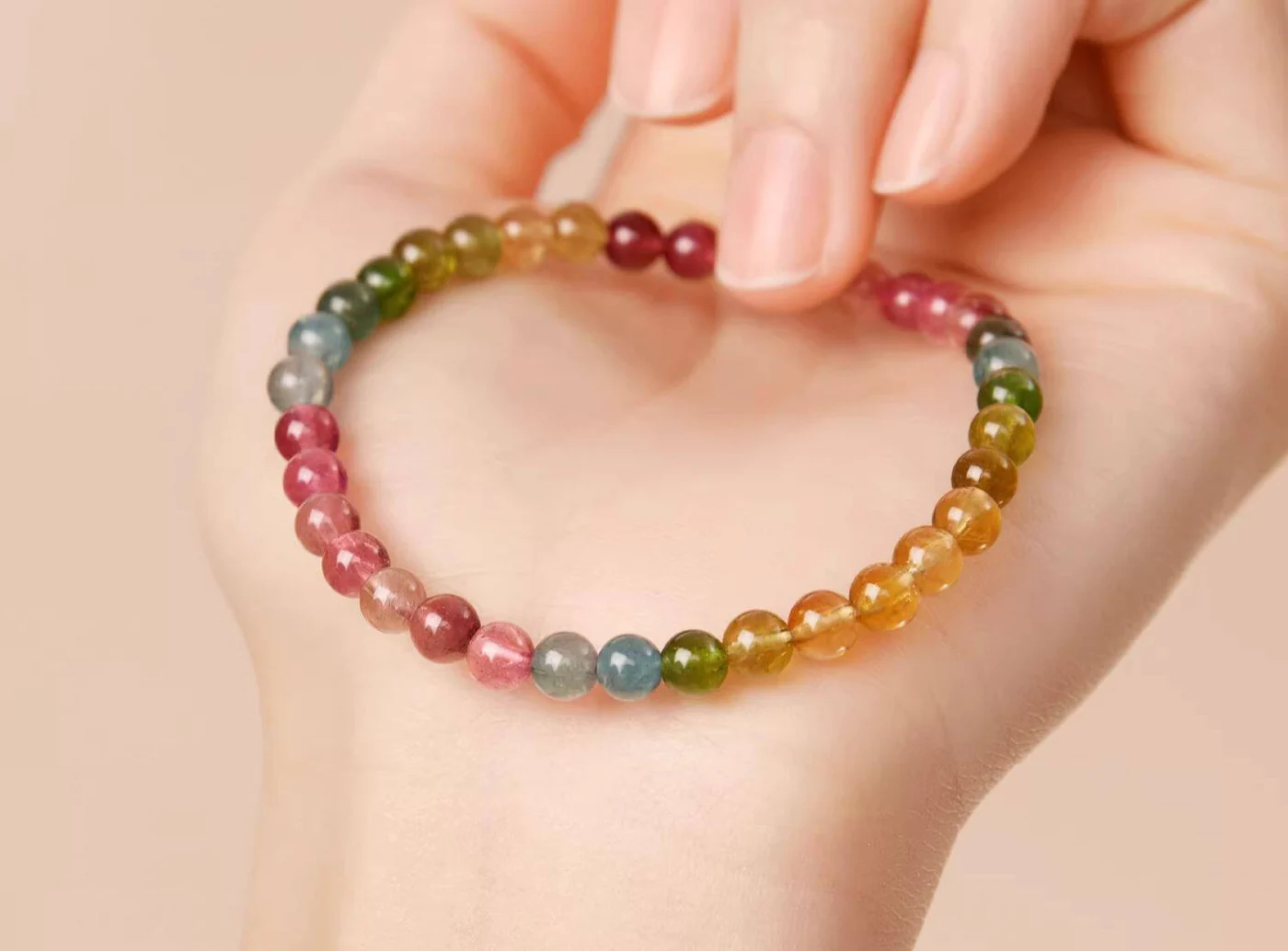
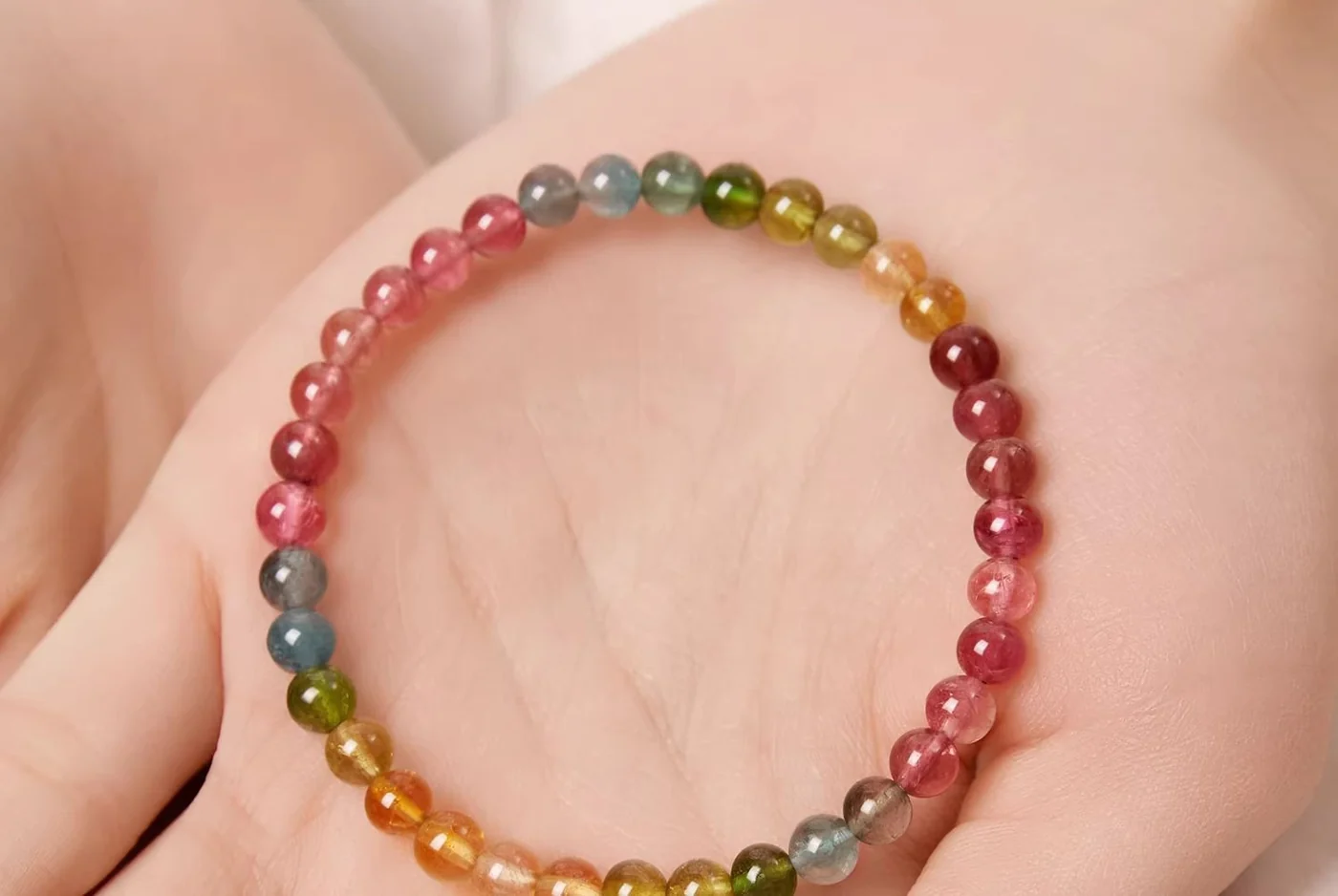
In crafting this standard edition of the Rainbow Tourmaline Bracelet, we deliberately chose fine 3 mm rounds rather than conventional chunky beads. Tourmaline rough of high gemstone transparency is inherently scarce and precious; cutting it into delicate 3 mm spheres transforms the bracelet into a supple, featherlight ribbon of colour that wraps effortlessly around the contour of your wrist.
At approximately 3 mm, the bracelet weighs only 3 to 5 grams depending on wrist measurement. It does not pull, rattle against desks during keyboard work, or catch on tailored garment cuffs. For those who wear a wristwatch every day, a 3 mm gemstone strand nests alongside leather straps, steel bracelets or gold bangles with whisper-quiet elegance, offering a subtle pop of multi-coloured radiance without overwhelming your personal aesthetic.
06
Comparing 3 mm, 5 mm and 6 mm sizes
While 3 mm is our recommended standard model for everyday comfort and accessible pricing, we also provide 5 mm and 6 mm sizes upon custom request. It is important for collectors to understand why the price increases substantially between these dimensions: gemstone rough is priced by weight (carats or grams), and the volume of a sphere scales with the cube of its radius. A 6 mm bead contains approximately eight times the volume and rough material of a 3 mm bead.
Large tourmaline crystals frequently develop heavy internal fractures and dark inclusions during geological tectonic movements. Therefore, finding gem-quality, translucent rough capable of yielding clean 5 mm and 6 mm beads free of opaque black flaws is vastly more challenging, accounting for the steep price progression between sizes.
07
Choosing your wrist size
To ensure your bracelet sits comfortably without pinching or excessive sliding, measure your bare wrist just above the wrist bone (styloid process) using a flexible sewing tape or a strip of paper. Mark the point where the ends meet flat against the skin, and measure that length against a ruler in centimetres. Do not add slack: fine 3 mm beads conform very closely to the wrist, and we calibrate the strand tension specifically to your snug measurement.
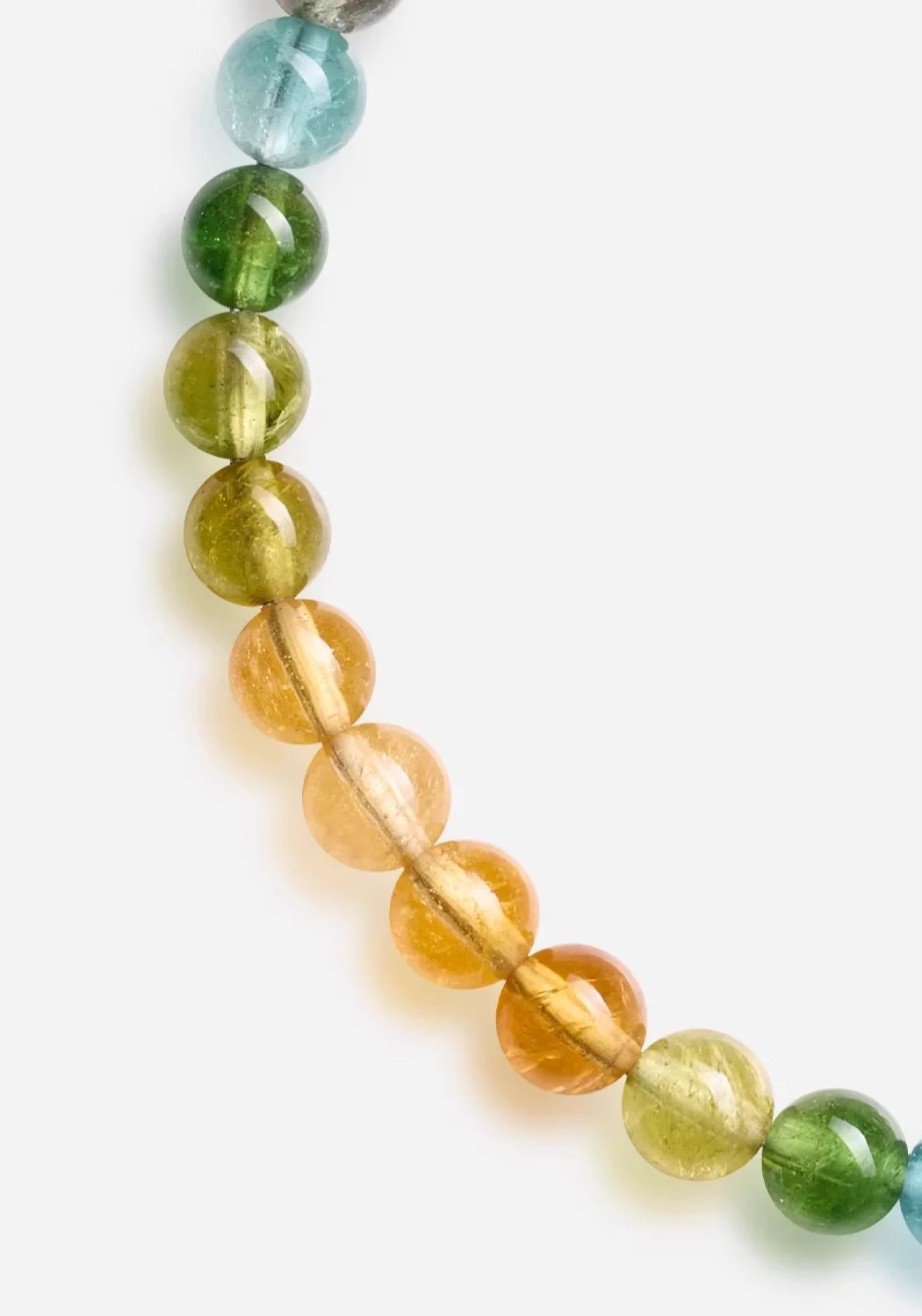
Because natural beads vary slightly in diameter by fractions of a millimetre, the exact bead count on each completed bracelet is adjusted by hand to achieve an accurate, balanced drape:
08
Understanding the "ice" grade
In the natural crystal and gemstone trade, our supplier categorises this material as boutique ice grade (jing pin bing zhong). The term ice grade describes tourmaline beads that possess high optical translucency, allowing ambient light to penetrate the crystal and illuminate its rich internal colours like stained glass under sunlight.
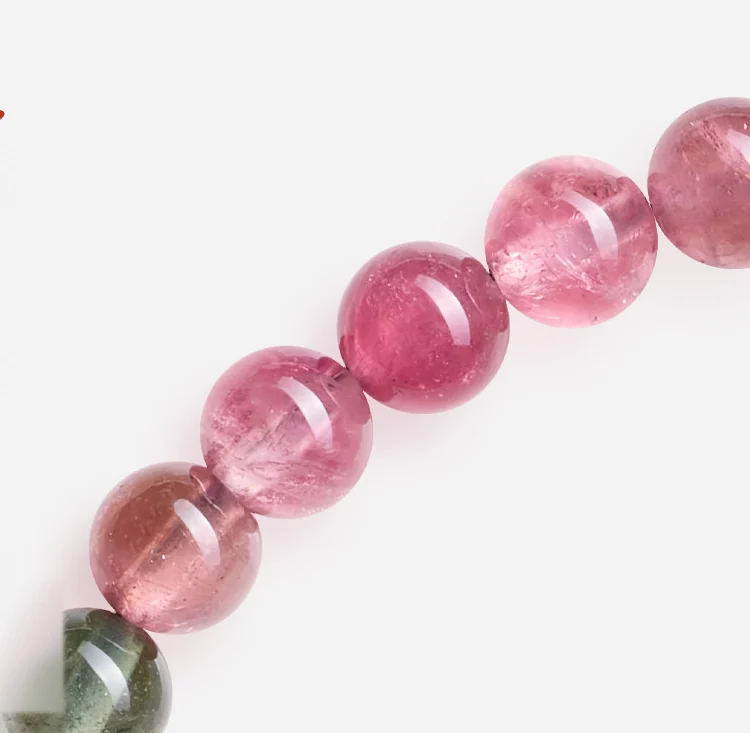
Unlike lower commercial grades that appear cloudy, opaque or heavily muddy, ice-grade tourmaline displays a bright vitreous luster and vibrant candy-like tones. However, natural ice-grade tourmaline is not synthetically flawless: under close inspection or 10x magnification, you will observe natural internal veil patterns, delicate liquid healing feathers (fluid inclusions trapped during pegmatitic growth) and tiny micro-cleavage planes. These organic crystalline signatures are definitive proof of authentic geological formation rather than artificial glass.
09
Precision lapidary and colour harmony
Transforming rough tourmaline into fine 3 mm beads requires exceptional lapidary skill. Tourmaline has distinct directional hardness and brittle basal parting planes, making small-bead fabrication technically demanding. Experienced cutters first examine the rough to map out internal fractures, sawing clean blocks into uniform blanks with diamond wire blades before tumbling them into spherical preforms.
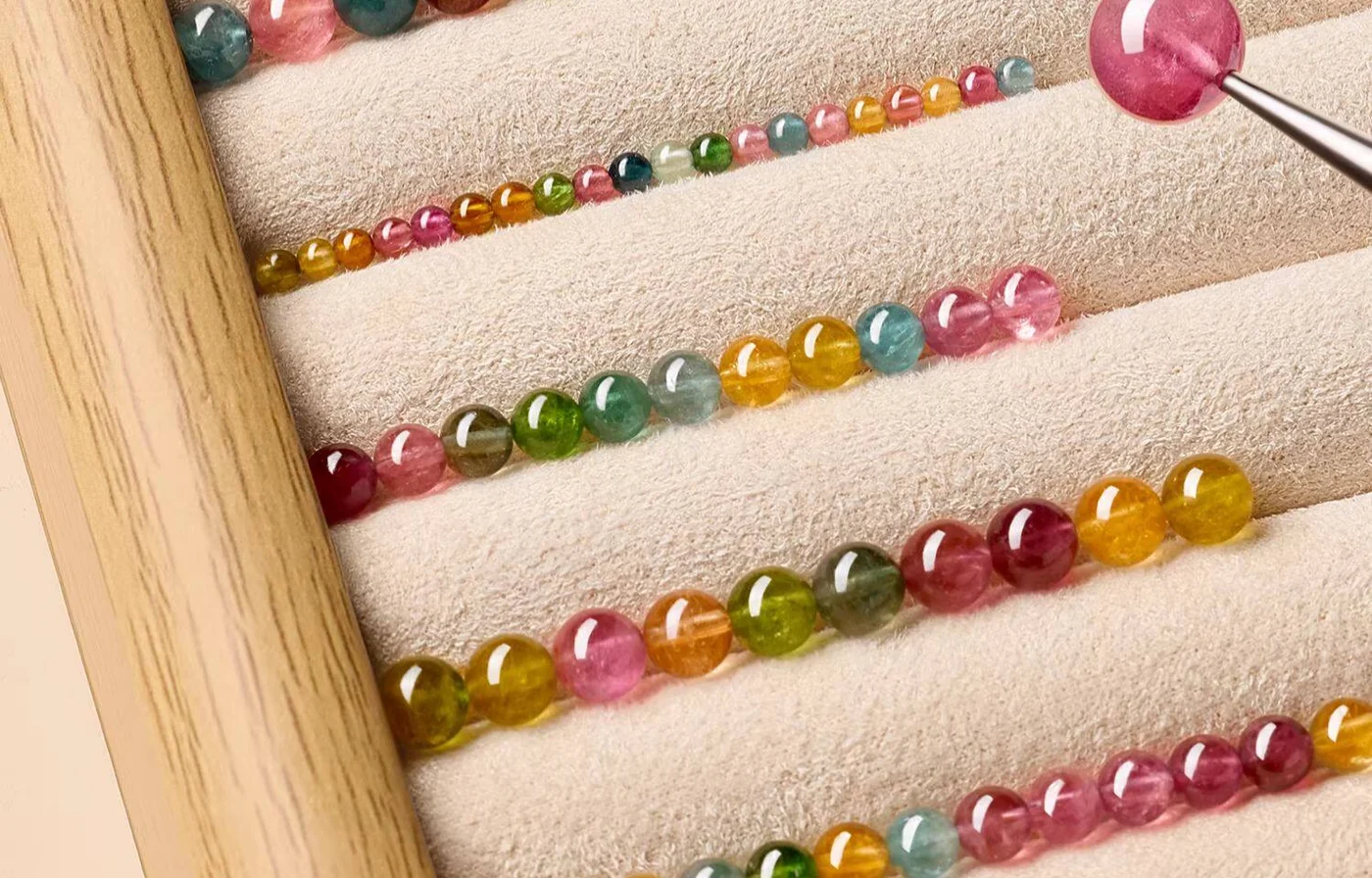
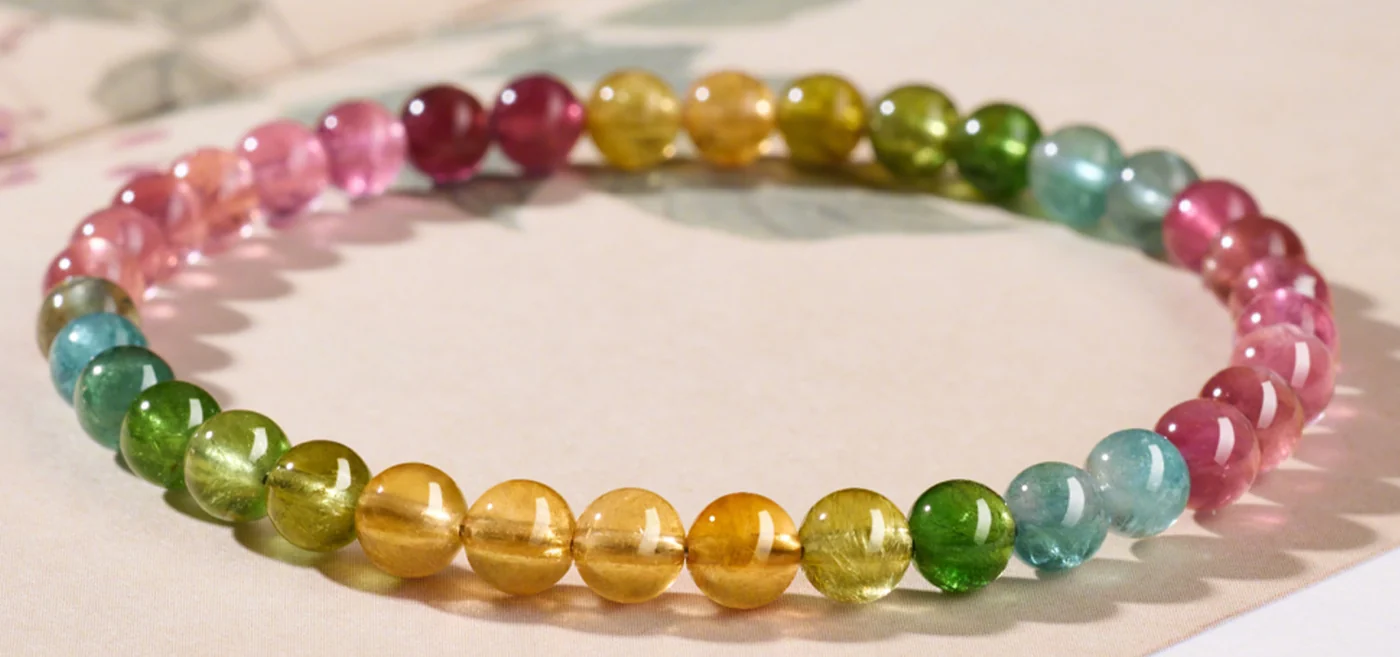
Drilling 3 mm beads requires microscopic precision: ultrasonic drill bits must penetrate the center without heating or fracturing the thin crystal walls. Once drilled, the beads undergo progressive tumbling polishing through diamond abrasives to produce a mirror-like shine. Finally, master stringers hand-sort hundreds of loose beads by shade, arranging them into a gentle, seamless rainbow progression so that each finished bracelet presents a harmonious flow of colour.
10
Tourmaline and the Wood element
In traditional Chinese Five Elements (Wu Xing) cosmology, natural tourmaline is primarily assigned to the Wood (Mu) element. Green tourmaline (verdelite) is the direct emissary of Wood, embodying the vital Qi of spring, botanical flourishing, resilience and expansive growth. Wood governs flexibility, the easing of liver stagnation (shu gan jie yu), and the capacity to adapt smoothly to changing life circumstances.
Simultaneously, the rainbow spectrum of tourmaline beautifully illustrates the generative cycle of the Five Elements: Wood naturally generates Fire (Mu sheng Huo), represented by the warm pink and rubellite beads that nourish the heart and spirit. Meanwhile, the blue indicolite beads connect with Water, the mother element that nurtures Wood. Wearing this prismatic strand serves as a cultural reminder of continuous growth, healthy balance and revitalising vitality.
11
Cultivating balance and emotional harmony
This design was conceived around two complementary personal intentions: Love (emotional warmth and harmonious relationships) and Balance (inner composure and emotional equilibrium). In modern crystal appreciation, pink tourmaline has long been associated with gentle self-compassion, romantic sweetness and the healing of old heartache, encouraging wearers to approach relationships with openness and trust.
Simultaneously, the full rainbow spectrum acts as a visual anchor for equilibrium. When life feels chaotic or emotionally demanding, running your fingertips over the cool, smooth beads reminds you of the natural balance between dynamic action (warm tones) and restful clarity (cool greens and blues). We present these cultural and mindful traditions as personal wishes and aesthetic inspirations, rather than medical or metaphysical guarantees.
12
Market realities and gemstone treatments
At vivqo, we believe complete transparency regarding gemstone treatments is essential for collector confidence. In the global jewellery market, tourmaline is subjected to various post-mining enhancements, some of which are standard while others represent artificial misrepresentation:
Our beads are sourced from vetted suppliers who specifically label the material as pure natural gemstone (chun tian ran bao shi), free from artificial dyeing or polymer filling, preserving the genuine natural energy and authentic mineral beauty of the earth.
13
Supplier standards and certification
This product is produced in collaboration with our verified high-tier jewellery partner, operating under strict official flagship certification standards. In the supplier’s technical documentation, the product is formally catalogued under Material: Gemstone (Bao Shi) and numbered under batch registration B25020504, carrying the title Pure Natural Ice Grade.
The supplier maintains rigorous quality control, reporting that each batch undergoes multi-tier physical inspection to verify natural mineral composition and eliminate dyed substitutes. For customers requiring formal proof of mineral authenticity, certified third-party gemological inspection reports from accredited national testing laboratories can be provided upon request prior to dispatch.
14
Distinguishing natural tourmaline from imitations
Due to tourmaline’s popularity and high market value, synthetic glass imitations, dyed chalcedony and dyed quartz beads frequently flood the market. Knowing how to identify genuine tourmaline provides lasting peace of mind:
Our 3 mm rainbow beads exhibit the unmistakable optical depth, cool thermal conductivity and delicate natural fluid inclusions characteristic of genuine earth-mined elbaite tourmaline.
| Test Property | Natural Rainbow Tourmaline | Coloured Glass Imitation | Dyed Quartz / Beryl |
|---|---|---|---|
| Internal Inclusions | Delicate natural fluid veils, two-phase liquid feathers and crystalline growth planes | Round gas bubbles, swirl lines and completely homogeneous synthetic clarity | Dye concentrations pooled along internal cracks and fissure borders |
| Pleochroism | Distinct dichroism: colour shade changes visibly when rotated under polarized or angled daylight | Isotropic: colour remains completely static from every viewing angle | Uneven unnatural surface colour without genuine directional dichroism |
| Specific Gravity | Heavier feel in hand (approx. 3.06 g/cm³); noticeably denser than glass | Lighter in hand (approx. 2.4–2.5 g/cm³) | Variable density; often feels porous or waxy if heavily treated |
| Thermal Sensation | Cool to the touch and warms up slowly against bare skin | Warms up almost instantly to body temperature | Conducts heat inconsistently depending on resin content |
15
From imperial courts to modern collections
Tourmaline holds a uniquely celebrated chapter in late imperial Chinese history. During the late Qing dynasty, Empress Dowager Cixi (慈禧太后) developed an extraordinary, almost legendary passion for tourmaline, particularly the vivid pink and bi-colour varieties mined from pegmatite deposits. Cixi amassed thousands of carved tourmaline snuff bottles, hairpin ornaments, court bead necklaces and ornamental belt buckles, considering the stone far more vibrant and expressive than traditional jadeite.
Historical records reveal that between 1902 and 1911, the Qing imperial court purchased over 120 tons of top-grade pink and rubellite tourmaline directly from the famous Himalaya and Mesa Grande pegmatite mines in San Diego County, California, shipped across the Pacific Ocean directly to Beijing lapidary workshops. Today, wearing a rainbow tourmaline bracelet links the wearer with this historic legacy of imperial refinement, reinterpreted into a modern, minimalist accessory for the contemporary wardrobe.
16
How it compares with rose quartz and strawberry quartz
Within vivqo’s curated gemstone collection, wearers exploring love, warmth and emotional balance often compare this Rainbow Tourmaline Bracelet with our WX016 Petal Halo (rose quartz) and our WX073 Strawberry Quartz design. While all three celebrate heart-centered intentions, their mineral nature and styling profiles are distinctly individual:
If you desire the comprehensive chromatic richness of nature and a remarkably fine, stackable bead profile, the Rainbow Tourmaline Bracelet offers an unmatched combination of mineral sophistication and daily versatility.
17
Everyday styling and layering
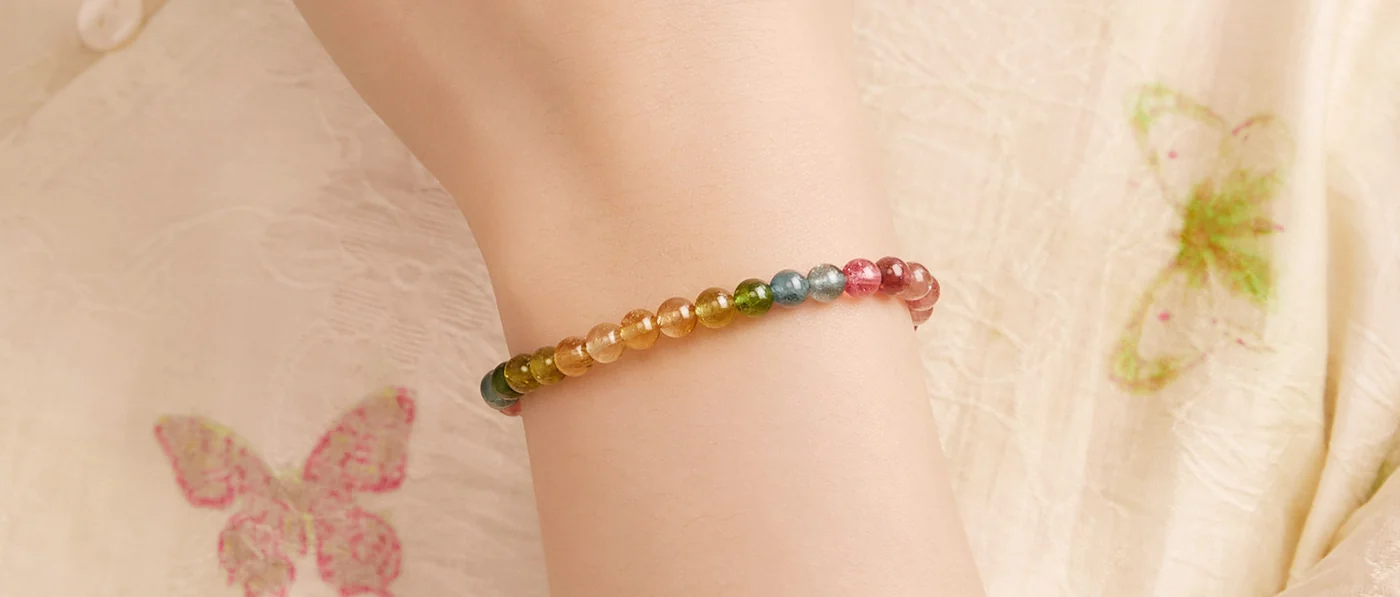
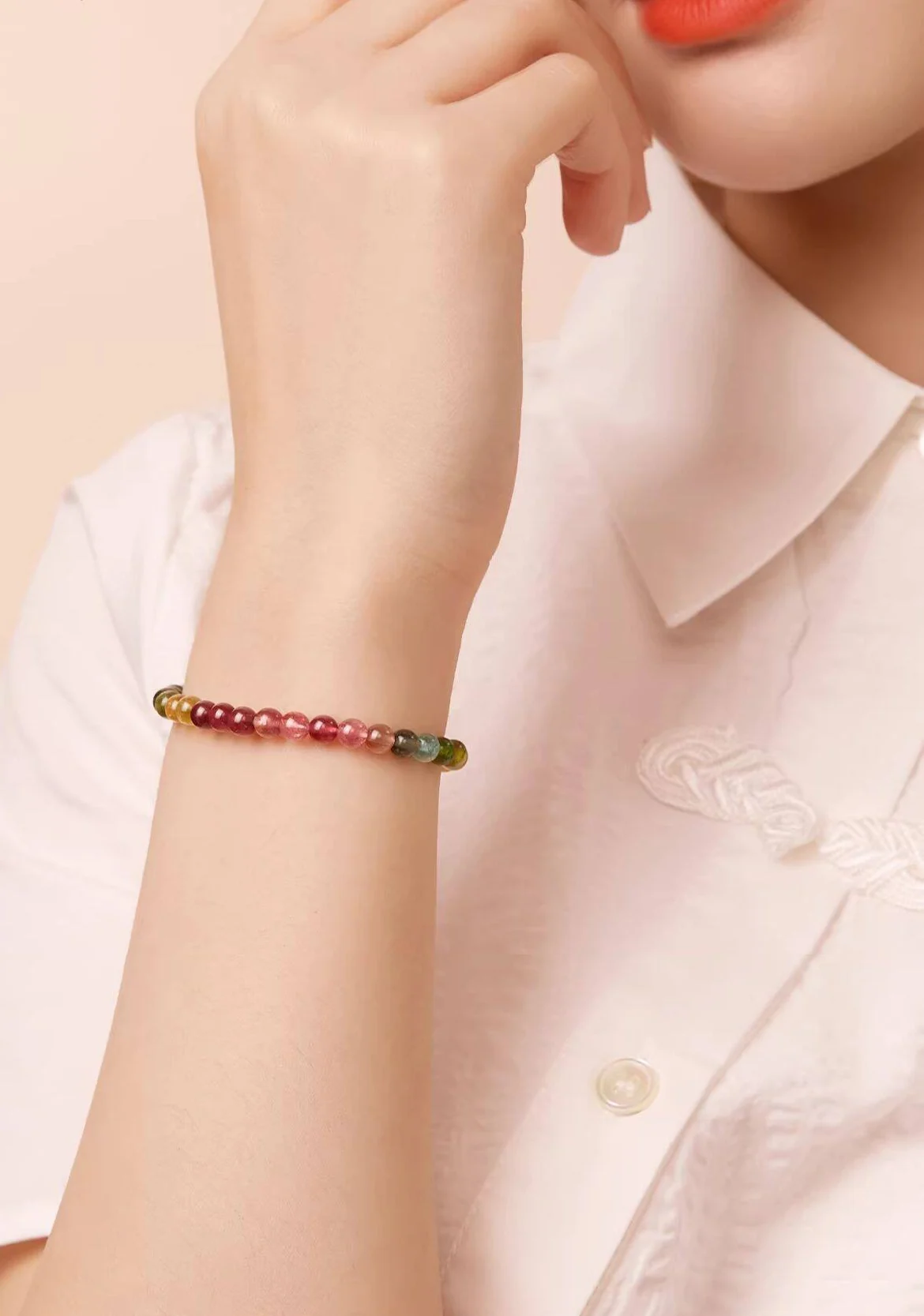
Thanks to its delicate 3 mm proportion, the Rainbow Tourmaline Bracelet is one of the most versatile styling pieces in our entire catalogue. The presence of every primary hue within a single strand means it harmonises naturally with virtually any clothing colour palette. Against crisp white linen shirts, cream silk blouses or grey cashmere knitwear, it introduces a subtle, painterly flourish of colour that brightens your overall presence without appearing loud.
For jewellery lovers who enjoy layering, this 3 mm strand pairs seamlessly with minimalist yellow-gold chains, silver bangles or leather watch straps. It nests comfortably against the skin without tangling or clashing. In casual weekend settings, it adds playful bohemian elegance, while in formal business meetings, its modest scale ensures it remains entirely tasteful and professional.
18
Wearing and caring for your tourmaline
With a Mohs hardness of 7 to 7.5, tourmaline is harder than glass and resistant to everyday airborne dust scratching. However, because tourmaline crystals contain internal cleavage planes and natural fluid veils, they can chip if subjected to sharp, direct impacts against marble countertops, ceramic tiles or metal gym equipment. We recommend removing your bracelet prior to heavy physical exercise, manual gardening or contact sports.
Keep your bracelet away from harsh chemical agents, including household bleach, acetone, acidic cleaning solutions, perfumed body sprays and sunscreen lotions, which can degrade the elasticity of the internal cord or dull the polished surface of the beads. To clean, gently rinse the bracelet in lukewarm water with a drop of mild pH-neutral soap, wipe dry with a soft microfibre cloth, and store it flat in a velvet pouch away from harder gemstones like diamonds and sapphires.
Frequently Asked Questions
Is this bracelet made from 100% natural tourmaline?
Yes. Every bead is cut and polished from genuine natural earth-mined tourmaline rough. The beads display authentic crystalline fluid veils and natural mineral pleochroism, with no artificial dyeing or synthetic glass substitutes.
Why is the 3 mm bead size recommended as the standard model?
Tourmaline rough of clean, transparent ice grade is rare and precious. The 3 mm size provides an ideal balance of accessible pricing, lightweight comfort (3–5 grams), and a delicate, fluid drape that layers effortlessly with watches and tailored clothing.
How much do the 5 mm and 6 mm sizes cost, and why are they significantly more expensive?
The 5 mm size is approximately $210 USD and the 6 mm size is approximately $314 USD upon custom request. Because gemstone rough is valued by weight and spherical volume scales cubically, a 6 mm bead requires roughly eight times the volume of clean rough as a 3 mm bead, and large flawless ice-grade tourmaline crystals are exceptionally scarce in nature.
What do the different colors of tourmaline represent?
In crystal tradition, pink rubellite represents affection, emotional warmth and harmony; green verdelite embodies vitality, steady growth and the Wood element; blue indicolite reflects calm clarity and truthful communication; and yellow amber evokes joyful nourishment and balanced energy.
How does rainbow tourmaline connect to the Wood element?
Green tourmaline is the foremost gemstone of the Wood element, representing growth, renewal and emotional easing. The rainbow strand as a whole reflects the organic cycle of Wood generating Fire (pink tones), fostering resilience, adaptability and vibrant life force.
Can I wear this tourmaline bracelet every day?
Yes. With a Mohs hardness of 7–7.5, tourmaline is well-suited for everyday wear. Simply take basic care to avoid sharp impacts against hard surfaces and remove it before swimming, showering or vigorous sports.
Will the colors of natural tourmaline fade over time?
Natural tourmaline colors derived from divalent iron, chromium and natural manganese are exceptionally stable under normal ambient conditions. To preserve their vibrancy, avoid leaving the bracelet in intense prolonged direct sunlight or near high heat sources.
Are the beads treated or artificially dyed?
No. Our beads are strictly free from artificial dyes, chemical colour enhancements or polymer filling. Any heat treatment used on select rough follows permanent, accepted industry practices that preserve natural mineral integrity.
How can I tell real rainbow tourmaline from colored glass or dyed quartz?
Natural tourmaline feels cooler to the touch than glass, shows subtle directional dichroism under angled light, possesses higher density (specific gravity ~3.06), and contains natural liquid feathers rather than round artificial gas bubbles or pooled crack dyes.
Is tourmaline fragile, and can it crack easily?
Tourmaline has good scratch hardness but moderate toughness due to internal cleavage planes. While resilient for daily office and casual wear, it can fracture if dropped onto hard ceramic tiles or struck sharply. Storing it flat in a soft pouch prevents accidental damage.
How should I measure my wrist to ensure the perfect fit?
Measure your bare wrist snug against the skin just above the wrist bone with a flexible tape or paper strip. Do not add extra buffer: we hand-string each strand with an exact bead count calibrated to your snug wrist measurement from 14 cm to 21 cm.
Can this bracelet be worn alongside a wristwatch or other gemstone bracelets?
Yes. The slender 3 mm profile makes it ideal for stacking. It sits comfortably beside leather or metal watchbands, gold bangles or companion gemstone strands without clashing or adding bulk.
How does this design compare with the WX016 Petal Halo rose quartz bracelet?
WX016 Petal Halo features larger 6 mm beads in a monochromatic, gentle lavender-pink palette focused purely on Fire/Earth romance. WX077 Rainbow Tourmaline features finer 3 mm beads encompassing the entire multi-colour spectrum, representing Wood element vitality, emotional balance and multi-hued radiance.
Does tourmaline really generate electricity?
Yes. Tourmaline is naturally pyroelectric and piezoelectric, generating an electrostatic charge when gently heated, rubbed or subjected to pressure. This property was scientifically documented by physicists Jacques and Pierre Curie in 1880.
How should I clean and maintain my tourmaline bracelet?
Wipe it gently with a clean, soft microfibre cloth after wear. When necessary, wash briefly in lukewarm water with a drop of mild pH-neutral soap, rinse thoroughly, and pat dry. Never clean tourmaline in ultrasonic or steam cleaners.
Does this bracelet come with an identification certificate?
Our supplier maintains official flagship enterprise certification and batch laboratory testing (registered under batch B25020504). Individual third-party accredited gemological identification certificates can be provided upon request prior to shipping.
Know the materials in this bracelet
Compare these related designs
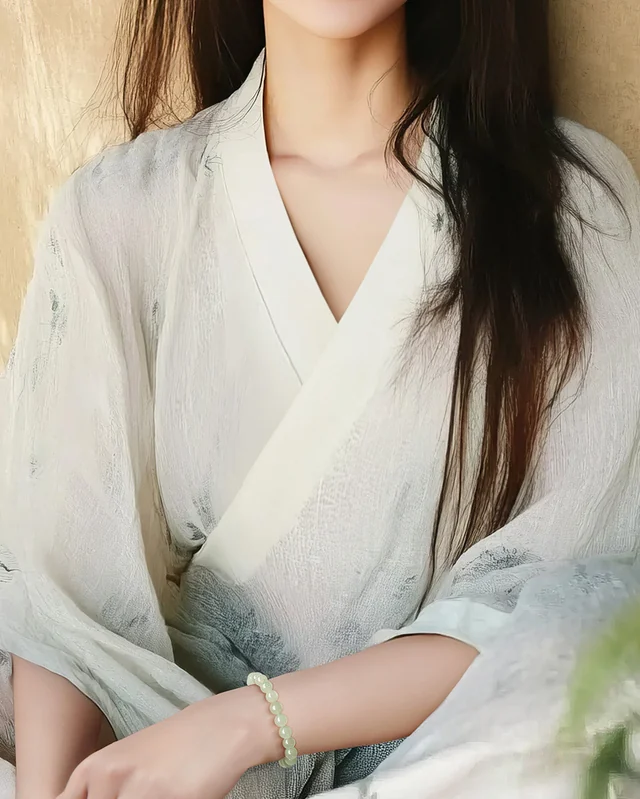
Protection · Balance
8 mm Hetian Jade Bracelet · Jade Blessings
Hetian jade (nephrite)
$128.008 mm · Wood
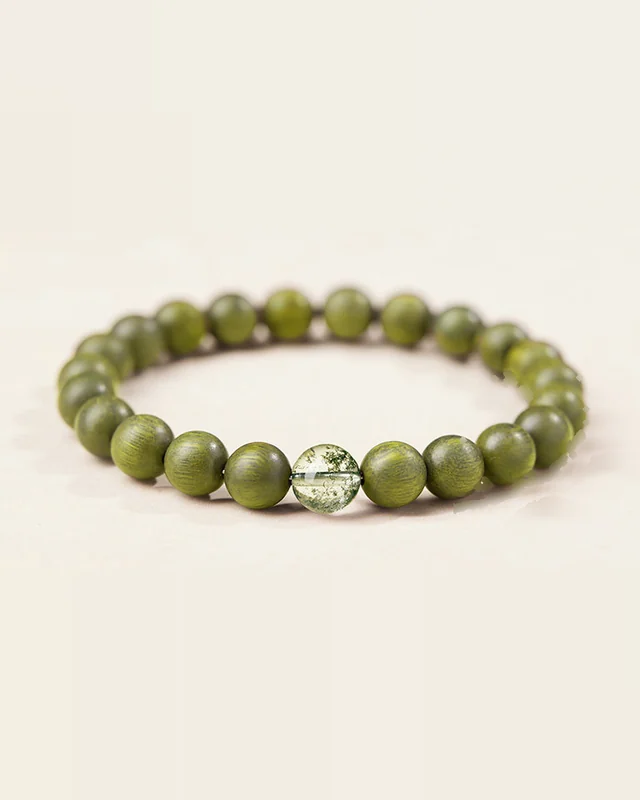 Personal designs
Career · Wisdom
Custom Green Sandalwood and Green Phantom Quartz Bracelet · Wood Career
Green sandalwood · Green phantom quartz
Quoted after we confirm your design8 mm · Wood
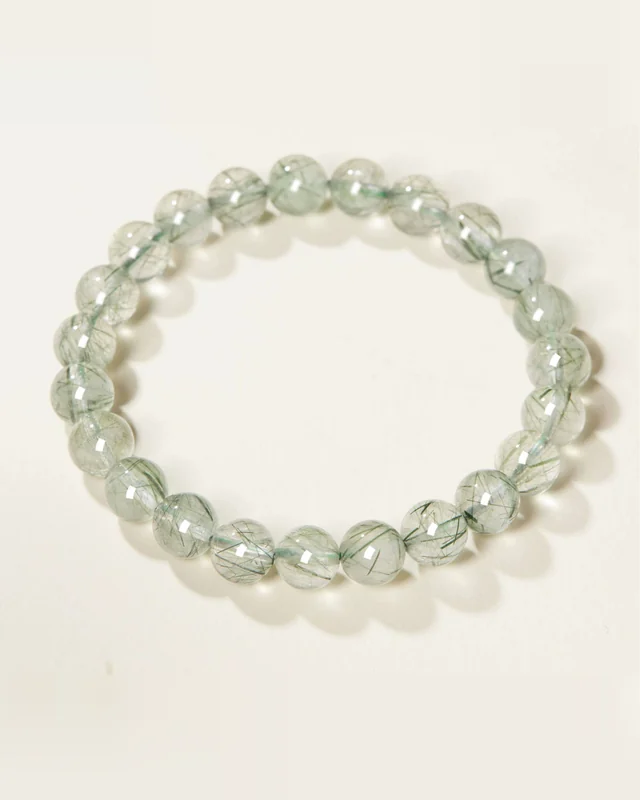
Prosperity · Career
8 mm Green Rutilated Quartz Bracelet · Renewed Prosperity
Green rutilated quartz
$98.008 mm · Wood