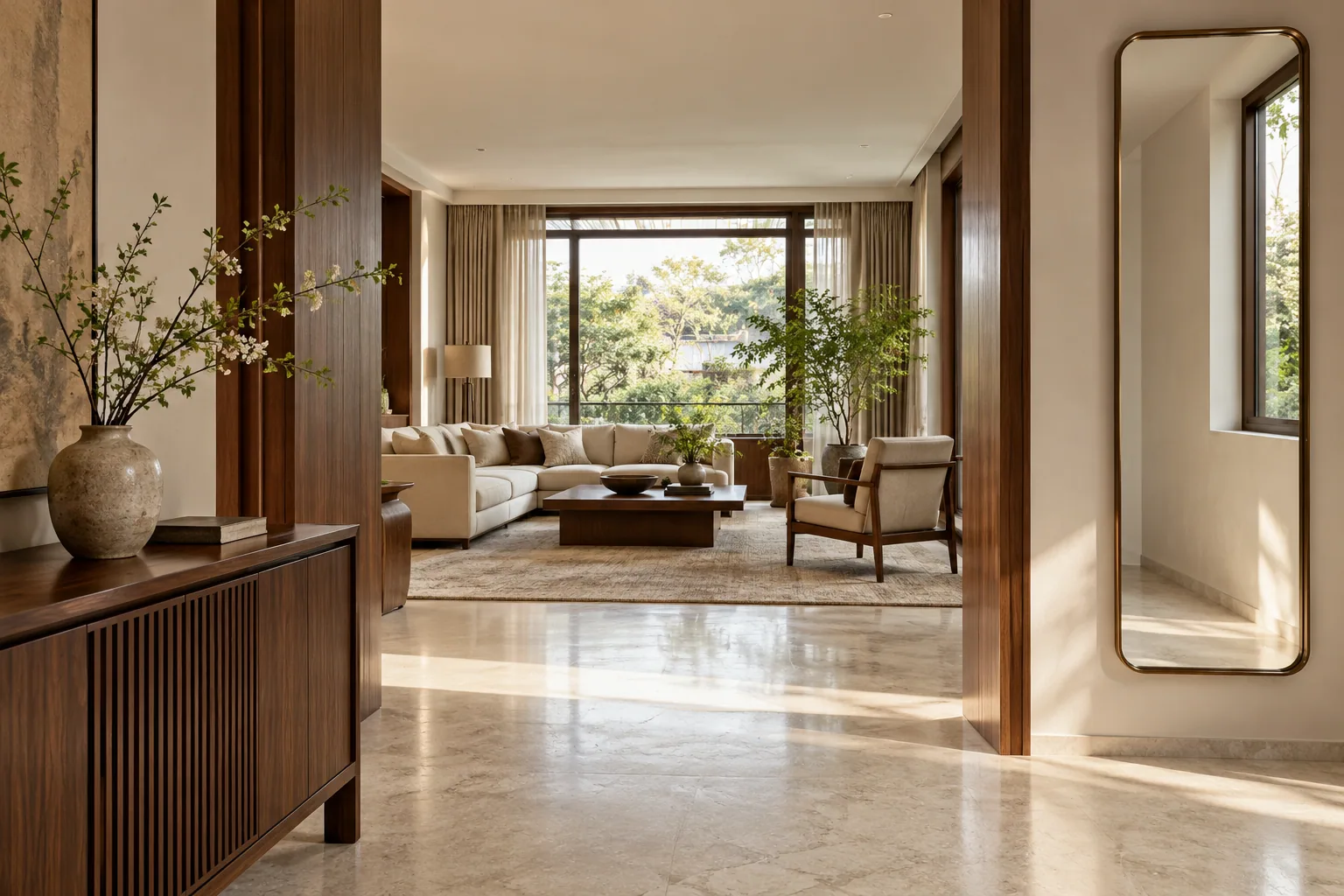
A mirror repeats what is already in the room
Think of a mirror as a window that reproduces a view. It might bring a bright window into sight, but it can also repeat an untidy surface, an exposed lamp or a narrow passage. The reflection changes between standing at the entrance, sitting on a sofa and lying in bed. An attractive frame is only one part of the choice.
Test an angle with an existing movable mirror before committing to a new position. One person can observe from the place actually used while another adjusts the angle. Decide whether the desired view is a plant, a complete dressing reflection, the doorway or a quieter part of the wall.
A large mirror also repeats moving people, opening doors and changing light. Several mirrors facing each other can make a hallway visually complicated. One clear, purposeful reflection is often easier to understand than multiple overlapping views.
Check a bedroom mirror in daylight and after dark
A prohibition on bedroom mirrors is not shared by every Feng Shui approach. Anjie Cho describes a BTB use of mirrors to provide a door view where the bed position cannot. Other traditions or personal preferences favor fewer reflections around rest. Understanding the method helps avoid installing conflicting adjustments.
Observe from the pillow position. A reflection of corridor lighting, passing headlights or movement may suggest turning the mirror, using a side wall or placing it inside a cupboard door. A fitted wardrobe mirror does not automatically require replacing the wardrobe; compare its positions and practical covering options.
In a child’s room, use the child’s viewing height as well. A reflection that an adult misses while standing may be directly visible from the bed. The fixing, edges and surrounding activity should suit the occupant. A symbolic preference should not introduce a heavy object above the sleeping space.
At the entrance, allow space to use the mirror
A full dressing reflection can be useful near the door. A side wall often gives a convenient position and can avoid a mirror directly facing someone as they enter. Test the layout with the door open and the shoe seat or cupboard in use. Standing in front of the mirror should not block the principal route.
Some traditional interpretations discourage a mirror directly opposite the entrance. If you value that convention, a side position or the inside of a cupboard door may work. In a small entrance, adding a thick screen to avoid one relationship can create a more immediate obstruction.
Consider the wider reflection too. A neighbor’s doorway, a shared corridor or a bright light need not become the dominant picture inside your home. Your own dressing area, an artwork or an appropriate window view may provide a more settled result.
A bagua mirror has a distinct cultural role
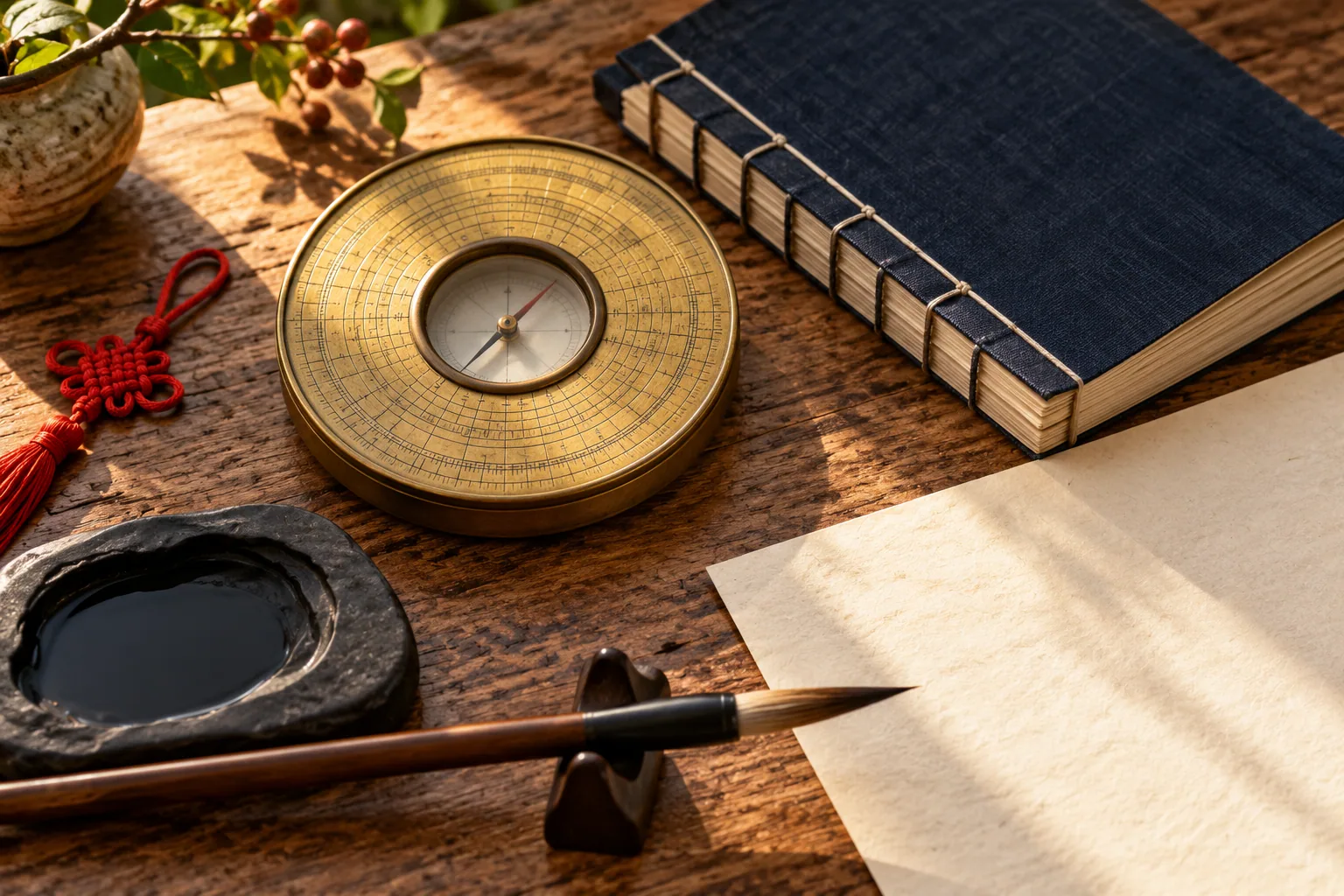
A bagua mirror combines a reflective surface with the eight-trigram symbols. Historic bronze mirrors in museum collections also carry trigrams, zodiac animals and directional imagery. These objects show that mirrors can hold cultural meanings as well as practical ones; they do not supply one universal modern installation rule.
Distinguish the everyday use of the mirror, the meaning of its symbols and the requirements of the particular tradition. Flat, convex and concave mirrors produce different reflections. An eight-trigram surround does not make these forms interchangeable.
If the aim is simply a brighter entrance or a place to check clothing, an ordinary mirror can meet that need. A bagua-mirror practice deserves consideration of the external setting, shared walls and neighboring homes. It should not become a confrontational gesture toward another household.
Choose the mirror that serves a clear purpose
Height should suit the people using it, while the frame and nearby light affect whether the view is complete and comfortable. For dressing, check standing distance and the whole reflection. For a view of an entrance, observe from the actual seated or lying position. Those tasks may need different mirrors.
A small home may benefit most from retaining one useful mirror. Give it a place to stand, room to pass and an acceptable reflection at different times. If a rental mirror cannot be moved, adjust surrounding furniture or lighting to change what it shows.
A reflective surface also needs cleaning and secure installation. Deal with cracks, movement or unstable fittings as physical issues. The Feng Shui language of clarity and openness can be expressed through a reflection that is comfortable, legible and useful in ordinary life.
Questions & answers
Can a bedroom mirror reflect the bed?
Approaches differ. Examine what is reflected and the nighttime light from the bed itself. Adjust the angle or position if the reflection is unwelcome.
Why consider an entrance side wall?
It can preserve door movement and circulation while avoiding a direct reflection on entry. Check the actual space needed to stand there.
Is a bagua mirror the same as a bagua floor-plan map?
No. One is a symbolic reflective object; the other is a diagram used to interpret space.