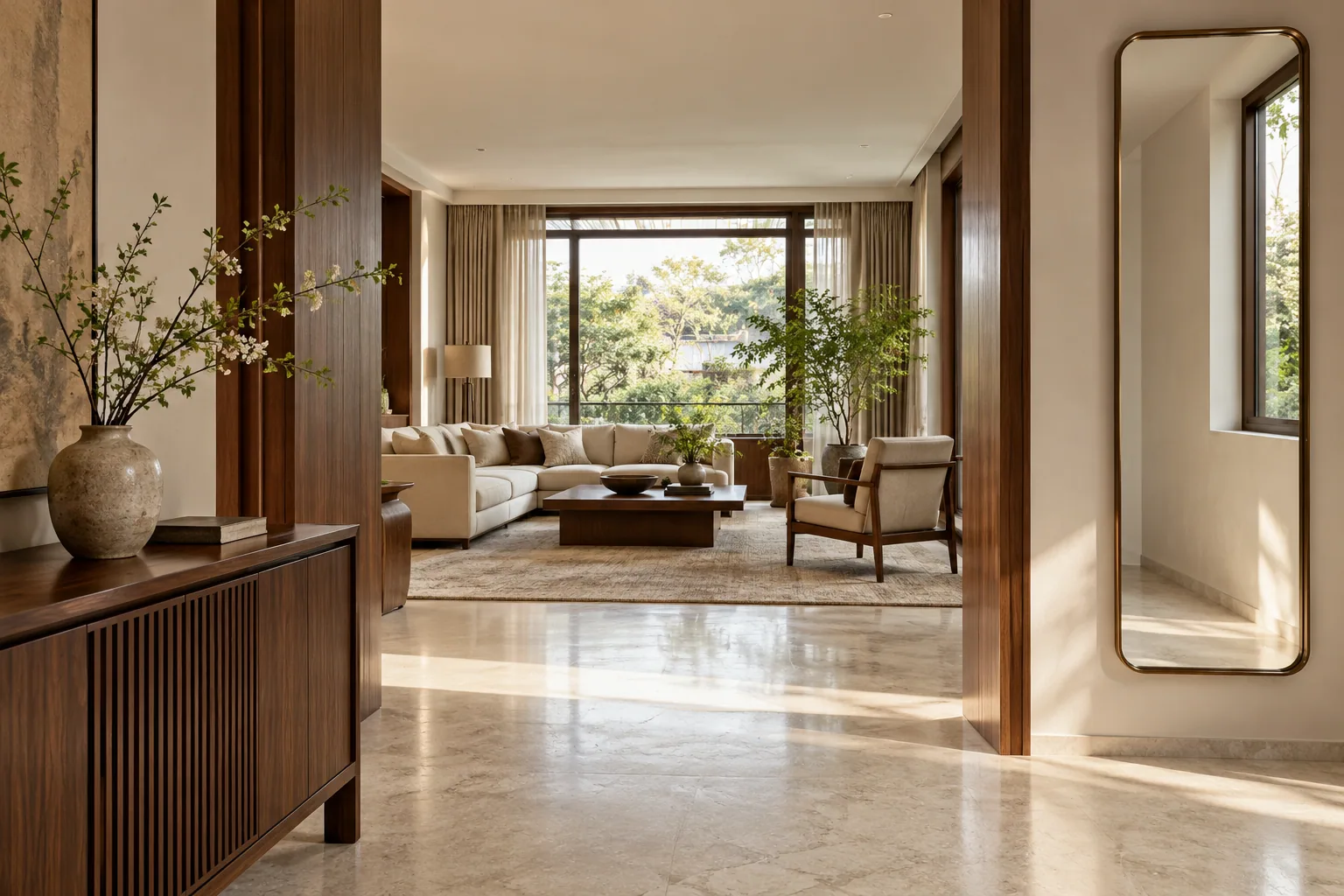
Why the entrance is called the mouth of qi
Many Feng Shui approaches give the entrance an important role in receiving the outside world and refer to it as a mouth of qi. This has a cultural association with opportunity and welcome, while the doorway also brings light, sound and activity into the home.
The first impression involves more than a door colour. A legible number, light at the lock or step, a door that opens properly and a place to pause inside all contribute to arrival. These ordinary details give the welcoming symbolism something tangible to work with.
Some households usually enter through a garage or side door while the formal entrance is seldom used. Record both the formal and frequently used doors. Different methods may interpret them differently, so one photograph of the facade should not stand in for all the entrance relationships.
Connect opening, putting things down and changing shoes
Try arriving with shopping bags in both hands. Where can the first bag naturally be placed? If a cabinet forces you sideways before you can reach a surface, the entrance may look decorative but remain awkward. A small stable landing surface can solve more than a large display occupying the floor.

Measure shoe storage with the door and a person in use. Tilt-out, hinged and drawer storage require different space. Keep corners away from the main route and preserve the entrance opening. Everyday shoes can remain reachable while seasonal pairs live elsewhere.
Umbrellas, coats, keys and recycling also need a place. Items waiting to leave can pause briefly without becoming a permanent feature. The aim is not an empty entrance; it is a clear arrangement for actions that happen repeatedly.
When the entrance looks straight toward a window
A direct door-to-window relationship is sometimes interpreted as qi passing through too quickly. In an existing home, examine the actual movement, whether the view exposes a private area, and whether the intervening room has somewhere to pause. A sightline, a walking route and real airflow are related but different things.
Where space permits, a sofa side, lower cabinet or rug can suggest an arrival and seating zone. Lower furniture can guide movement while keeping daylight. A freestanding screen needs enough room and a stable position; blocking the window to create a bend is rarely a useful trade.
In an open apartment, a concentrated place for coats or a change in lighting may be enough to establish an entrance. Put storage to one side so the first step inside does not conflict with a drawer or chair. A thick partition is not necessary to give a small home a clear sequence.
Give mirrors, colour and objects a particular purpose
An entrance mirror can support dressing, but it can also repeat a cluttered corridor or a bright light outside. A side wall often provides a useful view while avoiding an immediate head-on reflection. Test it with the lighting and cupboard doors in their ordinary positions.

Door colour belongs within the existing facade, light and maintenance conditions. Five Elements colours can express a preference or an auspicious theme, without making one festive colour the answer for every facing direction. In a rental, a clean surface, clear door number and suitable light can be considered even when repainting is not an option.
An object with a meaning you appreciate can become a recognizable focal point. Its base should be stable and leave the bag surface and shoe-changing area usable. Plants need actual light; hanging pieces need clearance from the moving door. A focused display is easier to understand than many unrelated symbols crowded together.
Questions & answers
Does every entrance need a screen?
No. Lower furniture, storage position and lighting can create a transition while preserving access and daylight.
Does a door facing a window require renovation?
Examine the actual route and view first. Furniture and zoning may offer smaller adjustments before considering construction.
Should an apartment reading use the building door or apartment door?
They represent different levels of entry. Record both and identify the level used by the particular analysis.