 View larger
Green aventurineUndyed · 8 mm
Auspicious bracelets / Wood
8 mm Green Aventurine Bracelet · Scholarly Aspiration
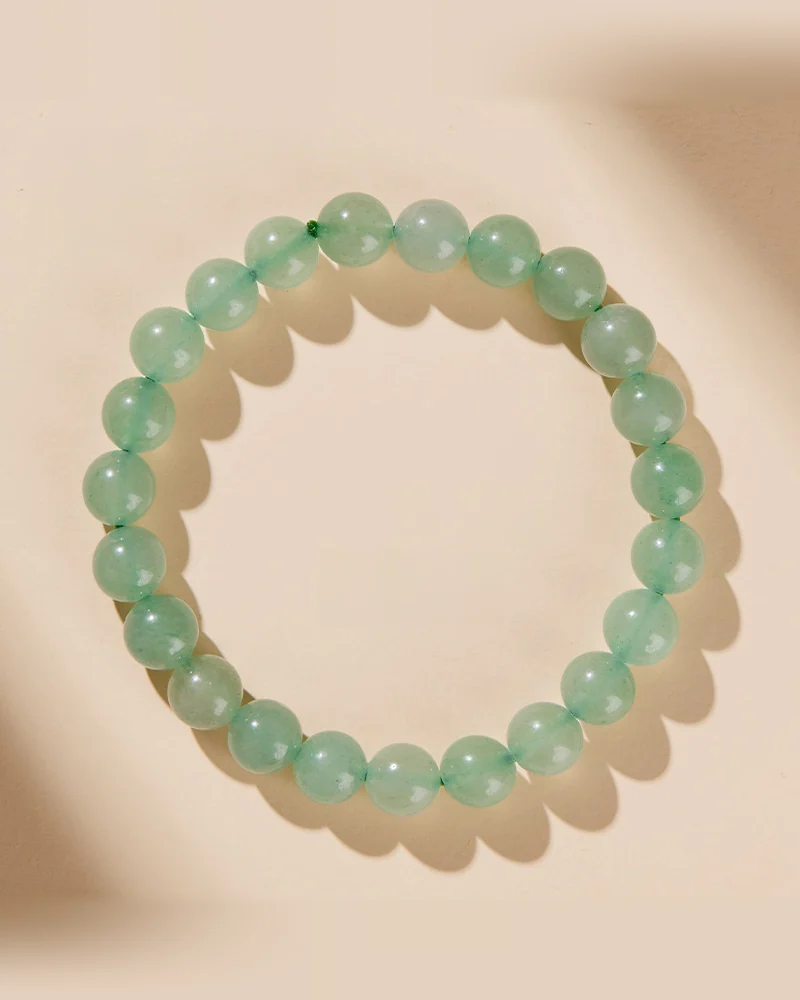
Undyed green aventurine rounds, approximately 8 mm, in a neat single strand that sits comfortably at a desk.
$68.00USD
- Gemstones & materials
- Green aventurine (aventurine quartzite)
- Bead shape & size
- Round, approximately 8 mm
- Treatment
- Undyed; no filling or coating
- Cord
- Stranded elastic, single strand
- Approximate weight
- 15–18 g at 16 cm
- Style
- WX005
Prepared in 5 days after payment
Shipping: Asia $10; Europe, US, Canada, Australia & NZ $20
Ready-designed returns may be requested within 14 days. See returns policy
Scholarly Aspiration
A quieter green for long days of study
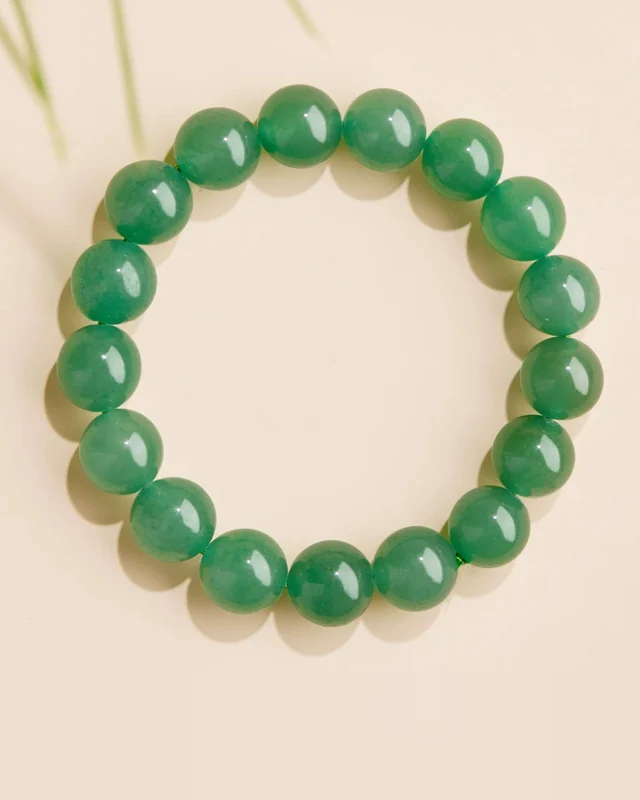
Scholarly Aspiration is a single strand of round green aventurine, each bead approximately 8 mm across. It is the same undyed stone as our 10 mm Rising Fortune, set in a finer proportion: close enough to the wrist to sit under a cuff, light enough to forget during a long afternoon of reading, and still clearly a stone bracelet rather than a thread. The soft green varies a little from bead to bead, and a faint sparkle appears when the light moves across it.
The design takes its name from Wenchang, the Chinese patron of literature and examinations, to whom generations of students have offered a wish before a test. Green belongs to Wood in the Five Elements, the element of steady growth, so the bracelet is often chosen for exam years, professional qualifications, a new course or a first research post. If you prefer a fuller look in the same stone, compare the 10 mm Rising Fortune.
- Round green aventurine beads, approximately 8 mm, undyed.
- A slim, light strand that stays comfortable while writing or typing.
- Stranded elastic cord; rolls on over the hand without a clasp.
- Wrist sizes from 14 to 21 cm, with the bead count adjusted to your size.
Scholarly Aspiration
Scholarly Aspiration in detail
How the 8 mm strand wears at a desk, what the Wenchang name means, and how to choose the right fit.
01
Made for the desk, not just the occasion
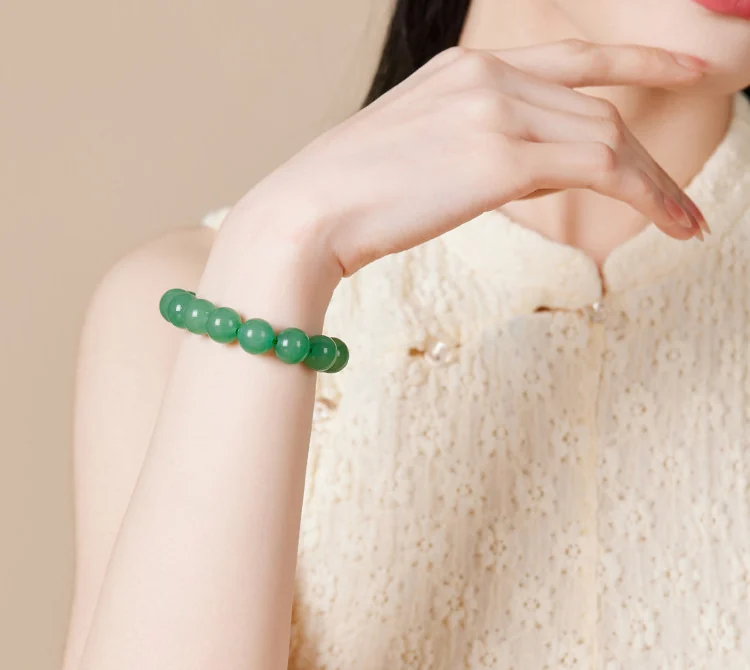
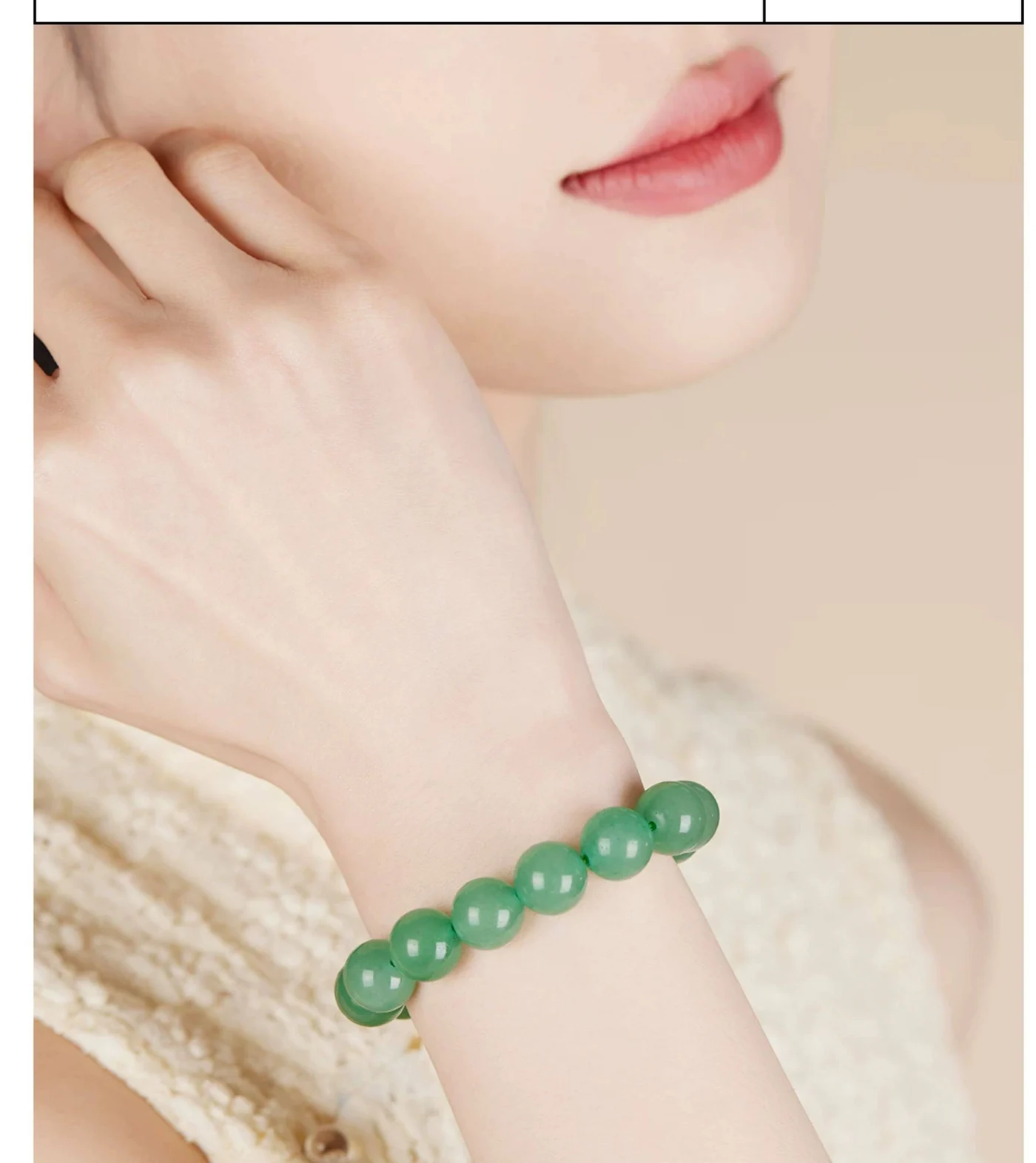
A study bracelet has a practical job before it has a symbolic one: it has to stay out of the way. At 8 mm, these beads sit low on the wrist. They do not clatter against a laptop, catch on the edge of a notebook or pull at a sleeve when you reach for a book. Many people who find a 10 mm strand too present for daily work are comfortable wearing this one from morning lectures to late revision.
The weight helps too. A 16 cm strand of 8 mm aventurine weighs roughly 15 to 18 grams, a little over half the weight of the 10 mm design. On the wrist that difference is easy to feel, especially for someone who writes by hand for long periods or rests the forearm on a desk. The polished beads are smooth and round, so there are no edges to press into the skin.
There is also the matter of attention. A large or noisy bracelet invites fidgeting; a slim strand of smooth beads tends to be something you notice only occasionally, when your hand rests on the desk or you turn a page. Some people like to roll a bead between finger and thumb while thinking through a problem, and the polished 8 mm rounds are a comfortable size for that small habit. Green is a restful colour to glance at during long sessions, too, which is part of why it has long been associated with study rooms, bamboo screens and the scholar’s desk in Chinese painting.
Visually, 8 mm is the classic everyday bead size. It reads as a clear line of green at conversation distance, pairs easily with a watch on the same arm and fits under most shirt and knit cuffs. It is a bracelet you can put on at the start of term and simply keep wearing.
02
How 8 mm compares with other sizes
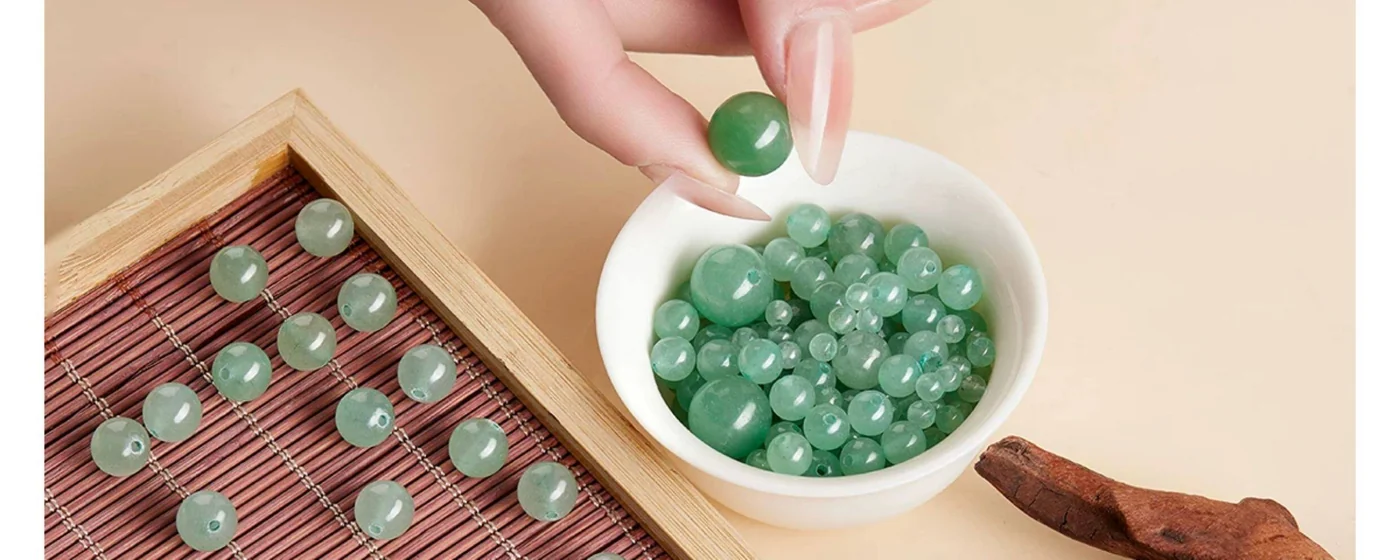
The scale comparison below shows the same green aventurine from 4 to 12 mm. The difference is larger than the numbers suggest. Four millimetres is almost a thread of colour; six millimetres is light and delicate; eight millimetres is the point at which each bead is clearly visible as a round stone; ten millimetres becomes a fuller, more noticeable band.
Scholarly Aspiration sits deliberately in the middle. It suits most wrists from slender to broad, works alone or stacked, and is easy to wear in settings where a large bracelet might feel out of place, such as a library, a laboratory or a formal examination hall. If you would like the stone to be the first thing people notice, the 10 mm Rising Fortune is the stronger choice.
03
Wenchang and the tradition of the study wish
Wenchang began as the name of a group of stars near the Big Dipper that Chinese astronomers associated with literary talent and official careers. Over the centuries it became a deity, Wenchang Dijun, honoured in temples across China as the patron of scholars. During the long era of the imperial examinations, candidates visited Wenchang shrines before travelling to sit the tests that could change a family’s fortunes, and many still do so today before university entrance exams.
The wishes attached to Wenchang are modest and practical: a clear head, a good memory, steady effort and a fair result. That is the spirit of this bracelet. Green aventurine brings the colour of Wood, which in the Five Elements stands for growth that happens gradually, ring by ring, rather than all at once. It is a fitting image for study, where progress is built day by day.
These meanings belong to culture and personal intention. The bracelet will not sit an exam for anyone, but many people find it helpful to wear something that marks a commitment, the way others keep a particular pen for exams or a note above the desk. If you would like an arrangement shaped around your own birth chart, a personal design begins with a fuller BaZi discussion.
04
What green aventurine is
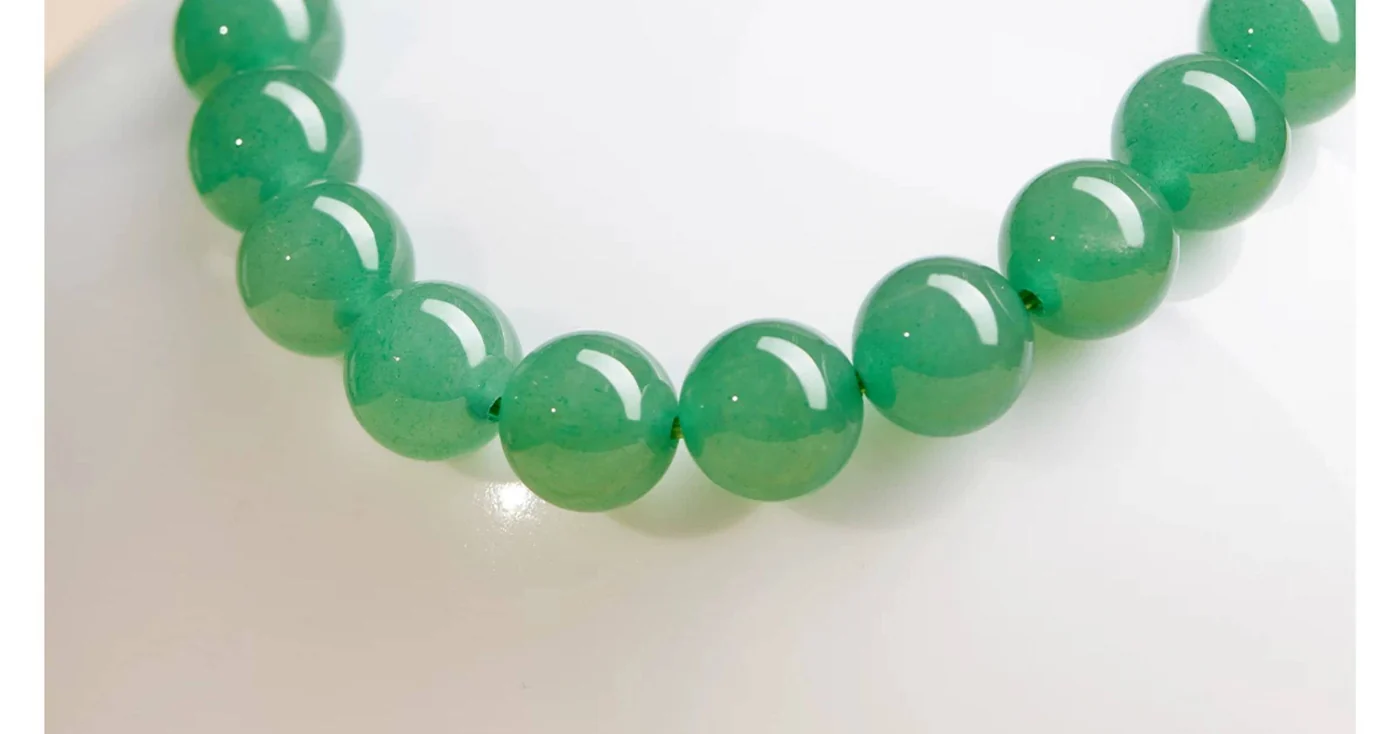
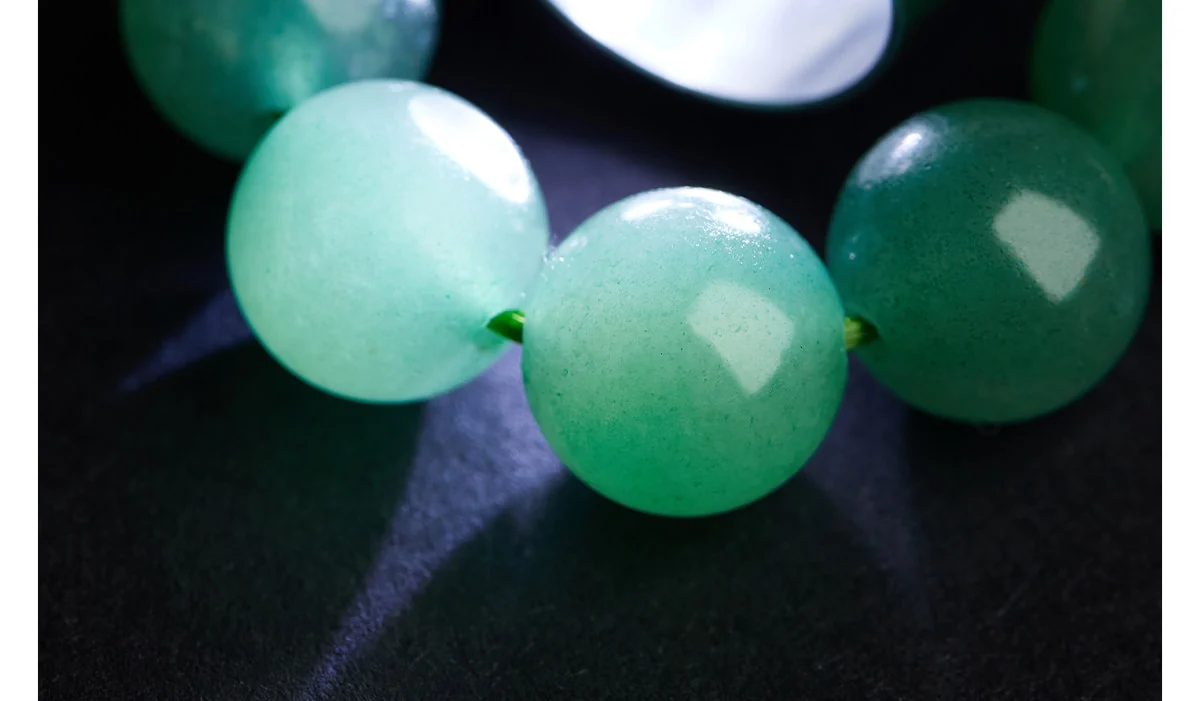
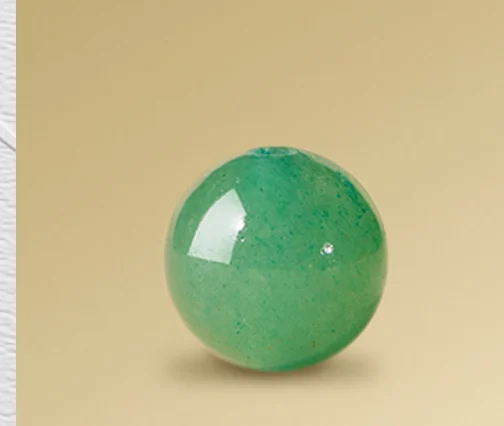
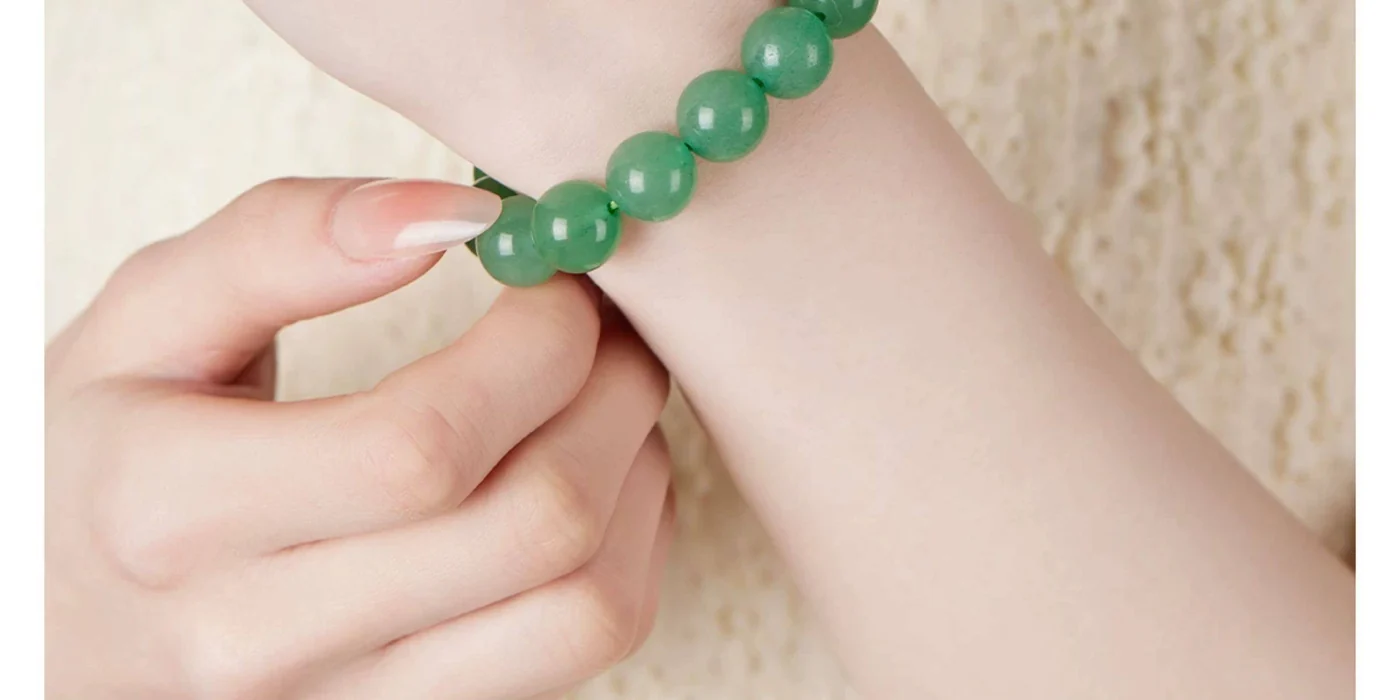
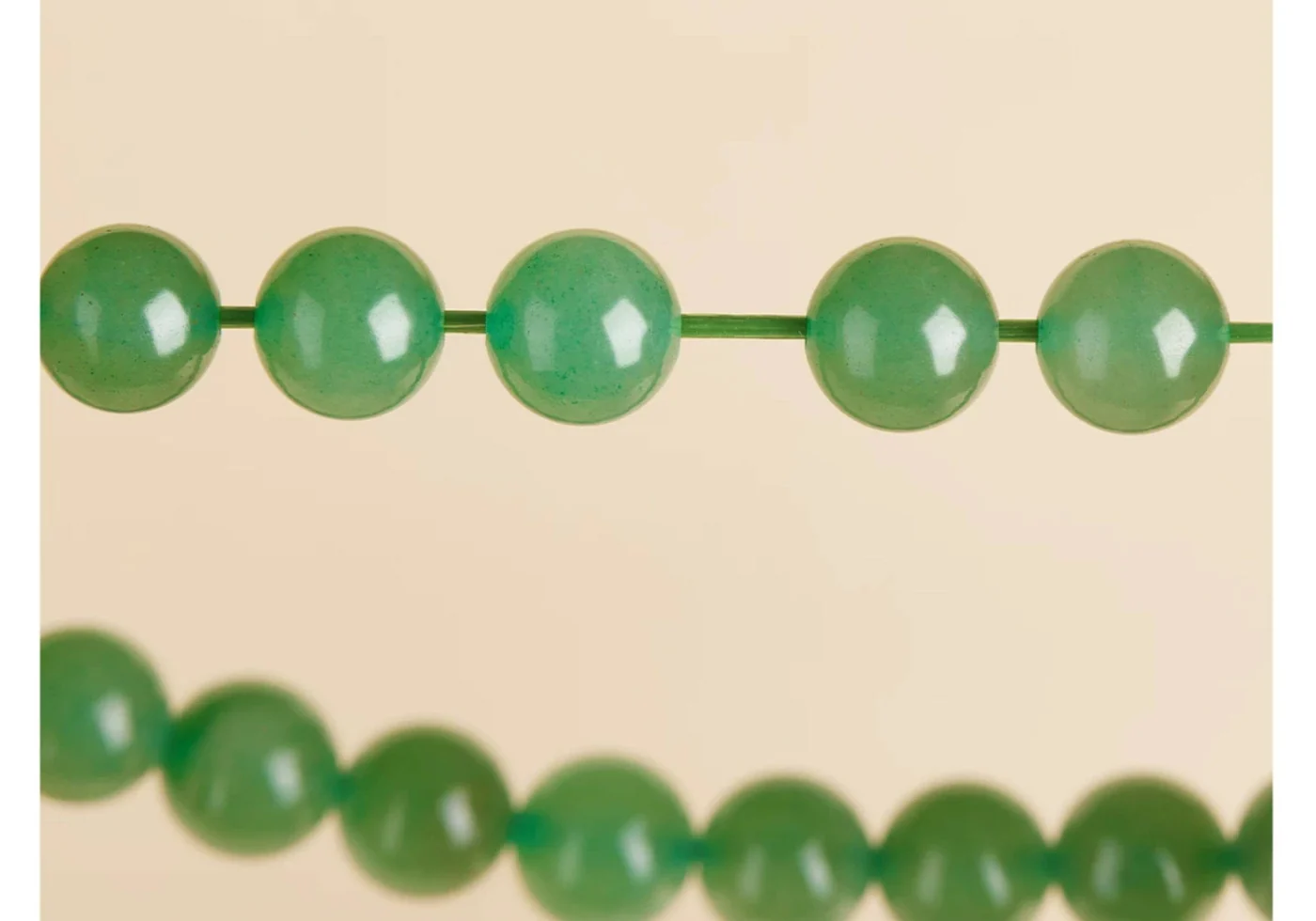
Green aventurine is a quartz-rich rock. Its green comes from tiny flakes of chromium-bearing mica, called fuchsite, scattered between the quartz grains. Those flat flakes also reflect light, which is why aventurine shows a faint glitter when it moves. In close-up the stone has a fine, slightly granular texture beneath the polish, and from bead to bead the tone shifts gently between sage and leaf green.
It is a durable stone for daily wear, at about 6.5 to 7 on the Mohs hardness scale, and it does not need special treatment to look good. The beads used here are supplied as undyed, unfilled and uncoated, with a third-party identification report recording a spot refractive index of about 1.54 and a granular structure, the readings expected for aventurine quartzite. Dyed quartzite, a common imitation, often shows colour pooled in cracks and around drill holes, and a suspiciously uniform green from bead to bead.
In the Chinese trade the stone is known as dongling stone, and it is sometimes sold abroad as “Indian jade”. It is not jade; it is simply a green stone with its own pleasures, chiefly its calm colour and quiet sparkle.
05
Choosing your wrist size
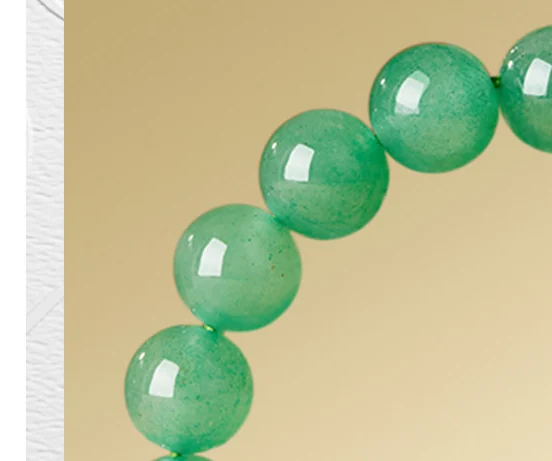
Measure the wrist itself with a soft tape or a strip of paper, just above the wrist bone where you usually wear a bracelet. Keep the tape snug without squeezing and choose that number on this page. The strand is made with a small allowance so that it moves slightly and stays comfortable through the day.
An 8 mm strand needs more beads than a 10 mm one for the same wrist. The table shows typical counts; your bracelet may differ by one bead, because natural beads vary fractionally and each strand is checked against the measurement when it is made. Between two sizes, choose the larger for a relaxed fit or the smaller for a closer one.
Because the strand is elastic, roll it on over the knuckles rather than pulling it wide. That small habit keeps the cord in good condition for much longer.
| Wrist size | Approximate inches | Typical bead count (8 mm) |
|---|---|---|
| 14 cm | 5.5 in | 22 beads |
| 15 cm | 5.9 in | 23 beads |
| 16 cm | 6.3 in | 24 beads |
| 17 cm | 6.7 in | 25 beads |
| 18 cm | 7.1 in | 27 beads |
| 19 cm | 7.5 in | 28 beads |
| 20 cm | 7.9 in | 29 beads |
| 21 cm | 8.3 in | 30 beads |
06
Wearing it through the school year
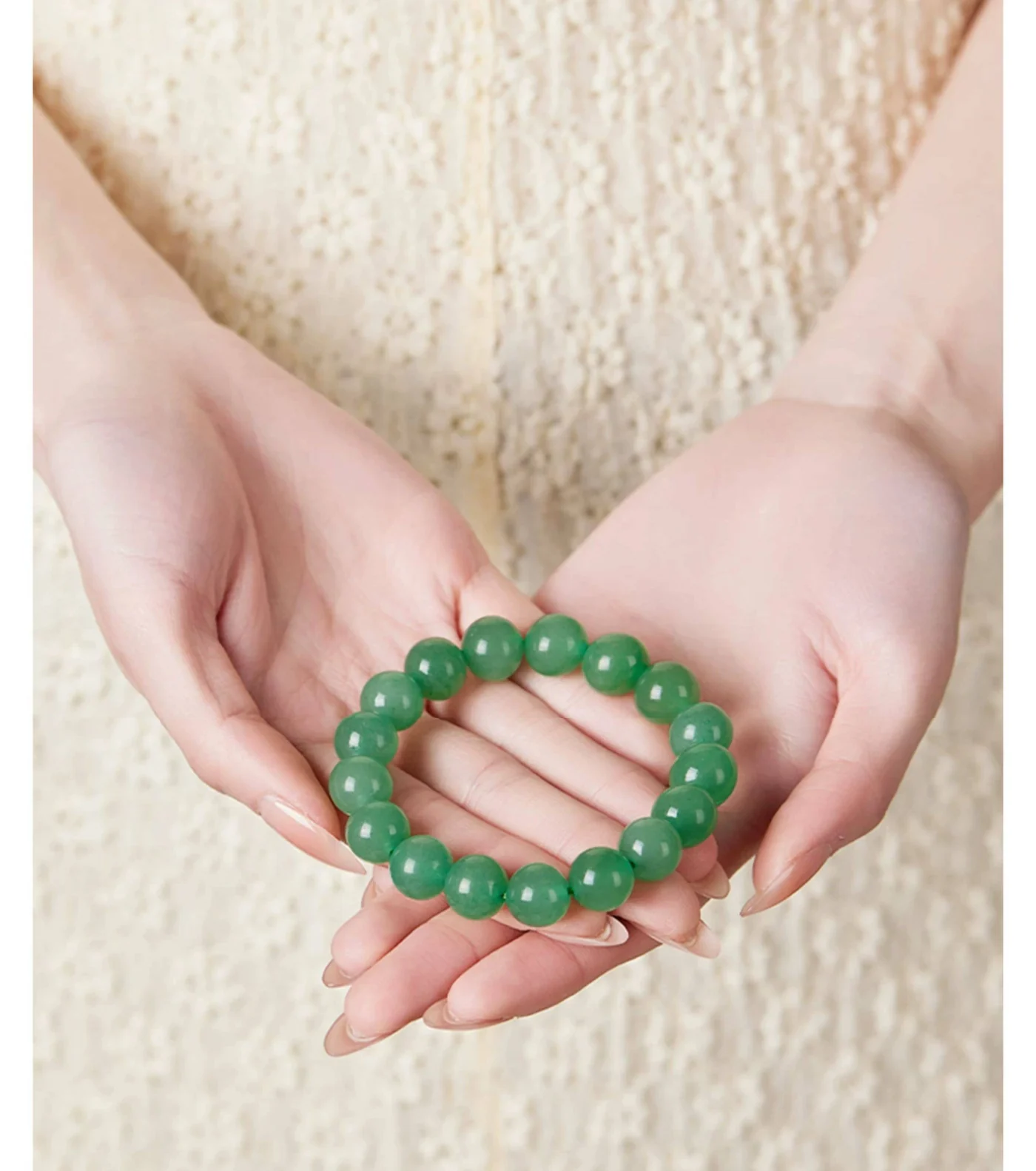
Many people treat a study bracelet as a small ritual rather than an accessory. Some put it on only when they sit down to work, so that the act of sliding it over the hand marks the start of a focused session; others wear it all day and take it off in the evening as a signal that study is finished. Either habit is a simple way of giving a long project a beginning and an end each day.
Through the year, the bracelet can follow the rhythm of the calendar. In the first weeks of a course it is a reminder of the goal you set; in the middle of term, when motivation fades, it is a quiet nudge to keep going; in exam season it travels with you to the library and, where the rules allow, into the exam room. After results come out, many people keep wearing it as a record of what they worked through, or pass it on to a younger sibling starting the same path.
Practically, 8 mm beads are easy companions for all of this. They sit comfortably under the wrist when you write, slip under a coat sleeve on the way to class and do not distract during online lectures or video calls. If you also wear a fitness tracker or watch, consider keeping the bracelet on the other wrist so the beads stay free of knocks and the device sits flat.
Finally, there is no need to protect the bracelet from use. Natural green aventurine is happiest worn often: a light film of polish from daily handling only softens the surface, and the stone’s colour does not change with wear.
07
A gift for an exam year
Scholarly Aspiration is most often given at the start of something demanding: a final school year, university entrance exams, a professional qualification, a thesis or a first job in research or teaching. It also suits a graduation, as a keepsake of the effort that led there. The 8 mm size makes it an easy choice when you do not know someone’s taste in jewellery well; it is understated enough for almost anyone.
A short note explaining the name helps the gift carry its meaning, especially for someone who has not heard of Wenchang. If you cannot measure the recipient’s wrist, choose the most likely size; an unworn ready-designed bracelet can be returned within 14 days of delivery. For a family gift, the 10 mm Rising Fortune in the same stone makes a natural pair for a parent or older sibling.
08
Care during a busy term
Aventurine is hard-wearing, but polished stone can chip if it knocks against a stone counter or metal desk edge, so take the bracelet off for sport and heavy work. Hand sanitiser, perfume and cleaning sprays do not harm the stone, though they dull the polish over time and age the elastic; let them dry before putting the bracelet back on.
Wipe the beads with a soft cloth now and then and let the strand dry flat. Do not soak it or use ultrasonic cleaners. Store it flat in a pouch, away from harder stones that could scratch it. The stranded elastic, made from many fine filaments twisted together, is strong and resilient, but every elastic relaxes in time. If gaps open between the beads or the cord looks pale, restring it before it breaks; with daily wear that is usually after one to two years.
Questions & answers
Is the green colour natural?
Yes. The beads are undyed; the colour comes from green fuchsite mica in the stone, so each bead varies slightly in tone.
What is the difference between this and Rising Fortune?
Both use the same undyed green aventurine. Scholarly Aspiration uses 8 mm beads for a neater, lighter strand; Rising Fortune uses 10 mm beads for a fuller look.
Can I wear it during an exam?
Usually, yes. A few test centres ask candidates to remove accessories, so check the rules for your exam in advance.
How many beads will it have?
Typically 22 beads for a 14 cm wrist, rising to about 30 beads for 21 cm.
Can I wear it with a watch?
Yes. The 8 mm size is slim enough to sit beside a watch, though wearing them on separate wrists avoids knocks.
Is it suitable for men?
Yes. The design is unisex, and 8 mm is a common size for men’s everyday bracelets.
Can I shower or swim with it?
It is best not to. Water will not hurt the stone, but soap, chlorine and repeated soaking weaken the elastic.
Will it look exactly like the photographs?
The material, size and finish match the photographs. Natural variation means the exact shade and small darker specks differ from strand to strand.
Does it need cleansing or charging like some crystals?
No special ritual is required. If you enjoy one, keep it gentle: avoid soaking the strand or leaving it in salt, which can damage the elastic cord.
Which wrist should I wear it on?
Whichever is more comfortable. Many people choose the hand they do not write with, so the beads stay clear of the page and the desk; others follow the folk custom of wearing a stone on the left wrist.
Can I give it to a child?
It suits teenagers well. For younger children, supervise wear, since a broken elastic strand releases small beads.
Compare sizes and arrangements in this material
Compare the material, bead shape and size to choose the arrangement that fits your style.
| Design | Materials | Bead shape & size | Ordering |
|---|---|---|---|
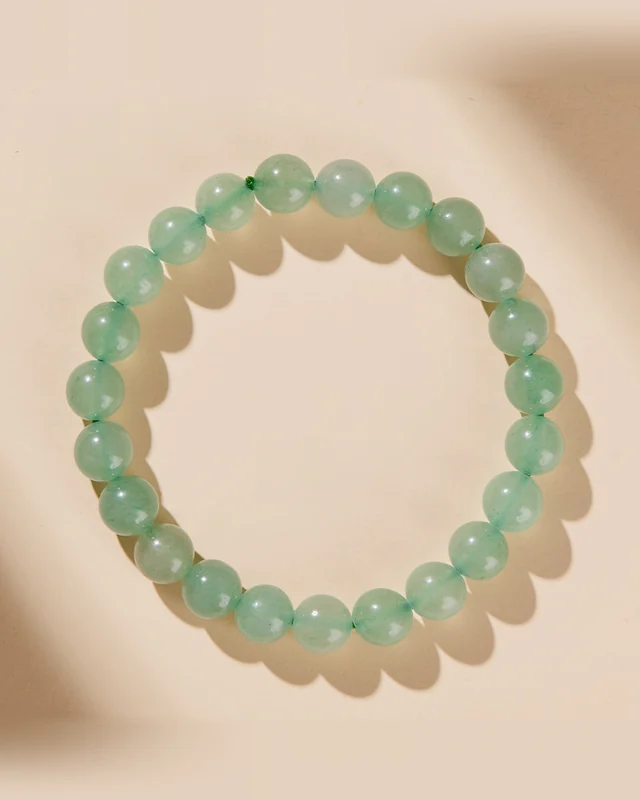 8 mm Green Aventurine Bracelet · Scholarly AspirationThis design | Green aventurine | 8 mm | $68.00 USD |
| 10 mm Green Aventurine Bracelet · Rising Fortune | Green aventurine | 10 mm | $78.00 USD |
Know the materials in this bracelet
Compare these related designs
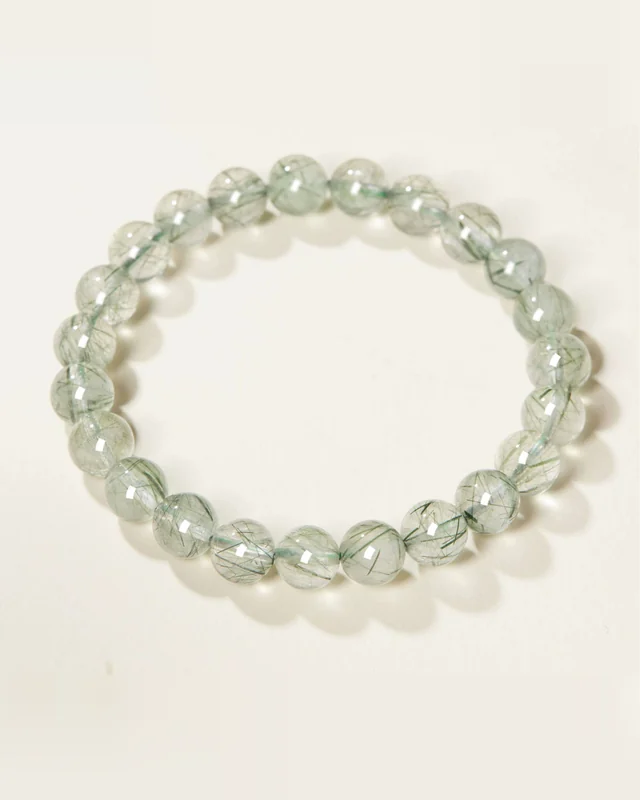
Prosperity · Career
8 mm Green Rutilated Quartz Bracelet · Renewed Prosperity
Green rutilated quartz
$98.008 mm · Wood
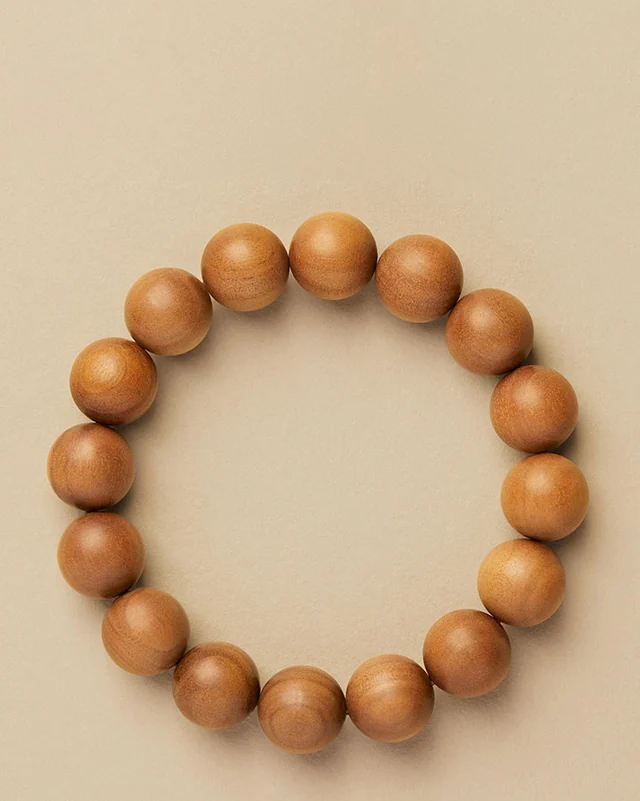
Career · Balance
8 mm Indian Sandalwood Bracelet · Helpful Connections
Indian Sandalwood
$64.008 mm · Wood
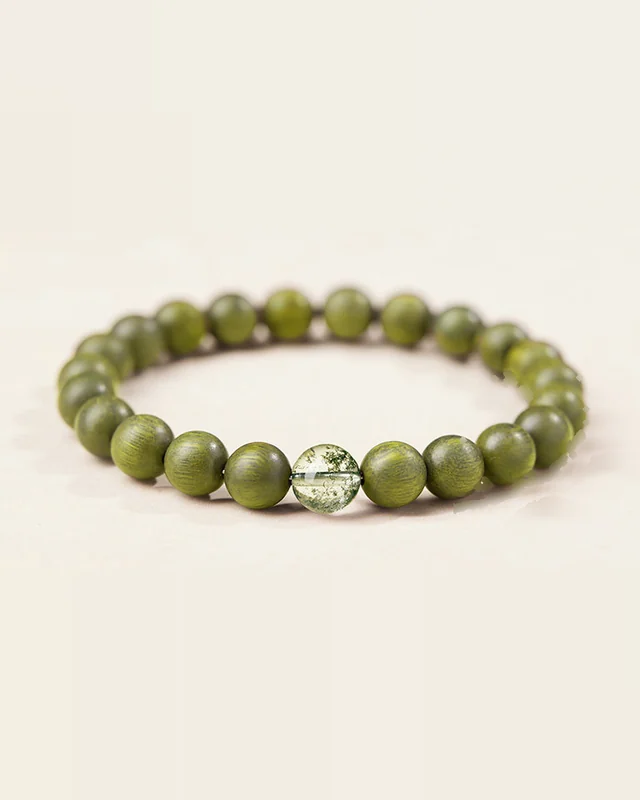 Personal designs
Career · Wisdom
Custom Green Sandalwood and Green Phantom Quartz Bracelet · Wood Career
Green sandalwood · Green phantom quartz
Quoted after we confirm your design8 mm · Wood