Tiny crystals and a broad family
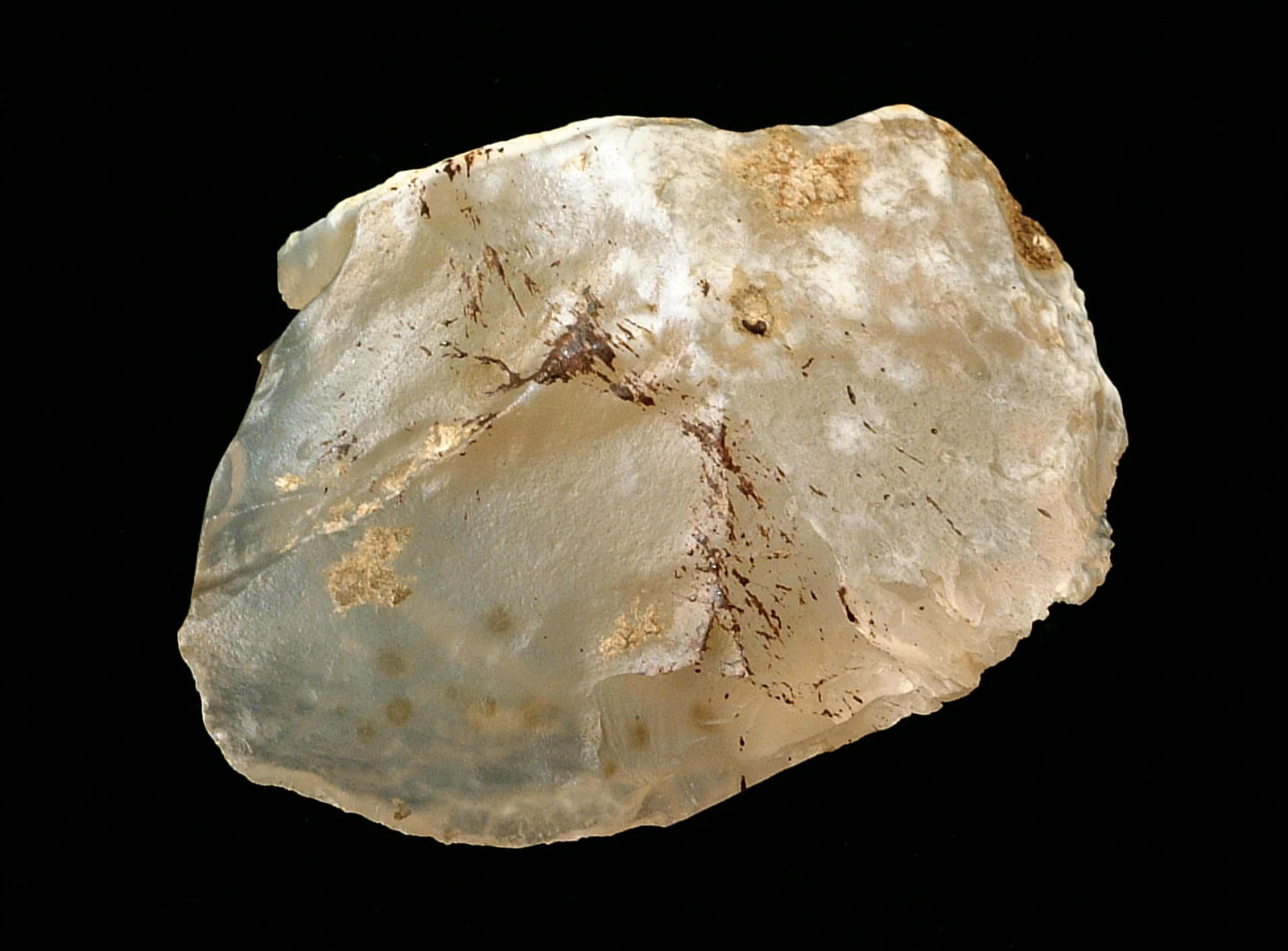
Chalcedony is a fine-grained form of quartz whose individual crystals are too small to see as obvious crystal points. IGS explains both its broad family use and the common trade practice of calling single-color translucent material chalcedony. Those two uses can appear together.
Agate, carnelian and onyx emphasize particular patterns or colors, while chalcedony describes a family relationship. Trade language can overlap, so a complete description should include the actual appearance and treatment rather than rely on a familiar name alone.
Chalcedony is not jadeite or nephrite. A soft-looking surface may resemble another material aesthetically without sharing its structure or value. Accurate names are still necessary when colors and polish look similar.
Swipe to see the full comparison
| Common name | Typical emphasis | Also check |
|---|---|---|
| Single-color chalcedony | Translucent, relatively continuous color | Color, treatment and dimensions |
| Agate | Bands or a named pattern variety | Actual pattern and variety description |
| Carnelian | Orange-red to reddish brown | Tone, translucency and treatment |
| Onyx | Bands or commercial black chalcedony | Identity, color treatment and construction |
White, blue, lavender, green and warm red
White or grayish-blue chalcedony can show gentle translucency, with thickness changing how light passes through it. Pale purple and blue varieties may carry gray tones. An ordinary-light view shows daily appearance, while backlighting emphasizes transparency; each offers different information.
Green varieties include chrysoprase, while orange-red and reddish-brown colors recall carnelian. Actual color may be natural or treated. Purple, blue or green in a name is neither proof of natural color nor a fixed quality grade.
For design, pale beads give space, blue feels cooler and orange-red warmer. A single-color strand still has subtle cloudiness, tone changes and polish to enjoy. Not every piece needs to meet the visual expectations of a transparent faceted gemstone.
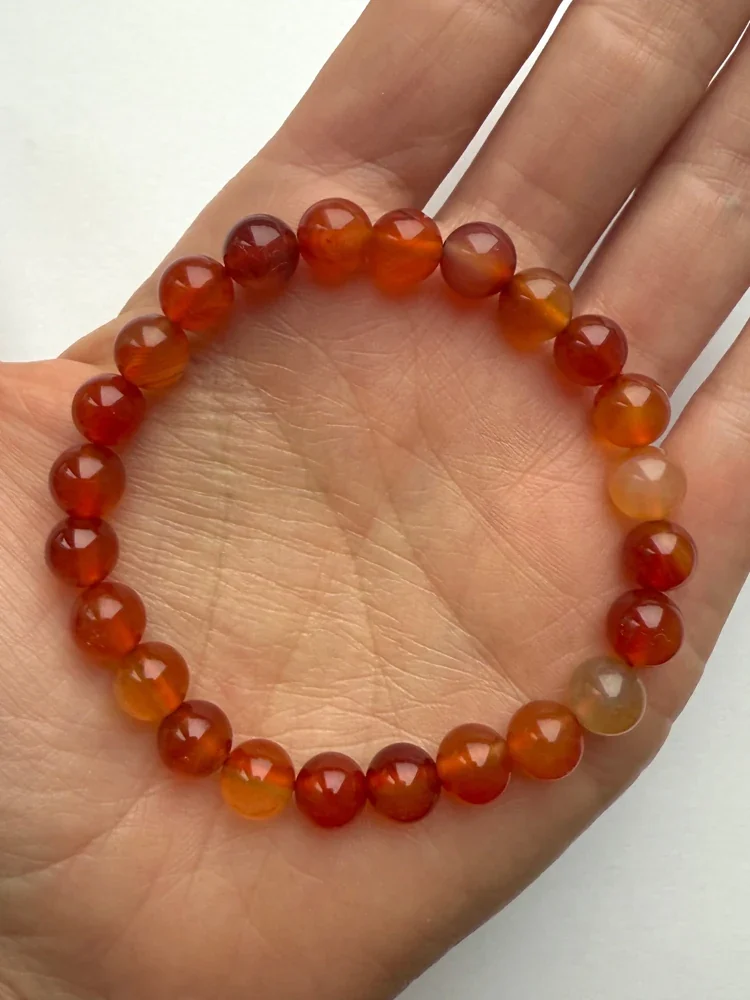
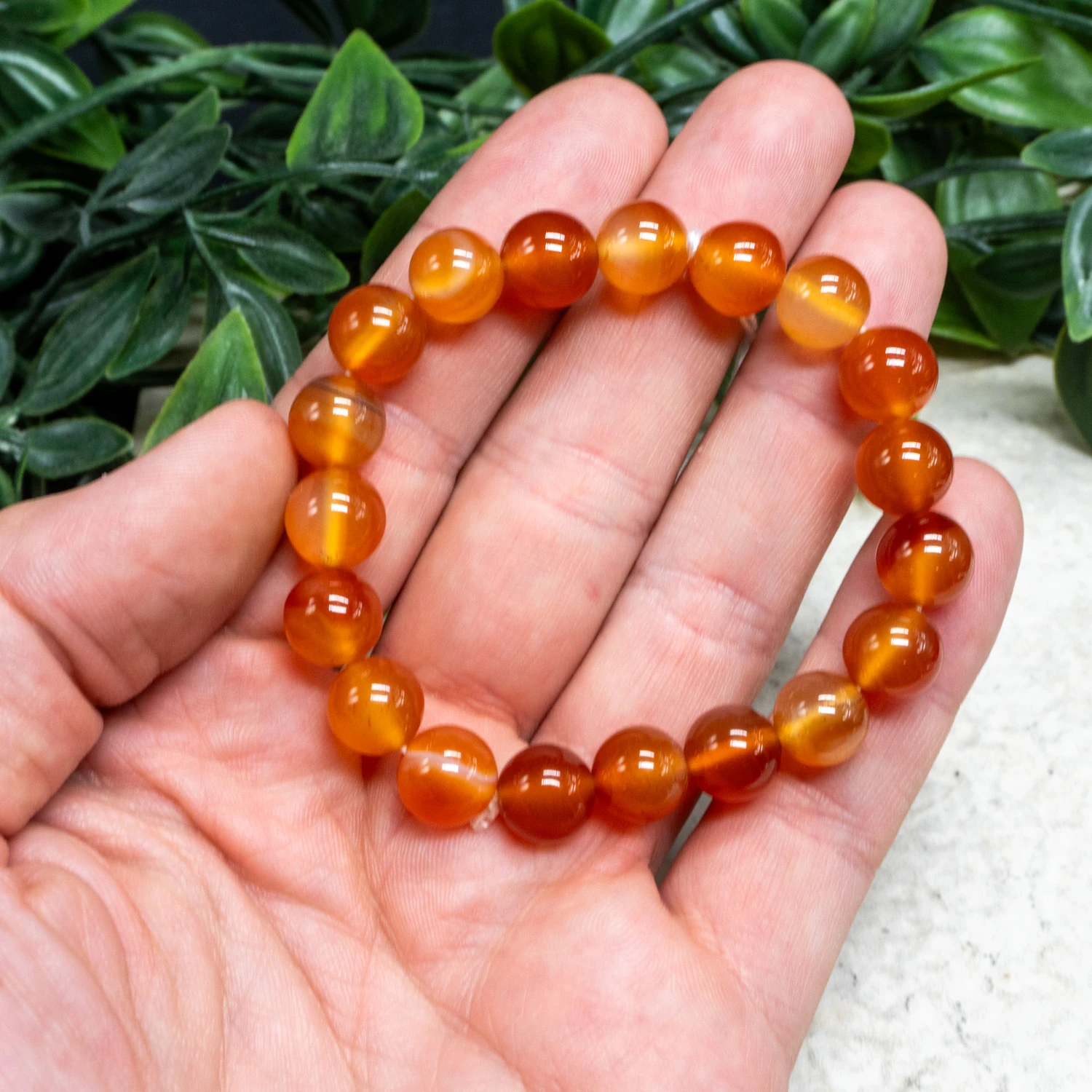
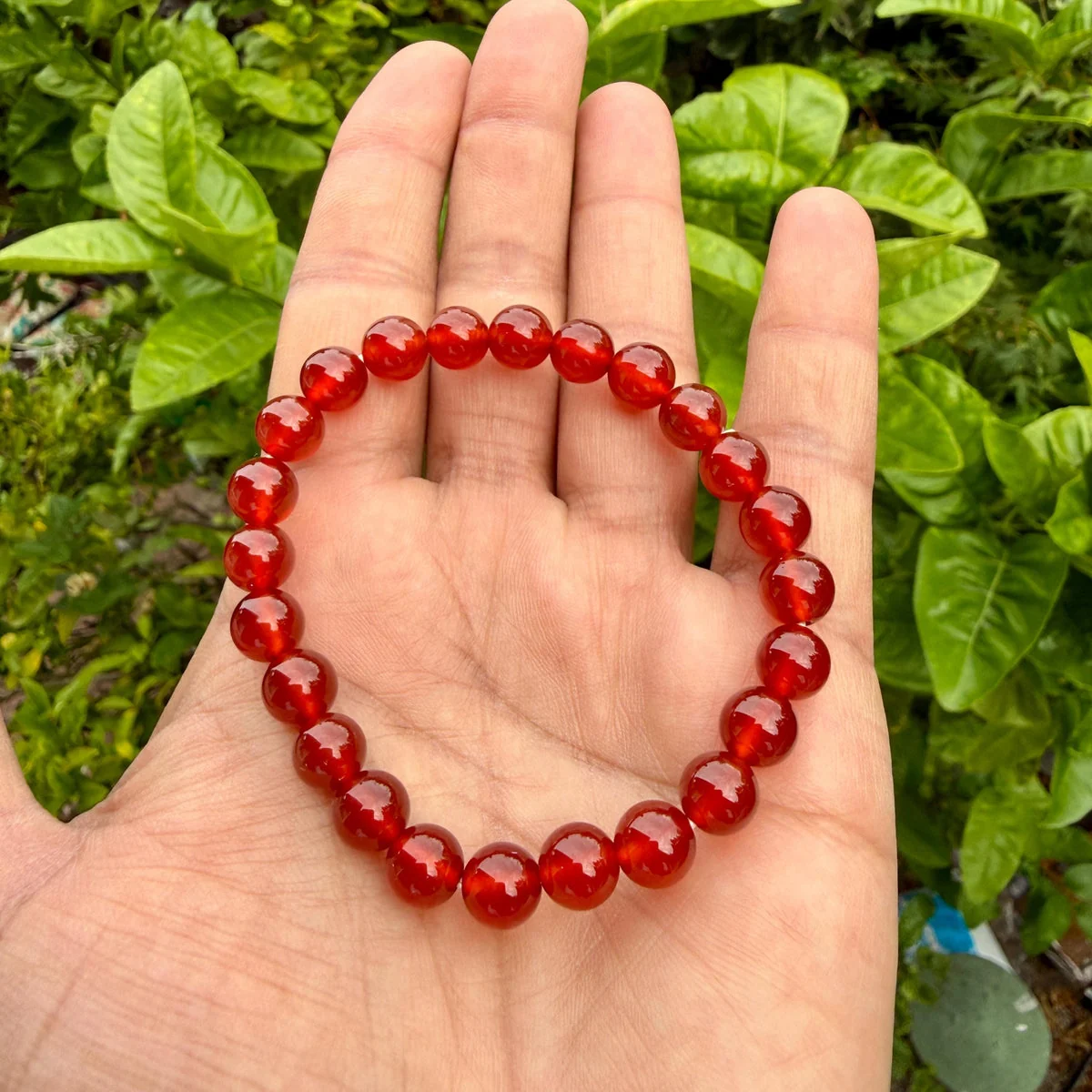
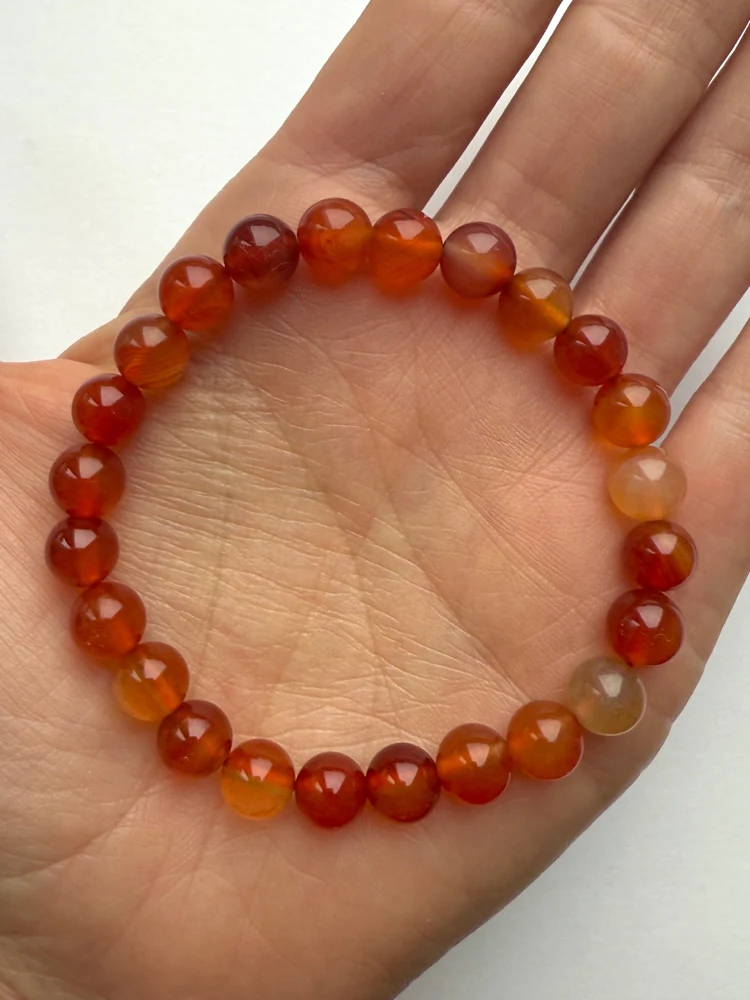
Carnelian pictured here is one family member present in the existing catalog, not a claim that every color discussed is stocked. It connects the wider material knowledge with a particular orange-red bead.
Color intentions in actual compositions
Meaning can change with color and form. Red can express celebration, a beginning or a zodiac-year wish; pale material can suggest clarity and harmony; blue-green can evoke growth or an open path. A specific intention is more useful than assigning one promised effect to an entire family.
The carnelian designs provide a practical introduction to chalcedony: compare approximately 6, 8 and 10 mm beads across the three ready-designed styles. Each uses carnelian alone. The material provides continuity while the bead diameter changes the bracelet’s proportion on the wrist.
The white-agate design uses approximately 6 mm round beads for a pale appearance, while moss-agate designs show green inclusions associated with growth. Within the broader chalcedony family, these offer distinct alternatives to carnelian. Choose the color and pattern you enjoy, with a clearer sense of how the materials relate.
A personal BaZi composition uses the energy pattern, favorable elements and annual and ten-year cycles alongside the wish. A birthday can commemorate a moment; complete birth details provide personal chart context. Mineral identity explains the material, while the design gives the wish a form.
Treatment, workmanship and considered care
Chalcedony materials can undergo dyeing, heating or other appearance improvements. GIA documents natural colors as well as treatment practices. The possibility of dyeing does not prove every piece was dyed, and a quiet color does not establish untreated status.
Glass, resin and similar-looking materials need their actual identity stated. Coolness, sound or a backlit photograph is not complete identification. Professional examination is preferable to heat, impact or solvent experiments that can harm the finish and components.
Color, evenness, pattern, size and workmanship all affect value. A cabochon, carving and bracelet involve different material use and labor. Modest rough-material cost does not eliminate the value of good work, and an attractive name does not excuse damaged holes or poor finishing.
Clean gently, avoid impact and strong cleaners, and follow any treatment-specific instructions. A mixed bracelet needs care for its more delicate companions and cord as well. Dry separate storage and checks for wear preserve the smooth appearance that makes the material appealing.
Questions & answers
Are chalcedony and agate entirely separate materials?
Agate belongs to the chalcedony family and commonly emphasizes banding or a named pattern. Trade chalcedony often refers to single-color translucent material.
Is chalcedony a type of jade?
It is not jadeite or nephrite. Similar polish or color does not establish the same material structure.
Are blue and lavender chalcedony always natural color?
The color name alone cannot establish that. Actual material and treatment information are needed.
How does carnelian differ from clear quartz crystal?
Both relate to quartz, but carnelian is a fine-grained aggregate, typically with warm color and translucency rather than the large-crystal appearance of clear quartz.