A strand does not need identical patterns
Sodalite is a sodium-containing mineral, and its name reflects that composition. Mindat records more than one color, although blue and white are the familiar jewelry appearance. Pale companion minerals can make the pattern look like little cloud paths across the beads.
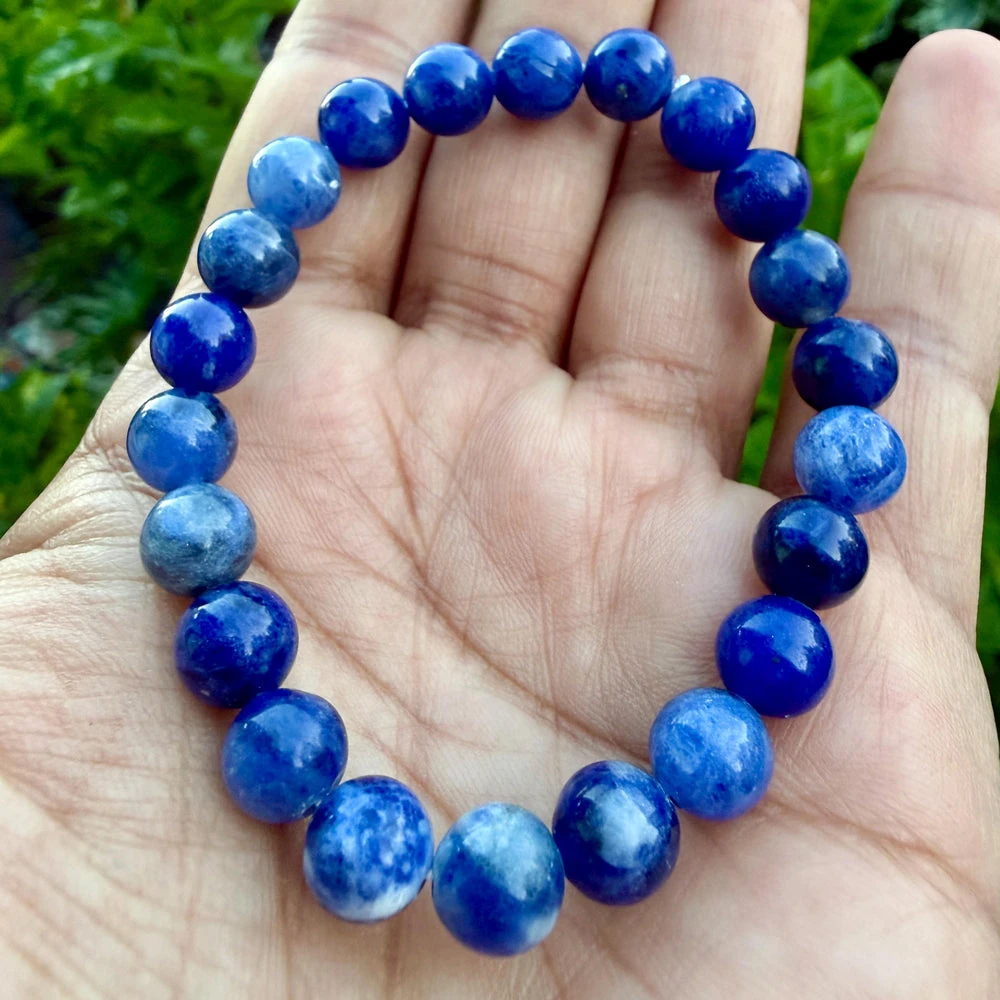
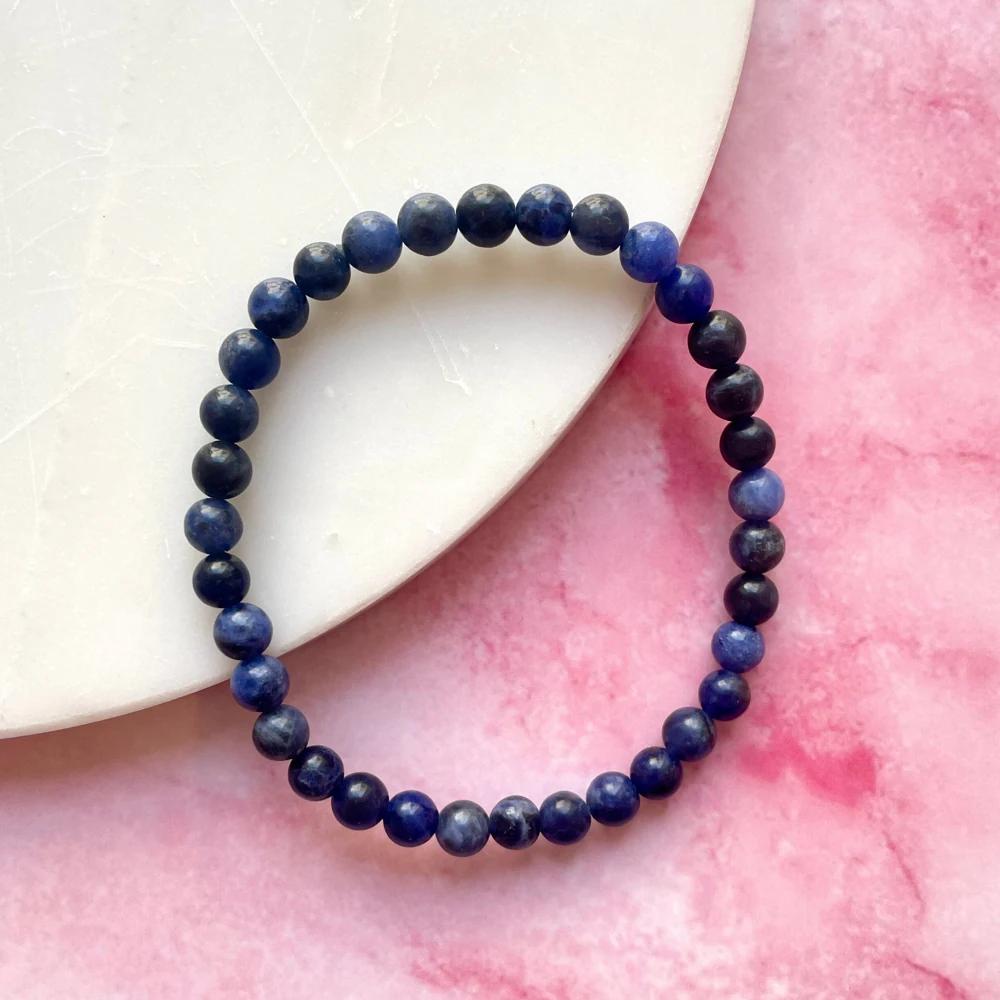
A patterned strand is not printed with an identical motif. More evenly blue beads look orderly; stronger pale markings add variation. Either can appeal, provided the whole arrangement is pleasing. Natural-looking pattern and an actual chip are different things, so visible diversity need not be treated as damage.
Shape changes how much pattern is visible. Small rounds make it a fine rhythm; larger beads reveal individual markings. Overall and close photographs are useful together, rather than using the bluest single bead to imagine the entire bracelet.
Two names that deserve their own meaning
Lapis lazuli is a rock containing several minerals; sodalite is a mineral in its own right. Both can appear blue with white markings, while lapis may also show golden pyrite. IGS compares them because of that visual relationship, not because their names are interchangeable.
Sodalite’s blue-and-white pattern has an appeal of its own. It can sit beside deep lapis or pale aquamarine while keeping each material clearly identified. Comparing color layers, patterns and translucency helps you choose the Water-inspired expression you enjoy most.
Hackmanite is a sodalite variety associated with reversible color change under light. GIA research discusses that phenomenon. A relationship within the mineral family does not mean every ordinary blue sodalite bracelet will change color or glow.
Color change, fluorescence and color in ordinary light involve different conditions. A special specimen should come with a clear account of the lighting used and the behavior observed. For an everyday bracelet, the appearance you actually wear remains the central consideration.
Water imagery and a wish for learning
The approximately 8 mm sodalite design carries a Water-inspired wish for peace and protection. Its blue-and-white patterns continue around the bracelet. It suits someone who enjoys natural color variation while keeping the composition to one clearly identified material.
Their names express curiosity, accumulation and steady progress. A new school year, graduation or further study can make the intention personal. The gift can also be for yourself: a wish to keep an interest alive and let experience become understanding. The material’s story need not turn a simple wish into technical language.
Aquamarine and lapis introduce other shades of blue. A personal BaZi composition considers the whole energy pattern, favorable elements and annual and ten-year cycles when relating a learning or career intention to the wearer. Blue alone is not the same answer for every chart.
Selecting beads for a lasting companion
Sodalite does not need an expensive origin story to have character. The blue-to-white balance, pattern matching, roundness and polish are direct buying considerations. Two similar colors may still come with different bead sizes, counts, companions and construction. Rough specimens and finished strands also use different pricing contexts.
Treatments and imitations should be described clearly. Other blue materials can resemble sodalite, and professional identification is more reliable than a photograph alone. Acid, hot water or scratching can damage a finished bead without resolving its complete identity.
Mindat gives a Mohs hardness of about 5.5–6. Limit repeated rubbing against harder jewelry and remove the bracelet for rough work or exposure to strong cleaners. A soft cloth, dry separate storage and checks of the cord and holes suit ordinary care. Mixed designs also need attention to their companion materials.
Questions & answers
Is sodalite a lower grade of lapis?
No. The difference is identity, not grade: lapis is a rock and sodalite is a mineral. Similar color does not make them the same material.
Will ordinary sodalite change color like hackmanite?
That cannot be assumed. Hackmanite describes material associated with a particular light-related color change; ordinary blue beads need not show it.
Are fewer white marks always better?
They change the appearance, and preferences differ. Overall harmony, finish and wearability matter alongside the pattern.
Which bead size is better for a learning intention?
The wish does not become stronger with diameter. Approximately 6 mm is finer, while 8 mm makes individual patterns more visible; wrist fit is separate.