A member of the beryl family
GIA identifies aquamarine as blue to blue-green beryl, sharing its mineral family with emerald while offering a different appearance. Its water-related name describes color rather than a marine origin. It also provides a traditional March birthday connection.
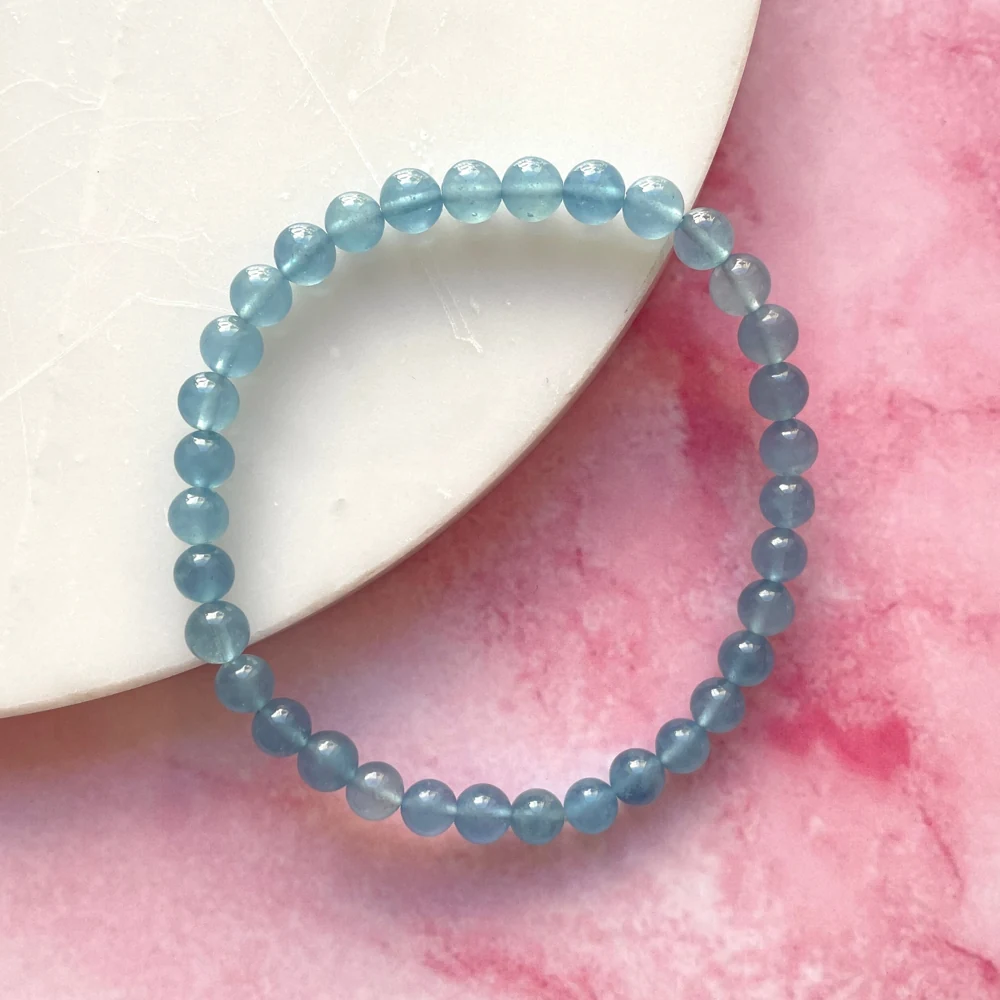
A transparent faceted stone presents color and light through its cut; round beads make a gentler continuous band. Included bead material can have a softly cloudy appearance. Enjoying that texture is a different choice from seeking a highly transparent faceted gem, and the two objects should not be judged as though their purposes were identical.
Companions change the impression as well. Clear quartz keeps a pairing light, while smoky quartz or deep lapis makes the pale blue more apparent. The complete arrangement often tells you more about daily appearance than an enlarged view of one bead.
Color, clarity and a useful price comparison
Color strength, clarity, size and cutting affect aquamarine value. GIA also notes that labels such as AAA are not part of a universal aquamarine grading scale. A letter grade cannot replace photographs, specifications and material information or automatically make two sellers comparable.
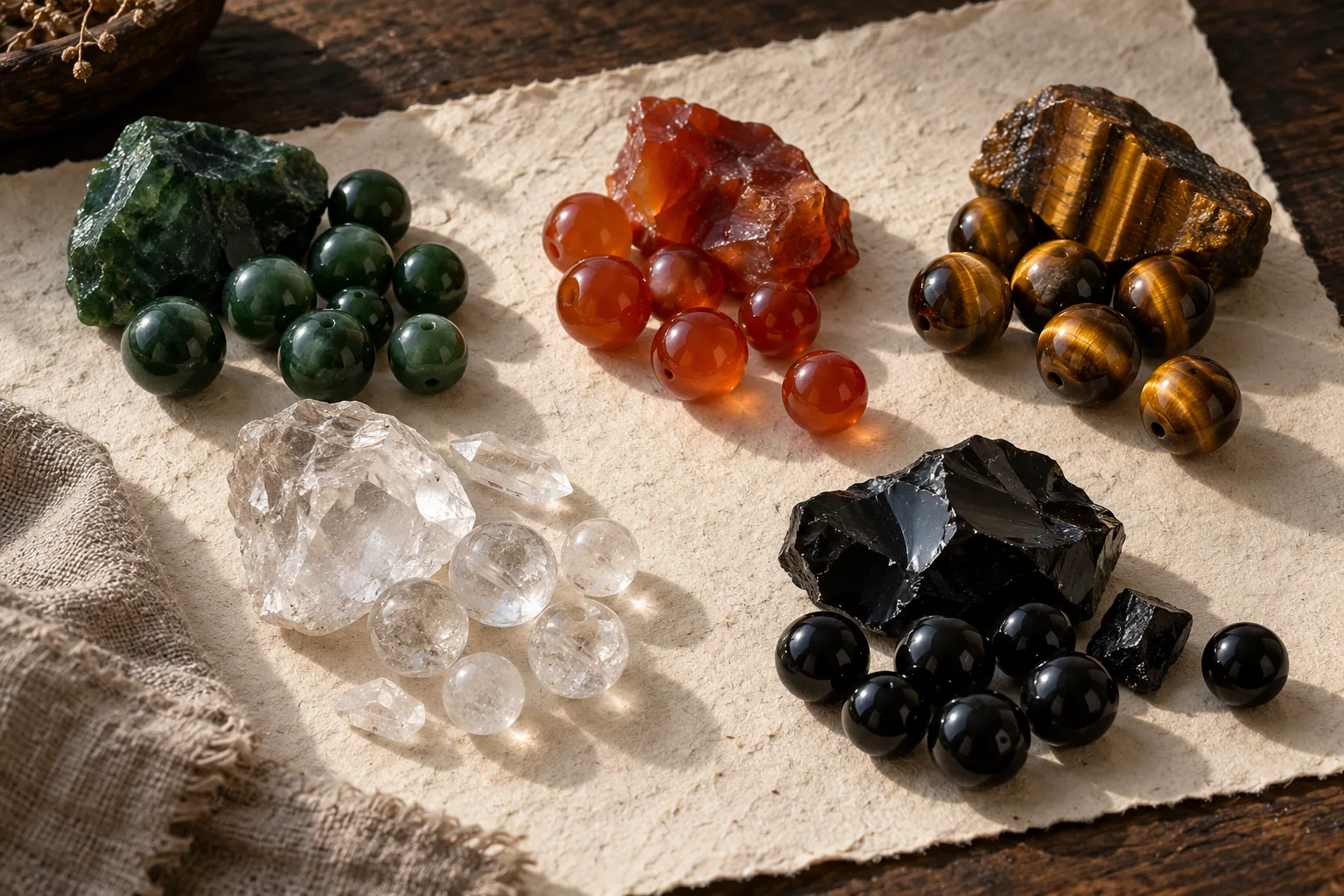
Names associated with famous sources, including Santa Maria, need their actual meaning explained in the offer. A source story is interesting, but the name alone does not guarantee the quality of the material in front of you. The color and evenness you can see remain important.
Loose-gem carat prices and finished-bracelet prices describe different goods. A dark, clean ring stone is not a direct pricing model for ordinary round beads. Bracelets also involve bead count, diameter, companions and construction. Like-for-like specifications make the comparison meaningful.
Treatment and similar blue materials
Heat treatment can improve aquamarine’s blue appearance. That does not turn beryl into glass, but natural origin and absence of treatment are separate statements. A preference for a particular treatment status needs supporting information rather than an assumption from pale or deep color.
Blue topaz, glass and other pale blue beads may give a related visual impression while having different identities. Topaz and beryl require their own material descriptions, price comparisons and care. Color can guide a preference; a correct name identifies what is being purchased.
Internal features do not automatically mean imitation, nor are all fractures harmless. Pay attention to cracked holes, surface chips and disclosed treatments. Professional identification can address identity and detectable treatment; one photograph, a cool touch or a scratch test cannot supply the complete answer.
The sea, safe journeys and harmonious connections
GIA’s aquamarine stories describe links with the sea, travel and a safe return. Those associations make pale blue a natural companion to birthday gifts, journeys and new chapters. A bracelet can wish for an open path or warmer connections without needing an elaborate message.
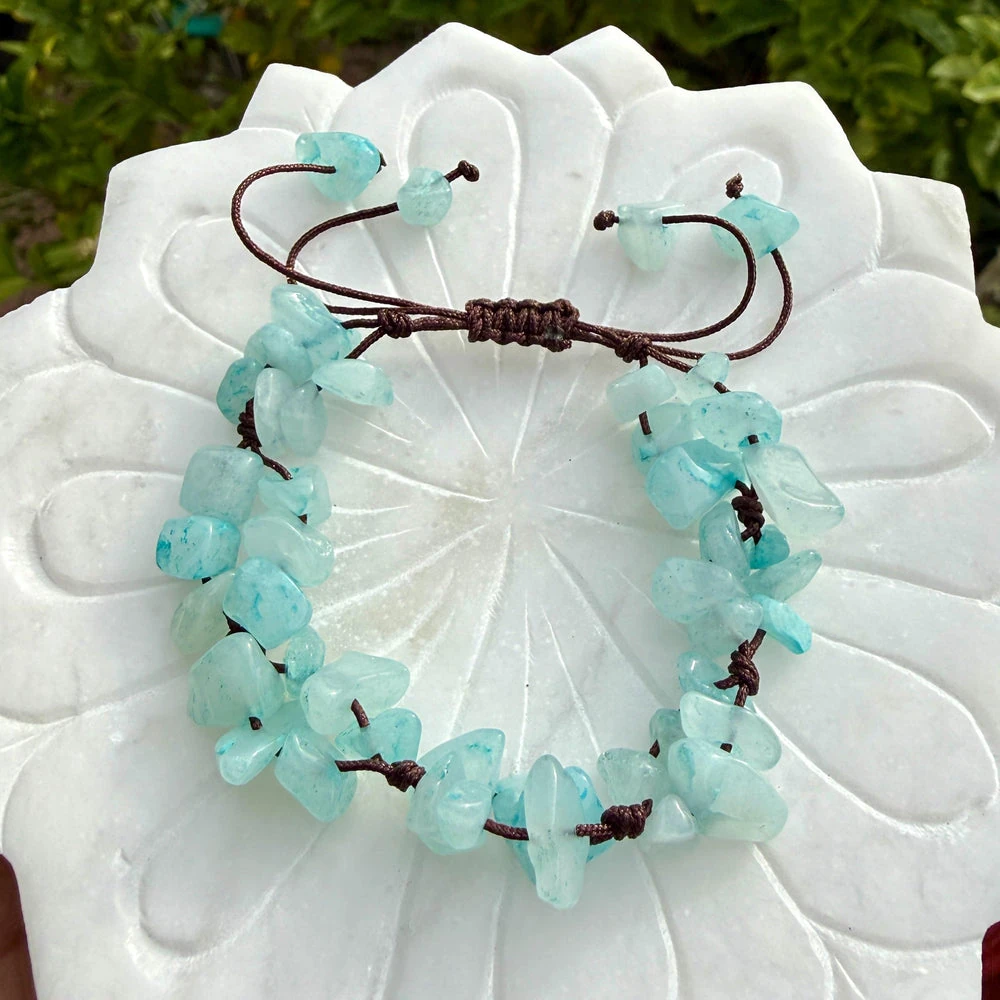
Flowing Connections uses approximately 6 mm aquamarine chips in a cord design. The irregular outlines give the pale blue a relaxed rhythm. Rather than a row of identical spheres, its character comes from the changing angles and proportions of the small stones.
For pale blue beside soft pink, explore the rose-quartz and aquamarine custom direction. Favorable elements, the intention for the year and wrist fit guide the arrangement. Order the ready-designed aquamarine bracelet at its listed price, or agree a personal composition and quote.
Gentle care for pale blue
Aquamarine has a Mohs hardness of about 7.5–8, but hardness does not prevent chipping. Impact, pressure around bead holes and worn cord still matter. Remove it for heavy work, sport or contact with strong cleaning agents.
GIA recommends warm soapy water. Fractures, liquid inclusions or filling can change the suitability of mechanical cleaning. A mixed bracelet also needs care for its other materials. Dry it afterward, store it separately and keep the material information for future maintenance.
Questions & answers
Are aquamarine and blue topaz the same?
No. Aquamarine is beryl; topaz is a different mineral. Similar blue colors do not make their identity, value or care interchangeable.
Is AAA aquamarine a universal grade?
No universal aquamarine scale is implied. Compare actual color, clarity, specifications and treatment information rather than letters alone.
Is greater transparency always better for BaZi design?
Transparency is a material-quality and appearance consideration. A personal composition also involves favorable elements and companions; cloudy beads and clear loose stones can serve different preferences.
Can carat prices estimate a whole bracelet?
Only comparable material and product specifications are useful. Selected beads, drilling, companions and making cannot be inferred from a different loose-gem price.