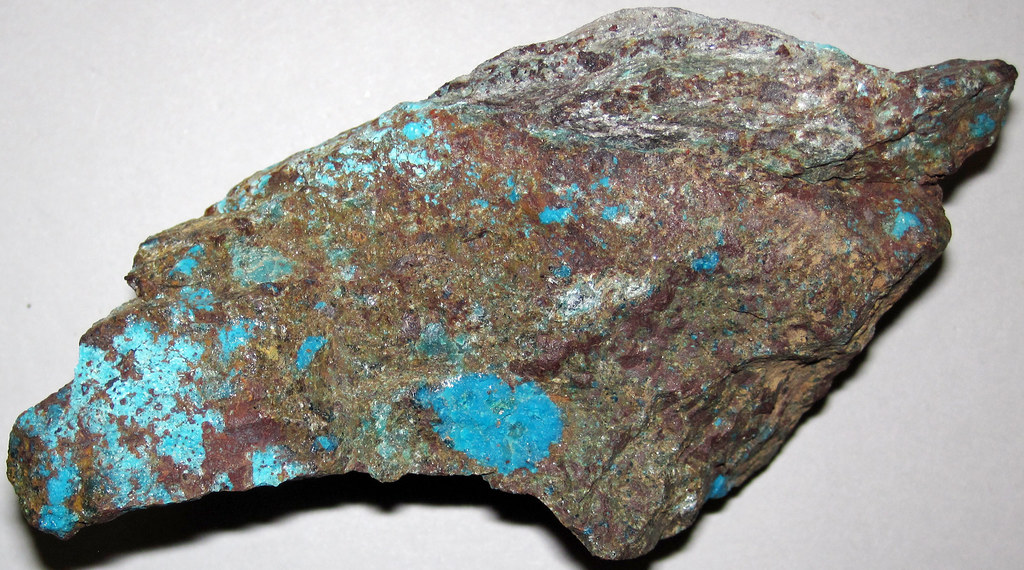
Blue-green color and a pattern of its own
GIA describes turquoise as hydrated copper aluminum phosphate with varying porosity. Finer material can take a warm, smooth polish, while a looser texture may appear duller. Color and texture belong to the same object and should be considered together.
Dark matrix represents associated host material and can form webs or broader patches. It is not a uniform decoration applied to every natural stone, but imitations may reproduce it. A matrix pattern alone therefore does not establish identity. Its balance with the blue is an appearance preference.
Even blue is widely valued, while attractive webbing also has admirers. Greener material can offer its own character. A color term such as Persian blue does not necessarily establish an Iranian origin; color language and provenance need separate explanation.
Stabilized, dyed and reconstituted
Turquoise can be impregnated with resin for stabilization and may also be dyed. GIA has documented material receiving both. Structural treatment and color alteration answer different questions, so a vague statement about enhancement may not explain everything relevant.
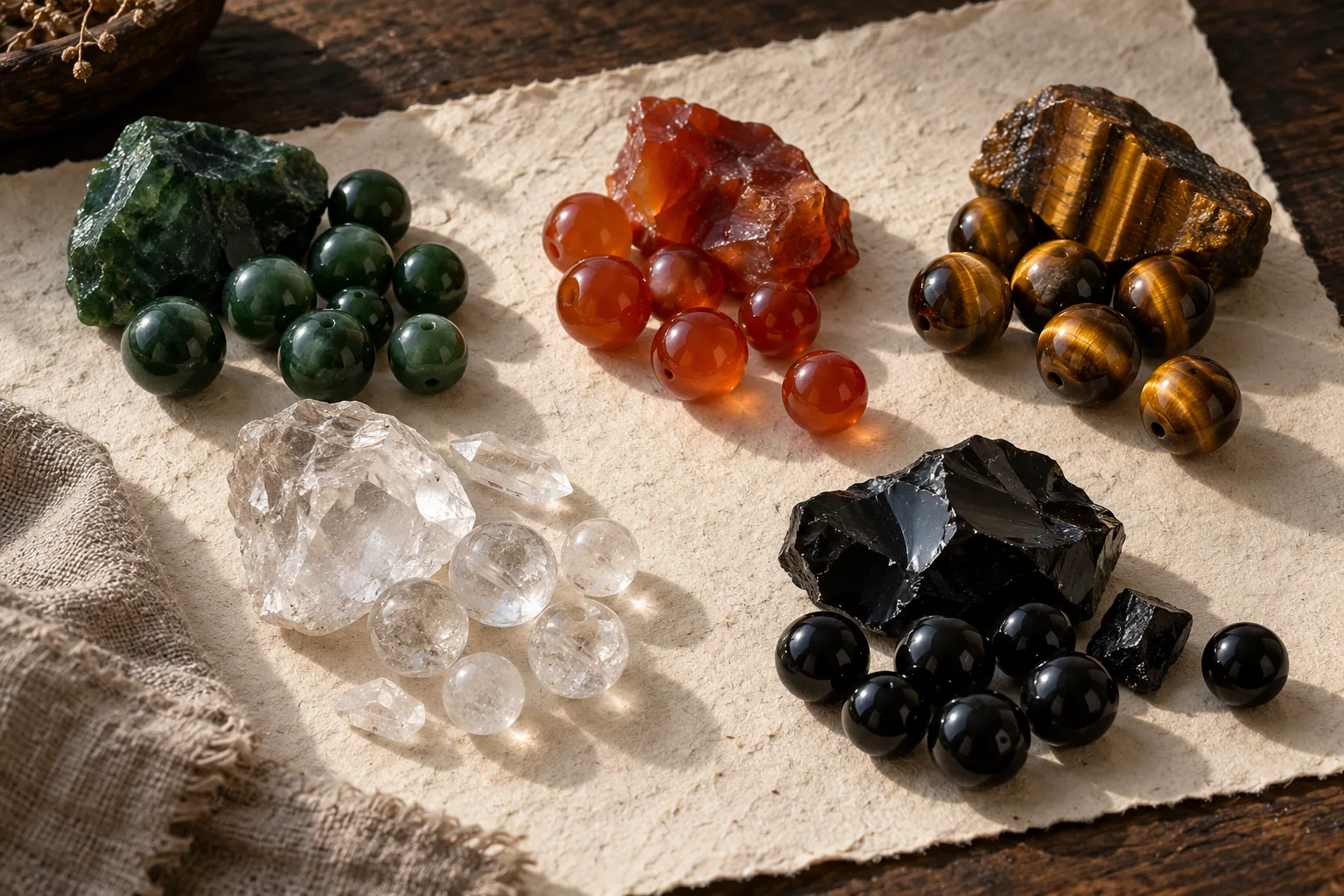
Reconstituted or composite materials can involve fragments and additional substances, differing from an intact stone receiving stabilization. Glass, plastic or dyed alternative minerals introduce another identity. A buyer needs to know the actual category, and price comparisons should match it.
Trade descriptions implying raw or original material do not necessarily establish treatment status. Untreated and undyed preferences need specific information. Darkening, absorbing moisture or becoming oily are not complete home identification methods and can change the surface in unwanted ways.
Howlite is not a white grade of turquoise
The Chinese trade name sometimes translated as white turquoise may refer to howlite or other pale materials. On this site, the existing material named 白松石 corresponds to howlite. It is not the turquoise discussed here and is not offered under that identity.
Dyed howlite and other pale stones can imitate turquoise blue. Similar veins and color indicate a resemblance rather than the same material. Clear descriptions, treatment information and professional examination are more reliable than judging from color or coolness.
Both materials can be appreciated correctly named. Turquoise offers blue-green texture and matrix; howlite provides pale contrast in existing designs. Accurate naming broadens an informed choice rather than diminishing the design.
Historical blue and a personal wish
GIA describes turquoise ornaments and protective associations across ancient Egypt, Persia and the Americas. Each tradition has its own context. Modern birthday, travel or protection gifts need not collapse all those stories into one universal ritual.
Blue-green color readily suggests sky, distance and growth. A Five Elements design can use its balance of blue and green with other materials for an intention of progress, renewal or protection. Not every turquoise object needs the same fixed element interpretation.
Personal BaZi work considers the whole chart, favorable elements and annual and ten-year cycles. Durability, the intended way of wearing and physical comfort also belong in a design. Cultural meaning works well alongside clear material information.
Texture informs both value and maintenance
Color, compactness, matrix, size, treatment and workmanship affect price. Rough, carvings and strands represent different goods. Coordinated beads, sound holes and a fine polish reveal material selection and work directly, while a locality story alone cannot establish those qualities. An overall view of a strand is particularly useful, since color and matrix should be assessed across all the beads.
Porosity makes oils, cosmetics, strong solvents and dirt worth avoiding. GIA recommends gentle care without steam or ultrasound. Repeated oiling or soaking should not become a test for authenticity, and treated pieces need the appropriate instructions.
Limit impacts, apply cosmetics before jewelry and store pieces dry and separately. Mixed bracelets also include cord and metal components. If appearance changes, use the material and treatment information to guide appropriate cleaning or repair.
Personal turquoise selection and pricing
Turquoise designs are quoted for bead size, colour, matrix, treatment and bead count. Untreated material and stabilized turquoise are described separately. We confirm the actual stones, wrist fit and total price before making your bracelet.
Questions & answers
Does matrix prove genuine turquoise?
No. Natural host material can create matrix, but imitations can mimic it. Identity requires more than the pattern.
Is stabilized turquoise the same as reconstituted material?
No. Stabilization usually treats turquoise through impregnation; reconstitution or composite construction involves fragments and other substances.
Is the site’s howlite actually turquoise?
No. Existing products labelled 白松石 use the English material name howlite and are not sold as turquoise.
Does Persian blue guarantee an Iranian source?
No. It can describe a color. Geographic origin needs separate supporting information.
How do I order a turquoise bracelet?
Share your preferred blue-green colour, bead size, matrix and budget through personal design. Your adviser confirms the stones, any treatments and the arrangement, then provides the corresponding quote.