Look at how the complete object stands
Common crystal trees combine chips or beads with metal branches and a base. The tree is a constructed form rather than a whole naturally grown crystal. Some branches can be adjusted, while others are fixed; the actual construction determines how they should be handled.
Examine the base, then the trunk and crown. Is the footprint stable, and does the weight lean strongly to one side? More leaves do not automatically improve the form. Open space between branches helps reveal the colour and direction of the materials.
A dense-looking tree in a close photograph may be palm-sized or much taller. Height, width, footprint and weight together determine where it fits. Colour and leaf count alone miss the practical scale.
Flowering trees have a longer decorative history
Chinese crafted landscapes have used gold, silver, gems, jade and glass to represent plants. The Palace Museum’s Penglai landscape combines rocks, trees and several materials within an auspicious scene. It shows an interest in preserving flourishing natural forms through lasting craft.
A modern wire-and-chip tree is not the same tradition of production as a courtly landscape, nor does it automatically inherit a court placement rule. The useful connection is the idea of holding growth in a material image. Branching, a stable trunk and abundance of leaves make understandable symbols of development.
Specific forms add meaning: peaches suggest longevity, pine appears in enduring imagery, and abstract branches can express unfolding work or life. Recognizing the actual subject gives more depth than calling every tree a money tree.
Make colour descriptions specific
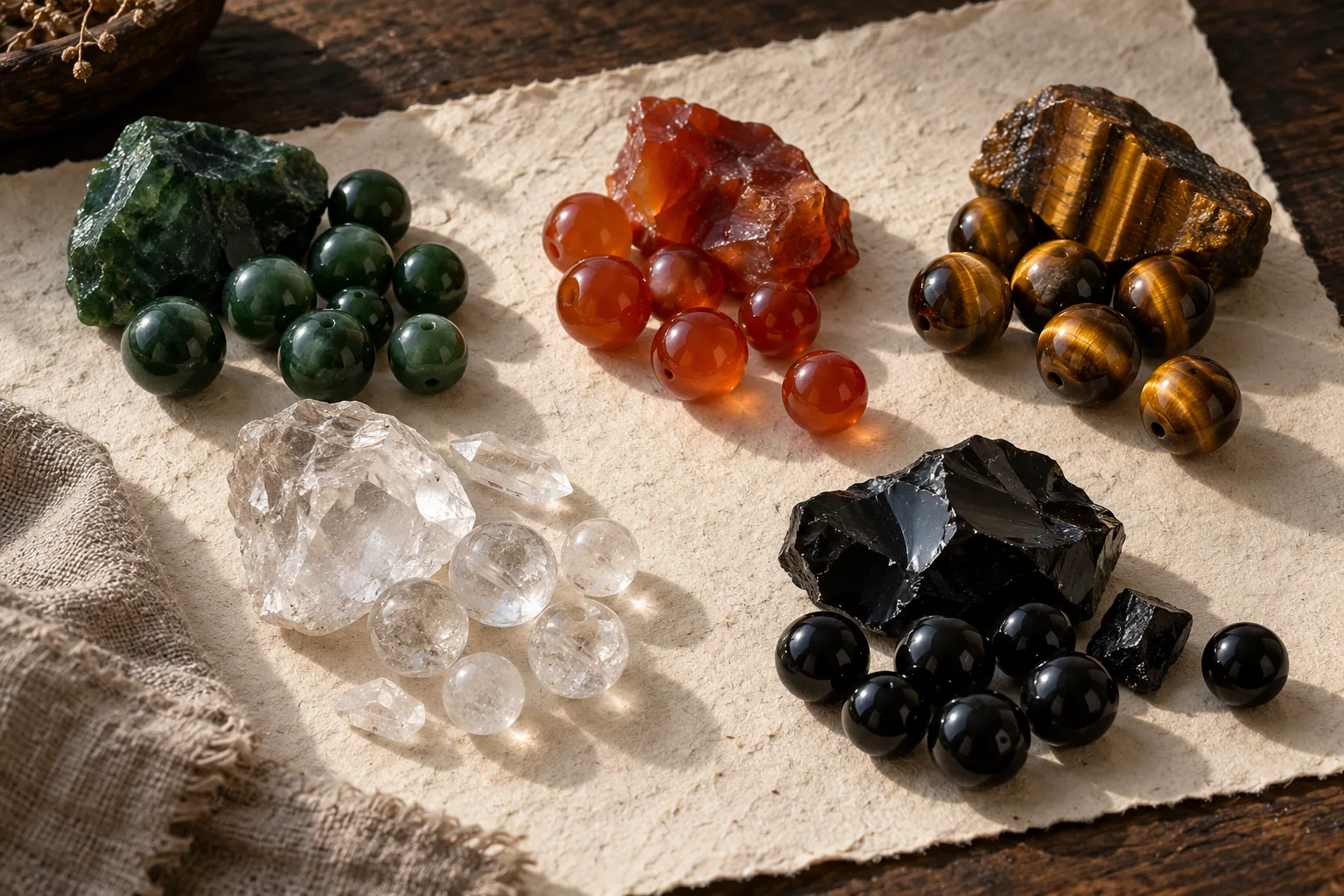
A single-colour tree produces a clear visual theme, while mixed materials create stronger contrasts. Read actual names such as amethyst, rose quartz or green aventurine rather than relying only on a rainbow-crystal label. Glass, resin and treated materials should also be described according to what they are.
Close views help assess chip size, edges, holes and attachment. Irregular chips create a different rhythm from regular beads. Branch density and transparency affect the apparent weight of the crown. Price comparisons should include material, size, construction and base.
For a Five Elements theme, colour and shape can provide a meaningful expression. Green and branches readily suggest growth, while a broad base gives visual stability. These are design relationships rather than one exclusive elemental label for every component.
Choose a scale for the desk or room
On a desk, the tree should remain visible without occupying the screen, documents or arm space. A projecting branch near the edge can catch a sleeve. Keep the base fully supported with access for dusting.
A living-room cabinet or shelf can offer a more defined display. A quiet background may show small stone leaves better than a busy wall. Near a window, consider the actual stones and finishes rather than treating the object as a living plant that needs sun.
For a wealth-themed area, identify the map being used. A tree can symbolize growth, but a mapped passage or cupboard door still needs to function. Stability, proportion and manageable care help the piece remain part of the room.
Preserve the details when shaping and cleaning
Dust gently with a soft tool, working from secure parts and avoiding strain at the stone attachments. If branches are designed to move, adjust them gradually. Repeated bending at one point may weaken it. Support the base and body when lifting rather than holding only the crown.
Glued components, coatings and mixed materials all affect cleaning. An assembled tree should not be immersed or treated with strong cleaners merely because it contains crystals. Keep any loose piece safely and establish the appropriate repair method.
For a gift, explain the chosen material and intention: expanding possibilities in a new role, learning bearing fruit or a steady beginning in a new home. The recipient’s space and preferences matter as much as size.
A growth intention can move from a desktop to daily wear. Aventurine, jade and other Five Elements bracelets differ in colour, texture and material associations. Choose according to how you wear them, or bring career, study and new-stage intentions into a personal composition informed by birth-chart guidance.
Questions & answers
Is a crystal tree one naturally grown stone?
Common examples are crafted from chips or beads, wire and a base. Check the particular construction.
Are more leaves always better?
No. Materials, attachments, branch shape and proportion all contribute to appearance and care.
Should it be sun-cleansed or soaked regularly?
Care depends on the stones, finishes and adhesives. An assembled object should not be treated as one isolated mineral.