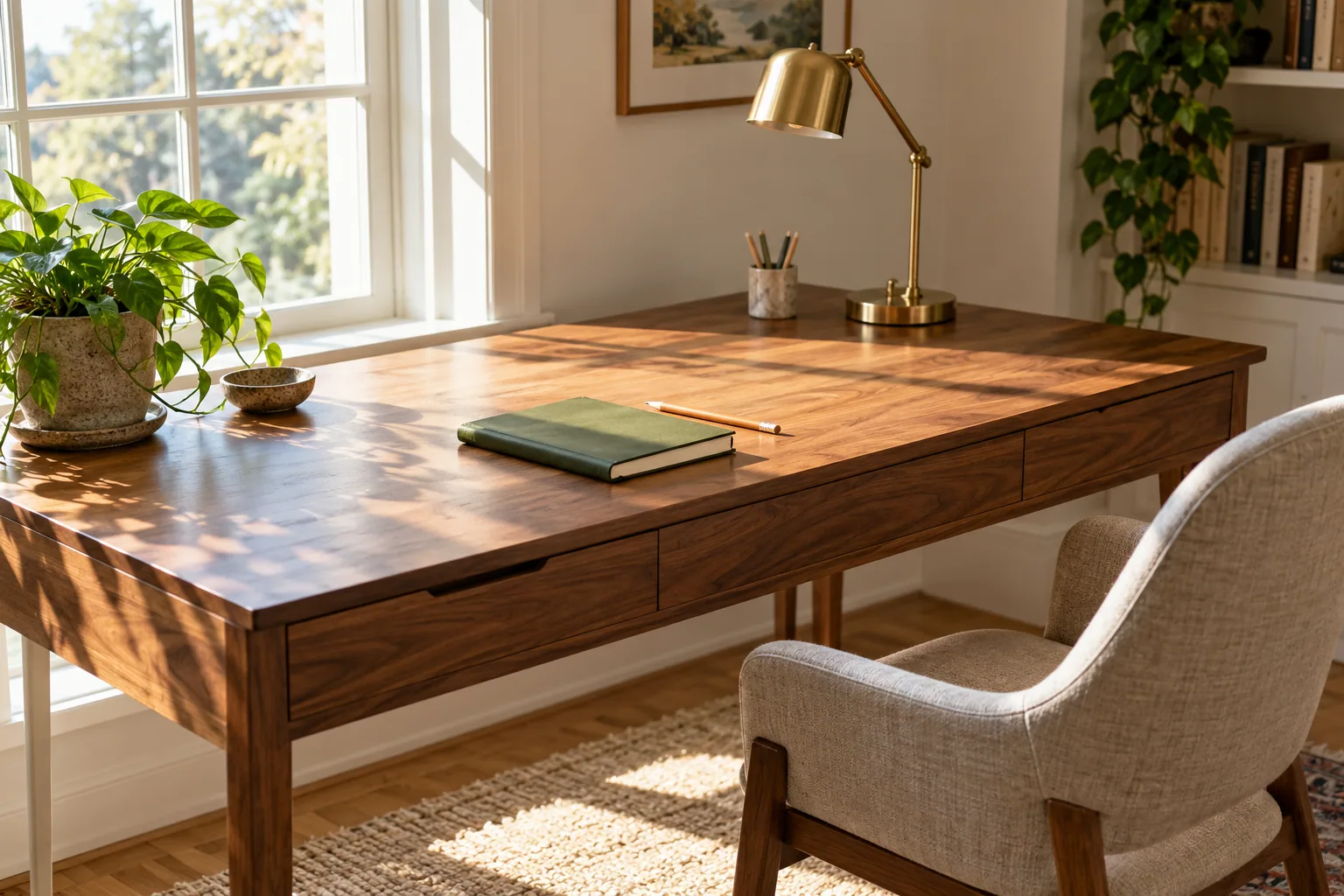
Look from the chair, not only from the doorway
In office use, the command position commonly refers to seeing the entrance, having a stable boundary behind and sitting outside the main direct traffic line. It concerns the person within the room. It does not require every desk to stand in the center or face one universal direction.
Sit in the chair and look past the actual equipment. A doorway directly ahead may be hidden by a large screen, while an entrance diagonally in front may already be visible. Include the monitor in a plan if it changes what the seated person can see.
If people frequently pass behind, compare turning the complete workstation, changing the route or using an existing partition. Turning only the screen can leave the body working at an awkward angle. Desk, chair and equipment form a unit and should be considered together.
Light determines whether a position remains useful
A bright window can create reflections or an uncomfortable contrast around a screen. Place the work area where daylight can be managed with blinds, curtains and task lighting. A side window can offer a useful starting point, although its size, sunlight and the hours worked still matter.

Arrange the screen for the person using it rather than aligning it with wall decoration. Keyboard, mouse and documents should remain convenient. If text is small, adjust its display size instead of leaning closer. Cornell’s ergonomics resources similarly treat the person, equipment and light as a connected arrangement.
A plan may miss afternoon sun, overhead reflections and backlighting during video calls. Try the position at the usual working time, with paper and screen, and compare the lighting settings. Brightness in a Feng Shui sense need not mean intense light everywhere; a clear and comfortable working focus is more useful.
Different workplaces have different possibilities
A private office allows a wider comparison between desk, entrance, window and rear wall. If visitors sit with you, include their chairs and route through the room. An impressive desk that forces everyone to squeeze around it may make conversation less comfortable. Nearby access to frequently used files also supports order.
A cubicle may have fixed partitions, cabling and furniture. Useful changes include monitor angle, frequently used items, space under the desk and the area toward which work is directed. A small mirror sometimes helps an entrance view, but it should not reveal a colleague’s screen or cause glare. Shared workplaces also have shared requirements.
A bedroom workstation benefits from a recognizable end to work: stored papers, closed equipment and different lighting. The occupied chair should leave the bed-to-door route usable. A simple boundary that is maintained every day may suit the room better than a large additional partition.
Give career or learning intentions a useful place
Reserve the surface required by the work itself. Computer use, writing, reading and making things need different spaces. A current book, a well-positioned lamp or one meaningful object can express a learning intention without crowding the keyboard.

A plant belongs where it receives suitable light and leaves equipment accessible. Keep water and electrical items separate, and trim growth that blocks the screen or a route. A living plant needs ongoing care, which matters more than placing it in a dark spot because a diagram calls that corner wealthy.
A crystal tree, coin display or personal symbol can carry one clear theme. Its base, size, cleaning and the things reached around it determine its place. A wearable career or study intention can also remain with the person while the desk stays available for the task.
Consider orientation within a workable layout
A desk-facing direction usually means the direction faced while seated, which differs from a building’s facing. For a compass-based method, record the measurement and its position. Personal directions, room sectors and annual flying stars are separate considerations; several different diagrams cannot simply be overlaid as one rule.
Compare two usable options before selecting a method. One may have good daylight with the entrance behind, while another gives a door view and afternoon glare. A blind or a small equipment adjustment may improve either choice. The way the position serves a normal day provides a meaningful basis for deciding.
A new role, business beginning or course can be marked by a purposeful desk arrangement. Keep the relevant materials, define a useful working surface and choose an intention you understand. A career or learning wish then has a place within a rhythm you can sustain.
Questions & answers
What if my desk cannot move?
Adjust equipment, lighting, the space below and the location of frequently used items. Examine the actual seated view and nearby circulation.
Is north always better than south for a desk?
No direction is a universal answer for every person and workplace. The method, property and practical task need to be considered separately.
Does an office desk need a fountain?
No. Limited space, electrical equipment and maintenance may make water unsuitable. A clear working area is already valuable.