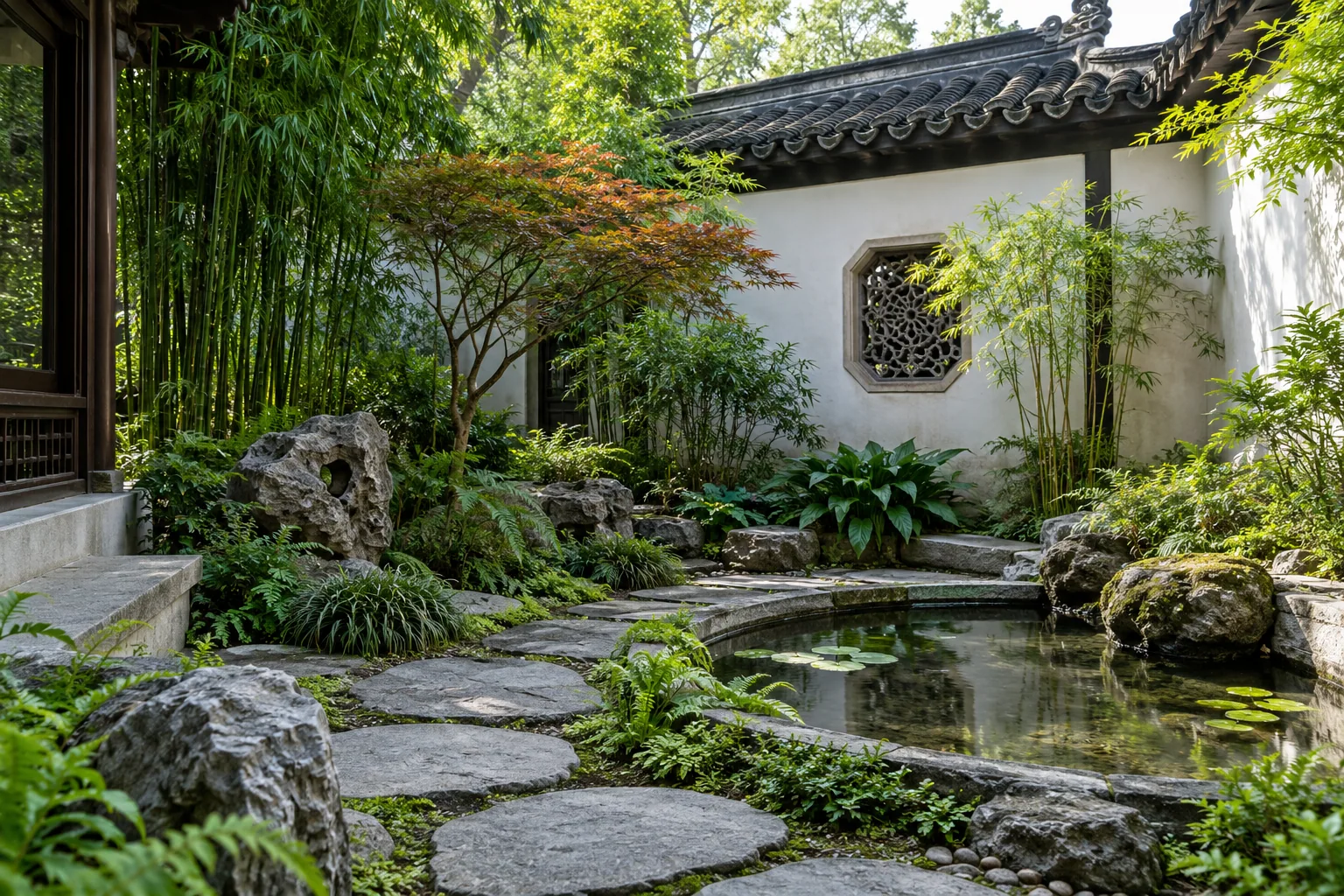
A garden needs both enclosure and openness
Garden Feng Shui often uses an image of support behind, some enclosure at the sides and a more open view ahead. A modern garden need not reproduce a mountain and river literally. Landform, fences, plants and buildings already create places that gather and places that open out. Mature planting can change those relationships significantly.
Look from the main indoor window, the outdoor seat and the entrance. Identify the view worth keeping and the boundary that needs attention. Denser planting may provide privacy in one place while the approach to the door needs visibility. Different tasks deserve different parts of the garden.
The bright-hall or ming tang idea concerns an open area in front. Even a small courtyard can express it through a clear place to pause before entering. An expensive fountain or extensive paving is not required to make the doorway legible and welcoming.
Curves and straight routes both need a destination
Many Feng Shui garden designs favor a gently changing path, allowing the eye to encounter planting in stages. It still needs to serve real journeys to a car, storage area, bins or washing line. A decorative detour may simply lead residents to walk a second route across the grass.

An existing straight path can gain visual interest from changing planting heights, lighting or a small feature beside it. Pots need stable edge positions that preserve the walking surface. Check the route after rain and in the evening, not only in a sunny photograph.
Paving and gradients depend on climate and site conditions. Puddles, slippery surfaces and lifted paving are practical maintenance issues. Addressing them provides a usable setting for the cultural interpretation of movement and water.
Choose for mature size and seasonal change
Plant labels give useful information about eventual height, spread and growth habit. A small tree that leaves a window clear today may shade it later. Seasonal changes can also alter the boundary. Imagine the garden both in full leaf and in its quieter months.
Light, moisture, soil and the time available for care determine whether planting will remain successful. A lucky name cannot replace those conditions. Suitable plants that can be looked after consistently give the Wood imagery of growth a convincing expression.
Distance from buildings, roots and underground services also require attention. Feng Shui interprets landscape relationships, while pruning, transplanting and large-tree work should respond to actual conditions and professional requirements. A generic sector diagram alone is not a reason to remove a healthy tree.
Let movement and stillness have different places
Water can introduce sound and movement, while a seat or stone feature provides a steadier focus. Consider where the water will be seen, how it sounds from the seat and whether cleaning and refilling are convenient. The nearest spot to the door is not automatically the best one.
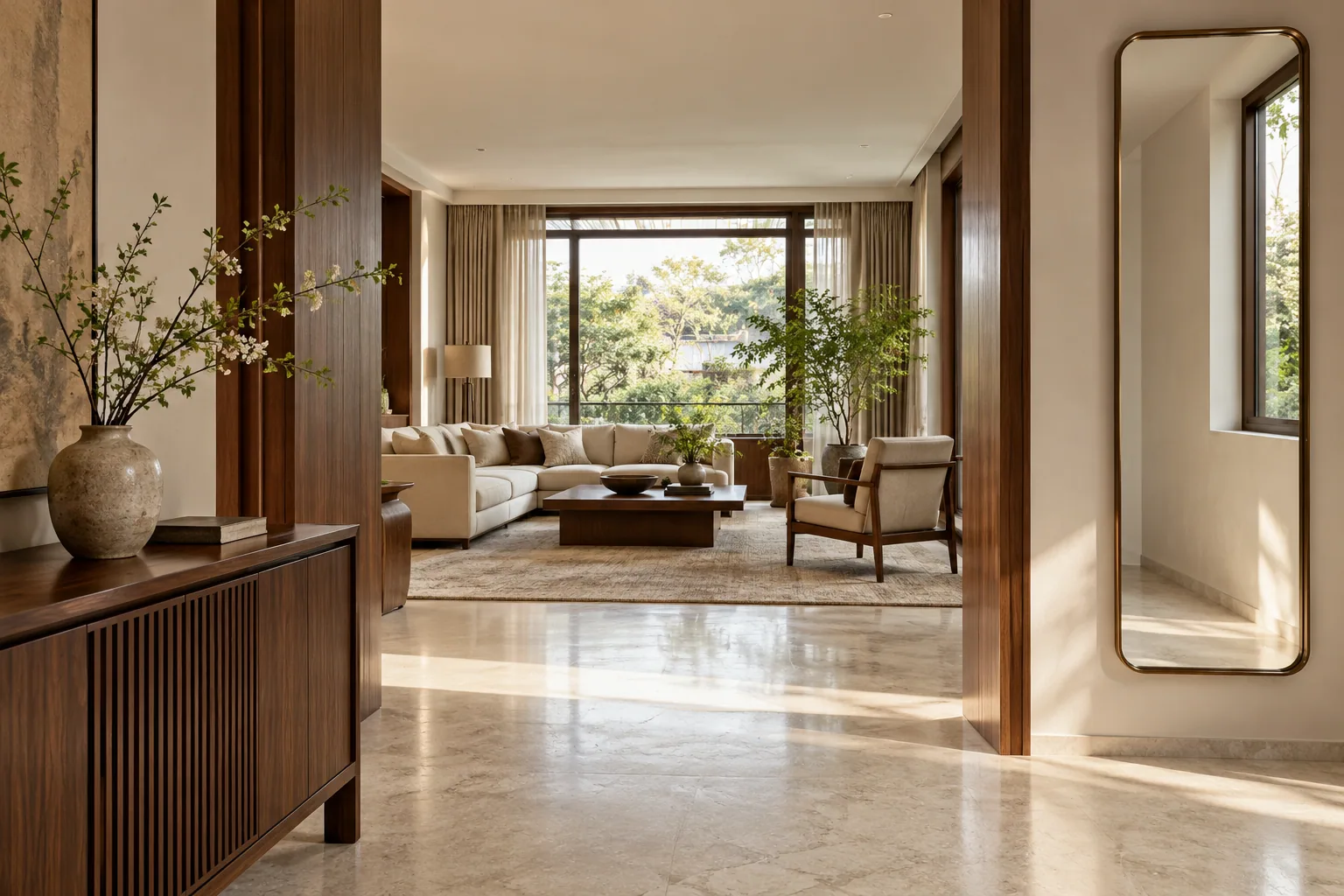
A garden can feel complete without a fountain. Moving leaves, shifting shade and a path toward a quiet seat already create changing qualities. Five Elements design does not require equal quantities of five physical objects. Form, colour and use can contribute to its interpretation.
Place the seat toward a view you would enjoy with a suitable boundary behind and a practical surface underfoot. Shade, drying after rain and cleaning affect whether anyone uses it. A meaningful object can then accompany an established place to rest.
Give a small courtyard room to grow
A principal seat, a considered planting group and a clear entrance may be enough for a small garden. Leave space for both plants and people rather than turning every corner into a separate display. In a narrow plot, one focal point at the far end can organize the view while the route remains less crowded.
A balcony has different structural and drainage conditions. Large rocks or water containers suitable for a ground-level garden cannot simply be copied upstairs. Lighter movable pieces and manageable planting can offer more flexibility within the building’s requirements.
Photograph the garden from one consistent viewpoint each season. Notice a branch reaching into a path, a wet patch or a seat needing more shade. This allows the arrangement to develop with real growth and family habits, keeping the interpretation connected to the environment.
Questions & answers
Must the path to the door curve?
No. A straight route can gain visual pauses through planting and details beside it, while remaining practical to walk and maintain.
Is a fountain necessary for Five Elements balance?
No. Form, colour and movement can express the elements without five separate physical installations.
Can a balcony copy a courtyard design?
Its load, drainage, wind and building requirements call for a different scale. Ground-level installations should not be transferred automatically.