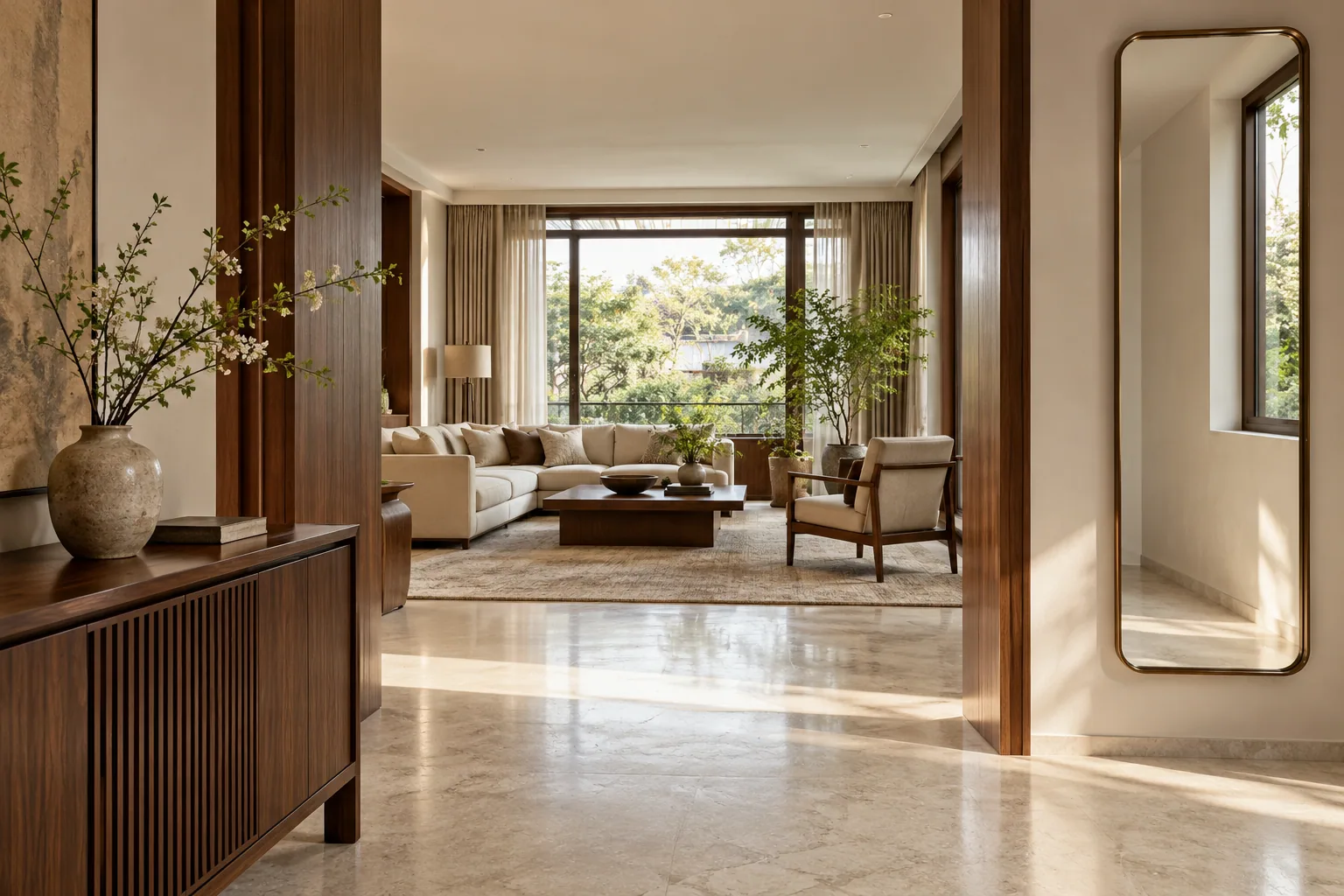
Let the seats form a relationship
Feng Shui considers movement and stillness within a space. A living room is usually more open and active than a bedroom, accommodating family time and visitors. Seats placed far apart around the walls may leave an empty center without creating an easy place to talk.
Begin with the way the room is normally shared. Two people having tea may enjoy seats opposite or at an angle. Watching television together also benefits from opportunities for a brief conversation. Turning one chair toward a sofa can change a layout that otherwise directs everyone toward separate views.
Gathering does not require crowding every piece into the center. Tables must leave room to stand and put things down. Routes used by children or older family members should remain clear. A seating group works when people can pause comfortably and also leave it easily.
A supported sofa is more than a sofa touching a wall
A continuous wall behind the sofa is a familiar expression of stability in Feng Shui. The choice still involves entrances, windows and screen position. A complete wall that leaves the occupant facing harsh light may not give the most useful principal seat.

An open-plan sofa may stand away from a wall to distinguish dining from sitting. Keep the route behind it clear and consider a proportionate stable lower cabinet or simply a well-defined sofa back. An unstable stack of tall objects does not make a useful substitute for support.
In a room with several doors, identify the busiest route. People passing immediately behind a regular seat create a different arrangement from a path farther to the side. Moving the most-used seat away from the main crossing can be a more direct improvement than choosing a compass word alone.
Pass beside the group rather than through it
Routes from the entrance to kitchen, balcony or bedrooms should be legible beside the seating. If everyone crosses directly in front of seated feet or shifts the coffee table each time, the furniture may be too large for the available room.
A compact living room may work better with a shorter sofa and movable chair than a large matched suite. Small side tables can replace a deep central table when flexibility matters. Actual family movement should determine the space retained around them.
A long room can hold a reading area and a conversation area instead of drawing every piece toward a television at the far end. Rugs and lighting can clarify those zones, with edges arranged so they remain easy to walk across. A useful division gathers activity without creating an obstacle.
Light, ceiling fans and overhead space
A living room can feel lively without every seat sitting directly beneath a strong light. Reading, conversation and watching a screen have different needs. Curtains, floor lamps and local lighting let the atmosphere change with the time of day.

For questions about a ceiling fan, consider its actual position, sound and airflow. Persistent strong air or noticeable vibration suggests adjusting the setting, seat or equipment maintenance. A central fan alone is not enough to judge a room. Follow the installation and clearance requirements of the equipment.
Where a beam or low ceiling makes a seat feel enclosed, compare a more open position and use the lower area for appropriately scaled storage. Working with existing changes in height may be more natural than adding further decoration overhead.
Make room for family meaning as well as movement
Photographs, books, artwork and keepsakes can give a living room a shared history. An object expressing harmony matters because the household recognizes its meaning and enjoys living with it. A larger number of decorations does not automatically communicate a stronger sense of togetherness.
For symbolic objects, choose a stable position that is accessible for cleaning and outside the main route. A plant needs suitable light, a fountain requires maintenance and a fragile piece needs protection from regular activity. One or two coherent themes can make the objects easier to see and care for.
Colours can respond to existing furniture and light while carrying Five Elements associations. The room does not need equal portions of five colours. Nor does calling a corner wealthy require a major decorative change. Clear zones, manageable objects and an atmosphere the family enjoys can together express a wish for a harmonious home.
Questions & answers
Must the sofa always touch a solid wall?
That is a common stable arrangement, but an open-plan room may call for a sofa away from the wall. Consider the route behind it and the view from the seat.
Is an L-shaped sofa suitable for a small room?
Check whether its return is used and whether it blocks the main route. A shorter sofa and chair may offer more flexibility.
Is a ceiling fan automatically unfavorable?
No. Its airflow, sound, position and installation conditions provide more useful information than its presence alone.