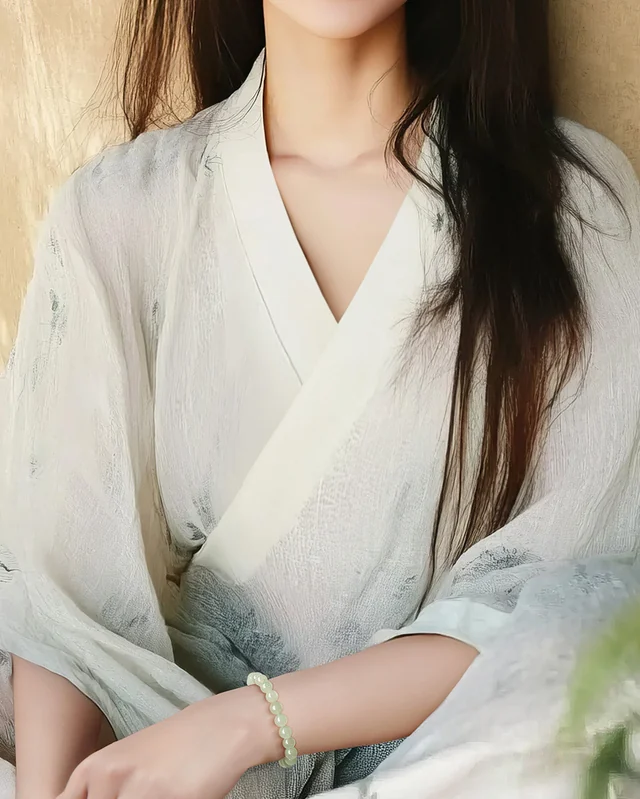
Protection · Balance
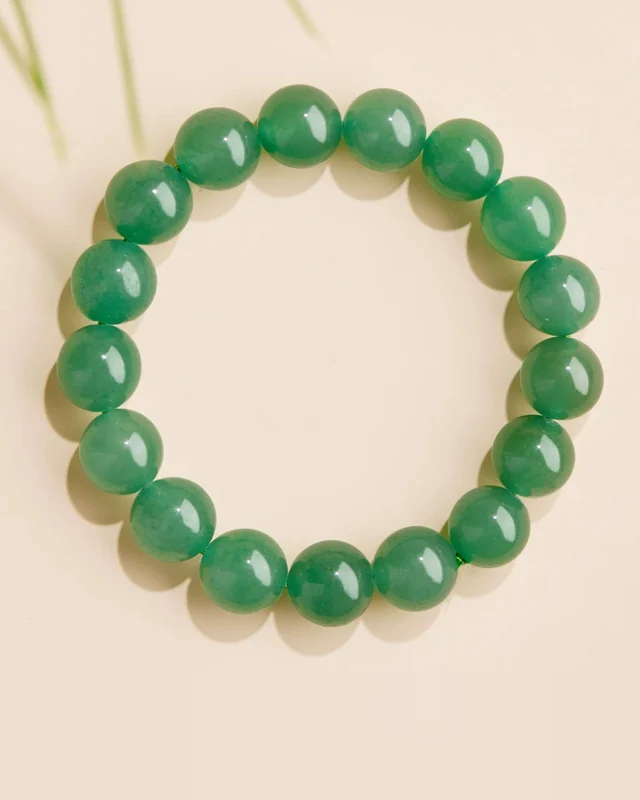
8 mm Hetian Jade Bracelet · Jade Blessings
Hetian jade (nephrite)
$128.008 mm · Wood
 View larger
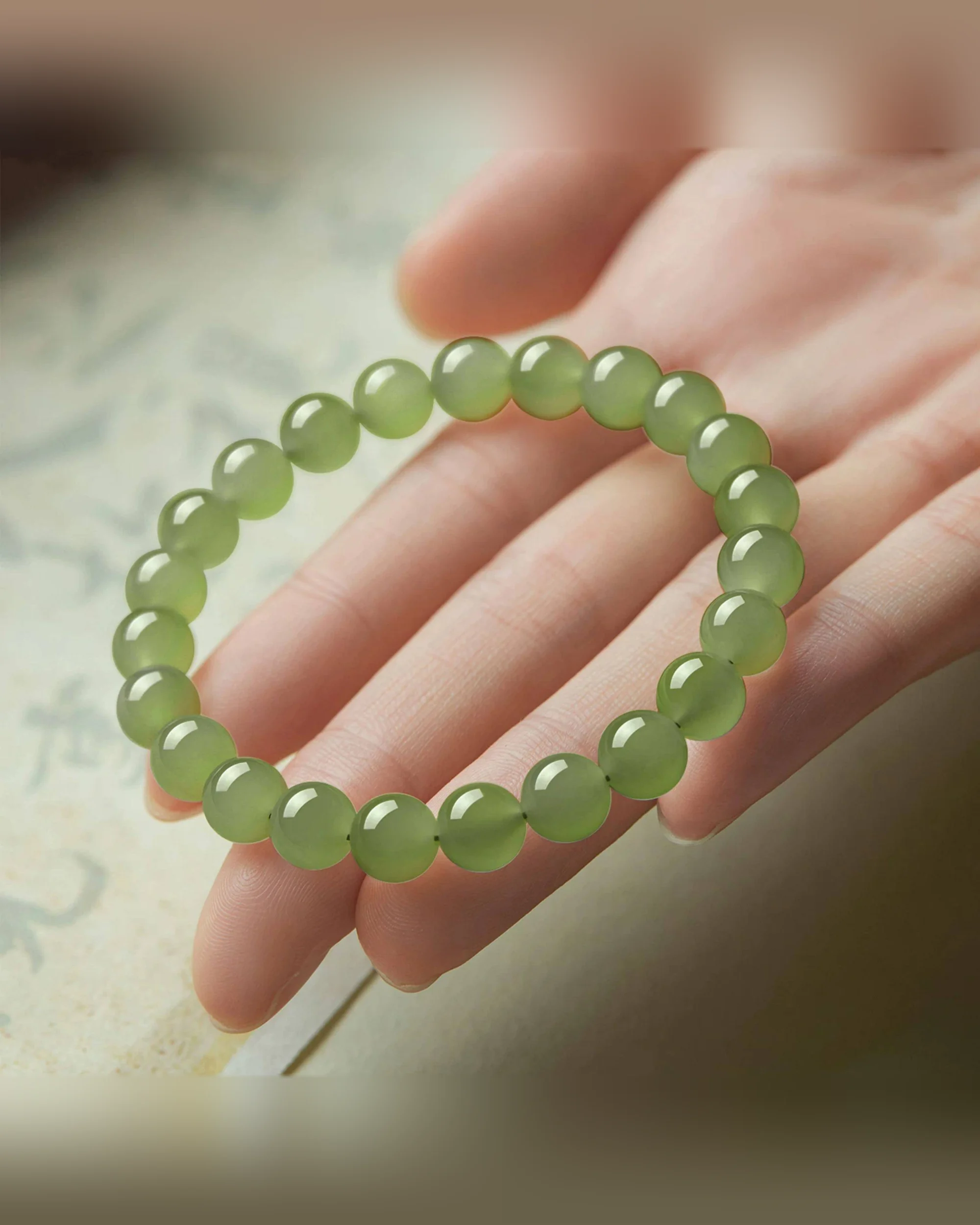
Hetian jade10 mm
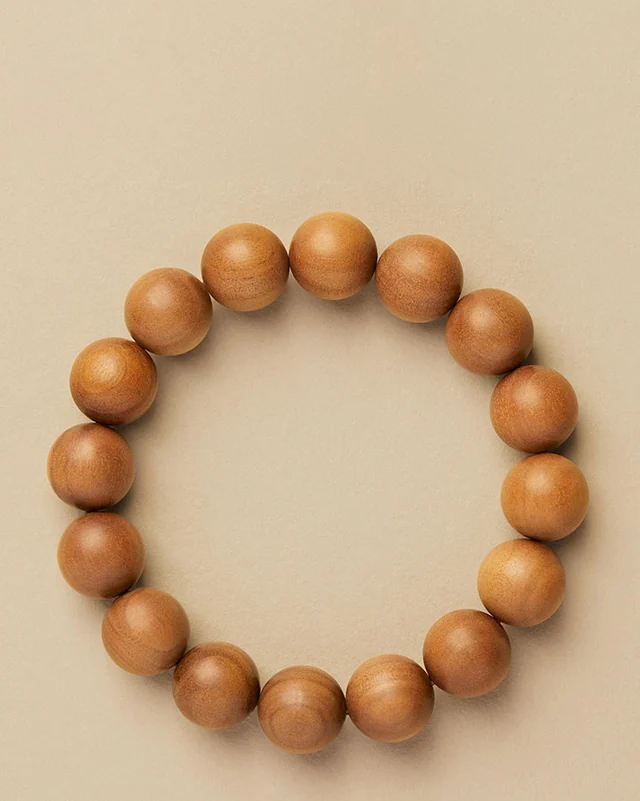
Auspicious bracelets / Wood
Fine Hetian nephrite in 10 mm rounds, a soft grape green with the clear, watery glow the trade calls qingshui.
$218.00USD
Prepared in 5 days after payment
Shipping: Asia $10; Europe, US, Canada, Australia & NZ $20
Ready-designed returns may be requested within 14 days. See returns policy
Jade Resolve
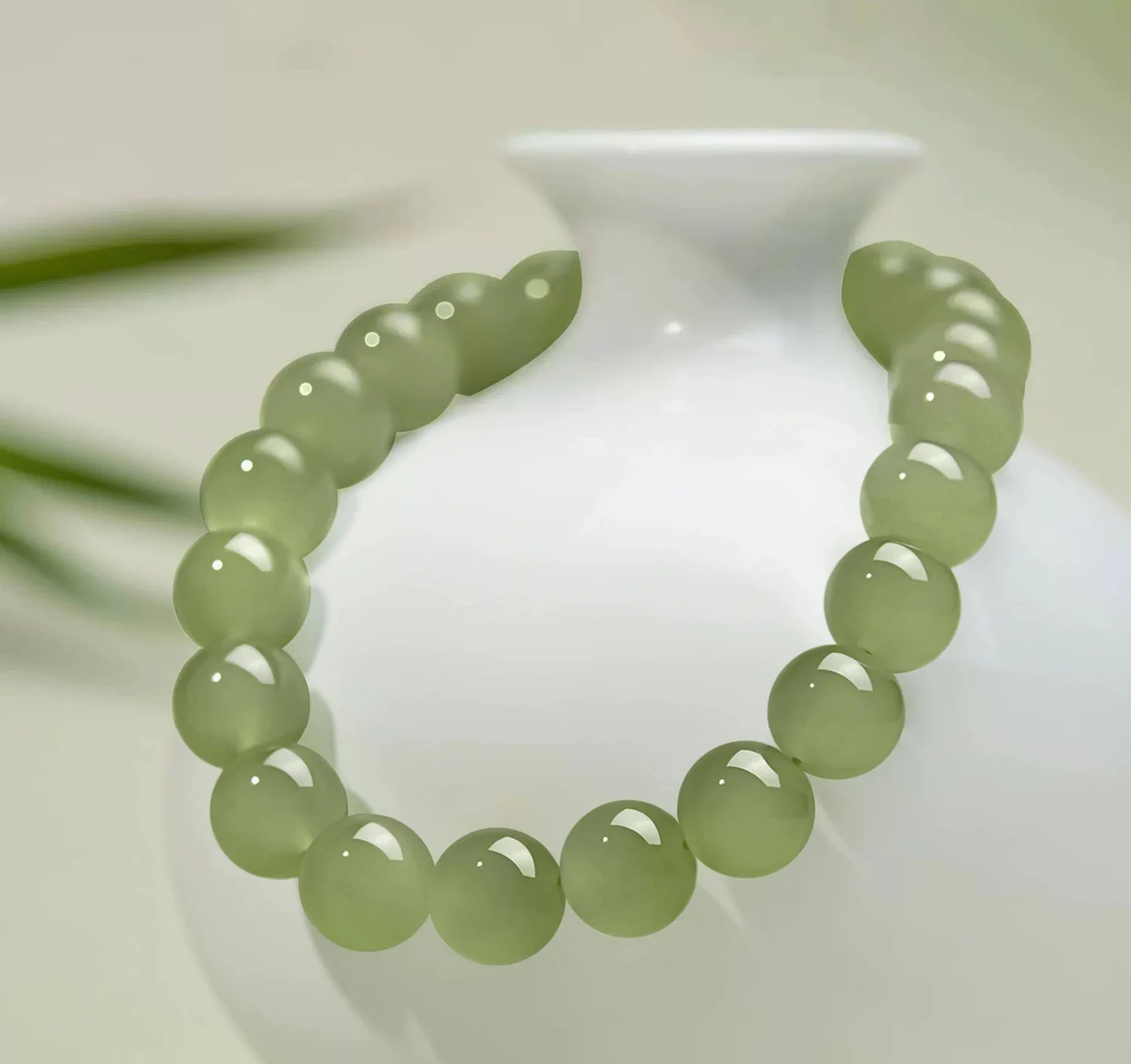
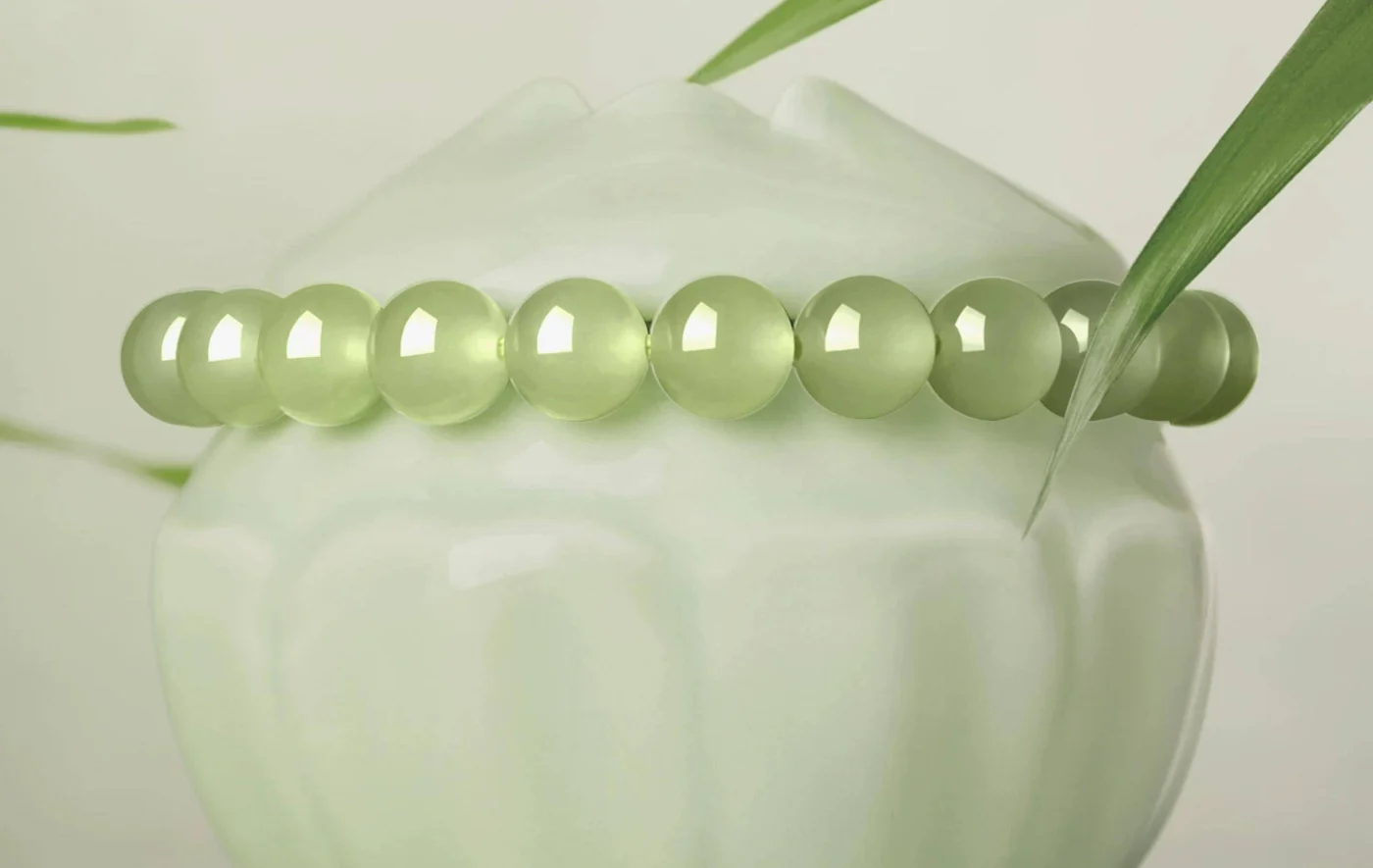
Jade Resolve is a strand of Hetian jade, each round bead approximately 10 mm across. The colour is the soft green the Chinese trade calls putao lü, grape green, with a translucent, watery glow known as qingshui, “clear water”. Polished, the beads have the gentle, oily lustre that has defined fine nephrite for thousands of years.
Jade has been the stone of character in China since antiquity, and green belongs to Wood, the element of steady growth. The Chinese name, qing bi shou xin, joins a green jade disc with guarding the heart: a wish for inner steadiness, integrity and peaceful days.
Jade Resolve
What Hetian jade is, what “grape green” and “clear water” mean, how jade is graded and how to choose the right fit.
01
Two different minerals are sold as jade: jadeite, prized mainly in the last few centuries, and nephrite, the jade of ancient China. Nephrite is a dense mat of microscopic, interlocking fibres of tremolite and actinolite. That structure gives it a soft, slightly oily lustre rather than a glassy shine, and a smooth, cool feel that warms gently in the hand.
Nephrite measures about 6 to 6.5 on the Mohs scale, slightly softer than quartz, but its interlocking fibres make it one of the toughest natural materials known. Neolithic craftsmen in China worked it into discs, blades and ornaments more than five thousand years ago, and it has been the country’s most treasured stone ever since.
02
Hetian, in Xinjiang, has been the most famous source of nephrite since ancient times, and its name became a byword for fine jade. Today, under Chinese national gem standards, “Hetian jade” is the commercial name for nephrite of suitable quality regardless of where it was mined; fine nephrite also comes from Qinghai, Russia, South Korea and elsewhere.
Our supplier describes this jade as Hetian nephrite from its own source and provides a testing certificate for the material. The certificate confirms the mineral species; it does not, under the standard, certify a particular mining region.
03
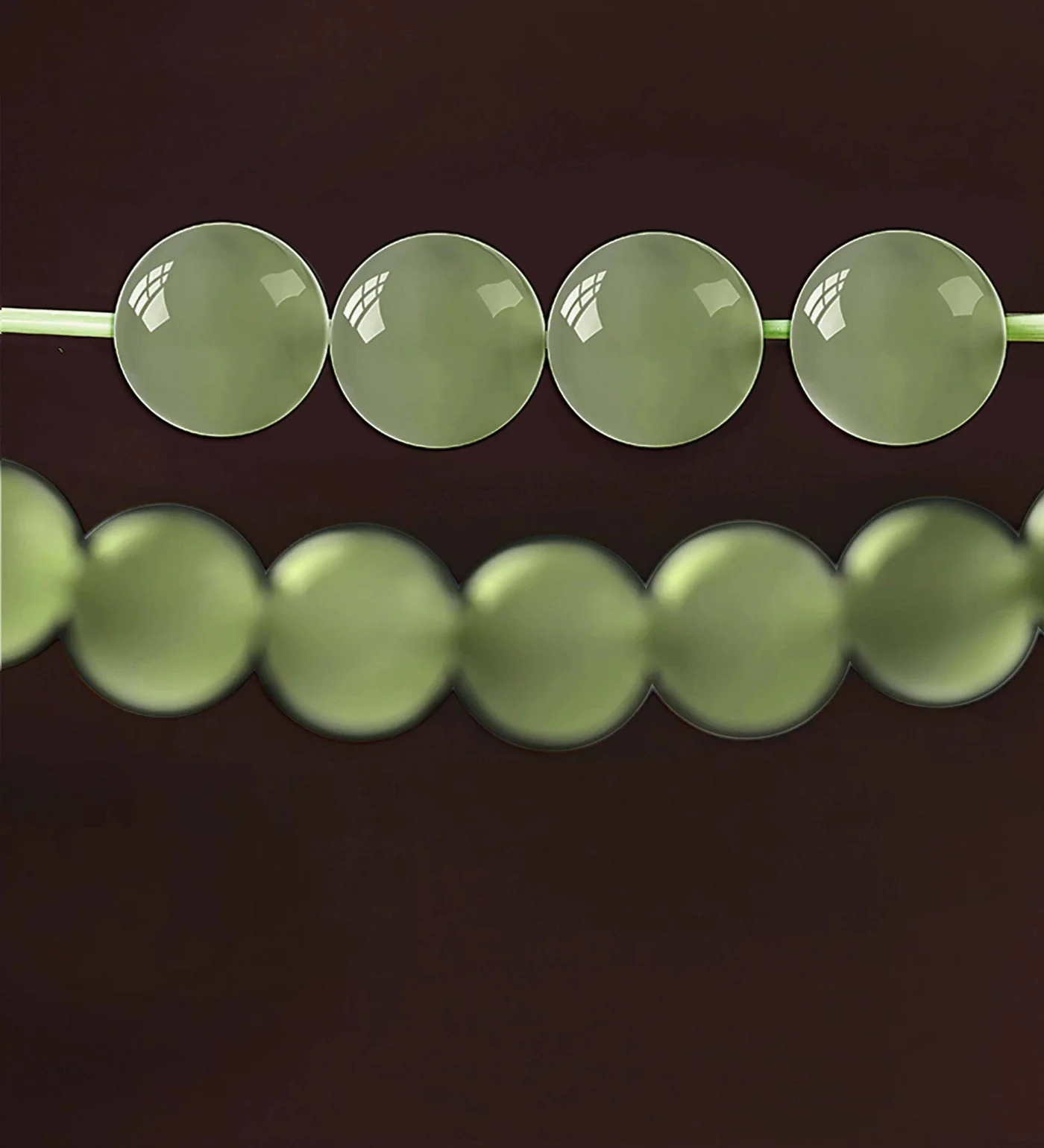
Grape green, putao lü, is a soft, slightly yellowish green like the skin of a green grape, lighter and fresher than the deep spinach greens of jasper-like nephrite. Qingshui, literally “clear water”, describes a translucent, watery quality in pale green or blue-green nephrite: the colour seems suspended in the stone rather than painted on its surface.
The supplier grades these beads as icy clear-water material. Natural jade varies, and you may see small differences in depth of green between beads, faint cloudy cotton or fine natural lines. These are part of real jade and help distinguish it from dyed imitations.
04
In judging nephrite, Chinese collectors look first at texture: how fine and dense the stone is, and how much of the soft, waxy-oily lustre called you xing it shows. Fine material looks smooth and creamy even under strong light, with no grainy or fibrous patches. Coarser jade looks dry, with visible grain and a duller polish.
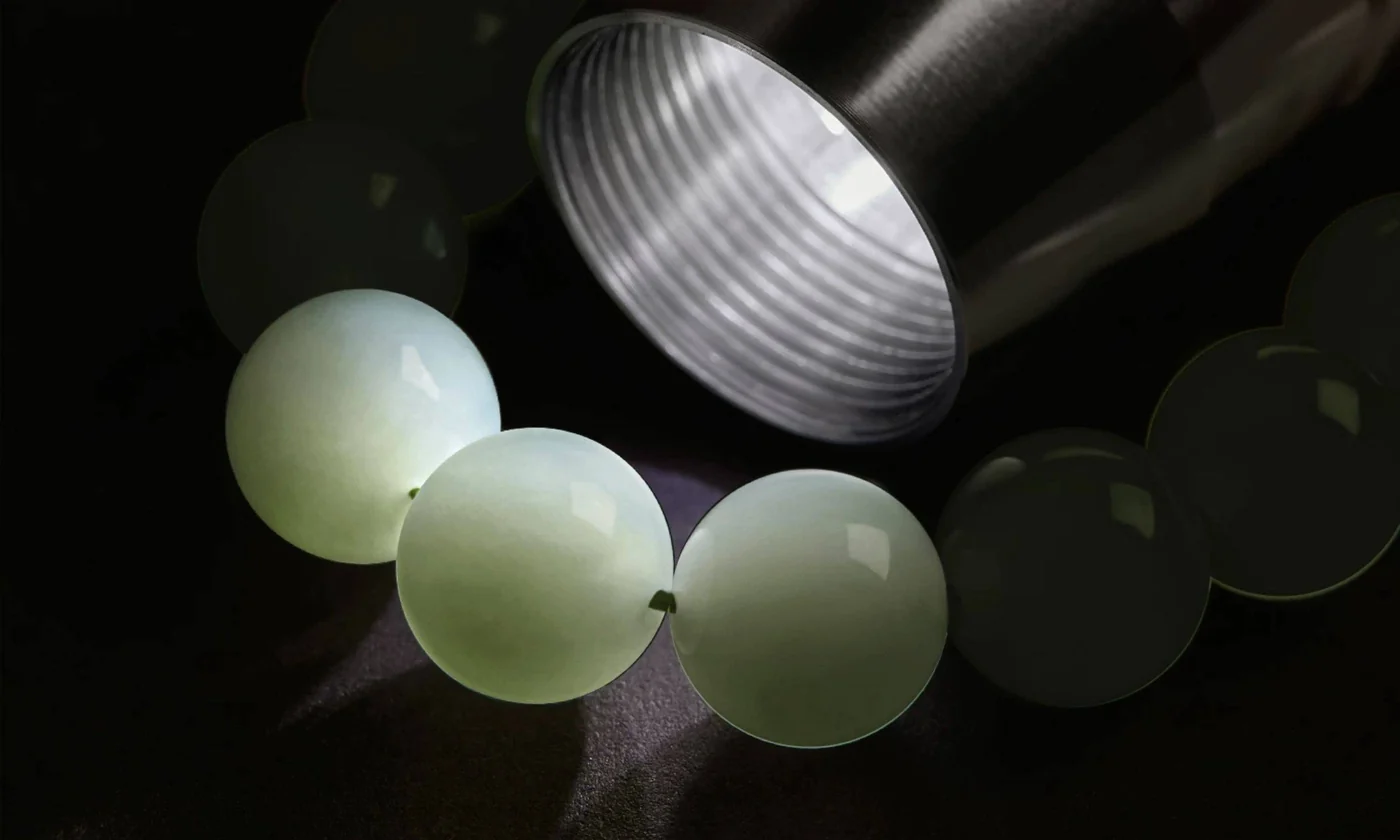
Held to a beam of light, good grape-green jade glows evenly from inside, with no sharp, glassy brightness. That soft glow is what the trade means when it says jade looks “alive”.
| Feature | Lower grade | This bracelet |
|---|---|---|
| Texture | Grainy, visible fibres | Fine, smooth and dense |
| Lustre | Dry or glassy | Soft, oily sheen |
| Translucency | Opaque or patchy | Even, watery glow |
| Colour | Greyish or uneven | Fresh grape green |
05
Hardness and toughness are different things. Hardness is resistance to scratching; toughness is resistance to breaking. Nephrite is only moderately hard, but its matted fibres absorb shocks so well that it is tougher than almost any other gemstone and, by some measures, tougher than steel. Ancient tools made of nephrite have survived thousands of years of use.
In practice, this means a nephrite bead rarely chips or cracks in everyday wear, although it can still be scratched by quartz, sand or metal. Jade bracelets passed down through families often show a soft, satiny surface built up over generations.
06
Nephrite rough often has a weathered skin, cracks and areas of uneven colour. For a matched 10 mm strand, cutters keep only the cleanest, most evenly coloured core sections. Our supplier reports using a small fraction of each piece for beads of this grade.
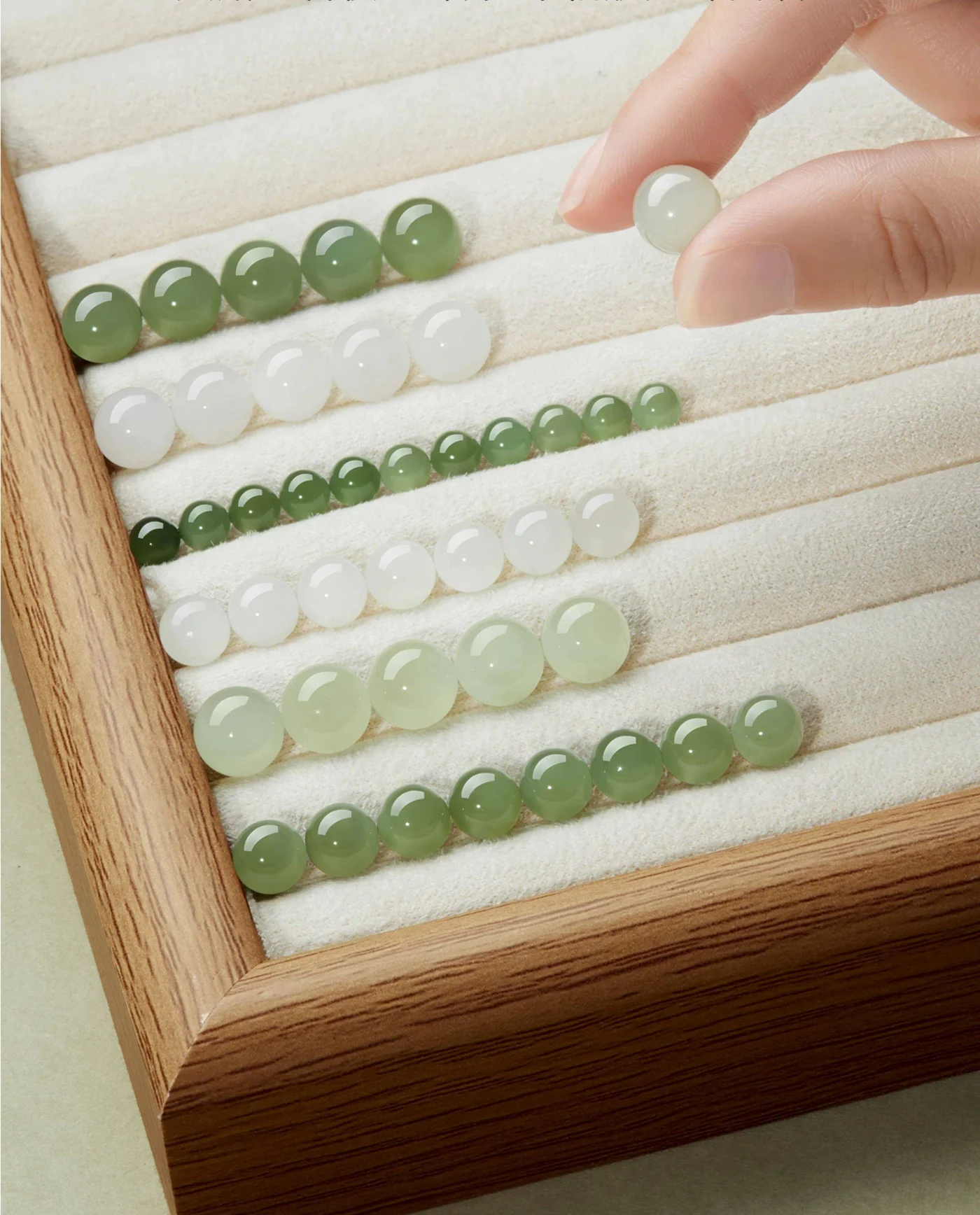
Finished beads are sorted on trays by colour, translucency and size, then matched so that the strand looks like one continuous green. Mismatched beads, too dark, too pale or too cloudy, go to other uses.
07
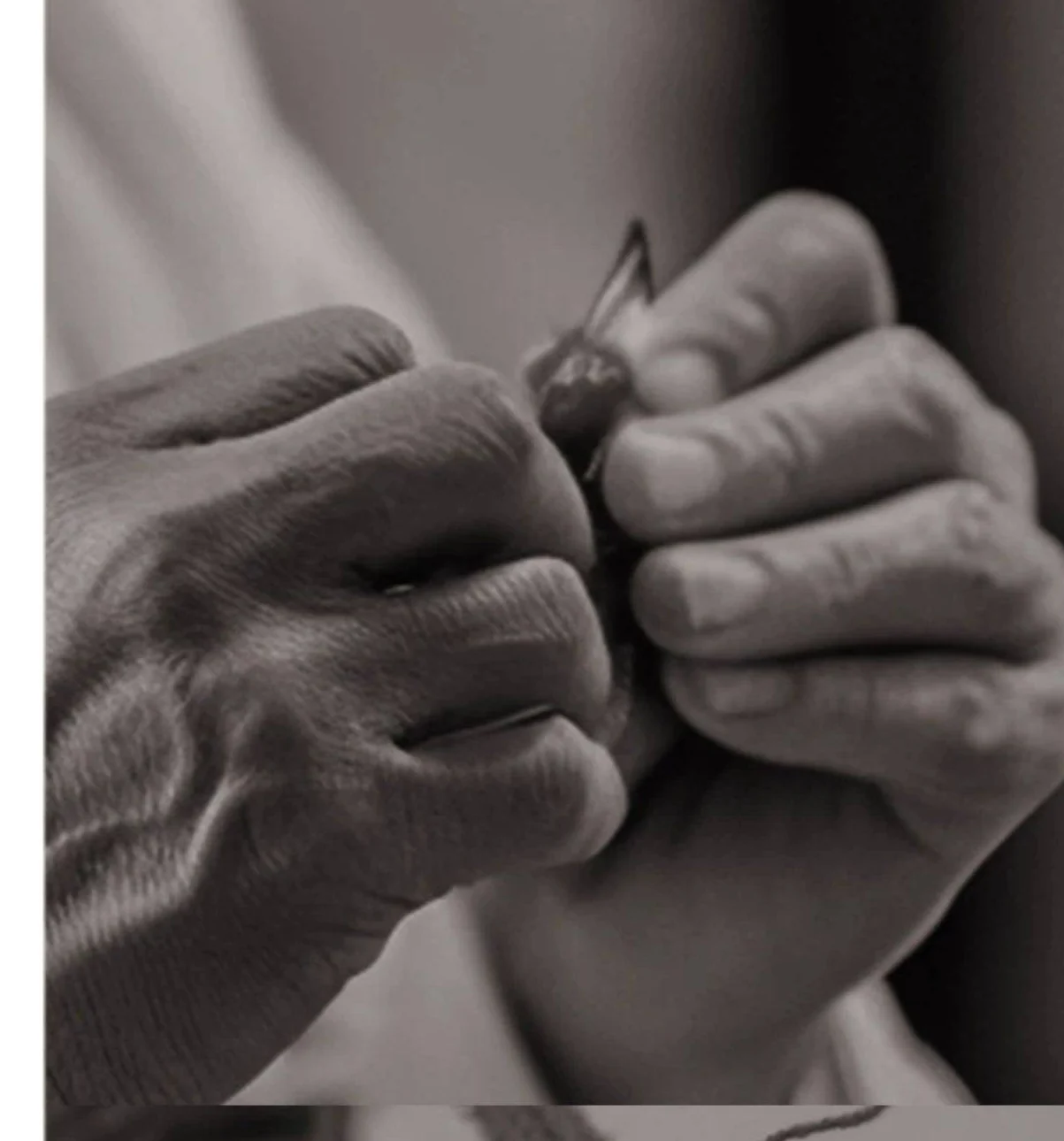
Because nephrite is so tough, it cannot be chipped into shape like other stones; it has to be ground with abrasive. Each bead is cut into a blank, ground round, drilled and then polished in many stages, ending with very fine abrasives that bring out the oily lustre without making the surface glassy.
The supplier describes a process of around forty steps, finished by experienced craftsmen. The aim is a bead that looks smooth and soft rather than mirror-bright: in Chinese terms, wenrun, warm and moist.
08
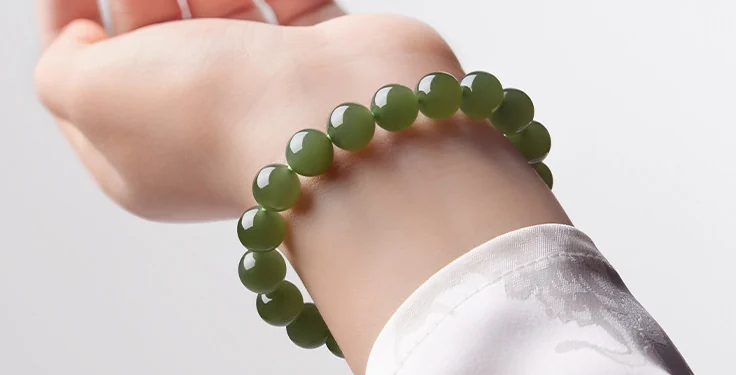
Hetian jade bracelets are made from about 6 mm to 12 mm. At 6 to 8 mm, grape-green jade looks delicate and pale; at 10 mm, each bead is large enough to show its watery depth and oily glow clearly, and the strand feels substantial without being heavy. At 12 mm, the price rises steeply because clean material in larger sizes is scarce.
| Bead diameter | How the jade looks | Often chosen for |
|---|---|---|
| 6–8 mm | Delicate, pale, light | Stacking, slender wrists |
| 10 mm · this design | Full depth and glow | A single, balanced strand |
| 12 mm | Bold and substantial | Larger wrists, statement wear |
09
Measure the wrist itself with a soft tape or paper strip, just above the wrist bone where you usually wear a bracelet. Keep it snug without squeezing and choose that measurement on this page. Larger beads take up more room inside the circle, so the strand is made with a little extra allowance.
The table shows typical bead counts for 10 mm beads. Your bracelet may differ by one bead, as natural beads vary fractionally and each strand is checked against the measurement when it is strung.
Between two sizes, choose the larger for a relaxed fit or the smaller for a closer one. Roll the strand over the knuckles rather than stretching it.
| Wrist size | Approximate inches | Typical bead count (10 mm) |
|---|---|---|
| 14 cm | 5.5 in | 18 beads |
| 15 cm | 5.9 in | 19 beads |
| 16 cm | 6.3 in | 20 beads |
| 17 cm | 6.7 in | 21 beads |
| 18 cm | 7.1 in | 22 beads |
| 19 cm | 7.5 in | 23 beads |
| 20 cm | 7.9 in | 24 beads |
| 21 cm | 8.3 in | 25 beads |
10
Bi is the jade disc with a central hole, one of the oldest ritual objects in China, associated with heaven and with a person’s worth; qing bi is a green jade disc. Shou xin means to guard the heart, keeping one’s mind steady and one’s principles intact. Together, qing bi shou xin wishes for quiet inner strength: calm under pressure, honesty in difficulty and peace in ordinary days.
A round bead strand, a circle of jade around the wrist, echoes the shape of the bi itself, which is part of why jade bracelets have long been worn as protective companions.
These are cultural meanings and personal wishes rather than promises.
11
In the Book of Rites, Confucius is quoted as saying that the gentleman compares his virtue to jade: warm and smooth like benevolence, fine and firm like wisdom, angular but not cutting like righteousness. For two thousand years, wearing jade in China has signalled not wealth but character, and scholars wore jade pendants that chimed as they walked to remind them to move with dignity.
There is also a well-known saying, ren yang yu san nian, yu yang ren yi sheng: a person nourishes jade for three years, and jade nourishes a person for a lifetime. It expresses the idea that jade and its wearer grow together, the stone gaining lustre and the person steadiness.
12
In the Five Elements, green belongs to Wood, the element of spring, the east and patient growth. Its virtue is ren, benevolence, the same quality Confucius saw in jade’s warmth. Wood bends without breaking and grows a ring each year, which suits a stone associated with quiet resilience.
If you would like to know whether Wood suits your own birth chart, a personal design begins with a fuller BaZi discussion.
13
Jadeite, the jade of Myanmar, is a different mineral: harder, often more glassy and vivid, with a granular rather than fibrous structure. Nephrite is softer-looking and tougher. Many green stones are sold as “jade” without being either, including dyed quartzite, serpentine and glass, which may be sold under names such as “Malaysian jade”.
14
Jade Resolve was previously described simply as a 10 mm jade bracelet. We now specify the material: grape-green Hetian nephrite of clear-water grade, from a supplier who provides testing certificates. The size, the meaning and the straightforward, auspicious character of the design remain the same.

15
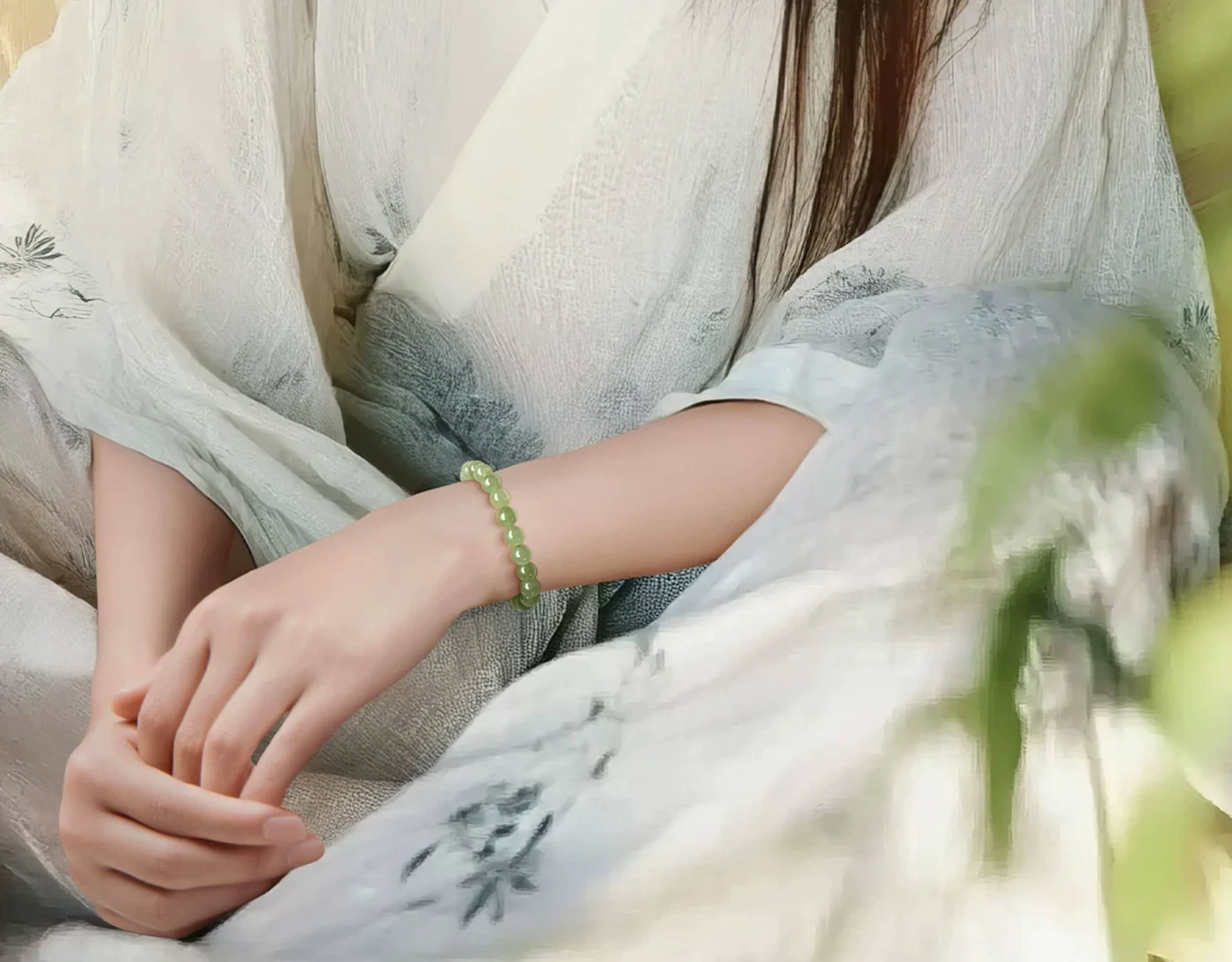
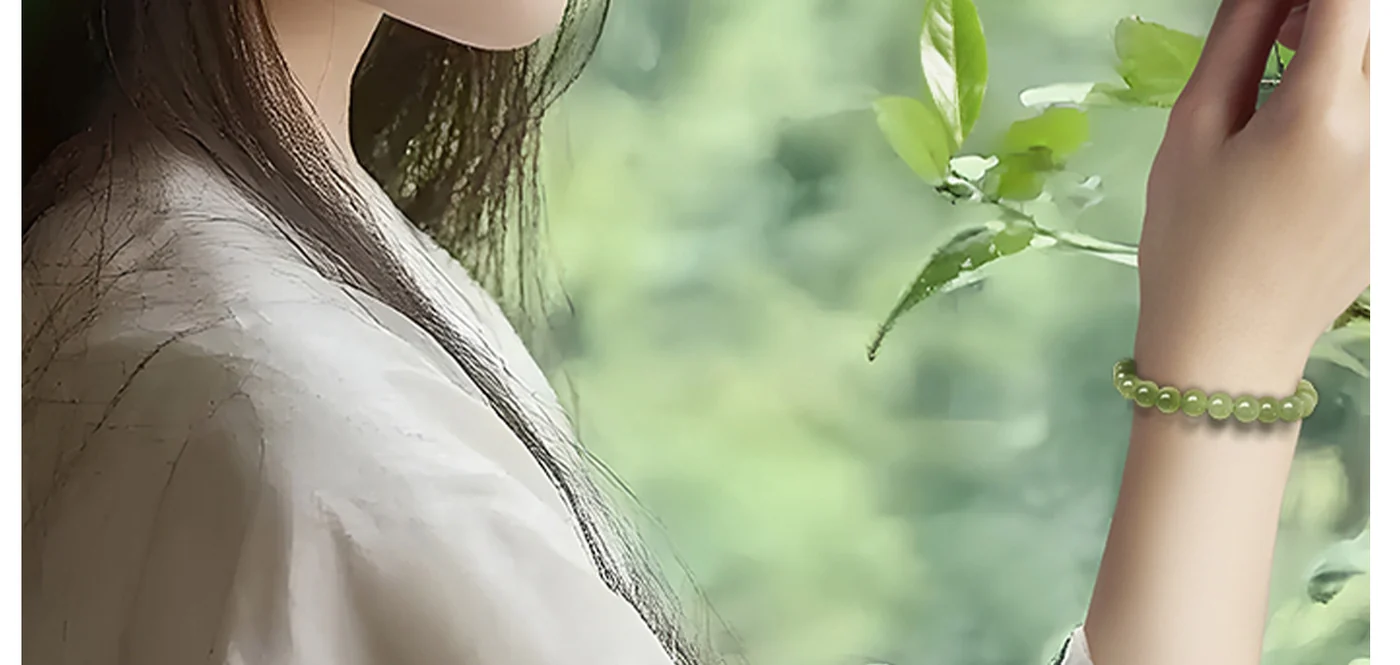
Soft green jade looks natural with white, cream, pale blue and linen, as the photographs show, and elegant with grey, navy and black. It pairs beautifully with gold, which warms its green, and looks cool and fresh with silver. Traditional Chinese clothing and modern minimal wardrobes both suit it.
At 10 mm the strand is substantial enough to wear alone. To stack, add a slim white jade or moonstone bracelet, or a fine gold chain. Avoid wearing it next to hard quartz or metal bangles that could scratch its surface.
16
Jade rewards daily wear. Natural oils from clean skin and gentle handling slowly deepen its lustre, so a strand worn for a year looks softer and richer than when it arrived. Many people like to turn the beads between their fingers in quiet moments, a habit as old as jade itself.
Remove it for washing up, cleaning and the gym, and wipe it with a soft cloth from time to time. With that small care, a jade bracelet can be worn for decades and passed on.
17
Because jade stands for integrity and steadiness, Jade Resolve is a fitting gift for a parent, a mentor, a graduate entering working life or anyone facing a period that calls for calm. In many Chinese families, jade is given at milestones, a coming of age, a wedding or a significant birthday, with the hope that it will be worn for life.
A short note explaining qing bi shou xin makes the meaning clear. If you cannot measure the recipient’s wrist, choose the most likely size; an unworn ready-designed bracelet can be returned within 14 days of delivery.
18
Natural nephrite feels cool and heavy for its size, has a soft, oily lustre and shows fine, natural variation under strong light: faint cotton-like clouds or slightly deeper patches of green. Dyed stones often look too even, with colour gathered in cracks; glass may show round bubbles and a glassy shine; serpentine scratches easily with a steel blade.
Our supplier describes these beads as natural Hetian nephrite and provides a national testing certificate. If you would like documentation or independent testing, please contact us before or after ordering.
19
Nephrite is tough but can be scratched by harder materials, so store the bracelet on its own in a soft pouch and avoid knocking it against quartz, sand or metal. Keep it away from perfume, cleaning products and strong heat, which can dull its lustre or affect the cord.
Wipe it with a soft, dry cloth after wear. There is no need to oil jade; handling with clean hands is enough. With daily wear, stranded elastic usually lasts one to two years; if gaps appear between the beads, have it restrung before it breaks.
Nephrite, the traditional jade of China, sold under the commercial name Hetian jade.
Not necessarily. Under Chinese standards, it is the commercial name for nephrite of any origin.
A soft, yellowish green, with a translucent, watery glow in the stone.
Our supplier describes it as natural nephrite and provides a national testing certificate.
Nephrite is exceptionally tough and rarely chips, but it can be scratched by harder stones.
Its lustre gradually deepens with wear and gentle handling.
Typically 18 beads for a 14 cm wrist, rising to about 25 for 21 cm.
Green jade is associated with Wood in the Five Elements.
Yes. 10 mm jade suits men and women alike.
Brief contact is fine; remove it for bathing to protect the elastic.
Yes, with white jade, moonstone or gold; avoid hard quartz and metal bangles.
A green jade disc guarding the heart: a wish for inner steadiness and integrity.
This design is made in 10 mm. Ask a design adviser about 8 or 12 mm.
On its own in a soft pouch, away from harder stones.
Traditionally many people wear jade on the left; choose whichever is comfortable.
The material and size match, though natural jade varies slightly in shade and translucency.
Compare the material, bead shape and size to choose the arrangement that fits your style.
| Design | Materials | Bead shape & size | Ordering |
|---|---|---|---|
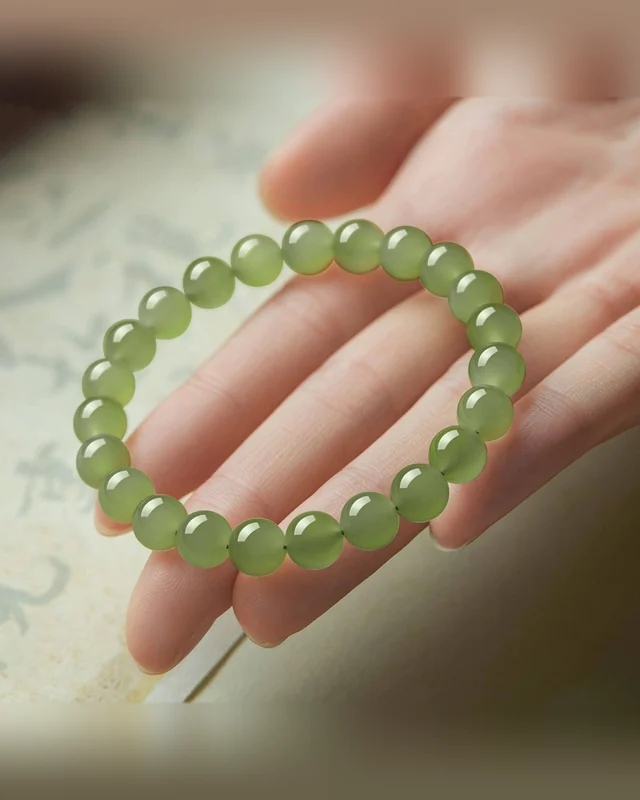 10 mm Grape-Green Hetian Jade Bracelet · Jade ResolveThis design | Hetian jade (nephrite) | 10 mm | $218.00 USD |
| 8 mm Hetian Jade Bracelet · Jade Blessings | Hetian jade (nephrite) | 8 mm | $128.00 USD |
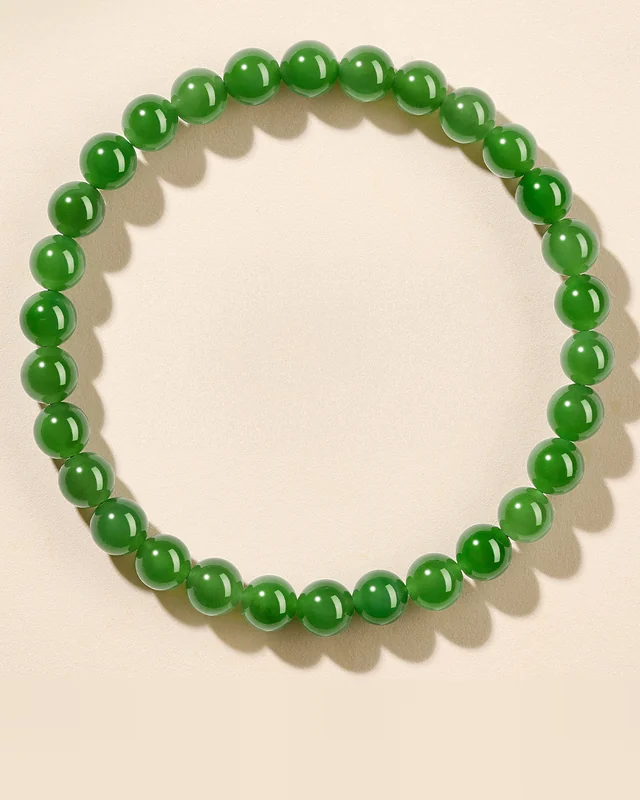 6 mm Spinach-Green Nephrite Bracelet · Growing Blessings | Green nephrite (Hetian biyu) | 6 mm | $278.00 USD |
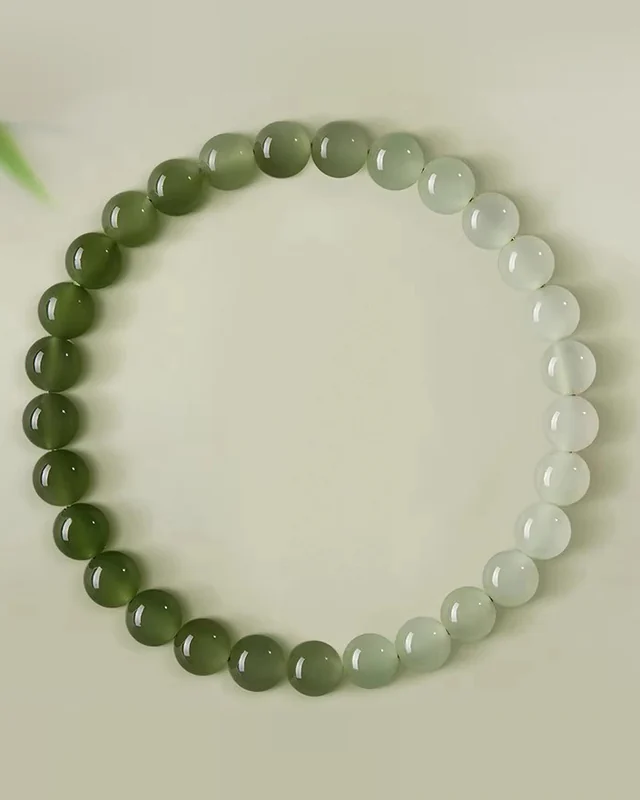 6 mm Gradient Hetian Jade Bracelet · Springtime Affinity | Hetian jade (nephrite) | About 6 mm | $78.00 USD |
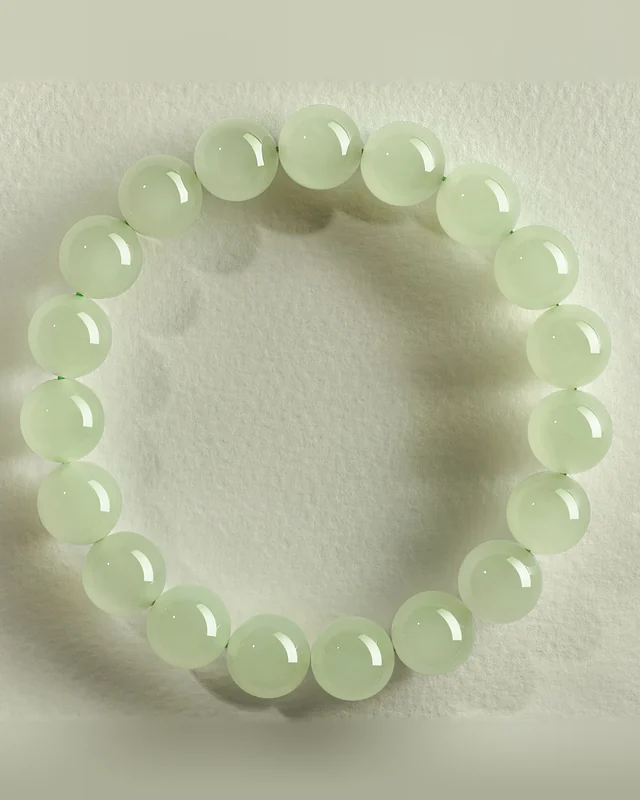 10 mm High-Ice Pale Qingshui Hetian Jade Bracelet · Clear and Harmonious | Hetian jade (nephrite) | 10 mm | $228.00 USD |
Protection · Balance
Hetian jade (nephrite)
Career · Balance
Indian Sandalwood
 Personal designs
Career · Wisdom
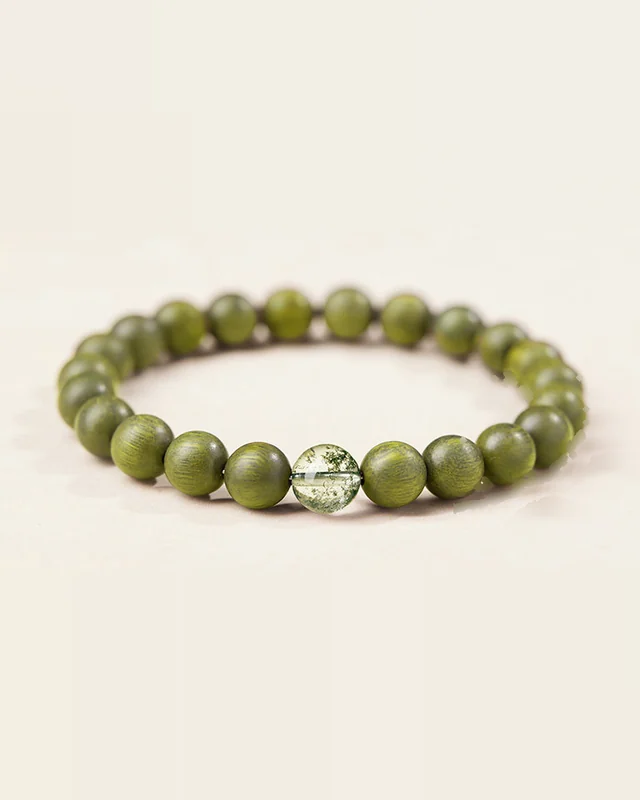
Green sandalwood · Green phantom quartz
We use Google Analytics and Microsoft Clarity by default to understand visits and improve browsing. Form inputs are masked, and you can opt out anytime. Privacy policy